Licia_Albanese

Carlo Bergonzi: from belcanto to verismo in just a few recordings

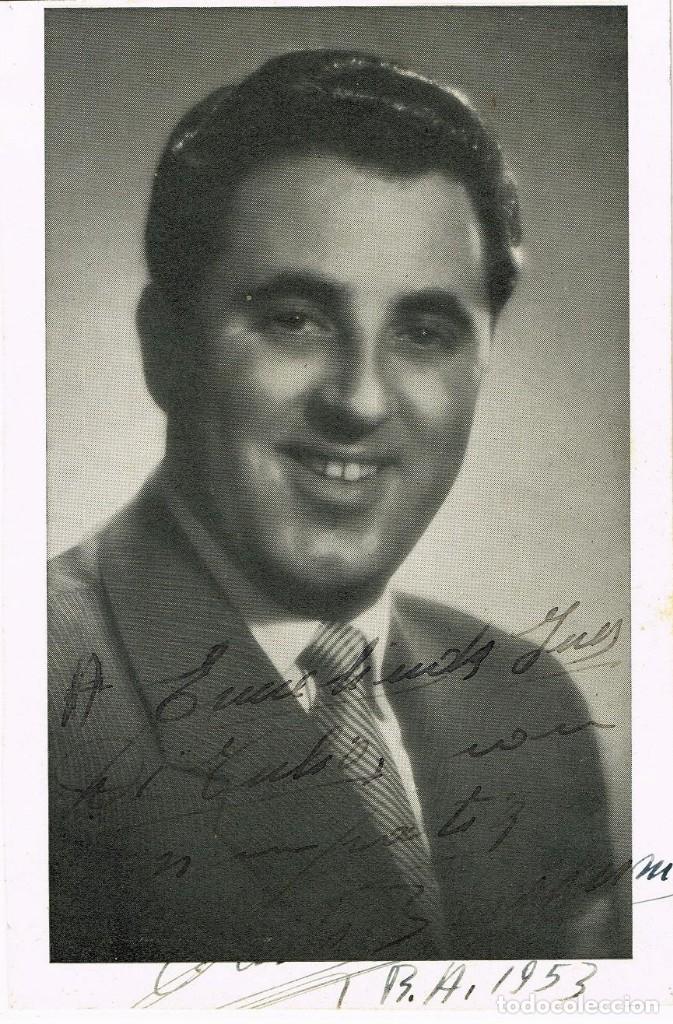
©https://cloud10.todocoleccion.online/autografos-antiguos-cantantes-musicos/tc/2021/08/05/19/279594008.jpg

L’ELISIR D’AMORE


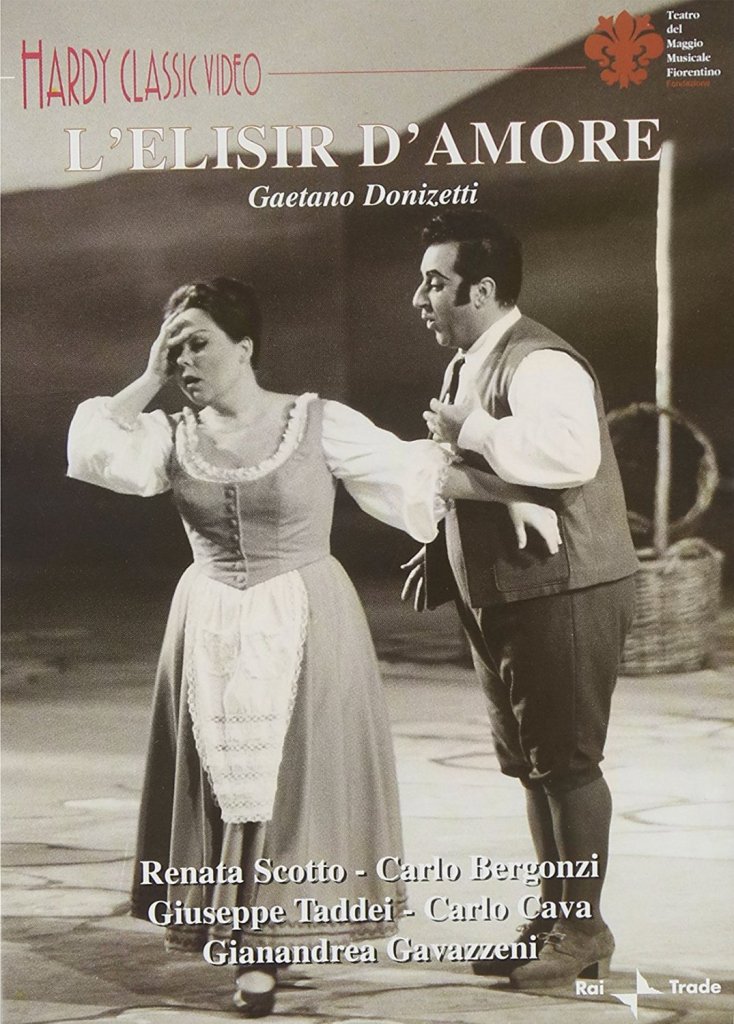
To the younger generation I would especially recommend the DVD with Renata Scotto, Carlo Bergonzi and Giuseppe Taddei (Hardy Classic Video HCD 4014). It is not only the beautiful voices of the past that impress (Scotto, Bergonzi, Taddei – who can still sing like them?), the eye is also given a lot to enjoy.

Do not think that they just enter the stage, sing an aria facing the audience and then take a bow. It is theatre pur sang and a better acting singer than Scotto has yet to be born.

The picture is black and white (the recording was made during Maggio Musicale Fiorentino in 1967) and the scenery is cardboard, but who cares?

LUCIA DI LAMMERMOOR

Renata Scotto 1967
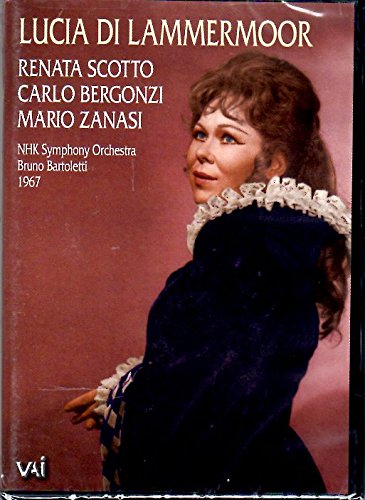

This production of Lucia di Lammermoor was recorded in Tokyo in 1967 and is available on DVD (VAI 4418). It circulated for years on pirate video, but since the sound and picture quality was particularly poor, the commercial release has made many opera lovers very happy. The sound is a little sharp, making Scotto’s high notes sound even more metallic than usual, but who cares?

Her interpretation is both vocally and scenically of an unprecedented high level. With a childishly surprised expression (my brother does this to me?) on her face, she agrees, albeit not without grumbling, to the forced marriage with Arturo (an Angelo Marchiandi who is hideous in every way).

After her mad scene, you tend to pull the plug, because everything that comes after it can only feel like a cold shower. But you are wrong about that. Edgardo’s two arias, sung by Carlo Bergonzi, will take you straight to (singer’s) heaven.


Afterwards, you can’t help but be a little sad, because where have they gone, yesterday’s singers? Small, tall, fat, skinny, with or without acting talent… None of them was a ballet dancer, but could they sing! And it was through their voices alone that they were able to convey all of the feelings that now require a whole ‘artistic team’. In spite of the cuts that were common at the time, this is an absolute must.

Below, Bergonzi sings ‘Fra poco a me ricovero’

Beverly Sills 1970
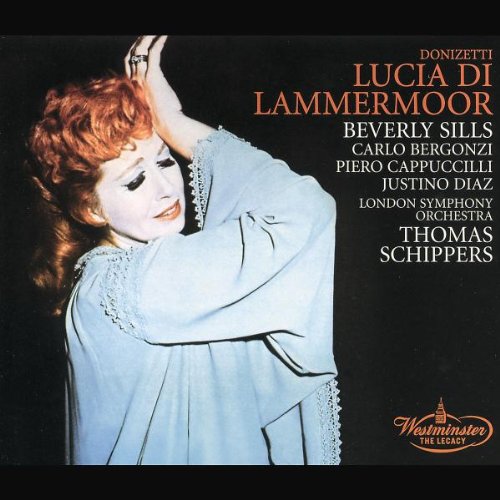


Sills’ Lucia (Westminster 4712502) for me remains one of the best interpretations ever, especially talking about studio recordings. Her portrayal unites the best of Callas and Suitherland: the virtuosity, vocal beauty and pure intonation of la Stupenda and the great acting of la Divina. Not really a great tragédienne (but then, neither is Lucia), she is more of a passive child-girl who just lets it all happen. Carlo
Sills’ Lucia (Westminster 4712502) for me remains one of the best interpretations ever, especially talking about studio recordings. Her portrayal unites the best of Callas and Suitherland: the virtuosity, vocal beauty and pure intonation of la Stupenda and the great acting of la Divina. Not really a great tragédienne (but then, neither is Lucia), she is more of a passive child-girl who just lets it all happen. Carlo Bergonzi sings an elegant and outraged Edgardo and Piero Cappuccilli a brutal and cruel Edgardo and Thomas Schippers conducts very firmly.

But what makes this recording really special is the use of a glass harmonica in the madscene, exactly as Donizetti had originally prescribed it


LA BOHEME

Renata Tebaldi 1958
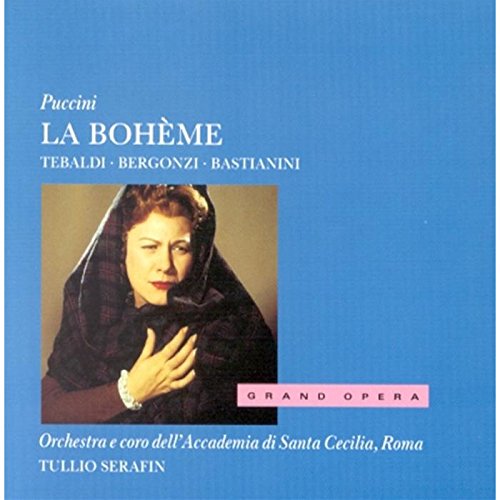


Actually, I also find Tebaldi’s voice a bit too heavy for Mimi, a tad too dramatic too, but there is no denying that her interpretation is very exciting. You have to keep listening to it.

Carlo Bergonzi is an insanely beautiful Rodolfo; secretly, I think he is the real star of the recording. Ettore Bastianini is a very charming Marcello, but Gianna d’Angelo is not a beautiful Musetta. Her singing has nothing sensual and is vulgar at times.

Tulio Serafin conducts more than superbly and the orchestral sound is brilliant. Remarkable actually how wonderful that recording still sounds! (Decca 4487252)

Licia Albanese 1958
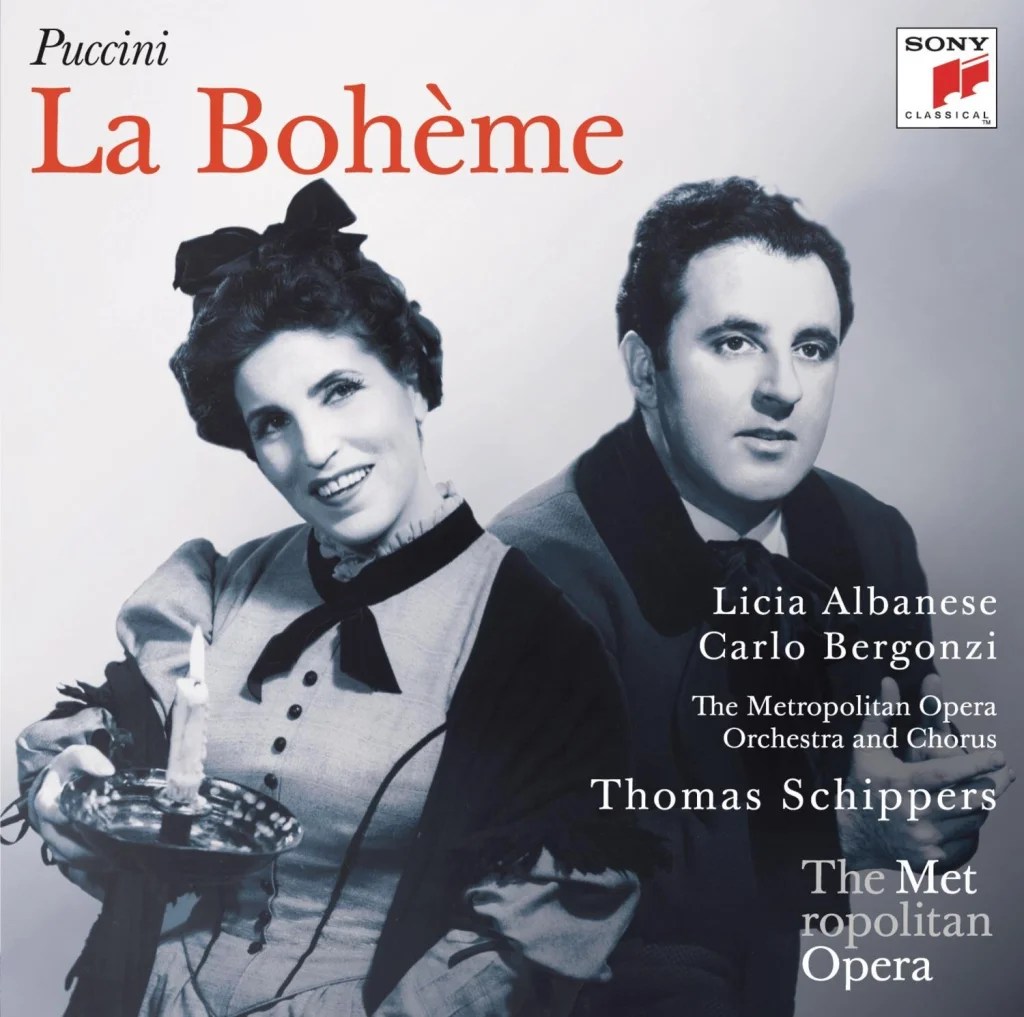
A warning is in order: the sound is not great. It is sharp and dull and occasionally the radio waves are humming rebelliously, but it also has something quite endearing. As if a time machine takes you back to the afternoons of yore, when the whole family settled down in front of the radio to listen to the latest invention, the live broadcast.

The performance, too, is old-fashionedly delicious. Not that the voices are all that exceptional, apart from Carlo Bergonzi who is at his finest, the other roles could have been better cast.

Licia Albanese (almost fifty by then, which is not at all audible) was a real crowd pleaser, especially in New York. Thomas Schippers conducts very vividly (Sony 8697804632)

MADAMA BUTTERFLY
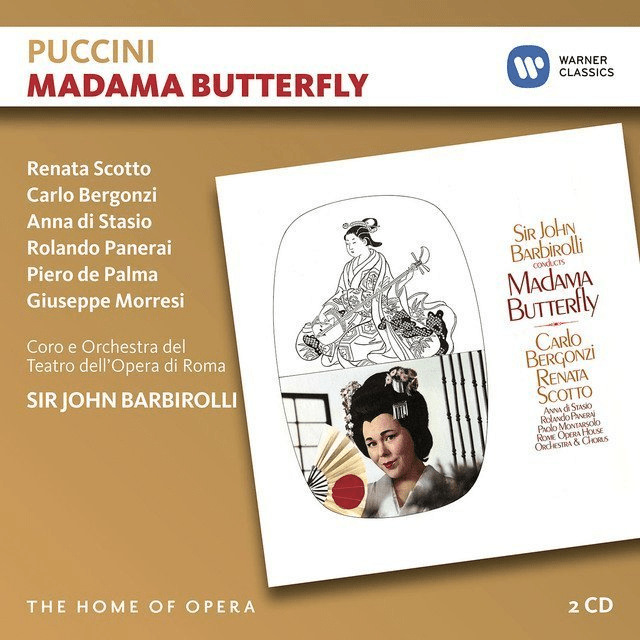
For me an absolute ‘numero uno’ is the 1966 recording by EMI (now Warner 0190295735913) under Sir John Barbirolli. One might imagine a more lyrical or alternatively a more dramatic Cio Cio San; one with less metal in her voice or maybe one with a more childlike voice. But no other singer was able to grasp the complex nature of the girl so well and to characterise her change from a naive child into an adult woman, broken by immense grief, so impressively

Carlo Bergonzi is a beautiful, lyrical Pinkerton, singing with glorious, golden ton and Rolando Panerai a very warm Sharpless.

La Bohéme…. something from the old days

NEW YORK live

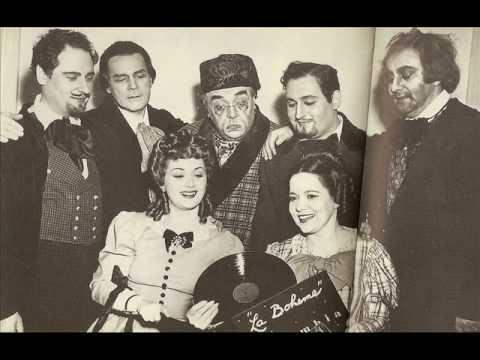
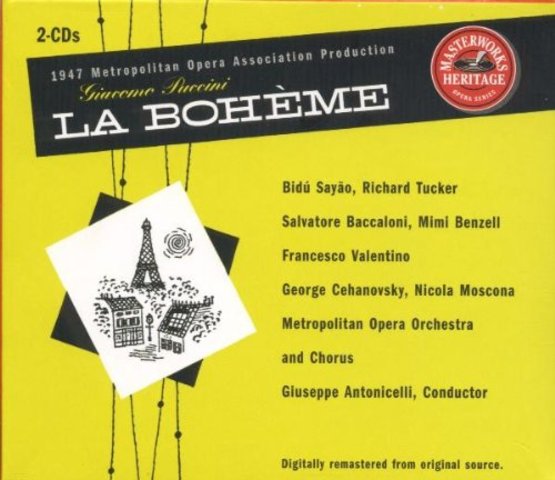
First, attention for two live recordings from the New York Met: from 1947, under Giuseppe Antonicelli and from1958, conducted by Thomas Schippers. Both were released on Sony some time ago and both are well worth listening to.

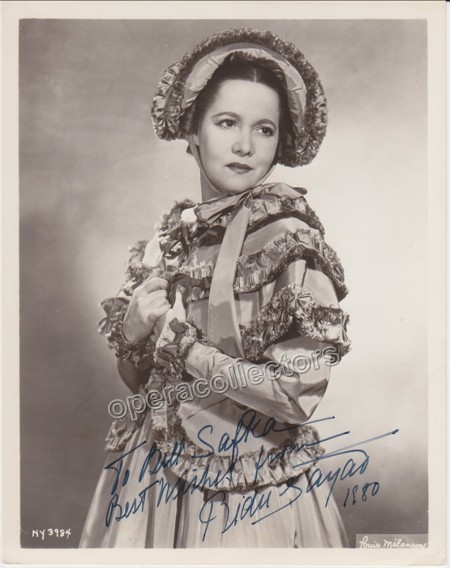
Bidú Sayão 1947


Brazilian Bidú Sayão was considered one of the most beautiful sopranos at the Met, and not just literally. Her voice is feathery light and reminiscent of women’s voices in the old movies from the early days of the “talking movies,” which definitely suits the role of Mimi.


Personally, I prefer rounder voices with slightly dramatic undertones, but this really makes me happy. Combined with the young Richard Tucker, she sounds very delicate and needy. Giuseppe Antonicelli’s conduction is fast-paced (Sony 74646762)


Below Richard Tucker, Bidu Sayao, Mimi Benzell and Frank Valentino in the quartet “Dunque e proprio finita” from the third act:


Licia Albanese 1958


A warning is in order: the sound is not great. It is sharp and dull and occasionally the radio waves are humming rebelliously, but it also has something quite endearing. As if a time machine takes you back to the afternoons of yore, when the whole family settled down in front of the radio to listen to the latest invention, the live broadcast.

The performance, too, is old-fashionedly delicious. Not that the voices are all that exceptional, apart from Carlo Bergonzi who is at his finest, the other roles could have been better cast.

Licia Albanese (almost fifty by then, which is not at all audible) was a real crowd pleaser, especially in New York. Thomas Schippers conducts very vividly (Sony 8697804632)

STUDIO


Victoria de los Angeles 1956


Do you want to cry, from the very beginning? If so, you have come to the right place. Thomas Beecham really does his best to make the RCA orchestra sound a little detached, but the musicians are real human beings and they have no reservations concerning true love. Completely unashamedly, they allow all feelings, including a healthy dose of sentimentality. So you may cry all you want to!

The first meeting between Rodolfo and Mimi already… his ‘così’ when pouring his ‘po’ di vino’ and then her ‘grazie, buona sera’…. Folks, anyone here who doesn’t instantly forget about the rest of the world has no heart!

Jussi Björling is a dream Rodolfo: sensitive, sensible, sweet and so damn attractive! That Victoria de los Angeles (Mimi) falls for him we can’t blame her for, after all, so do we. But we grant him to her wholeheartedly because of her voice, it is so terribly beautiful that it almost hurts. As if she were the Madonna herself who has her extinguished candle lit by her neighbor. In which we conveniently forget that she probably blew out the candle herself. That, then, is the only downside of the recording: Mimi was no Madonna.

For the rest: a must. Also because of the irresistible Marcello by Robert Merrill (Naxos 8.111249/50)


Maria Callas 1956


This recording will not go with me to the “desert island.” It is not because of the conductor, nor the splendidly playing orchestra from La Scala: Antonino Votto conducts smoothly and excitingly and his attention to all the details is truly brilliant,

Rolando Panerai (Marcello) and Giuseppe di Stefano (Rodolfo) are a match for each other, their voices suit each other excellently, although I find di Stefano a bit on the screaming side at times. I also like young Anna Moffo’s very sensual Musetta. The problem – at least for me – lies with La Divina.

Mimi is not a role with which we associate Callas, and rightly so. She has therefore – wisely enough – never sung her on stage. No matter how hard she tries (and she really does!) nowhere does she manage to convince me that she is a poor seamstress, her voice is just too regal for that. Frantically she tries to keep her voice small which makes her sound quite artificial. But I’m sure her fans would disagree with me.

The recording still sounds surprisingly good (Warner Classics 0825646341078)


Renata Tebaldi 1958


Actually, I also find Tebaldi’s voice a bit too heavy for Mimi, a tad too dramatic too, but there is no denying that her interpretation is very exciting. You have to keep listening to it.

Carlo Bergonzi is an insanely beautiful Rodolfo; secretly, I think he is the real star of the recording. Ettore Bastianini is a very charming Marcello, but Gianna d’Angelo is not a beautiful Musetta. Her singing has nothing sensual and is vulgar at times.

Tulio Serafin conducts more than superbly and the orchestral sound is brilliant. Remarkable actually how wonderful that recording still sounds! (Decca 4487252)


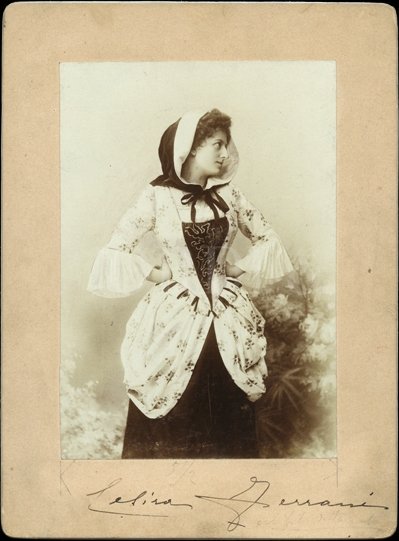
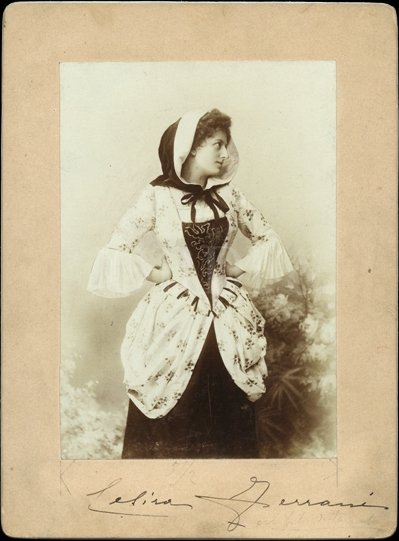
Cesira Ferrani


Would you like to know what the first Mimi sounded like? You can. Cesira Ferrani who created the role in 1896 recorded two minutes from Mimi’ in 1903 (Creators’ Records SRO 818-2).

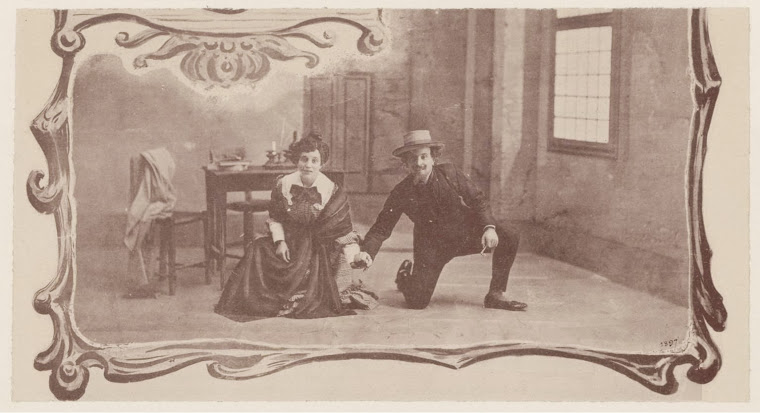
Cesira Ferrani (Mimi) and Evan Gorga (Rodolfo) at the premiére 1 februari 1896


It still sounds surprisingly good, thus we know that Mimi’s soprano was very light, but far from soubrette. Ferrani was also the first Manon Lescaut, Micaela and Melisande, so you can suspect some deeper things under the veneer of an “innocent” girl. As it should be.


Also on Spotify, are a few of her recordings taken from The Harold Wayne Collection and released on Symposium. Here, in addition to “Si mi chiamamo Mimi,” you will also find “Donde lieta usci. And – a real oddity! – an aria from Lohengrin sung in Italian.


Moonstruck


And then there’s (go ahead, it’s almost Christmas anyway) one of all-time’s greatest feel-good movies: Moonstruck.

The story itself has little to do with the real opera, except that the main characters attend a performance of La Boheme at the Metropolitan – it’s good old Zeffirelli – after which we fast-forward to the movie’s happy ending. But in that scene, we too, along with both protagonists are allowed to shed a few tears. The fact that Puccini’s music resounds not only at the credits but also throughout the film is a nice touch.

Trivia: the old man (Loretta’s grandfather) is played by Feodor Chaliapin junior, the son of the great Russian bass.

Scene in the opera. The voices you hear are those of Renata Tebaldi and Carlo Bergonzi.

Discografie van La Bohème, deel twee

La_Bohemeposter_l

NEW YORK LIVE

Allereerst aandacht voor twee live opnamen uit de New Yorkse Met: uit 1947 onder Giuseppe Antonicelli en uit1958 gedirigeerd door Thomas Schippers. Beiden zijn al een tijd terug op Sony uitgebracht en beiden zijn het beluisteren meer dan waard.

Bidú Sayão 1947

La Boheme sayao-bidu-as-mimi-n1790_w

De Braziliaanse Bidú Sayão gold als één van de mooiste sopranen aan de Met en dat bedoel ik niet alleen letterlijk. Haar stem is vederlicht en doet denken aan vrouwenstemmen in de oude films uit het begin van de ‘talking movies’, wat zonder meer bij de rol van Mimi past.

La Boheme opname met Sayao en Tucker

Persoonlijk prefereer ik rondere stemmen met licht dramatische ondertonen, maar hier word ik echt blij van. In combinatie met de jonge Richard Tucker klinkt zij zeer teer en hulpbehoevend. Giuseppe Antonicelli dirigeert met veel vaart (Sony 74646762)


La Boheme Sayao

Hieronder Richard Tucker, Bidu Sayao, Mimi Benzell en Frank Valentino in het kwartet ‘Dunque e proprio finita’  uit de derde akte:


Licia Albanese 1958

La Boheme Albanese

Een kleine waarschuwing is op zijn plaats: het geluid is niet mooi. Het is scherp en dof en af en toe willen de radiogolven even opstandig brommen, maar het heeft ook iets aandoenlijks. Alsof een tijdmachine je terugbrengt naar de middagen van weleer, toen de hele familie zich voor de radio nestelde om naar de nieuwste uitvinding, de live broadcast te luisteren.

Ook de uitvoering is ouderwets heerlijk. Niet dat de stemmen zo uitzonderlijk zijn, want behalve Carlo Bergonzi op zijn mooist heb ik de andere rollen wel eens beter bezet gehoord.

Licia Albanese (toen al bijna vijftig, wat absoluut niet te horen is) was een echte publiekslieveling, zeker in New York. Iets wat ik nooit zo goed heb kunnen begrijpen, want zelf had ik er echt niets mee. Thomas Schippers dirigeert zeer levendig (Sony 8697804632)


STUDIO

Victoria de los Angeles 1956

La Boheme de los angeles

Wilt u huilen, al vanaf het begin? Zo ja dan bent u hier aan het beste adres. Thomas Beecham doet werkelijk zijn best om het RCA-orkest een beetje afstandelijk te laten klinken maar de musici zijn net mensen en niet gediend van reserves in de echte liefde. Geheel onbeschaamd laten ze alle gevoelens, inclusief een gezonde dosis sentimentaliteit toe en het snotteren kan beginnen.

De eerste ontmoeting tussen Rodolfo en Mimi al… zijn ‘così’ bij het inschenken van ‘po’ di vino’ en dan haar ‘grazie, buona sera’…. Mensen, wie hier niet de hele wereld vergeet heeft geen hart!

Jussi Björling is een Rodolfo uit meisjes-dromen: gevoelig, sensibel, lief en zo verdomd aantrekkelijk! Dat Victoria de los Angeles (Mimi) voor hem valt kunnen we haar niet kwalijk nemen, doen wij immers ook. Maar we gunnen hem haar van harte want haar stem, die is zo verschrikkelijk mooi dat het bijna pijn doet. Alsof het Madonna zelf is die haar gedoofde kaars door haar buurman laat aansteken. Waarbij we het voor gemak vergeten dat zij de kaars waarschijnlijk zelf heeft uitgeblazen. Dat is dan ook het enige minpuntje van de opname: Mimi was geen Madonna.

Voor de rest: een must. Ook vanwege de onweerstaanbare Marcello van Robert Merrill (Naxos 8.111249/50)


Maria Callas 1956

.

Deze opname gaat niet mee naar een ‘onbewoond eiland’. Het ligt niet aan de dirigent noch aan de schitterend spelende orkest uit La Scala: Antonino Votto dirigeert vlot en spannend en zijn aandacht voor alle details is werkelijk briljant,

Rolando Panerai (Marcello) en Giuseppe di Stefano (Rodolfo) zijn aan elkaar gewaagd, hun stemmen passen uitstekend bij elkaar, al vind ik di Stefano soms een beetje aan de schreeuwerige kant. Ook de zeer sensuele Musetta van de jonge Anna Moffo kan mij bekoren. Het probleem – althans voor mij – ligt bij La Divina.

Mimi is geen rol waarmee wij Callas associëren en terecht. Zij heeft haar dan ook – wijs genoeg – nooit op de bühne gezongen. Hoe zij ook niet haar best doet (en dat doet zij echt!) nergens weet zij mij te overtuigen dat zij een arm naaistertje is, daarvoor is haar stem te koninklijk. Krampachtig probeert zij haar stem klein te houden waardoor zij behoorlijk gekunsteld klinkt. Maar ik ben er zeker van dat haar fans het niet met mij eens zijn.

De opname klinkt nog steeds verrassend goed (Warner Classics 0825646341078)


Renata Tebaldi 1958

La Boheme Tebaldi

Eigenlijk vind ik de stem van Tebaldi ook iets te zwaar voor Mimi, tikkeltje te dramatisch ook, maar het valt niet te ontkennen dat haar interpretatie zeer spannend is. Je blijft luisteren.

Carlo Bergonzi is een waanzinnig mooie Rodolfo, stiekem vind ik hem dan ook de ster van de opname. Ettore Bastianini is een zeer charmante Marcello, maar Gianna d’Angelo is geen mooie Musetta. Haar zingen heeft niets sensueels en is bij vlagen ordinair.

Tulio Serafin dirigeert meer dan voortreffelijk en het orkestklank is briljant. Merkwaardig eigenlijk hoe geweldig goed die opname nog klinkt! (Decca 4487252)


Montserrat Caballé 1974

la BOheme Domingo Caballe

Met haar fluweelzachte pianissimi, haar onwaarschijnlijk mooie legato, haar warmte en sensualiteit was Caballé een gedroomde Mimi. Met haar stem alleen kon ze alles waarmaken, ook dat ze een aan tering stervende klein meisje was.

In die tijd trad ze veel met haar landgenoot Plácido Domingo op, hun stemmen waren dan ook schitterend op elkaar ingespeeld. De stem van de jonge Domingo was niet minder dan hemels, zijn Rodolfo is dan ook om verliefd op te worden.

Ook Sherill Milnes hoorde er helemaal bij: luister naar het Rodolfo/Marcello duet aan het begin van de vierde acte!

Ruggero Raimondi is een mooie Colline en de directie van Solti is zeer levendig. (ooit RCA, tegenwoordig Sony 88697-57902-2)


Cesira Ferrani

La Boheme ferrani

Wilt u weten hoe de eerste Mimi klonk? Het kan. Cesira Ferrani die de rol in 1896 creëerde heeft twee minuten uit Mimi’ in 1903 opgenomen (Creators’ Records SRO 818-2).

La Boheme Ferani en Evan Gorga

Cesira Ferrani (Mimi) en Evan Gorga (Rodolfo) tijdens de premiére 1 februari 1896

Het klinkt nog verrassend goed, zodoende weten we dat Mimi’s sopraan heel erg licht was, maar verre van soubrette. Ferrani was ook de eerste Manon Lescaut, Micaela en Melisande, u kunt dus het een en ander onder het vernis van een ‘onschuldig’ meisje vermoeden. Zoals het hoort.

Ook op Spotify zijn een paar van haar opnamen te vinden, afkomstig van The Harold Wayne Collection en uitgebracht op Symposium. Hier vindt u behalve “Si mi chiamamo Mimi’ ook ‘Donde lieta usci’. En – een echte rariteit! – een in het Italiaans gezongen aria uit Lohengrin.


FILM

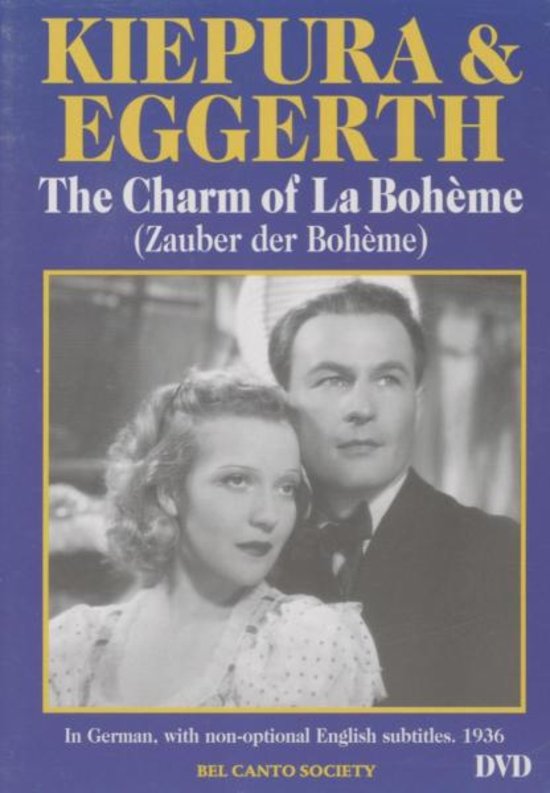
Zauber der Bohème 1936

La Boheme Eggert

Het begrip ‘traumpaar’ heeft sterk aan betekenis ingeboet. Want, zeg maar zelf: hoeveel van de ‘traumparen’ zag u komen en gaan zonder dat er iets van overbleef? Gheorghiu/Alagna gingen vechtscheidend uit elkaar, Netrebko/Villazon bestonden eigenlijk alleen op papier en – wie weet? – in de tenors dromen….

Maar het hoeft geen fabel te zijn want ooit bestond zo’n droompaar ook in het echt. De Poolse tenor Jan Kiepura en de Hongaarse sopraan Martha Eggerth wisten hun sprookjesachtige status van voor elkaar geschapen te zijn niet alleen te bereiken maar ook te behouden. En dat zowel op de bühne, op de filmdoek als in het echte leven.

La Boheme Kiepura

In de film Zauber der Bohème van Géza Von Bolváry maken we kennis met twee verliefde jonge zangers in spe wiens leven zich parallel afspeelt zowel in het echt als op de bühne. Hun lotgevallen lijken sterk op het leven van de fictieve personages die zij ook op de bühne vertolken, maar de dood is hier echt en onoverkomelijk: na haar laatste noten sterft Denise/Mimi (Eggerth) in de armen van René/Rodolfo (Kiepura). Doek!

Hier redt u het niet met één zakdoek, maar u moet wel tegen een zeer slechte beeld en geluidskwaliteit kunnen. Maar eerlijk gezegd: who cares?

De laatste scéne uit de film:

Moonstruck 1987

La Boheme moonstruck

En dan is er nog (vooruit maar, het is toch al bijna Kerst) één van allermooiste feelgood movies allertijden: Moonstruck. Het verhaal zelf heeft weinig met de echte opera te doen, behalve dat de hoofdpersonen een voorstelling van La Boheme in de Metropolitan bezoeken – het is de goede oude Zefirelli – waarna we in een versneld tempo naar het happy end afstevenen. Maar in die scéne mogen ook wij, samen met de beide hoofdpersonen een traantje wegpinken. Dat Puccini’s muziek niet alleen bij de credits maar ook door de hele film weerklinkt is lekker meegenomen.

Trivia: de ode oude man (Loretta’s grootvader) wordt gespeeld door Feodor Chaliapin junior, de zoon van de grote Russische bas.

Scène in de opera. De stemmen die u hoort zijn van Renata Tebaldi en Carlo Bergonzi:

Discografie La Bohème d.1:  LA BOHÈME. Discografie

La Bohème in Amsterdam: LA BOHÈME Amsterdam december 2017