Jascha_Horenstein

Franz Schreker deserves Eternal Life in The Distant Perfect Sound

THE SOUND

Sight & Sound Experience of Gustav Klimt – Atelier des lumières Paris

On the threshold of the twentieth century, many artists were guided in their work by the desire – and the search – for a perfect world. It had to do with the spirit of the times, among other things, and it influenced many painters, writers, poets and composers in their work. But with no other artist it was as prominent as with Franz Schreker (1878-1934). The search for ‘the’ sound dominated his entire life, he was fascinated and obsessed with it. A sound that would die of its own accord, but not really, because it had to continue to be heard – if only in your thoughts. It had to be a pure sound, but one with orgasmic desire and interwoven with visions. Narcotic. In his music I really hear the perfect sound that he so desired which makes me intensely happy.

For Schreker you can wake me up in the middle of the night. The fusion of shameless emotions with undisguised eroticism and intense beauty turns me into an ‘Alice in wonderland’. I want more and more of it. Call me a junkie. I consider his operas to be the most beautiful in existence, alongside those of Puccini and Korngold.

When the Nazis came to power, Schreker was labelled an ‘entartet’. His works were banned and no longer performed. In 1933 he was dismissed from all his engagements and suspended. Schreker was devastated. In December of that year he suffered a heart attack which became fatal to him. But even after the war Schreker was hardly ever performed. The same fate awaited him as (among others) Korngold, Braunfels, Goldschmidt, Zemlinsky, Waxman …. An unprecedented number of names of composers. They were once labelled  ‘Entartet’ by the Nazis and banned, reviled, expelled and murdered. Forgotten.

And that was not just the fault of the Nazis.  After the war, the young generation of composers did not want to know about emotions anymore. Music had to be devoid of any sentiment and subject to strict rules. Music had to become universal: serialism was born. The past was dealt with, including composers from the 1930s. It is only in the last thirty years that the once forbidden composers have regained their voices. The Saturday Matinee has played a major role in this and I thank them on my bare knees for that.

DER FERNE KLANG
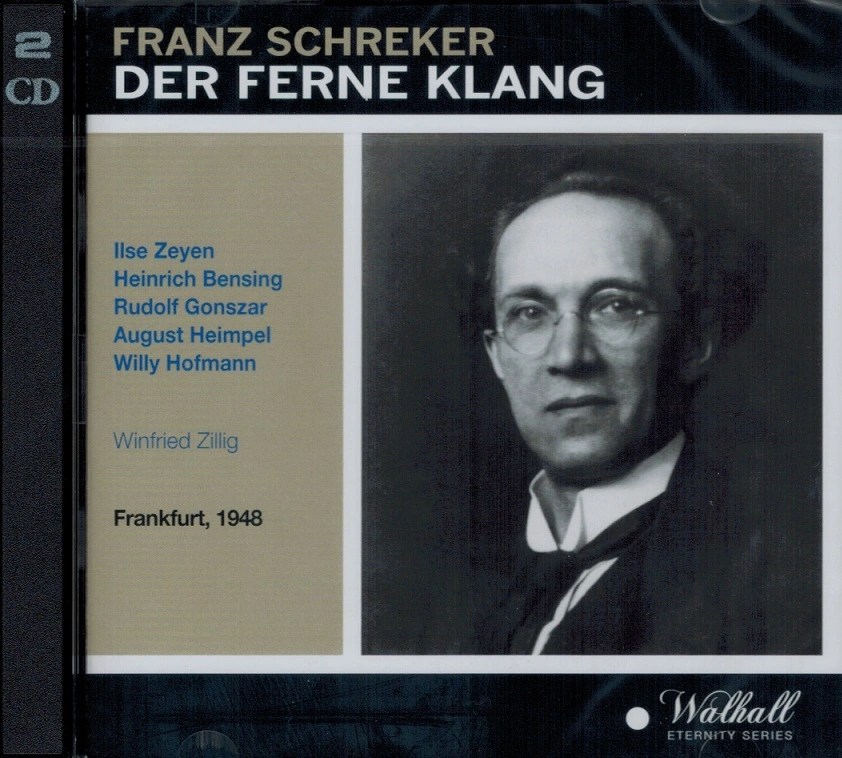
, The premiere of Der ferne Klang, in Frankfurt in 1912, was very enthusiastically received. In the Frankfurter Zeitung, critic Paul Bekker wrote that “the audience could identify with the central metaphor of Schreker’s work. Everyone hears that enigmatic sound at some point”.

The protagonist is a composer with only one desire: to discover the perfect sound. On his quest for it, he rejects his beloved Grete and leaves everything he loves behind. Only at the end, when it is already too late, does he realise that he could only find the enchanting “distant sound”, along with happiness, in his love for Grete.

There are not many official recordings of the opera on the market. I myself know only one: live recording from Berlin 1991, on Capriccio (60024-2). I’ve never been devastated by that and quietly hoped that NTR will release their September 2004 performance, with Anne Schwanewilms and others. Alas.

Fortunately, Walhall is now coming out with a live radio recording from Frankfurt 1948, and I am very happy about that. It is a fantastic recording, with exceptionally good sound quality for the time.

I did not know any of the singers, the greater the surprise for me. Der Ferne Klang is an opera that is not easy to cast. Both main roles require big voices that are also distinctly lyrical, and Ilse Zeyen (Grete) and Heinrich Bensing (Fritz) are very much so.

The Frankfurt radio orchestra is sublimely conducted by Winfried Zillig, a very well-known German composer, musict heorist and conductor at the time.

Excerpts can be heard here:

https://www.jpc.de/jpcng/classic/detail/-/art/Franz-Schreker-Der-Ferne-Klang/hnum/2994743

DIE GEZEICHNETEN

The idea came from Zemlinsky. He wanted to compose an opera about an ugly man – his obsession – and commissioned the libretto from Schreker. After finishing his work, it was hard for Schreker to give up his text. Fortunately, Zemlinsky abandoned the opera so Schreker started to compose himself.

Zemlinsky, Schoenberg and Schreker in Prague 1912

Like Der Ferne Klang, perhaps his best-known work, Die Gezeichneten also deals with the search for unattainable ideals. Alviano, a deformed rich nobleman from Genoa, dreams of beauty and perfection. On an island he has ‘Elysium’ built, a place where he hopes to realize his ideals. What he doesn’t know is that the noblemen abuse his island: they are engaged in orgies, rapes and even murders.

Alviano: photo from the premiere in Frankfurt 1918 via Green Integer Blog

The title of the opera is ambiguous. Not only are the main characters ‘marked’ (Alviano by his monstrous appearance and Carlotta by a deadly illness), Carlotta also makes a drawing of Alviano, in which she tries to capture his soul.

This beautiful opera, with its thousands of colours and sensual sounds (just listen to the overture, goosebumps!), is being staged more and more nowadays. In 1990 it was performed at the Saturday Matinee, with an ugly singing but very involved and therefore very vulnerable William Cochran as Alviano and a phenomenal Marilyn Schmiege as Carlotta (Marco Polo 8.223328-330).

Evelyn Lear (Carlotta) and Helmut Krebs (Alviano), scene from the second act:


On Spotify you can find several performances of the complete opera, but if you want to have images as well: below you will find the recording from Salzburg 2005:

IRRELOHE
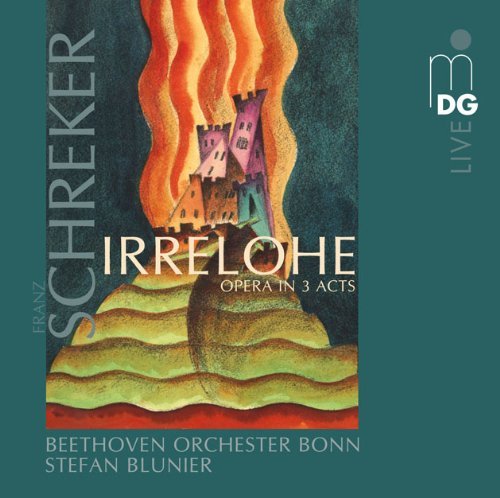
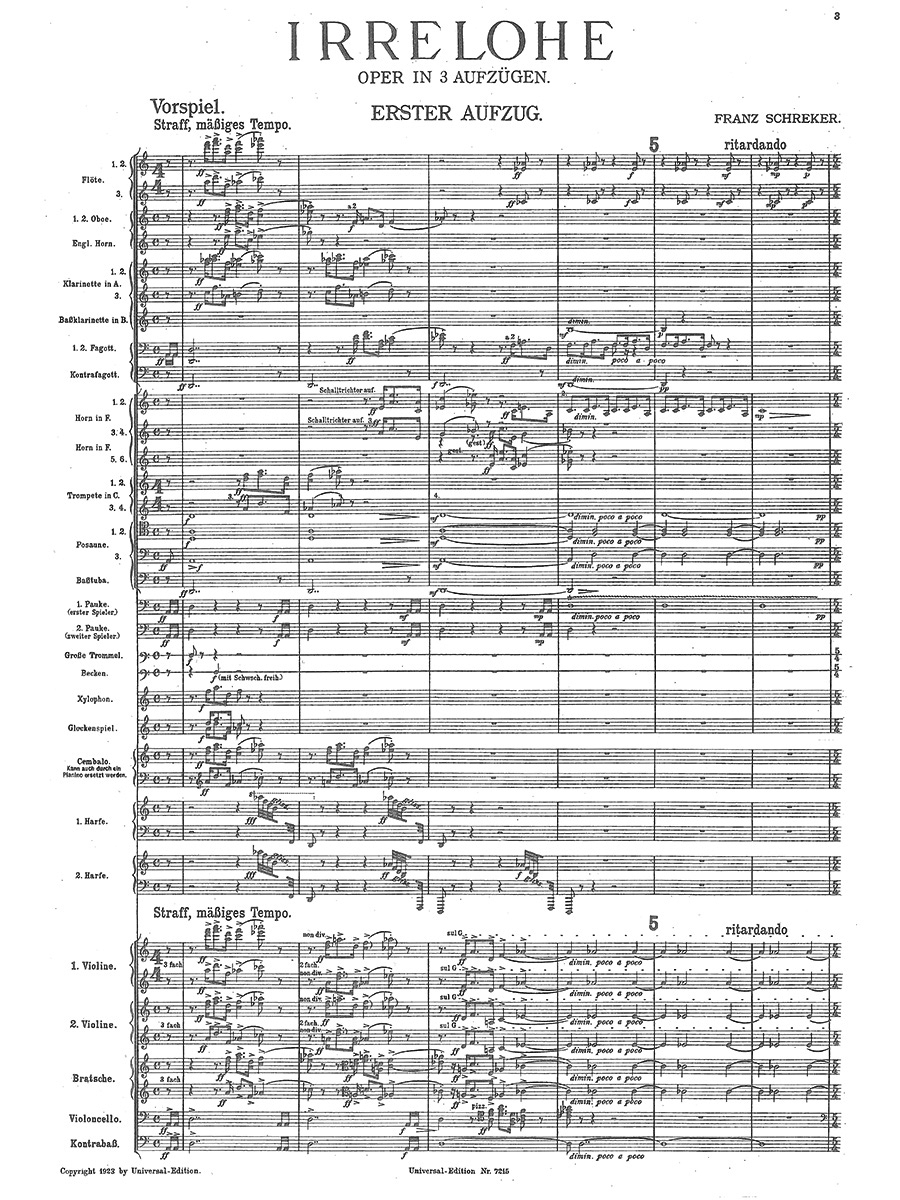
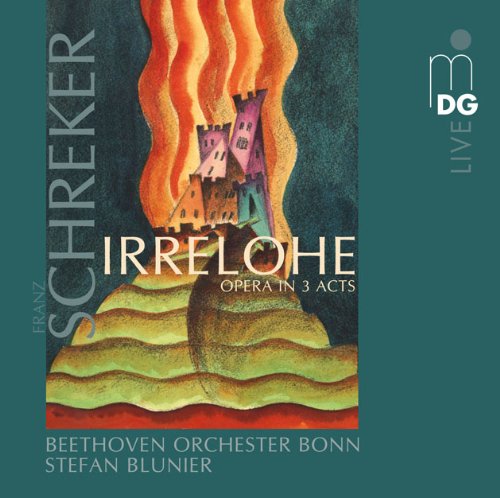
In 2010, The Opera in Bonn started a Schreker revival. Kudos! In 2010, Irrelohe was put on the stage there and recorded live by MDG (9371687-6).

The story most resembles a real horror movie. The lords of the Irrelohe castle are cursed. On their wedding day, they go mad and rape a virgin, a curse they pass on to their first-born son. Only a fire and its flames can lift the curse. And those flames do come, at the end, when the beautiful Eva (Ingeborg Greiner) prefers Count Heinrich (irresistible Roman Sadnik) to the bastard Peter (Mark Morouse). You get the idea: Peter is the first-born son of the rapist; Heinrich (who is his half-brother) was born 30 days later. All’s well that ends well, but first we shudder, shiver and enjoy…….


Roman Sadnik in scenes from Irrelohe:


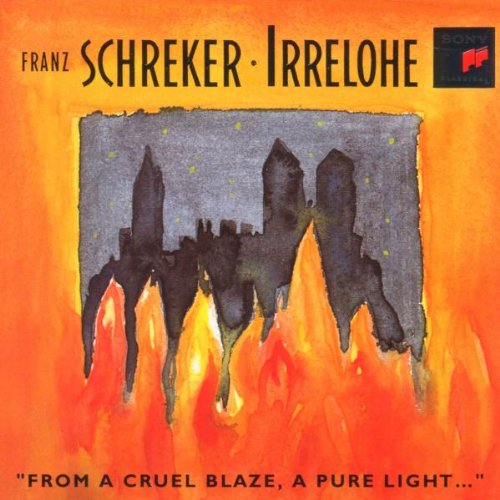
Of the opera there already existed a recording on Sony, recorded live in Vienna in 1989. The Wiener Symphoniker was conducted by Peter Gülke and maybe it is his fault that it does not sound very exciting. The singers (including Luana de Vol and Monte Pederson) are certainly not to blame, although they are nothing to write home about.


Worth knowing:
Schreker wrote the libretto in a very short time (it took him only a few days) in 1919. The work takes its name from a railway station called Irrenlohe which Schreker passed by on a trip to Nuremberg in March 1919.


DER SCHMIED VON GENT


I had in my possession a pirate recording of Schrekers’s last opera, Der Schmied von Gent from Berlin 1981, but I wasn’t particularly fond of it: neither the sound nor the performance could really please me. Moreover, the opera was hard to follow without a synopsis.

So I was eagerly awaiting the first commercial release of it and lo and behold: there it is! ‘The Smith’ was recorded live in Chemnitz in 2010 and released on CPO (777 647-2), kudos!

It is a “Grosse Zauberoper” with a story a bit close to ‘Der Freischütz’, it also features a devil, as well as Saint Peter and … Alva (it takes place during the Eighty Years’ War). And yes, it all works out.

The cast, including a fantastic Oliver Zwarg in the role of Smee, is excellent.

VOM EWIGEM LEBEN

I don’t think it was wise to include ‘Ekkehard’, a work Franz Schreker wrote while still in his youth. And certainly not to place it at the beginning of the CD. The symphonic overture has little to say, sounds incoherent, is boring and deters rather than invites listening. ‘Phantastische Ouvertüre’ on 15 is hardly any better and even I, a diehard Schreker fan, really had to force myself to keep listening to it.

But it could also be a bit down to the young English conductor Christopher Ward. He conducts very skilfully but lacks a real drive. Nor can I escape the impression that he doesn’t quite understand the ‘Schrekian idiom’, because somewhere between all the very neatly played notes he has quite lost the eroticism. You hear it best in Schreker’s best-known piece, his ‘Vorspiel zu einer grossen Oper’.

Fortunately, on that CD you will also find two songs; two settings to the poem by Walt Whitman, (translated into German by Hans Reisiger) entitled ‘Vom Ewigen Leben’ and here you hear the real Schreker. Sensual and languorous. That my final verdict is not negative is therefore thanks  to these songs being sung beautifully, with much sehnsucht, by Australian soprano Valda Wilson.

SONGS


The unsurpassed Reinild Mees took the initiative and (of course) got behind the piano herself, to accompany and record two CDs full of Schreker’s songs. It features Jochen Kupfer, Ofelia Sala and Anne Buter and the result is truly outstanding (Channel Classics CCS 12098 and CCS 14398)


Also highly recommended is a release by Koch Schwann (3-6454-2), hopefully still for sale, which includes, in addition to the prelude to Irrelohe and ‘Vorspiel zu einer grossen Oper’, again the truly irresistible song cycle ‘Vom ewigen Leben’, after Walt Whitman’s poems.
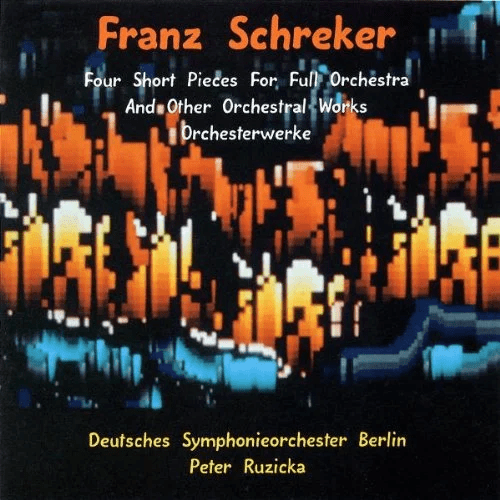


It is phenomenally sung by Claudia Barainsky – for her alone, with her radiant height and tremendous understanding of the text, you really must have the CD. Not to mention the fantastically playing Deutsche Symphonie-Orchester Berlin. The conductor, Peter Ruzicka understands exactly what Schreker’s music is all about.


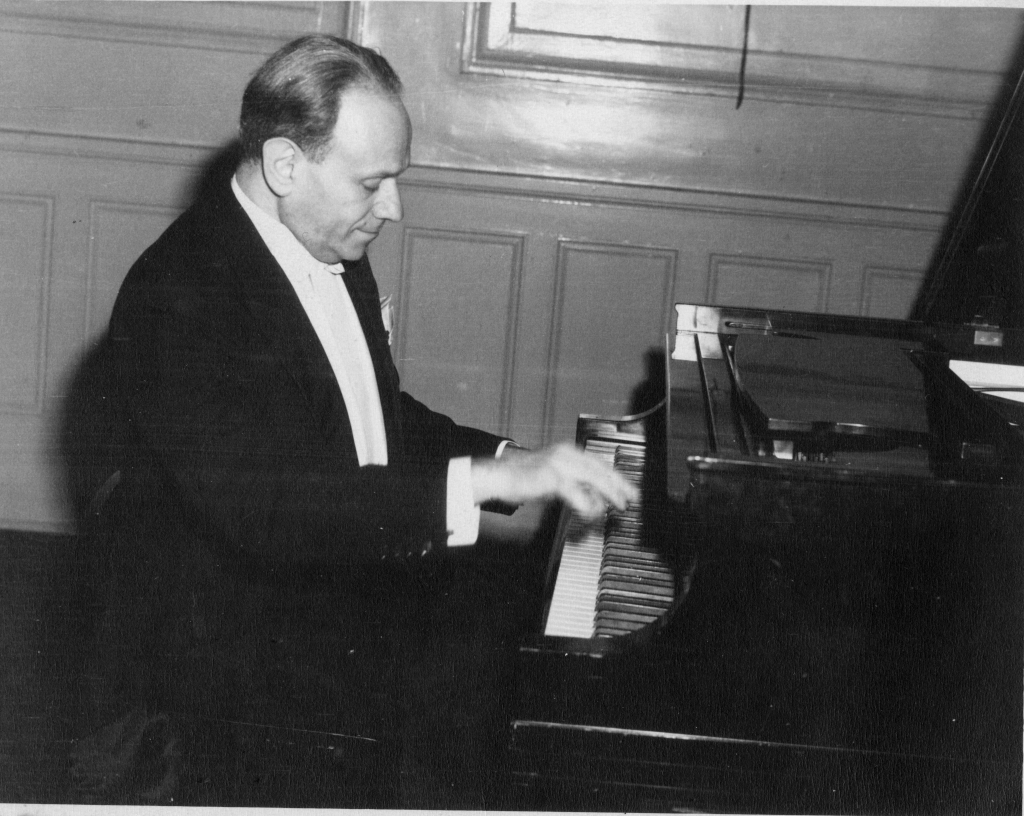
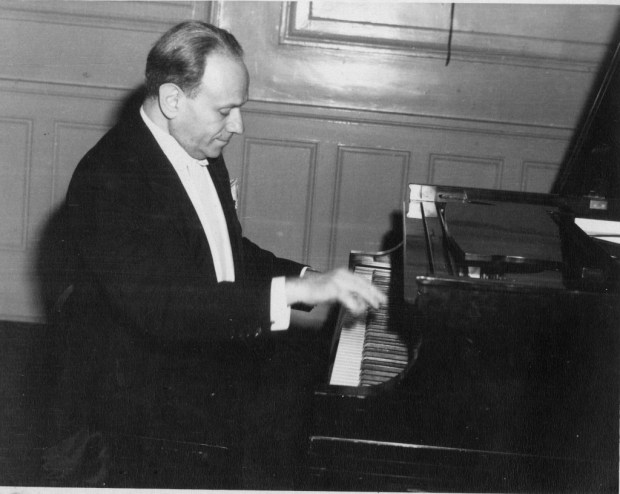
For dessert, one of the most beautiful instrumental works by my beloved composer: Vorspiel zu einem Drama from 1913. The BBC Symphony Orchestra is conducted by Jascha Horenstein:

A new arrival:


Christoph Eschenbach and Chen Reiss

“Christoph Eschenbach conducts this generous survey of the sumptuous, hyper-Romantic music of Austrian composer Franz Schreker. Not only was he the pre-eminent opera composer of his generation, he also, says Eschenbach, “took Mahler’s symphonic writing to a whole new level”. The album includes the ecstatic “Nachtstück” from Der ferne Klang, the exquisite Chamber Symphony and some ravishing orchestral songs, featuring Chen Reiss and Matthias Goerne”(© DG)
Karol Rathaus herontdekt

IDENTITEIT

RathausJune041byPiano-1

Karol Rathaus, circa 1952 (from Rathaus’ family archive)

Zijn fascinerende muziek in zijn geheel vond weinig weerklank. Hij voelde zich miskend, was eigenlijk nergens thuis en ook in het landschap van muzikale stijlen raakte hij tussen wal en schip. Nu zijn pianowerken van Rathaus voor het eerst op cd verschenen

Rathaus cd

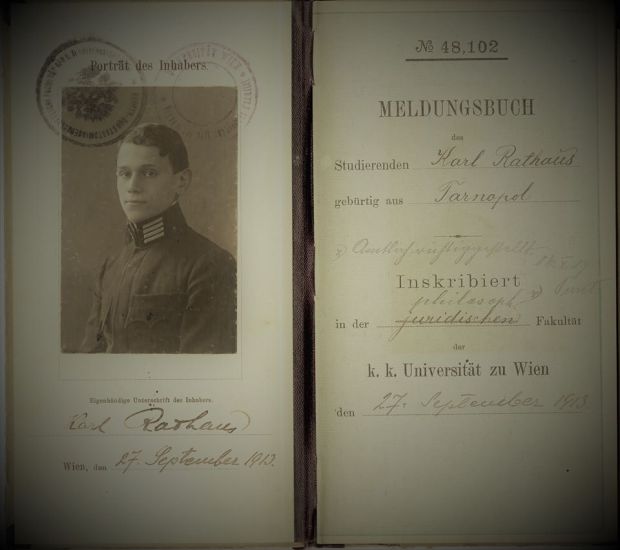
Wat weten we van Karol Rathaus (1895–1954)? Hij werd geboren in 1895 in Ternopol, een stad dat nu in West Oekraïne ligt maar toen een onderdeel was van de Oostenrijks-Hongaarse monarchie. Bij hem thuis werd er Pools gesproken, maar zijn opleiding volgde hij in het Duits, een taal die hij beter beheerste dan de ‘native speakers’. Hij studeerde in Wenen, emigreerde in 1926 naar Berlijn, in 1932 naar Frankrijk en daarvandaan naar de Verenigde Staten. Geen wonder dat zijn eerste biograaf zich openlijk afvroeg of Karol Rathaus, een Poolse, Oostenrijkse of Amerikaanse componist was. Hij baseerde zich niet alleen op zijn levensloop maar ook op de brieven die Rathaus schreef aan zijn vrienden, waarin hij vertelde dat hij het moeilijk vond zich aan zijn nieuwe landen aan te passen en vaak in een identiteitscrisis belandde. Zijn composities werden amper opgevoerd, iets waar hij zeer verbitterd over was.

Rathaus

In 1950 schreef Rathaus aan dirigent Jascha Horestein: “Mijn probleem is dat van de genegeerde, eigengereide componist. Mijn naam is bekend, maar niemand voert mijn werken uit. Ik heb geen ambassades, geen consulaten die achter me staan, geen propagandamachine en in het land waar ik heel gelukkig leef, word ik beschouwd als een buitenlander. “

Jascha Horenstein dirigeert Rathaus. Deel 1:

Vierde deel:

ENTARTETE MUSIK

Dat Rathaus zo in vergetelheid is geraakt is niet alleen de schuld van de Nazi’s. Michael Haas, de voormalige producent van de ‘Entartete Musik’-serie van Decca, één van de eersten die een cd met werken van Rathaus heeft opgenomen, met o.a. zijn ballet Der Letzte Pierrot, had hiervoor een duidelijke verklaring: “De jonge generatie componisten bleef na de oorlog met schuldgevoelens zitten. Het mocht nooit meer gebeuren, dus hebben zij daar een remedie voor gevonden. Er moest gewerkt worden aan het bouwen van objectieve muziek, gespeend van ieder sentiment en onderworpen aan strenge regels. Muziek moest universeel worden. Het serialisme werd geboren. In Darmstadt werd afgerekend met het verleden, dus ook met componisten uit de jaren dertig”.

Dance from Uriel Acosta  from 1930, played by Orquesta Filarmonica Cuidad de Mexico conducted by Jascha Horenstein (live, Mexico City, 28 March 1951). The orchestra on this recording included Sally van den Berg (oboe) and Louis Salomons (bassoon), who played in the Concertgebouw before the war:

LIFE CHANGING EXPERIENCE

Rathaus Wnukowski

Daniel Wnukowski, photo by Claudia Zadory

Het is door Michael Haas dat de jonge Canadese pianist Daniel Wnukowski in aanraking kwam met de muziek van ‘Entartete componisten’ (Haas spreekt liever van ‘Forbidden composers’). Hoe het allemaal begon?

Wnukowski: “Haas bracht mij in contact met een zeer bijzondere man, de componist Walter Arlen. Arlen was op zoek naar een pianist die voor hem zijn piano- vocale en kamermuziekwerken kon opnemen. Het eerste deel van zijn project nam hij op met de Oostenrijkse pianist Danny Driver, die wegens andere verplichtingen niet meer beschikbaar was. In oktober namen we de cd op en ik kan alleen maar zeggen dat de ontmoeting met die fascinerende man voor mij een ‘levens veranderende ervaring’ was.”

Wnukowski speelt ‘Der Letzte Pierrot’:

“Ik ben Joods. Mijn familie van zowel mijn moeders als vaderskant komt oorspronkelijk uit Lublin (Polen). Het is de ouders van mijn vader gelukt om in 1945 naar Canada te vluchten. Tot hun negentigste wilden ze nooit over hun oorlogservaringen spreken, zij wilden mijn vader een ‘normale’ Noord-Amerikaanse opvoeding geven. Mijn andere grootouders bleven na de oorlog in Polen waar ze hun Joodse identiteit krampachtig verzwegen. Het was een taboe. Tot 1968, toen als gevolg van een antisemitische campagne de meeste nog in Polen levende Joden gedwongen werden om het land te verlaten. Mijn moeder was toen 17. Mijn Joodse identiteit speelt een grote rol in mijn leven. Het is een drijvende kracht achter mijn loopbaan van een concertpianist en ik doe mijn best om de verhalen over de overlevenden van de Holocaust levend te houden. “

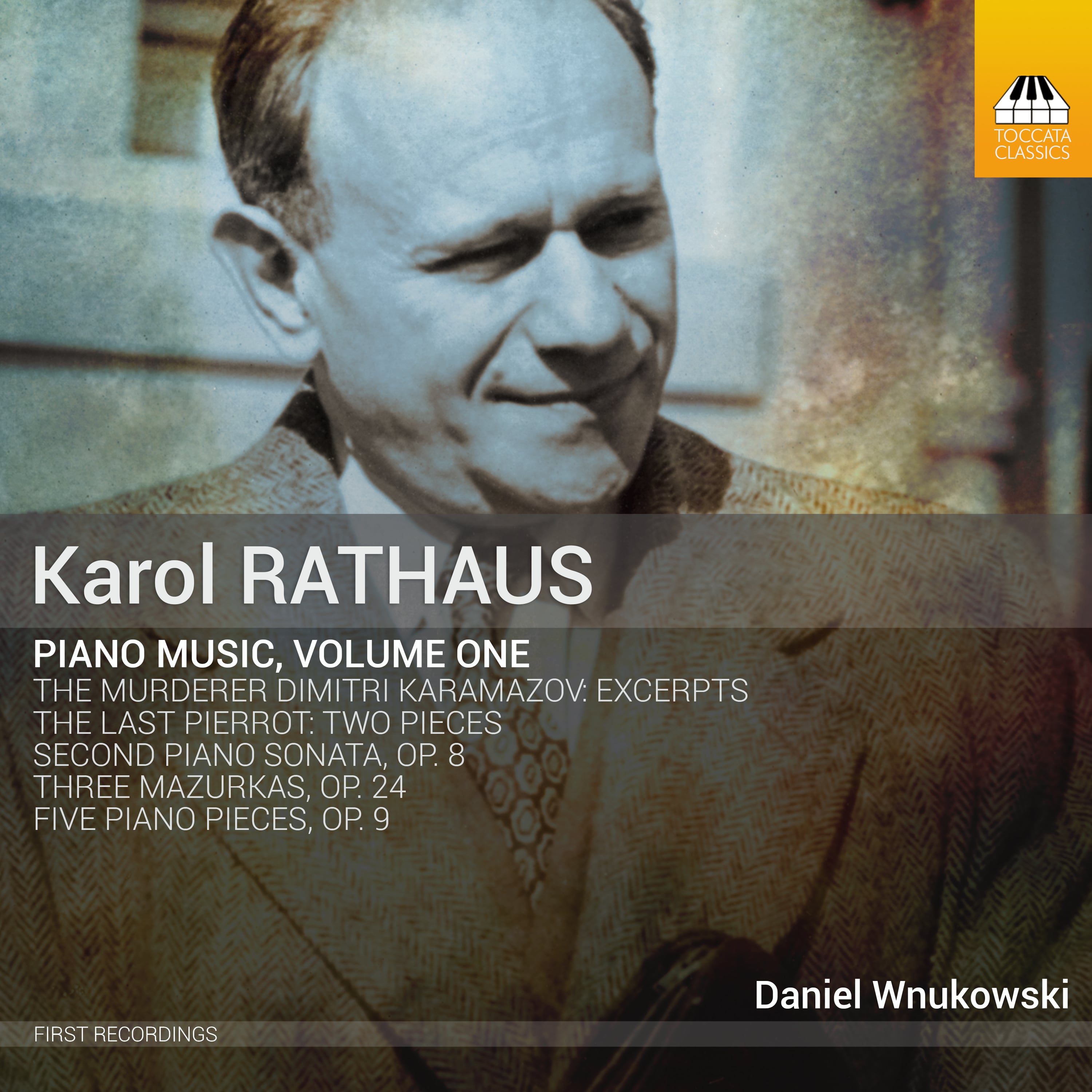
Voor zo ver ik weet is deze cd de allereerste opname van pianowerken van Rathaus. Al deze composities werden geschreven tussen 1924 en 1931. Behalve de Fünf Klavierstücke, de tweede pianosonate en drie Mazurka’s staan er ook – door de componist zelf voor de piano gearrangeerde – twee fragmenten uit het ballet Der Letzte Pierrot en drie stukken uit de filmmuziek uit Der Mörder Dimitri Karamasoff. Het zijn fascinerende werken met zeer geprononceerde ritmes. Harmonisch, maar wel met nodige dissonanten. Oneerbiedig gezegd: Bartók meets Szymanowski. Nee, Rathaus is noch Pools, noch Oostenrijks, noch Amerikaans. Zijn muziek is uniek, anders, gewoon… Rathaus.


Karol Rathaus
5 Klavierstücke. Piano Sonata No. 2. 3 Mazurkas. 3 Stücke aus dem ballet “Der letzte Pierrot.” 3 Excerpts from the Film Music for “The Murderer Dimitri Karamazov”
Daniel Wnukowski, piano
Toccata Classics TOCC 0451

in English:

Discovering Karol Rathaus

Discovering Karol Rathaus

A forgotten composer, and not just because of the Nazis

RathausJune041byPiano-1

Karol Rathaus, circa 1952 (from Rathaus’ family archive

A demo/promo/proof-of-concept video for documentary film ‘Discovering Karol Rathaus’:

With his equally fascinating and individual music, Karol Rathaus met with little approval. He felt misunderstood, was actually nowhere at home, and also in the musical landscape surrounding him he sat between all chairs – and styles. His piano works have been now released on CD, for the first time.

Rathaus cd

What do we know about Karol Rathaus (1895-1954)? He was born in 1895 in Ternopol, a city now in Western Ukraine but then part of the Austro-Hungarian monarchy. He spoke Polish at home and German at school, a language he mastered better than the native speakers. He studied in Vienna, emigrated to Berlin in 1926, to France in 1932 and from there to the United States. No wonder that his first biographer openly wondered whether Karol Rathaus was a Jewish, Polish, Austrian or American composer. He based himself not only on Rathaus’s life but also on the letters he wrote to his friends, in which he said that he found it difficult to adapt to his new countries and often ended up in an identity crisis. His compositions were rarely performed, something he was very bitter about.

Rathaus

Dance from Uriel Acosta  from 1930, played by Orquesta Filarmonica Cuidad de Mexico conducted by Jascha Horenstein (live, Mexico City, 28 March 1951). The orchestra on this recording included Sally van den Berg (oboe) and Louis Salomons (bassoon), who played in the Concertgebouw before the war:

As he wrote in a letter to Jascha Horenstein in 1950: “My problem is that of the ignored independent and individual composer. My name is known, but nobody performs my works. I have no embassies, no consulates that stand behind me – no propaganda machine – in the country where I live very happily, I’m considered a non-native.“

 Jascha Horenstein conducts Rathaus. World premiere, recorded on March 13, 1956 in “Farringdon” studio, BBC

The fact that Rathaus has been so forgotten is not just the fault of the Nazis. Michael Haas, the former producer of the ‘Entartete Musik’ series by Decca, one of the first to record a CD with works by Rathaus, including his ballet Der Letzte Pierrot, had a clear explanation for this: “The young generation of composers was left with feelings of guilt after the war. It was never to happen again, so they found a cure for it. We had to work on building objective music, devoid of any sentiment and subject to strict rules. Music had to become universal. Serialism was born. In Darmstadt, the past was dealt with, including composers from the 1930s”.

It is because of Michael Haas that the young Canadian pianist Daniel Wnukowski came into contact with the music of ‘Entartete composers’ (Haas prefers to speak of ‘Forbidden composers’). How did it all start?

Rathaus Wnukowski

Daniel Wnukowski, photo by Claudia Zadory

Wnukowski: “Michael Haas introduced me to a fascinating person he had met in his role as a senior researcher on the topic Holocaust music – Walter Arlen. Walter was apparently looking for a pianist to record his complete solo piano and vocal works, together with one small work for violin and piano. He had already recorded one CD set with another Viennese-based pianist Danny Driver, but for a variety of reasons beyond the scope of this note, Danny was no longer available to record the remainder of Walter’s works. “

“It was a life changing experience to learn about this man’s unique story of survival, his harrowing journey of escape to America. It was an exceptionally inspiring and moving experience to have had the composer present at all times during the entire session. I can only say that the encounter with this fascinating man was a ‘life-changing experience’ for me.”

Rathaus Daniel

Daniel Wnukowski, photo by Claudia Zadory

“My paternal grandparents were from Lublin. They became forced labourers on workers camps but escaped to Canada at the end of WWII in 1945, as the camps were liberated by allied forces. They kept quiet about their WWII experiences until they were well over 90 years of age. Even then, trying to pull out any details of their life experiences was a moot point. They simply wanted my father and the rest of the family to have a ‘traditional’ North American upbringing – a spacious suburban home and hockey played out on the street.

My maternal grandparents, on the other hand, remained in Lublin after the war and were much more secretive, strongly discouraging any discussion on the topic of the war in the household. My mother mentioned that it was strictly taboo to discuss any aspect of the family’s origins, throughout her entire upbringing. The situation became particularly tense in 1968, when state-backed anti-semitism launched a massive campaign to depart all Jews to Israel. My mother was only 17 at the time.

My Jewish identity plays a huge role in my current work as a pianist. I honor every drop of my Jewish blood, which has been a passionate, driving force in my overall musical activities as a concert pianist. I want to continue my efforts to keep the stories of Holocaust survivors alive at a crucial time when many of them are approaching 100 years of age and dying off at alarming rates.”

Daniel Wnukowski plays ‘Der Letzte Pierrot’:

As far as I know, this CD is the very first recording of Rathaus’s piano works. All these compositions were written between 1924 and 1931. Besides the Fünf Klavierstücke, the second piano sonata and three Mazurka’s there are also – arranged for the piano by the composer himself – two fragments from the ballet Der Letzte Pierrot and three pieces from the film music from Der Mörder Dimitri Karamasoff. These are fascinating works with very pronounced rhythms. Harmonious, but with some dissonances. Irrespectfully said: Bartók meets Szymanowski. No, Rathaus is neither Polish, nor Austrian, nor American. His music is unique, different, just… Rathaus.


Karol Rathaus
5 Klavierstücke, Piano Sonata No. 2, 3 Mazurkas, 3 Stücke aus dem ballet Der letzte Pierrot, 3 Excerpts from the Film Music for The Murderer Dimitri Karamazov
Daniel Wnukowski, piano
Toccata Classics TOCC 0451

BETWEEN TWO WORLDS

More about Rathaus:

‘Alien Soil’ and the Slow Death of Karol Rathaus

Fremde Erde– Prescience as Opera


Franz Schreker: Irrelohe, Der Schmied von Gent en nog meer…

IRRELOHE

schreker_2053_partbuch.indd

In 2010 is het opera in Bonn aan een heuse Schreker revival begonnen. In 2010 werd er Irrelohe op de planken gezet en daar door MDG (9371687-6) live opgenomen.

schreker-irrelohe

Het verhaal lijkt nog het meest op een heuse horrorfilm. De heren van het kasteel Irrelohe zijn vervloekt. Op hun huwelijksdag worden ze gek en verkrachten een maagd – een vloek die ze aan hun eerstgeborene zoon doorgeven. Alleen de vlammen kunnen de vloek ontkrachten. En die vlammen komen er ook, aan het eind, als de mooie Eva (Ingeborg Greiner) de graaf Heinrich (onweerstaanbare Roman Sadnik) boven de bastaard Peter (Mark Morouse) verkiest. U snapt hem natuurlijk meteen: Peter is de eerstgeborene zoon van de verkrachter; Heinrich (die dus zijn halfbroer is) kwam 30 dagen later ter wereld. Eind goed al goed, maar eerst gaan we huiveren, sidderen en…. genieten..

Roman Sadnik in scènes uit Irrelohe:

Van de opera bestond al een opname op Sony, in 1989 live opgenomen in Wenen.

schreker-irre

Wiener Symphoniker stond onder leiding van Peter Gülke en wellicht is het zijn schuld dat het niet heel erg opwindend klinkt. Aan de zangers (o.a. Luana de Vol en Monte Pederson) ligt het in ieder geval niet niet, al vind ik ze ook niet echt om naar huis te schrijven.

DER SCHMIED VON GENT

7776472_multipac.indd

Van Schrekers’s laatste opera, Der Schmied von Gent had ik een piratenopname uit Berlijn 1981 in mijn bezit, maar daar was ik niet echt weg van: noch van de klank, noch van de uitvoering. Bovendien was de opera zonder synopsis amper te volgen.

Met smacht zat ik dus op de eerste commerciële uitgave van te wachten en zie: daar is hij dan! ‘De Smit’ werd in 2010 in Chemnitz live opgenomen en op CPO (777 647-2) uitgebracht, hulde!

Het is een “Grosse Zauberoper” met een verhaal dat een beetje in de buurt komt van ‘Der Freischütz’, er komt ook een duivel in voor, maar ook de Heilige Petrus en … Alva (het speelt zich tijdens de 80-jarige oorlog). En ja, het komt allemaal goed.

De bezetting, met o.a. fantastische Oliver Zwarg in de hoofdrol van Smee is voortreffelijk.


LIEDEREN

schreker_vol1


De onvolprezen Reinild Mees heeft er het initiatief voor genomen en is (uiteraard) zelf achter de piano gekropen om twee cd’s vol met de liederen van Schreker te begeleiden en op te nemen. Er doen Jochen Kupfer, Ofelia Sala en Anne Buter aan mee en het resultaat is werkelijk voortreffelijk (Channel Classics CCS 12098 en CCS 14398)


schreker-ruzicka

Ook een echte aanrader is een uitgave van Koch Schwann (3-6454-2), hopelijk nog in de handel, met daarop naast het voorspel voor Irrelohe en ‘Vorspiel zu einer grossen Oper’ een werkelijk onweerstaanbare liedcyclus ‘Vom ewigen Leben’, naar de gedichten van Walt Whitman. Het is fenomenaal gezongen door Claudia Barainsky – alleen al voor haar, met haar stralende hoogte en een enorme tekstbegrip moet je de cd toch echt hebben.


En dan heb ik het nog niet eens over het fantastisch spelende Deutsche Symphonieorchester Berlin. De dirigent, Peter Ruzicka snapt precies waar het in de muziek van Schreker over gaat.


VORSPIEL ZU EINEM DRAMA

Als toetje één van de prachtigste instrumentale werken van één van mijn geliefde componisten: Vorspiel zu einem Drama uit 1913. Het BBC Symphony Orchestra
staat onder leiding van Jascha Horenstein:


Meer Schreker:

De bedwelmende klank van Franz Schreker
‘Zij was toch de mijne, of was zij het niet’?

DIE GEZEICHNETEN. Discografie
DER FERNE KLANG
DER SCHATZGRÄBER: Amsterdam september 2012
FRANZ SCHREKER door Lawrence Renes
SCHÖNE WELT. Anne Schwanewilms