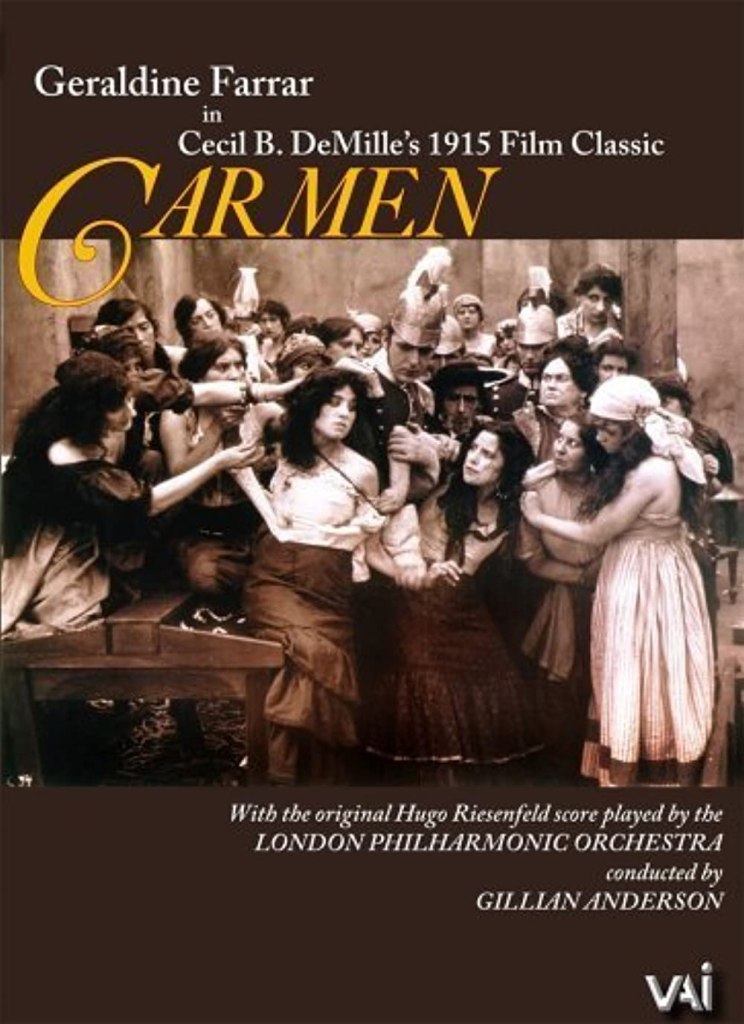
Zoals de films tegenwoordig, zo was de opera vroeger een lange tijd publieksvermaak nummero uno. Geen wonder dus dat al vanaf het prilste begin van de cinema veel aandacht werd besteed aan deze kunstvorm. Carmen, één van de meest populaire opera’s in die tijd, sprak bijzonder tot de verbeelding en werd reeds in 1912 verfilmd met in de hoofdrol de prima ballerina van de Opéra Comique, Régina Badet.
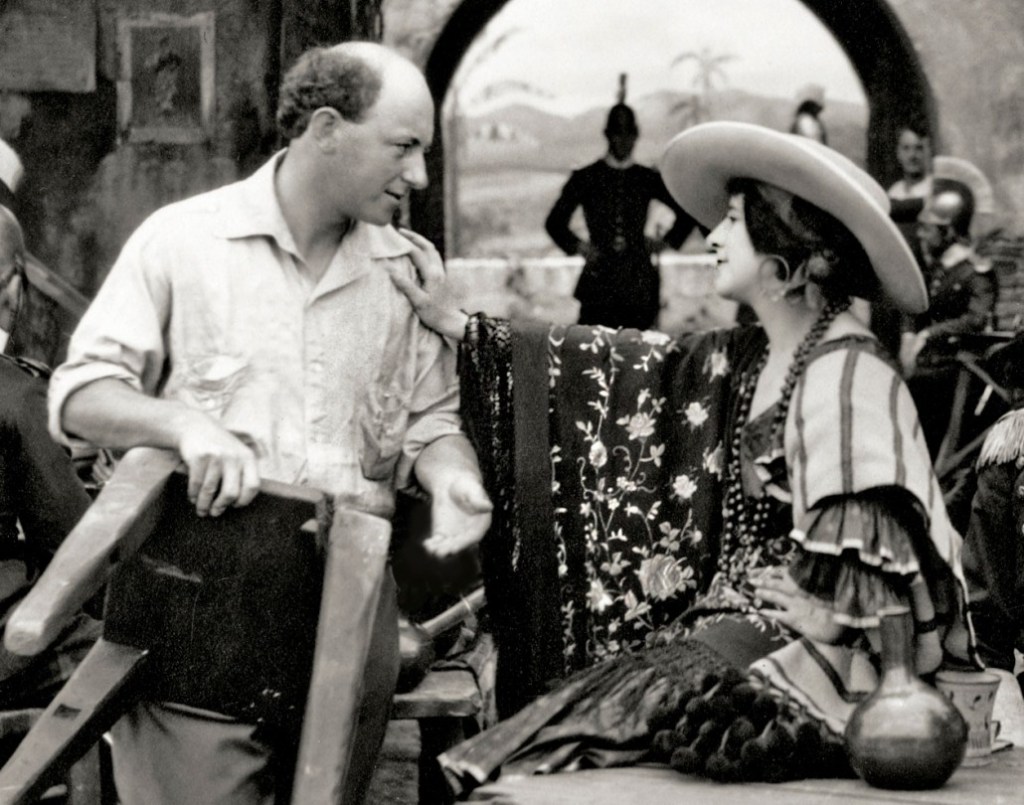
Cecil B.DeMille met Geraldine Farrar
In 1915 verfilmde Cecil B. DeMille de opera opnieuw, ditmaal met Geraldine Farrar als de mannen verslindende zigeunerin. Nu was Farrar niet alleen één van de grootste sopranen en MET-legendes uit het begin van de 20e eeuw, haar prachtige verschijning en een bovenmatig acteertalent maakten het voor haar mogelijk om ook een carrière als Hollywood-actrice op te bouwen.
Het verhaal werd behoorlijk aangepast, waardoor Carmen een door en door slechte vrouw was geworden en subtiliteiten zijn ver te zoeken. Alles is zwart-wit, net als de (stomme) film zelf, maar het mag de pret niet drukken, want er valt waanzinnig veel in te genieten.
De film is vanuit de DeMille’s persoonlijke kopie volledig gerestaureerd, en de oorspronkelijke score van Hugo Riesenfeld is door Gilian B. Anderson, die ook het London Symphonic Orchestra in de opgenomen soundtrack dirigeert, herschapen. Als bonus zijn er enkele door Farrar gezongen aria’s tussen de scènes in gemonteerd. Voor de zowel film- als operaliefhebbers een niet te missen monument (VAI 4362).
Na zijn voorstellingen The Great Tamer (2017) en Seit Sie (Neues Stuck 1) (2018, met Pina Bausch’ Tanztheater Wuppertal) stond de Griekse choreograaf, striptekenaar en schilder Dimitris Papaioannou opnieuw in het Holland Festival. In Transverse Orientation wil hij levensvragen op een lichte manier aan de orde stellen. Soms iets te licht misschien.
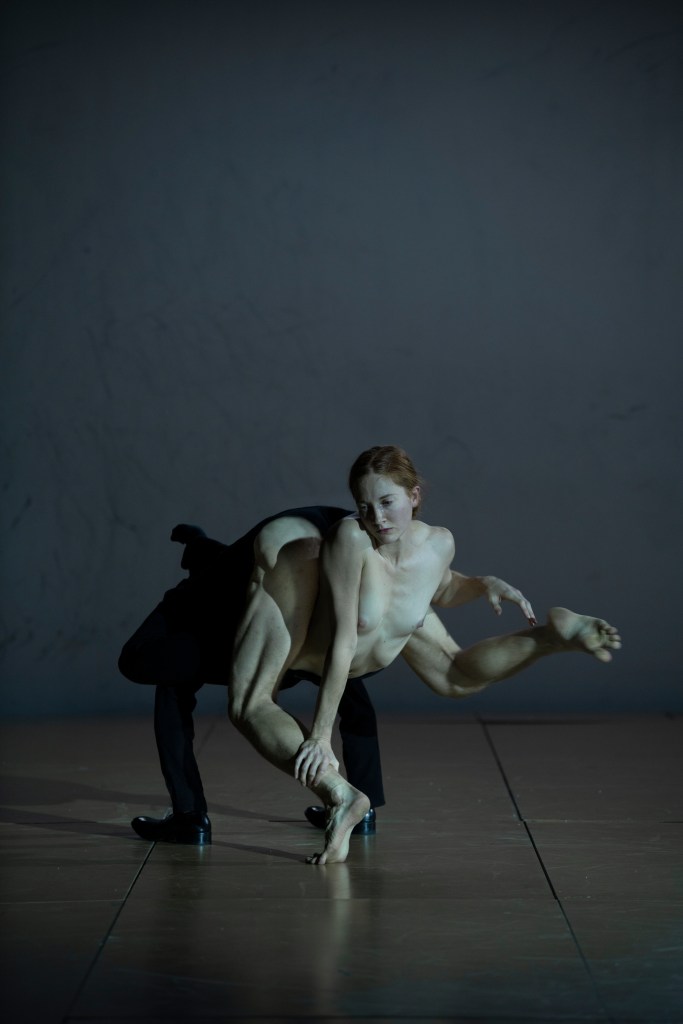
Uitgangspunt bij Papanaioannou is het menselijk lichaam, dat hij in allerlei gedaanten en standen toont. Soms reorganiseert hij lichamen, door met twee menselijke lichamen een nieuw wezen te vormen, het onderlijf van het ene met het bovenlijf van een ander, het ene ruggelings tegen het andere. De nieuwe vormen zijn soms lieflijk maar vaak ook grotesk, als de gedrochten in de hel bij Jeroen Bosch’ Tuin der Lusten. En ook Othello’s Beest met de twee ruggen? Er wordt sowieso lustig met beelden uit de kunstgeschiedenis en de mythologie gestrooid.
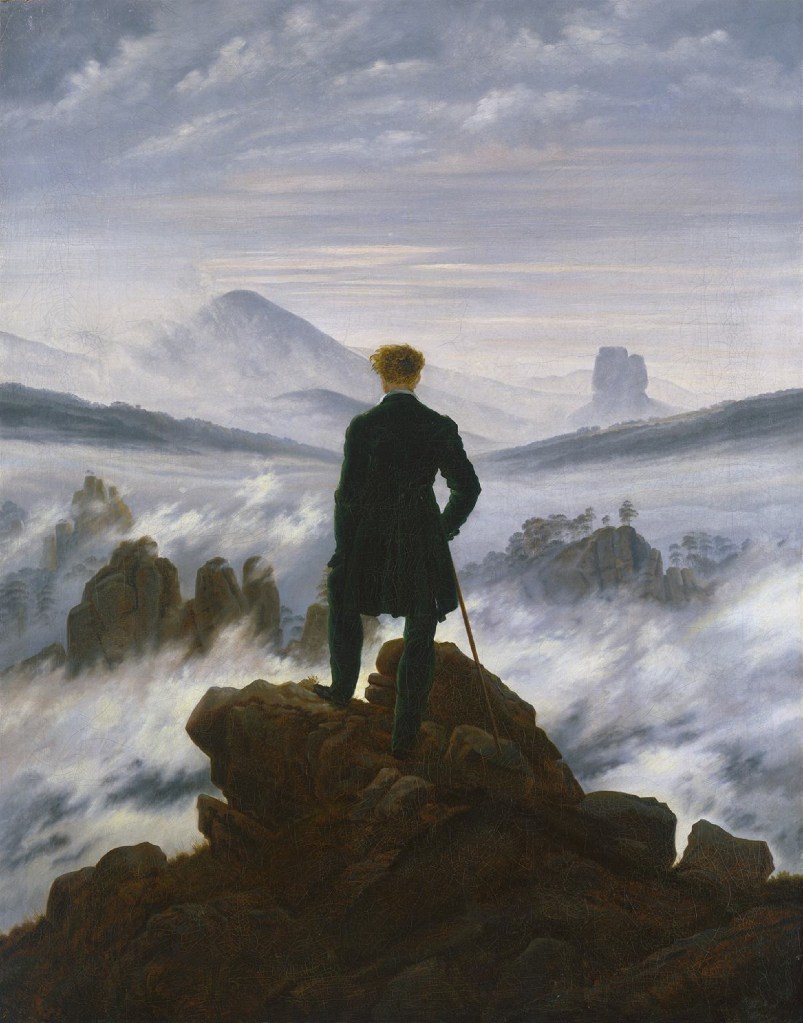
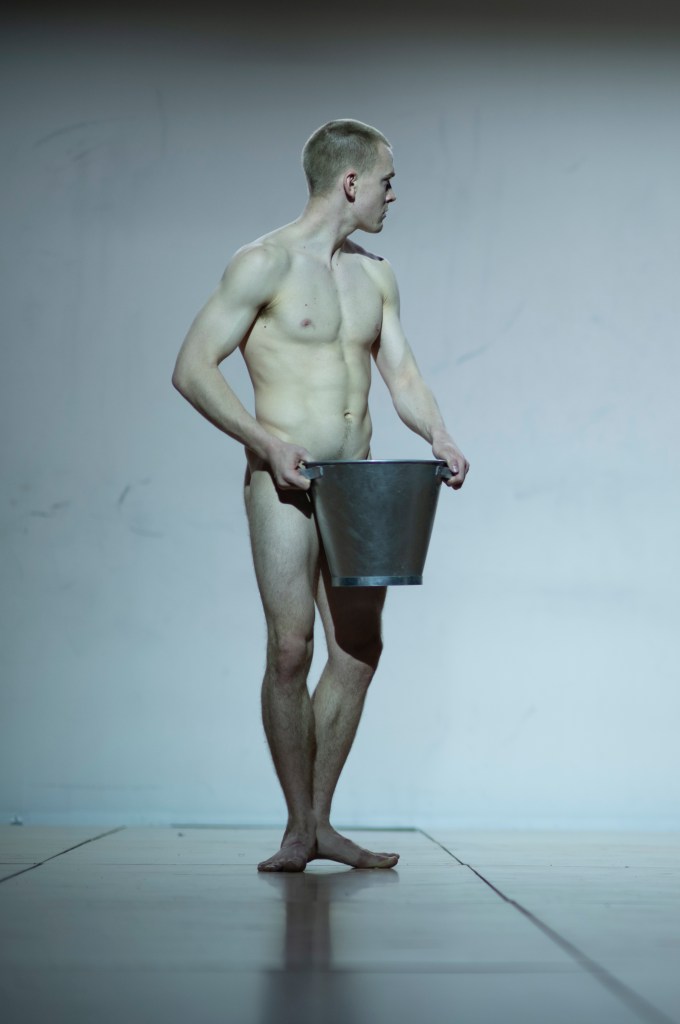
In het begin al zien we een man die met zijn rug naar het publiek vooraan op het toneel staat. Met zijn gesoigneerde haar lijkt hij op de man die we van de rug af zien op Magritte’s La reproduction interdite, ‘Verboden af te Beelden’. Een andere associatie bij dit beeld die later nog sterker zal terugkeren is de man op de bergtop in Caspar David Friedrichs Der Wanderer über dem Nebelmeer, ‘De Zwervende boven de Nevelzee’.
Prachtig is een haast levensechte woeste stier, met de suggestie dat hij zo groot en sterk is dat hij alleen met vereende krachten kan worden bedwongen; het is natuurlijk de groep dansers, die spelen dat ze het monster proberen te bedwingen, die intussen het mechaniek van het gevaarte bedienen om het natuurgetrouw te laten voortbewegen.
Uiteindelijk wordt het dier tot staan gebracht door een naakte man die het recht in de ogen kijkt. Belicht in oker, is het een beeld dat afkomstig zou kunnen zijn van antieke Griekse vaas.
De enige danseres van het gezelschap verschijnt, op een schelp, waaruit water omhoog spuit en uit haar haar komen ook waterstralen. Ze lijkt op Venus in Botticelli’s ‘Geboorte van Venus’. Een volgend moment is ze Botticelli’s ‘La Primavera’. Ze staat dan in een sculptuur die op een vulva lijkt. Maar tegelijkertijd draagt zelf een homp kleiachtig materiaal in haar armen, die ze begint af te pellen en daar zien we het Kindeke Jezus.
Er is nog een vrouw, een zeer omvangrijke. Op gegeven moment ploetert ze met stokken voortbewegend naakt het toneel op. Het publiek kijkt ademloos toe.
Volgens Papaioannou is zijn nieuwe stuk is een mannenuniversum, dat door de vrouwelijke aanwezigheid wordt gedefinieerd, geheroriënteerd en komt te overstromen. De fontein rond het evenbeeld van Botticelli’s Venus is nog maar het begin, zal later blijken.
“In Griekenland wordt mijn werk heel serieus genomen. Het publiek is terughoudend om op de humor te reageren. Nederland was het eerste land waar tijdens The Great Tamer werd gelachen en geapplaudisseerd”, zegt Papaioannou.
Voor mij was de humor deze keer niet het sterkste punt. Veelal in de vorm van lichtelijk flauwe slapstick-actjes tussen de grote scenes door. Terwijl Papaioannou juist heel goed scherp gemonteerde overgangen maakt. Bijvoorbeeld de flits van een seconde waarin die reuzenstier tevoorschijn kwam, nadat een danser een sterke lamp de zaal in had gericht, die je even verblindde; en daar stond hij plotseling op het toneel.
Ook ademstokkend was de scene waarin de corpulente naakte dame zich wiebelend met haar stokken drie treden ophees van een trapje naar een deur in de achterwand en door een deur achter op het podium verdween, waarna in een fractie van een seconde de Botticelli-danseres in haar plaats in de deuropening verscheen en naar beneden schreed. De Venus van Willendorf (met dank aan Peter van der Lint) op krukken. En zoals gezegd, doodse stilte, niemand in het publiek grinnikte zelfs maar om de corpulente vrouw. Het Nederlandse publiek weet blijkbaar ook wanneer het niet moet lachen.
Die deur achter op het podium speelde een centrale rol. Spectaculair was een scene waarin nadat er wordt geklopt een personage de deur opent en zich erachter een lawine van ijsblok-achtige objecten blijkt te bevinden. De blokken worden naar binnen getrokken, en met de blokken mee valt de rest van de dansers naar binnen. Gezamenlijk proberen ze de berg blokken op te ruimen, in nodeloos ingewikkelde coördinatie, maar uiteindelijk lukt het. Ik moest aan de humor van Hauser Orkater denken.
De titel Transverse Orientation is een begrip uit de biologie: motten richten zich op horizontaal licht. In Papaioannou’s meest acrobatische momenten lijkt het soms alsof de zwaartekracht horizontaal loopt. Papaioannou citeert ook Rumi’s uitspraak over de mot en de schoonheid van een kaars: de mot leert die kennen door in de vlam te vliegen. Dat de mens met al zijn technisch vernuft zich soms op dezelfde manier gedraagt en daarbij op Goethes roekeloze tovenaarsleerling lijkt wil Papaioannou wellicht uitdrukken in de magische slotscène.
De Botticelli-vrouw beweegt zich naar achter op het podium. Ze opent een kraan. Langzaam zinkt ze weg in een plas water, technisch zeer overtuigend gedaan. De plas loopt over. De overige dansers beginnen van het midden af de vloer te demonteren. Net als eerder de ijsblokken die door de deur heen kwamen, worden de vloerdelen weggedragen op een manier die nodeloze ingewikkeldheid suggereert. En nu loopt het minder goed af, want al snel staat de hele vloer blank, in wat op een zwartgeblakerd landschap lijk.
De man die zich aan het begin uitkleedde kleedt zich weer uit en neemt naakt plaats aan de rand van de waterplas, de enige overgebleven schoonheid. Een ander probeert met een zwabber de vloer droog te dweilen, maar het mag niet baten. De belichting verandert en de tafels lijken ijsschotsen. De ijsschotsen uit Caspar David Friedrichs Das Eismeer, dat schilderij met het scheepswrak in de eindeloze ijszee. Even later komt de ‘Magritte’-man uit de beginscène weer ruggelings naar de zaal vooraan het toneel staan. Slotbeeld, en nu duidelijker: de berusting van Friedrichs Der Wanderer über dem Nebelmeer.
Trailer van de productie:
Transverse Orientation van Dimitris Papaioannou Holland Festival, Theater Carré Amsterdam, 25 juni. Decorontwerp Tina Tzoka en Loukas Bakas Muziek: Antonio Vivaldi, Concerto In due Cori door het Combattimento Consort Amsterdam. Licentie verleend door The Orchard Music (namens Challenge Classics). Fotografie Julian Mommert
Friedrichs Der Wanderer über dem Nebelmeer in de Kunsthalle Hamburg.
It was Rimsky-Korsakoff who, in St. Petersburg at the beginning of the last century, encouraged his Jewish students to show more interest in their national culture. His advice did not fall on deaf ears: they started collecting synagogal and folk music, which they soon incorporated into their own compositions. Thus was born the Society for Jewish Music, which was banned by Stalin in 1929.
Some of the composers were exiled to the camps, a few managed to emigrate, but all were forgotten. The renewed interest in their music is mainly due to the pianist Jascha Nemtsov, one of the greatest ambassadors of Jewish music.
On the CD with the title Jewish Chamber Music we find works by composers who belonged to this Jewish School, supplemented by one of the best compositions by Ernest Bloch: the ‘Suite for Viola and Piano’ from 1919.
Not all compositions are on the same high level. A real highlight for me is Alexander Weprik’s ‘Totenlieder’, but the whole CD is worthwhile, not least because of the excellent performance. The viola player Tabea Zimmerman has a beautiful tone on her instrument: low, warm and melodious but it is clearly the pianist, Jascha Nemtsov, who is at the helm.
Alexander Weprik, Alexander Krejn, Michail Gnesin, Grigorij Gamburg, Ernest Bloch Jewish Chamber Music Tabea Zimmermann (viola), Jascha Nemtsov (piano) Hänssler CD93008
Have you ever heard of Abraham Krejn, a klezmer musician, and his seven children? They were called the Jewish Bachs and that makes sense, even if the comparison sounds a bit strange to you. Especially since there is a good chance that you have never heard the name before. You are not alone there.
All seven Krejn children were musicians. Most famous were brothers Alexander and Grigori, both active members of the Society for Jewish Music.
The most original compositions on the CD Jewish Songs Without Words were written by Grigori Krejn. On the basis of synagogal songs, he created his own world, full of melancholic desires.
The ‘Three Hebrew songs without words’ by Grigori’s thirteen-year-old son Julian reveal not only a special talent, but also show influences of Berg and Debussy.
Simeon Bellinson, one of the most famous clarinettists of his time, also worked as a composer and arranger. For his Suite, he arranged original compositions by Grzegorz Fitelberg, Jacob Weinberg and Boris Levenson.
Almost all the compositions on this CD are world premieres. They are fascinating works, a reminiscence of a world that has been irrevocably lost.
The clarinettist Wolfgang Meyer is an excellent musician, but for me his tone could have been a bit warmer. Jewish Songs Without Words is the fourth CD in a series that Jascha Nemtsov made for Hånssler and, as always, his performance is not only impeccable but also heart-warming.
Grigori Krejn, Julian Krejn, Israel Brandman, Simeon Bellinson Jewish Songs Without Words Wolfgang Meyer (clarinet), Jascha Nemtsov (piano) Hänssler Classic CD 93.094
Tabea Zimmermann and Jascha Nemtsov in ‘Ornaments – 3 Songs without Words, op. 42 by Alexander Krein:
Dit wordt een wat langere beschrijving, omdat er veel verschillende onderwerpen aan bod komen in De Muziekmutant van Micha Hamel en regisseur Arlon Luijten, een combinatie van theatraal essay over de functie van muziek, een interactief muzikaal spel met publiek, een cursus in luisteren, een enquête over de betekenis van het muzikaal erfgoed van vorige eeuwen en een wetenschappelijk onderzoek naar de manier waarop klassieke muziek wordt beleefd. Micha Hamel, zelf lector ‘Performance Practice’ bij de Hogeschool Codarts, werkte hierbij samen met TU Delft, de Erasmus Universiteit en de Willem de Kooning Academie.
Vier jongeren verdedigen samen met een tiental medeleerlingen van de Jeugdtheaterschool Zuidoost verschillende stellingen over het belang van symfonische muziek, met als voorbeeld Mendelssohn. Mendelssohns muziek stamt uit de tijd dat, zoals de makers stellen, deze muziek een maatschappelijke functie had en onderdeel was van een algemeen maatschappelijk verheffingsideaal. Bovendien waren orkestmusici toen goedkoop, dus kon het symfonieorkest, gesubsidieerd door vorst of bourgeoisie, steeds groter worden.
Inmiddels is de maatschappij veranderd, het enorme orkest is relatief kostbaar, terwijl het verheffingsideaal, althans wat de symfonische muziek betreft aan belang heeft ingeboet. Of althans dat is de vraag. Misschien is de muziek nog steeds drager van een belangrijke, misschien wel tijdloze boodschap uit het verleden of een mogelijke brenger van nieuwe boodschappen, terwijl het draagvlak kan groeien als meer mensen er vertrouwd mee zouden raken. Moderne digitale middelen kunnen daarbij een rol spelen, of dat willen de betrokkenen in elk geval onderzoeken.
Mendelssohn is overigens natuurlijk een interessante keuze. Een beetje Biedermeier, maar hij belichaamt ook de volmaakte eenheid in de klassieke traditie, voordat Berlioz en daarna Wagner twijfel begonnen zaaien. Maar zowel Wagner als diens antipode Brahms waren het eens over de genialiteit van Mendelssohn. En Hamel is bewonderaar van Mendelssohn. Stefan Sanders, die Hamel voor een Holland Festival podcast interviewde, trouwens ook; zie bijgaande link.
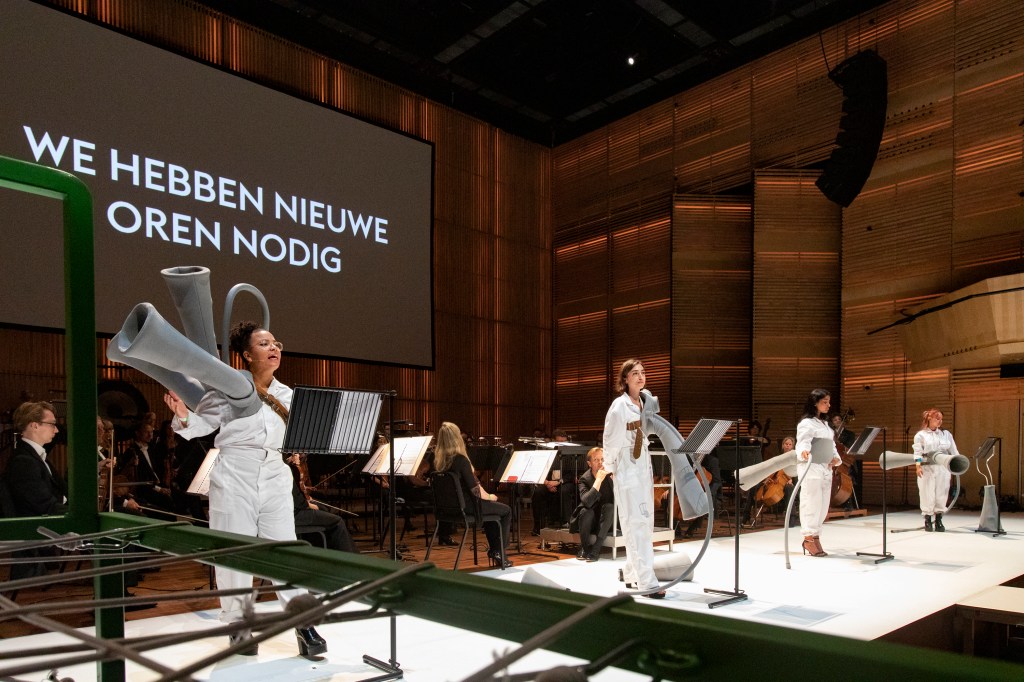
De voorstelling begon onder de noemer ‘Hoofdluisteren’ met een overzicht van elementen die de meeste muziek, zoals die van Mendelssohn maar ook de meeste andere vormen van muziek bevatten en waarop je bij het luisteren kunt letten: melodie, ritme, harmonie, timbre. Hierbij speelde de Philharmonie Zuidnederland, onder Bas Wiegers, van elk element een voorbeeld, terwijl het achterdoek blauw kleurde, de kleur van ‘Hoofdluisteren’.
In de volgende etappe, ‘Hartluisteren’, met rood achterdoek, werd onderzocht welke gevoelens muziek kan opwekken, en of je die toch kunt benoemen. Het orkest speelde passages uit Mendelssohns Italiaanse symfonie, en werd het publiek gevraagd via de mobiele telefoon te kiezen tussen afbeeldingen op het achterdoek welke het beste bij de passage paste, bijvoorbeeld tussen een alpenweide of een vertrek uit een 18eeeuws paleis, een zonnige moderne stad of een ezel (wie zou voor de ezel hebben gestemd? ik! vanwege de associatie met Mendelssohn en Midsummer Night’s Dream) en een vrouw in wit gewaad of een autoweg maar wel een die zich mooi door een landschap kronkelde. Ik moest wél denken aan de luchtbeelden uit de opening van Haneke’s Funny Games waarin 18e en 19e-eeuwse klassieke muziek een rol speelt, voordat metal-geluid van John Zorn de idylle komt verstoren, zoals de film de romantische idylle van de intellectuele bourgeoisie-familie als veilige omgeving onderuit haalt.
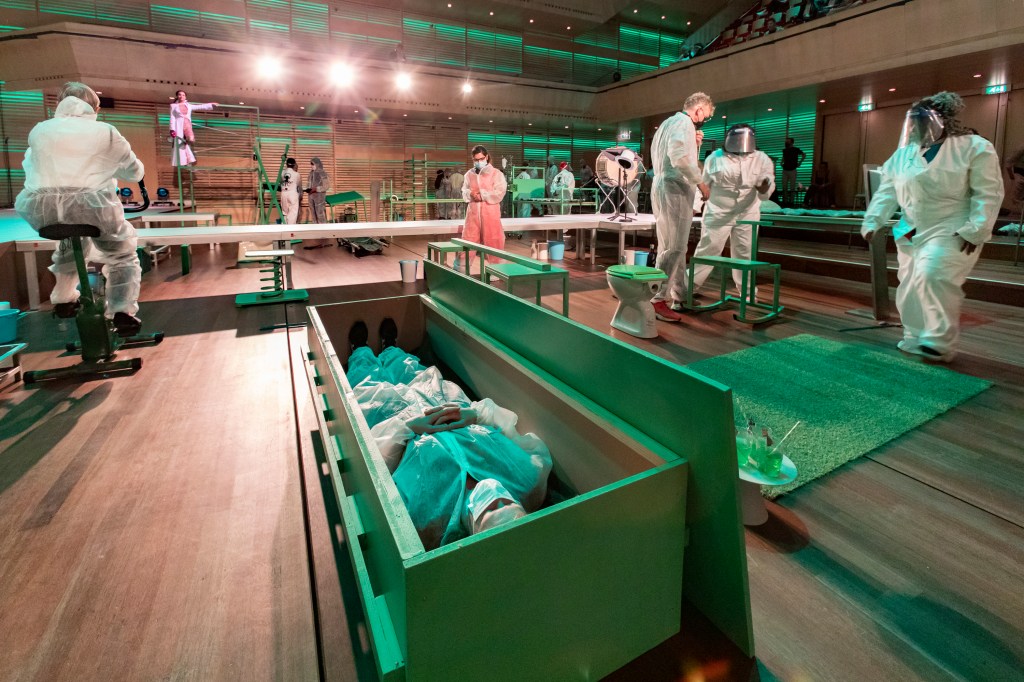
‘Lijfluisteren’ gaat over hoe je muziek fysiek ervaart. Hiertoe trokken de toeschouwers een witte hansop aan en namen plaats in een groengekleurd lusthof vlak voor het orkest, met een elementen waarmee mensen ontspanning of vermaak zoeken: schommelstoelen, speeltuinmeubilair, maar ook wc-potten en een doodskist. Ik mocht plaats nemen op een massagebed met dildo en condooms binnen handbereik en op groen kunstgras dat een zonneweide verbeeldde, met groene longdrinks bij de hand.
Er is nog een vierde stap in het luisteren, namelijk ‘elastisch luisteren’, een combinatie van de zojuist genoemde luisterwijzen. Die werd geoefend aan de hand van een fraai nieuw orkeststuk van Bram Kortekaas terwijl de genoemde corresponderende kleuren op het achterdoek werden geprojecteerd, met een cocktail van deze kleuren als aanduiding voor elastisch luisteren. Het idee was waarschijnlijk onbevooroordeeld te kunnen luisteren naar een stuk dat zowel voor regulier als debuterend concertpubliek nieuw was; zij het dat het idioom – tonaal, een beetje impressionistisch, een beetje laten we zeggen Vermeulen-achtig – al wel vertrouwd was voor de klassiek geschoolde luisteraar, maar dat kan bij een nieuw werk ook afleidend werken.
Zou het ook interessant zijn geweest om de ideeën te testen aan de hand van muziek uit de tijd waarin de scheiding tussen traditioneel en niet-elitair maar wel mondiger massa’s zich steeds duidelijker aftekende? De tijd ook waarin het idee van ‘verheffing des volks’ door cultuur gestalte kreeg, dus de eerste decennia van de vorige eeuw. En dan óf in principe toegankelijke muziek, Ravels Daphnis et Chloé of Debussy’s La Mer, óf juist werk waar ook veel klassiek publiek moeite mee heeft, Schönbergs Erwartung of een pianoconcert van Bartók, en waarvoor andere oren misschien juist open staan.
Niet alleen muziek beluisteren, maar ook luisteren in het algemeen was onderdeel van het onderzoek. Zo was er een betoog over basale regels voor een luisterend gesprek, door de – geweldige – ceremoniemeester, actrice Lidewij Mahler; de hele cursus empathische vragen stellen uit mijn medicijnenstudie passeerde voor mijn geest.
Vervolgens werd de toeschouwers gevraagd, via de eigen smartphone, een computerspel te spelen waarin luisteren naar redeneringen werd getest. In een Alice in Wonderland-achtige setting moesten we ene Eustachius (genoemd naar de buis van, onderdeel van ons oor) te bevrijden uit een onderaards gewelf tijdens een virtuele tocht langs allerlei fantasieschepselen die ieder voor zich iets wist over de verblijfplaats van Eustachius en de uitgang van het labyrint. Maar bijvoorbeeld een slak met eindeloze verhalen moest je ook netjes, maar resoluut leren afwimpelen.
Het laatste onderdeel bracht ons terug bij Mendelssohn en de klassieke muziek van de negentiende eeuw: een debatteerwedstrijd waarin vier jongeren ieder een stelling over klassieke muziek verdedigden. De eerste spreker vond dat onze aandacht voor emoties uit de tijd is en dat we aan de slag moeten om de wereld te verbeteren. “Dus nee, muziek die gemaakt is om iets bij te voelen, om navelstaarderig in jezelf te gaan zitten wroeten, daar hoeft niet zo veel tijd, geld en aandacht naar toe.” Een andere spreker wees op de helende kracht van muziek. “De meeste componisten van 1840 worden niet meer gespeeld. Mendelssohn wel. Omdat hij een universele kracht heeft. Een kracht die de tand des tijds en de waan van de dag kan doorstaan. En dat is wat we nodig hebben. Juist vandaag. Juist nu.”
Beiden werden in de eerste rondes weggestemd. De overblijvende stellingen waren ”Geef mij Mendelssohn. Geef mij al die verschillende zoekende stemmen die zich in de 19e eeuw loszongen van de wereld zoals die was en die nog steeds klinken. Stemmen van mensen die niet langer onderworpen willen worden. Want hun zoektocht is dezelfde zoektocht van ons allemaal vandaag. De zoektocht om een vrij mens te zijn. Stemmen die een wereld creëren waarin ik vrij rond mag lopen en mag zijn wie ik wil zijn. Mag denken wat ik wil denken en mag voelen wat ik voel.” En daartegenover: “De wereld verandert zo snel, dus moeten kunstenaars snel zijn. Stukken schrijven en weer weggooien. Nieuwe muziek maken en weer weggooien. In dialoog blijven met de tijd. Niet met vroeger. Met vandaag. Verschillende stemmen, ja, maar alsjeblieft: de stemmen van vandaag. Zit de tijd op de hielen, zodat iedereen maar dan ook echt iedereen in de zaal straks kan zeggen: ja shit man, dit gaat over mij.”
Een extra spelelement was dat als Mendelssohn zou worden weggestemd, het laatste stuk van het programma, zijn Hebriden Ouverture, voor het laatst zou klinken. Maar die middag won Mendelssohn. Zij het met niet een grote voorsprong. Bij de generale, met veel kennissen van de acteurs van de Jeugdtheaterschool Zuidoost, was hij weggestemd. Dat gebeurde ook ’s avonds, zo vertelt Hamel. De luisteroefeningen hebben daar blijkbaar weinig verandering in kunnen brengen.
Ik weet niet of onderzoek met deze beperkte aantallen publiek statistisch significante waarden oplevert. Maar de uitkomsten zijn toch iets waarvan orkesten kunnen leren, vindt Micha Hamel. Rest de vraag hoe een én/én optie als vijfde stelling het er vanaf zou hebben gebracht, én klassiek én nieuwe vormen van muziek in de concertzaal?
Podcast gesprek tussen Stephan Sanders en Micha Hamel:
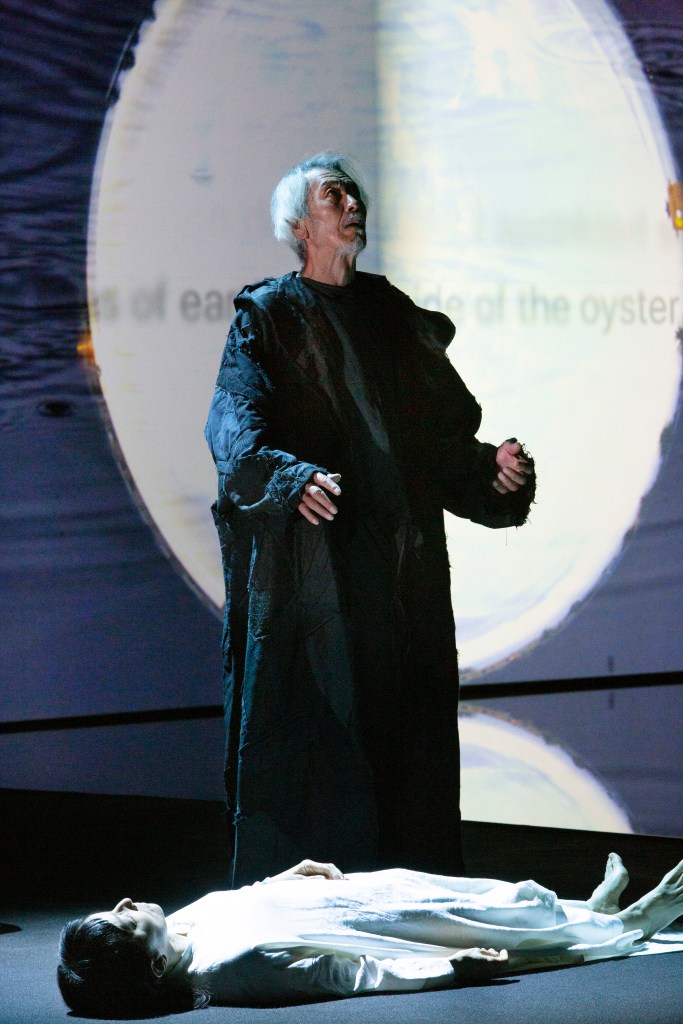
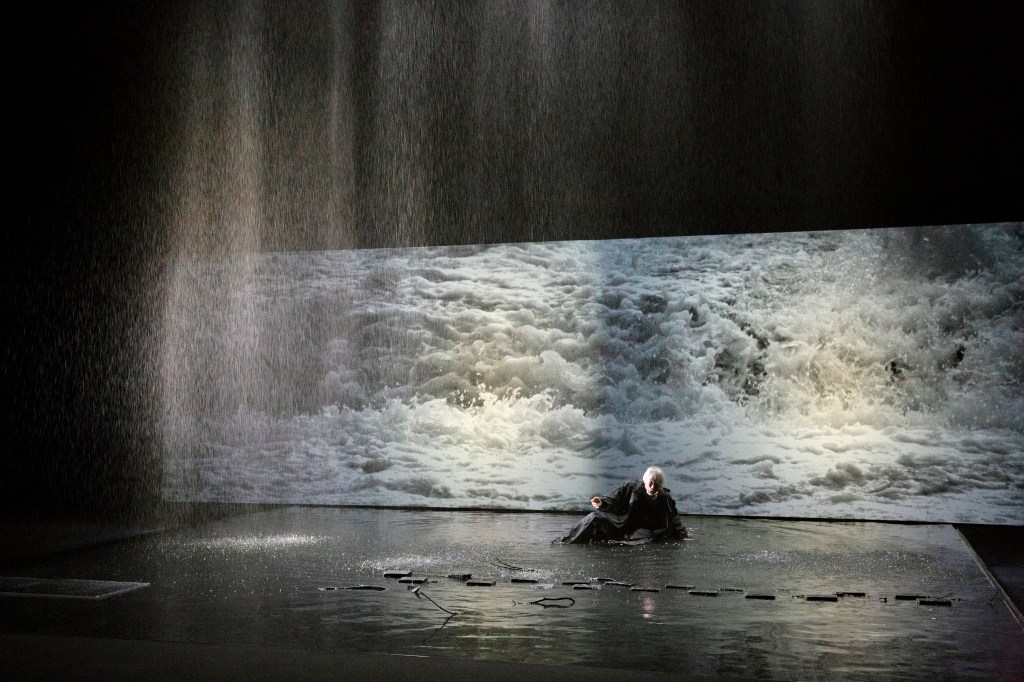
De opera opent met een in het zwart geklede bespeelster van de sho, een Japans mondorgel. Langzaam schrijdt ze door een zwart iets, zo langzaam dat eerst niet is te zien dat het water is. Dan komt een in een donkere sjofele mantel geklede oude man op. Hij speelt twee verhalen door elkaar heen, het ene een magisch-realistisch verhaal van de befaamde Japanse schrijver Soseki Natsume uit 1908, het andere een tekst uit een Japans klassiek No-theaterstuk uit de derde eeuw voor Christus.
Ze worden verteld in het Japans en op een meters breed videoscherm achter het waterbassin wordt de Engelse vertaling geprojecteerd in gestileerde, overvloeiende letters, een visueel kunst werk op zich. De verhalen worden met spaarzame middelen uitgebeeld. In het ene, dat van Soseki Natsume, dat zich aan de linkerkant van het toneel afspeelt, is de man aanwezig bij de dood van een vrouw. De vrouw ligt helder wit gekleed bewegingloos op de grond. Is het de sho-speelster van daarnet? (NB Het is een pop, maar de gestalte lijkt op die van de sho-speelster.) De man krijgt te horen dat hij haar moet begraven, maar als hij honderd jaar wacht bij het graf zij weer bij hem zal terugkeren.
In het andere verhaal, aan de rechterkant van het toneel, gebaseerd op de No-theatertekst, is een man, dezelfde acteur, op reis en besluit de nacht door te brengen in een herberg. Daar krijgt hij van de herbergierster een hoofdkussen met spirituele eigenschappen. Hij legt zich te ruste. Hij krijgt te horen dat de koning hem als troonopvolger heeft aangewezen. Duizend jaar koningschap en een leven van roem en vertier kondigen zich aan.
De muziek bestaat uit spaarzame elektronische klanken, een dun uitgesmeerde versie van wat bekend is van Sakamoto’s filmmuziek, al van jaren her, en gedeeltelijk ontleend aan de ijle klanken van zijn laatste CD Async. Soms gaat het alleen om het geluid als van regendruppels, terwijl op het achterdoek beelden van vallende regendruppels te zien zijn, afgewisseld met beelden van weelderige tuinen, dichtbegroeide bossen, de herberg en schuimende golven.
De twee verhalen vloeien geregeld samen. In het ‘herberg’-verhaal aan de rechterkant, het verhaal dat zich het meest in de wereldlijke realiteit afspeelt, maakt de man stenen van modder en probeert daarmee een brug door het water naar de overkant te leggen. Een aan een draad hangende rondtollende camera filmt de man van bovenaf; op het achterdoek verschijnen draaiende beelden van zijn noest gegraaf; maar de brug komt niet af – en staat het ook het feit dat hij telkens na het aanbrengen van de volgende steen weer terug waadt door het water voor de futiliteit van ons aardse gezwoeg? (Ik moest denken aan: ‘In het zweet uws aanschijns’ zult gij brood eten, totdat gij tot de aardbodem wederkeert, omdat gij daaruit genomen zijt; want stof zijt gij en tot stof zult gij wederkeren’ – Genesis 3:19)
En kwamen hier de twee verhalen weer even bij elkaar? Het eerdere graven van het graf van man 1 en de industriële pogingen van man 2 om de aarde weer open te graven?
Man 1 in het verhaal over het honderd jaar wachten, wacht en wacht. De eerste vijftig jaar vallen hem verbazingwekkend gemakkelijk, maar geleidelijk aan bekruipt de twijfel hem en vraagt hij zich af of de vrouw zich niet had vergist, of hem zelfs had voorgelogen.
Man 2 is intussen aanbeland in het vijftigste jaar van zijn koningschap. Dan komt de herbergierster hem wekken; zijn avondmaaltijd is klaar – gekookte gierst, niet een koningsmaal. Een heel aards bestaan leek zich te hebben afgespeeld in een droom die zo lang duurde als tijd die het kost een armenmaal te bereiden. Of is, zoals de duidelijk voor de hand liggende vraag luidt, ons aards bestaan niet inderdaad weinig anders dan een kosmische vingerknip, een knipperen van het eeuwig oog, of nog minder.
Ongetwijfeld bedoelt Sakamoto, nu 69 en ernstig ziek (zo ziek dat hij niet als Holland Festival-associate artist, bij de wereldpremière van deze voorstelling hier in Amsterdam aanwezig kon zijn) hiermee ook terug te blikken op zijn eigen leven, dat zich inderdaad in een fractie van tijdseenheden lijkt te hebben afgespeeld, zoals ik mij als de dag van gisteren herinner dat ik de Japanse persing van een LP van zijn Yellow Magic Orchestra op de platenspeler legde, en hem als acteur zag in de film Merry Christmas Mr Lawrence, met wijlen David Bowie; wat is er intussen gebeurd?
Maar het verhaal van man 1, de wachtende man aan de linkerkant, was nog niet klaar. Hij had misschien de hoop opgegeven, maar op zeker moment ontdekt hij op de plek van het graf een groene knop, waaruit een witte lelie opbloeit.
De sho-speelster keert terug en speelt weer een melodie. Was zij inderdaad ook de vrouw in het wit, die nu weer tot leven is gekomen? Is zij de kunst, die overleeft?
Aan het einde waadt de man, die nu zowel het verhaal aan de rechter als de linkerkant besluit, naar het midden van de watervlakte. Een stortbui valt neer vanaf het gewelf van de gashouderruimte, de man kijkt ons aan, en dat is het einde.
Sakamoto: ‘We leven en we sterven, en daarna wordt ons lichaam onderdeel van een volgend leven. Dat is samsara, de levenscyclus van wezens op deze planeet.’
muziek, concept
Ryuichi Sakamoto
visual design, concept Shiro Takatani
danser Min Tanaka
shō Mayumi Miyata
Een impressie:
Ryuichi Sakamoto Async:
Gezien 20 juni in de Gashouder, Westergas, Holland Festival, Amsterdam.
Time is nog online te zien via de website van het Holland Festival.
The term “entartet” (degenerate) was already in use in criminology in the 19th century, it meant something like “biologically degenerate”. The Nazis made grateful use of this idea; that it was something to be wary of, a bad influence that had to be banned. Modernism, Expressionism, jazz … and Jews of course, they were degenerated from the start, they could make Aryan souls sick. They all had to be banned.
What had started as prohibition soon developed into exclusion and resulted in murder. Those who managed to flee to America or England usually survived the war, but at what cost?
Those who stayed in Europe were doomed. Many composers were deported via Theresienstadt to the concentration and extermination camps, many ended up there directly. After the war they were totally forgotten and thus murdered a second time. Those who survived were called hopelessly old-fashioned and therefore their works were not performed. The turnaround finally came in the 1990s, too late for most.
Michael Haas, then a very efficient producer for Decca, started an unsurpassed series called ‘Entartete Musik’. Unfortunately, it did not last: it did not sell. Haas was fired and most of those CDs are now out of the catalogue.
Michael Haas at Tonzauber Studios Vienna, photo Georg Burdicek
In 2004, Michael Haas was back, in Amsterdam of all places: together with Jan Zekveld and Mauricio Fernandez (respectively artistic director and head of casting of the Matinee) he put together a beautiful series for the Saturday Matinee in the Amsterdam Concertgebouw, starting with a magnificent performance of Schreker’s Die Ferne Klang.
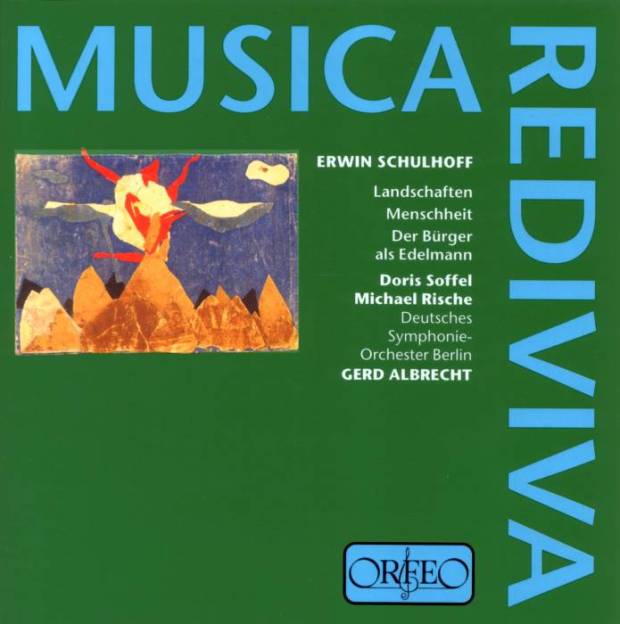
But the small German firms CPO, Cappricio and Orfeo assiduously continued to record special treasures of forgotten works. Orfeo even devoted a special series to that music, called ‘Musica Rediviva’. This included the opera Die Bakchantinen by Egon Wellesz (Orfeo C136 012H), which was also performed at the Matinee.
Schulhoff’s vocal symphonies (Orfeo C056031 A) are not to be despised either. Composed in the years 1918/19, they breathe the unadulterated atmosphere of the fin de siècle: dark and heavily melancholic they show us another Schulhoff, the romantic pur sang. The warm, dark timbre of Doris Soffel fits the melancholic melodies like a glove.
An absolute must is the DVD entitled ‘Verbotene Klange. Komponisten in Exil’ (Capriccio 93506). It is a documentary on German and Austrian composers who, as the commentator puts it, “instead of being revered, were despised”. And who, thanks to emigration, survived. With interviews with, among others, Ernst Krenek and Berthold Goldschmidt: the latter we meet at the very first recording (after 50 years!) of his string quartets. And the almost centenarian Krenek says something that could be called typical for that generation: “I am caught between continents. In America I don’t really feel ‘heimisch’, but I would never consider going back to Europe. There is no home for me anywhere. Not anymore.
She has been called the world’s most glamorous pianist and that may well be true. In today’s music world, it is not only talent and ability that counts. Even winning a prestigious competition does not automatically lead to a contract with a record company: if you really want to make it, you also have to be able to present yourself as attractive as possible on a cover.
Khatia Buniatishvili is busy. Performances, recordings, book signings, interviews, festivals and even TV appearances with talks about fashion and her choice of clothes: like everything about her, her dresses are special too.
Getting an interview is easier said than done, but after a lot of scheduling and rescheduling, I finally manage to get her on the phone. She apologises for postponing the appointment and I immediately forgive her: Buniatishvili is extremely kind.
Batumi is mentioned as her place of birth. An exotic name I know from a song from my childhood in Poland. A song, sung by a very popular girl group at the time, which after all these years still haunts me.
Would Buniatishvili know it? I sing it to her and she laughs. No, it means nothing to her. The name of the composer, Ajwazian, is also completely unknown to her. Moreover, she may have been born in Batumi, but in fact she is not really from there.
“I was born there, but that was no more than a coincidence. We are originally from Tbilisi and my father happened to be in Batoumi for his work. When I was two months old we moved back to Tbilisi. So actually I am from Tbilisi”.
It is more than striking how many new young musical talents come from Georgia. Pianists, violinists, singers… One Georgian name after another appears in large neon letters above the biggest concert stages and halls around the world. Buniathisvili may be part of a musical family, but how about the others? How does she explain the enormous success of Georgian musicians and singers? Is it something to do with training? Or just the upbringing? Are children there being fed something that makes them more receptive to music? Is there a special diet that makes Georgian children more gifted than those from, say, the Netherlands?
“Hahahaha! No, of course not. It is our folk music. Well, mainly. We have a huge and rich tradition of music making, it’s in us, in our genes. Georgia is a small country inhabited by different peoples, so we have a huge diversity in folk music. There is a song for everything: for love, war, struggle and victory. And for death. Really for everything.”
“Music is natural to us, playing and singing is innate in our people. What’s more, our country has an exceptionally good music education, we are spoon-fed anything that has to do with music, as it were.”
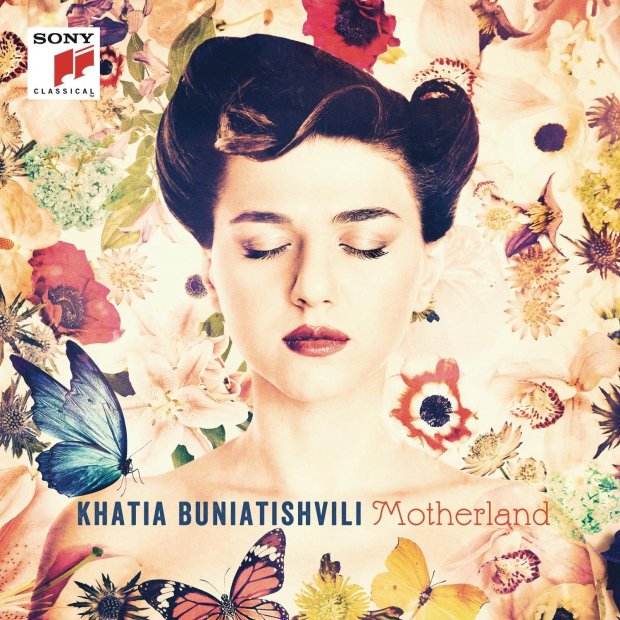
I tell her that I am particularly impressed with her penultimate album, Motherland. The pieces she plays there are less virtuoso than her usual repertoire. She also plays them very softly. And lovingly. The CD moves me very much.
But why is the album called Motherland? You would expect it to contain music by Georgian composers, but apart from When Almonds Blossomed by Giya Kanchelli and a folk song Vaguiorko ma, arranged by Buniatishvili herself, there is nothing Georgian to be discovered.
“I dedicated the CD to my mother. I wanted to combine all styles, from baroque to (more) modern, to folk. In this way I wanted to declare my love to her, to let her know how much I love her. So the title refers to my mother, not to my country. I am really glad that you like the CD so much, it means that I have succeeded in communicating my emotions…”
“On the CD I also play a piece, Dumka by Dvorak, with my sister Gvantsa. She is a great pianist and I regret that we cannot play together more often. But we are making lots of plans. And soon we are going to record something together. I’m looking forward to that.”
“Why did I choose the piano and not another instrument? I didn’t.
People say I should have become a violinist because of my perfect pitch, but it was the piano that was meant for me. I didn’t make the choice. At least, not consciously. I didn’t choose the piano: the piano chose me.”
Is there still such a thing as the renowned ‘Russian piano school’? For a moment there is silence and in the silence I can hear a question mark, so I repeat my question.
“No. I don’t think so. Everything has become international. Borders no longer exist or are blurred. Which gives you more opportunity to develop your own style, not bound by national borders. What is important for me is that I stay true to myself.”
“I am not a perfectionist, nor do I strive for that. Perfection takes the soul out of music. I am and will remain a flesh-and-blood human being, not some building material.”
“I also think it is important to enter into a kind of relationship with the composer. I find the thought that a composer made a certain piece especially for me very important and exciting, it also helps me. When I study a new piece – and by that I mean new to me – I try to avoid all other interpretations. I never listen to recordings then, because I want to make the score my own, all mine. I want to feel that I am the first.”
“My style can be described as a combination of extrovert and introvert. I love both equally and both are parts of me. Of me as a person and also of my way of making music. But it is, I think, also a female characteristic. Piano as a symbol of the loneliness that you can share with other people.”
Her interpretations are rather wild. Or, to put it kinder: energetic. Extraordinarily virtuoso too. Does she choose her repertoire from that category? How does she feel about the more subdued composers? Which does she prefer to play: solo recitals? Concerts? Chamber music?
“I like to play chamber music. Just like concerts and recitals, by the way.
Which of the three do I prefer? I couldn’t choose, but recitals are my favourite. With concerts you have to make a lot of compromises, it can’t be helped. The same with chamber music, because you also have to deal with your partner(s). But if it clicks, the result can be very satisfying.”
But what if you don’t agree with the conductor? I cite as an example the famous quarrel between Glenn Gould and Bernstein concerning the interpretation of Brahms’ piano concerto.
“I firmly believe that you can make compromises. That is what rehearsals are for, so that you can exchange ideas and if necessary meet each other halfway. But my thoughts, my ideas about a composition are sacred to me.”
Artists today are real globetrotters with many residences all over the world. Where does she feel at home?
“Everywhere actually. Georgia is very dear to me because that’s where my family lives, but Paris also feels like home, this is where I live.”
In February 2016, Sony released a solo album of hers, featuring works by Mussorgsky, Ravel and Stravinsky. And in May that same year, Buniatishvili performed at the Muziekgebouw aan ’t IJ.
Buniatishvili plays Mussorgsky at the Bimhuis in Amsterdam:
“I love Amsterdam. No, I don’t ride a bike. My parents never let me. I always had to be mindful of my hands, take care not to hurt them, so I didn’t learn. But I like to walk through the streets of the city for hours… it is so beautiful!
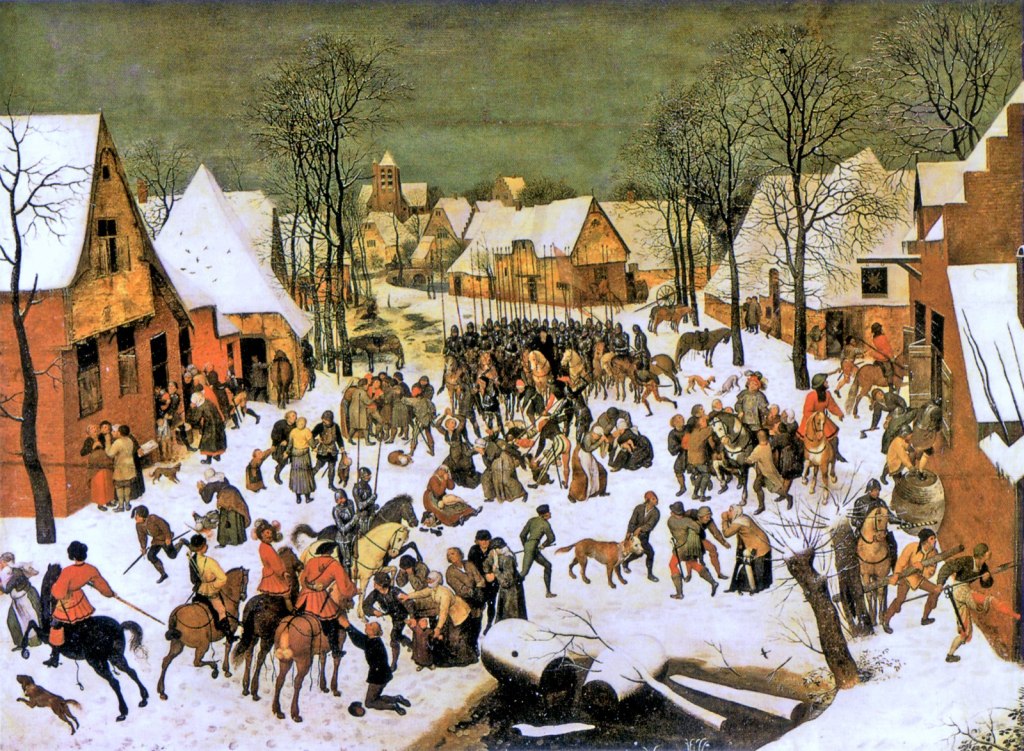
Massacre of the Innocents Pieter Brueghel the Elder Kunsthistorisches Museum Vienna, which may be a copy painted by Pieter Brueghel the Younger
“Thank you for coming to this memorial concert for my friend, and I want to thank one of this favourite bands for agreeing to play here today. He was my friend since we were 2 years old, and I knew he would have…” (voice cut). These are the words of one of the characters on stage, Jonathan, commemorating the death of his friend. Whom he supposedly killed, we are about to learn.
On stage is a group of people in a snowy landscape, some of them are children. In one corner of the scene there is a coffin, with the lid open. Slow movements, slowly evolving electronic sounds. But after a while one of the people runs to two of the children in front and makes movements as if killing them. Kindertotenlieder is the title. Killing children and snow, I had to think of Brueghel’s The Massacre of the Innocents; I will come back to that later. The children figures turn out to be stuffed puppets; I will come back to that later too.
A guitarist starts to play growling loud slowly progressing chords, style ‘black metal’. The audience has been given earplugs. The actors keep on moving slowly to a virtual point on the left of stage where rays of light are shining from. The killer gets killed by another character. After a while the former rises again and grabs another character, takes off his clothes and stammers texts about raping him, and then kills him. Spoken text suggests that that was the person who was probably murdered by Jonathan.
The group keeps moving to the light, so slow some seem like puppets. After a while we notice that some did not move at all: they are puppets. Another actor grabs some of the other figures, the puppets, and stacks them up together.
More snow is falling. Heaps and heaps of snow. Everybody still alive now has their winter coats fully buttoned up, except for the naked rape and murder victim, still lying on stage. It turns out that the young boy who was killed by his best friend has returned as a ghost during his funeral, and the story started from there.
Kindertotenlieder is a performance from 2007 by Gisèle Vienne, who along with Japanese composer and actor Ryuichi Sakamoto is associate artist of this year’s Holland Festival.
The two musicians on stage, Stephen O’Malley on guitar and Peter Rehberg on electronic equipment, work together under the name KTL (KinderTotenLieder!, I assume) since they participated for the first performances in 2007. In the storyline the murdered boy’s favourite music was KTL. Their style,, ‘Black metal’, is often associated with satanism and ‘doom’cults.
Another cult that plays a role in the performance is the German and Austrian Alpine rite of the Perchten. Gisèle Vienne is partly Austrian. At some point in the wintery landscape on stage two tall figures appear, dressed as ‘Perchten’. Perchta (English: Bertha) was a pagan goddess in the German and Austrian Alps. She lived on since the arrival of Christianity, entering village homes during the twelve days between Christmas and Epiphany, especially on the Twelfth Night. She knows whether children and young servants have behaved well and worked hard. If not, she would slit their bellies open, and stuff them with straw and pebbles. There you have it, child murder and stuffed puppets, two of the elements we see on stage. For centuries after paganism disappeared boys would roam villages wearing animal masks, the midwinter Perchten feasts that still exist in the region, intended to chase out winter.
Maybe the title of the performance is derived from (Austrian composer) Gustav Mahler’s Kindertotenlieder, in which the composer reflects on the death of children; to which Mahler and the poet of the texts Friedrich Rückert were no strangers, Mahler having lost eight of his siblings and later a daughter and Rückert two children.
It occurred to me that the idea of child murder in combination with midwinter also can be associated with the ‘celebration’ of Mary and Joseph bringing the newborn Jesus to safety from the troops of King Herod; as pictured by Brueghel the Elder in his Massacre of the Innocents. When King Herod had learned from The Three Wise Men from the East that stars had taught them that the future king of Jews was born in Bethlehem, he ordered all newborn males of Bethlehem to be killed. Mary and Joseph fled in time after being warned by an angel, and fled to Egypt. (All other babies were killed; thank You, God.) Brueghel the Elder’s painting, set in a snow-covered landscape, was in fact an allegory on the cruelty on the Spanish occupation troops fighting the Netherlands’ independence movement. Here comes another Austrian link, as what was considered to be the original version of the painting is in the Kunsthistorisches Museum, Vienna. (It is now thought to be a copy by Pieter Brueghel the Younger. But as other authorised versions have been censored for its cruelty, this one shows the original cruel details of the mass-murder as conceived by Brueghel the Elder.
Vienne and Sakomoto are the festival’s associate artists. Partly due to COVID19 and unfortunately because Sakamoto is ill, a full collaboration between the two could not materialise It is possible to envisage why the two artists might have been attracted to each other’s work, with both’ interest in atmospheric music and immersive visual art.
Meanwhile, that the Holland Festival could happen at all including complex productions like Kindertotenlieder and Sakamoto’s opera Time is yet a miracle
Concept and choreography: Gisèle Vienne, dramaturgy and texts by Dennis Cooper, music by KTL: Stephen F. O’Malley and Peter Rehberg.
Zuiveringshal West, Westergas, June 19th 2021, as part of the Holland Festival
Een dybbuk is, volgens de kabbala, een ziel van een gestorvene die bezit neemt van het lichaam van een levende. In het verhaal Tzvischen Zvei welten van Salomon An-ski beloven twee beste vrienden Nisan en Sender elkaar dat hun nog ongeboren kinderen met elkaar zullen trouwen. Na jaren en allerlei verwikkelingen verder is de belofte allang vergeten. En als Lea, de dochter van Sender en Chanan, de zoon van Nisan verliefd op elkaar worden gaat het mis: Sender is schatrijk en de verweesde Chanan is straatarm.
Zodra Chanan hoort dat Lea met een rijke man gaat trouwen gaat hij Satan om hulp vragen. Het gaat hem zijn leven kosten maar hij keert terug als een dybbuk en neemt zijn ziel het bezit van het lichaam van zijn geliefde Lea.
Sender haalt een rabbijn erbij, die door middel van bezweringen de dybbuk haar lichaam dwingt te verlaten, met voor haar desastreuze gevolgen.
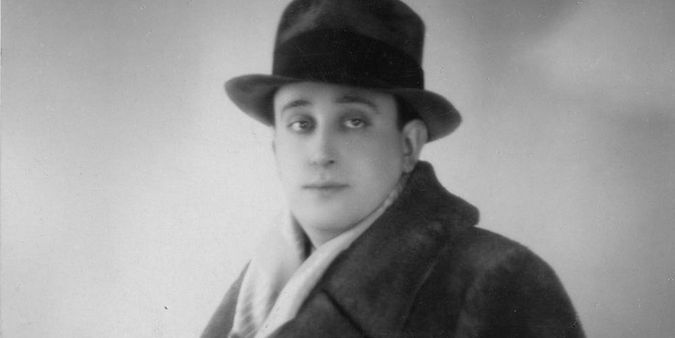
Michal Waszynski
Toen Waszynski het verhaal in 1937 verfilmde kon hij het niet eens vermoeden dat hij hiermee geschiedenis zou schrijven. Niet alleen bestaat de wereld van An-ski niet meer, ook de wereld van Waszynski is na 1945 nooit meer dezelfde geworden.
Kazimierz Dolny, waar het verhaal grotendeels werd opgenomen, is tot een openluchtmuseum verworden en het lot van Poolse Joden, waaronder wellicht de grootste voorzanger aller tijden, Gershon Sirota, wiens optredens wij in de film mogen meemaken, is algemeen bekend.
Deze film van Michał Waszyński uit 1937 wordt beschouwd als de beste Jiddische film in de geschiedenis van de cinema.
I first got to know the music of Ryuichi Sakamoto (b.1952) through the Yellow Magic Orchestra, formed in 1978, a Japanese electronic artpop ensemble of which Sakamoto was a member, responding to Euro-synthesizer-pop acts like Germany’s Kraftwerk, Switzerland’s Yello, Jean Michel Jarre and Donna Summer’s disco music recordings with Giorgio Moroder. The Yellow Magic Orchestra or YMO as their name was often abbreviated gradually developed a style of their own, a mixture of jagged computer-generated riffs resembling computer game tunes and smooth, suave and sometimes cheesy melodies. As more and more of the electronic instruments were being made in Japan, first by imitating the American and European originals, then coming up with more advanced, reliable and userfriendly models, the members of the YMO more and more went their own way well.
Sakamoto’s solo career started to soar with his magnificent role as actor in the movie Merry Christmas, Mr Lawrence (1983), playing opposite David Bowie and Tom Conti, for which Sakamoto also composed the music.
Japanese culture was becoming fashionable just when the Western political leaders started to depict Japan as an economic threat to the West. In Merry Christmas Mr Lawrence Sakamoto personified a different Japan. He was likeable, good looking, easily embodying the semi-homoerotic infatuation between the characters played by him and by Bowie that is at the centre of the storyline. Musically this was even sealed in a vocal version of a piece in the soundtrack, ‘Forbidden Colours’, performed by Sakamoto with singer David Sylvian, frontman of the British glam-art-rock band Japan, who were toying with queer symbolism as well as hip Japanese and Chinese aestheticism in their image.
Sakamoto did more beautiful collaborations, with Sylvian and others, and he continued making soundtracks for movies like Bertolucci ‘s The Last Emperor and The Sheltering Sky and Alejandro González Iñárritu’s The Revenant.
PhotoByNata_ opromadze19-e1602257243821
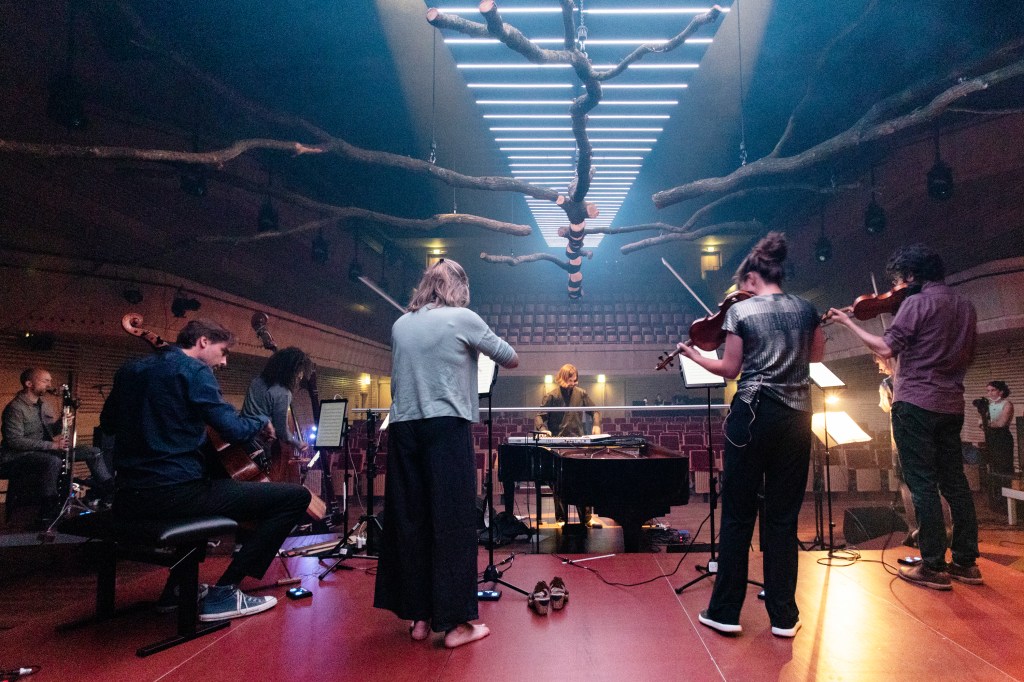
Swiss-Georgian composer Alexandre Kordzaia a.k.a. Kordz (b.1994) studied in Basel and at the Royal Conservatoire in The Hague (with Yannis Kyriakides). In Georgia Kordzaia made a name with dance music and collaborations with the Georgian Philharmonic Orchestra. Here he worked with Asko|Schönberg, the Nieuw Ensemble and the Residentie Orkest in The Hague. Recently he wrote an adaptation of for Dutch dance ensemble Club Guy & Roni.
Kordz x Sakamoto is a collage of material mostly originating from Sakamoto’s early years, including the theme song from Merry Christmas, Mr Lawrence. We hear modern electronics, plus vintage electronic instruments, plus the acoustic instrumentalist of the ensemble, with Kordzaia behind the piano. Most of the music flows like a smooth machine, but sometimes disruption occurs, like drum rolls that go against the metre, and a long virtuoso and in this context deliberately alien, ‘dirty’ clarinet solo, by David Kweksilber.
The result sounds like Sakamoto embedded in an idiom that ASKO|Schönberg is so much at home with, of for instance Louis Andriessen. “Merry Christmas, Mr Lawrence meets Andriessen’s De Staat.” Imagine the Royal Concertgebouw Orchestra playing Bert Kaempfert, including of course masterpieces like Strangers in the Night and Living it Up (alias Theme from Kapitein Zeppos), paying homage to the tone colouring of Bruckner and Debussy at the same time. Something I would not want to miss.
Kordzaia emphasised that some of the music of the Yellow Magic Orchestra in their early years has inspired the later pioneering American techno and hiphop musicians, by interweaving techno- and hiphop-beats at certain points and making the ensemble-members rap and cheer as if they are in a houseparty.
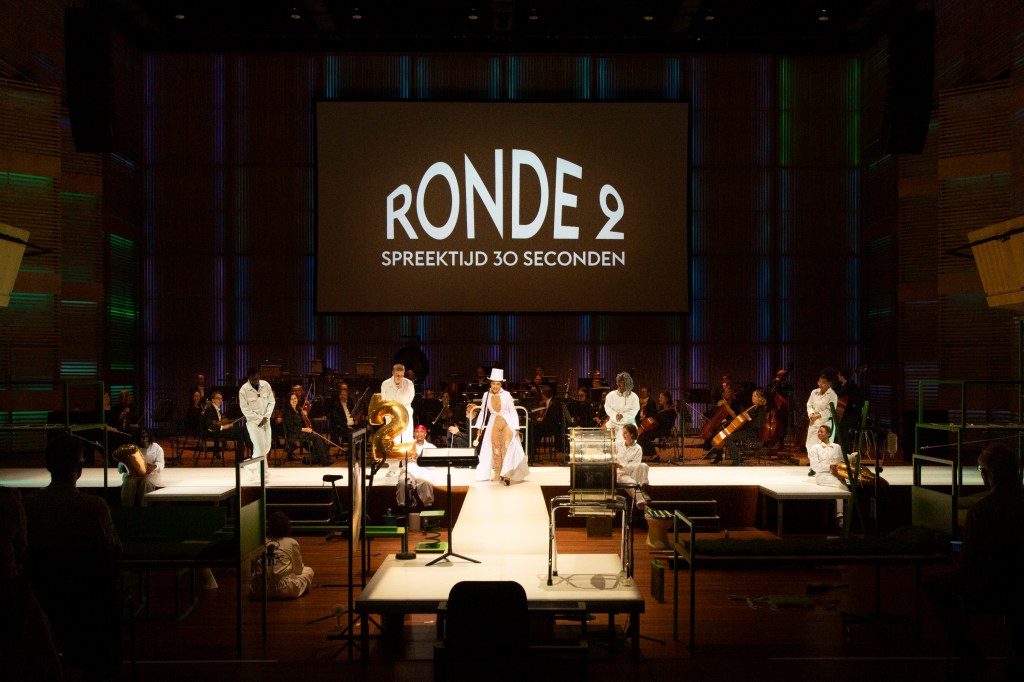
I listened to the radio broadcast of the performance the next evening and it became clear that the music, somewhat against my initial misgivings I must admit, stood the test of being consumed as music as such. While another strong point of the live performance, which I had not yet mentioned, was absent, namely the wonderful visual installation by the Dutch light artist Boris Acket.
From back to front the cut parts of a single tree are fixed to the ceiling, its branches arching over the musicians. Above the tree, a set of LED-light screens, a metre wide, thirty metre long, stretches along the middle of the ceiling of the hall. The LEDs initially show black and white light patterns, resembling the patterns of early computergames, or white on black stripes of a highway, but soon the images become coloured, resembling landscapes gliding by in high-speed, as is we were riding the Maglev, the Japanese magnetic levitation train, the fastest in the world, with the Milky Way above us.
This association with high-tech urban transport could stand for how Sakamoto might see his evolution from emulating one of his first main influences, the 1974 LP Autobahn by Kraftwerk, to becoming an artist on his own, with the German Autobahn, the German highway, with what drives on it, German cars, once the pinnacle of Western technology, in a few decades gradually being replaced by technology often coming from the Far-East, much better suited for modern metropoles, like that of the clean and smooth Maglev. Tree-friendlier, even though for this event a tree had to be felled.
Could the tree stand for Sakamoto himself, the giant who recently was diagnosed with recurring cancer, the reason he could not be present at the festival?
The Autobahn is there itself as well.
The Asko|Schönberg ensemble performing adaptions of Ryuichi Sakomoto’s mysic by Alexandre Kordzaia, conducted by Kordzaia. Muziekgebouw aan ‘t IJ, June 15th 2021. Pictures of a rehearsal by Ada Nieuwendijk.






















 Basia con fuoco
