kamermuziek/solorecitals

Rudolf Karel, a hardly known ‘Theresienstadt composer’

If it is true that Gideon Klein composed the Divertimento as early as 1940, this is a very important musical discovery. Until now it was assumed that all works that Klein composed before his internment in Terezín have been lost. Unfortunately, the brief-looking booklet with only a short story about the composers and the performers leaves us in limbo. Is the year correct? The (little) work itself is pleasant and easy to hear.
The wind quintet by Pavel Haas dates from 1929. It was very much influenced by Janácek, who has been his teacher and great example since 1920. The second part of the quintet is movingly beautiful. I will not be surprised if the ‘Preghiera’ will lead a life of its own on a compilation CD.
Below ‘La Preghiera’, performed by the Belfiato Quinten:
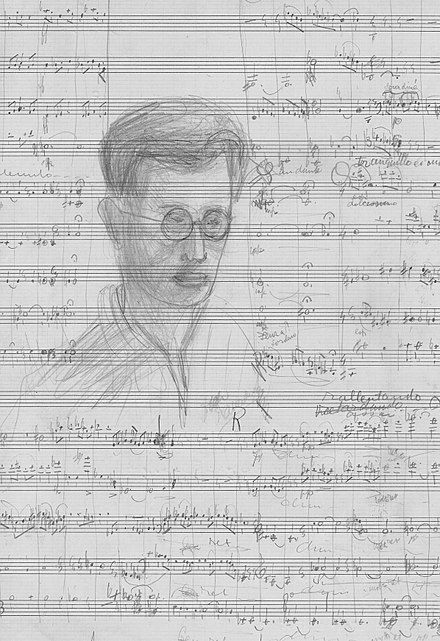
The biggest discovery for me, however, is the nonet of Rudolf Karel (1880 – 1945). The least known of the ‘Theresienstadt composers’ certainly does not seem to be the least gifted! The work was created when Karel stayed in the hospital barracks of a Prague prison. He wrote his compositions on the smuggled pieces of toilet paper with staves, which were then immediately smuggled out.

Below, Rudolf Karel’s Nonet, performed by Orquesta de Cámara del Auditorio de Zaragoza “Grupo Enigma” – OCAZEnigma:
Gideon Klein (then 24 years old) and Pavel Haas were gassed in Auschwitz. Rudolf Karel died in Theresienstadt. Štepan Lucký is not really part of it. His Divertimento, composed in 1974, is from a different time, in a different style and of a different quality. Why he is included here, is a mystery to me.
The performances are more than exemplary. The pinnacle is Karel’s Nonet, in which the Academia Wind Quintet is strengthened by the members of the famous Panocha Quartet.
You can also listen to Rudolf Karel’s Nonet, plus some compositions by Haas, Klein and Schulhoff on Spotify, in a performance by the Bayerische Kammerphilharmonie conducted by Israel Yinon:
Nonet in the reconstrution of the original piano score by Francesco Lotoro (and more):
English translation Frans Wentholt
Gideon Klein, Pavel Haas, Rudolf Karel, Štêpán Lucký
Chamber compositions
Academia Wind Quintet Prague, Panocha Quartet conducted by Vladimír Válek
Supraphon SU 3339-2131
Marcel Worms takes care of piano works by Jewish composers

We can safely call Marcel Worms the ambassador of persecuted and forgotten composers. For his latest CD, he has recorded piano works by composers from various European countries: the Netherlands, Poland, Hungary, Czechoslovakia, France and Austria. Not only the countries of origin are different, the compositions written between 1922 and 1943 also vary a lot. From jazzy and swinging through romantic, virtuoso and modest to an attempt at serialism.
The composers all have one factor in common: they were Jewish and all but three (Weinberg, Laks and Urbancic) did not survive the war. Weinberg fled to the Soviet Union, Urbancic (who was not actually Jewish but his wife and children were) to Iceland. And Laks was very lucky to survive Auschwitz, as the bandmaster of the camp orchestra.
The CD starts spectacularly with ‘Blues’ by Szymon Laks. It is unknown when this wonderful work was composed. For myself, I think of the early 1930s. Dick Kattenburg’s ‘Novolette’ from 1941 fits in perfectly with this work. As well as the very rhythmic ‘Toccata’ by Paul Hermann.
The ‘Prelude’ by Mischa Hillesum (Etty’s brother) is another story. The composition is strongly anchored in romance: never are Chopin and Rachmaninoff far away; and the two Hommage-pieces (to Sherlock Holmes and to Remmington) by Leo Smit, that you can’t actually ‘store’ anywhere, are simply delightful.
Victor Urbancic is a big unknown to me, it is the first time that I hear from him. That is not very strange: his compositions are completely forgotten and the 1922 ‘Sonatine’ has its recorded premiere here. I don’t really love it, which may be due to my unfamiliarity with his idiom.

What I really do love is the irresistible playing by the pianist. Marcel Worms plays as if his life depended on it. Full of conviction and a real pianistic zest.
Szymon Laks (1901 – 1983), Dick Kattenburg (1919 – 1944), Paul Hermann (1902 – 1944), Mischa Hillesum (1920 – 1943), Nico Richter (1915 – 1945), Erwin Schulhoff (1894 – 1942), Viktor Urbancic ( 1903-1958), Gideon Klein (1919 – 1945), Leo Smit (1900 – 1943), Mieczyslaw Weinberg (1919 – 1996)
Marcel Worms, piano
Zefir Records ZEF 9669
English translation: Frans Wentholt
Marcel Worms ontfermt zich over pianowerken van Joodse componisten

Marcel Worms kunnen we rustig de ambassadeur van vervolgde en vergeten componisten noemen. Voor zijn nieuwste cd heeft hij pianowerken opgenomen van componisten uit verschillende Europese landen: Nederland, Polen, Hongarije, Tsjechoslowakije, Frankrijk en Oostenrijk. Niet alleen de landen van afkomst zijn verschillend, hun composities geschreven tussen 1922 en 1943 zijn het ook. Van jazzy en swingend via romantisch, virtuoos en ingetogen tot een poging tot serialisme.
Er is één verbindingssector: allemaal waren ze Joods en op drie na (Weinberg, Laks en Urbancic) hebben ze de oorlog niet overleefd. Weinberg vluchtte naar de Sovjet-Unie, Urbancic (die eigenlijk niet Joods was maar zijn vrouw en kinderen wel) naar IJsland. En Laks had de enorme mazzel om Auschwitz te overleven, als de kapelmeester van het kamporkest.
De cd begint spetterend met ‘Blues’ van Szymon Laks. Het is onbekend wanneer het heerlijk werkje werd gecomponeerd, zelf denk ik aan begin jaren dertig. De ‘Novolette’ van Dick Kattenburg uit 1941 sluit daar perfect aan. Alsook de zeer ritmische ’Toccata’ van Paul Hermann.
De ‘Prelude’ van Mischa Hillesum (de broer van Etty) is een andere koek. De compositie zit sterk in de romantiek verankerd: Chopin en Rachmaninoff zijn nergens ver weg; en de twee Hommage-stukken (aan Sherlock Holmes en aan Remmington) van Leo Smit die je eigenlijk nergens kunt ‘opbergen’ zijn gewoon verrukkelijk.
Victor Urbancic is voor mij een grote onbekende, het is voor het eerst dat ik iets van hem hoor. Zo raar is het niet, zijn composities zijn totaal vergeten en de ‘Sonatine’ uit 1922 beleeft hier zijn plaatpremière. Echt kapot ben ik er niet van, wat onder andere aan mijn onbekendheid met zijn idioom kan liggen.

Waar ik wel kapot van ben is het onweerstaanbare spel van de pianist. Marcel Worms speelt alsof zijn leven er van afhangt. Vol overtuiging en een echt pianistiek elan.
Szymon Laks (1901 – 1983), Dick Kattenburg (1919 – 1944), Paul Hermann (1902 – 1944), Mischa Hillesum (1920 – 1943), Nico Richter (1915 – 1945), Erwin Schulhoff (1894 – 1942), Viktor Urbancic ( 1903-1958), Gideon Klein (1919 – 1945), Leo Smit (1900 – 1943), Mieczyslaw Weinberg (1919 – 1996)
Marcel Worms, piano
Zefir Records ZEF 9669
Music as ecstasy: Kathryn Stott plays Erwin Schulhoff
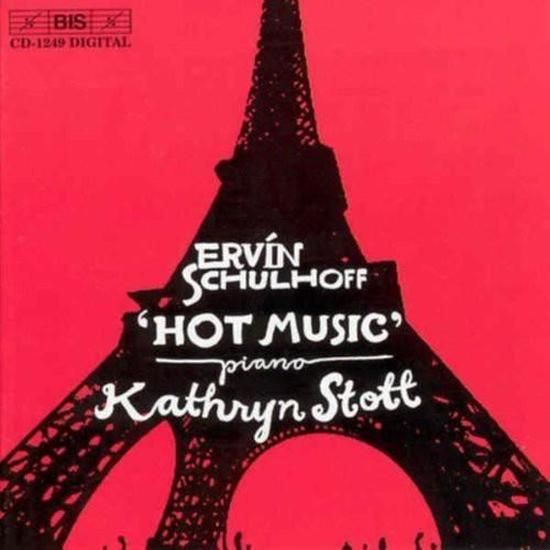
In 1919 Erwin Schulhoff wrote: “Music should bring primarily physical pleasure, even ecstasy, to the listener. It is not philosophy: its roots lie in ecstatic situations and its expression lies in rhythm.” No wonder the synthesis of jazz and classical music was not only a challenge for him, but eventually became his artistic credo.
In his time, Schulhoff (1894-1942) was highly appreciated as a composer and a virtuoso pianist. One review even speaks of an ‘absolutely perfect technique’ and a remarkable gift for improvisation.
The latter was particularly appreciated during his (live) radio performances, in which, of course, he also promoted his own jazz compositions. In 1928 he recorded several of his compositions for Polydor, including three from his Cinq Études de Jazz. These are particularly difficult works, which demand almost the impossible from the performer.
That Kathryn Stott has the required technique is obvious. Her recordings of piano music by Fauré, among others, earned her world fame and numerous prizes. She also deserves the greatest praise for her performance of Schulhoff’s jazz compositions. She plays the Etudes much slower than the composer, yet very rhythmical and extremely virtuosic. And yes: the pleasure of listening is indeed physical.
Ervín Schulhoff
Hot Music
Katryn Stott (piano)
BIS 1249
Translated with http://www.DeepL.com/Translator (free version)
Kremerata Baltica leaves the listener open-mouthed and gasping for breath
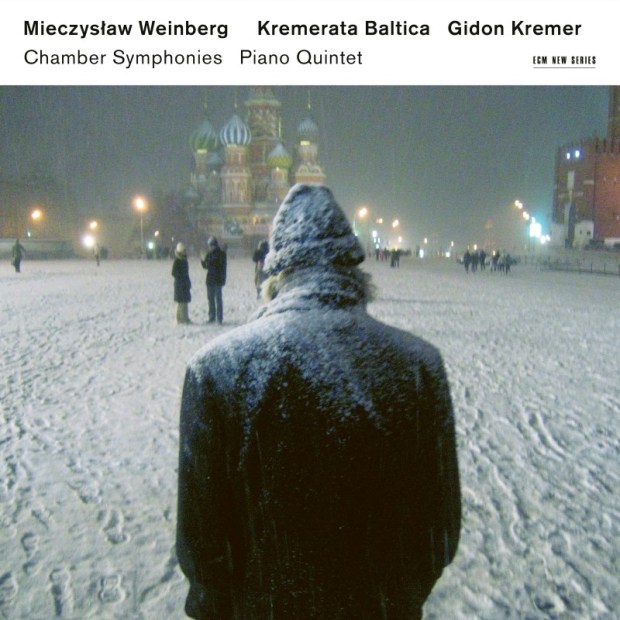
Gidon Kremer is one of the most ardent advocates of Weinberg’s music. This is also not the first time he has tackled his music. With his Kremerata Baltica and a few eminent guests, he has already recorded Weinberg’s chamber music works for CD in 2014. And the live recording of Weinberg’s violin sonata he made with Martha Argerich in Lugano has rightfully become legendary.
Kremer’s unsubtle way of playing and his almost animalistic drive are the best keys to the music of the Polish-Russian-Jewish composer who for decades – if not forgotten – had been lost in the madness of world history.
The recording of the first three chamber symphonies was made live in the Viennese Musikverein in June 2015. As expected, Kremer and his ensemble are more than ideal for the impetuous music of the composer who whimsically seemed to disregard all musical laws.
A foretaste (in poor sound quality): Chamber Symphony No. 2, Op. 147 – III Andante Sostenuto
The arrangement of the 1944 piano quintet may seem superfluous, but the addition of percussion does not miss its effect and makes the work more monumental and the tension is immense.
The fourth symphony was the last work Weinberg orchestrated. The addition of the clarinet solo does not miss its effect and leaves the listener gasping for breath with an open mouth. Which is certainly also thanks to the unparalleled playing of the clarinettist Mate Bekavac and the very muscular conducting of Mirga Grazynité-Tyla.
The fact that the inflated piano quintet and the fourth symphony sound slightly better than the other works can be explained: the recording was made in the studio.
MIECZYSŁAW WEINBERG
Chamber Symphonies; Piano Quintet
Kremerata Baltica, Gidon Kremer (conductor and violin), Yulianna Avdeeva (piano), Andrei Pushkarev (percussion), Mate Bekavac (clarinet), Mirga Gražinité-Tyla (conductor)
ECM 2538/39 4814604 – 155′ (2cd’s)
Translated with http://www.DeepL.com/Translator (free version)
Muziek als extase: Kathryn Stott speelt Schulhoff

“Muziek moet voornamelijk fysiek plezier, zelfs een extase bij de luisteraar teweegbrengen. Zij is geen filosofie, haar oorsprong ligt in de extatische situaties en haar uiting in het ritme”, schreef Erwin Schulhoff in 1919. Geen wonder dat de synthese van jazz en klassieke muziek voor hem niet alleen een uitdaging maar zelfs zijn artistieke credo was.
Schulhoff (1894-1942) was in zijn tijd zeer gewaardeerd niet alleen als componist maar ook als een virtuoos pianist. In a recensies uit die wordt gesproken van een ‘absoluut volkomen techniek’ en een opmerkelijke gave tot improviseren.
Dat laatste kwam hem bijzonder te pas tijdens zijn (live) radio optredens, waarin hij uiteraard ook zijn eigen jazz composities promootte. In 1928 nam hij voor Polydor een paar van zijn composities op, waaronder drie uit zijn Cinq Études de Jazz. Het zijn bijzonder moeilijke concertstukken, die van de uitvoerder bijna het onmogelijke eisen.
Dat Kathryn Stott over de vereiste techniek beschikt is evident. Haar opnamen van onder andere pianomuziek van Fauré bezorgden haar wereldfaam en ettelijke prijzen. Ook voor de uitvoering van de jazzcomposities van Schulhoff verdient zij de grootste lof. Zij speelt de Etudes veel langzamer dan de componist, maar toch zeer ritmisch en bijzonder virtuoos. En ja: het plezier bij het luisteren is inderdaad fysiek.
Ervín Schulhoff
Hot Music
Katryn Stott (piano)
BIS 1249
Prettige kennismaking met de pianomuziek van Cilea

Even een kort vraagje: wat weet u van Francesco Cilea? Zeer waarschijnlijk kent u zijn grootste hit, Adriana Lecouvreur, al is het vanwege de twee aria’s die elk zichzelf respecterende sopraan op het repertoire heeft staan. Ongetwijfeld kent u ook ‘Lamento di Frederico’, de tenor aria uit L’Arlesiana, één van de meest geliefde tranentrekkers van de hele operaliteratuur. Maar wist u dat Cilea ook pianomuziek componeerde?
Ik niet. Niet dat ik denk dat ik veel heb gemist. Het is allemaal zeer aangenaam, niet meer. Heerlijk om op de achtergrond te hebben maar om er puur naar te gaan luisteren, daar heeft de muziek te weinig voor om het lijf. Het beklijft niet.
En toch ben ik blij dat iemand de moeite heeft genomen om de muziek op te nemen. Het werpt een totaal ander licht op de componist en haalt hem uit de schaduw waarin de (muziek)geschiedenis hem heeft opgeborgen.
Nee, Puccini was hij niet en in zijn tijd was de pianistiek al veel meer dan een aangename ‘salonmuziek’, maar eerlijk is eerlijk: ik moet bekennen dat ik het een uitermate plezierige kennismaking vond. Niet in de laatste plaats vanwege het zeer sterke pleidooi die de pianist Sandro De Palma voor zijn muziek voert.
In de zeer Schubertiaans aandoende sonate voor cello en piano wordt hij bijgestaan door de niet bijster virtuoze Ferdinando Calcaviello.
Francesco Cilea
Acque correnti
Sandro De Palma (piano), Ferdinando Calcaviello (cello)
Pianoclassics PCL0059
Trio Khnopff speelt Weinberg

De titel: Weinberg 1945 verwijst naar het jaartal waarin alle op deze cd opgenomen composities zijn ontstaan. De eerste uitvoering van het pianotrio vond plaats op 9 juni 1947, door Weinberg zelf en de twee leden van het Beethovenkwartet: Dmitri Tsyganov (viool) en Sergei Shrinsky (cello).
Van het trio bestaan er bij mijn weten al minstens negen uitvoeringen, allemaal goed tot uitstekend. Denk alleen maar aan Gidon Kremer (de grootste pleitbezorger van Weinbergs muziek, Yulianna Avdeeva en Giedrė Dirvanauskaitė (DG).
Of, mijn absolute favoriet met Dmitry Sitkovetsky, David Geringas en Jascha Nemtsov (Hänssler).
Hiermee vergelijken valt deze uitvoering mij een beetje tegen. Voornamelijk vanwege de pianiste: Stéphanie Salmin is te dominant en de pianoklank overheerst de strijkers, iets wat ook aan de opname kan liggen.
Maar de cellosonate en de Rhapsodie op Moravische thema’s (vervang het ‘Moravische’ door het ‘Joodse’, wat eigenlijk de bedoeling was) maken alles goed. Hier krijgen de cellist (Romain Dhainaut) en Sadie Fields (viool) alle ruimte om te schitteren en dat doen zij.
Het is dan ook Sadie Fields die mijn hart volledig heeft gestolen in de Two songs without words die hier hun allereerste uitvoering ooit beleven. Tot voor kort dacht men namelijk dat die twee prachtige miniatuurtjes verloren zijn gegaan.
MIECZYSŁAW WEINBERG
Weinberg 1945
Pianotrio op. 24, Cellosonate nr. 1 in C, op. 21, Two songs without words voor viool en piano, Rhapsody on a Moldavian Theme voor viool en piano op. 47 nr. 3
Trio Khnopff: Sadie Fields (viool), Stéphanie Salmin (piano), Romain Dhainaut (cello)
Pavane ADW 7590
Silenced Voices
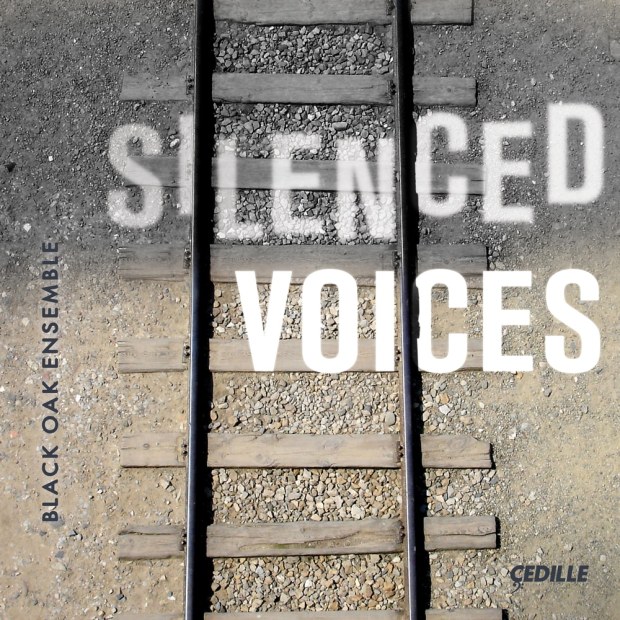
Do you know the Black Oak Ensemble? There is a good chance you don’t, even though this American string trio, which barely anyone knows in the Netherlands, is rated as absolute top class. Its recent CD called Silenced Voices features pieces by six Jewish composers, Géza Frid, Paul Hermann, Dick Kattenburg, Gideon Klein, Hans Krása and Sándor Kuti.

Paul Hermann
They originally came from Hungary, Czechoslovakia and the Netherlands and with the exception of Géza Frid, who was active in the Dutch Resistance, they were all murdered. Hans Krása, Gideon Klein and Dick Kattenburg at Auschwitz. Sándor Kuti at a concentration camp in the Ukraine, probably in 1945 (!). But we don’t even know when or where the almost Dutch Paul Hermann was murdered.
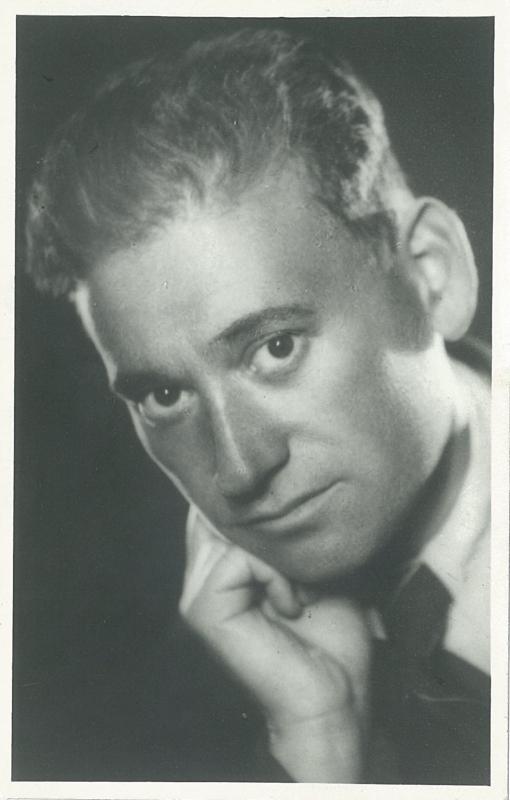
Sándor Kuti
Sándor Kuti studied at the Franz Liszt Academy with Georg Solti, who had a great deal of respect for him and once said that if he had not been murdered, Kuti would have become one of the greatest composers of Hungary. I read that he continued to compose up until his death somewhere in the Ukraine.
His Serenade for String Trio (1934) was what touched me the most on this CD. Of course the fact that I had never heard this composition before could have influenced how it affected me, but even when I listened to it again, it intrigued and moved me. Despite the numerous quotes straight from Hungarian folk music, the trio got under my skin. Just listen to the mesmerizing Scherzando that turns into an ominous Adagio ma non troppo. Real goosebumps.

Géza Frid
Géza Frid taught chamber music at the Utrecht Conservatory from 1964 to 1970, and his trio also had its world premiere here. Frid survived the war but died a horrifying death. The staff at his nursing home failed to check the temperature in his bathtub and he died at the Beverwijk Burn Centre.

Hans Krása
Like Gideon Klein’s string trio, Hans Krása’s Passacaglia & Fugue for String Trio had already been recorded a couple of times, though still not often enough. Certainly not if you bear in mind that neither of the compositions are anything short of true masterpieces.

Gideon Klein
There is also an earlier recording – one recording! – of Dick Kattenburg’s Trio à cordes. It had its world première on the incredible CD of The Hague String Trio. The composition only takes five minutes but what a five minutes they are!
Dick Kattenburg: self portrait
The performance by the Black Oak Ensemble is simply sublime. I think you should all buy this CD!.
Kattenburg: Trio à cordes
Kuti: Serenade for String Trio
Krása: Passacaglia & Fuga for String Trio
Klein: Trio for violin, viola, and cello
Hermann: Strijktrio
Frid: Trio à cordes, Op. 1
Black Oak Ensemble
Cedile Records CDR 90000 189
English translation: Sheila Gogol
 Basia con fuoco