Galina_Vischnevskaya

Yevgeni Onegin: bored brat or pathetic and to be sorry for?


Onegin, unlike don Giovanni, is not a colourful character. He is a rather dull, bored brat, for whom even hitting on a woman is too much trouble. Through an inheritance he has become a rich man and as such has access to the”high society”, but everything bores him and in fact he does not know himself what it is he really wants.

He dresses according to the latest fashion, the only question is whether he does it because he likes nice clothes, or because that’s the way things are supposed to be. Because he does know how things should be done.

He also shows hardly any character development  over the whole course of the opera. He kills his best friend after flirting with his lover – not because he really wants to, but to teach him (and the, in his eyes horrid, countrybumpkins) a lesson – and even that leaves him unmoved. Only at the end does he “wake up” and something of a feeling enters his mind. But is it real?

Not really someone you can dedicate an entire opera to, which is why for many people the real protagonist is not Onjegin but Tatyana. If Tchaikovsky had really wanted it that way he might have named the opera “Tatyana”, but that she is a much more captivating character than the man of her dreams, is beyond any doubt.


CDs

SERGEY LEMESHEV:


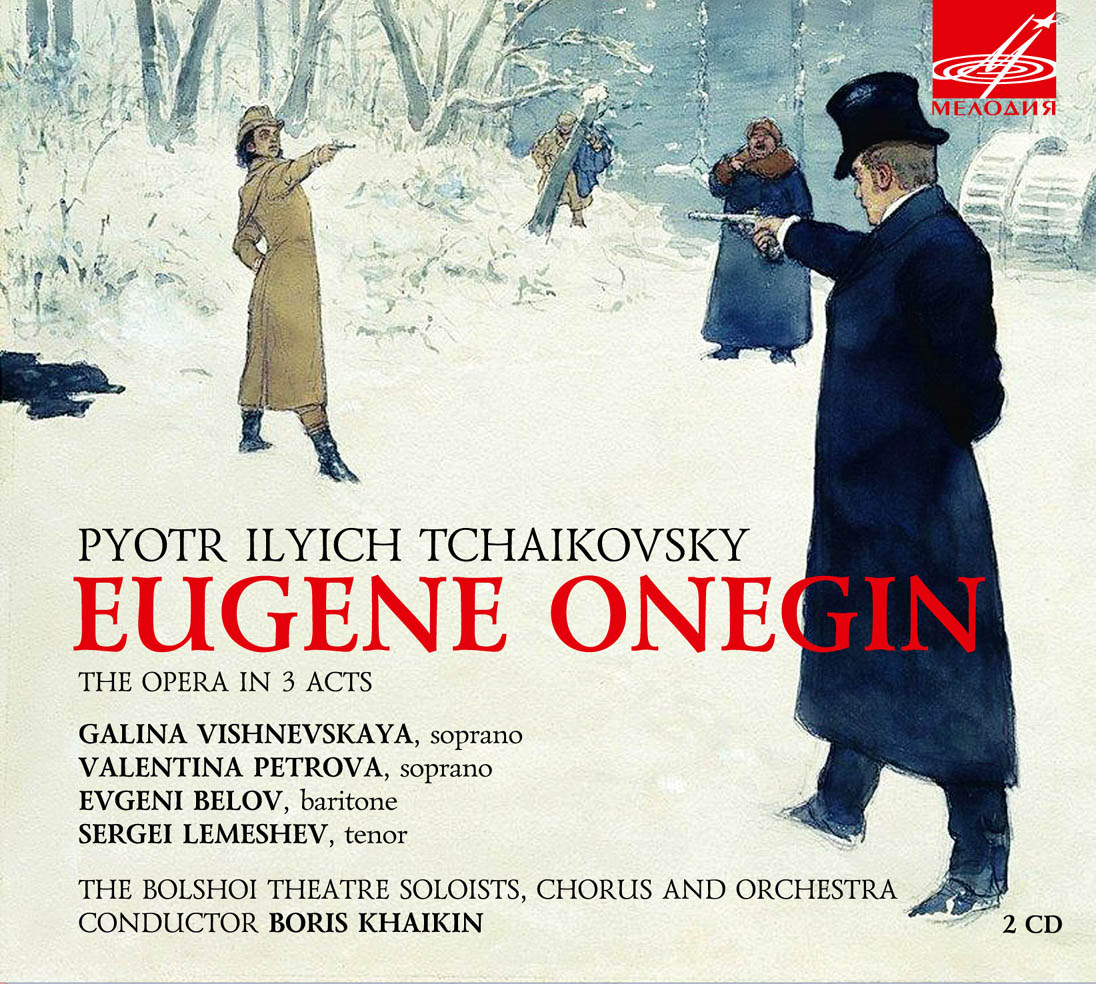
One says Tatyana, one thinks Galina Vishnevskaya. The Russian soprano has created a benchmark for the role that few singers can yet match. In 1955, she recorded the role, along with all the Bolshoi greats of the time.

Her “letter scene” is perhaps the most beautiful ever, but the recording has even more to offer: how about Sergei Lemeshev as Lensky? Fingerlicking good!

Sergey Lemeshev as Lensky (his great aria & duel scene)


Valentina Petrova is a peerless Larina, unfortunately the title hero himself (Evgeny Belov) is a bit colourless. (Melodiya 1170902)


FRITZ WUNDERLICH:

In 1962, the opera was recorded live in Munich (Gala GL 100.520).
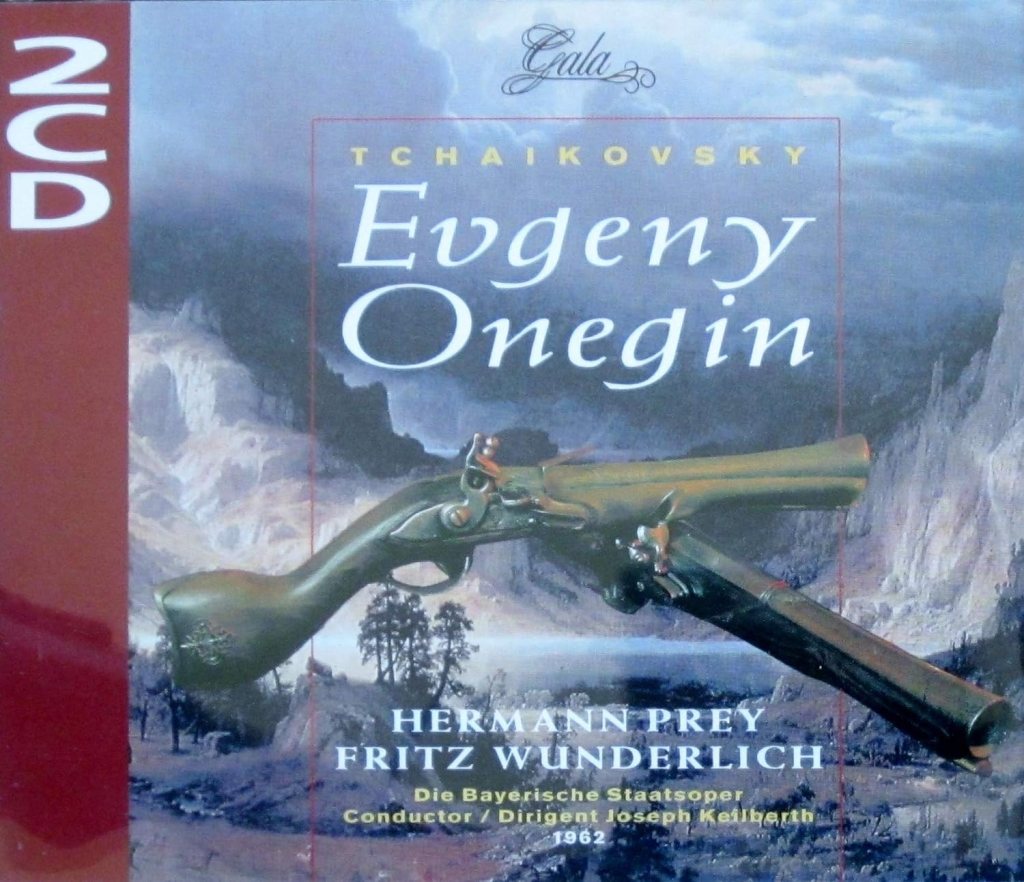


Ingebort Bremmert is too light for Tatyana, she also sounds rather sharp, but Brigitte Fassbaender makes up for a lot as Olga. But for a change, the ladies do not make the greatest impact, you buy it, of course, for the men: Hermann Prey and Fritz Wunderlich.


Prey is a very charming, gallant Onjegin, actually more like a brother than a lover, but the voice is so divinely beautiful! And about Wunderlich’s Lensky I can be very brief: ‘wunderbar’! By the way, it strikes me once again how similar Piotr Beczala sounds to him!

There is a lot of stage noise and the sound is dull with far too many bass sounds. And of course it is in German, but yes, that’s how it was done in those days. But it is a matchless document and, especially because of both singers, actually a must-see.

Duel scene from the recording (with picture!):

BERND WEIKL:
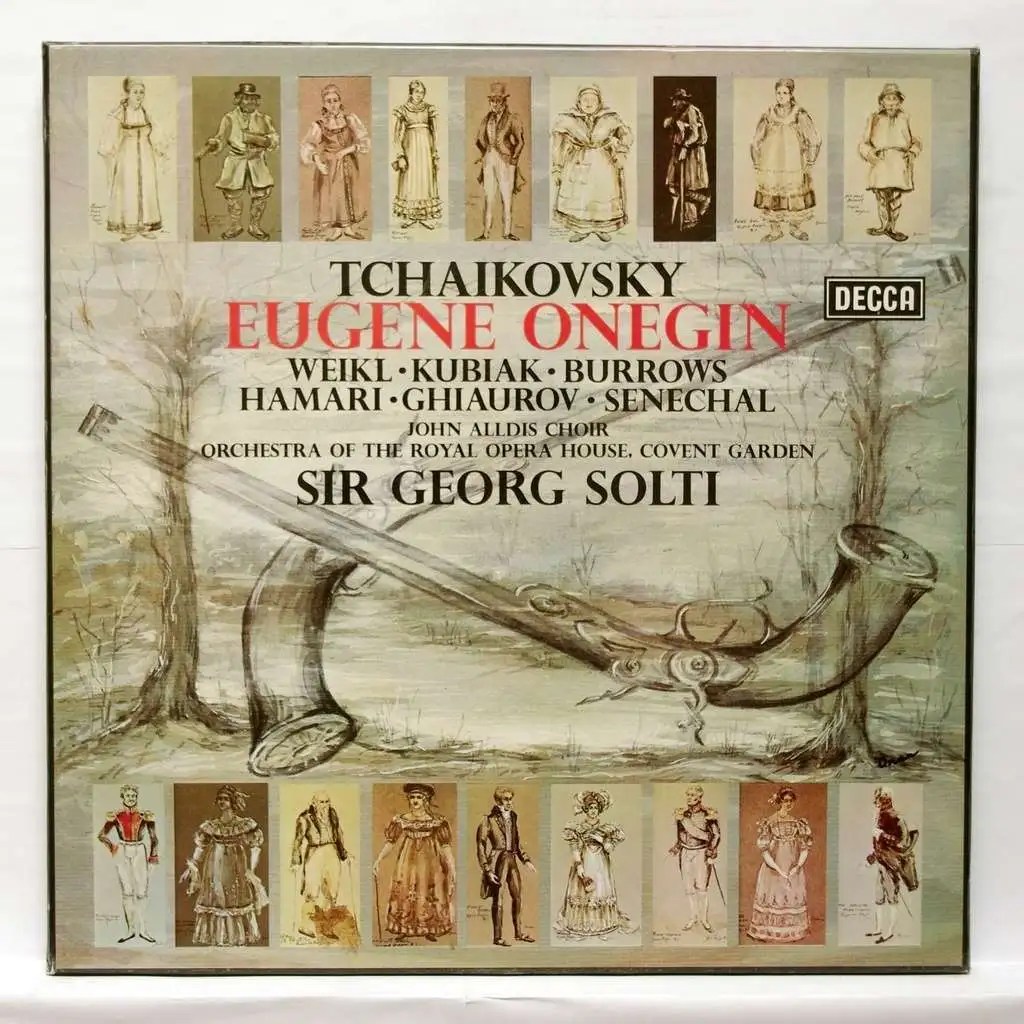


In 1974, Georg Solti recorded the opera for Decca(4174132) and that reading is still considered one of the best. In Stuart Burrows he had at his disposal the best Lensky after Wunderlich and before Beczala, and Teresa Kubiak was the very personification of Tatyana. Young, innocent, with a touch of elation at the beginning of the opera, but resigned at the end.

Under his direction, the orchestra (Orchestra of the Royal Opera House) flourished like the cornflowers in the Russian fields, making it clear why the composer considered his opus magnus to be “lyrical scenes” and not opera.

Bernd Weikl is a very seductive Onjegin, his very spicy baritone particularly sexy. Nicolai Ghiaurov is of course legendary in his role of Gremin and for me Michel Sénéchal is perhaps the best Triquet ever. Enid Hartle deserves to be especially mentioned as Filipyevna.

THOMAS ALLEN:
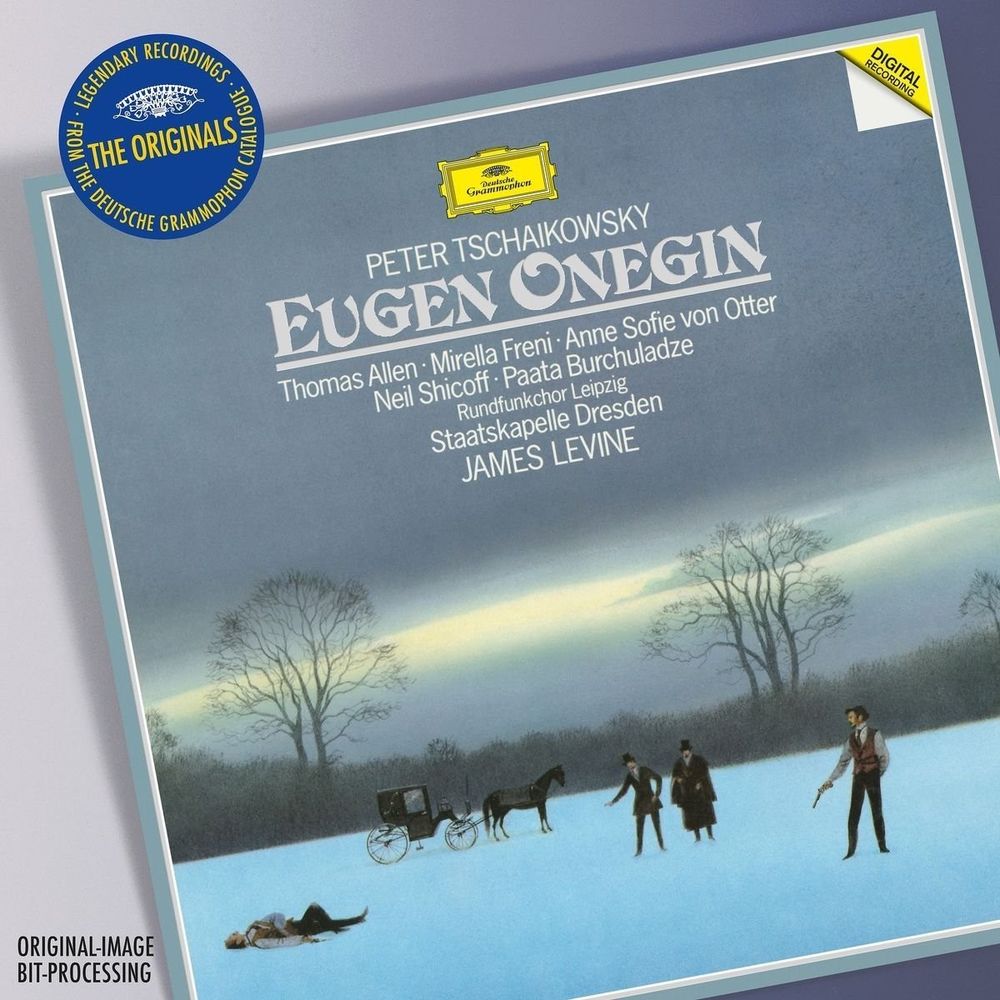


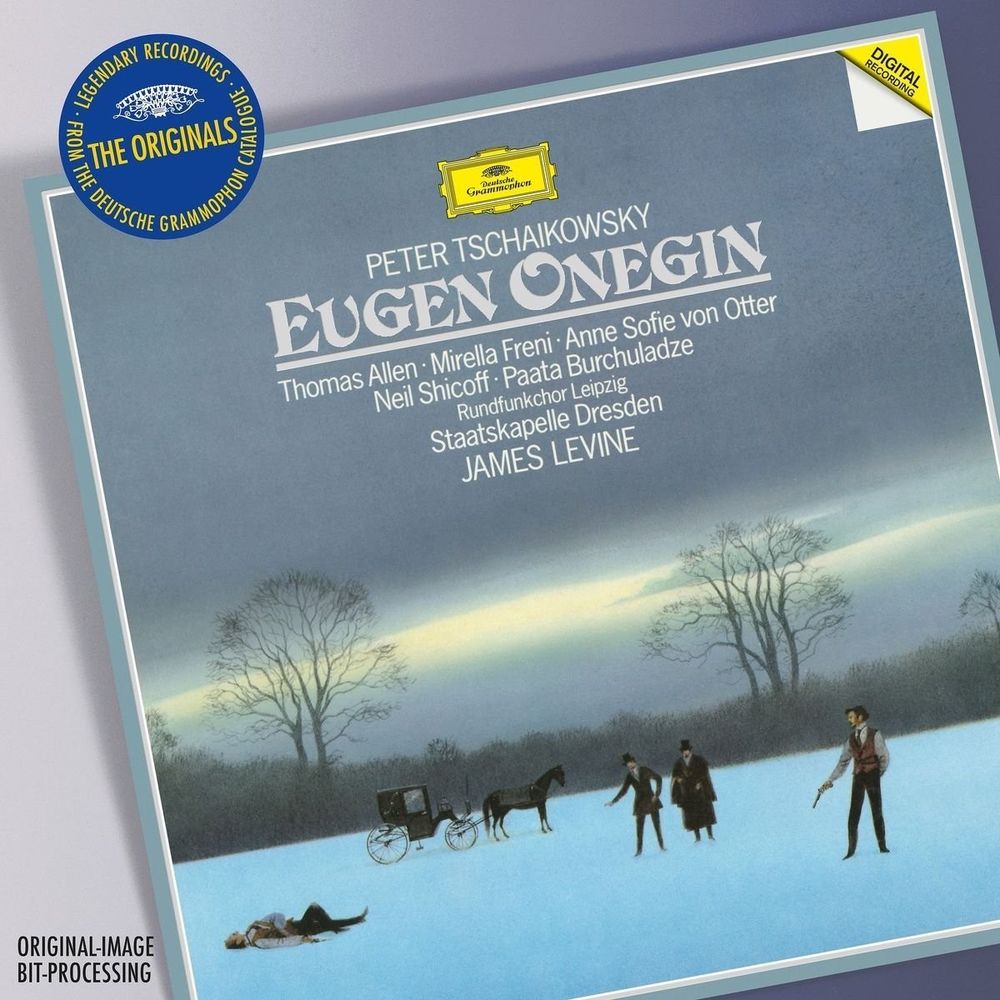
I want to dwell for a moment on Onjegin by Sir Thomas Allen. He has sung the role several times: both in Russian and in English. In 1988, he recorded it for DG (423 95923). Tatyana was sung by Mirella Freni – in the autumn of her career it became one of her showpieces. She is therefore more convincing as the older Tatyana than as the young girl, but there is nothing to criticise about her interpretation.

Neil Shicoff, then a splendid lyricist, was a very idiomatic Lensky, but Anne Sophie von Otter was only moderately convincing as Olga. Under James Levine, the Staatskapelle Dresden produced an unexpectedly lyrical sound, with lovely long arcs, but not devoid of a healthy sense of drama.

Anyway: it’s mainly about Thomas Allen. His reading of the title hero is particularly exciting and dramatically well grounded; it is truly fascinating to hear how Onjegin’s condescension in I turns into a shimmering passion in III. A vocal artist, no less.


It is also very interesting to see how he coaches young people at an ‘Onjegin master class’ (among his “students” is James Rutherford, among others)


DVDs

VLADIMIR REDKIN


Boris Pokrovsky is a living legend. For decades, from 1943 to 1982, he was opera director of the Bolshoi Theatre in Moscow. Even in the Netherlands, he is not unknown: in 1996, he was ‘visiting’ us with his new company, the Moscow Chamber Opera, with “Life with an Idiot” by Alfred Schnittke.

His production of Onjegin, recorded for TV at the Bolshoi in Moscow in 2000(Arthaus Musik 107 213) originally dates from 1944. It is, of course, a classic, complete with all the trimmings. Sumptuous costumes, true-to-life sets, everything as it ‘should’ be.

As soon as the stage curtain opens, the first ‘open curtain’ is a fact. People love it. And they are right: it is indeed so very beautiful! Of course, you don’t get to see it like that anymore. Think Zeffirelli, but really authentic, without a single liberty being taken. You have to have seen it at least once, just to know how it was originally intended.

The unknown singers are all just fine, but the close-ups are a bit laughable. Of course, it is not a production to be shown on TV, you have to actually see it in the opera house. There is no chance of that, though: Boris Pokrovsky’s production has been replaced by a new production by Dmitri Tcherniakov after more than 60 years of faithful service. Buy the DVD and muse on the ‘good old days’, because they really aren’t coming back.

https://www.operaonvideo.com/eugene-onegin-moscow-2000-ermler-gavrilova-redkin-baskov-martirosyan/


MARIUSZ KWIECIEN:
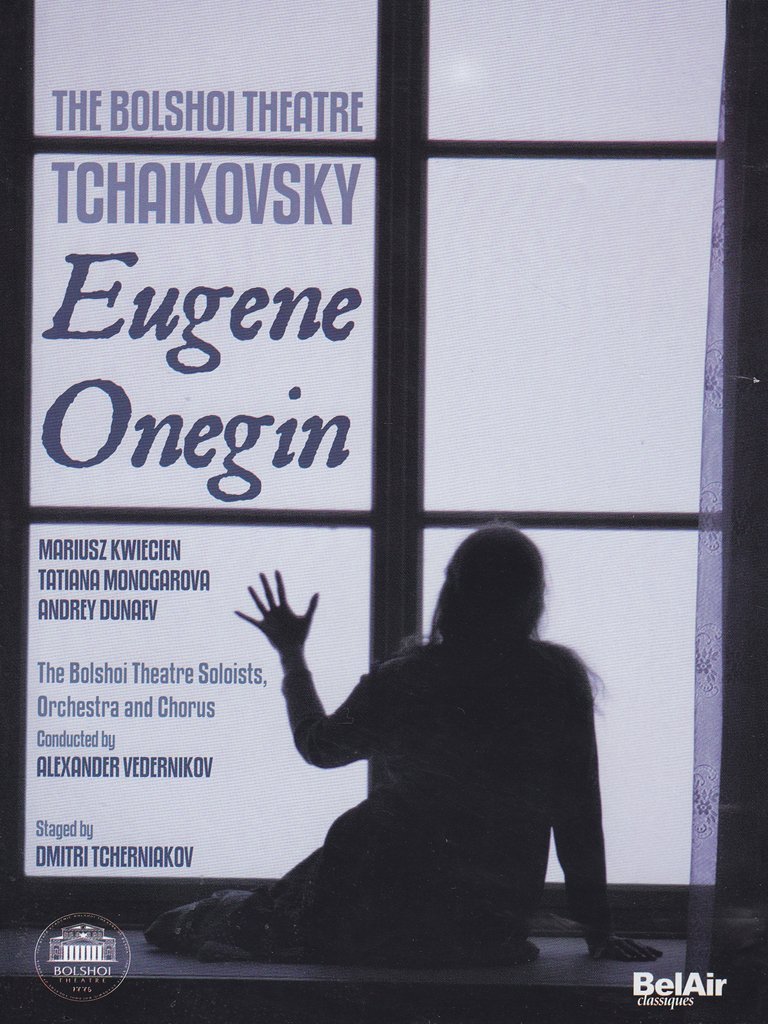


I started on Dmitri Tcherniakov’s production(Bel Air BAC046) with a huge dose of scepticism. His decision to replace Boris Pokrovsky’s old legendary production was very brave, because Muscovites (and not only Muscovites) were so very attached to it. Besides: you have to be really sure of yourself to dare to replace a LEGEND. On top of that, from the entire cast – apart from Kocherga and Kwiecien – I did not know any of the performers.

I quickly changed my mind, because from the start I was on the edge of my seat. The staging, costumes, stage design, sets and props – everything is right, even if it is not as it is in a typical ‘Onegin’. The entire first and second acts take place in the same space: the dining room in Larina’s house, with a long table and chairs prominently displayed. The same table and chairs also recur in III, but in a much richer ambience.

It is incredibly difficult to explain the whole directorial concept in a few words, you have to believe me that it is extremely fascinating and extremely exciting. Very intelligent too.

Tatyana is portrayed by Tatiana Monogarova in a  very convincing way. She is pale, thin and slightly autistic, locked in her own mind. The outside world scares her as she tries to hide from it.

Olga(Margerita Mamsirova) is just a flirt and from the start she challenged Onegin. She is more than a little tired of her poet- boyfriend’s sighs. and she is not wrong!

Lensky is sung by a good, though not exeptional, Andrey Dunaev. He is a bit stupid, pushy and jealous and thus the real instigator of all  evil happenings.

Larina (an insanely good singing and acting Makvala Kasrashvili) also gets more attention than usual. The moment when, thinking back to her childhood, she downs a drink and has a little cry is very touching. But she soon recovers and everything stays the same.

Mariusz Kwiecien (Onegin) is indeed irresistible. Or let me rephrase it: he portrays such a very bored and self-important arsehole (sorry for the word!). And he actually stays that way until the end. Utterly convincing!

Frantically he tries to belong to the ‘high society’, where he is not really accepted. Even his sudden passionate love for Tatyana feels unreal. On his knees, he offers her a bunch of red roses and when she refuses to run away with him, he tries to rape her.

Dignified, Tatyana walks off the stage on her husband’s arm on which Onjegin pulls out a pistol, but we are spared the suicide, because, of course!, without witnesses by his standards there is no use for it..


Trailer:

DMITRY HVOROSTOVSKY


And then there is Robert Carsen’s production for the Metropolitan Opera, recorded in February 2007(Decca 0743298). I am a huge Carsen-adept and love almost everything he does. So too this Onjegin

His staging is very realistic and he follows the libretto accurately. In the first act, the stage is strewn with autumn leaves, but everything else is basically bare and there is almost no scenery. A bed for the ‘letter scene’, otherwise some chairs in the second and third acts. At the duel, the stage is completely empty.

It is not distracting. On the contrary. The costumes are really beautiful, but especially in the first act they remind me more of English Jane Austen film adaptations than of the Russian countryside. It is not really disturbing, the eye wants something too, but Renée Fleming is too glamorous for a peasant trio, making her switch to a proud princess less impressive.

Onjegin (Dmitri Hvorostovsky) is mainly a dandy here, very concerned with his, good, looks. Well, Dima is an extremely attractive singer in all aspects, but in his confrontation scene with Tatyana, he is more reminiscent of daddy Germont than of Onjegin.

Ramón Vargas is one of the best lyric tenors in 2007, but Lensky he is not! He really does his best, he also looks like a real poet, but this role needs to be a bit more languorous.

As usual, Carsen’s character direction is truly unsurpassed and even Fleming seems to thaw out at times. Unfortunately, her Russian is totally unintelligible.

Fleming and Hvorostovsky in the final scene of the opera:


Isn’t it time to talk about Lady Macbeth of Mtsensk?

Lady Macbeth of Mtsensk illustration by B.M. Kustodiyev

It was supposed to be a four-part opera, an operatic tetralogy dedicated to the position of women in Russia in different eras.

A Soviet Russian Ring des Nibelungen, of which part one, `Lady Macbeth of Mtsensk’ would be a kind of Rheingold. But alas, it was not to be. Though initially no one could have suspected any impending doom.

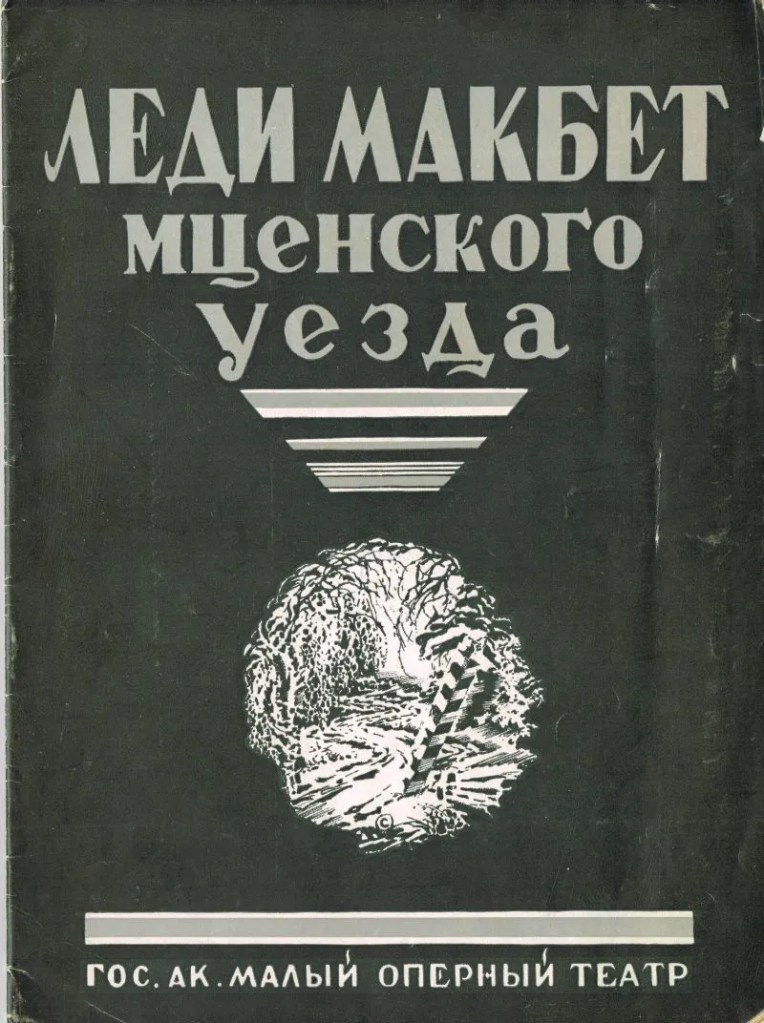
Premiere poster 1934 QED Art and press from the USSR and Central Europe


The premiere on 22 January 1934 at the Maly Theatre in Leningrad was a tremendous success, and for two years the opera was performed several times a week both in Leningrad and Moscow. The opera was also very succesful abroad: after Cleveland the New York City Opera followed , and then Stockholm, Prague and Zurich.

Until Stalin attended a performance in January 1936 and left early. The next day, an article appeared in Pravda under the headline ‘Chaos instead of music’.

It was signed by a certain Zaslavsky, but according to Shostakovich, it was written by Stalin himself. The opera was immediately dropped from the programmes and the composer was labelled an ‘enemy of the people’.


After Stalin’s death, Shostakovich revised his opera, and under a new title, Katerina Ismailova, it was first performed in Moscow in 1963. Prague and Zurich.

Shostakovich loved his heroine. To Solomon Volkov, he confessed: “Although Yekaterina Lvovna is a murderess, she is not yet lost as a human being. Her conscience torments her, she keeps thinking about the people she killed. I have sympathy for her. […] I wanted to show a woman who morally stands much higher than all the people around her. Because around Yekaterina there are only villains. She lives like in a prison and this is how she has been suffering for five years.”

“Her life is sad and uninteresting. But then comes love, a great passion. And it turns out that this passion is worth a crime to her. After all, it doesn’t matter, since otherwise life makes has no meaning to her.” (From Testimony. Memoirs of Dimitri Shostakovich.)

The opera, about the tragic fate of Katerina, who after marrying a rich merchant ends up in a kind of prison, from which she believes she can escape through her passionate love for Sergei and then ends her life in an icy river in Siberia, is a mix of tragedy and satire, seriousness and humour, lyrical melodies and – yes, indeed – chaos.

With a dizzying pace, the atmosphere changes from touching melancholy (Katja’s lament ‘Zherebyonok k kob’lke toropotsa’) to sexually charged (seduction scene), to end in actually pornographic sounds – Shostakovich has succeeded in describing ‘the deed’ through music in detail.


The premiere on 22 January 1934 at the Maly Theatre in Leningrad was a tremendous success, and for two years the opera was performed several times a week both in Leningrad and Moscow. The opera was also very succesful abroad: after Cleveland the New York City Opera followed , and then Stockholm, Prague and Zurich.

Until Stalin attended a performance in January 1936 and left early. The next day, an article appeared in Pravda under the headline ‘Chaos instead of music’.

It was signed by a certain Zaslavsky, but according to Shostakovich, it was written by Stalin himself. The opera was immediately dropped from the programmes and the composer was labelled an ‘enemy of the people’.
After Stalin’s death, Shostakovich revised his opera, and under a new title, Katerina Ismailova, it was first performed in Moscow in 1963. Prague and Zurich.

Shostakovich loved his heroine. To Solomon Volkov, he confessed: “Although Yekaterina Lvovna is a murderess, she is not yet lost as a human being. Her conscience torments her, she keeps thinking about the people she killed. I have sympathy for her. […] I wanted to show a woman who morally stands much higher than all the people around her. Because around Yekaterina there are only villains. She lives like in a prison and this is how she has been suffering for five years.”

“Her life is sad and uninteresting. But then comes love, a great passion. And it turns out that this passion is worth a crime to her. After all, it doesn’t matter, since otherwise life makes has no meaning to her.” (From Testimony. Memoirs of Dimitri Shostakovich.)

The opera, about the tragic fate of Katerina, who after marrying a rich merchant ends up in a kind of prison, from which she believes she can escape through her passionate love for Sergei and then ends her life in an icy river in Siberia, is a mix of tragedy and satire, seriousness and humour, lyrical melodies and – yes, indeed – chaos.

With a dizzying pace, the atmosphere changes from touching melancholy (Katja’s lament ‘Zherebyonok k kob’lke toropotsa’) to sexually charged (seduction scene), to end in actually pornographic sounds – Shostakovich has succeeded in describing ‘the deed’ through music in detail.


GALINA VISHNEVSKAYA, 1978


Shortly after the composer’s death, his friend, the cellist and conductor Mstislav Rostropovich, found the original score of Lady Macbeth. In 1978, the opera was recorded in full for the first time (Warner 0825646483204). Rostropovich conducted and the leading roles were performed by the best singers from the Russian tradition.
Galina Vishnevskaya is a phenomenal Katerina. In her interpretation, you can hear her character’s full range of emotions and character developments. She is bored, in love and passionate, and her despair at the end is the very deepest.

Nicolai Gedda portrays a very attractive and masculine Sergei, and Dimiter Petkov and Werner Krenn are matched as father and son Ismailov. Robert Tear is (as always, by the way) extremely convincing in his character role as the shabby labourer and only Birgit Finnila (Sonyetka) sounds a little too old-fashioned for me.

Rostropovich conducts with an eye for all the details and emphasises the contrasts. All in all: a better CD recording is unthinkable. Not that you have a choice: the only real competitor on CD, a DG recording (4375112) with Maria Ewing and Sergei Larin conducted by Myung Whun Chung, has now been dropped.


NADINE SECUNDE, Barcelona, 2002


EMI (5997309) once released a production from Barcelona (May 2002) on DVD, which may be called convincing to say the very least. It was directed by a former actor from Norway, Stein Winge, who made a very moving, mainly personal drama of it.

The setting suits the opera’s period of origin. The stage is dominated by a giant bed, which is prominently displayed even during the first bars of the music. Above it, a window with clouds, too high to see through, and too high to escape from. Good find.

Katerina’s arioso:


The staging is quite realistic without being vulgar. The lovemaking scene is particularly beautifully portrayed. Katerina ties the endless sheets to the legs of the bed, creating a kind of sea. She and Sergei disappear under it, and the commentary is left to the music (and our own imaginations), which is very evocative.

Nadine Secunde is a fine Katerina, very believable and extremely convincing both vocally and scenically. Christoper Ventris seems born for the role of Sergei: extremely attractive and very macho, he lives up to his reputation that no woman can resist him.

The rest of the cast is also phenomenal. Most impressive to me is the veteran Yevgeny Nesterenko in the small role of the old forced labourer.

And yet I still have a side note: the end of the opera. I won’t give it away to you, but it’s different from the libretto (for the umpteenth time already). Where does the new fashion of changing an opera’s ending come from anyway?


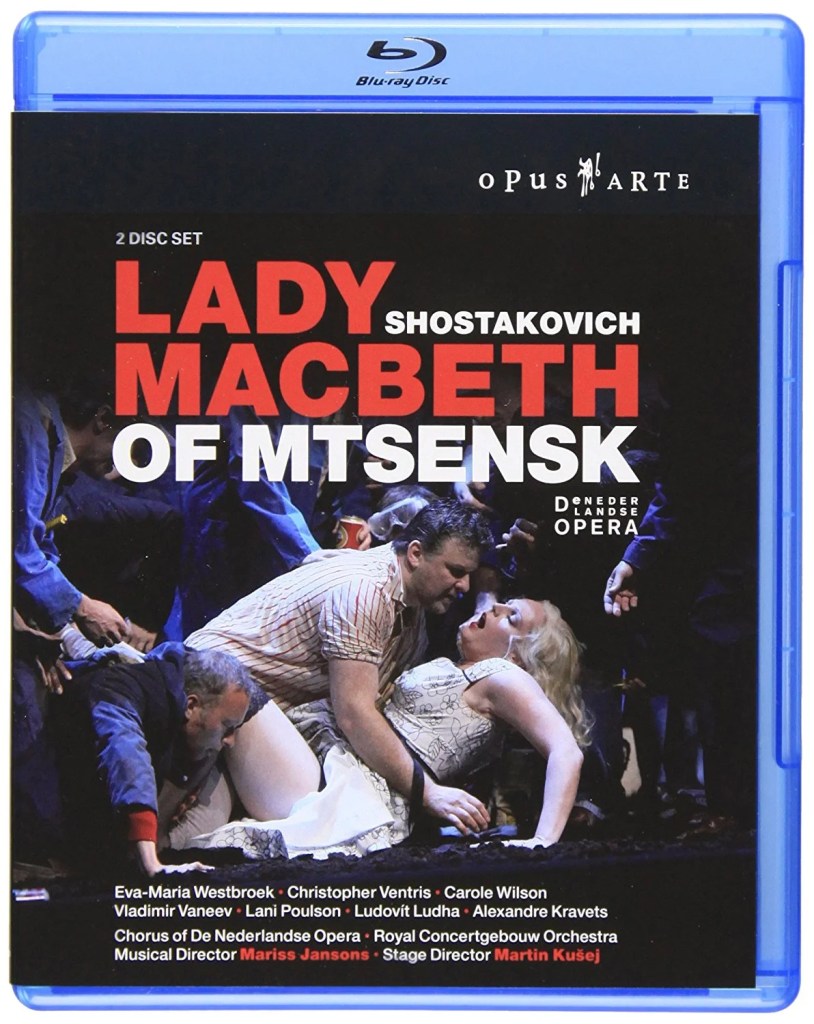
EVA-MARIA WESTBROEK, Amsterdam, 2006


In October 2006, Eva-Maria Westbroek made her widely acclaimed debut at London’s Royal Opera House as Katerina Izmailova. It was even spoken of as ‘one of the most important debuts at Covent Garden ever’

.
But we, the Dutch opera lovers, already knew it, because at the Holland Festival in June 2006, Westbroek made her debut at the Netherlands Opera in the same role, in a performance that received nothing but overenthusiastic reactions.


The production also saw Martin Kušej, a not uncontroversial Austrian opera director, make his debut in our country. In his concept, sexuality and power are closely linked and the opera is a terrible abyss, which can only be described with words like orgasm and manslaughter.

Katerina lives in a glass cage with a hundred pairs of shoes, guarded by dogs and surrounded by mud. Her longing for love and security is never satisfied, because what Sergei has in store for her is pure sex, devoid of any affection.


The musical mix of tragedy and satire, seriousness and humour, lyrical melodies and hard porn was perfectly portrayed scenically by KuÅ¡ej, which was only enhanced by the phenomenally playing Concertgebouw Orchestra conducted by Mariss Jansons. As a bonus, you get an extremely interesting ‘the making of’ documentary (Opus Arte OA 0965).


GLORIA LANE, Rome, 1976


To my knowledge, only one recording exists of Katerina Ismailova’s 1963 adaptation of Lady Macbeth, on the budget label Opera D’Oro (OPD 1388). It is an RAI recording of a broadcast on 29 May 1976 in Rome.

The differences from the original are noticeable right from the first bars: it is milder, without the biting irony, with more melancholy and sadness. The biggest differences are in the intermezzi. The first, for instance, has been replaced by completely different music. Even in the big seduction scene, the bulk of the music has been killed off and almost all the high notes have disappeared from Katerina’s music.

The performance, conducted by Yuri Ahronovich, is most certainly adequate, although I have trouble with William Cochran’s Sergei. It may be just me, but I experience his tenor as pinched rather than sexy. In the lead role, another one of those forgotten greats of yesteryear: Gloria Lane. Her Katerina is very dramatic and full of passion.he making of’ documentary (Opus Arte OA 0965).

Finally, the very interesting documentary Shostakovich against Stalin by Larry Weinstein was once released on Philips (Philips 0743117) with very much historical footage and even more music. The docu can also be found in its entirety on You Tube


Jevgeni Onegin. Discografie

Onegin

Jevgeni Onjegin is geen kleurrijke figuur. Hij is een nogal saaie, verveelde kwast, voor wie zelfs een vrouw versieren te veel moeite is. Door nalatenschap is hij een rijke man geworden en heeft toegang tot de “high society”, maar alles verveelt hem en eigenlijk weet hij zelf niet wat hij wil.

Hij kleedt zich volgens de laatste mode, de vraag is alleen of hij het doet omdat hij van mooie kleren houdt, of omdat het eenmaal zo hoort. Want hoe de dingen horen: dat weet hij wel.

Hij maakt ook amper een ontwikkeling door in de loop van de opera. Hij doodt zijn beste vriend nadat hij met zijn geliefde heeft geflirt – niet omdat hij daar zin in had, maar om hem (en de, in zijn ogen vreselijke, plattelanders) een lesje te leren – en zelfs dat laat hem onberoerd. Pas aan het eind wordt hij “wakker” en er komt iets van een gevoel bij hem binnen. Maar is het heus?

Niet echt iemand aan wie je een opera kan ophangen, vandaar ook dat voor veel mensen de echte hoofdpersoon niet Onjegin maar Tatyana is. Zelf weet ik het niet (als Tsjaikovski het zo had gewild dan had hij de opera “Tatyana” genoemd?), maar dat zij een veel boeiender karakter is dan de man van haar dromen staat buiten kijf.

CD’s

Galina Vishnevskaya

Onegin Vishnevskaya

Men zegt Tatyana, men denkt Galina Vishnevskaya. De Russische sopraan heeft een maatstaf voor de rol gecreëerd, waar nog maar weinig zangeressen aan kunnen tippen. In 1955 heeft zij de rol, samen met alle Bolshoi grootheden uit die tijd, voor de plaat opgenomen

Haar ‘letterscène’ is wellicht de mooiste ooit, maar de opname heeft nog meer te bieden: wat dacht u Sergei Lemeshev als Lensky? Om te likkebaarden!

Sergey Lemeshev als Lensky (zijn grote aria & duel-scène)

Valentina Petrova is een weergaloze Larina, jammer genoeg is de titelheld zelf (Evgeni Belov) een beetje kleurloos. (Melodiya 1170902).


Herman Prey

Evgeny Onegin [Hermann Prey, Fritz Wunderlich, Bayerische Staatsoper,  Keilberth] by Пётр Чайковский [Pyotr Tchaikovsky] (Album, Opera): Reviews,  Ratings, Credits, Song list - Rate Your Music

In 1962 werd de opera live opgenomen in München (Gala GL 100.520). Ingebort Bremmert is te licht voor Tatyana, zij klinkt ook nogal scherp, maar Brigitte Fassbaender maakt veel goed als Olga. Maar voor de verandering doen de dames even niet mee, u koopt het natuurlijk vanwege de heren: Hermann Prey en Fritz Wunderlich.

Prey is een zeer charmante, galante Onjegin, meer een broertje dan een minnaar, maar de stem is zo goddelijk mooi! En over Lensky van Wunderlich kan ik zeer kort zijn: ‘wunderbar’! Het valt mij overigens weer eens op hoe sterk Piotr Beczala op hem lijkt!

Er zijn veel toneelgeluiden en het geluid is dof met veel te veel bassen. En het is natuurlijk in het Duits, maar ja, zo ging dat in die tijd. Maar het is een weergaloos document en zeker vanwege de beide zangers eigenlijk een must.

Duel-scène uit de opname (met beeld!):

Bernd Weikl

Onegin Solti

In 1974 heeft Georg Solti de opera voor Decca opgenomen (4174132) en die lezing geldt nog steeds als één van de besten. In Stuart Burrows had hij de beste Lensky na Wunderlich en vóór Beczala tot zijn beschikking en Teresa Kubiak was de personificatie van Tatyana. Jong, onschuldig, een tikje geëxalteerd aan het begin van de opera en berustend aan het einde

Onder zijn leiding bloeide het orkest (Orchestra of the Royal Opera House) als de korenbloemen in de Russische velden, waardoor het duidelijk werd waarom de componist zijn opus magnus als ’lyrische scènes’ en niet als opera beschouwde.

Bernd Weikl is een zeer verleidelijke Onjegin, zijn zeer kruidige bariton is bijzonder sexy. Nicolai Ghiaurov is natuurlijk legendarisch in zijn rol van Gremin en voor mij is Michel Sénéchal wellicht de beste Triquet ooit. Enid Hartle verdient speciale vermelding als Filipyevna.


 Thomas Allen

 Onegin Levine

Ik wil wat langer stilstaan bij Onjegin van Sir Thomas Allen. Hij heeft de rol ettelijke keren gezongen: zowel in het Russisch als in het Engels. In 1988 nam hij hem voor DG (423 95923) op. Tatyana werd gezongen door Mirella Freni – in de herfst van haar carrière werd het één van haar paradepaardjes. Zij overtuigt dan ook meer als de oudere Tatyana dan als het jonge meisje, maar aan haar lezing valt niets op aan te merken.

Neil Shicoff, toen nog een pracht van een lyrico was een zeer idiomatische Lensky, maar Anne Sophie von Otter overtuigde maar matig als Olga. Onder James Levine liet het Staatskapelle Dresden een onverwacht lyrisch geluid horen, met mooie lange bogen, maar niet gespeend van een gezond gevoel voor drama.

Maar goed: het gaat voornamelijk om Thomas Allen. Zijn lezing van de titelheld is bijzonder spannend en dramatisch goed onderbouwd, het is werkelijk fascinerend om te horen hoe Onjegin’s neerbuigende houding in I verandert in een zinderende passie in III. Een stemkunstenaar, niet minder.


Het is ook zeer interessant om te zien hoe hij jonge mensen coacht bij een ‘Onjegin masterclass’ (onder zijn “leerlingen” is o.a. James Rutherford):

DVD’s

Boris Pokrovsky

Onegin Pokrovski

Boris Pokrovsky is een levende legende. Decennialang, van 1943 tot 1982, was hij operadirecteur van het Bolshoi Theater in Moskou. Zelfs in Nederland is hij niet onbekend: in 1996 was hij met zijn nieuwe gezelschap, de Kameropera van Moskou, bij ons ‘op bezoek’ met Leven met een idioot van Alfred Schnittke.

Zijn productie van Onjegin, in 2000 in het Bolshoi in Moskou voor tv opgenomen (Arthaus Musik 107 213) dateert oorspronkelijk uit 1944. Het is natuurlijk een klassieker met alles erop en eraan. Weelderige kostuums, natuurgetrouwe decors, alles zoals het ‘hoort’.

Al bij het opengaan van het toneeldoek komt het eerste ‘open doekje’. Mensen vinden het mooi. Neem het ze kwalijk: het is ook mooi! Sterker nog: het is prachtig! Zo zie je het natuurlijk niet meer. Denk aan Zeffirelli, maar dan echt authentiek, zonder een enkele vrijheid. Je moet het minstens een keer gezien hebben, alleen al om te weten hoe het oorspronkelijk bedoeld was.

De onbekende zangers zijn allemaal gewoon goed, maar de close-ups werken een beetje lachwekkend. Het is natuurlijk ook geen productie om op tv te vertonen, je moet het daadwerkelijk zien in het operahuis. De kans daartoe is echter nihil: de productie van Boris Pokrovsky is na meer dan 60 jaar trouwe dienst door een nieuwe productie van Dmitri Tcherniakov vervangen. Koop de dvd en mijmer over de ‘goede oude tijden’, want ze komen echt niet meer terug.

https://my.mail.ru/video/embed/1560297859847322722

Mariusz Kwiecien (Dmitri Tcherniakov)

Onegin Tsjer

Aan de productie van Dmitri Tcherniakov (Bel Air BAC046) ben ik met een enorme dosis scepsis begonnen. Zijn besluit om de oude legendarische productie van Boris Pokrovsky te vervangen was zeer dapper, want de Moskovieten (en niet alleen de Moskovieten) waren er zeer aan gehecht. Bovendien: je moet toch echt goed in je schoenen staan en zeker zijn van jezelf om een LEGENDE durven te vervangen. Daar kwam nog bij dat ik van de cast – op Kotsjerga en Kwiecien na  –  geen van de zangers kende.

Ik heb het geweten, want vanaf het begin zat ik op het puntje van mijn stoel. De enscenering, kostuums, bühnebeeld, decors en rekwisieten – alles klopt, al is het niet zoals het in een doorsnee ‘Onegin’ gaat. De hele eerste en tweede acte speelt zich in dezelfde ruimte af: de eetkamer in het huis van Larina, met prominent een lange tafel en stoelen. Dezelfde tafel en stoelen komen ook in III terug, maar dan in een veel rijkere ambiance.

Tatyana wordt zeer goed geacteerd door Tatiana Monogarova. Ze is bleek, spichtig en lichtelijk autistisch. Ze zit opgesloten in haar eigen gedachtenwereld. De buitenwereld maakt haar bang, ze wil er niet bij horen, ze wil weg, schuilen. Monogarova zingt een beetje tegen de toon aan, wat soms irritant aandoet, maar haar portrettering maakt alles goed.

Lensky (een goede, al niet hemelbestormende Andrey Dunaev) is door zijn onnozelheid, drammerigheid en jaloezie eigenlijk de aanstichter van het kwaad. Ook Tatyana heeft een aandeel in het drama, al is zij het zich niet bewust.

Olga (Margarita Mamsirova) is gewoon een flirt en vanaf het begin daagt zij Onegin uit. Zij is het zuchten van haar dichtende vriendje meer dan zat. En geef haar maar ongelijk!

Ook Larina (een waanzinnig goed zingende en acterende Makvala Kasrashvili) krijgt meer aandacht dan gebruikelijk. Het moment waarop zij, terugdenkend aan haar jeugdjaren, een borrel achterover slaat en even moet huilen, is zeer hartroerend. Maar zij herstelt zich gauw en alles blijft bij het oude.

Mariusz Kwiecien (Onjegin) is inderdaad onweerstaanbaar. Of laat ik het anders formuleren: hij zet zo’n verveelde, zich boven alles en iedereen verheven voelende klootzaak (sorry voor het woord!) neer zoals ik het nog nooit eerder heb gezien en dat blijft hij eigenlijk tot het eind.

Krampachtig probeert hij bij de ‘high society’ te horen, waar ze hem niet lusten. Zelfs zijn plotseling ontvlamde liefde voor Tatyana doet onecht aan. Op zijn knieën biedt hij haar een bos rode rozen aan en als zij weigert met hem te vluchten, probeert hij haar te verkrachten.

Waardig loopt Tatyana de bühne af aan de arm van haar echtgenoot waarop Onjegin een pistool tevoorschijn haalt, maar de zelfmoord wordt ons bespaard, want zonder getuigen is er natuurlijk niets aan.

Trailer:

Dmitri Hvorostovsky (Robert Carsen)

Onegin Carsen 

En dan hebben we nog Robert Carsens productie voor de Metropolitan Opera, opgenomen in februari 2007 (Decca 0743298). Ik ben een enorme Carsen-adept en vind bijna alles wat hij doet geweldig. Zo ook deze Onjegin

Zijn enscenering is zeer realistisch en volgt het libretto nauwkeurig. In de eerste akte is de bühne bezaaid met herfstbladeren, maar voor de rest is alles eigenlijk kaal en is er bijna geen decor. Een bed voor de ‘briefscène’, verder wat stoelen in de tweede en derde akte. Bij het duel is de bühne helemaal leeg.

Het is niet storend. Integendeel. De kostuums zijn werkelijk prachtig, maar zeker in de eerste akte doen ze mij meer aan Engelse Jane Austen-verfilmingen dan aan het Russische platteland denken. Echt storend is het niet, het oog wil ook wat, maar Renée Fleming is te glamoureus voor een boerentrien, waardoor haar omschakeling naar een trotse prinses minder indruk maakt.

Onjegin (Dmitri Hvorostovsky) is hier voornamelijk een dandy, zeer met zijn uiterlijk bezig. Nou is Dima in alle aspecten een buitengewoon aantrekkelijke zanger, maar in zijn confrontatiescène met Tatyana doet hij meer aan pappa Germont dan aan Onjegin denken.

Ramón Vargas behoorde in 2007 tot één van de beste lyrische tenoren, maar Lensky was hij niet. Hij doet werkelijk zijn best, hij ziet er ook uit als een heuse dichter, maar die rol heeft wat meer smachten nodig.

Zoals gebruikelijk is Carsens personenregie werkelijk onovertroffen en zelfs Fleming lijkt af en toe te ontdooien. Jammer genoeg is haar Russisch totaal onverstaanbaar.

Fleming en Hvorostovsky in de laatste scène van de oper

Meer Jevgeni Onegin:

JEVGENI ONJEGIN van Stefan Herheim

JEVGENI ONEGIN in de regie van Kaspar Holten. ROH 2013