Edith_Mathis

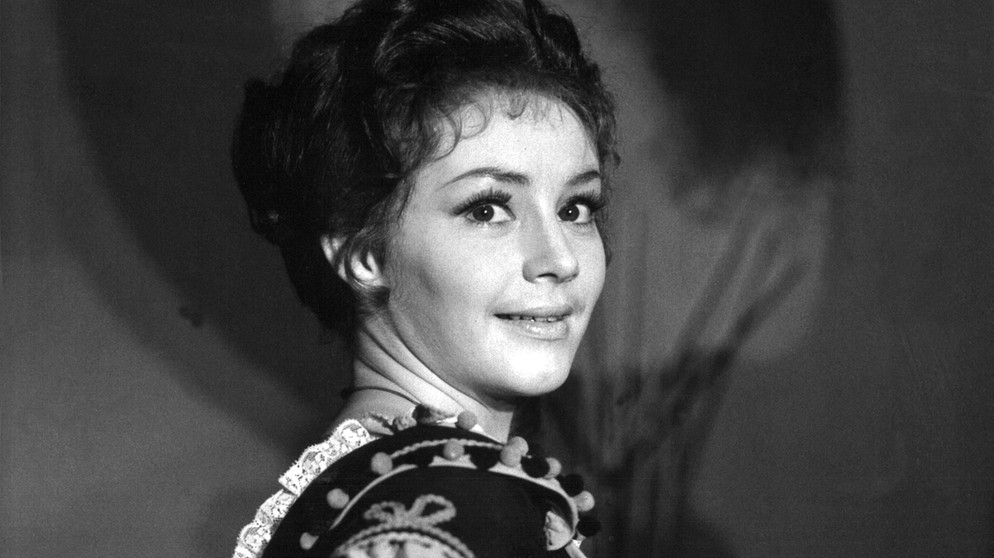
Edith Mathis as Emily, Ginevra, Pamina, Sophie, Susanna…

© picture-alliance / dpa

Hilfe, Hilfe Die Globolinks (Emily)
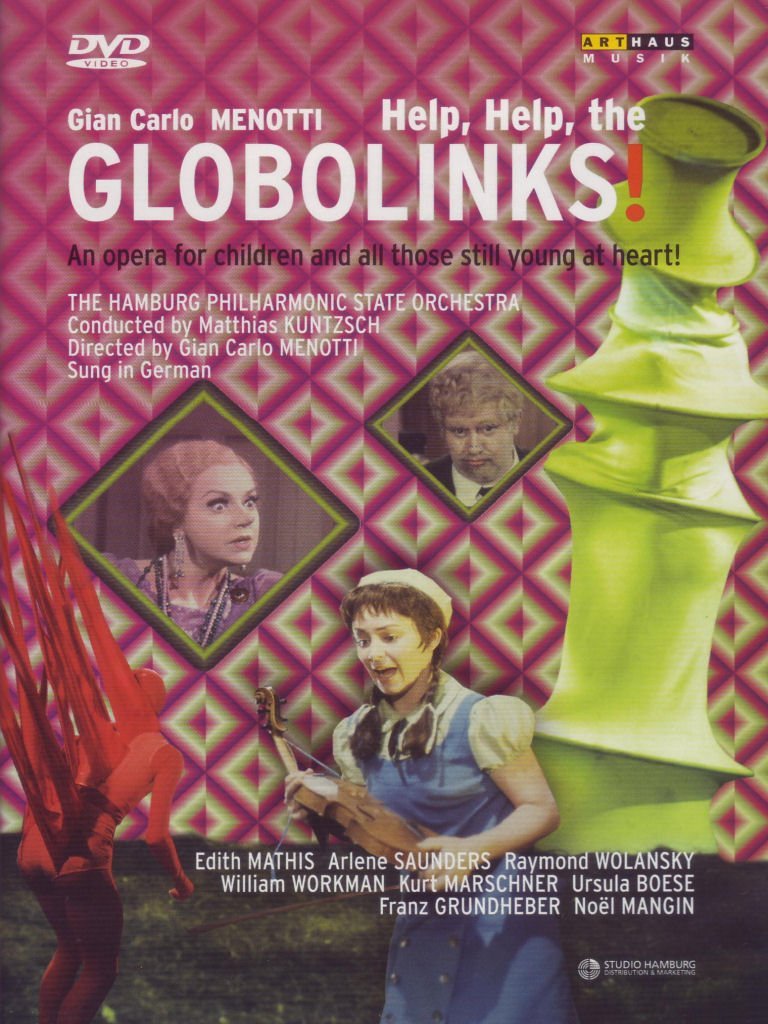
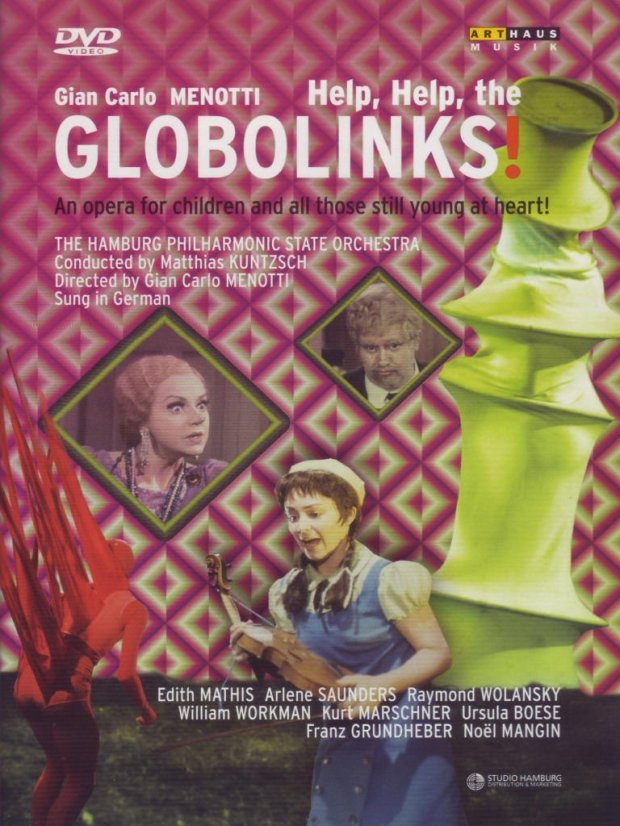
Especially for Hamburg, the Italian-American composer and director Gian Carlo Menotti composed Hilfe, Hilfe Die Globolinks!, an opera ‘for children and for those who love children’. The premiere took place in 1968 and a year later it was filmed in the studio.

I must confess that I’m not a big fan of children’s operas, but I’ve been shamelessly enjoying this one. It is an irresistible fairy tale about aliens (Globolinks) who are allergic to music and can only be defeated by means of music.

The images are very sensational for that period, full of colour and movement and the forest little Emily (the irresistible Edith Mathis) has to go through with her violet to get help is really frightening. The aliens are a bit of a let-down according to modern standards, but that doesn’t matter, it gives the whole a cuddly shine. The work is bursting with humour and irony; musical barbarians are lashed out at: the school principal who doesn’t like music turns into an alien himself.

There are also a lot of one-liners (“music leads you to the right path” or “when music dies, the end of the world is near”). It is incomprehensible a work like this is not performed all the time in every school (and I don’t mean just for the children), the subject is (and remains) very topical.

None of the roles, including the children, could be better cast, and this once again proves the high standard of the Hamburg ensemble. In which other city would you find so many great singers/actors who can perform so many different roles on such a high level?

Ariodante (Ginevra)
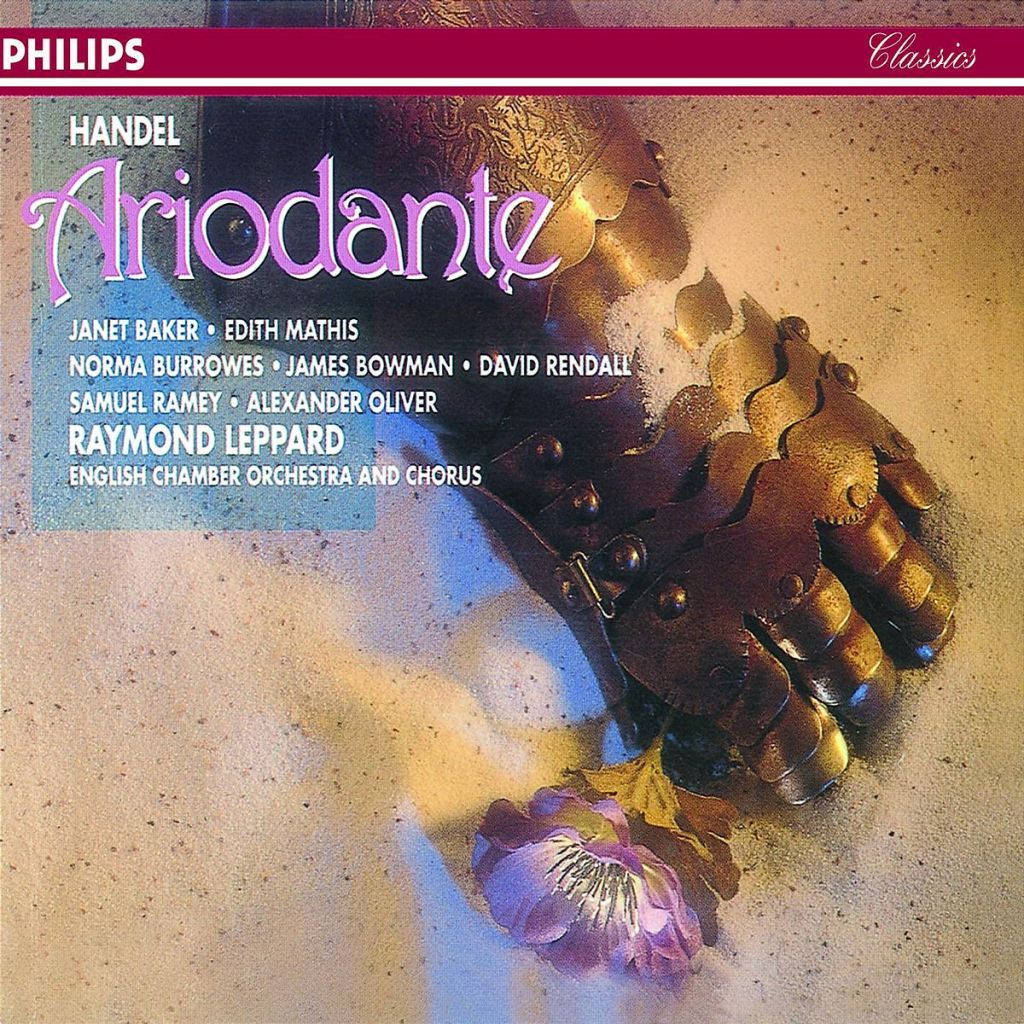
Listening to Janet Baker is always a feast. Her Ariodante sounds old-fashioned heartwarming.

Warm-blooded too. And sopranos Edith Mathis (Ginevra) and Norma Burrowes (Dalinda) are a pure joy to listen to.

Edith Mathis sings “Si, morrò, ma l’onor mio”:

Nozze di Figaro (Susanna)


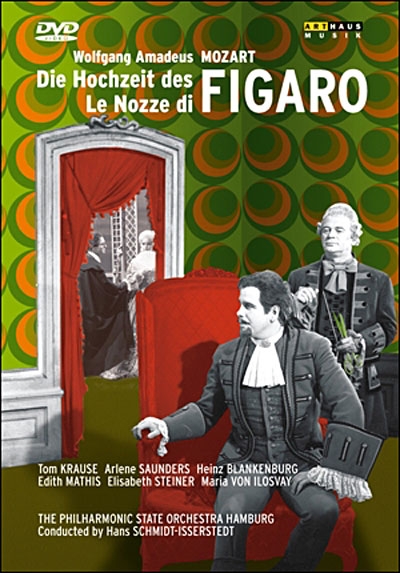
This reconstructed production of Die Hochzeit des Figaro (yes, it is sung in German) is of great historical value. But it has more to offer; the production is magnificent, the orchestra of the Hamburg Opera under conductor Hans Schmidt-Isserstedt is excellent and the singers are all idiomatic.

The American baritone Heinz Blankeburg is a droll Figaro and as Susanna, Edith Mathis is simply wonderful. I would actually like to shout it from the rooftops: this is how Susanna is meant to be! The young Tom Krause is a more than delightful Count and Arlene Saunders as the Countess, is a real match for him (and his timbre).

Cherubino
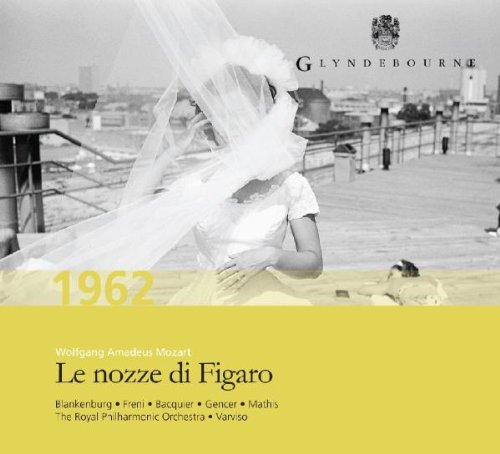
From 1960 on, all operas performed at Glyndebourne were recorded live. The more-than-valuable archive began to be polished off and transferred to CDs in 2008.

It was no coincidence that it was precisely Figaro’s Wedding that inaugurated the new series: after all, that opera gave the go-ahead to the new festival in 1934, which is now among the most prestigious in the whole world.


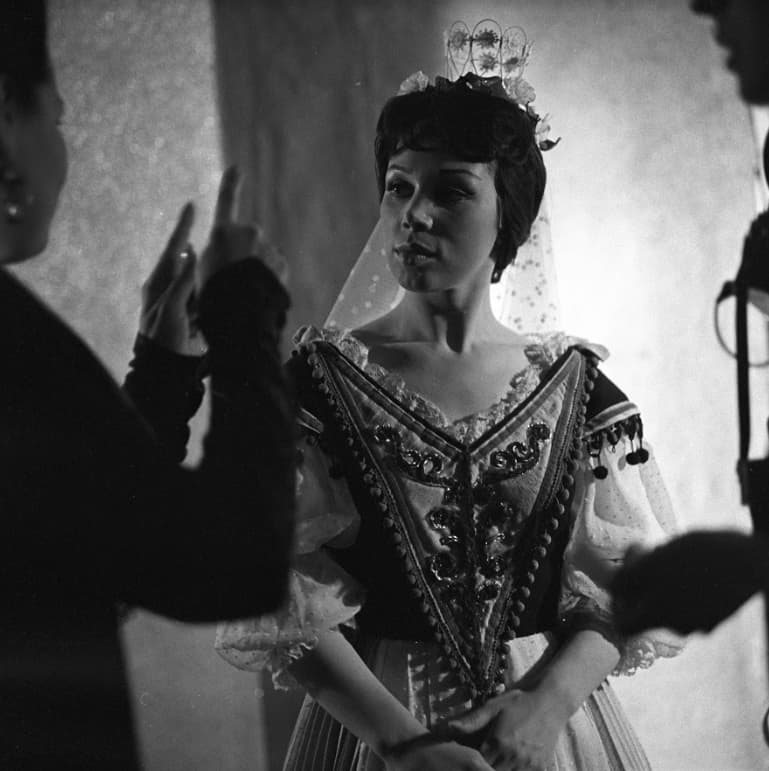
Gabriel Bacquier does not immediately associate you with Almaviva, and the Contessa is not the role you think of in connection with Leyla Gencer, but they both sing beautifully, with a great sense of nuance. The rest of the cast is also fantastic, headed by Mirella Freni (Susanna), then still at the beginning of her career, and the very young Edith Mathis as the ideal soprano-Cherubino

Salzburg Festival 1966 directed by Karl Böhm:

Rosenkavalier (Sophie)
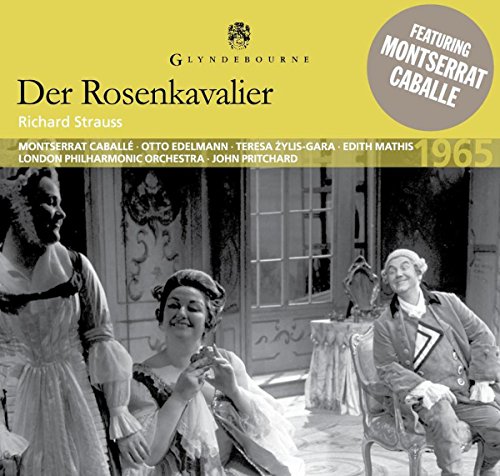
Montserrat Caballé (Marschallin) is a beautiful, young and spirited Marschallin, who enriches the role ‘at his Caballés’ with the most beautiful pianissimos and legatos.Teresa Zylis-Gara is a wonderfully light-sounding Octavian and Edith Mathis a Sophie who sounds like a 15-year-old girl. Otto Edelmann (Ochs) completes the fantastic recording

Edith Mathis as Sophie, here with Tatiana Troyanos (Octavian) in Salzburg 27 July 1969:

Zauberflöte (Pamina)
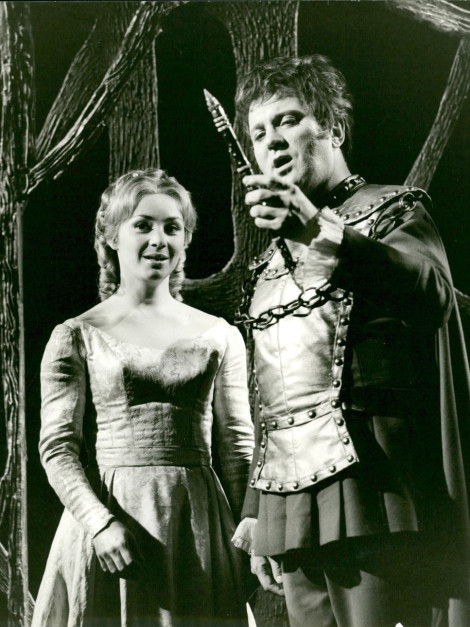
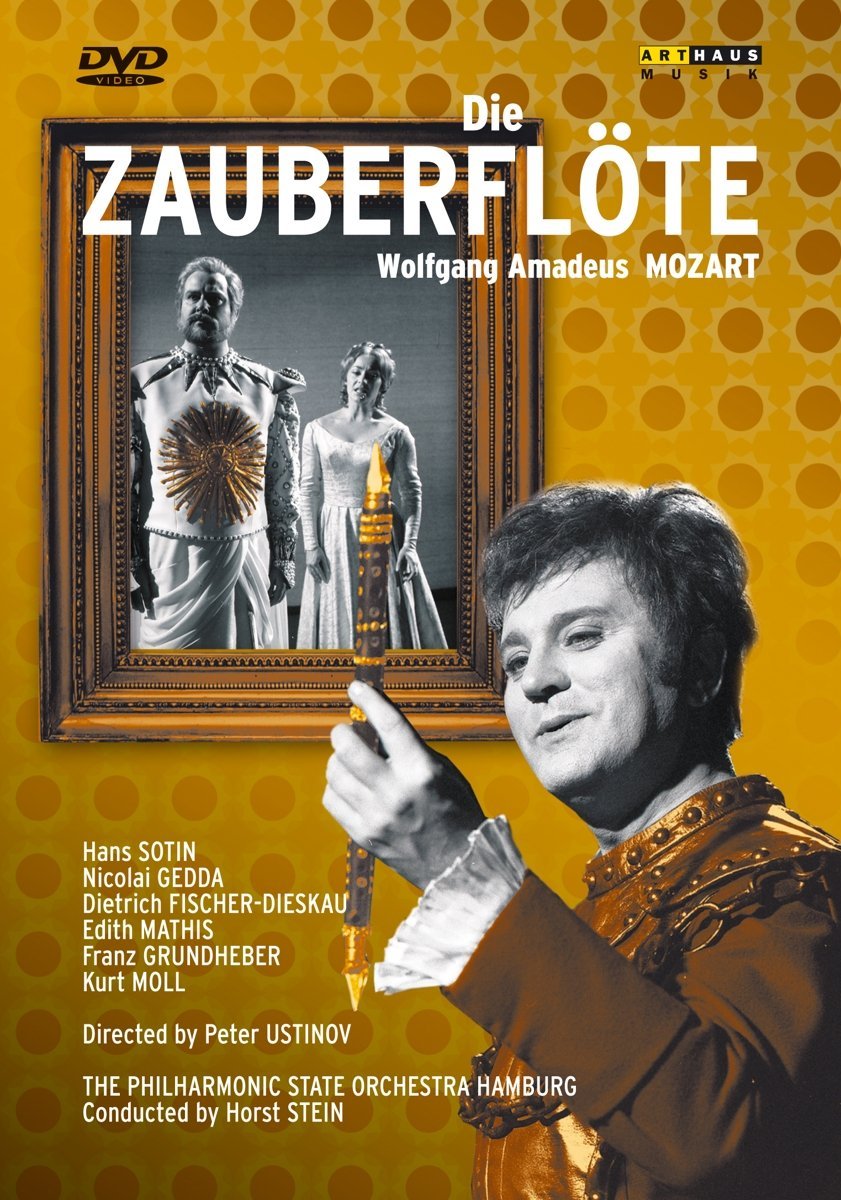
I think it’s one of the most important Magic Flutes ever, especially because of the singers! Shall I name them? Nicolai Gedda, Hans Sotin, the young Franz Grundhebber, Edith Mathis, Kurt Moll; Fischer-Dieskau, Kurt Moll , the very underrated William Workman and ….. last but not least! YES! Our ‘own’ Deutekom in her parade role.
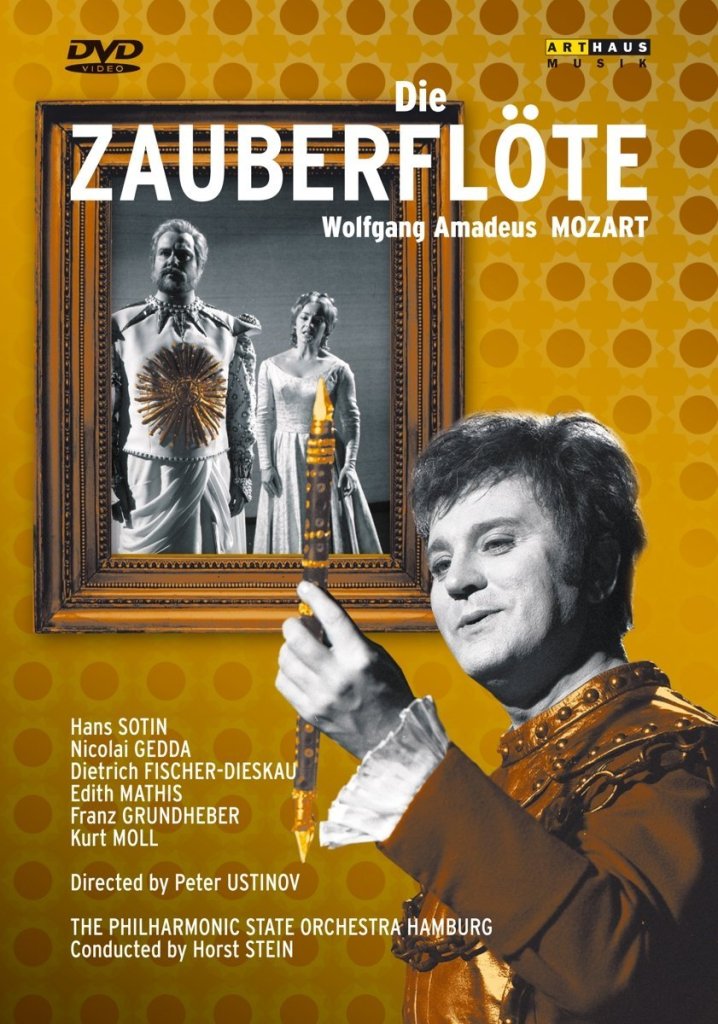

Edith Mathis & Nicolai Gedda in „Mein, o welch ein Glück!’


Edith Mathis died 9 Februari 2025, only three days before her 86th birthday
Rest in Peace Grandiosa!

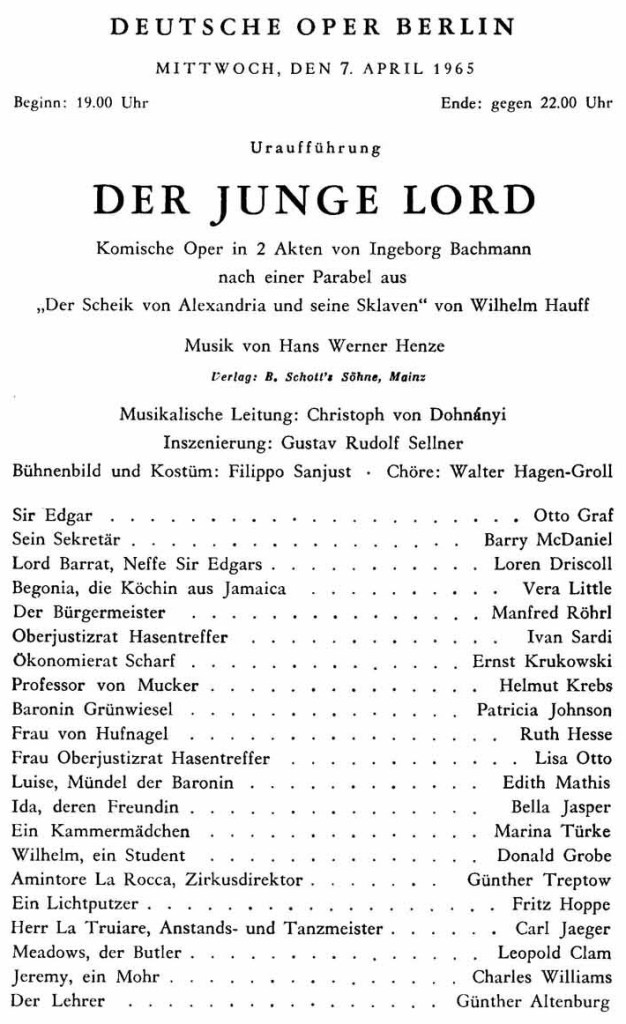
Der junge Lord van Henze. Satire? Of meer?

Tekst: Peter Franken

Dit werk ging in 1965 in première aan de Deutsche Oper Berlin. Net als bij Mozart en Schikaneder is het de vraag wie de belangrijkste bijdrage heeft geleverd aan het ontstaan. De aftiteling van de Unitel opname uit DOB die daar in 1968 werd gemaakt vermeldt librettist Ingeborg Bachmann als de auteur van het werk, ‘met muziek van Henze’.

Bachmann was echter in hoge mate schatplichtig aan het verhaal Der Affe als Mensch van Wilhelm Hauff uit 1826. De getoonde productie met decors en kostuums van Filippo Sanjust doen volledig recht aan deze periode, op het karikaturale af. Je zou het kunnen omschrijven als Biedermeier naturalisme zoals geproduceerd door een zondagsschilder. De regie is in handen van Gustav Rudolf Sellner, de toenmalige intendant van DOB.

Henze en Bachmann

Het verhaal is volstrekt ongerijmd en leent zich uitstekend voor de opera buffa die Bachmann en Henze er van wisten te maken. In Hülsdorf-Gotha, een kleine stad in Oberfranken, wachten alle notabelen met spanning op de komst van een nieuwe belangrijke en vooral zeer rijke bewoner: Sir Edgar. De eerste twee koetsen die arriveren blijken echter tot hun teleurstelling en verwondering slechts een complete menagerie aan exotische dieren te bevatten. Pas in derde instantie arriveert de door Prinz Heinrich aanbevolen Engelsman zelf.

Zijn secretaris doet het woord en slaat alle uitnodigingen voor welkomstfestiviteiten beleefd af. Hij spreekt voor zijn werkgever die overigens de gehele opera geen mond open zal doen. Men is in zijn waardigheid aangetast maar schikt zich in zijn lot, Prinz Heinrich zal wel geweten hebben wie hij hen op hun dak heeft gestuurd. En de man heeft het grootste pand in de stad gekocht voor zeer veel geld, op termijn zal hij de plaatselijke economie wel stimuleren.

Maar als Sir Edgar wordt uitgenodigd voor de thee bij barones Grünwiesel stuurt hij zijn Moorse lakei in vol oosters ornaat pas met een bericht van afwijzing als haar salon al vol zit met alle echtgenotes van heren die er toe doen in de stad. De vernedering is groot en ze neemt zich voor hem zijn verblijf onmogelijk te maken. Dan arriveert een klein Italiaans circus en verschijnt Sir Edgar voor het eerst sinds zijn komst buiten op het plein.

Nu voelt alles en iedereen zich geschoffeerd: voor die nietsnutten komt hij wel naar buiten terwijl hij de gehele sociale bovenlaag al die tijd heeft genegeerd. De burgemeester wil het circus wegsturen omdat ze niet voor hun vergunning hebben betaald maar Sir Edgar springt bij. Nog erger wordt het als de gehele troupe door de secretaris naar binnen wordt genood om de gastvrijheid van Sir Edgar te genieten. Behalve de obligate krachtpatser, koorddanseres en jongleur zit er ook een gedresseerde Orang-oetan bij.

Louise is het mooiste meisje van de stad en wordt opgevoed als pupil van de barones. Ze is gecharmeerd van de student Wilhelm maar de barones denkt dat er een betere partij voor haar is weggelegd, eentje die ook haar eigen status verder kan verhogen. Niettemin weten die twee elkaar te vinden en over en weer verklaren ze hun liefde. Intussen worden er vreemde jammerkreten uit Sir Edgars huis gehoord.

Als de notabelen om opheldering komen vragen vertelt de secretaris dat een neef van Sir Edgar uit Engeland is overgekomen en dat die nog veel moeite heeft zich de Duitse taal aan te leren. Gepast geweld moet deze jonge Lord Barrat stimuleren om beter zijn best te doen. Daar heeft iedereen alle begrip voor, zonder tuchtiging wordt het immers niets met opvoeden en onderwijzen? Maar als de jonge Lord zover is zal iedereen wordt uitgenodigd om tijdens een feestelijke ontvangst met hem kennis te maken.

Het verdere verloop is voorspelbaar. De barones probeert Louise aan die hoog adellijke heer te koppelen. Die valt als een blok voor hem en een gedroomde toekomst, Wilhelm heeft het nakijken. Hij is de enige die overal doorheen kijkt: die man gedraagt zich onbeheerst en kan maar een paar zinnen uitbrengen. Later wordt dat beter en binnen een paar maanden is hij the talk of the town die onmerkbaar een voorbeeldfunctie heeft gekregen. Beter gezegd: men gaat hem imiteren. Een Engelse lord is nu eenmaal altijd een beetje excentriek en hij brengt leven in de brouwerij. Naar verwachting zal tijdens een bal in het casino de verloving van Louise met die bijzondere Engelsman bekend worden gemaakt.

Barrat danst met Louise en maakt daarbij vreemde hoge sprongen die vooral door de jongere gasten braaf worden geïmiteerd. Vervolgens loopt alles echter vreselijk uit de hand doordat Barrat ‘zijn manieren’ begint te verliezen en als de ontreddering compleet is neemt Sir Edgar zijn neef het gezichtsmasker af: hij is een aap. Louise probeert zich te redden door te zwijmelen dat alles een kwade droom is geweest. Wilhelm weet wel beter maar heeft er geen belang bij haar al te zeer tegen te spreken.

De gehele gemeenschap voelt zich in zijn hemd gezet. Het waarom hiervan blijft onduidelijk. Welke drijfveer kan die Engelsman hebben gehad hen een spiegel voor te houden om te tonen dat men zich slaafs gedraagt als gedresseerde wezens die elkaar alleen maar na-apen?  Zij zijn kleinburgerlijk maar dat was in die tijd de norm in Duitsland, een reactie op woelige tijden die standhield tot revolutiejaar 1948. En waarom moest Sir Edgar zich zo nodig in dat oord vestigingen als hij er sowieso geen deel van uit wenste te maken?

From DER JUNGE LORD by Ingeborg Bachmann and Hans Werner Henze – Edith Mathis with Loren Driscoll and Bella Jasper © Archiv Deutsche Oper Berlin, April 1965

Sopraan Edith Mathis is betoverend mooi als de onstandvastige Louise. Haar vriendin Ida wordt alleraardigst vertolkt door coloratuursopraan Bella Jasper. Comic relief komt van mezzo Vera Little als Begonia, de Jamaicaanse kokkin van Sir Edgar en van Margarete Ast dankzij haar Mrs. Bouquet act als barones Grünwiesel.

Tenor Donald Grobe is een prima Wilhelm en bariton Barry McDaniel maakt goede sier als de onverzettelijke secretaris die altijd precies weet te vertellen wat zijn meester wil. De titelrol wordt met verve vertolkt door tenor Loren Driscoll. Qua zang wordt er niet heel veel van hem gevergd, zijn rol steunt op acteren. Omdat het moeilijk valt te voorspellen hoe een getrainde aangeklede Orang-oetan zich zal gedragen in de sociale omgang met grote groepen bewonderaars, heeft de regie hem vooral robotachtige bewegingen laten instuderen die tegen het einde ontaarden in wilde gebaren, hoge sprongen en de aankondiging van regelrecht geweld. Op dat moment laat Sir Edgar zijn zweep knallen waarop het dier op slag kalmeert en gedwee met zijn meester het casino uit loopt, terug naar huis. De vele overige rollen zijn stuk voor stuk naar behoren bezet.

Muzikaal is het werk een collage van Mozart, Lortzing, Strauss en Stravinsky. Veel eigenwijs geklets van in hun eigen belangrijkheid verstrikte notabelen en vergelijkbaar gekwetter van hun echtgenotes die maar al te graag het gevolg van de barones vormen. Het is aardig om eens te bekijken en ook wel om te beluisteren. Maar als middel tegen de existentiële angst die het ontstaanstijdperk bij de twee scheppers had doen ontstaan is het ongeloofwaardig en volledig gedateerd. Niettemin een waardevol tijdsdocument. Christoph von Dohnányi heeft de muzikale leiding.

.

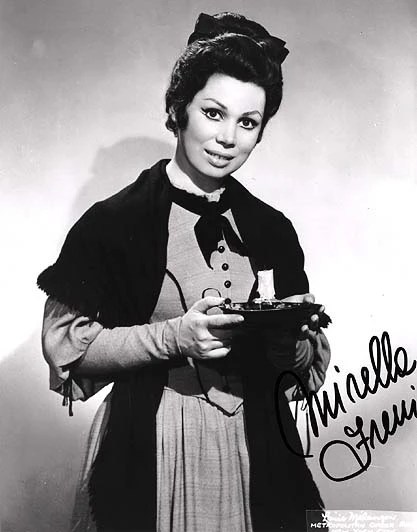
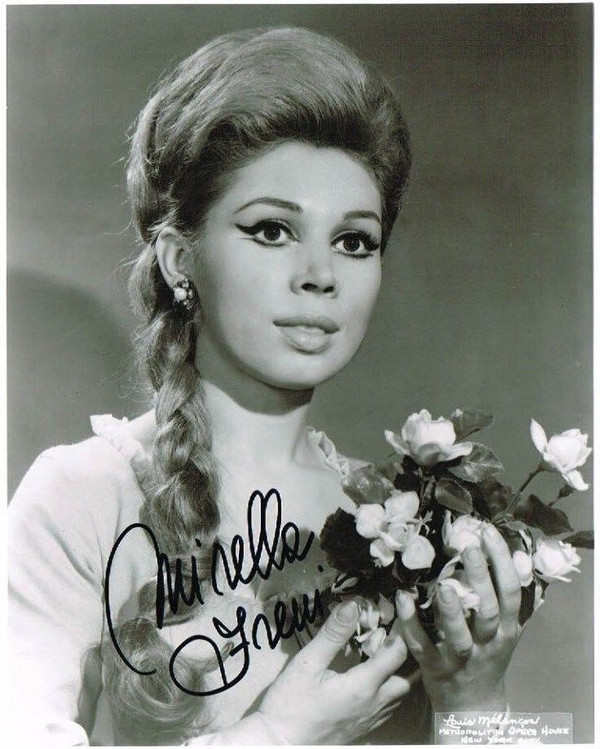
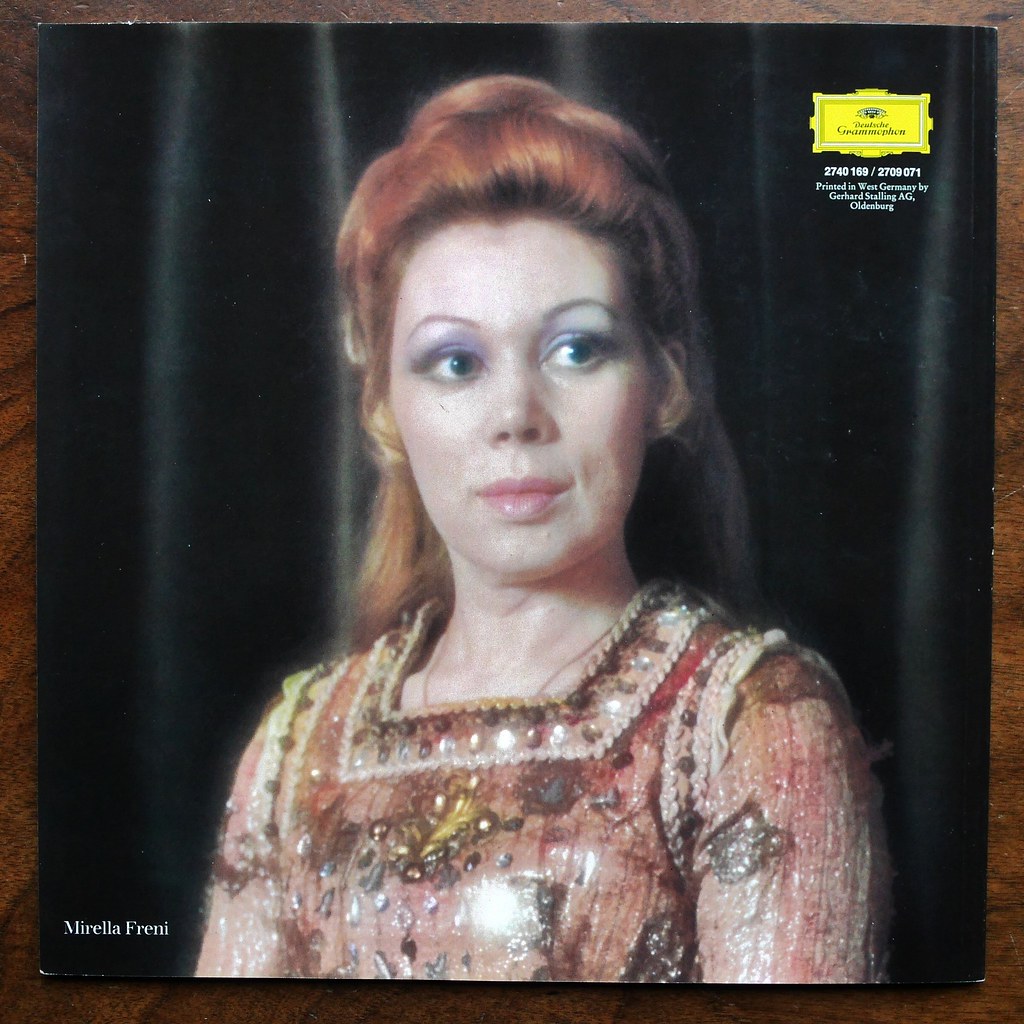
Mirella Freni as Susanna, Mimi, Adina, Amelia, Marguerite and Fedora

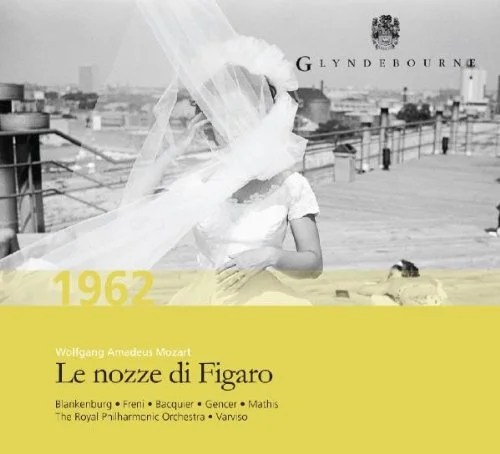
Le Nozze di Figaro Glyndebourne 1962

From 1960 on, all operas performed at Glyndebourne were recorded live. The more-than-valuable archive began to be polished off and transferred to CDs in 2008.

It was no coincidence that it was precisely Figaro’s Wedding that inaugurated the new series: after all, that opera gave the go-ahead to the new festival in 1934, which is now among the most prestigious in the whole world.

photo © Houston Rogers


Gabriel Bacquier does not immediately associate you with Almaviva, and the Contessa is not the role you think of in connection with Leyla Gencer, but they both sing beautifully, with a great sense of nuance. The rest of the cast is also fantastic, headed by Mirella Freni (Susanna), then still at the beginning of her career, and the very young Edith Mathis as the ideal soprano-Cherubino. (GFOCD 001-62))


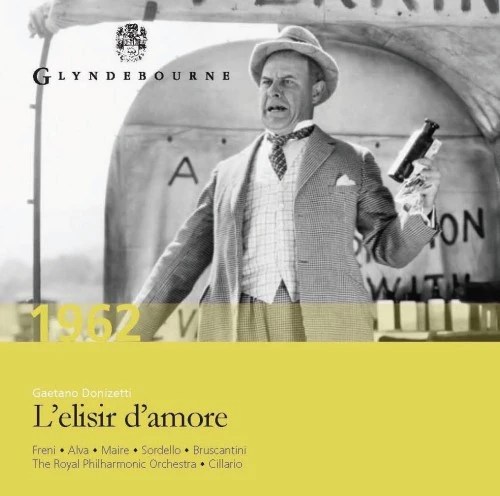
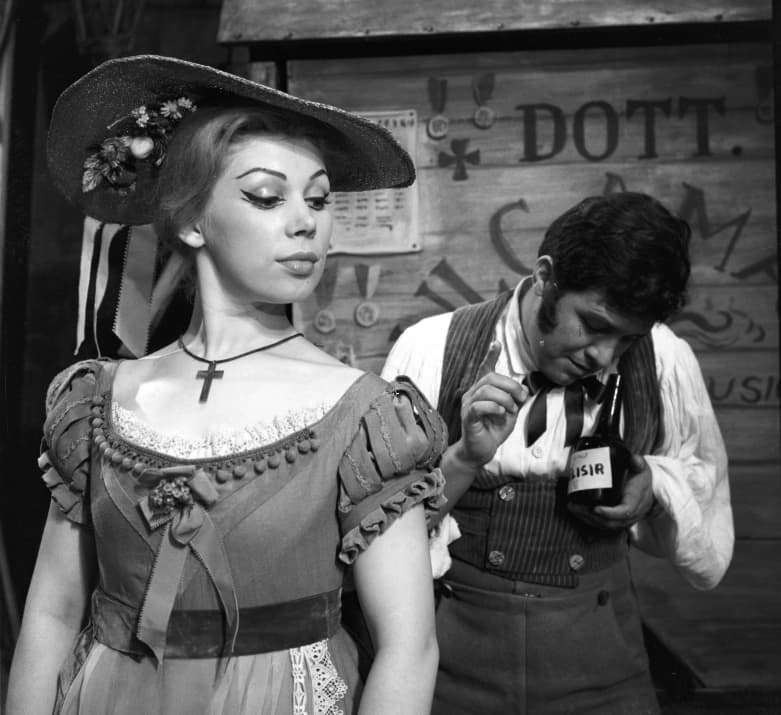
Elisir d’Amore Glyndebourne 1962


Adina marked Mirella Freni’s international breakthrough. Understandable, when you hear how beautifully she gives shape to the role: charmingly and wittily she lets her beautiful lyrical young girl soprano blossom and her height is radiant.


Luigi Alva’s velvety timbre and perfect coloratura technique made him a Mozart and Rossini tenor who was much in demand at the time, and Donizetti also fits him like a glove. His ‘Una furtiva lagrima’ may sound slightly less sweet-voiced than Tagliavini’s or Schipa’s, but his interpretation of the character of Nemorino is formidable.

Sesto Bruscantini is easily one of the best Dulcamaras in history and Enzo Sordello a very masculine Belcore.

La Bohème

MET 1965


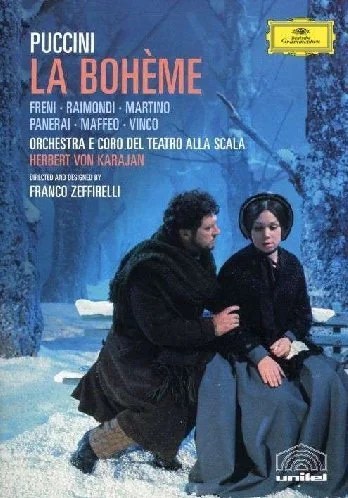
Mirella Freni made her debut as Mimì at the Metropolitan Opera in September 1965. Her Rodolfo was another debutant: the (how unfair!) nowadays almost completely forgotten Italian tenor Gianni Raimondi. For me, he is preferable to Pavarotti. I find his voice more pleasant and elegant. And he could act!


Freni’s and Raimondi’s renditions were captured on a wonderful film, directed by Franco Zeffirelli and conducted by Herbert von Karajan. An absolute must (DG 0476709).


“O Soave Fanciulla” with Freni and Raimondi:

MET 1973


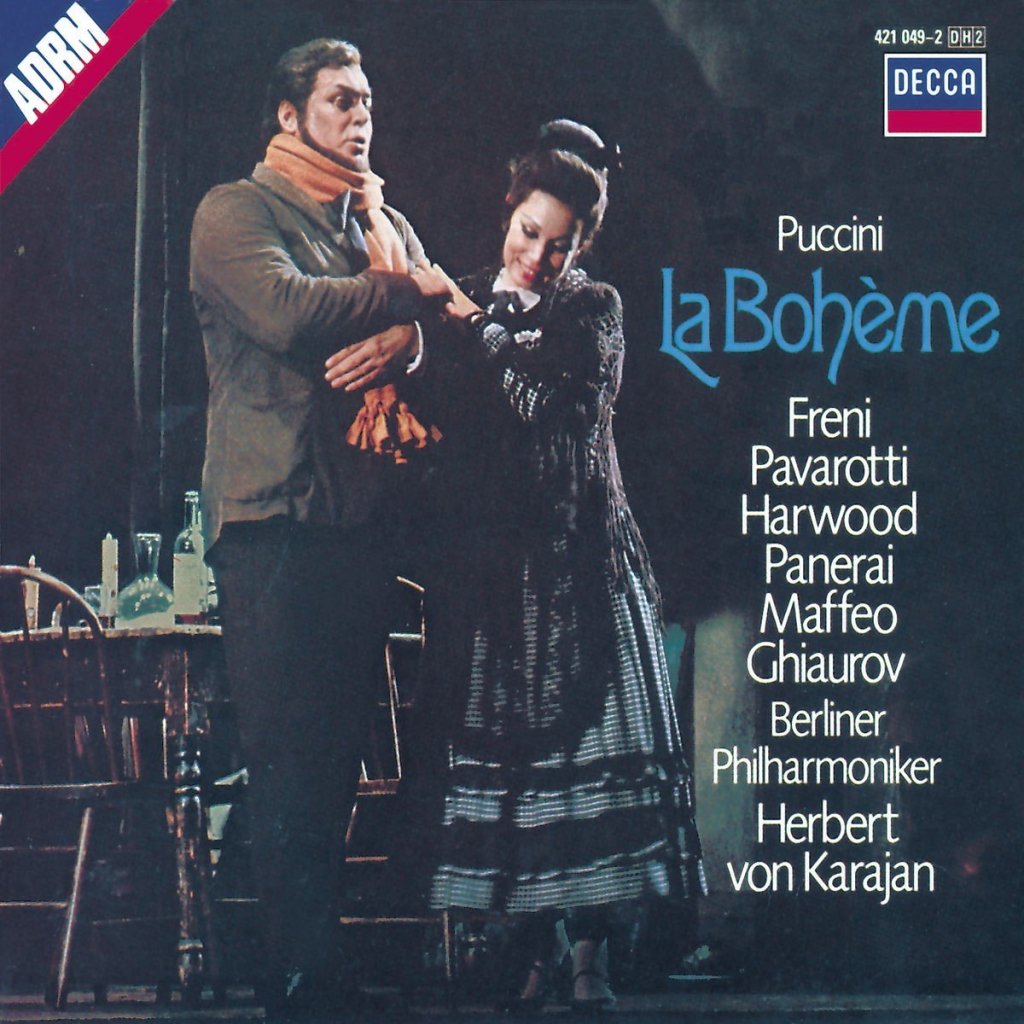
Many opera lovers will probably agree on one thing: one of the best Bohèmes ever is the 1973 version recorded by Decca under von Karajan. With Mirella Freni and Luciano Pavarotti.


Rodolfo has always been Pavarotti’s calling card. For years he was considered the best interpreter of the role – his fantastic legato, the smoothness and naturalness with whih he sang the high notes are truly exemplary. Incidentally, as befitted a typical Italian tenor of the time, he sang the end of “O soave fanciulla” at the same height as the soprano. Not prescribed, but it was tradition!


Freni was undoubtedly one of the most beautiful Mimi’s in history. Tender and fragile, with her heartbreaking pianissimi and legato arches she managed to move even the greatest cynics to tears.

Von Karajan conducted theatrical and passionate way, with ample attention to the sonic beauty of the score. As the Germans would say “das gab’s nur einmal.”


In 2008 we celebrated not only Puccini’s 150th birthday, but also von Karajan’s 100th. Moreover, it was 35 years since the famed conductor recorded La Bohème: a cause for celebration! And lo and behold – Decca has released the opera in a limited deluxe edition (Decca 4780254). On the bonus CD, Mirella Freni talks, among other things, about her relationship with von Karajan and about singing Puccini roles. It is really fascinating.


SIMON BOCCANEGRA 1977

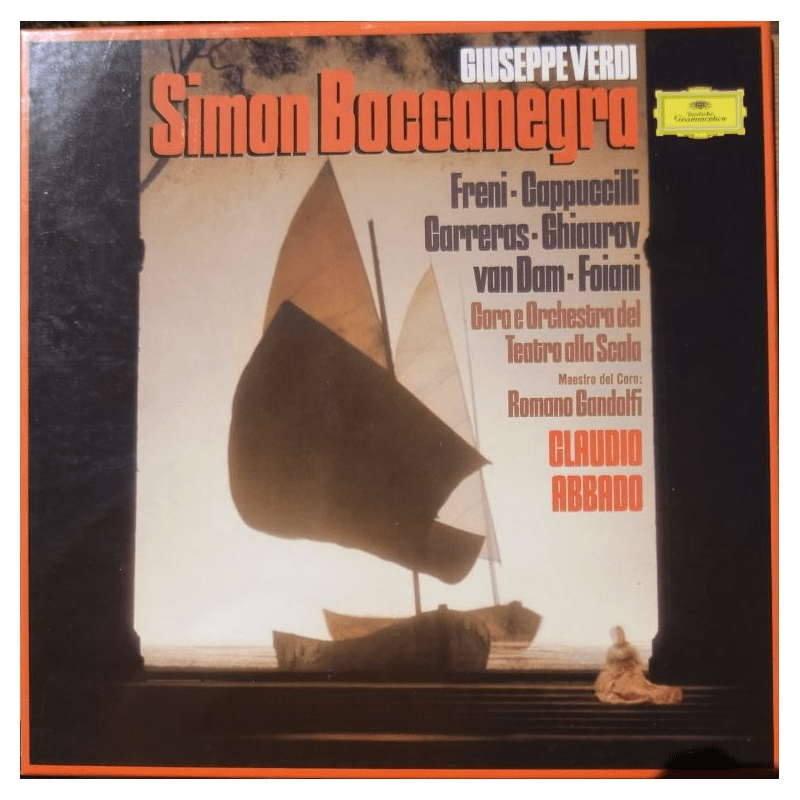
In 1971, Claudio Abbado conducted a magisterial and now legendary performance of Boccanegra at La Scala. It was directed by Giorgio Strehler and the beautiful sets were designed by Ezio Frigerio. In 1976, the production was shown at the ROH in Covent Garden. Unfortunately, no official (there are ‘pirates’ in circulation) video of it was made, but the full cast did fortunately go into the studio, and thus the ultimate ‘Simone’ was recorded in 1977 (DG 4497522).

Abbado treats the score with such love and such reverence as if it were the greatest masterpiece of all time, and under his hands it really does transform into a masterpiece without parallel. Such tension, and with all those different nuances! It is so, so beautiful, it will make you cry.


The casting, too, is the best ever. Piero Cappuccilli (Simon) and Nicolai Ghiaurov (Fiesco) are evenly matched. Both in their enmity and reconciliation, they are deeply human and always convincing, and in their final duet at the end of the opera, their voices melt together in an almost supernatural symbiosis:

Before that, they had already gone through every range of feeling and mood, from grievous to hurtful, and from loving to hating. Just hear Cappuccilli’s long-held ‘Maria’ at the end of the duet with his supposedly dead and now found daughter (‘Figlia! A tal nome palpito’).
José van Dam is an exquisitely vile Paolo and Mirella Freni and Jose Carreras are an ideal love couple. The young Carreras had a voice that seems just about created for the role of Adorno: lyrical with a touch of anger, underlining Gabriele’s brashness. Freni is more than just a naive girl; even in her love for Adorno, she shows herself to be a flesh-and-blood woman

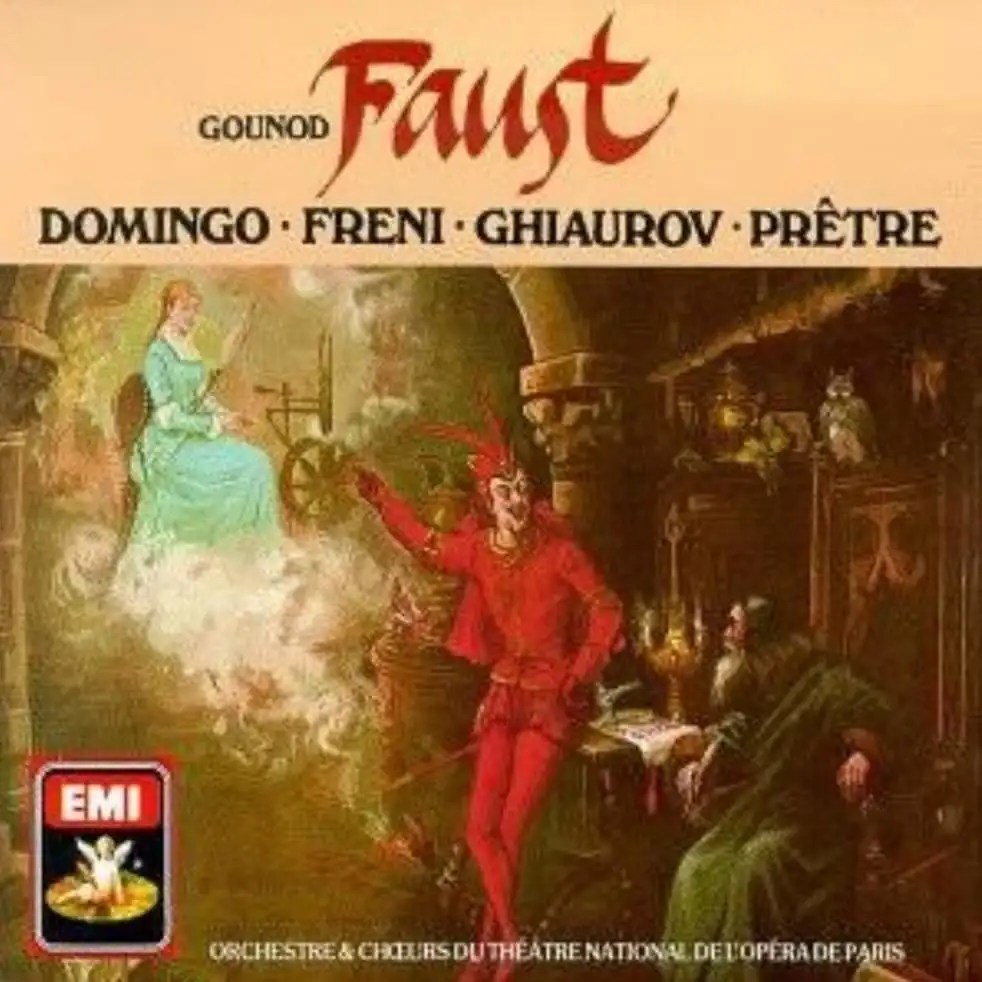
Gounod: Faust


Gounod’s Faust with Plácido Doming, Mirella Freni and Nicolai Ghiaurov was recorded in 1979 by EMI (now Warner) and it is easily one of the best recordings of the work. The orchestra of the Paris Opera is conducted by Georges Prêtre, one of the best conductors of French repertoire.

The cast is finger-licking gorgeous: Mirella Freni is a fragile and sensual Marguerite and Nicolai Ghiaurov a very impressive Méphistophélès. In the small role of Valentin we hear none other than Thomas Allen.

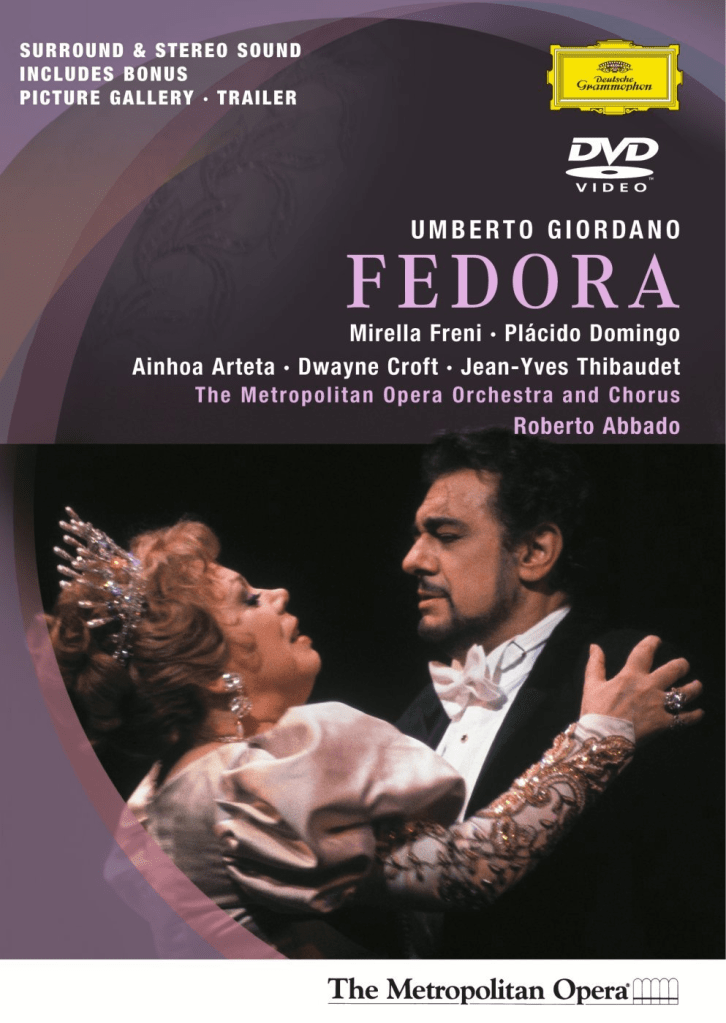
Fedora 1996

When she was sixty, Mirella Freni included Fedora in her repertoire and she gave a series of performances in Italy and Spain, finally coming to the Met in 1996. It became an enormous success. No wonder, because La Freni’s voice was extraordinary. I have never before seen her act with such intensity; it is a performance of the highest level.


Ainhoa Arteta is truly delightful as the flirtatious, spirited Olga; her performance provides the necessary comic note. As the Polish pianist, Boleslao Lazinski, the real piano virtuoso appears: Jean-Yves Thibaudet. Not only can he play the piano very well, but throughout his performance he convinces as a real primadonna, it is very entertaining to watch.
Domingo also portrays a perfect Loris: tormented and oh so charming!

The staging is conventional, with lavish, larger-than-life sets and real snow behind the stage-sized windows. It is just beautiful (DG 0732329).

— 

Le Nozze di Figaro from Hamburg: Arlene Saunders in memoriam

Arlene Saunders, Soprano With a Dramatic Flair, Dies at 89 - The New York  Times

In 1967 Liebermann was still in charge of the Hamburg opera house. He made sure they offered a good, solid and varied repertoire with special attention to the contemporary repertoire.He built a fantastic ensemble of singers and attracted foreign stars and would-be stars ( the world career of Plácido Domingo took off in Hamburg).

Liebermann is now regarded as the founding father of Regietheater, (German for director’s theater), although his ideas were very different from today’s conceptualism, in which the boundary between the permissible and the ridiculous is sought and often crossed

Nozze Hamburg

The reconstructed production of Die Hochzeit des Figaro (yes, it is sung in German) is of great historical value. But it has more to offer; the production is magnificent, the orchestra of the Hamburg Opera under conductor Hans Schmidt-Isserstedt is excellent and the singers are all idiomatic.

The American baritone Heinz Blankeburg is a droll Figaro and as Susanna, Edith Mathis is simply wonderful. I would actually like to shout it from the rooftops: this is how Susanna is meant to be! The young Tom Krause is a more than delightful Count and Arlene Saunders as the Countess, is a real match for him (and his timbre).


We even get a bit of historical ‘maestro to the pit’ as part of the recording. Atmittedly, the tape is not completely reconstructed, there are gaps and the colours are very much “the sixties”. It doesn’t matter, I’m very happy to enjoy it al (Arthaus Musik 101263)


De hele opera:

Plea for Giancarlo Menotti and his operas.


Consul Gian_Carlo_Menotti_Paris-962x538

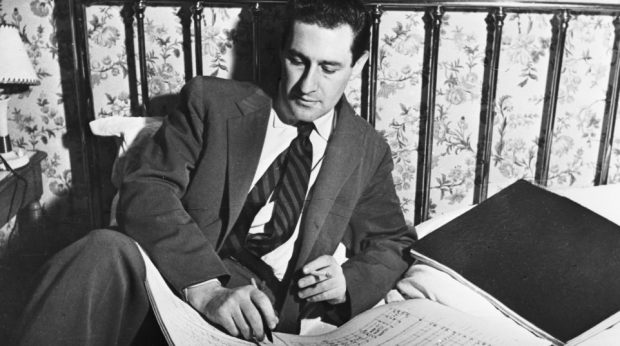
Giancarlo Menotti. For most Dutch opera lovers, he is no more than a vaguely familiar name. His operas have never been very popular here and performances can be counted on one hand.

A pity, really, because not only is his music exceptionally beautiful (think of a combination of Mascagni and Britten), but the subjects he deals with in his (self-written) libretti are socially engaged and they address current topics.

THE CONSUL

Consul


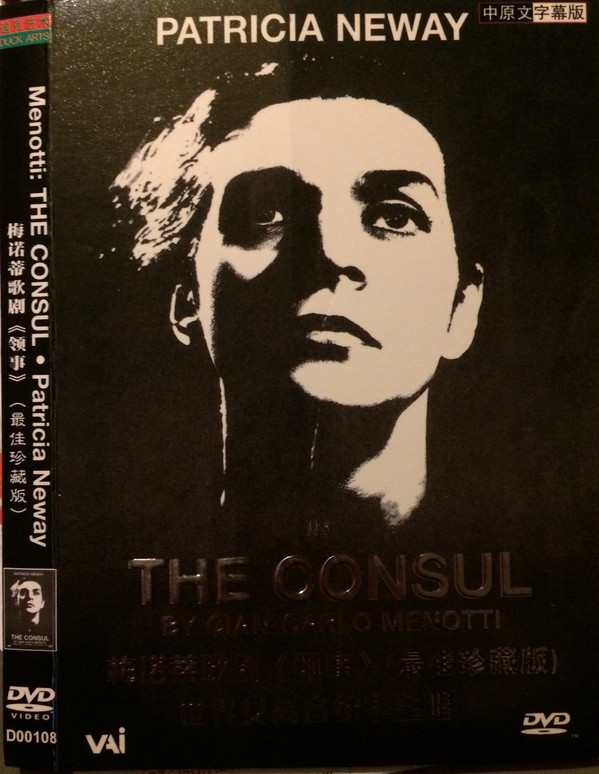
A newspaper article of February 12, 1947 on the suicide of a Polish emigrant whose visa for the USA had been rejected, was seen by Menotti, who sadly remembered the fate of his Jewish friends in Austria and Germany (his own partner, the composer Samuel Barber, was also Jewish). He took this sorry tale and used it as a basis for his first full-length opera. The subject has – unfortunately – lost none of its actuality and The Consul is and remains an opera that cuts right through your soul.


In 1960, it was produced for television, and that registration has been released on DVD by VAI (4266 ). In black and white, without subtitles (don’t be alarmed, there is very clear singing) and extremely dramatically portrayed by Jean Dalrymple.

Patricia Neway sings ‘To This We’ve Come’:


HILFE, HILFE DIE GLOBOLINKS!

Liebramann Globolinks

This opera is ‘for children and for those who love children’. The premiere took place in 1968 in Hamburg and a year later it was filmed in the studio.

I must confess that I’m not a big fan of children’s operas, but I’ve been shamelessly enjoying this one. It is an irresistible fairy tale about aliens (Globolinks) who are allergic to music and can only be defeated by means of music.

The images are very sensational for that period, full of colour and movement and the forest little Emily (the irresistible Edith Mathis) has to go through with her violet to get help is really frightening. The aliens are a bit of a let-down according to modern standards, but that doesn’t matter, it gives the whole a cuddly shine. The work is bursting with humour and irony; musical barbarians are lashed out at: the school principal who doesn’t like music turns into an alien himself.

There are also a lot of one-liners (“music leads you to the right path” or “when music dies, the end of the world is near”). It is incomprehensible a work like this is not performed all the time in every school (and I don’t mean just for the children), the subject is (and remains) very topical.

None of the roles, including the children, could be better cast, and this once again proves the high standard of the Hamburg ensemble. In which other city would you find so many great singers/actors who can perform so many different roles on such a high level?

Help, help, the Globolinks are coming and only music can save us!

Liebramann Globolinks

Especially for Hamburg, the Italian-American composer and director Gian Carlo Menotti composed Hilfe, Hilfe Die Globolinks!, an opera ‘for children and for those who love children’. The premiere took place in 1968 and a year later it was filmed in the studio.

I must confess that I’m not a big fan of children’s operas, but I’ve been shamelessly enjoying this one. It is an irresistible fairy tale about aliens (Globolinks) who are allergic to music and can only be defeated by means of music.

The images are very sensational for that period, full of colour and movement and the forest little Emily (the irresistible Edith Mathis) has to go through with her violin to get help is really frightening. The aliens are a bit of a let-down according to modern standards, but that doesn’t matter, it gives the whole a cuddly shine. The work is bursting with humour and irony; musical barbarians are lashed out at: the school principal who doesn’t like music turns into an alien himself.

There are also a lot of one-liners (“music leads you to the right path” or “when music dies, the end of the world is near”). It is incomprehensible a work like this is not performed all the time in every school (and I don’t mean just for the children), the subject is (and remains) very topical.

None of the roles, including the children, could be better cast, and this once again proves the high standard of the Hamburg ensemble. In which other city would you find so many great singers/actors who can perform so many different roles on such a high level?

Le Nozze di Figaro uit Hamburg: Arlene Saunders in memoriam

Arlene Saunders, Soprano With a Dramatic Flair, Dies at 89 - The New York  Times

In 1967 was Liebermann nog de baas van het Hamburgse operahuis. Hij zorgde voor een goed, gedegen en gevarieerd repertoire met extra veel aandacht voor het hedendaags repertoire, bouwde er een fantastisch zangersensemble op en trok buitenlandse sterren en would-be sterren (in Hamburg begon de wereldcarrière van Plácido Domingo) aan.

Liebermann wordt tegenwoordig gezien als de vader van het regietheater, alleen bedoelde hij er iets anders mee dan het huidige conceptualisme waarin de grens tussen het toelaatbare en belachelijke opgezocht en vaak overschreden wordt

Nozze Hamburg

De zo goed mogelijk gereconstrueerde productie van Die Hochzeit des Figaro (ja, er wordt in het Duits gezongen) is van een grote historische waarde, maar dat niet alleen. De productie is prachtig, het orkest van de Hamburgse Opera is onder dirigent Hans Schmidt-Isserstedt voortreffelijk en de zangers stuk voor stuk idiomatisch.

De Amerikaanse bariton Heinz Blankenburg is een koddige Figaro en als Susanna is Edith Mathis gewoon niet te versmaden. Eigenlijk zou ik het van daken willen roepen: zo is Susanna bedoeld! Zo en niet anders! De jonge Tom Krause is een meer dan heerlijke Graaf en Arlene Saunders een Gravin die perfect bij hem (en zijn timbre) past.

We krijgen als onderdeel van de opname zelfs een stukje historische ‘maestro to the pit’ voorgeschoteld. Goed: de band is niet helemaal gereconstrueerd, er zitten hiaten in en de kleuren zijn echt jaren zestig. Geeft niets, dat alles neem ik graag voor lief. Aanbevolen! (Arthahaus Musik 101263)

Twenty years after his death: Rolf Liebermann In Memoriam

Liebermann

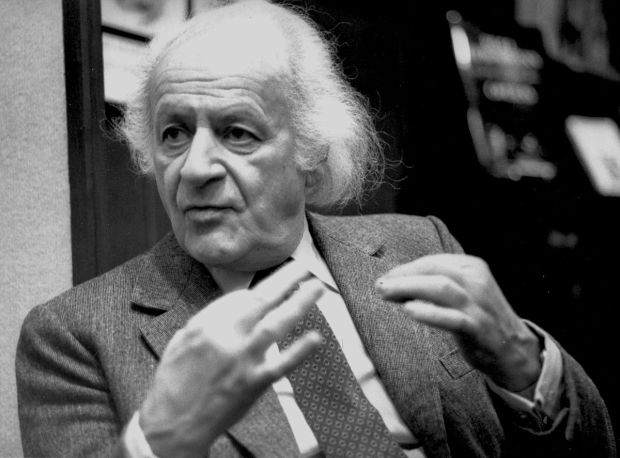
Rolf Liebermann © Claude Truong-Ngoc (1980

The Swiss composer Rolf Liebermann (14 September 1910 – 2 January 1999) is nowadays seen as the father of Regietheater, although he meant something different from the current conceptualism in which the boundary between the permissible and the ridiculous is explored and often crossed.

Under his leadership, the Hamburg State Opera, where he ruled for fourteen years between 1959 and 1973, grew into one of the best and most talked-about opera houses in the world. Liebermann created a good, solid and varied repertoire with special attention to contemporary works, built a fantastic artists’ ensemble and attracted foreign stars and would-be stars (Plácido Domingo’s world career began in Hamburg). Arlene Saunders, William Workman, Raymond Wolansky, Franz Grundhebber, Tom Krause, Hans Sotin, Toni Blankenheim – they all formed a solid and close-knit ensemble, with the occasional addition of a bigger (read: more familiar to the general public) name: Lucia Popp in Fidelio and Zar und Zimmerman, Cristina Deutekom, Dietrich Fischer-Dieskau and Nicolai Gedda in Die Zauberflöte, Sena Jurinac in Wozzeck.

Liebermann boek

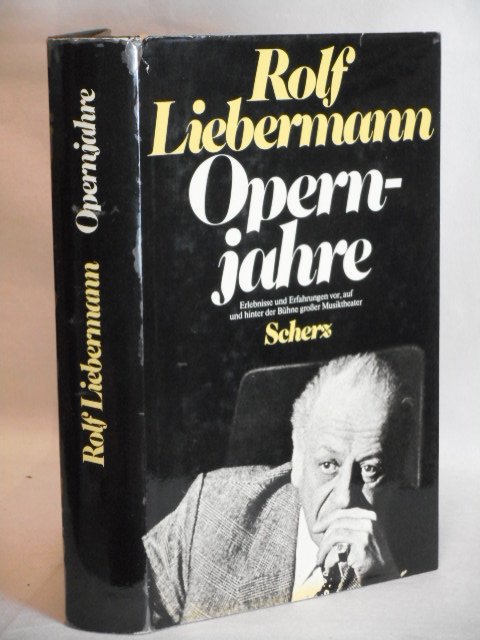
Liebermann also regularly commissioned compositions. In the years of his management no less than 28 operas and ballets had their world premiere, a number many an opera house should be jealous of. Later, in his autobiographical book ‘Opernjahre’, Liebermann described his time at the Hamburg State Opera as the happiest time of his life. I can imagine that. If you were able to realise so much beauty at such a high level, you can only be intensely happy.

Luckily for us, who have not (consciously) experienced those years, Liebermann was also thinking about the future and had director Joachim Hess record thirteen productions for television. Most of the recordings took place in a studio. With the means available at the time, it was impossible to record sound and images at the same time. This meant that first a musical soundtrack had to be pre- recorded, after which the singers could mime to it in the studio very precisely, so everything was in sync.

Liebermann box

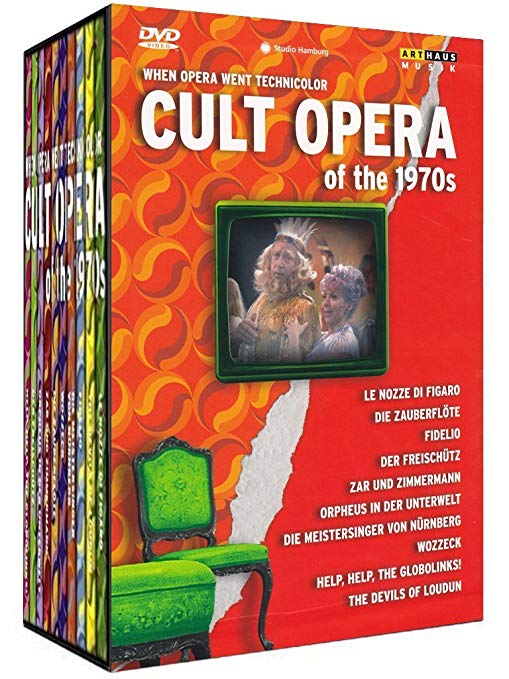
About ten years ago, Arthaus Musik released these operas on DVD. Of course, by today’s technical standards, it’s all far from perfect. The sound is mono and the camera is rather static, but for the enthusiast there is a lot to enjoy, not in the least because of the repertoire.

PENDERECKI: DIE TEUFEL VON LOUDUN

Liebermann Penderski

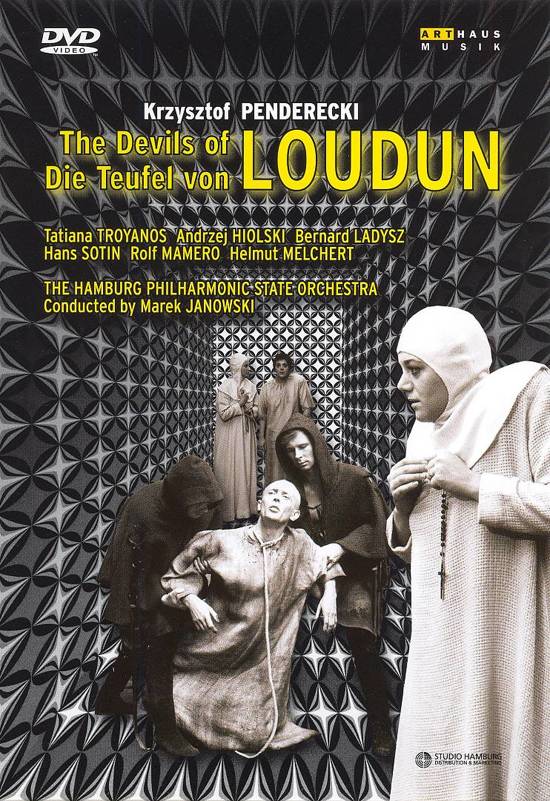
In 1967 Liebermann approached Krzysztof Penderecki with the request to compose an opera for Hamburg. The result was Die Teufel von Loudun, for which the composer himself had written the libretto. The story is based on a true event: in Loudun (France) in 1634, a Prioress of the Ursuline Order accused a priest of diabolical practices for which he was sentenced to be burned at the stake.

The opera had its world premiere on 20 June 1969 and shortly afterwards it was filmed. The leading role of mother Jeanne was performed in a very impressive way by Tatiana Troyanos, another great star whose career began in Hamburg (after she had received a grant from the Rockefeller Foundation to further her education in Europe, she auditioned in Hamburg where Liebermann immediately offered her a contract). Her portrait of the hunchbacked demonically possessed nun with sexual visions is breathtaking. Everything about her, from head to toe, acts. Her facial expression changes with every phrase she sings and her voice chills you to the bone.

The horror-like music with its many glissandi and octave leaps evokes a feeling of unease and makes the opera, despite the immense tension, rather uncomfortable to watch. The staging, with a lot of nudity and explicit sex scenes, is very progressive for that time and I can imagine it was experienced as shocking!

First act of DIE TEUFEL VON LOUDUN:

Speaking of music: did you know that William Friedkin used music by Penderecki for his film The Exorcist?

GIAN CARLO MENOTTI: HILFE, HILFE DIE GLOBOLINKS!

Liebramann Globolinks

Especially for Hamburg, the Italian-American composer and director Gian Carlo Menotti composed Hilfe, Hilfe Die Globolinks!, an opera ‘for children and for those who love children’. The premiere took place in 1968 and a year later it was filmed in the studio.

I must confess that I’m not a big fan of children’s operas, but I’ve been shamelessly enjoying this one. It is an irresistible fairy tale about aliens (Globolinks) who are allergic to music and can only be defeated by means of music.

The images are very sensational for that period, full of colour and movement and the forest little Emily (the irresistible Edith Mathis) has to go through with her violet to get help is really frightening. The aliens are a bit of a let-down according to modern standards, but that doesn’t matter, it gives the whole a cuddly shine. The work is bursting with humour and irony; musical barbarians are lashed out at: the school principal who doesn’t like music turns into an alien himself.

There are also a lot of one-liners (“music leads you to the right path” or “when music dies, the end of the world is near”). It is incomprehensible a work like this is not performed all the time in every school (and I don’t mean just for the children), the subject is (and remains) very topical.

None of the roles, including the children, could be better cast, and this once again proves the high standard of the Hamburg ensemble. In which other city would you find so many great singers/actors who can perform so many different roles on such a high level?


Translated with the http://www.DeepL.com/Translator

In Dutch: Rolf Liebermann In Memoriam

Rolf Liebermann In Memoriam

Liebermann

Rolf Liebermann © Claude Truong-Ngoc (1980)

De Zwitserse componist Rolf Liebermann (14 september 1910 – 2 januari 1999) wordt tegenwoordig gezien als de vader van het regietheater, alleen bedoelde hij er iets anders mee dan het huidige conceptualisme waarin de grens tussen het toelaatbare en belachelijke opgezocht en vaak overschreden wordt.

Onder zijn leiding groeide de Hamburgse Staatsopera, waar hij tussen 1959 en 1973 veertien  jaar de scepter zwaaide tot één van de beste en spraakmakendste operahuizen ter wereld. Liebermann zorgde voor een goed, gedegen en gevarieerd repertoire met extra veel aandacht voor de hedendaagse werken, bouwde een fantastisch artiestenensemble op en trok buitenlandse sterren en would-be sterren (in Hamburg begon de wereldcarrière van Plácido Domingo) aan. Arlene Saunders, William Workman, Raymond Wolansky, Franz Grundhebber, Tom Krause, Hans Sotin, Toni Blankenheim – allemaal vormden ze een vast en hecht ensemble, waar af en toe een grotere (lees: voor het grote publiek bekendere) naam aan werd toegevoegd: Lucia Popp in Fidelio en Zar und Zimmerman, Cristina Deutekom, Dietrich Fischer-Dieskau en Nicolai Gedda in Die Zauberflöte, Sena Jurinac in Wozzeck.

Liebermann boek

En hij gaf compositie opdrachten. In de jaren van zijn managent beleefden maar liefst 28 opera’s en balletten hun wereldpremière, een score waar menig operahuis jaloers op zou moeten zijn. Zijn tijd aan de Hamburgse Staatopera beschreef Liebermann later in zijn autobiografische boek ‘Opernjahre’ als de gelukkigste tijd van zijn leven. Daar kan ik me wel iets bij voorstellen. Als je zoveel moois op zo’n hoog niveau wist te realiseren kan je niet anders dan intens gelukkig zijn.

Gelukkig voor ons, die de jaren niet (bewust) hebben meegemaakt, dacht Liebermann ook aan de toekomst en liet regisseur Joachim Hess dertien producties voor de tv vastleggen. De meeste opnamen vonden plaats in een studio. Met de toen beschikbare middelen was het onmogelijk om geluid en beeld tegelijk op te nemen, dus werd eerst de soundtrack gemaakt, waardoor de zangers het in de studio zeer precies konden na-mimen, zodat alles synchroon liep.

Liebermann box

Een jaar of tien geleden werden de opera’s door Arthaus Musik op dvd’s uitgebracht. Naar de hedendaagse technische maatstaven is het allemaal uiteraard verre van perfect. Het geluid is mono en de cameravoering nogal statisch maar voor de liefhebber valt er waanzinnig veel te genieten, niet in de laatste plaats vanwege het repertoire.

PENDERECKI: DIE TEUFEL VON LOUDON

Liebermann Penderski

In 1967 benaderde Liebermann Krzysztof Penderecki met het verzoek een opera voor Hamburg te componeren. Het werd Die Teufel von Loudun, waarvoor de componist zelf het libretto had geschreven. Het verhaal is gebaseerd op een ware gebeurtenis: door het toedoen van een priores van de Ursulinenorde werd in het Franse Loudun in 1634 een priester van duivelse praktijken beschuldigd en tot de brandstapel veroordeeld.

De opera beleefde zijn wereldpremière op 20 juni 1969 en kort erna werd hij verfilmd. De hoofdrol van moeder Jeanne werd op een zeer indrukwekkende manier vertolkt door Tatiana Troyanos, een andere grote ster wiens carrière in Hamburg was begonnen (toen ze een beurs van de Rockefeller Foundation had gekregen om zich in Europa verder te bekwamen, deed ze auditie in Hamburg waar Liebermann haar meteen een contract aanbood). Haar portrettering van de door duivels geplaagde gebochelde non met seksuele visioenen is duizelingwekkend. Alles aan haar, van top tot teen, acteert. Haar gezichtsuitdrukking verandert met elke gezongen frase en haar stem gaat door merg en been.

De horrorachtige muziek met haar vele glissandi en octavensprongen roept een gevoel van onbehagen op en maakt dat je, ondanks de immense spanning, toch wel ongemakkelijk in je stoel blijft zitten. De enscenering, met veel bloot en expliciete seksscènes is voor die tijd zeer vooruitstrevend en ik kan me voorstellen dat het toentertijd als shockerend werd ervaren.

De eerste acte van de opera:

Over muziek gesproken: wist u dat William Friedkin muziek van Penderecki gebruikte voor zijn film The Exorcist?

GIAN CARLO MENOTTI: HILFE, HILFE DIE GLOBOLINKS!

Liebramann Globolinks

Speciaal voor Hamburg heeft de Italiaans-Amerikaanse componist en regisseur Gian CarloMenotti  Hilfe, Hilfe Die Globolinks!, een opera ‘voor kinderen en voor hen die van kinderen houden’ gemaakt. De première vond plaats in 1968 en een jaar later werd het in de studio verfilmd.

Ik moet u bekennen dat ik niet zo’n liefhebber van kinderopera’s ben maar hier heb ik toch schaamteloos van zitten genieten. Het is een onweerstaanbaar sprookje over aliens (Globolinks) die allergisch zijn voor muziek en alleen door middel van muziek bestreden kunnen worden.

De beelden zijn voor die tijd zeer sensationeel, vol kleur en beweging en het bos waar de kleine Emily (onweerstaanbare Edith Mathis) met haar viooltje doorheen moet om hulp te gaan halen is werkelijk beangstigend. De aliens zijn volgens de hedendaagse begrippen een beetje knudde, maar het geeft niet,  het geeft het geheel een aaibare glans. Het werk zit barstensvol humor en ironie, er wordt naar de muziekbarbaren uitgehaald: de schooldirecteur die muziek niks vindt verandert zelf in een alien.

Er wordt ook rijkelijk met oneliners gestrooid (“muziek leidt je naar de juiste weg” of “als de muziek sterft is het eind van de wereld nabij”). Onbegrijpelijk dat zoiets niet standaard voor alle scholen (en ik bedoel hiermee niet alleen de kinderen) wordt opgevoerd, het onderwerp is (en blijft) zeer actueel.

De bezetting van alle rollen, inclusief de kinderen, kan gewoon niet beter, en bewijst nog eens de hoge standaard van het Hamburgse ensemble, want waar vind je nog zoveel geweldige zangers/acteurs bij elkaar, die zoveel verschillende rollen op zo’n hoog niveau kunnen brengen?

ALBAN BERG: Wozzeck. Discografie.

LE NOZZE DI FIGARO deel 2

Die Zauberflöte: discografie

toverfluit-schinkel-act-1

Tekening van van Karl Friedrich Thiele naar het ontwerp van Karl Friedrich Schinkel

Die Zauberflöte is zonder twijfel één van de populairste opera’s ooit. De officiële catalogus telt meer dan tachtig opnamen op cd’s en zo’n vijftien op dvd’s. De kans dat u de opera niet kent is, denk ik, nihil. Er gaat geen jaar voorbij zonder dat de opera ergens bij in u in de buurt wordt uitgevoerd. Ik twijfel er ook niet aan dat u minstens één opname in de kast hebt staan.

toverfluit-schinkel

“Water en vuurproef”, scèneontwerp van Karl Friedrich Schinkel 1817

CD’s

Cristina Deutekom

toverfluit-deutekom

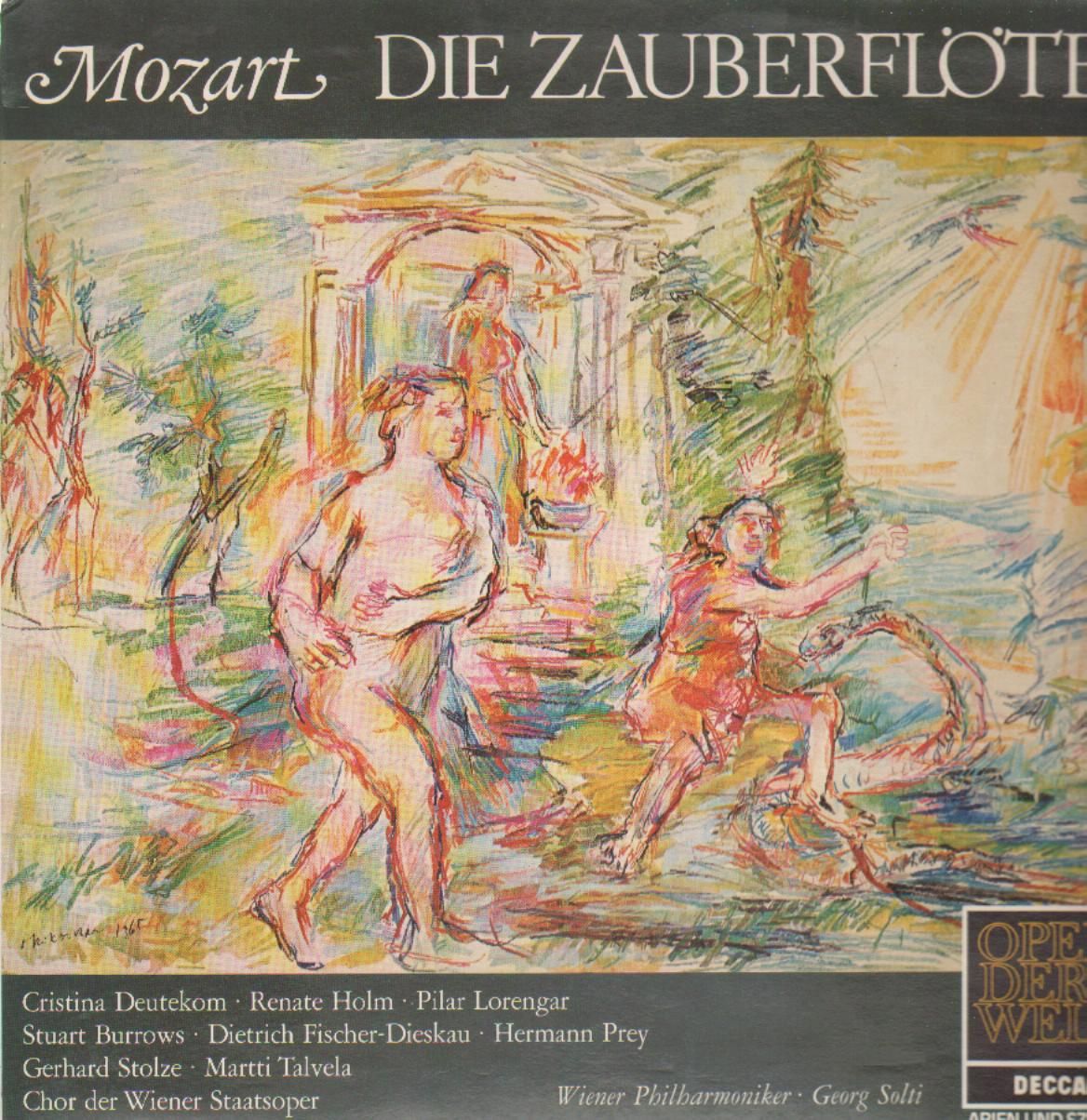
Men zegt Koningin van de Nacht, men denkt Cristina Deutekom. Althans ik. De opname die zij in 1969 voor Decca (4145682) maakte staat voor mij als een huis en mag eigenlijk in geen enkele huishouding ontbreken. Oké, haar staccato is soms een beetje vreemd en af en toe mechanisch, maar wat een perfectie! Haar woede is heerlijk ordinair. Dat is niet onaardig bedoeld, want het klopt perfect met het karakter van ‘the Queen’. Al komen wij daar pas later in de opera achter.

Stuart Burrows gold ooit als één van de grootste Mozart tenoren die al op weg waren naar het zwaardere “fach”. Voor mij een schakel tussen Fritz Wunderlich en Piotr Beczala. Ik luister graag naar zijn elegante Tamino, zijn stem mengt ook heel erg mooi met Pilar Lorengar (Pamina).

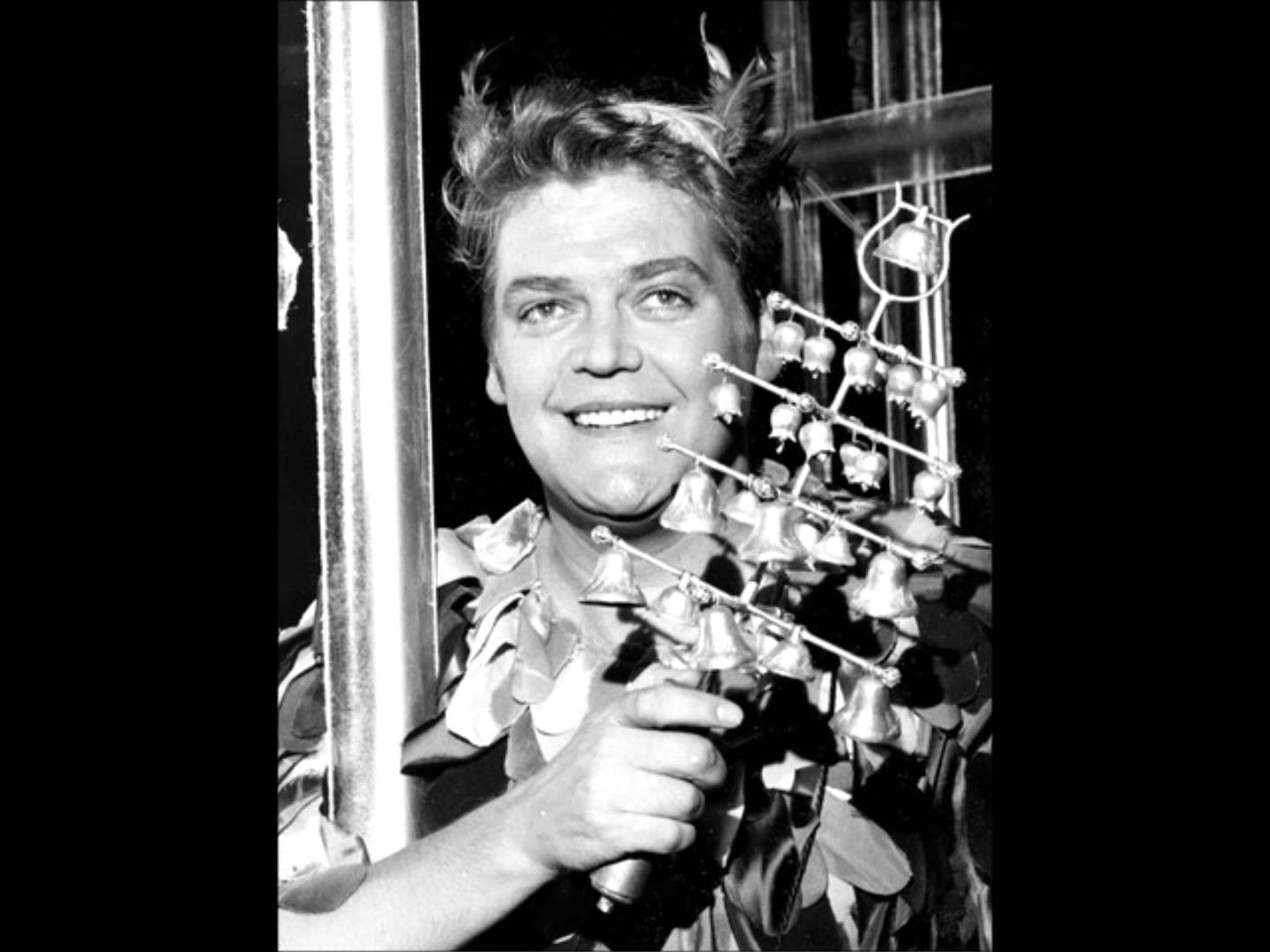
Over de Papageno van Hermann Prey kan ik heel erg kort zijn: de beste ooit.

prey

De Wiener Philharmoniker staat onder leiding van Georg Solti en dat beteken vaart, drama en af en toe stilstaan. Opera ten voeten uit. Wat de opname nog dat beetje (nou ja, beetje?) extra geeft, is het tekstboek met de tekeningen van Kokoschka.

Fritz Wunderlich

toverfluit-bohm

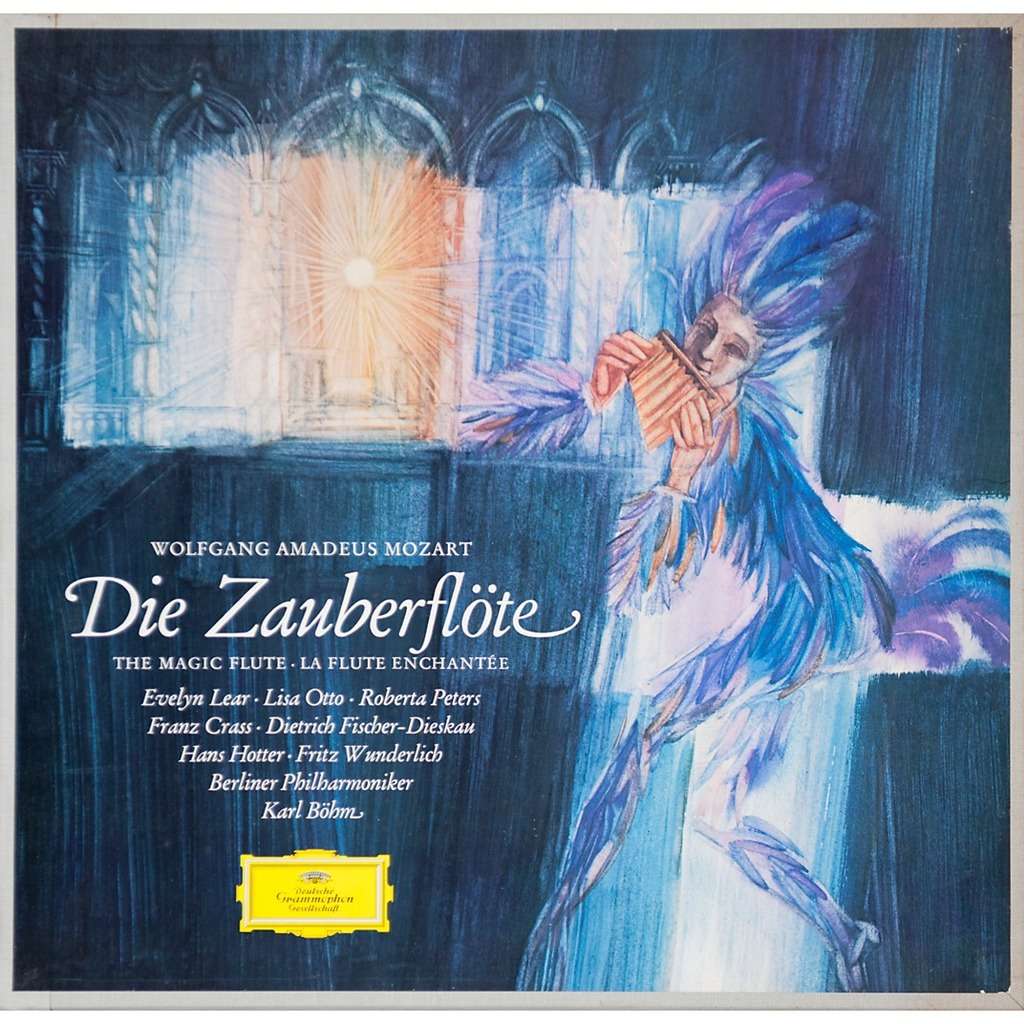
Zoals Hermann Prey de Papageno en Cristina Deutekom de Koningin van Nacht voor mij zijn, zo is Fritz Wunderlich de Tamino. In 1965 heeft hij de rol voor DG (4497492) opgenomen.

toverfluit-wunderlich

HetBerliner Philharmoniker stond onder directie van Karl Böhm, wat natuurlijk wat meer statigheid en behoedzaamheid betekent dan Solti. Maar de klank is echt heel erg mooi. Roberta Peters is een waanzinnig goede Koningin van de nacht en Evelyn Lear een zoetig lyrische Pamina. Tel daarbij de werkelijk fenomenale Franz Crass als Sarastro en Hans Hotter als Sprecher – heerlijk. Toch kent de opname één minpunt: Papageno wordt gezongen door de totaal humorloze Dietrich Fischer-Dieskau. Jammer!

Charles Mackerras

toverfluit-mackerras

Voor de lezing van Sir Charles Mackerras heb ik altijd een zwak gehad. In deze opname stond hij aan het roer van het Scottish Chamber Orchestra (Telarc CD 80302). Zijn zeer elegante manier van dirigeren, zijn integriteit en totale gebrek aan maniertjes zijn mij zeer lief. Maar ook zijn cast doet mijn hart sneller kloppen van plezier.

Allereerst is er de onvergetelijke Jerry Hadley (Tamino), met zijn zoete tonen en Mozartiaanse lijnen. Daar moet ik even een traantje bij wegpinken, hij is ons te vroeg en te onnozel weggevallen.

Barbara Hendricks zingt een beetje gemaniëreerd, maar haar stem is verleidelijk lyrisch en past bij Pamina. June Anderson heeft alle “Queen waardige” noten en coloraturen paraat en Thomas Allen is voor mij, naast Hermann Prey, de beste Papageno.

Claudio Abbado

toverfluit-abbado

Geloof het of niet, maar in 2006 nam Claudio Abbado (toen al over de 70) zijn eerste Toverfluit ooit op (DG4775789). Het resultaat is niet helemaal bevredigend, maar ik wil het toch noemen, vanwege het heerlijk en slank spelende Mahler Chamber Orchestra, maar ook vanwege de toen nog betrekkelijk jonge en beginnende zangers.

Niet allemaal hebben ze het gemaakt, maar René Pape (Sarastro) hoef ik niet meer bij u te introduceren en ook Dorothea Röschmann (Pamina) behoeft geen aanbeveling. Christoph Strehl is een zonder meer overtuigende Tamino en Hanno Müller-Brachman een zeer speelse Papageno.

Dorothea Röschmann als Pamina:

DVD’s:

Nicolai Gedda

toverfluit-gedda

Gedda kon eigenlijk alles zingen en dan ook nog in vele talen. Zijn muzikaliteit was werkelijk spreekwoordelijk en dat kun je goed op deze opname horen.

Edith Mathis & Nicolai Gedda in „Mein, o welch ein Glück!’

Horst Stein dirigeert de Hamburger Philharmoniker en zijn tempi zijn fors, maar met precies 156 minuten speeltijd weet je zeker dat het een en ander is gesneuveld. Het geluid is dof en de aankleding echt “jaren zestig” (de opname is gemaakt in Hamburg, in 1971).

Toch vind ik het één van de belangrijkste Toverfluiten ooit, zeker vanwege de zangers! Zal ik ze noemen? Behalve Gedda: Hans Sotin, de jonge Franz Grundhebber (Monostatos!), Edith Mathis, Kurt Moll, Fischer-Dieskau (als spreker veel beter op zijn plaats), Kurt Moll als Gehärnischte, de zeer ondergewaardeerde William Workman als Papageno en ….. last but not least! JA! Onze “eigen”  Deutekom in haar parade rol:

De regie is van de hand Peter Ustinov. Een monument (Arthaus Musik 101265)

Piotr Beczala

toverfluit-beczala

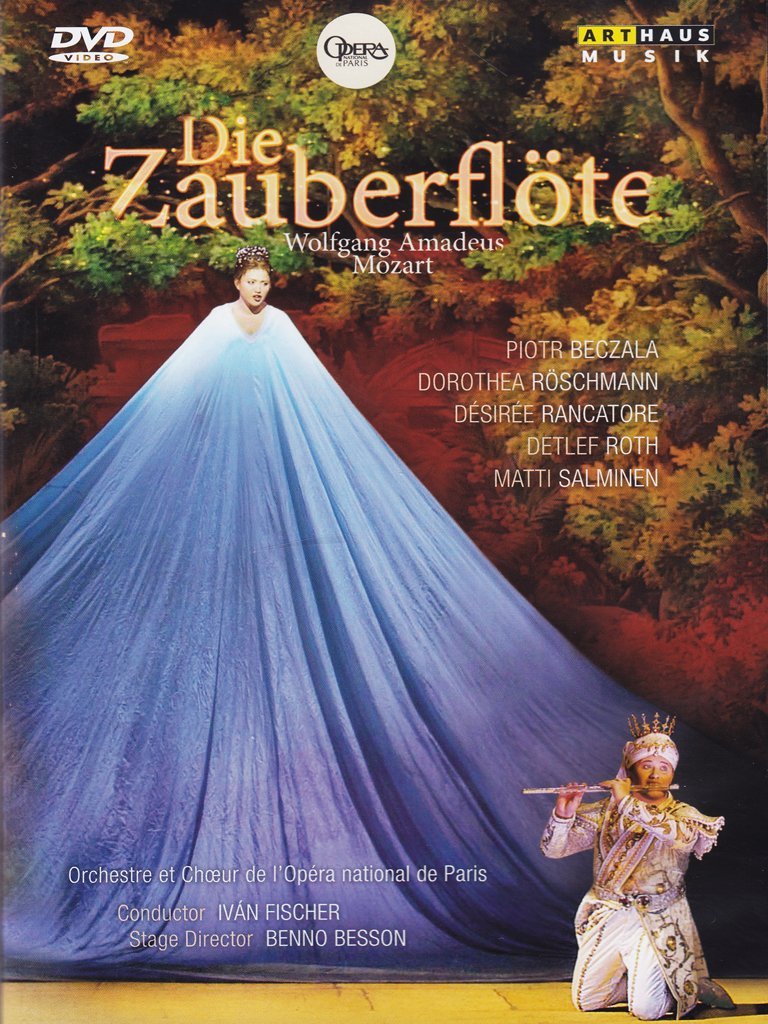
Een overenthousiast, stormachtig applaus voor het productieteam van een opera: hoe vaak maak je dat nog mee? Het overkwam Benno Besson (regie) en Jean-Marc Stehlé (decors en kostuums) in januari 2001 na hun Zauberflöte in het Parijse Palais Garnier.

Terecht. De door hun gecreëerde voorstelling laat zich als een ouderwetse sprookjesfilm (denk aan Wizzard of Oz) bekijken en ademt de toverachtige sfeer van weleer, toen alles nog goed kwam en waarbij je je tegoed deed aan een simpel, geschilderd decor (en daar genoeg aan had). Het decor en de fantasievolle kostuums zijn overweldigend en feeëriek, met felgekleurde tropische bossen, ‘wilde dieren’ en een ‘echte’ sprookjesprins – gestoken in het wit en met een heus gouden kroontje op zijn hoofd.

Het Orchestre  de l’Opéra national de Paris onder de liefdevolle leiding van Iván Fischer speelt heel erg mooi, al zijn de tempi soms een beetje aan de (te) langzame kant.

Piotr Beczala is voor mij de mooiste lyrische tenor sinds Wunderlich en Gedda. Zijn Tamino is niet alleen perfect gezongen maar ook fantastisch geacteerd. Hij is inmiddels een wereldster, maar was toen nog maar een geheimtip.

Dorothea Röschmann schittert als een gloedvolle Pamina, en Detlef Roth is een prima Papageno. Ook de rest van de cast is zonder meer goed: Désirée Rancatore is een zeer overtuigende Koningin van de Nacht en Matti Salminen een voorteffelijke Sarastro (Arthaus Musik 107233)

Beczala en Röschmann in ‘Tamino mein, o welch ein Glück!’:

Georg Solti

toverfluit-solti-legacy

Nog even kort over Georg Solti: in 2012 vierde hij zijn honderdste verjaardag en naar aanleiding daarvan heeft Decca veel van zijn nooit eerder uitgebrachte en veelal totaal onbekende opnamen uitgebracht. Op de dubbel-cd Solti. The legacy 1937-1997 hoort u hem als de klokkenspelbespeler in Die Zauberflöte. De opname werd gemaakt in 1937 in Salzburg, Papageno wordt gezongen door Willi Domgraf-Fassbander en de Wiener Philharmoniker staan onder leiding van Toscanini (Decca 4784884).

Hieronder Domgraf-Fassbaender als Papageno (met de klokkenspel van Solti):

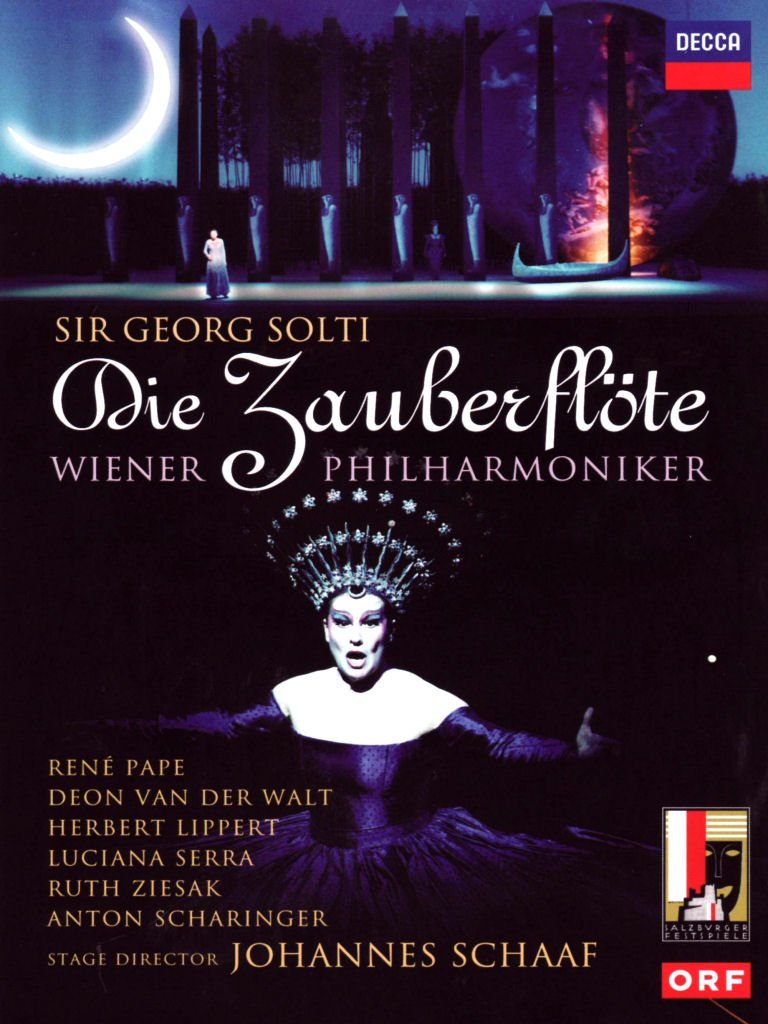
In 1991 heeft Solti het instrument opnieuw ter hand genomen, alweer in Salzburg, maar nu stond hij ook op de bok. De opera is twee jaar geleden op dvd uitgebracht (Decca 0743603). De regie was in handen van Johannes Schaaf en onder de solisten vinden we de piepjonge René Pape (Sarastro) en de zeer droevig aan zijn einde gekomen Deon van der Walt (Tamino)

toverfluit-solti-dvd

De opera is inmiddels ook op youtube te vinden. Hieronder deel 1: