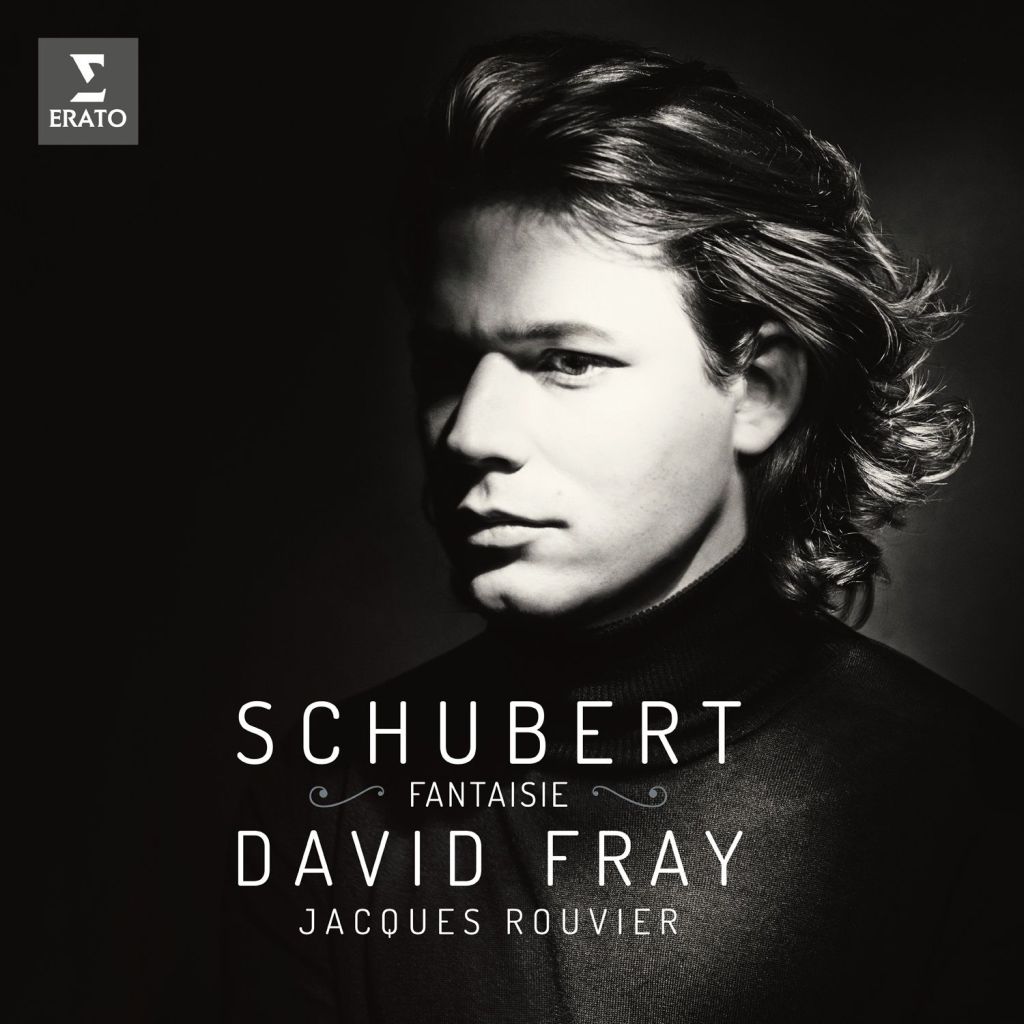
Fantasy: that is the name of the CD by David Fray, one of the most remarkable young pianists of recent times. It is a provocative title that is perhaps also a bit superfluous, because the fantasy and enchantment that music, especially Schubert’s, can evoke are always closely linked. ‘Fantasy’ is also the nickname of the great G Major sonata, which sounds remarkably milder and less “crazy” in Fray’s hands than it does when played by many of his colleagues.
His performance of Fantasia D 940, Schubert’s most famous and undoubtedly most beloved work for piano for four hands, together with his former teacher Jacques Rouvier, rivals the performance by Murray Perahia and Radu Lupu, which I still consider the benchmark.
Fray and Rouvier’s interpretation sounds less dreamy and more down to earth, which may be due to the faster tempi, but the poetry and enchantment are still intact. What makes their sober approach even more appealing is the recognisability of the keys used, which keeps your attention focused all the time. To put it bluntly, played this way, it is also less like a “musical earwurm”.
In the three-minute-long but oh-so-beautiful Hungarian Melody, Fray also shows his down-to-earth poetic side. Anyone who has ever become attached o András Schiff’s interpretation will have to take a deep breath (again, the fast tempo!), but after repeated listening, you will come to the conclusion that it can be done this way and still remain irresistible.
Maybe a matter of using your imagination?
In an interview, the very charismatic young Frenchman once said: “I want to let the piano speak and sing”, and he certainly succeeds in doing so.
In de serie Voix Étouffées, Missing Voices presenteerde de Leo Smit Stichting een CD met werken van Henriëtte Bosmans (1895-1952). De serie heet zo omdat, net zoals zoveel componisten waaraan de Leo Smit Stichting aandacht besteed, en zoveel anderen, Henriëtte Bosmans, met een Joodse moeder, slachtoffer werd van de Nazipraktijken. In 1941 werd haar (volgens de Joodse leer dus Joods, maar volgens de Nazis ‘maar’ half-Joods) optreden als pianist verboden, ook omdat ze weigerde lid te worden van de Nederlandsche Kultuurkamer.
Maar ze heeft de oorlog overleefd. Anders dan de andere componist die deze middag op het programma stond, Daniel Belinfante (1893-1945) die naar een werkkamp bij Auschwitz was gedeporteerd en daar de dag voordat het kamp werd bevrijd stierf (toen de Duitsers terwijl Russische troepen naderden) de barak waar hij doodziek was ondergebracht in brand hadden gestoken. Van hem klonk zijn prachtig grimmige, maar deels ook lyrische Sonatine uit 1939.
In een vergelijkbaar concert vorig jaar november van sopraan Elizaveta Agrafenina en pianist Dimitri Malignan stond naast Bosmans ook werk van Daniel Belinfante op het programma. Malignan bereid inmiddels een CD helemaal gewijd aan werk van Belinfante voor. Daniel Belinfante was trouwens een neef van celliste Frieda Belinfante, Bosmans’ levensgezellin gedurende de jaren twintig.
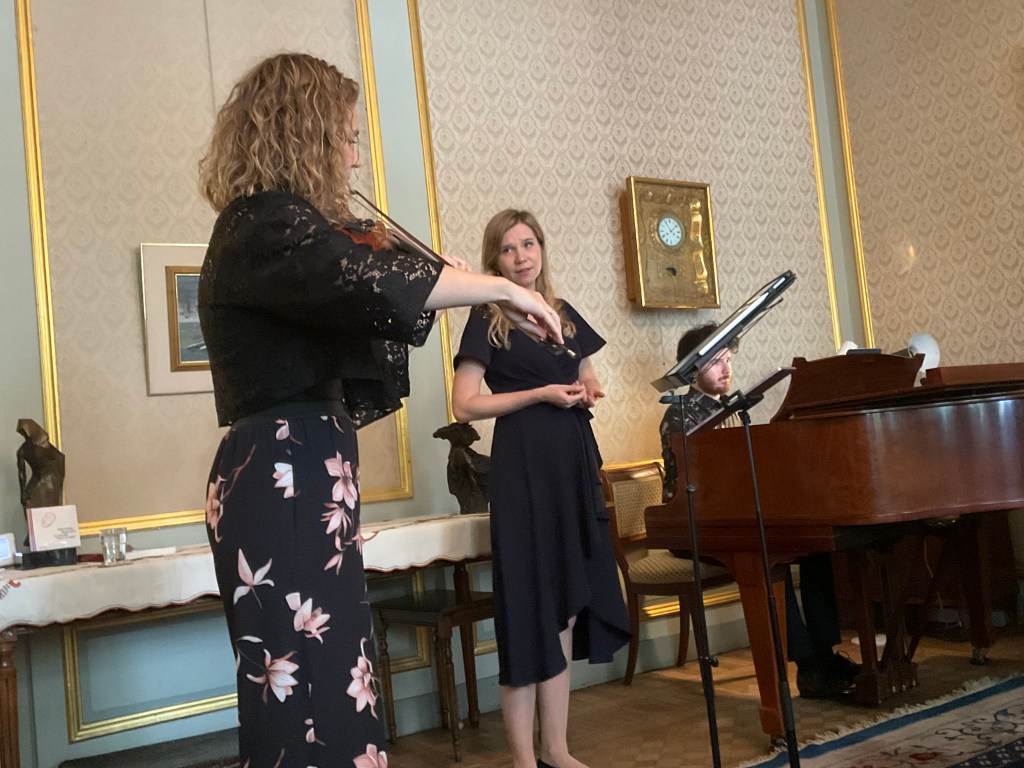
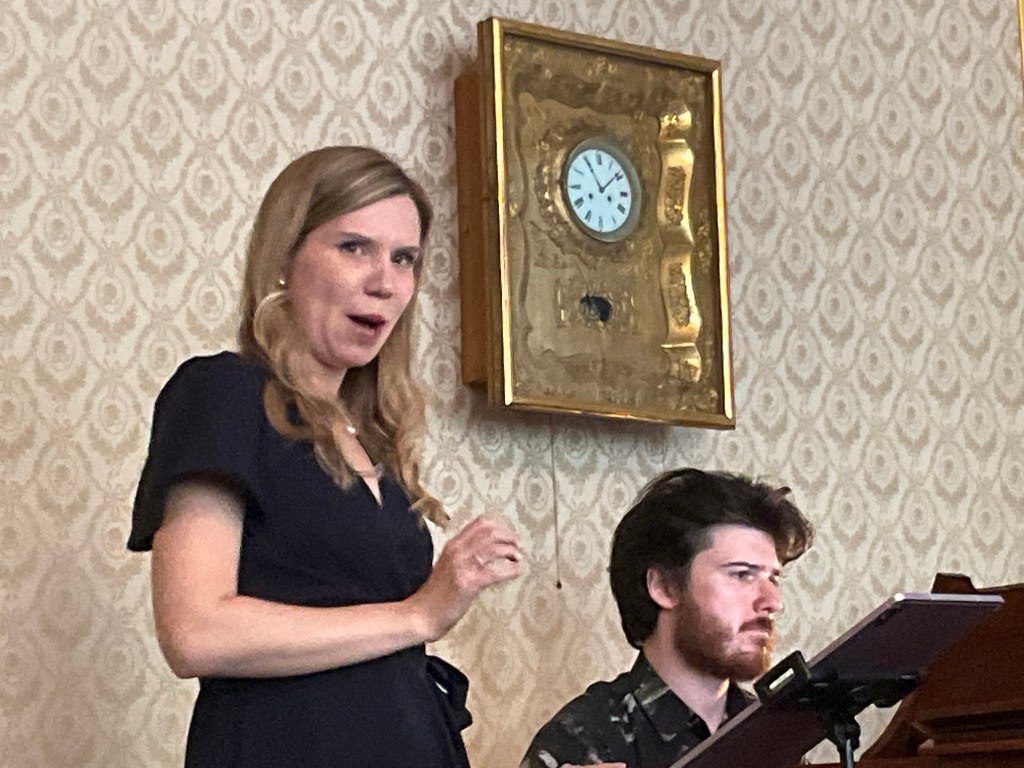
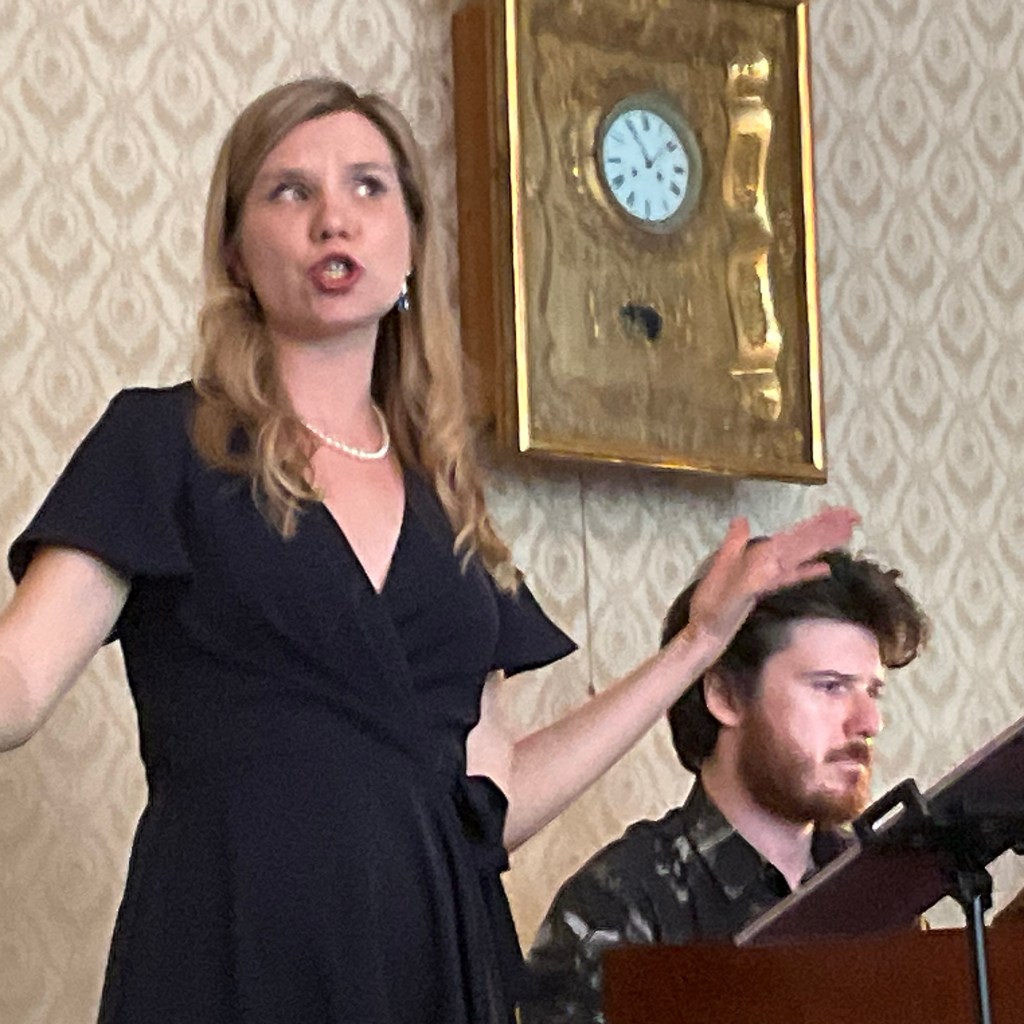
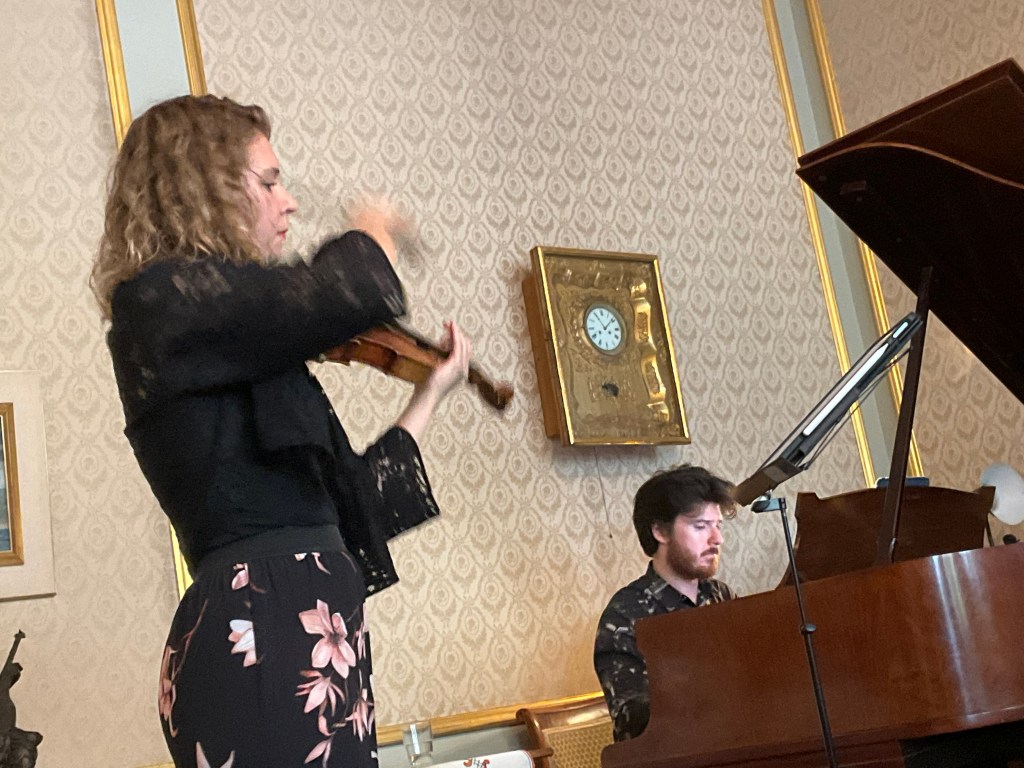
De eerste drie liederen van deze middag klonken de vorige keer ook. “Lead, kindly light” uit 1945 op tekst van de Engelse kardinaal Newman is geschreven voor Jo Vincent, die het in de orkestversie zong met het Concertgebouworkest onder Adrian Boult. Newman had ook de tekst voor Elgar’s The Dream of Gerontius geschreven. Bosmans was in die jaren bevriend met Britten. Het lied werd nu uitgevoerd in de versie voor piano, maar met een fraaie extra toegevoegde vioolpartij (bewerking Elizaveta Agrafenina), gespeeld door Sarah Bayens.
“La chanson des marins hâlés” (Het lied van de gebruinde zeelieden) uit 1949 was wat zonniger, burlesker. Maar het gaat ook over de rusteloosheid van het leven, van mensen als zeelieden die overal en nergens thuis zijn.
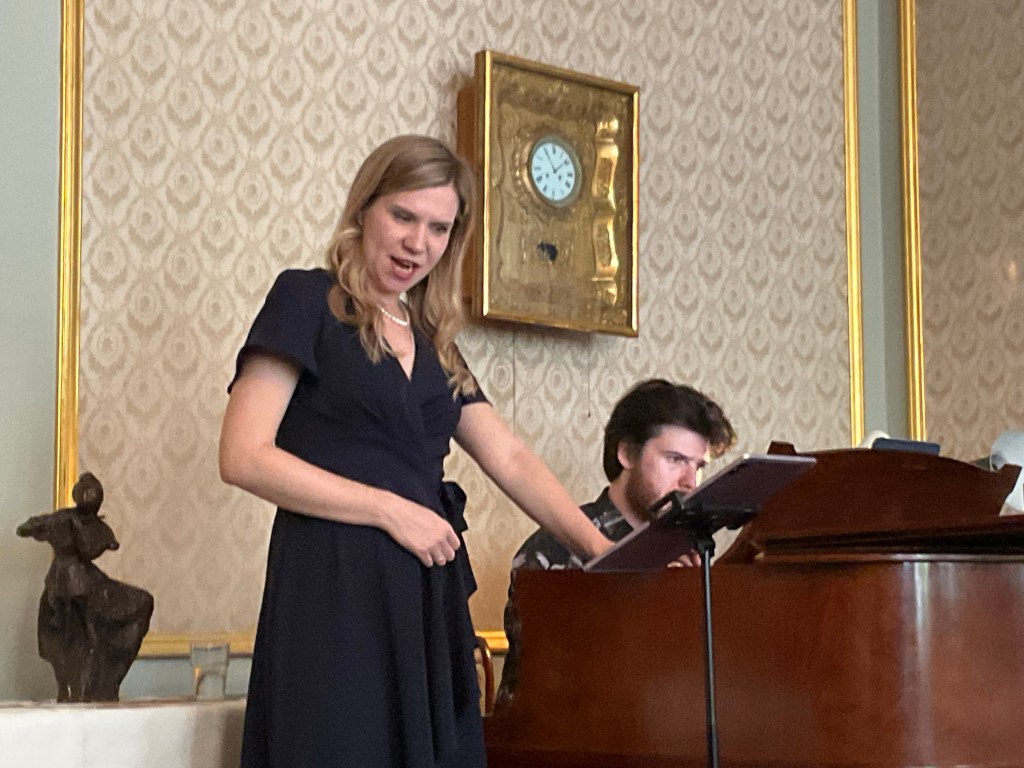
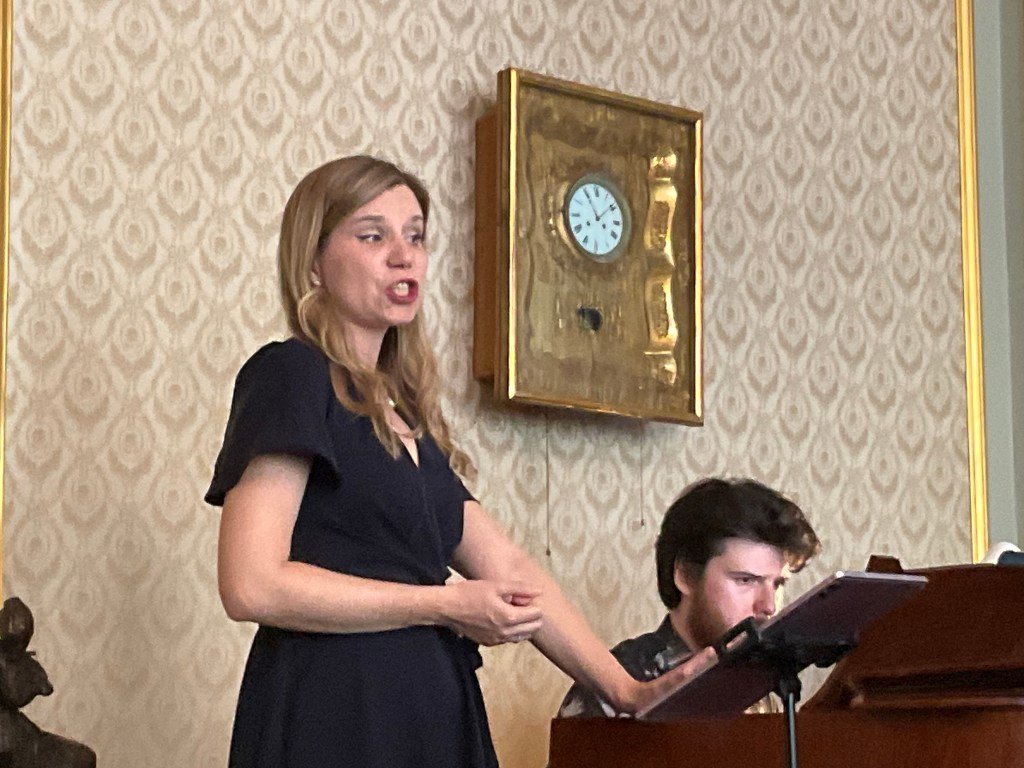
Het derde lied, “Le diable dans la nuit” uit 1935, waarnaar de middag vernoemd was, onderstreept de lugubere sfeer van die tijd. Het lied zit vol extreme kleuringen, in de zang en de pianopartij, fraai naar boven gehaald door Agrafenina en Malignan.
De eerste regel uit het gedicht van Paul Fort uit 1895 luidt “Le diable court dans la nuit”, “De duivel rent de nacht in”, maar in 1935 moest er eerst nóg weer een Satan komen.
Bosmans’ vier liederen die na Belinfantes Sonatine werden uitgevoerd stonden de vorige keer niet op het programma. “Complainte du petit cheval blanc” uit 1949, heeft door de combinatie van de speelse pianopartij en de tekst van Paul Fort, over een levenslustig ronddravend wit paard dat bliksem en donder tart, maar uiteindelijk door de bliksem wordt getroffen, wel iets Mahler-Wunderhorn-achtigs, ook in de Mahleriaanse harmonieën en ritmen die het beeld van het ronddravende paard oproepen.
“Pieusement” is een relatief vroeg werk, uit 1921, fraai devoot. Ik meen er ook kerkklokken ergens in een landschap in te horen, op zijn impressionistisch, zoals in werken met kerklokken als thema van Debussy en Ravel.
Het contrast met “Chanson” kon bijna niet groter zijn. In dit lied uit 1952, Bosmans’ laatste levensjaar, is ze mondain, een echt-Franse chanson, die misschien Piaff niet zou hebben misstaan, aldus Agrafenina.
Nog een contrast is er met “Daar komen de Canadezen” uit 1945 behoort tot haar Nederlandstalige liederen. Het is ook geschreven voor Jo Vincent. Ondanks dat er een satire op marsmuziek in doorklinkt, is het een ode aan het geallieerde bevrijdingsleger (en misschien is gekozen voor de Canada als bevrijdingsmacht met de minst imperialistische aspiraties).
Na een fraaie uitvoering door Sarah Bayens en Dimitri Malignan van Bosmans’ vioolsonate voegde Elizeveta Agrafenina zich voor de laatste keer bij hen voor “Gebed” uit 1945, van dezelfde tekstdichter als van “Daar komen de Canadezen”, Fedde Schurer, en een meditatiever oorlogslied: ‘Heer, zegen Gij ons dierbaar vaderland En laat ons nimmer, nimmer slaven worden. Gelijk de blinde, teugellooze horden Die ons verheerden lang met moord en brand.’ Het lied, waarin op de piano ook weer kerkklokken doorklinken, eindigt met een ‘Amen’.
Henriëtte Bosmans (1895-1952)
Lead Kindly light (arr. met viool) 1945 J.H. Newman
La chanson des marins hâlés 1949 Paul Fort
Le diable dans la nuit 1933 Paul Fort
Daniel Belinfante (1893-1945) Sonatine 1939
Henriëtte Bosmans
Complainte du petit cheval blanc 1949, Paul Fort
Pieusement (1921, second song she wrote after Beau Chevalier.. first work was already 1914.) I only spoke from lieder perspective, a bit like with Schubert.. his first song was Erlkonig…. op.1 (Poet: Verhaeren)
Chanson 1952 Fernard Mazade
Daar komen de Canadezen. 1945-1946, Fedde Schurer
Henriëtte Bosman Sonate voor viool en piano 1918
Henriëtte Bosmans
-Gebed (arr.met viool) 1945 Fedde Schurer
De hele CD staat op Spotify:
Er zijn nog veel meer liederen van Bosmans. Hopelijk gaan Agrafenina en Malignan die ook opnemen. Hopelijk komt het ook van opnamen van Bosmans’ liederen met orkest. In elk geval bestaat er een youtube opname van de orkestversie van “Lead, kindly light” met Elizaveta Agrafenina als solist.
Afgelopen juni en juli verschenen bij CPO twee fraaie CDs met onder meer de cellosonate en de twee celloconcerten van Bosmans, met cellist Raphael Wallfisch en Ed Spanjaard als pianist en dirigent.
On one of his latest, already his seventh, recording for Decca, Benjamin Grosvenor has taken care of Liszt. That he did so very carefully, even meticulously, he told candidly in the interview he gave to the New York Times. ‘I almost feel like you should know the notable recordings of a work like this’ he said, referring to the piano sonata. So he studied just about every possible performance of the work: Lupu, Cherkassky, Horowitz, you name it.
Whether it also influenced his own interpretation? Undoubtedly. We, humans, we are influenced even if we don’t notice it. And yet his reading of the sonata is completely his own. Virtuoso, mainly. So much so that I was breathless by just listening to it. His technique is fabulous. What I admire even more is his, how shall I put it, “acting” skills. Acting, as it were, on the piano and building the tension with only the keys at your disposal
I am slightly less charmed by the other pieces on the CD. Mainly the three Petrarch Sonets from the second book of “Années de Pèlerinage”, which I have heard more beautiful and lyrical: Arrau, Lazar Berman… And no one can really match Michael Rudy’s interpretation. In my opinion, then.
Boris Giltburg: matchless
Wow, how great is that CD! Whereas Giltburg’s performance of Rachmaninoff’s Third Concerto disappointed me a little (I thought it was too forceful and too rushed), now I just have to admit that I may have been wrong about him.
Just take the “Rigoletto paraphrases” with which he opens his recital: mamma mia! The first bar already made me sit up because this is how it should be, this way and no other. It splashes out of the boxes, but more importantly: Giltburg takes ample time to bring out Liszt’s poetic, salon-like, if you will, side. I am very much impressed..
But it’s obviously all about the 12 Études d’exécution transcendante, works previously considered unplayable and which only the all-time great master pianists dared to try.
Giltburg plays them – all of them – naturally, decidedly, as if they are nothing at all. Well; his attaque may still be fierce, but he also knows how to conjure breathtaking, enchanting, pianissimi from the keys. And those glissandi!
Slowly, much too slowly and actually much too late, but the music world is waking up. One gap after another is finally being filled and the (consciously or unconsciously) ‘forgotten’ composers are at long last coming to our CD players.
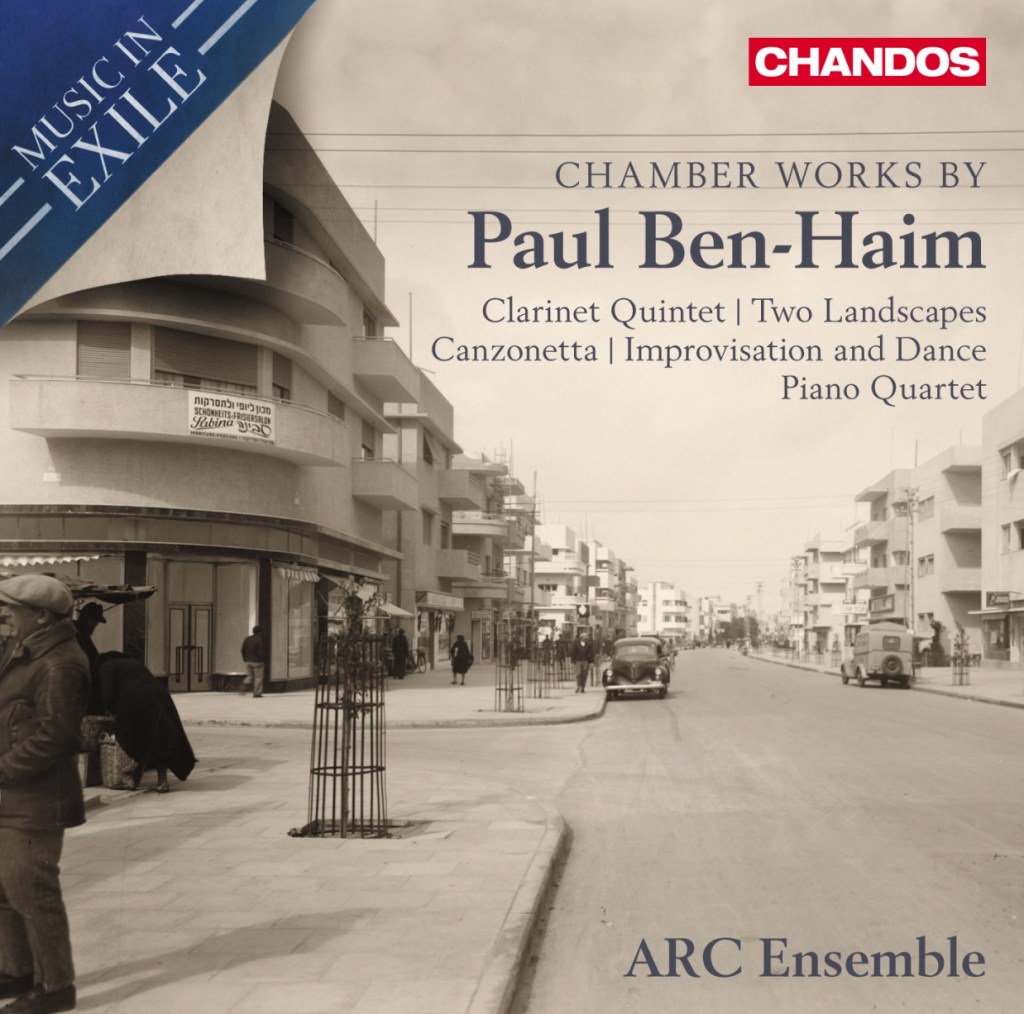
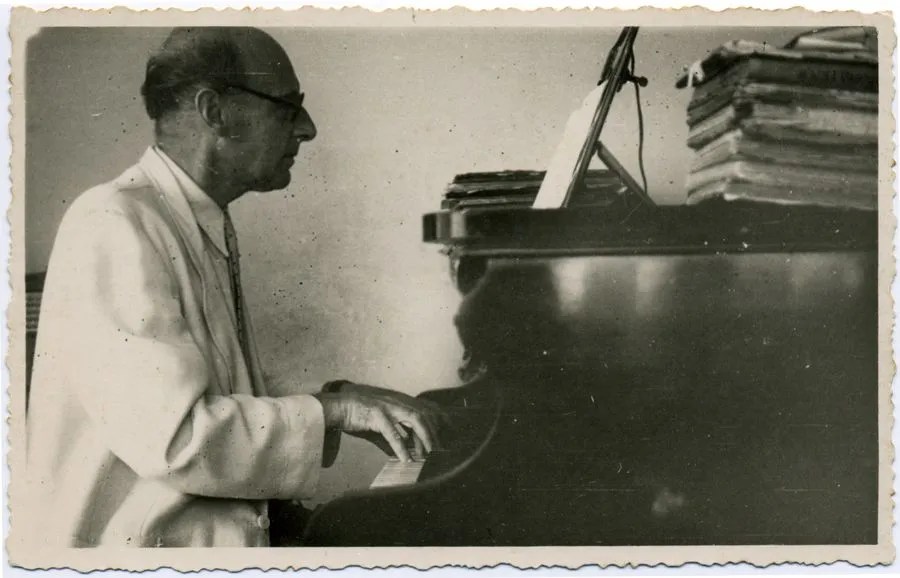
Who among you has ever heard of Paul Ben-Haim? If not, why not? The composer was born as Paul Frankenburger in Munich in 1897 and died in Tel Aviv almost 90 years later. And he left behind a really spectacular oeuvre.
Many vocal works, orchestral pieces, chamber music…. What not, actually? Most of his works are influenced and inspired by Jewish, Israeli and Arab melodies, so you may call his music “nationalistic”. Nothing wrong with that word.
Just take the opening of his 1941 clarinet quintet! The dancing clarinet part reminds one of swinging klezmer, but in a Brahmsian way.
The ARC Ensemble perform the opening movement of Paul Ben-Haim’s Clarinet Quintet at the Enav Center, Tel Aviv:
This is even more pronounced in his “Two Landscapes” for viola and piano, in which he sings the praises of his new homeland’s beauty.
Steven Dann and Dianne Werner prepare to record The Landscapes for viola and piano:
The “Improvisation and Dance”, dedicated to Zino Francescati, betrays influences from Yemeni folklore and only his oldest work on the CD, the Piano Quartet from 1920, does not yet have its own “face”.
The (very infectious playing!) members of the Canadian ARC Ensemble all work at the Glenn Gould Conservatory in daily life. A CD to cherish.
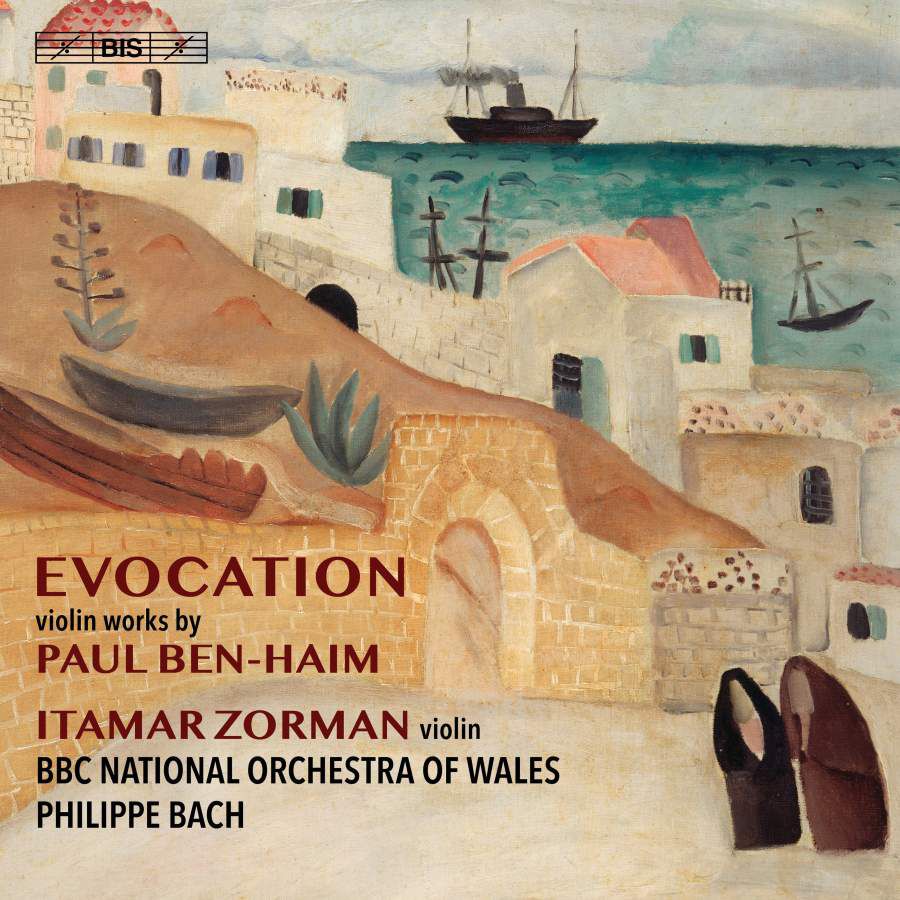
Evocation
Paul Ben -Haim, who was born in Munich in 1897 as Paul Frankenburger and died almost 90 years later in Tel Aviv, remains a great unknown to many music lovers. This is a great pity, because the oeuvre of this sadly forgotten composer is very diverse and most exciting. At one time he was totally immersed in the German Romantic tradition before he almost radically broke with it when he left his native country in 1933.
He began his new life composers life in what was then known as the British Mandate of Palestine by changing his name, after which he also adapted his compositions to his new homeland. Starting in 1933, most of his works were influenced and inspired by Jewish, Israeli and Arabic melodies.
Between 1939 and 1949 Ben-Haim accompanied the at that time extremely famous folk singer Bracha Zefira. Zefira, who was of Yemeni origin, had a great influence on the musical life in what was then Palestine. It was for her that he composed the Berceuse Sfaradite, a song which had become one of her greatest successes.
Bracha Zefira:
The Violin Concerto, which dates from 1950, is probably Ben-Haim’s best-known composition, in no small part as a result of the great recording by Itzhak Perlman. The CD is still on the market, I believe, but as far as I know the Concerto is only rarely performed. Why?
Three Studies for Solo Violin is Ben-Haim’s last violin composition, dedicated to Yehudi Menuhin in 1981. Splendid. But I was most struck by the completely unknown Evocation from 1942, a work which has its premiere here and which really gave me goose bumps. Wow.
Evocation live:
Itamar Zorman, the young Israeli violinist who won the 2011 prize in the Tchaikovsky competition, has immersed himself in the composer and his work. Thanks to him, this album was compiled and released. He plays these works as if his life depends on them. He believes in them and he communicates that belief more than convincingly.
Zorman about Ben-Haim:
The accompaniment by Amy Yang (piano) and the BBC National Orchestra of Wales conducted by Philippe Bach is first-rate as well
Works for violin
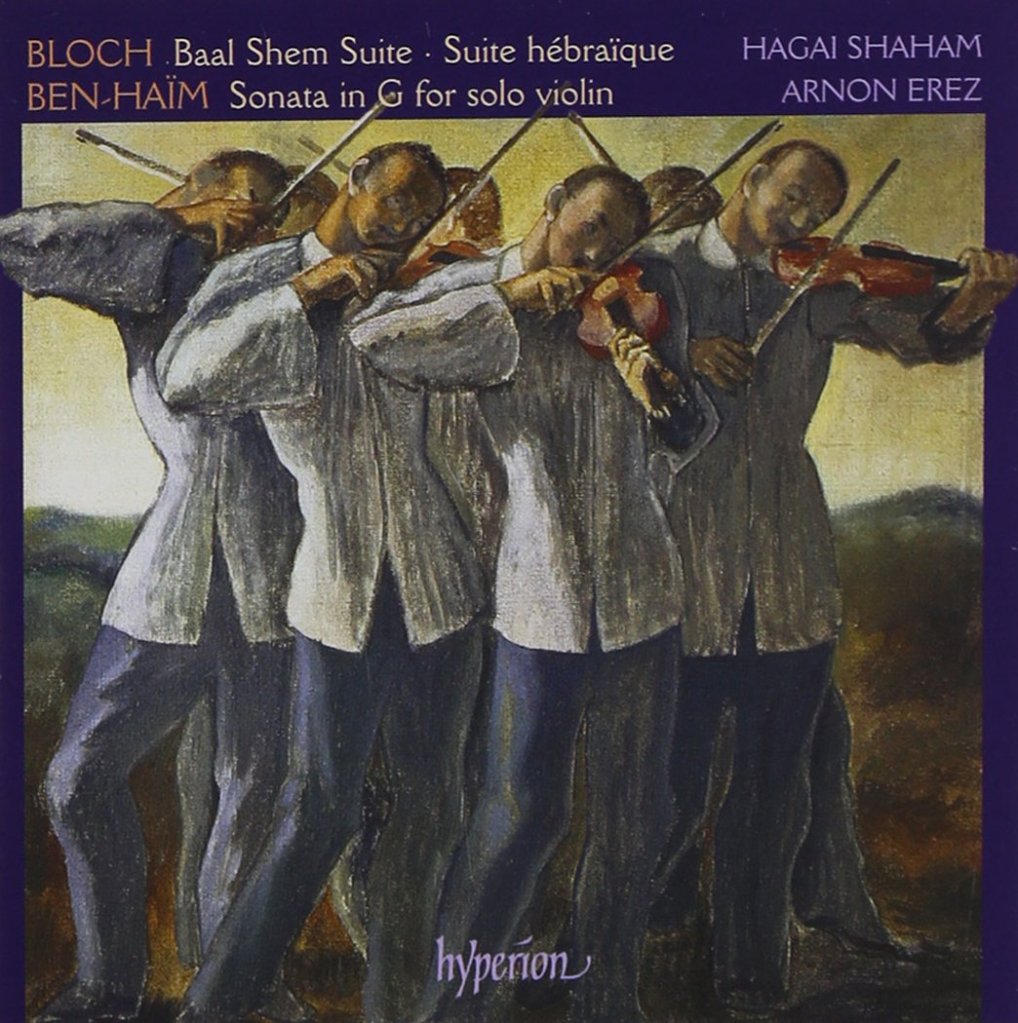
The Berceuse Sfaradite is based on a Sephardic lullaby. In Hagai Shaham’s hands, the piece sounds sultry and reassuring at the same time. And the two tone poets’ violin solo suites, composed at Yehudi Menuhin’s request, turn into forgotten masterpieces in his hands. Wonderful.
More works by Ben-Haim
Psalm from Symphony no. 1:
Whole symphony:
From Israel
Sonata for two mandolins, guitar, harpsichord, harp and string orchestra:
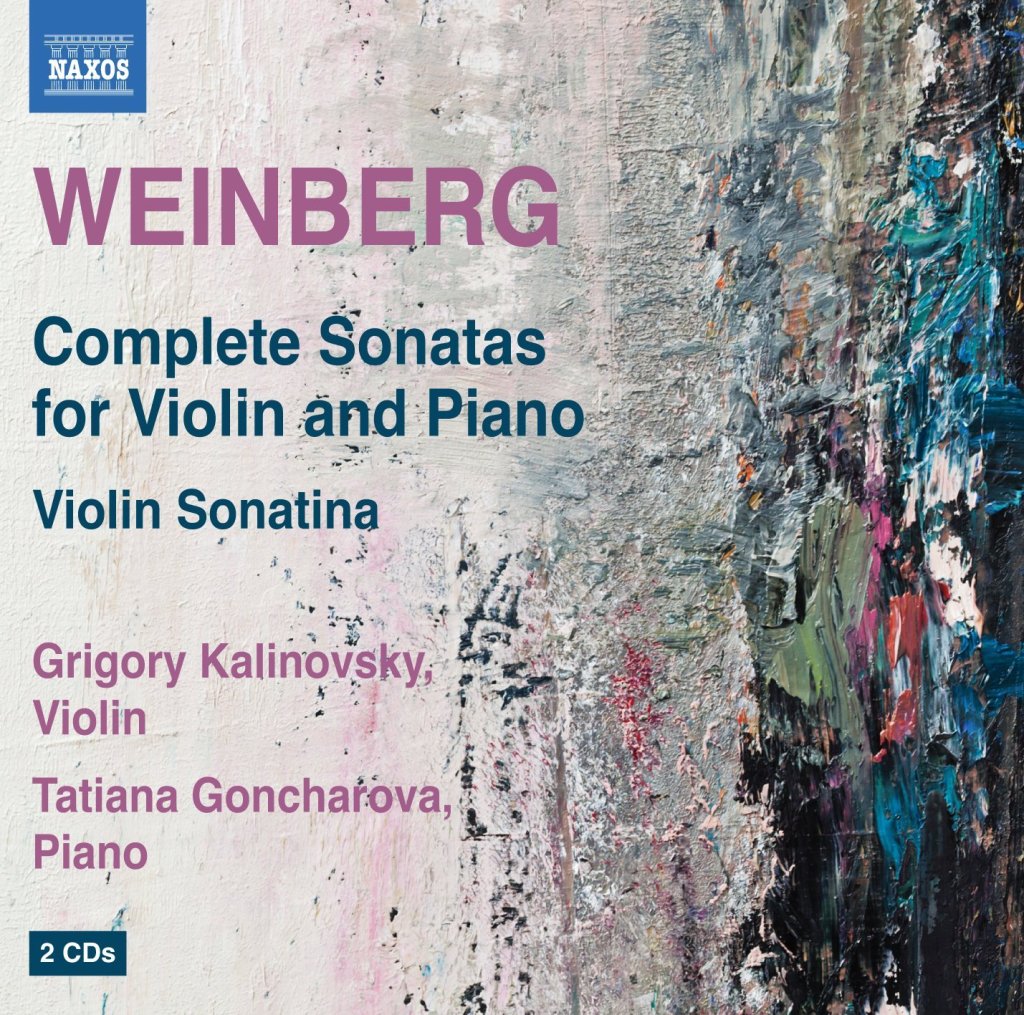
I know the risk of my umpteenth ultimate praise for a ‘new Weinberg’, but believe me: I have no choice.
Not that I didn’t have my doubts. Especially on the first time listening; I had a bit of trouble with the violinist, because to say that his violin really sings… well, no.
I found his playing too fierce, too straightforward . . violent at times. The singing came mainly from the piano, at least it seemed so at first, because the more I listened to the CDs the more layers I discovered in the renditions of – both – soloists.
Just take the moving Lento in the second sonata, here time stood still for a moment. This also because the work reminded me most of film music. Black-and-white images from ‘The Cranes are Flying’ automatically loomed before my eyes. It is one of the most moving films ever, for which Weinberg composed music.
And what a difference with the Lento from the 1947 third sonata! Here you can already see Shostakovich lurking around the corner, smiling approvingly. And here it was that I finally heard Kalinovsky sing on his violin as I was, again, marvelling at Goncharova’s beautiful touch.
The first four sonatas were created between 1943 and 1947 and, despite the major Shostakovich influences, they are rather conservative in nature. Especially number four, for me, the least interesting of these first four pieces: despite the passionate plea of both soloists, I noticed that somewhere along the way my attention had waned.
Only in the fifth sonata from 1953 does the true genius Weinberg reappear: it was the first composition that he completed after being released from prison. Listen to the Allegro moderato in which he manages to forge totally different themes into one whole.
His sixth sonata is a bit of an odd one out. Weinberg composed it in 1982; it was not premiered until 2007, eleven years after his death.
Woodcut by Conrad Felixmüller of the composer Erwin Schulhoff, Prague 1924. Lindenau-Museum, Altenburg, VG Bild-Kunst
Of all the composers covered by the term ‘Entarte music’, Erwin Schulhoff is the most complex.
Contrary to what various anthologies tell us, Schulhoff was never in Theresienstadt. Nor was he murdered in Auschwitz. The hybrid Czech composer who did not fit into any pigeonhole had simply been unlucky. The Russian citizenship he applied for came two days too late, so instead of being in the Soviet Union, he ended up in the Wülzburg concentration camp, where he died of tuberculosis in 1942.
From his early childhood, Schulhoff was fascinated by everything new. Heartily embracing dada and jazz, he also had a particular liking for the grotesque. His music crossed borders and genres – sometimes even those of a “good decency”.
No wonder his music cannot be labelled: within the oeuvre for string quartet alone, one will discover a huge variety of styles.
Except for his Divertimento op.14 and string quartet op.25, all the works played by the Alma Quartet were composed between 1923 and 1925. Both, highly rhythmic string quartets betray Schulhoff’s affinity with jazz – the second a little more than the first – and also with Czech folklore.
The 1923 ‘5 Pieces for String’ dedicated to Milhaud sound quite neo-classical. Each refers to a dance or a country. In ‘Alla Valse Viennese’, the “waltzes of Ochs” are shining through and in ‘Alla Tango Milonga’ one can only think of Argentina.
Of all the existing recordings of Schulhoff’s quartets so far, the one by the Petersen Quartet (Cappricio) was always dearest to my heart. I still love their performance, but now they have to acknowledge the superiority of their Amsterdam colleagues. Grandiose.
Huge kudos also to Vruchtvlees.com for the cover and box cover design. Not only very bright and cheerful, but also perfectly suited to Schulhoff’s music.
The title, Weinberg 1945, refers to the year when all the compositions recorded on this CD were created. The first performance of the piano trio took place on 9 June 1947, by Weinberg himself and two members of the Beethoven Quartet: Dmitri Tsyganov (violin) and Sergei Shrinsky (cello).
To my knowledge, there are already at least nine performances of the trio, all good to excellent. Consider Gidon Kremer (the greatest advocate of Weinberg’s music, Yulianna Avdeeva and Giedré Dirvanauskaité (DG).
Or, my absolute favourite with Dmitry Sitkovetsky, David Geringas and Jascha Nemtsov (Hänssler).
In comparison, this performance feels a bit disappointing to me. Mainly because of the pianist: Stéphanie Salmin is too dominant and the sound of the piano drowns out the strings, but this is something that could also be due to the recording.
But the cello sonata and the Rhapsody on Moldavian themes (replace ‘Moldavian’ with ‘Jewish’, which was actually the intention) make up for everything. Here, the cellist (Romain Dhainaut) and Sadie Fields (violin) are given every chance to shine, and they certainly do! And Sadie Fields completely stole my heart in the Two songs without words, which get their first ever performance here. Indeed, until recently, these two beautiful miniatures were thought to have been lost.
Piano Trio op. 24, Cello Sonata No. 1 in C, op. 21, Two songs without words for violin and piano, Rhapsody on a Moldavian theme for violin and piano op. 47 no. 3 Trio Khnopff: Sadie Fields (violin), Stéphanie Salmin (piano), Romain Dhainaut (cello) Pavane ADW 7590
Incredible really how many great musicians there are in our small country! Pianists, violinists, cellists, singers, harpists…. You name it. And I’m not even talking about the chamber music ensembles. Alma Quartet, The Hague String Trio … all world-class. That also includes the Delta Piano Trio.
Pianist Vera Kooper, violinist Gerard Sponk and cellist Irene Enzlin met in Salzburg in 2013, where all three were students at the time. They clicked. They were on the same page and that not only musically, but also outside the concert stages and concert halls. Friends for life?
Origin is already the third CD they have recorded together, I missed the first two, but this one has been in my player for a few weeks . Well, on Spotify really, because it’s that easy. The title refers to the origin of the music from which the composers draw: unadulterated folklore as a guiding principle.
In Dvořák’s case, it is – more or less – obvious: Dvořák developed his own musical language through a love of folk music from which he then drew his inspiration. His ‘Dumky trio’ (just a digression: ‘dumky’ is a plural of the word ‘dumka’, which is then also a diminutive of ‘duma’, a wistful Slavic folk ballad) is the only work on the CD that has known any recognition. And even that is almost gone, because this work also is not performed that often these days.
Things become more painful when it comes to the other two composers and their works recorded on this CD. A real music lover will know the name of Frank Martin, but who knew that he also composed a Trio sur des mélodies populaires irlandaises? What did a Swiss living in the Netherlands have to do with Ireland? Oh well… does it really matter?
And then we come to Tigran Mansurian, arguably one of the most important Armenian composers. But even in his case, things are a bit complicated. He was born in 1939 in Beirut, Lebanon. His family moved to Armenia in 1947. He received his education in Yerevan. His Five Bagatelles have been recorded before and, as far as I am concerned, not often enough.
Delta Piano Trio: “Three composers, three different cultures and three different eras, but with one similarity: a search for musical origins”.
Is there anything I can add? Yes. Not only the music, but also the performance is at the highest level. Don’t let this gem pass you
Frank Martin: Trio sur des mélodies populaires irlandaises Tigran Mansurian: Five Bagatelles for piano trio Antonín Dvořák: Piano Trio No. 4 in E, op. op. (Dumky) Delta Piano Trio
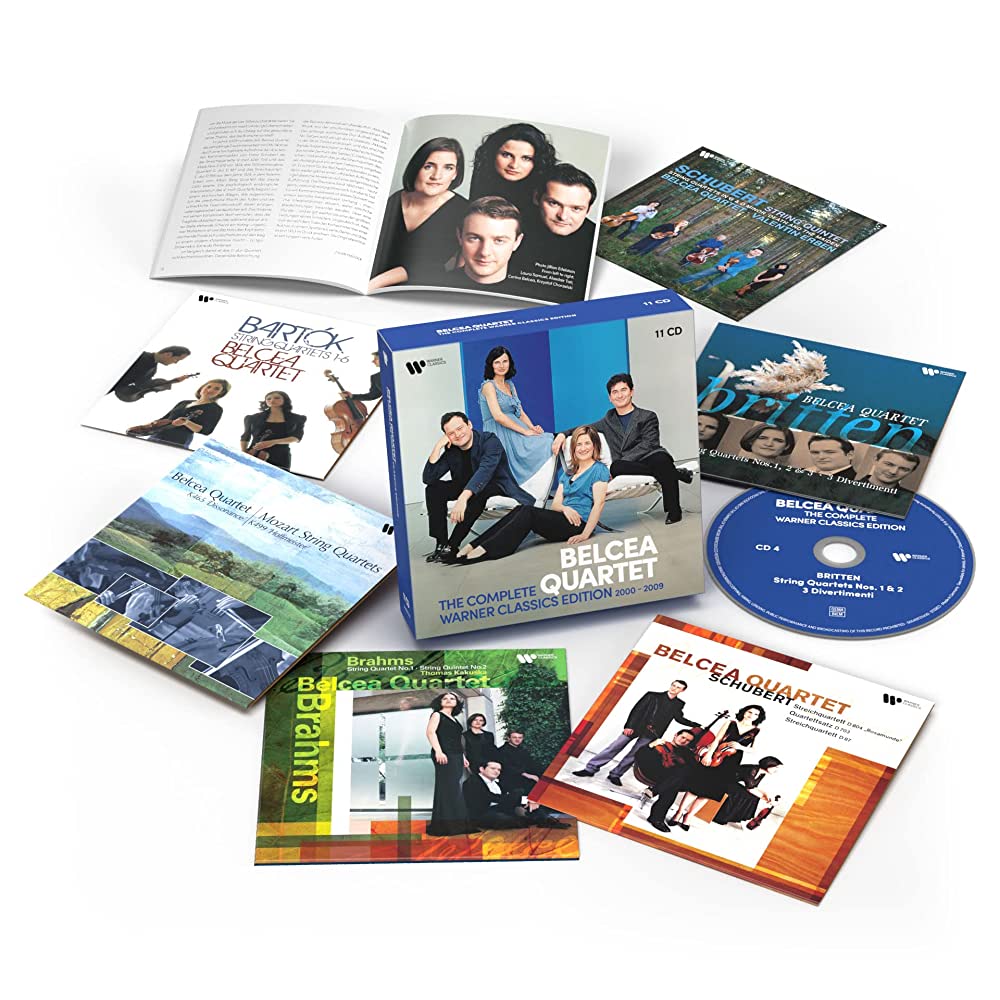
It was about 25 years ago, I think, that I first became acquainted with the then very young Belcea Quartet. They had then recently made their debut in the Rising Stars series in the Concertgebouw’s Kleine Zaal, the programme included string quartets by Schubert and Thomas Adès. I also got the opportunity to speak at length with (the members of) the quartet.
At eleven o’clock in the morning, I rang the doorbell at hotel Verdi in Amsterdam, where the quartet was staying. The intention was to have a bite to eat with Corina Belcea and Krzysztof Chorzelski. And to talk about the quartet, of course.
Unfortunately, Corina had fallen ill so they suggested they’d stay in the hotel breakfast room.
Corina, frail and girlish, coughing heavily, and looking so pitiful that I wonder how she will be able to play that night.
And yet she leads the conversation, just as she leads the quartet – very briskly and confidently.
Corina Belcea was born in Romania in 1975. She won a few violin competitions, including Yehudi Menuhin’s, which had earned her a scholarship to the music school of the same name in London. Why did she choose to play quartet and not a solo career?
“In the Yehudi Menuhin music school where I started studying in 1991, chamber music was the main item on the agenda. Everyone was doing it, so I was too. And I loved it.”
“When I started my studies at the Royal College in 1994, I decided to start a string quartet with three friends from my school days. After a year and a half, exactly a week before an important competition, our viola player dropped out. Then I asked Krzysztof, who was my best friend, if he was up to the challenge. He was a violinist at the time and had never played even a single note on the viola.”
Did it take a long time to learn to play the viola? Chorzelski, laughing: “I’m still learning!”
Their repertoire includes a lot of modern music. Not that they are going to specialise in that, but at a concert they want to play at least one quartet from the 20th century. And they order new works, one per season, which they then actually perform. For instance, they have performed five compositions written especially for them, including Two movements for String Quartet by Simenon ten Holt, which they love. Very expressive.
And Thomas Adès’ quartet, which they will play later that evening? “Oh, but that one is already quite a few years old! Adès was only 22 at the time but the work is really unprecedented and so incredibly beautiful. We consider it one of the greatest works in the modern repertoire.”
“The composer himself is also an extraordinary person, very inspiring. A few times we have played with him, and a while back we recorded Schubert’s Piano Quintet together (Warner Classics 5576642)
They always choose their repertoire together, “democratically”. “We almost always agree with each other. Besides, we can’t play something, which we don’t like, anyway”. What do they like most? “Schubert. Beethoven. Mozart. And Janaček.”
And Shostakovich?
“Hmmm… Let’s say we’re not there quite yet”
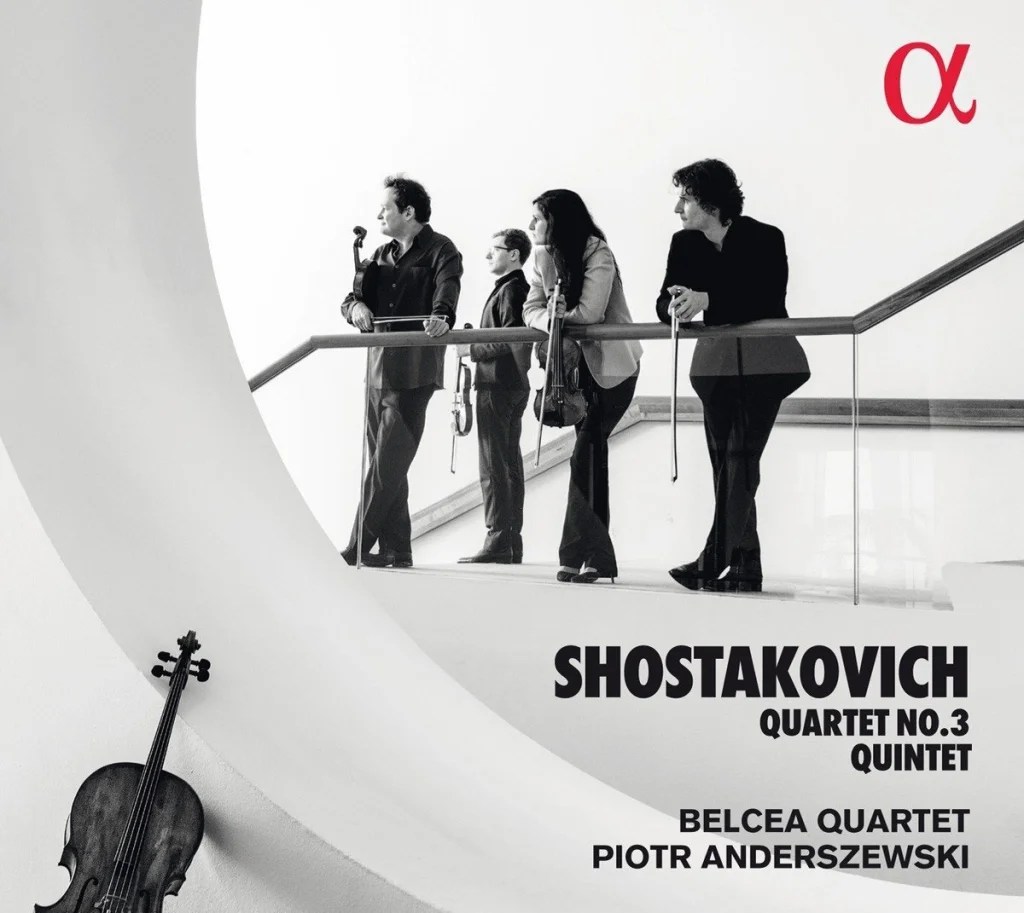
It took a few years but by now Shostakovich has also become well known to the Belceas. In the previous few years, they have played just about all his string quartets live but never put his work on CD before.
And now they have! For Belgian Alpha, they have recorded the third string quartet and, reinforced by Polish pianist Piotr Anderszewsk, the piano quintet, and the result is undoubtedly excellent but with a few caveats.
The piano quintet dates from 1940. Its premiere, by the Beethoven Quartet with the composer himself at the piano, was greeted very enthusiastically by all. It earned Shostakovich the Stalin Prize, plus a considerable sum of money.
How different things were with the third string quartet! Again, it was premiered by the Beethoven Quartet, in 1946. The work was initially censored by the Soviet regime. Critics found the note with which the piece ends ‘ambiguous’ and Shostakovich was even accused of hiding coded messages against Stalin in it!
Shostakovich String Quartet no.3
The Belcea Quartet’s performance is milder than what I am used to. It’s not that the sting has been taken out, as the bitterness is still very prominent. But now you can listen to it several times in a row, without your ears getting tired. In a manner of speaking, that is.
Even the quintet, surely one of Shostakovich’s ‘sunniest’ compositions, sounds even more pleasant than usual to my ears. Incredibly beautiful, yes, but what I miss a little is the undertone – always present with Shostakovich – that makes it less pleasant for the listener.
Peanuts really. The four strings and the pianist feel each other very well, forging it into a beautiful, homogeneous whole. Without a doubt an asset!
‘Prehistoric’ Ligeti brilliantly performermed
For me, Leoš Janáček’s string quartets form the absolute opus magnus of the genre. Call me sentimental, but at the very first bars of number two my eyes fill with tears and I am really swept up in all the emotions. Over the years, many excellent versions have appeared on the market, of which the DG recording, by the then still very young Hagen Quartet, is the most precious to me.
It is not the first time that Belcea tried their hand at the string quartets: already in 2001, they recorded them for Zig Zag Territoires (ZZT 010701). I was not exactly over the moon then, somehow I did not feel they got to the core of the music. Still, I cherish the recording: I am a real ‘Belcea fan’.
I find the recording on Alpha Classis refreshing. The tempi are a bit fast, but that does not hurt. The players somewhat control their emotions, so that a lot of underground tension can be felt. Nice.
But what makes the CD a real must is the performance of Ligeti’s first string quartet. The Hungarian master composed it in 1954, two years later he had to flee the country, after which he referred to this composition as a ‘prehistoric Ligeti’.
Prehistoric or not: I think it is genius. It keeps you nailed to your seat and you can’t help but listen: preferably with all doors and windows closed, so you will not be disturbed. The string quartet, which for a good reason bears the name Métamorphoses nocturnes (yes, call it programmatic), is not performed very often, but of all the performances I have heard so far, the Belceas’ is definitely at the top.
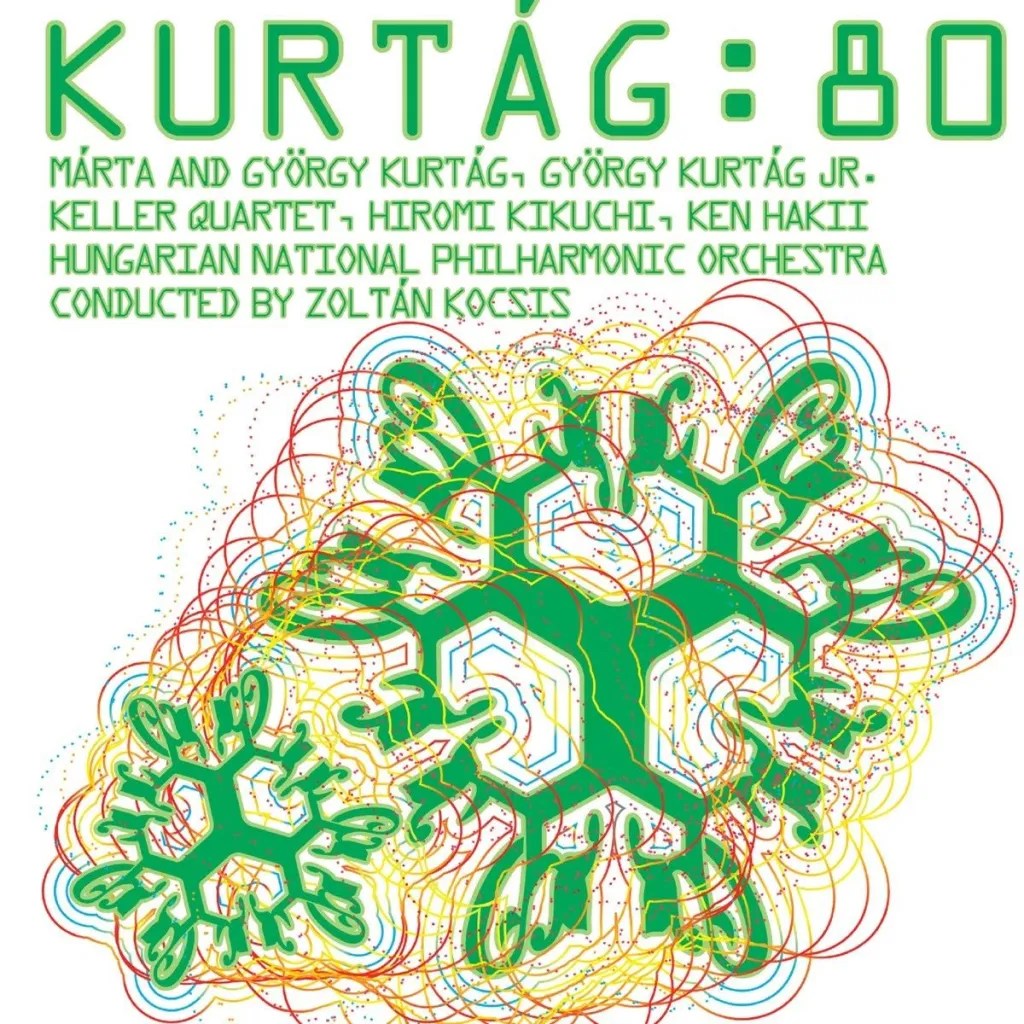
György Kurtág ,the undoubtedly greatest composer still alive, turned 80 years old in February 2006, which was celebrated all over the world.
A ‘Kurtág 80 Festival’ was even created in Budapest, during which some of his works had their premieres.
“…Concertante…” for violin, viola and orchestra had been created back in 2003, but in 2006 Kurtág completely revised it. The composition, dedicated to Hiromi Kikuchi and Ken Hakii and realised in collaboration with these artists was awarded the prestigious Grawemeyer Award.
It is a wonderfully beautiful work, with many whispering tones and dream images, which gently fades out in a hushed epilogue, almost like a candle. Without a doubt, it is a true masterpiece, and the performance on this CD is so perfect and beautiful that it simply couldn’t be more wonderful. It will bring tears to your eyes.
In “Zwiegespräch”, with its strong Hungarian accents and its discernible influences of Mahler and Webern, the Keller Quartet’s lyrical sound is literally “enhanced” by a synthesiser played by György Kurtág junior.
The second CD ends with a few “Játékoks” (“Games”), played by Kurtág himself together with his wife Márta, but before that, you can dream away at “Hipartita” for violin solo.
Quirel from the Játékoks:
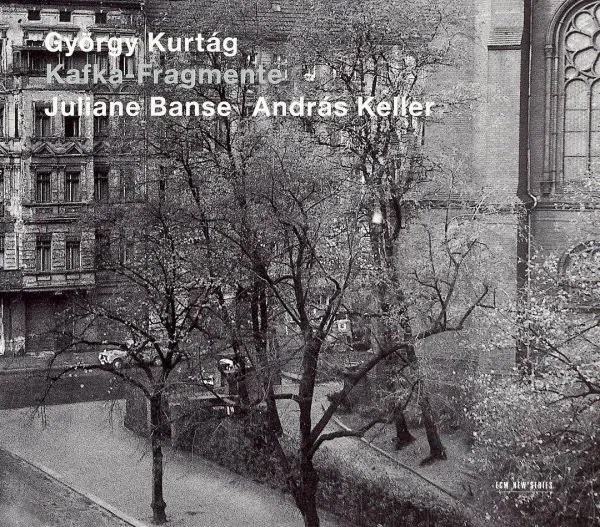
German firm ECM had not forgotten Kurtág’s 80th birthday either. In February 2006, they released a new recording of ‘Kafka-Fragmente’, arguably his most important work.
The composition was created in the years 1985 – 1986, in close collaboration with the violinist András Keller, a Kurtág promoter pur sang, who advised him in the technical instrumental issues. In 1987, Keller, together with Adrienne Csengery, took care of the premiere at the Festival of Modern Music in Witten.
Adrienne Csengery and András Keller:
Kurtág based his piece on fragments from Kafka’s diaries and letters, which he wove together into an hour-long beautiful and finished entity. Those fragments, forty in total, were spread randomly over four movements. Their order was determined on an exclusively musical basis, the texts were subordinated to the music
Kurtág was always strongly attracted to Kafka. Ever since his childhood, he collected all the texts which he thought could be “composable”. There is also a certain similarity between the two: their Central European Jewish roots, their high degree of self-criticism and their long periods of inactivity.
The small fragments are very different in atmosphere, text and music are symbiotically linked. This performance can hardly be bettered – it is a monumental birthday present.
William Kinderman on Kurtág’s Kafka-Fragmente, for soprano and violin, posted by king permission of William Keinderman







 Basia con fuoco