Roberto_Sacca

Die Regie hat das Wort oftewel Thaïs van Konwitschny uit Theater an der Wien

Tekst: Peter Franken

In 2021 ging in Wenen een nieuwe productie van Massenets opera Thaïs. De regie was in handen van Peter Konwitschny. Decors en kostuums kwamen voor rekening van Johannes Leiacker. Dit gerenommeerde duo stond voor de taak om ondanks alle corona gerelateerde beperkingen een volwaardige productie af te leveren. Daar zijn ze redelijk in geslaagd. Een opname zonder publiek is op Bluray uitgebracht door Unitel.

Het libretto van Thaïs is gebaseerd op de gelijknamige roman van Anatole France uit 1890. Daarin wordt het losbandige leven, de bekering door toedoen van een doortastende monnik en de boetedoening van de legendarische courtisane Thaïs beschreven. Deze vermoedelijk historische figuur leefde in de vierde eeuw in Alexandrië en werd later heilig verklaard. Santa Thaïs heeft een reputatie die ruwweg te vergelijken is met die van Maria Magdalena.

Anatole France voegde een geheel nieuwe dimensie aan het verhaal toe door de monnik in kwestie verliefd te laten worden op zijn ‘bekeringsproject’ waardoor hij weliswaar haar ziel redt maar de zijne verspeelt. ‘Eeuwig leven en zielenheil, wat doet het er toe. De enige echte liefde is die tussen levende mensen’ zingt hij vertwijfeld.

De handeling speelt zich in Wenen af op een vrijwel leeg toneel met een groot gordijn als achterdoek. Door dit gedeeltelijk opzij te schuiven of op te halen kunnen personages of zelfs een geheel koor snel opkomen en afgaan.

Athanaël maakt zijn opwachting in Alexandrië bij zijn jeugdvriend Nicias die toevallig net ten koste van zijn complete (?) vermogen een week exclusieve aandacht van Thaïs heeft weten te verwerven. Het wordt zijn laatste avond met haar en hij is niet te beroerd die verdwaasde monnik aan haar voor te stellen.
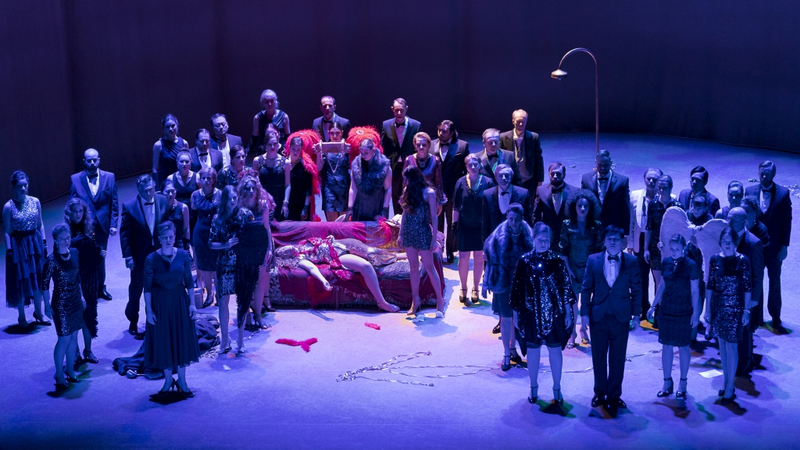
Het huis van Thaïs wordt slechts geduid door een kleurige sofa. Haar rijkdom moeten we aflezen aan een exuberant kostuum, getooid met rode vleugels. Alle anderen lopen ook met vleugels rond maar die ogen veelal wat meer ingehouden. De menigte is modern stemmig gekleed, met witte vleugels. Ter onderscheid lopen alle monniken rond in het zwart met bijpassende vleugels. Wellicht wordt hier bedoeld dat je niet perse in een klooster hoeft te leven om een engel te kunnen zijn.

Athanaël begint voortvarend aan zijn missie om Thaïs terug tot het christelijk geloof te brengen door haar levenswijze af te kraken en haar een prachtig bestaan in het hiernamaals voor te spiegelen. Konwitschny heeft echter zo zijn twijfels over wat er in het hoofd van die monnik omgaat.

Athanaël gaat zo tekeer dat hij Thaïs angst inboezemt. Zij zingt ‘Pitié, ne me pas de mal’. De regie laat hem haar zonder pardon verkrachten en vervolgens wordt hij door haar bereden. Dat gebeurt natuurlijk niet in werkelijkheid maar zo wordt op niet mis te verstane wijze getoond dat hij niet denkt wat hij zegt. Later geeft hij dat toe: ‘Het was een leugen. Er is geen hiernamaals, alleen het leven telt.’

Aanvankelijk wil Thaïs er allemaal niets van weten maar tijdens een droom, begeleid door de overbekende vioolsolo ‘Meditation’, komt ze tot inkeer en laat zich door Athanaël wegvoeren naar de woestijn met achterlating van al haar bezittingen. Dat gaat niet zonder slag of stoot. Ze wil een beeldje meenemen dat Eros voorstelt. Het wordt hier voorgesteld door een klein jongetje met een pijl en boog dat zo nu en dan gezellig bij Thaïs op schoot kruipt. Als Athanaël hoort dat ze het ooit van Nicias heeft gekregen, dat verdorven heidense individu, ontsteekt hij in woede en schiet het jongetje neer.
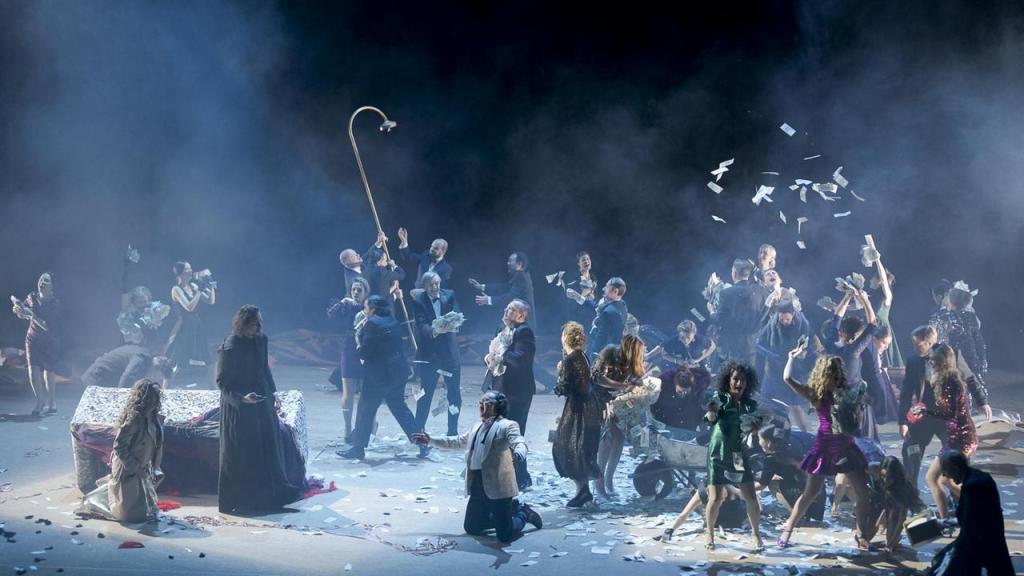
De menigte krijgt lucht van Thaïs’ vermeende ontvoering en wil die beletten. Athanaël schiet wild in het rond om hen op afstand te houden maar het volk komt pas tot bedaren als Nicias arriveert met een kruiwagen vol geld dat hij begint rond te strooien. Kennelijk had hij nog iets achter de hand gehouden.
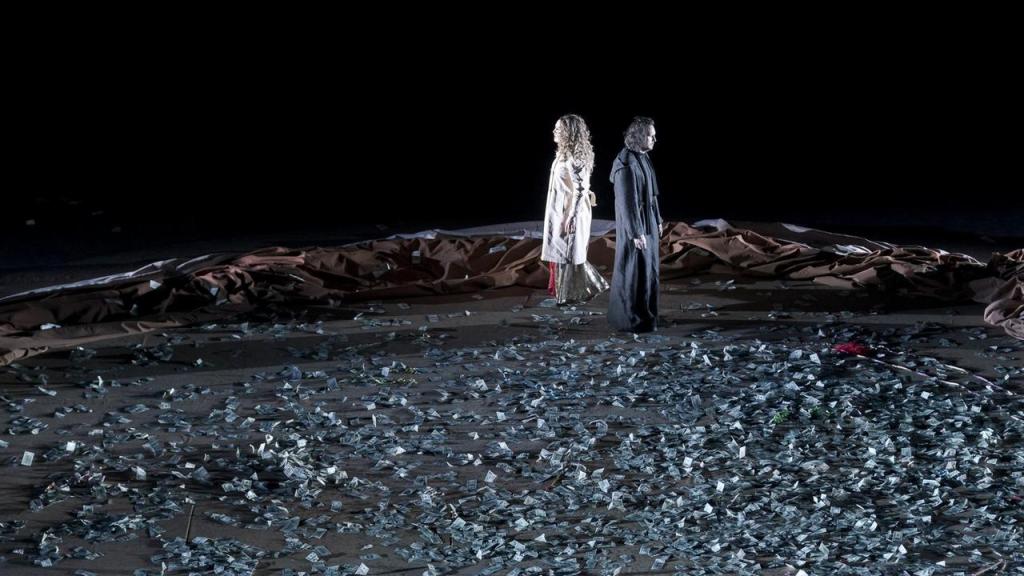
Muzikaal doet Thaïs me zo nu en dan denken aan Manon, een van Massenets grote succesnummers. Als ze zichzelf in de spiegel bekijkt en zingt ‘Dis-moi que je suis belle’ hoor ik echo’s van ‘Je marche sur tous les chemins’. Ook scenisch is er een parallel: beide dames slepen zich aan het einde voort door een woestijn. Manon sterft, Thaïs bereikt nog net het nonnenklooster waar Athanaël haar naar toe brengt. De scène waarin hij terugkeert in zijn eigen klooster is gecoupeerd. We zien en horen hem direct aansluitend van zijn geloof afvallen.

Nicole Chevalier is niet helemaal opgewassen tegen de eisen die de titelrol aan haar stelt maar houdt zich toch vrij goed staande. Hetzelfde kan worden gezegd van Josef Wagner als Athanaël. Roberto Sacca geeft een goede vertolking van Nicias. De overige rollen zijn adequaat bezet.

Dirigent Leo Hussain geeft leiding aan het Arnold Schoenberg Chor en het ORF Radio-Symphonieorchester Wien. Al met al toch een wat tegenvallende Thaïs, ik had me er in elk geval meer van voorgesteld.

Productiefoto’s: © Werner Kmetitsch


Een paar woorden over Thaïs van Massenet


Pakkende Thaïs uit Venetië
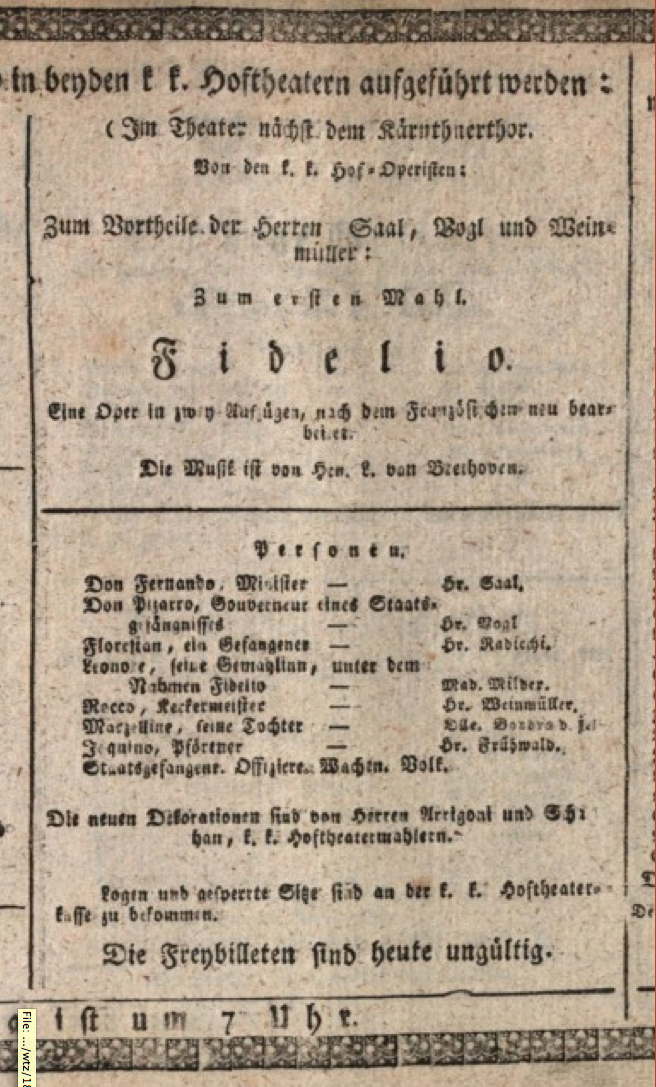
My love-hate relationship with Fidelio by Beethoven

https://basiaconfuoco.com/wp-content/uploads/2020/07/fidelio18140523.jpg

I have a love-hate relationship with ‘Fidelio’. On the one hand, I think it is a whole lot of rubbish, but on the other hand, I love the overture. And the quartet in the first act – a heavenly piece of music, if performed well.

Harnoncourt (Teldec 4509-94560-2)

Fidelio Harnoncourt cd


I particularly like the recording Nikolaus Harnoncourt made in 1995 with the Chamber Orchestra of Europe. Charlotte Margiono is a fantastic Leonore and Peter Seiffert (Florestan) sounds like a young god. Also the young (yes, make no mistake! Don Ferrando is young!) Bo Skovhus sings the noble minister in a very natural way. Sergei Leiferkus (Don Pizarro) is also much more at home here than in Verdi’s operas.

I become a little sad when I see the names of László Polgár (Rocco) and Deon van der Walt (Jaquino) again: Polgár, a much beloved singer (not only in Amsterdam), died suddenly in September 2010. And Deon van der Walt was shot dead by his own father in November 2005 (who says life is not like opera?). The orchestra is very transparent and wonderfully light-hearted, something I enjoy very much.


Barenboim (Teldec 3984-25249-2)

fidelio barenboim


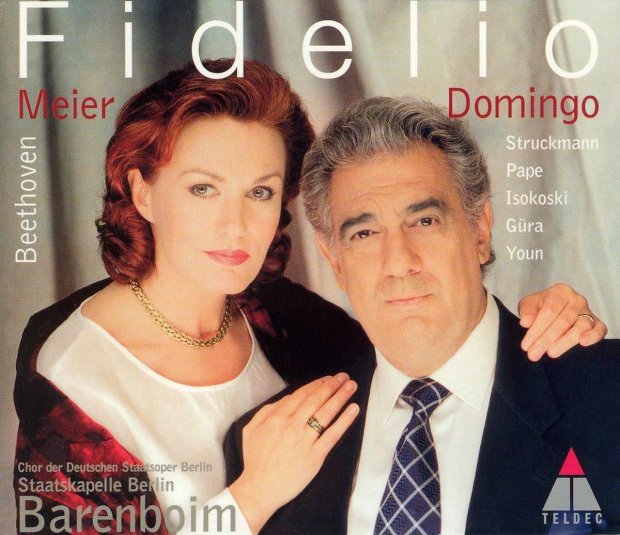
Now you may say: Fidelio light-hearted? I want thunder and lightning! In that case, your choice should be Daniel Barenboim. Here, not only is the orchestra (Staatskapelle Berlin) of almost Wagnerian proportions, so are the singers: Waltraud Meier (Leonore), Plácido Domingo (Florestan), Falk Struckman (Don Pizarrro), René Pape (Rocco), Kwangchul Youn (Don Fernando).
On the other hand the roles of Jaquino (Werner Güra) and Marzelline (Soile Isokoski) are wonderfully lyrical (although more heavily cast than usual). The tempi are solid but never punishing, and Barenboim conducts with verve.

Elder (GFOCD 004-06)

Fidelio Eldet

There is absolutely nothing wrong with the 2006 performance, recorded live in Glyndebourne for the Festival’s own label. Anja Kampe made her enthusiastically received debut there as Leonore. And rightly so. Rarely, if ever, has this role been sung with such beautiful lyricism and such fragility, making Leonore even more deserving of our respect for her heroic actions. In the spoken dialogues, moreover, Kampe shows herself to be an outstanding actress.

I am not a big fan of Torsten Kerl (Florestan), but the way he sings his great aria is outstanding. Lisa Milne (Marzelline) has stolen my heart with her lovely soprano and the rest of the cast is also fantastic. Mark Elder conducts the beautifully playing London Philharmonic Orchestra with great intensity.
It is a great pity that the production has not appeared on DVD, because all the reviews praised Deborah Warner’s direction. But even without seeing it, there is still a lot to enjoy.

The packaging is also very attractive: the two CDs are enclosed in a kind of booklet with a hard cover, with, besides the libretto, many rehearsal and performance photographs.

Harnoncourt (Arthouse 107111)

Fidelio kaufmann

On DVD the choice is also quite large and out of necessity I will limit myself to two recordings.

Already in 2004 (!) Jonas Kaufmann sang Florestan, in Zurich, conducted by Nicolaus Harnoncourt. The conductor has changed his vision audibly and the orchestra sounds heavier than on Teldec. He conducts with a firm hand and starts very quickly, only to calm down afterwards. I find it all too measured, too tight … At least it is for me.

Jürgen Flimm directed the film and he gives us, for him, rather realistic images, sometimes maybe even ‘too’ realistic. A fun fact: Flimm also directed and supervised the dialogues for the 1994 Teldec recording.

Lászlo Pólgár is a wonderful Rocco. I doubt if he is a perfect match for the role (physically then), especially with a (very weak) Elisabeth Magnus as his daughter, but just to be able to see that man again!

Camilla Nylund is a rather unemotional Leonore, but Kaufmann is an irresistible Florestan.

Haitink (Opus Arte BD OA7040)

Fidelio Haitink


Again in Zurich, but four years later in 2008, a new production of ‘Fidelio’ (they apparently love it there) was presented. The orchestra of the Opernhaus Zürich is conducted very affectionately by Bernard Haitink, but then again – he has pretty much identified himself with Beethoven’s works.

He has also really thought about it: he finds the ideas behind the music much stronger than any political labels. He doesn’t care about updating, because the music itself is translucent, transparent and warm.

Harking back to the Mahlerian tradition, he puts “Leonore III” in the second act. However, he is a bit on the slow side.

Katharina Thalbach’s direction and Ezzio Tofolutti’s furnishings are very realistic, which is in line with Haitink’s ideas, but the costumes are a bit of everything. The dialogues are somewhat abbreviated, which I do not really consider a lack.

Lucio Gallo is a misfit for me. He portrays Don Pizzaro as an Italian mafia boss, but as the sort you’ll only see in the cinema. It is  all very exaggerated and his voice does not have the right timbre for the role.

Alfred Muff is better suited as Rocco than as Pizzaro four years earlier, but he too has had his day. Melanie Diener (Leonore) sings very adequately, and I have little to say about her acting, but she is not at all convincing as a man!

Robberto Saccà  is a great Florestan. More lyrical than we are used to, but I do not mind that at all. And although he does not look gaunt, his fantastic acting skills are enough to suggest his great suffering. I have also come to appreciate this singer more and more.