Leos_Janacek

The Eternal Life or Věc Makropulos by Janáček

Eternal life, don’t we all secretly want it? Especially if you will stay young, beautiful and healthy in the process? And especially if you are an opera singer and you will be able to perfect your voice during all those hundreds of years of your life. Unfortunately, there is also a downside: you will certainly become cynical and then nothing will interest you anymore, not even sex. After all: you’ve seen it all?

Emilia Marty (or Elina Makropoulos, or Eugenia Montez, or any of the other of her former alter egos) brings turmoil to everyone’s lives, but she herself remains calm thoughout it all. Once she loved, yes, but even that was more than a hundred years ago. Now her end seems closer anyway, so she must find the elixir once invented by her father. But maybe death is the solution after all?


Janáček’s Věc Macropulos (The Makropoulos Case) is an extraordinary opera, providing much food for thought. A ˜gefundenes fressen” for a director, you might say, especially since the libretto (by Janáček himself and based on the story by Karel Čapek ) is truly genius and provided by the composer with equally genius music.

DVD


But when your name is Christoph Marthaler, you prefer to put your own stamp on the production, and he does just that. The opera begins with ˜silent” dialogue, which you can follow through subtitles. No, it’s not in the libretto, but apparently this director thought it was exciting. It took me a few hours to figure out that it wasn’t because of the DVD!

© Walter Mair


Whether it adds any value? You have to judge that for yourself. For me, it doesn’t; the opera’s message was more than clear without it. But once you get the hang of it, it is undeniably exciting, although I wonder if the audience on the left of the hall could see anything except the subtitles.


I have absolutely nothing against modern theatre, especially if it is done well and intelligently. As theatre, then, the production is certainly engaging. But Janáček it is not, also because the orchestra has too little affinity with him. Janáček is not modern, Mr Salonen! Even in this horribly inverted fairy tale, he does not lack lyricism. And the accents, the typical ‘Janáček accents’, I don’t hear them anywhere either. What a misunderstanding!


The singing is undeniably good to very good. Johan Reuter is a fantastic Prus and Raymond Very a really endearing Gregor. Angela Denoke is a fenomenal artist and although I don’t really like her voice, in her role she is more than convincing.

The reviews were almost all very complimentary. People praised the drama and the singers. Even Salonen was applauded, so the final verdict is yours.


Behind the scenes:


CDS


The 30-year-old classic conducted by Charles Mackerras still sounds great and it leaves very little room for improvement, unfortunately it is not available separately (anymore?). Decca has compiled all the Janáček operas recorded by Mackerras and put them in a 9-CD box set (4756872).

Fine in itself, especially considering the price; unfortunately you don’t get the libretto with it. But the performance is very pleasing indeed. Elisabeth Söderström  is an excellent Emilia, Peter Dvorský a fine Albert and Václáv Zítek an impressive Baron Prus.


In 2006, Mackerras conducted the opera at English National Opera, in English. The (live) recording appeared on Chandos (CHAN 3138), and it is good to have it there. Cheryl Barker sings a beautiful, cool Emilia, perhaps less lived-in than Söderström, but certainly no less sophisticated. And the English is something you just have to get used to.)

The Cunning Little Vixen by Mackerras

No composer, perhaps apart from Puccini, loved women as much as Janáček did. Not that he was a womaniser, though he did fall in love with a 30-year-old younger woman at the age of 70. Whether it was anything more than a platonic relationship is totally irrelevant. Kamila Stösslová became his muse, and to her he dedicated his most beautiful works.

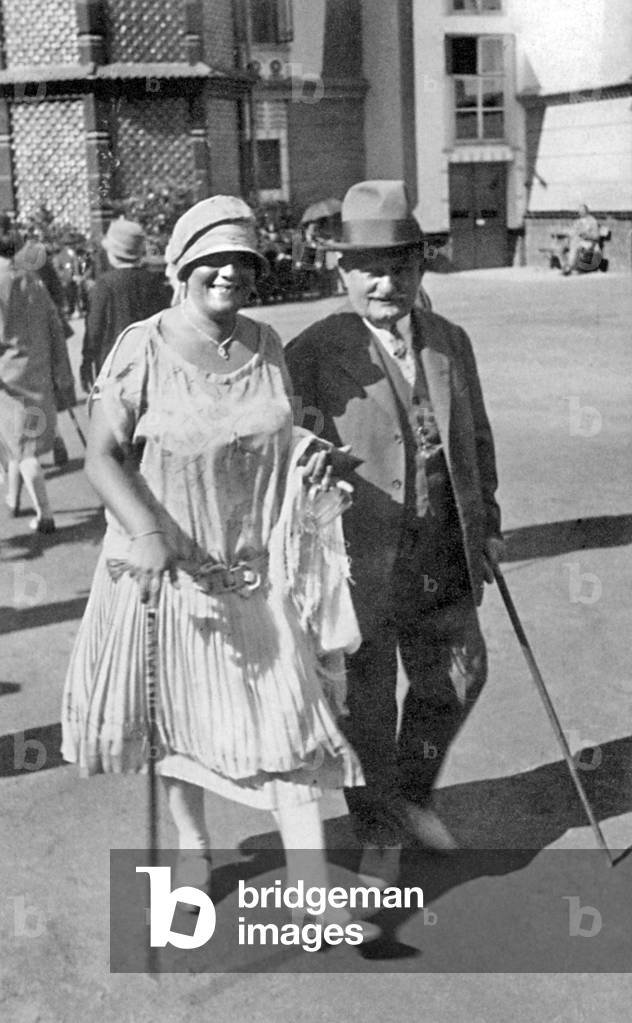
Kamila Stosslova & Leos Janacek, 1927


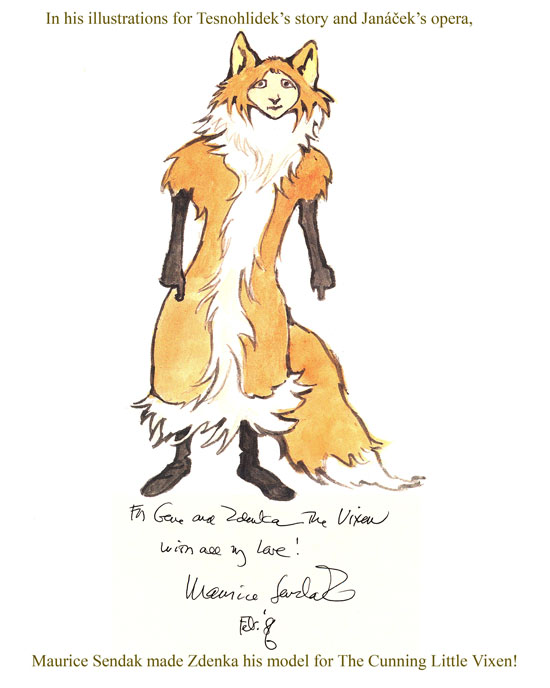
Without question, then, she was his inspiration for creating female characters, whom he treated with such deep affection that it is utterly impossible not to love them. The beautiful, sly little vixen Bystrouška (meaning ˜sharp ears”) is a case in point.


Bystrouška symbolises everything that men in opera lack, but still crave: freedom, independence, beauty, but also affection. Hence she reminds the Forester of Terynka, a beautiful gypsy girl, who also evokes warm feelings in the Schoolmaster and the Parson. But it is ultimately the Poacher who marries Terynka and gives his bride a fox fur as a gift. It couldn’t be more symbolic


Charles Mackerras on Decca


The Cunning Little Vixen is a wonderful opera, with music so beautiful it hurts you at times. Hence, conductor and orchestra not only have to be exceptionally good, but also have to have a special affinity with Janáček ’s music.

Sir Charles Mackerras is one such conductor. In the 1980s, he recorded five Janáček operas in Vienna, for which he received only the highest praise. And rightly so. A few years ago, Decca compiled all the operas and released them in a box set, which I can warmly recommend.

The role of Vixen is sung by Lucia Popp, a singer with probably one of the most beautiful lyrical voices in history: a voice with the beauty and purety of a crystal.

Apart from The Cunning Little Vixen, the box contains Jenůfa, Kát’a Kabanova, Věc Makropulos and From the House of the Dead. It comes with a clear booklet, unfortunately no librettos.


Charles Mackerras on Arthaus Musik


In 1995, The Cunning Little Vixen was staged at Châtelet in Paris, directed by Nicholas Hytner. The production was immediately awarded top prizes. No wonder, as it is of a rare beauty.


Hytner shows us a fairy tale, which is nót a fairy tale, in which people and animals are perfectly integrated into a symbiosis of nature and human desires.

Eva Jenis is truly phenomenal as Vixen. What this woman is all about, borders on the impossible. She runs, drops, rolls over the stage, jumps like crazy… The fact that she also manages to sing beautifully is unimaginable.


Also wonderful is Hana Minutillo as Fox and Ivan Kusnjer as Poacher. Thomas Allen further proves once again what a great and intelligent singer-actor he is. He had sung the role of Forester before (I remember a wonderful production from Covent Garden some 25 years ago), but now he does it in Czech (perfectly), in an otherwise almost exclusively Czech cast.

That the orchestra sounds as if it had played nothing but Janáček in the whole of its existence should come as no surprise: the conductor, after all, is no less than Charles Mackerra

Jenůfa in Antwerpen raakt tot diep in de ziel

Tekst:  Ger Leppers

De Nederlandse operaliefhebbers zullen dit seizoen hebben afgesloten met gemengde gevoelens: naast een schitterende concertante uitvoering vn ‘Alice in Wonderland’ van Unsuk Chin in het Concertgebouw moesten zij het stellen met een mallotige, door een pretentieuze regisseur meedogenloos door de verhakselaar gehaalde ‘Fidelio’ in het Muziektheater.

Vlaamse opera-aficionado’s zullen daarentegen de hele zomer in gedachten nog kunnen nagenieten van de prachtige reprise van Robert Carsens regie van Leos Janáčeks Jenůfa, een voorstelling van vijfentwintig jaar geleden die sedertdien op mijn netvlies gebrand is gebleven.

Robert Carsens kijk op Jenůfa :

De samenwerking tussen Carsen en (toen nog) de Vlaamse Opera dateert al van de jaren negentig van de vorige eeuw, toen de Canadese regisseur, aan het begin van een glanzende internationale carrière, samen met de betreurde dirigent Silvio Varviso en op instigatie van intendant Marc Clémeur een inmiddels legendarisch geworden Puccini-cyclus opzette.

De cyclus, die zich over een reeks van jaren uitstrekte, begon met een memorabele ‘Manon Lescaut’, die nog steeds op DVD te bewonderen valt.

Naarmate het project vorderde kreeg de eigen stijl van Carsen steeds duidelijker gestalte: in sobere decors en met een uiterst precieze, heel liefdevolle personenregie werd het werk tot zijn essentie teruggebracht, waardoor de betrokken opera onder Carsens handen een tintelende frisheid en grote kracht kreeg – een schoolvoorbeeld van de regel ‘minder is meer’. Hoogtepunt was voor mij het ‘Trittico’ waarmee de cyclus eindigde.

Maar dat het nog beter kon bewees de Canadese regisseur daarna met een kleine Janacek-cyclus, bestaande uit ‘Kata Kabanova’, ‘Het sluwe vosje’ en deze ‘Jenůfa’, die we nu tot mijn grote genoegen – lichtjes gewassen, geknipt en geschoren – terug op het thuishonk opnieuw konden bewonderen. Het is een opera waar Carsens stijl bij uitstek tot zijn recht komt.  

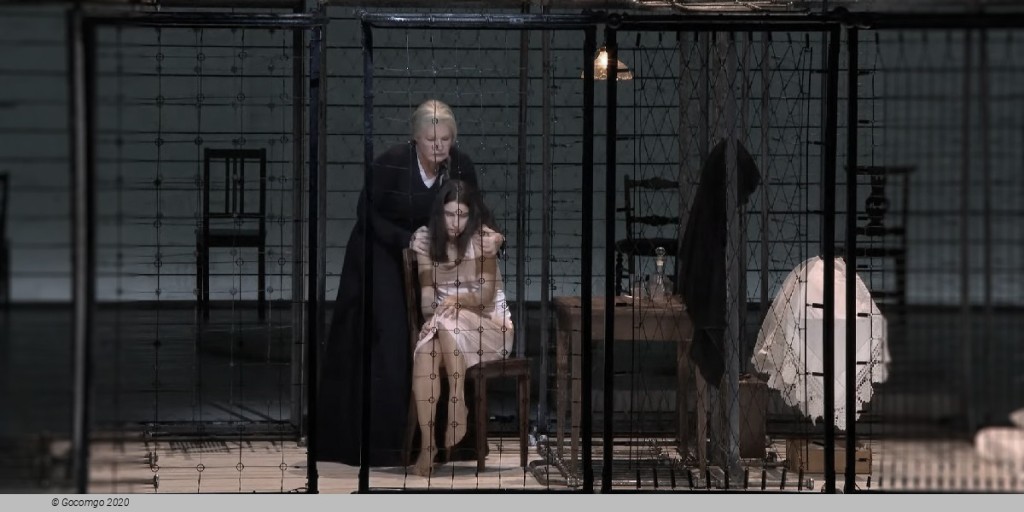
Het slot van ‘Jenufa’ is namelijk niet zonder problemen op het gebied van de geloofwaardigheid: in een paar minuten verneemt Jenufa, die op het punt staat te trouwen met de man die haar gezicht voorgoed heeft verminkt, dat haar stiefmoeder haar baby heeft vermoord, en besluit ze die misdaad te vergeven.

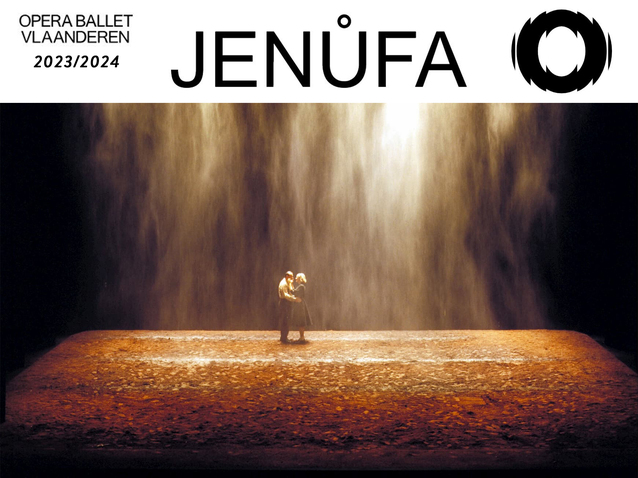
Dat de toeschouwer dit accepteert is in de eerste plaats te danken aan de genereuze muziek van Janáček. Wat de personages uit de opera ook aan misdrijven begaan, de componist oordeelt niet over hun daden, maar laat alleen zien (en vooral horen!) aan welke veelheid van tegenstrijdige gevoelens zij ten prooi zijn.  Maar in deze enscenering schiet Carsen Janáček op een prachtige manier te hulp om de dramatische slotwending van het verhaal aanvaardbaar te maken: in een oogwenk is het toneel leeg gevaagd, en het verzoenende slotduet speelt zich af onder een plots losgebarsten, alles reinigende en wegspoelende stortbui – en daarmee in een andere, nieuwe dimensie.

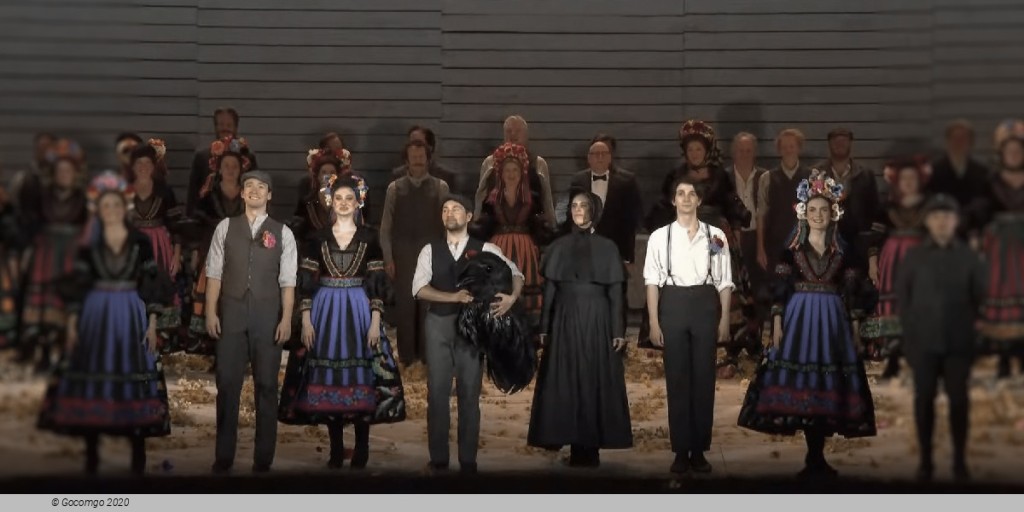
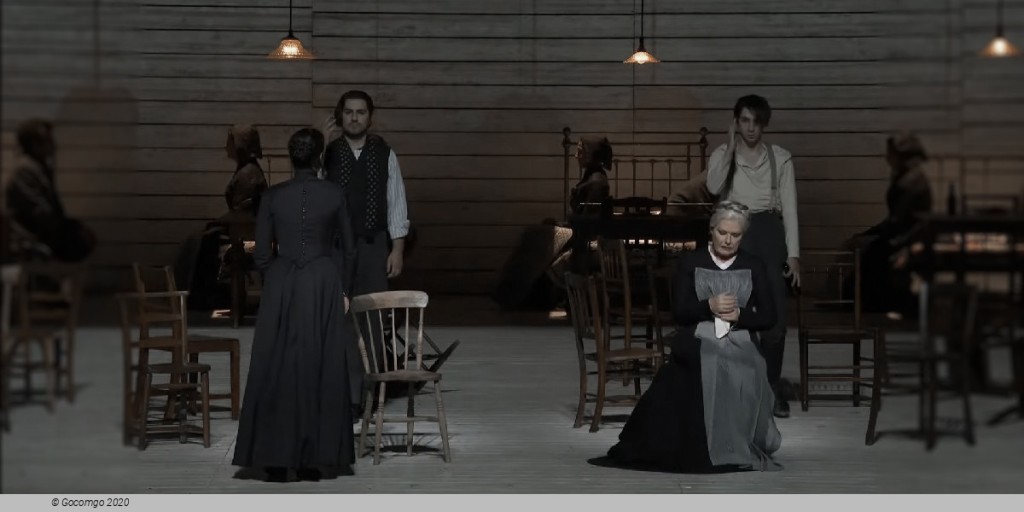
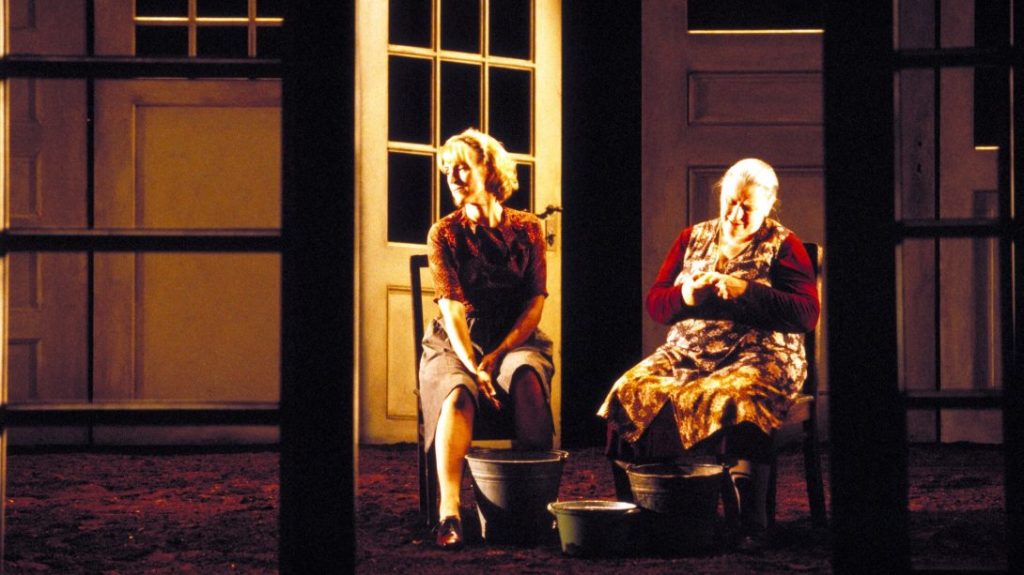
Het decor is overigens sober, en bestaat uit een zandvlakte en enkele tientallen deur- en raampanelen, die verplaatst kunnen worden om steeds nieuwe ruimtes te scheppen. Voor Carsen is dat genoeg om de geslotenheid op te roepen van het dorpsleven waarin zijn personages geacht worden zich te voegen naar verstikkende traditionele waarden en rolpatronen. Waarden en rolpatronen die bedoeld zij om een stabiel, voorspelbaar maatschappelijk kader te scheppen, maar die hier juist onontkoombaar leiden tot een hartverscheurende kindermoord.

In een voorstelling die vrijwel geen wens onvervuld liet, en die zozeer gebaseerd is op collectief werk, heeft het iets oneerlijks om bepaalde zangers naar voren te halen.

Maar als het toch moet – en de regels van de kritiek zijn op dit punt naar het schijnt onverbiddelijk – dan noem ik toch Natascha Petrinsky, in de rol van de door het leven getekende kosteres – een van de rijkste, meest complexe rollen voor oudere sopranen uit het hele repertoire. Zij benutte prachtige de rauwe kantjes die haar stem inmiddels hier en daar vertoont om de verscheurdheid van haar personage over het voetlicht te brengen. En het is misschien een vreemd compliment om aan een zangeres te maken, maar zelfs zonder muziek zou ik de hele avond hebben genoten van haar acteren. Voor alle andere zangers verder niets dan lof.

Agneta Eicheholz en Natascha Petrinsky over Jenůfa:

Alle vocalisten werden op voorbeeldige wijze ondersteund door het orkest onder leiding van huisdirigent Alejo Pérez, dat één was met alle personages. Ik dacht dat ‘Jenufa’ voor mij vertrouwd terrein was: ik heb de opera een keer of tien gezien, en bezit er verschillende opnamen van. Maar van de eerste maten tot in de slotakkoorden hoorde ik nu allerlei bijzondere details van Janaceks kolkende, kernachtige muziek die mij niet eerder waren opgevallen en het werk een bijzondere warmte gaven.

Het orkest wisselde met natuurlijk gemak intieme en subtiele momenten af met de ongepolijste, rauwe klanken waar dit plattelandsdrama óók om vraagt. Bij de abrupte, dramatische afsluitingen van de eerste twee bedrijven was het mij te moede alsof ik een guillotine-bijl naar beneden zag suizen. Het was, kortom, een onvergetelijke avond.

Trailer:

Jenůfa                                                            Agneta Eichenholz
Laca Klemen                                              James McCorkl
Steva Buryja                                               Ladislav Elgr
Kostelnicka Buryjovka                          Natascha Petrinsky
Starenka Buryjovka                                Maria Riccarda Wessling
Starek                                                            David Stout
Rychtar                                                         Reuben Mbonambi
Rychtarka                                                    Karen Vermeiren
Karolka                                                         Zofia Hannah
Pastuchyna                                                 Marta Babic
Barena                                                           Bianca Van Puyvelde
Jana                                                                 Lissa Meyvis
Tetka                                                             Christa Biesemans

Symfonisch Orkest Opera Ballet Vlaanderen
Koor Opera Ballet Vlaanderen
Muzikale leiding                                       Alejo Pérez
Regie en lichtontwerp                           Robert Carsen
Instudering regie                                     Maria Lamont
Scenografie en kostuumontwerp    Patrick Kinmoth
Lichtontwerp                                            Peter Van Praet
Instudering lichtontwerp                      Glen D’haenens
Koorleiding                                                Jan Schweiger
Dramaturgie                                              Ian Burton

Fotomateriaal: © Annemie Augustijns

Voorstelling gezien op 14 juni in Antwerpen

Nog te zien op 30 juni, 3, 5, 7 en 9 juli in Gent

Jenufa in de Royal Opera
Amsterdamse Jenůfa ontroert. Wel met kanttekeningen.