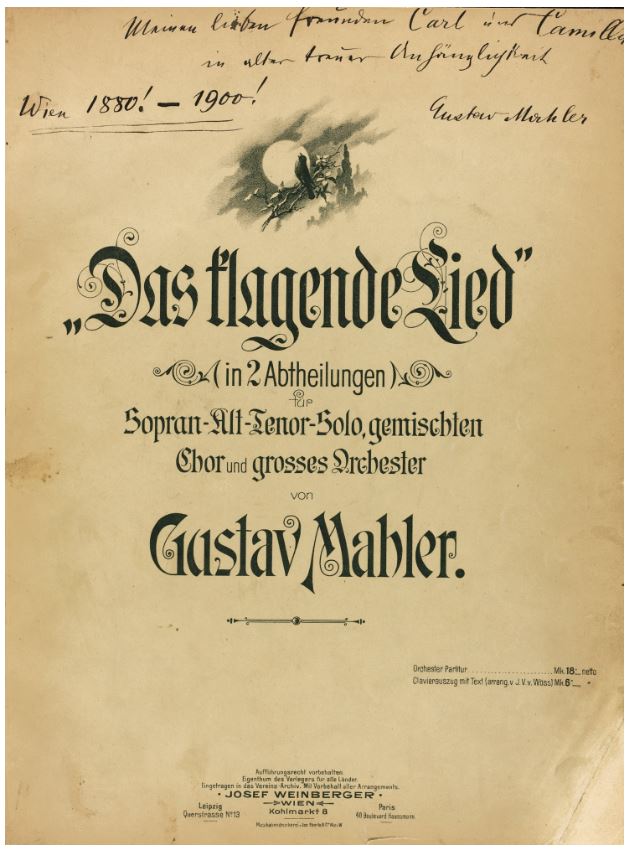
Year 1902: Vocal score of Das klagende Lied, version in two movements, signed and inscribed by Gustav Mahler
Sometimes you just don’t know. You think you understand a work well, very well indeed. You have a soft spot for it, so you’ve collected quite a few recordings and you think there cannot be any secrets left. And then an old, mastered recording drops on your doormat and it leaves you totally flabbergasted.
Until recently, you were still of the opinion that there is nothing better than Giuseppe Sinopoli and that MTT gets you carried away so nicely and completely, if only because of its very grueling tempi. But then your whole world goes haywire, because suddenly it feels as if you have awakened from a long sleep and only now everything is falling into place.
Mahler was barely 20 when he completed Das klagende Lied, the highly romantic and oh so sad fairy tale about a king’s son who murders his brother in a struggle for power and love. The composer himself considered it his opus 1 and the first work in which he found himself as “Mahler”.
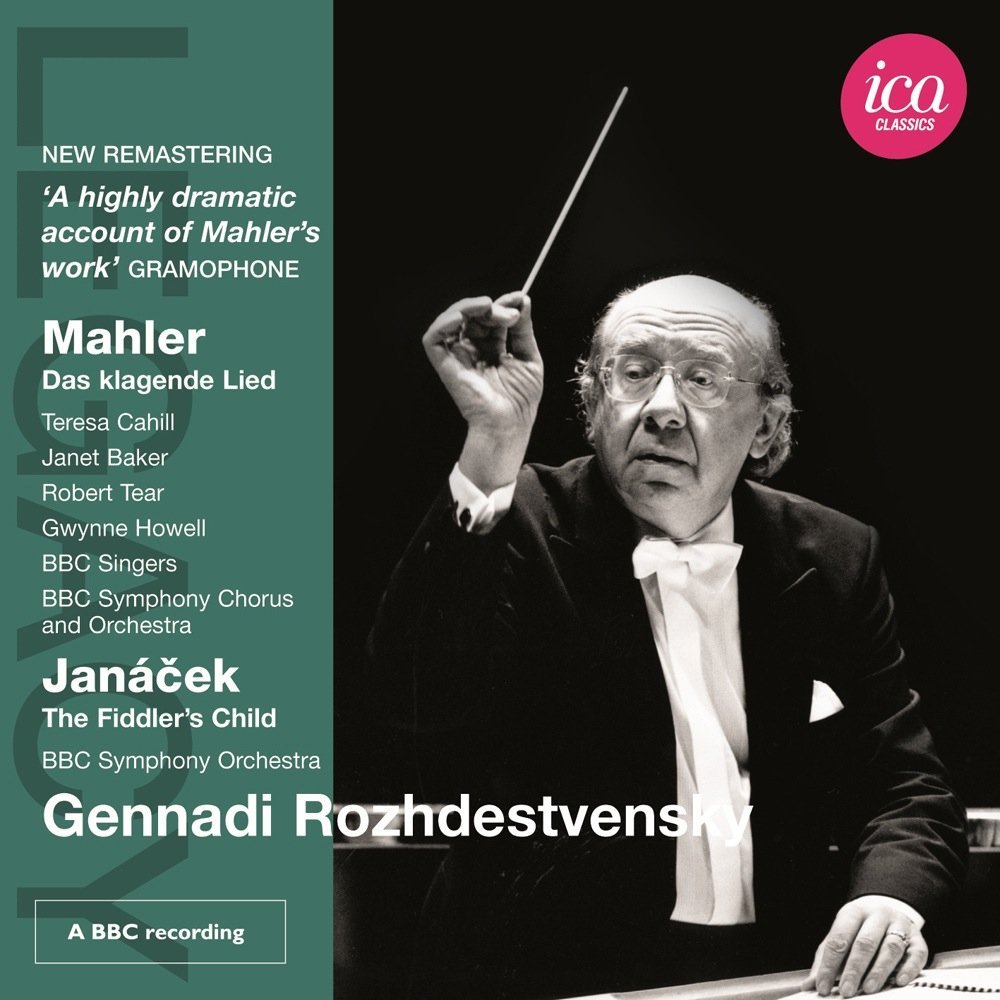
Gennady Rozhdestvensky was the first to conduct Das Klagende Lied in its original, three-part version. For that alone, he deserves more than praise. I am really at a loss for words to describe the performance, because I have never heard the work performed so dramatically and at the same time so incredibly lyrical and loving.
Rozhdestvensky manages to elicit the most beautiful sounds from the BBC orchestra, most reminiscent of first the awakening and then the ending of the day, the world and the universe. You hear the birds chirping softly and the wind blowing through the trees. And then the sun sets. No, fairy tales were not always cheerful, even when the world still believed in them.
Janacek’s The Fiddler’s Child (recorded in 1979 in Prague) has never before been released on CD. I must confess that I, a big Janácek fan, did not yet know this magnificent work, and I am quite ashamed of that.
Sinopoli:
Michael Tilson Thomas London live
First recording of the version in three movements by Pierre Boulez in 1970:
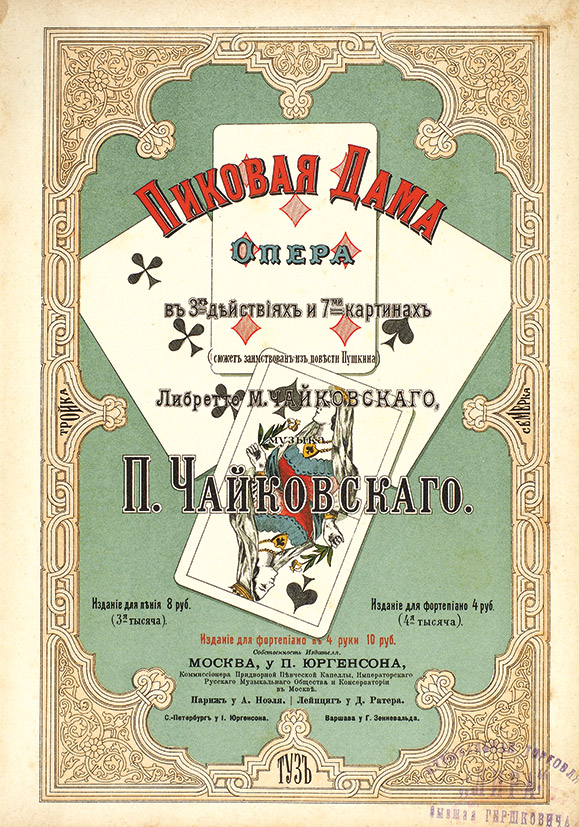
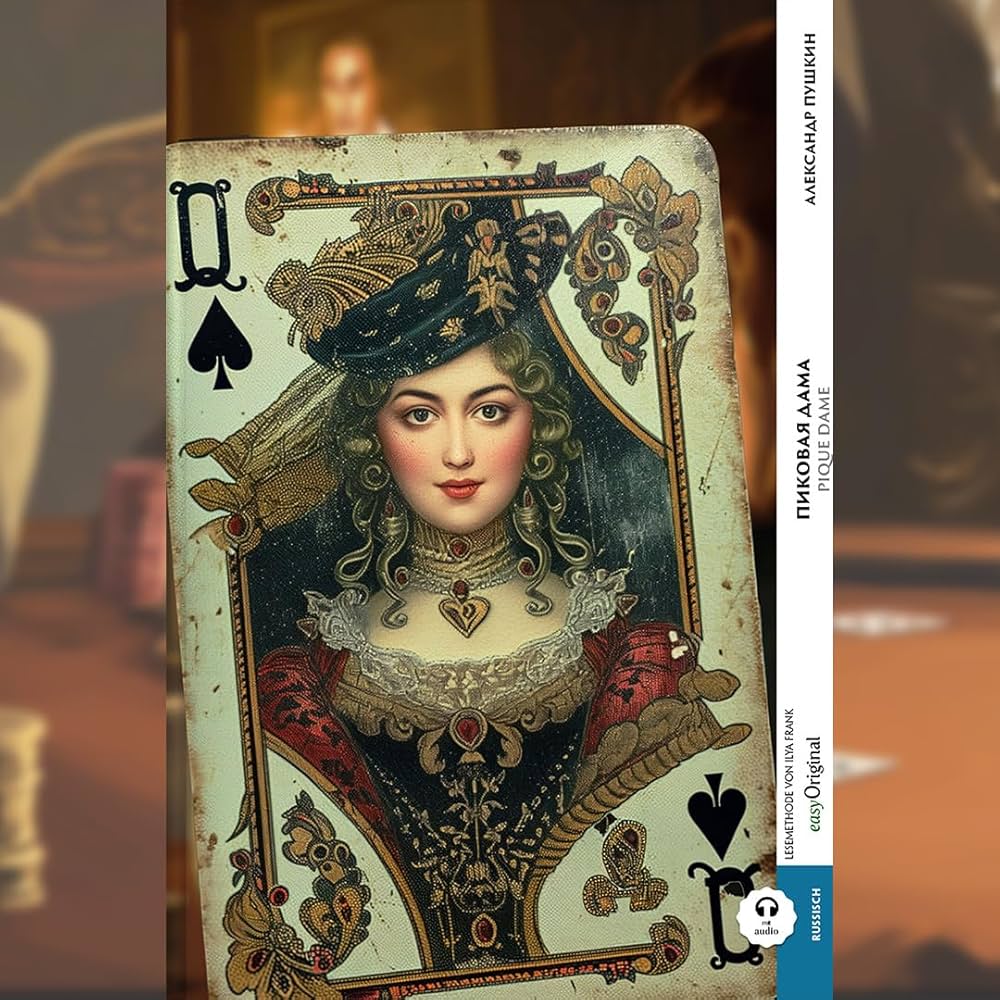
The Queen of Spades has always had something unsettling for me. I did not trust her. After all, she lacked the sweetness of Hearts, the wisdom of Diamonds and the sadness of Clubs. I experienced her as threatening
In Tchaikovsky’s opera, she symbolises the once blood-loving countess who, as legend has it, lost her entire fortune in a card game in her youth and regained it with the help of black magic.
The opera may be named after the countess’s ˜card alter ego”, but the real leading role belongs to Herman. A rather strange young man with obsessive eyes, of whom we know little to nothing. Fortunately, I would say, because this only adds to the suspense and mystery.
In Pushkin’s novel, on which the Tchaikovsky brothers based their opera, Herman is a German who at the end does not commit suicide but goes insane and is admitted to a mental institution.
Lisa (in the book not a granddaughter but companion of the countess) survives her misspent affair and marries a rich man. Do you need to know it all before going to the opera?
No, you do not! Hence also why I always sincerely hope that the directors who take Pique Dame in hand ignore the novel and stick to what the opera is about: a musical dissection of obsessions.
It is about an addiction carried to the utmost absurdum; to gambling, to love, to money, to power, to everything really. And about an all-pervading madness to which Lisa too falls prey, making her behave as if she were possessed by the devil. This is what the score also says.
GEGAM GRIGORIAN
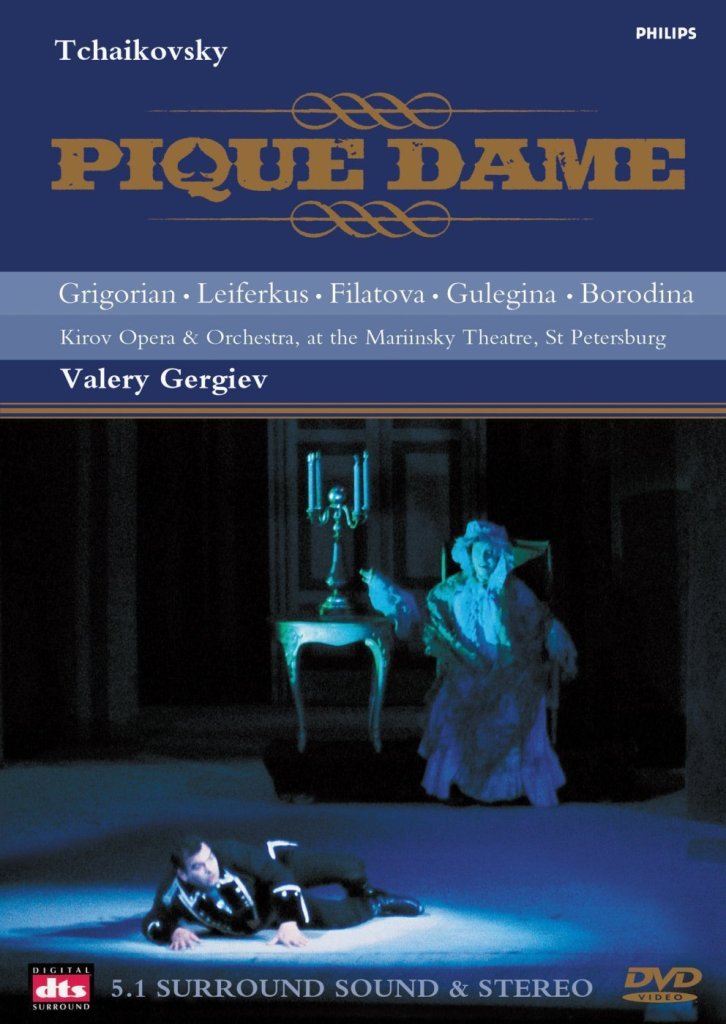
This 1992 Mariinsky production is a feast for the lover of traditional staging, where there is no room for updating and searching for hidden intentions. All the sets are super realistic, extensive attention has been paid to all the details and the costumes too seem to have been pulled out from under the dust.
That the whole thing nevertheless does not come across as very corny is due not so much to the director (Yuri Temirkanov, the renowned conductor and former artistic director of the Kirov), but to the truly superior team of singers.
Armenian tenor Gegam Grigorian, who died in March 2016, makes Herman a little brother to Otello, a true achievement.
Maria Gulegina, despite minor intonation problems, is a brilliant Lisa: tearful and heartbreaking.
Sergei Leiferkus puts on a solid Tomsky and Ludmila Filatova impresses as the old countess. Only Alexander Gergalov’s understated Yeletsky is not up to par, but he is soon forgiven, after all he has only the one aria to ruin.
Gergiev conducts animatedly, though he is not the subtlest. (Philips 070434-9)
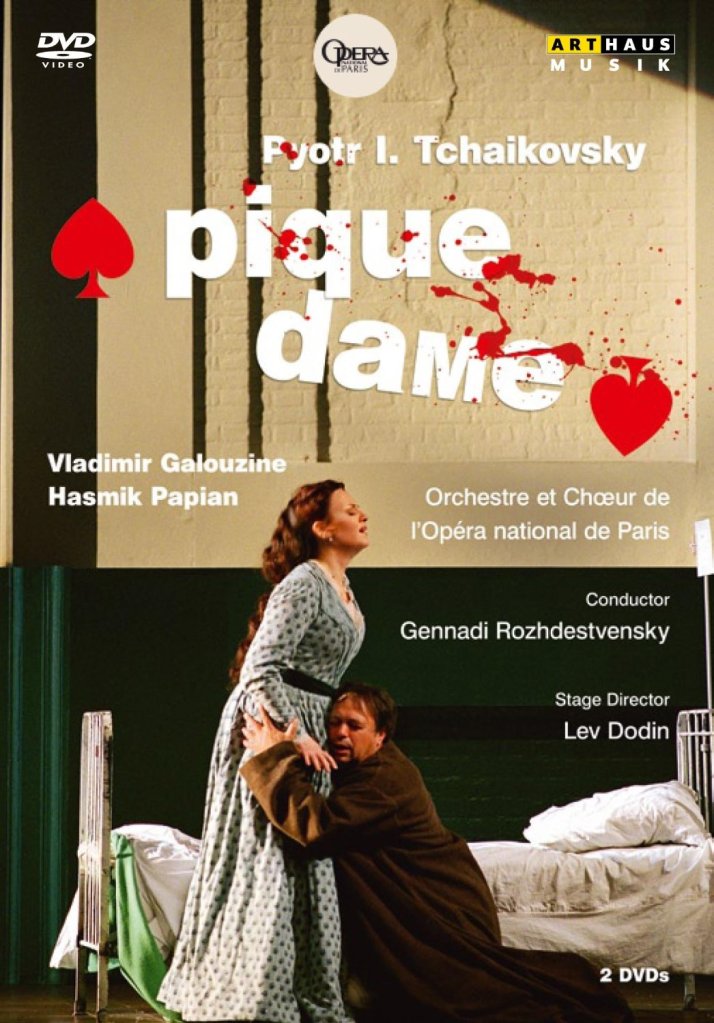
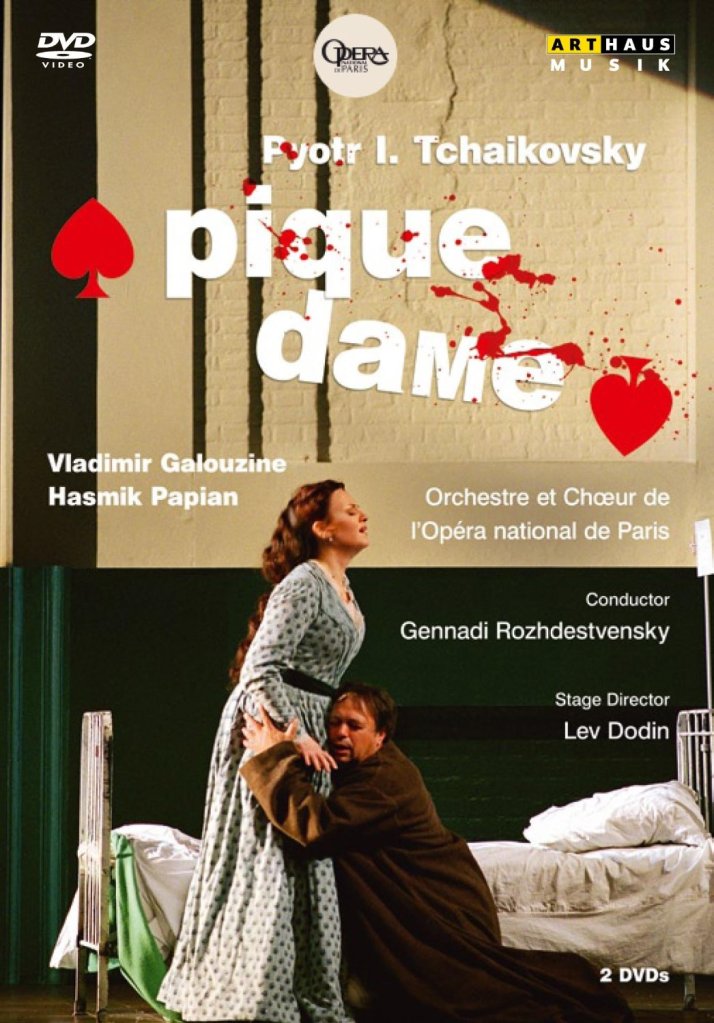
VLADIMIR GALOUZINE
We experienced Lev Dodin’s recorded in Paris production of 2005 a few years earlier in Amsterdam: DNO staged it back in 1998.
Lev Dodin is a renowned playwright and a great Pushkin enthusiast, which is why he wanted to return to the original story (here we go again!), which he felt was thoroughly botched by the Tchaikovsky brothers.
He came up with a formula that was ˜logical” in itself, in which the whole story exists only in the memories of the mentally ill Herman. I think I could probably live with it if Dodin had not subordinated the music to his concept and had not cut into the score: he deleted some 20 minutes of Tchaikovsky’s music and added a spoken text. I consider this a real crime.
The music that remains, however, is spot on. Rozhdestvensky has the score in his fingertips and there is also a lot of excellent singing, mainly by Vladimir Galouzine as Herman. He seems utterly fused with the role and commands admiration for his brilliant performance, both vocally and theatrically.
Hasmik Papian is a moving Lisa and as Polina we hear the young Christianne Stotijn (Arthouse Music 107317)
MISHA DIDYK.
This made me really go quiet This because of the unimaginably beautiful traditional production directed by Gilbert Deflo, which faithfully follows both the libretto and the score in every detail, while also being challenging and unusually exciting (Barcelona 2010).
The conductor (Michael Boder) handles the music with velvet gloves, steering it in the right direction and creating an atmosphere where pastoral scenes, sweet songs and folk dances alternate with horror, fear and death.
I fall silent too when hearing the singers, who give everything that even the most discerning person can desire. Micha Didyk ís Herman. He looks like Herman, he acts like Herman and he sings the role as only the real Herman can: passionate, obsessed and driven to madness. Truly: I don’t think there is any singer these days who can match him in the role. Peerless.
Nor can I imagine a better countess than Ewa Podleś : impressive. Superb also are the two baritones Lado Atanelli (Tomsky) and Ludovic Tézier (Yeletsky) and the warm Russian mezzo Elena Zaremba (Polina). Add the veteran but certainly not forgotten Stefania Toczyska in the small role of the governess…. Top.
I dó have a little bit of trouble with Emily Magee: she looks and sounds a little too old for the role. When I think of Lisa, I think of Natasha (War and Peace) or Tatyana (Yevgeny Onjegin): an excited young girl and not a mature woman.
Nevertheless: an absolute must-see. (Opus Arte OA BD 7085) an excerpt:
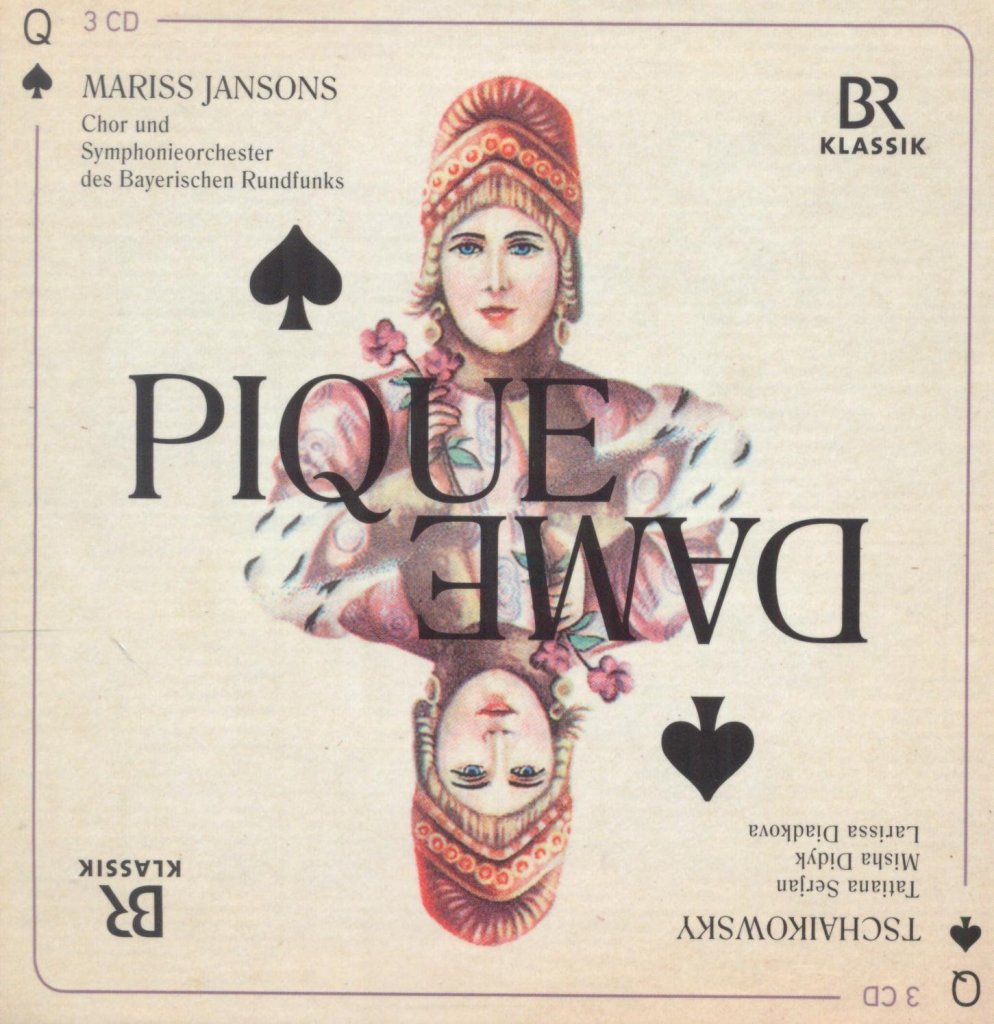
With the images of the production in your mind, you can sit back and listen to the recording under Mariss Jansons. In a manner of speaking, then, because even with Jansons the tension is cutting edge. Larissa Diadkova is an outstanding countess, very moving in her great aria ‘Je crains de lui parler la nuit’. Tatiana Suryan is a firm yet fragile Lisa and in the duet with Polina (beautiful Oksana Volkova) their two voices melt into a harmonic unity, worthy of sisters. Even without vision, Mischa Didyk is the best Herman around. The recording, recorded live in Munich in October 2014, sounds more than excellent (BR Klassik 900129)
VLADIMIR ATLANTOV
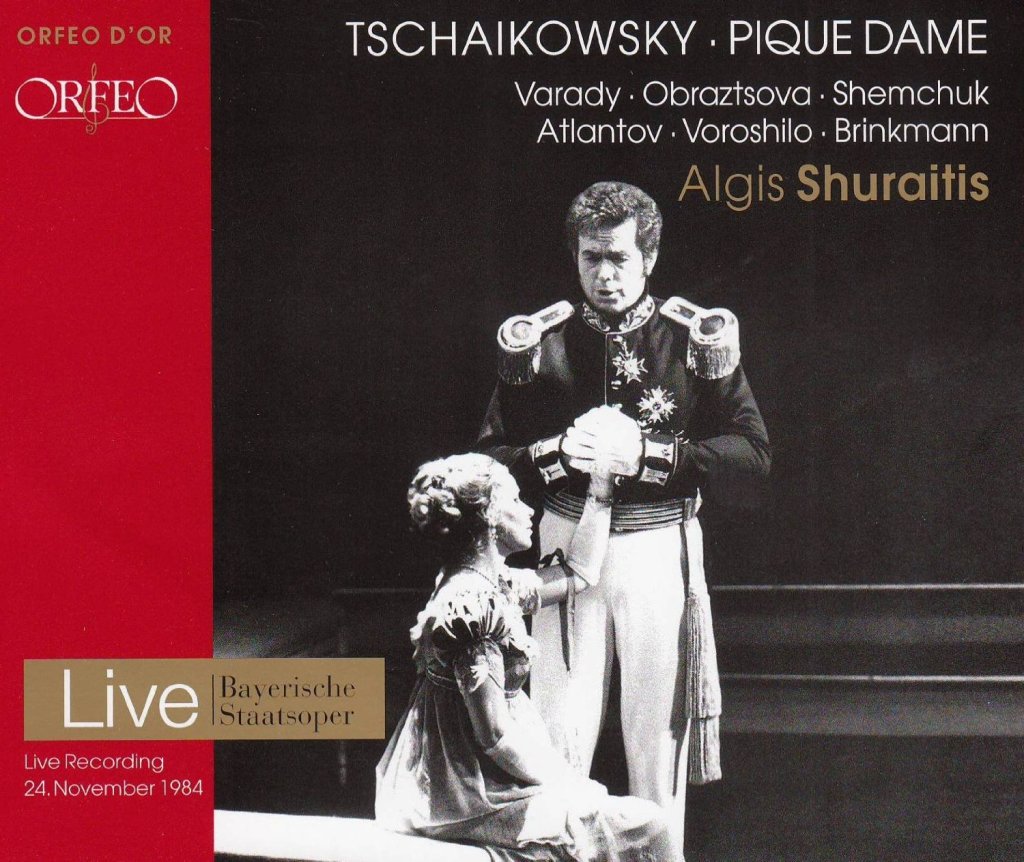
Julia Varady and Vladimir Atlantov were once a ˜match made in heaven”. In Munich in November 1984, they sang just about the most ideal Lisa and Herman in history, although I also have my reservations about Atlantov.
Atlantov has a cannon of a voice, which makes everything seem so unimaginably easy with him. Very beautiful, but his Herman sounds a bit too heroic and under-tormented for me.
Varady is a perfect Lisa in every way: vulnerable, insecure and in love. Lisa’s aria ‘Otkúda eti slyózy’ and the subsequent duet with Herman ‘Ostanovítes’ is breathtaking and of a touching beauty. Elena Obraztsova is a very impressive countess.
Algis Shuraitis conducts with little subtlety, but his reading is extremely exciting with a very cinematic ending (Orfeo D’Or C8111121).
Atlantov in ‘What is our life’ Recording from a performance at Mariinsky (not on DVD to my knowledge):
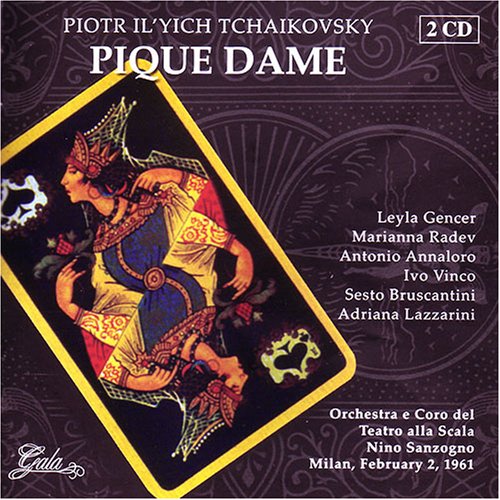
LEYLA GENCER
Version 1.0.0
You really should have this recording, of course, because of the Turkish Diva. It is in Italian and the 1961 recording sounds pretty dull, but a collector takes it all for granted.
A totally unknown for me, Antonio Annaloro, does what he can and that, unfortunately, is very little. His uninspired Herman is a real crier and sounds like a Domenico Modugno in a mini format. Soon forgotten.
But Marianna Radev’s Countess is worthy of note. And ‘Da quando il core mi donasti’ aka ‘Ya vas lyoublyu’ by Sesto Bruscantini (Yeletski) is delightful and is rewarded with a very deserved ovation.
Nino Sonzogno revives a verist heaven, though not quite rightly so here (Gala GL 100.792)
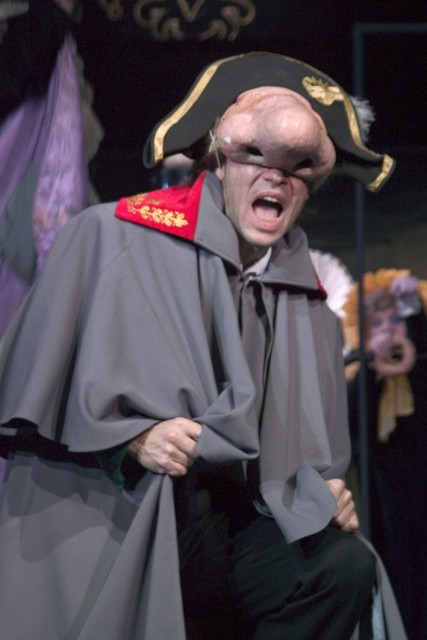
Dit is de eerste opera van Dmitri Sjostakovitsj uit 1927-1928, gebaseerd op het gelijknamige verhaal van Nikolaj Gogol. De première vond plaats te Leningrad, Maly Theater, 18 januari 1930; het libretto is van Jevgeni Zamjatin, Georgi Jonin, Aleksandr Prejs en de componist zelf. Hoewel deze opera een unieke plaats inneemt in de geschiedenis van de opera, is het werk weinig bekend en het wordt zelden uitgevoerd.
Het verhaal van De Neus is volstrekt ongerijmd. De ambtenaar achtste klasse Kovaljov (‘college-assessor’) mist op zekere morgen zijn neus. Hij vermoedt dat die er af gesneden door de kapper Ivan Jakovlevitsj. Kovaljov gaat op zoek naar zijn neus en bemerkt dat die inmiddels een zelfstandig leven leidt. Het is een personage geworden dat maatschappelijk vele trappen hoger staat dan Kovaljov zelf, de Neus is staatsraad geworden en weigert hem te woord te staan.
Sjostakovitsj verwerkte het verhaal van Gogol (1809-1852) vrijwel letterlijk. Het tsaristische Rusland lag nog vers in het geheugen. De toenmalige toeschouwers konden dus hun hart ophalen aan de satire. Dat het (muziek)theater in dat opzicht ook interessant kon zijn, kwam in Rusland vooral na 1918 tot uitdrukking toen de kunsten zich in allerlei experimenten rijkelijk ontplooiden, parallel aan wat in het westen Dada werd genoemd, alles werd op zijn kop gezet.
Al jaren voor de wereldpremière in 1930 zocht Sjostakovitsj een onderwerp op een eigentijds thema in een vorm die heel anders zou zijn dan de 19e eeuwse opera en operette tot dan te bieden hadden. Dat er nogal wat kritiek loskwam na de première in Leningrad, is niet onbegrijpelijk, want het stuk is nog steeds onbegrijpelijk in zijn vertelling en wonderbaarlijk in zijn muzikale onderlagen. Wanneer je leest dat in de jaren twintig het muziektheater in Leningrad vooral draaide op operettes van Offenbach en Léhar, dan was De Neus wel een heel erg grote sprong voorwaarts. Er kwamen destijds overigens ook positieve reacties los.
De Neus is na de eerste serie uitvoeringen van 1930 in de doofpot van het steeds repressiever wordend Stalinistische cultuurbeleid verdwenen, tot regisseur Boris Pokrovski het werk er in 1972 weer uit opdiepte. Sindsdien is het werk ook in het Westen verscheidene malen geënsceneerd. Pokrovski heeft het met zijn eigen gezelschap, de Kameropera van Moskou, talloze malen opgevoerd.
Ik heb deze productie in 1994 gezien in Rotterdam toen het gezelschap op tournee was in Nederland. De Pokrovski-enscenering bood een traditionele aanblik (voor zover dat kan bij een opera waarin een neus los rondloopt), dat wil zeggen, de handeling is zichtbaar gesitueerd in het Rusland van Gogols tijd.
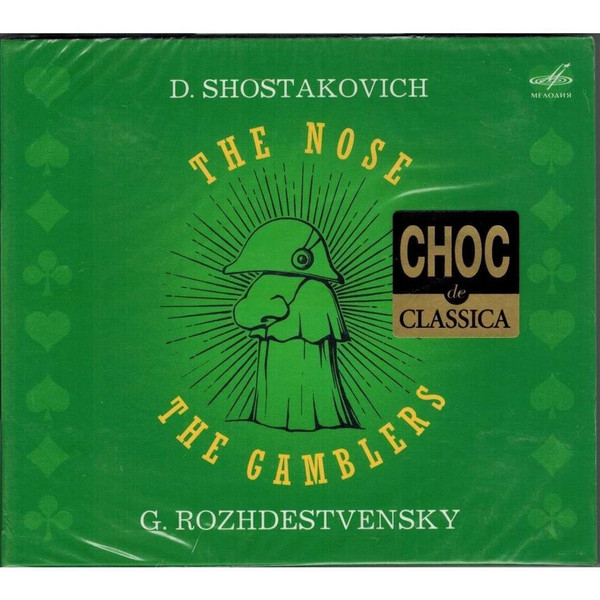
Van een voorstelling die in 1979 in het huistheater van het gezelschap is gemaakt werd in 2010 een opname op dvd uitgebracht. Omdat het theater veel te klein is voor een volwaardige operavoorstelling met groot orkest, is gebruik gemaakt van een geluidsband die in 1975 in een grotere zaal werd gemaakt met exact dezelfde bezetting en op cd is uitgebracht, samen met de onvoltooide opera The gamblers. De synchroniteit op de dvd is bij vlagen ver te zoeken maar dat went snel.
De wijze van acteren is een hybride van Dada, operette en commedia dell’arte. Het oogt allemaal prettig chaotisch en dat effect wordt volledig ondersteund door de meelopende geluidsband.
Feitelijk beslaat het relevante deel – Kovaljov is zijn neus kwijt, ontmoet die Neus in een kerk, krijgt zijn neus weer terug – minder dan de helft van de opera. Voor het overige zijn het korte op zichzelf staande scènes waarin een heel scala aan opgewonden tijdgenoten zich met deze nieuwe roddel inlaten. Het is een gedrang van jewelste op het toneel.
In een proloog wordt getoond dat de bakker de verloren neus in een van zijn broden aantreft. De barbier krijgt de schuld van alles maar ontkent. Kovaljov probeert een advertentie te zetten in een krant waarin de neus bij de verloren voorwerpen wordt geplaatst maar die wordt geweigerd. Er zijn grenzen waar de krant binnen dient te blijven, ook waar het ‘fake news’ betreft. De politie is wel bereid naar de Neus uit te kijken en het gerucht van een als Neus rondwandelende staatraad gaat als een lopend vuurtje door de stad. Als de Neus wordt waargenomen in een park wordt hij ‘geprügelt’ waardoor er weer gewoon een losse neus te voorschijn komt. Na wat vijven en zessen komt alles weer goed met Kovaljev en zijn neus en in een epiloog bespreken een paar mensen de absurditeit van het gebeuren, met dien verstande dat men stelt dat dergelijke vreemde zaken wel degelijk elders schijnen voor te komen. Maar niet bij ons in Rusland natuurlijk.
Eduard Akimov geeft een fraaie vertolking van de ongelukkige Platon Kuzmich Kovaljov. De Neus komt voor rekening van Alexander Lomonosov. Gennady Rozhdestvensky heeft de muzikale leiding.
Van een voorstelling die in 1979 in het huistheater van het gezelschap is gemaakt werd in 2010 een opname op dvd uitgebracht. Omdat het theater veel te klein is voor een volwaardige operavoorstelling met groot orkest, is gebruik gemaakt van een geluidsband die in 1975 in een grotere zaal werd gemaakt met exact dezelfde bezetting en op cd is uitgebracht, samen met de onvoltooide opera The gamblers. De synchroniteit op de dvd is bij vlagen ver te zoeken maar dat went snel.
Soms weet je het niet meer. Je denkt een werk goed te kennen, heel erg goed zelfs. Je hebt er een zwak voor, dus je hebt het een en ander verzameld en denkt dat er geen geheimen meer voor je bestaan. En dan komt er een oude, geremasterde opname op je deurmat vallen en je voelt je verward
Tot voor kort riep je nog dat er niets beters is dan Giuseppe Sinopoli en dat je met MTT zo lekker wegdroomt, alleen al vanwege zijn zeer slopende tempi. Maar dan gaat je hele wereld op de schop, want opeens voelt het alsof je van een lange slaap bent ontwaakt en dat nu pas alles op zijn plaats valt.
Mahler was amper twintig toen hij Das klagende Lied voltooide. Het zeer romantische en o zo treurige sprookje over een koningszoon die zijn broer vermoordt in strijd om macht en liefde, beschouwde de componist zelf als zijn opus 1 en het eerste werk waarin hij zichzelf als ‘Mahler’ heeft gevonden.
Gennadi Rozhdestvensky was de eerste die Das Klagende Lied in zijn oorspronkelijke, driedelige versie dirigeerde. Alleen daarvoor verdient hij al meer dan lof. Voor de beschrijving van de uitvoering kom ik woorden te kort, want zo dramatisch en tegelijk zo ontzettend lyrisch en liefdevol heb ik het werk nooit eerder uitgevoerd gehoord.
Rozhdestvensky weet de mooiste klanken aan het BBC-orkest te ontlokken, die het meest op het ontwaken en dan het ondergaan van de dag, de wereld en het universum doen denken. Je hoort de vogels zachtjes tsjilpen en de wind door de bomen waaien. En dan gaat de zon onder. Nee, de sprookjes waren niet altijd vrolijk, zelfs toen de wereld er nog in geloofde.
The Fiddler’s Child van Janaček (opgenomen in 1979 in Praag) is nooit eerder op cd uitgebracht geweest. Ik moet u bekennen dat ik, een grote Janáček-fan, het schitterende werk nog niet kende en daar schaam ik mij voor.
De cd is een echte MUST!
Gustav Mahler en Leoš Janáček
Das klagende Lied en The Fiddler’s Child
Teresa Cahill (sopraan), Janet Baker (mezzo), Robert Tear (tenor), Gwynne Howell (bas) en Bela Dekany (viool).
BBC Singers en BBC Symphony Orchestra and Chorus olv Gennadi Rozhdestvensky
ICAC (5080)




 Basia con fuoco