Cristina_Gallardo_Domas

Over Salud, haar passionele liefde en haar korte leven. La vida breve van de Falla

Tekst: Peter Franken
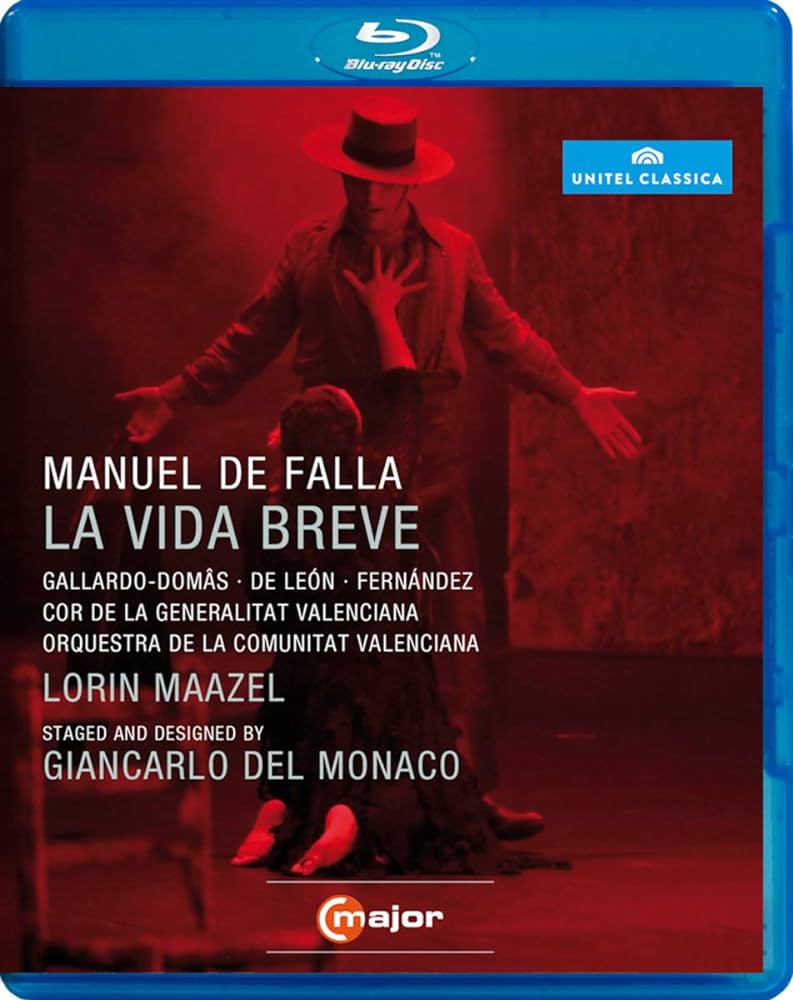
Deze korte opera van de Falla (1876-1946) ging in 1913 in première en is een modern doorgecomponeerd muziekstuk in Spaanse stijl.

De handeling speelt zich af in Granada en draait rond de altijd moeizame verhouding tussen de zigeuners en de burgerij. De mooie zigeunerin Salud is hevig verliefd op Paco, een jongeman uit de gegoede burgerij. Zij weet niet, en hij vertelt dat haar ook niet, dat haar minnaar verloofd is met een vrouw uit zijn eigen sociale klasse.

Haar oom en grootmoeder zijn daar echter zelf achter gekomen en proberen Salud ervan te weerhouden om Paco’s bruiloft te verstoren nadat ze daar zelf ook lucht van heeft gekregen. Het komt tot een confrontatie als Salud als wedding crasher de festiviteiten ruw onderbreekt. Dit tot verbijstering van de bruid en de gasten.
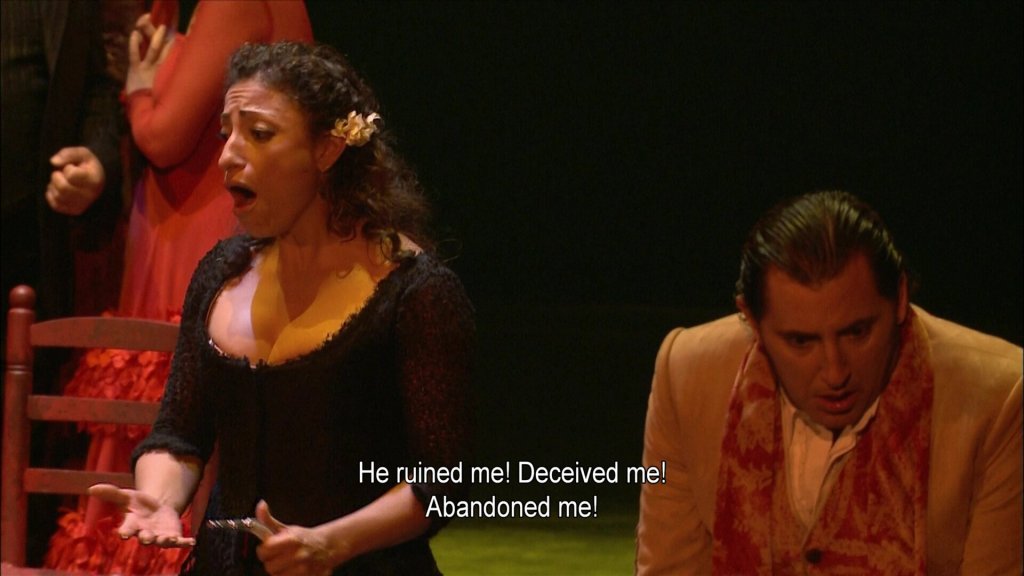
Paco is zozeer van zijn stuk gebracht dat hij Saluds naam noemt. Direct herpakt hij zich en ontkent haar ooit eerder te hebben gezien. Als hij opdracht geeft haar te verwijderen stort Salud in, laat zich aan zijn voeten vallen en sterft aan een gebroken hart. Daarmee geeft de trotse zigeunerin uiting aan haar minachting voor die ontrouwe leugenachtige minnaar.

In de productie die Giancarlo del Monaco in 2012 maakte voor Palau de les Arts Reina Sofia in Valencia krijgt het werk een iets realistischer einde. Salud grijpt een mes uit de handen van haar oom en benadert daar haar ontrouwe lover mee. Ze duwt het in zijn handen en trekt zijn arm naar zich toe waardoor ze zichzelf doorsteekt.

Het is een treffend einde van een doorleefde uitvoering waarin de Chileense sopraan Christina Gallardo-Domas een zeer complete Salud neerzet. Het hele scala aan emoties passeert de revue, fascinerend om naar te kijken en plaatsvervangend te beleven.

De openingsscène toont Salud ten prooi aan twijfel. Zou Paco wel komen, is hij haar niet vergeten. Verliefde mensen kunnen erg onzeker zijn wat zich uit in hevige gevoelens. Zo ook Salud, ze sterft er bijna aan. Haar grootmoeder probeert haar gerust te stellen en inderdaad komt Paco opdagen. Hij benadert zijn zigeunerliefje zoals altijd, de hartstochtelijke minnaar die haar volledig is toegewijd.

Saluds oom weet wel beter en wil hem doden maar grootmoeder weerhoudt hem daarvan. ‘We hebben al problemen genoeg.’ Door een opening in het doosvormige decor dat rood belicht wordt komt een vrouw in bruidsjurk op. Paco stoot Salud van zich af, tilt zijn bruid op en gaat met haar af. Salud stort volledig in.
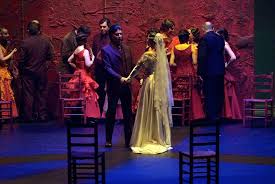
In diezelfde ruimte, nu wat neutraler belicht, vindt de bruiloft plaats. Een zigeunerin zingt een flamenco en wordt gedanst. Alles lijkt goed te gaan tot Salud arriveert. Met voor haar fatale afloop.
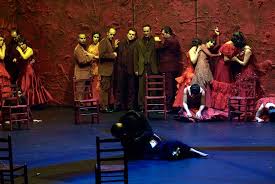
De voorstelling is een triomf voor Gallard-Domas maar ook in de kleinere rollen wordt er uitstekend gezongen en geacteerd. Maria Luisa Corbacho geeft gestalte aan de bezorgde grootmoeder en Felipe Bou aan Saluds oom die Paco het liefst direct een kopje kleiner wil maken en zich ook dreigend gedraagt op de bruiloft. Jorge de León heeft de ondankbare rol van Paco, te vergelijken met die schurkachtige Pinkerton die het publiek van tegenwoordig graag op boegeroep trakteert.
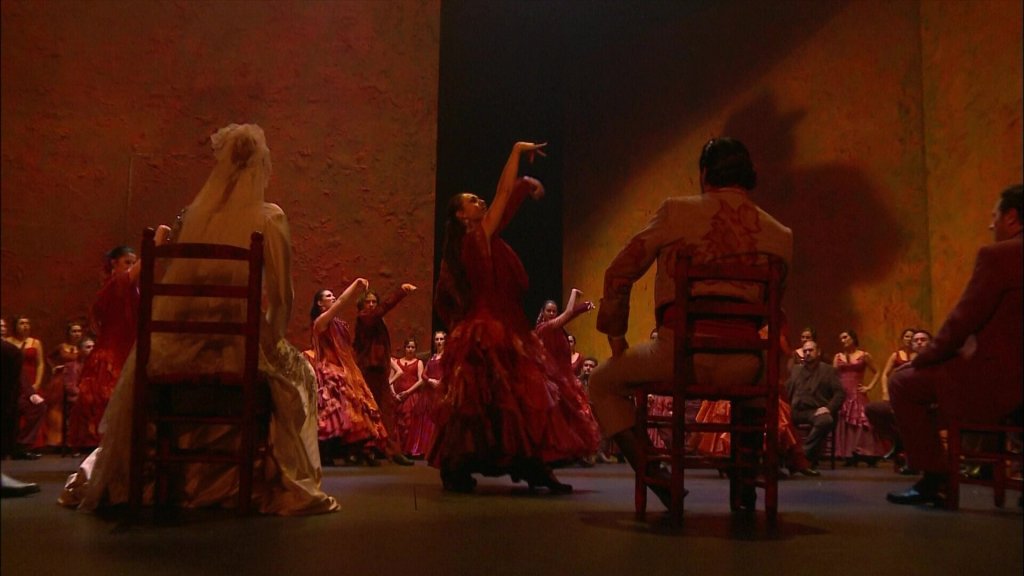
De Monaco staat in zijn producties garant voor authenticiteit en dat bereikt hij hier door een echte flamencozangeres op te voeren met begeleiding door een flamenco gitarist. Esperanza Fernnandez zingt met ongeschoolde schorre stem en Juan Carlos Gómez Pastor ondersteunt haar op klassieke wijze. Het is alsof ze beiden rechtstreeks uit Albaicin komen. Met tien dansers completeert del Monaco de Andalusische couleur locale.

Lorin Maazel heeft de muzikale leiding. Orkest en koor van de Opera in Valencia. Uitgebracht op BluRay door Unitel.

https://exporntoons.net/watch/397380959_456239104

Het leven is kort! Over La vida breve van Manuel de Falla

Il Postino: wonderful opera, wonderful performance, wonderful production….

What started with a Chilean novel in 1983 turned into an opera in Los Angeles in 2010. Composer Daniel Catán followed the success of the book and two film adaptations with a wonderfully lyrical and poetic opera: Il Postino. Highly recommended.

First there was a novel, Ardente Patience (Burning Patience), written by Chilean Antonio Skármeta. The book became widely known when it was filmed in 1983, by the author himself. The film won a large number of national and international awards, including Le Grand Prix du Jury in Biarritz.

However, it did not become a real hit until 1994, when it was filmed for the second time by Michael Radford, this time under the title Il Postino (The Postman). The film gained cult status – you didn’t count if you hadn’t seen it.

It is a (fictional) story about a young postman Mario who discovers the world of poetry. Inspired and encouraged by his only “customer”, an exiled world-famous poet and communist activist (Pablo Neruda), Mario writes poems to his beloved Beatrice.

Years later, during his return to Cala di Scotto, once his place of exile, Neruda meets Pablito, Mario’s little son, who never knew his father – he was killed during a communist demonstration.

The delightfully nostalgic and moving “feel-good movie”, in which tears also flow profusely, has also conquered the world of classical music. In 2010, the opera Il Postino had its world premiere in Los Angeles, with none other than Plácido Domingo in the role of Neruda.

Daniel Catán

It was the last opera by Mexican composer Daniel Catán, who died in 2011 at 61. Catán himself produced the libretto for his opera.

With its flowing melodies and recognisable arias and duets, Catán’s music is nothing short of beautiful. Not only for us, the audience, but also for the singers. I quote George Loomis, one of the New York Times’ music critics: “His operas let singers do what they have been trained to do, and what they do in the theatre when not performing operas by contemporary composers.

And so it is, although, especially with Il Postino, I myself would prefer to use the word “poetic”. Not because one of the main characters is a famous poet, but mainly because of the language used in the libretto, to which the music is “moulded”.

Just listen to the duet “Metaforas”, in which Neruda explains to the young postman the art of using metaphors. “Is the whole world just a metaphor then?” asks Mario, who discovers that he too can write poetry… “You’ll get the answer tomorrow,” says Neruda, but we can already read it on his face.

The super-romantic love duet between Mario and Beatrice melts your heart. It could have walked right out of La bohéme and I love that. Indeed, I am touched by it.

In one of the opera’s first scenes, we are introduced to Neruda and his wife Matilde. Endearingly, he sings of how she managed to turn their “asylum” into a home (the duet ‘Los Manos’).

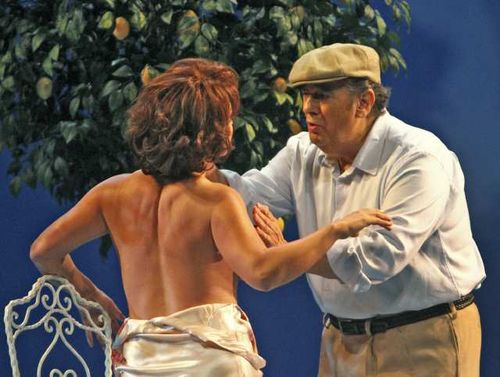
In a very erotic aria ‘Desnuda’, he sings of her beauty and undresses her with his eyes. What follows is a very poetic love scene, in which we are shown just enough to tickle our fancy.

Domingo is a dreamy Neruda. His very warm voice is full of love and passion, he transports, inspires and endears. He has hundreds of facial expressions at his disposal… and he can tango!

Cristina Gallardo-Domas (Matilde) occasionally sounds a little shrill in the upper registers, but her intensity and her role interpretation make up for everything. She is also a beautiful woman, a prototype of a South American with too big eyes and too big a mouth, behind which you can suspect one and all passion.

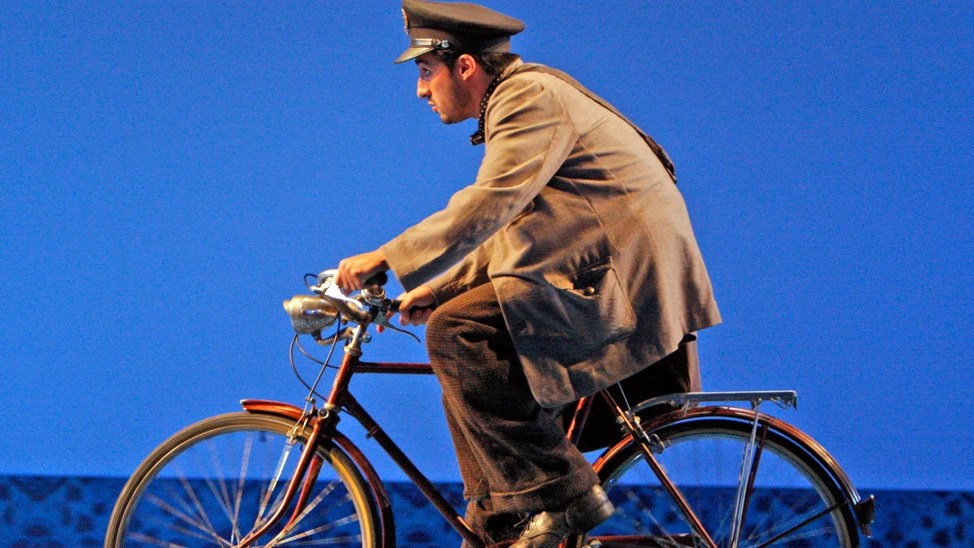
In Mario, Charles Castronovo has found the role of a lifetime. With his lyrical tenor – and his acting talent! – he portrays a real-life young man: shy and romantic but one with many ambitions and perseverance to achieve his goal.

Amanda Squitieri is a sparkling Beatrice and Ron Daniels’ direction is definitely sublime – his character direction is to die for! The production is very cinematic and a little reminiscent of de Sica’s Italian neorealism with Almodovár’s colours.

Wonderful opera, wonderful performance, wonderful production….

Trailer:

La Bohème: few of my favorite recordings on DVD

Mirella Freni


Many opera lovers will probably agree on one thing: one of the best Bohèmes ever is the 1973 version recorded by Decca under von Karajan. With Mirella Freni and Luciano Pavarotti.


Rodolfo has always been Pavarotti’s calling card. For years he was considered the best interpreter of the role – his fantastic legato, the smoothness and naturalness with which he sang the high notes are truly exemplary. Incidentally, as befitted a typical Italian tenor of the time, he sang the end of “O soave fanciulla” at the same height as the soprano. Not prescribed, but it was tradition!

Freni was undoubtedly one of the most beautiful Mimi’s in history. Tender and fragile, with her heartbreaking pianissimi and legato arches she managed to move even the greatest cynics to tears.

Von Karajan conducted theatrical and passionate way, with ample attention to the sonic beauty of the score. As the Germans would say “das gab’s nur einmal.”

In 2008 we celebrated not only Puccini’s 150th birthday, but also von Karajan’s 100th. Moreover, it was 35 years since the famed conductor recorded La Bohème: a cause for celebration! And lo and behold – Decca has released the opera in a limited deluxe edition (Decca 4780254). On the bonus CD, Mirella Freni talks, among other things, about her relationship with von Karajan and about singing Puccini roles. It is really fascinating.

Arias and duet from the first act:


Mirella Freni made her debut as Mimì at the Metropolitan Opera in September 1965. Her Rodolfo was another debutant: the (how unfair!) nowadays almost completely forgotten Italian tenor Gianni Raimondi. For me, he is preferable to Pavarotti. I find his voice more pleasant and elegant. And he could act!
Freni’s and Raimondi’s renditions were captured on a wonderful film, directed by Franco Zeffirelli and conducted by Herbert von Karajan. An absolute must (DG 0476709).

“O Soave Fanciulla” with Freni and Raimondi:


Renata Scotto


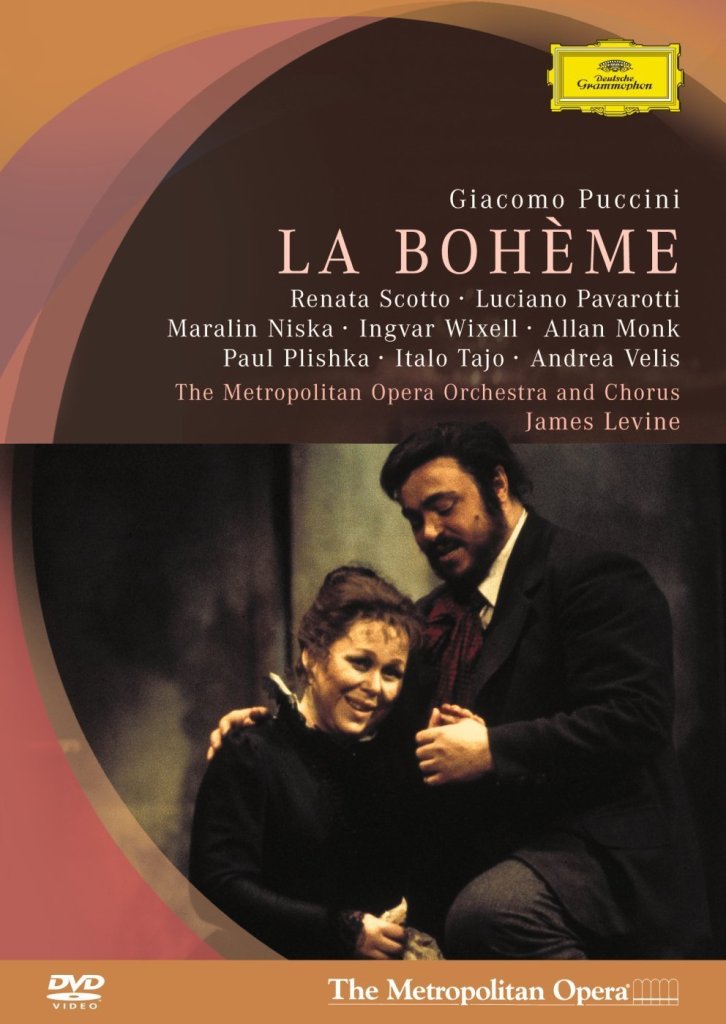
History was made with La Bohème from the Met in 1977 (DG 0734025): it was the very first direct transmission from the New York opera house on TV. The production was in the hands of Pier Luigi Pizzi, who at that time was not yet obsessed with excessive ballets and the colour red.


Although I was never a big fan of Pavarotti, I cannot deny that he produces a fresh sound here and that his high notes stand like a house. Acting was never his cup of tea, but here he does the best he can.

It becomes really exciting when Mimì enters: in 1977, Renata Scotto was at her unprecedented peak. She spins the most beautiful pianissimi and her legato and mezza voce are so beautiful they make you want to cry. The rest of the cast is no more than adequate, but the young James Levine conducts as if his life depended on it!

Scotto sings ‘Si mi chiamano Mimì’:


Musetta was not really a role with which we associate Scotto. Neither did she herself, but she accepted the challenge with both hands. In the Zeffirelli Met production of 1982, she sang a Musetta to die for. Alongside the very moving José Carreras and Teresa Stratas, she was the undisputed star of this recording (DG 073 4539 9).


Scotto as Musetta:


Cristina Gallardo-Domâs


Sometimes I wonder how perverse it is when people pay a lot of money to go see, dressed in fur coats, the misery of freezing poor artists?


I myself took great pleasure in the sight of all those fur-wearing audiences on my way to a performance of La Bohème at La Scala in 2003 (Arthouse 107119). The then 40-year-old Zeffirelli production was altered a bit, but the beautiful, realistic sets and brilliant lighting remained the same. The snowflakes, the light radiating from the inn that warmly colors the white earth, the snowy bench and Mimi’s tear-stained face: there is something magical about it all and it is more like a movie than a performance in the theater. It cannot leave you unmoved, all the more so because all the protagonists are truly superb.

Cristina Gallardo-Domâs is a delicate, emotionally torn Mimì. Her lyrical soprano is a bit reminiscent of Freni. Malcero Ãlvarez convinces with a (then still) beautifully lyrically sung Rodolfo and Hei-Kyung Hong, clearly inspired by Scotto, portrays a kitschy Musetta. Bruno Bartolletti conducts lively, without shying away from sentiment.

Below, ‘O soave Fanciulla’ with Gallardo-Domâs and Ãlvarez


Gallardo-Domâs was also present in Zurich two years later. With this very realistically staged Bohème, Philippe Sireuil made a thunderous debut at the Zürich Opera House (EMI 3774529). Don’t expect Zeffirelli-like scenes with snowflakes drifting down, however.

Sireuil’s conception is very “down to earth” and as such more veristically faithful than any other production known to me. With great love of detail, he draws the lives of the foursome of artist friends: their attic is tiny and stuffy, and their struggle to better themselves is life-like. The costumes (second-hand clothing from thrift stores) is contemporary, yet timeless at the same time.

Whatever Mimì is suffering from (it is surely not tuberculosis – the director doesn’t even allow her to cough) doesn’t really matter, although it seems to be drug related. Like a sick bird (how much she resembles Edith Piaf!) she slowly slides into the abyss, and her death forces the others to really think, for the first time. The third act, set at a gloomy train station, is particularly strong and painfully poignant.

The entire cast, headed by a movingly beautiful Marcello Giordani and a very virile Michael Volle (Marcello) in addition to the heartbreaking Gallardo-Domâs, is also outstanding. The much lamented László Polgár  sings Colline. Believe me: this La Bohème is really not to be missed.

Below, Marcello Giordani and Michael Volle in ‘Marcello finalmente:


Cheryl Barker


Back in time a little, to Sydney, Australia, 1993. For the first time I saw the production on TV (yes, kids: once upon a time there were the days when an opera was simply broadcast live from an opera house on TV!) and not soon will I forget that night. I didn’t know any of the singers; it was the name of the director (Baz Luhrmann) that drew my attention to the production.


The singers were mostly young – a plus, since the opera is about young people in love. They could sing, too, and with their looks of real movie stars, they could have been on the movie screen. Strange really, that, apart from Cheryl Barker (Mimì), no one had a great career. That Luhrmann was obsessed with opera is also confirmed by the film buffs: his Moulin Rouge is a direct look alike , including the red-lit “L’amour” on the rooftop. (Arthaus Musik 100 954)


Scene from the production:


Ileana Cotrubas


But, hand on heart, if I had to go through life with only one recording of La Bohème … I would choose John Copley’s 43-year-old production made for the Royal Opera House.

My “desert island recording” was captured on DVD in 1983 by NVC Arts (Warner 4509 99222-2) and – no matter how many times I watch it, I never get tired of it. And still, after all those years, it always makes me cry. Some things never age.

 Neither does the cast : Ileana Cotrubas as my beloved Mimì, the irresistible young Neil Shicoff as Rodolfo and Thomas Allen as a very erotic Marcello.