Arabella

Teschek, bedien dich! Arabella… A fairy tale or…?

arabella-uesuleac

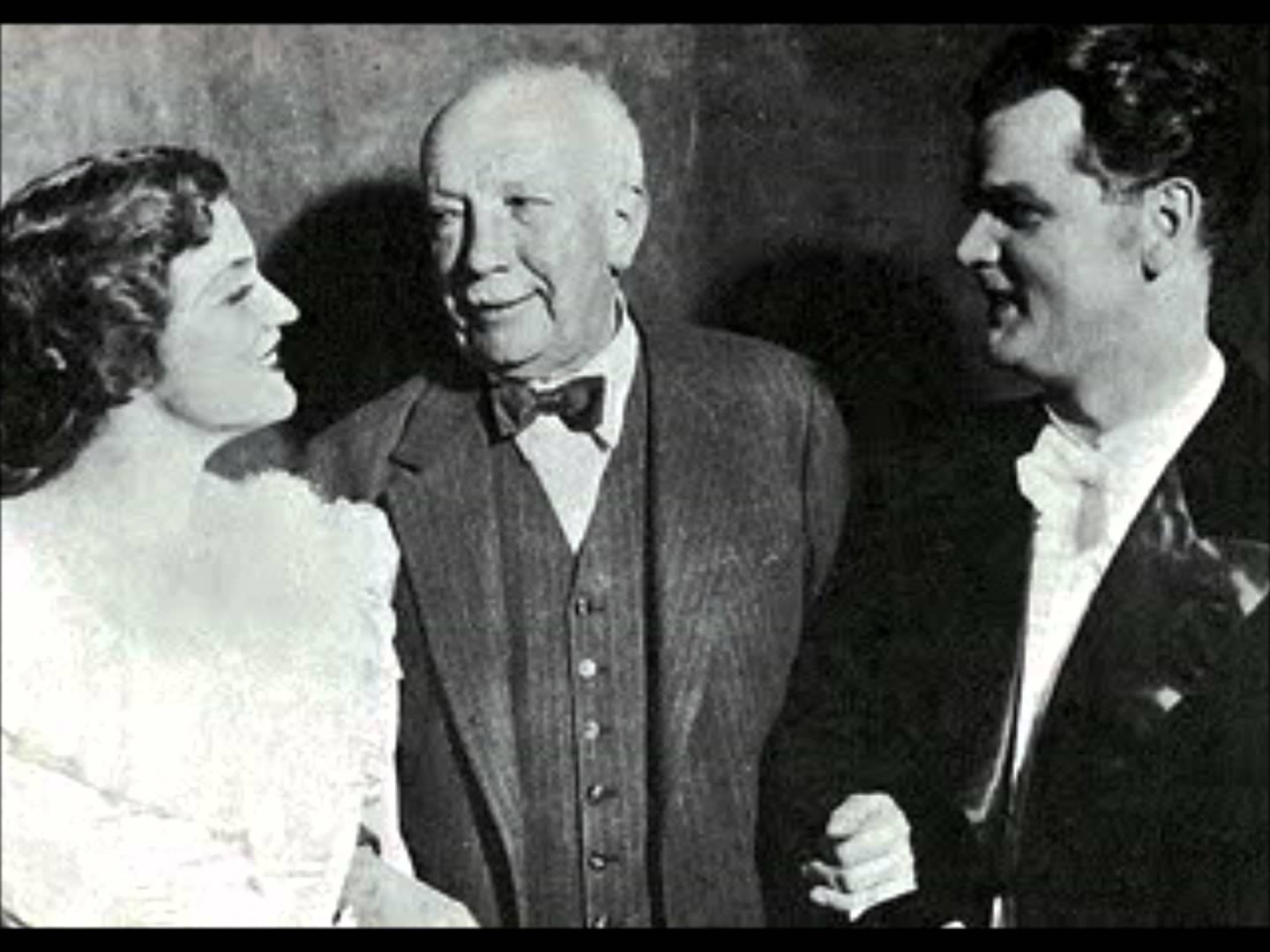
Richard Strauss met de allereerste Arabella (Viorica Ursuleac) en Mandryka (Alfred Jerger)

“Teschek, bedien dich”!
You really cannot escape the fact that Mandryka’s words, endlessly repeated by Graf Waldner, settle in your ears like the proverbial earworm. ‘Teschek, bedien dich‘ sings Mandryka as he pulls out his thick wallet and holds out banknotes, like chocolates, in front of his father-in-law-to-be.

For those not so familiar with “Viennese”, Teschek is not only a person who is always on the losing end, but also a card game and perhaps a “delicate” reference to the count’s addiction, which has left the family financially ruined, the youngest daughter having to go through life dressed as a boy and the eldest, Arabella, to be sold to the highest bidder. Well, in a manner of speaking.

How well do you know the opera? Honestly! I’m the first to admit it: until recently, I knew this opera only so-so. Once I saw it (and forgot about it), once I heard something wonderful on the radio (Lucia Popp and Bernd Weikl! I still haven’t managed to get hold of that recording), a snippet here and there …. Nothing more. Nice little snippet,  though.

But now, after a few weeks on “an Arabella diet” I have become a real worshipper. Why is that? Mainly because of the libretto, I think. The opera is seen as a light comedy, a kind of fairy tale where everything is going to be all right at the end. But is that really the case? I think not. Actually, it’s not a fun opera at all. Because let’s face it: everybody is cheating on everybody here and the chances of anyone ending happily ever after are just as high as in Snow White.

To start with Zdenka, the almost “discarded” daughter: do you actually think Matteo has suddenly come to love her? Well, I don’t! He has to marry her because she lured him into her bed. And that, even though he thought she was a man. Anyway, Mandryka is paying, and since everything in this opera is about money…

Anyway, relax and sit back, because the opera is more than worth it. And there are so many good performances out there!


Otto Schenk 1

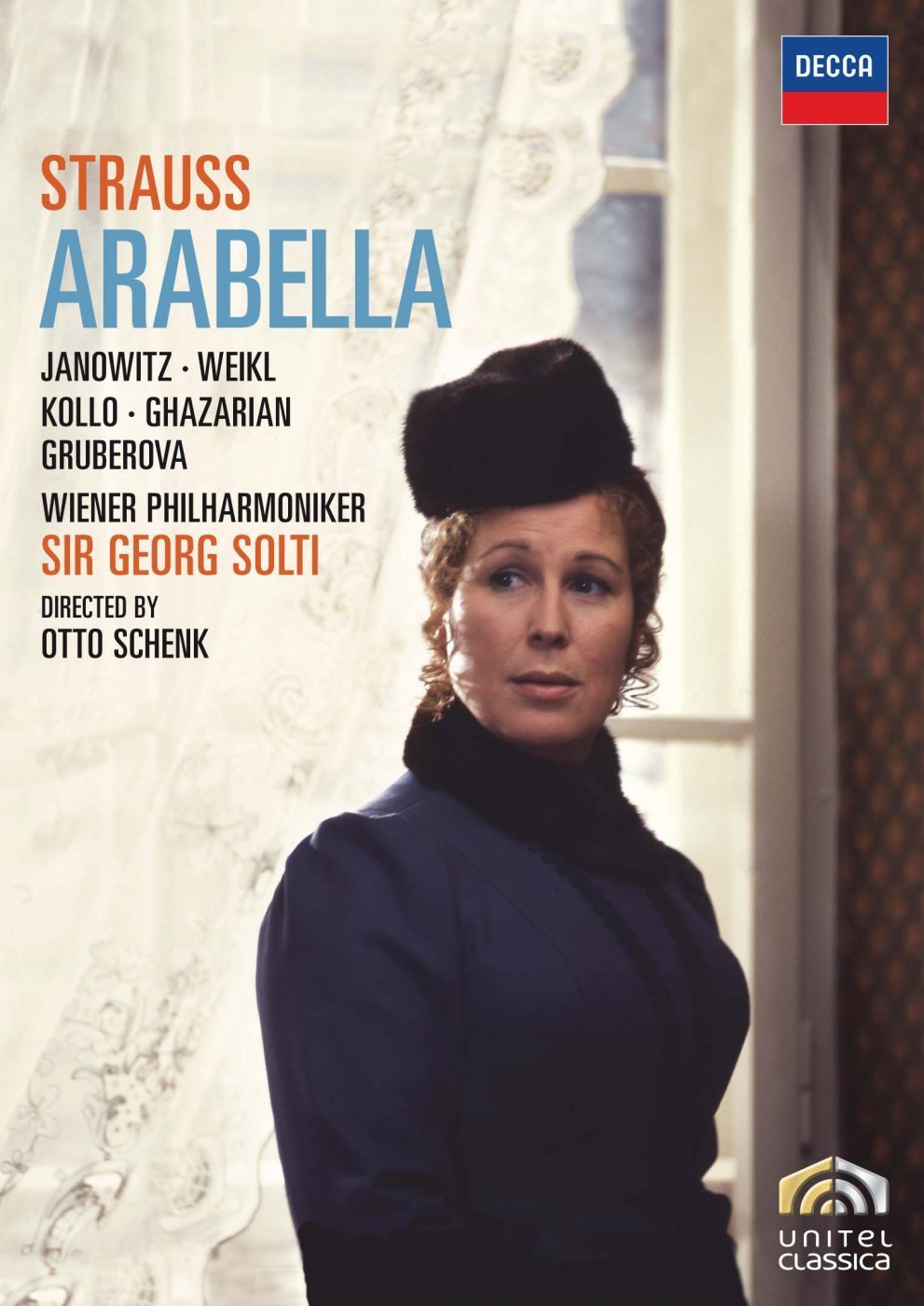
If you have never seen the opera, you would do well to start with Otto Schenk’s 1977 film (DG0743255). Larger than life, with lifelike sets. Of course, no ordinary live performance can compete with that.

Gundula Janowitz is a delightful Arabella. Perhaps not the best actress in the world, but her high notes are so very beautiful. Sona Ghazarian is a good Zdenka, but what really makes the recording, alongside the very erotic playing of the Wiener Philharmoniker (Solti!), more than worthwhile, is Bernd Weikl’s Mandryka. Any woman would certainly want to be kissed awake by him.

The minor roles are also fantastically cast: René Kollo is a Matteo out of thousands and I know of no better Fiakermilli than the young Gruberova. Add to this the very young (30!) Kurt Rydl as Lamoral and Margarita Lilova (Adelaide).  It is definitely very good.

Below Gundula Janowitz and Bernd Weikl in the last act:


Otto Schenk 2


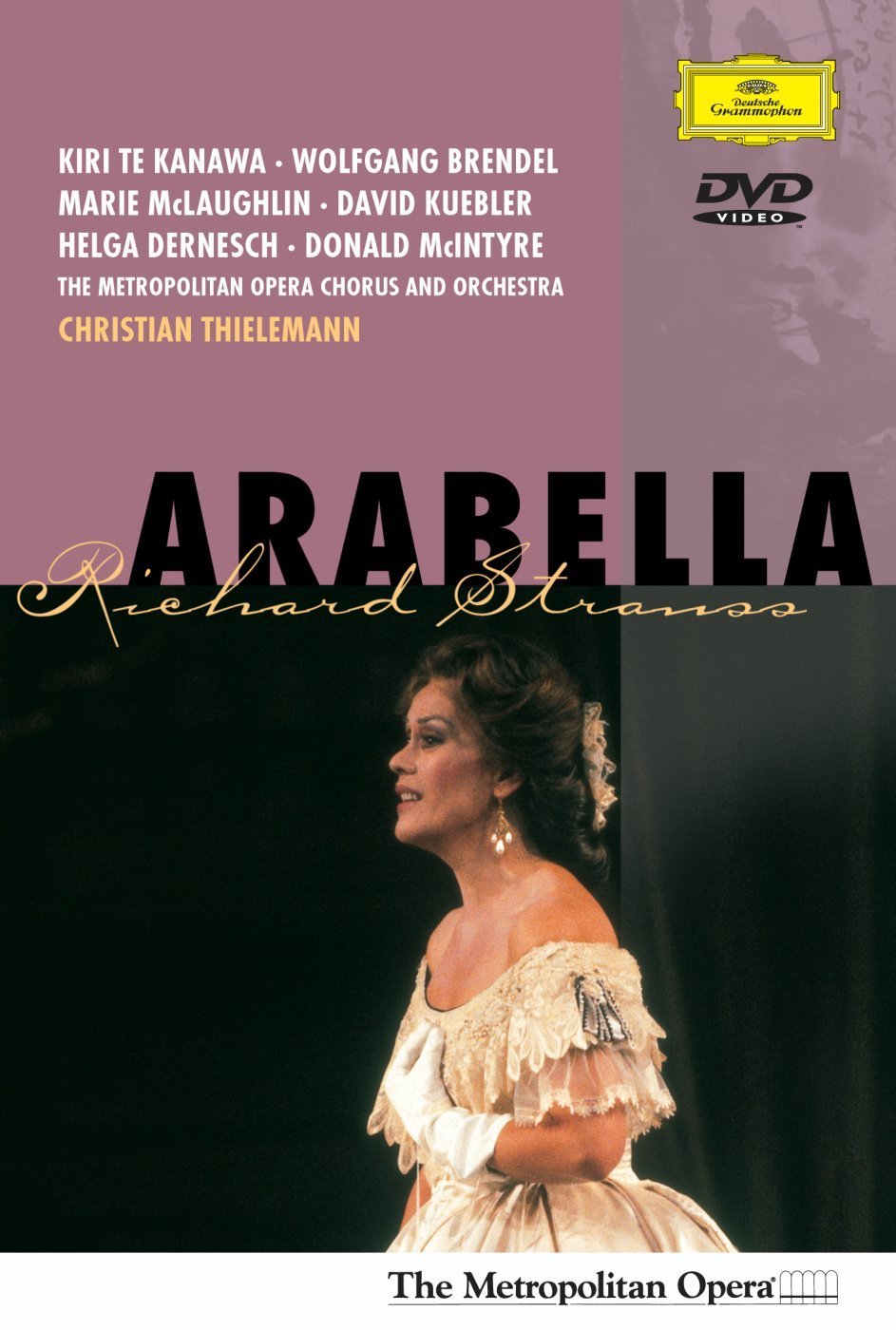
We stay with good old Otto Schenk for the moment: his production was recorded at the Met in 1995 (DG 0730059). Kiri te Kanawa is an exemplary Arabella; there are few singers who can match her in this role. Strauss has always been a bit like her personal composer and optically, of course, she is a dream Arabella.

Her sister Zdenka (Marie McLaughlin) is also wonderful, something that cannot be said of Wolfgang Brendel (Mandryka). He doesn’t succeed in making my female heart beat any faster. Thielemann conducts well, but he lacks the sensuality of Solti.

Below is a scene with Kiri te Kanawa and Marie McLaughlin:


Renée Fleming


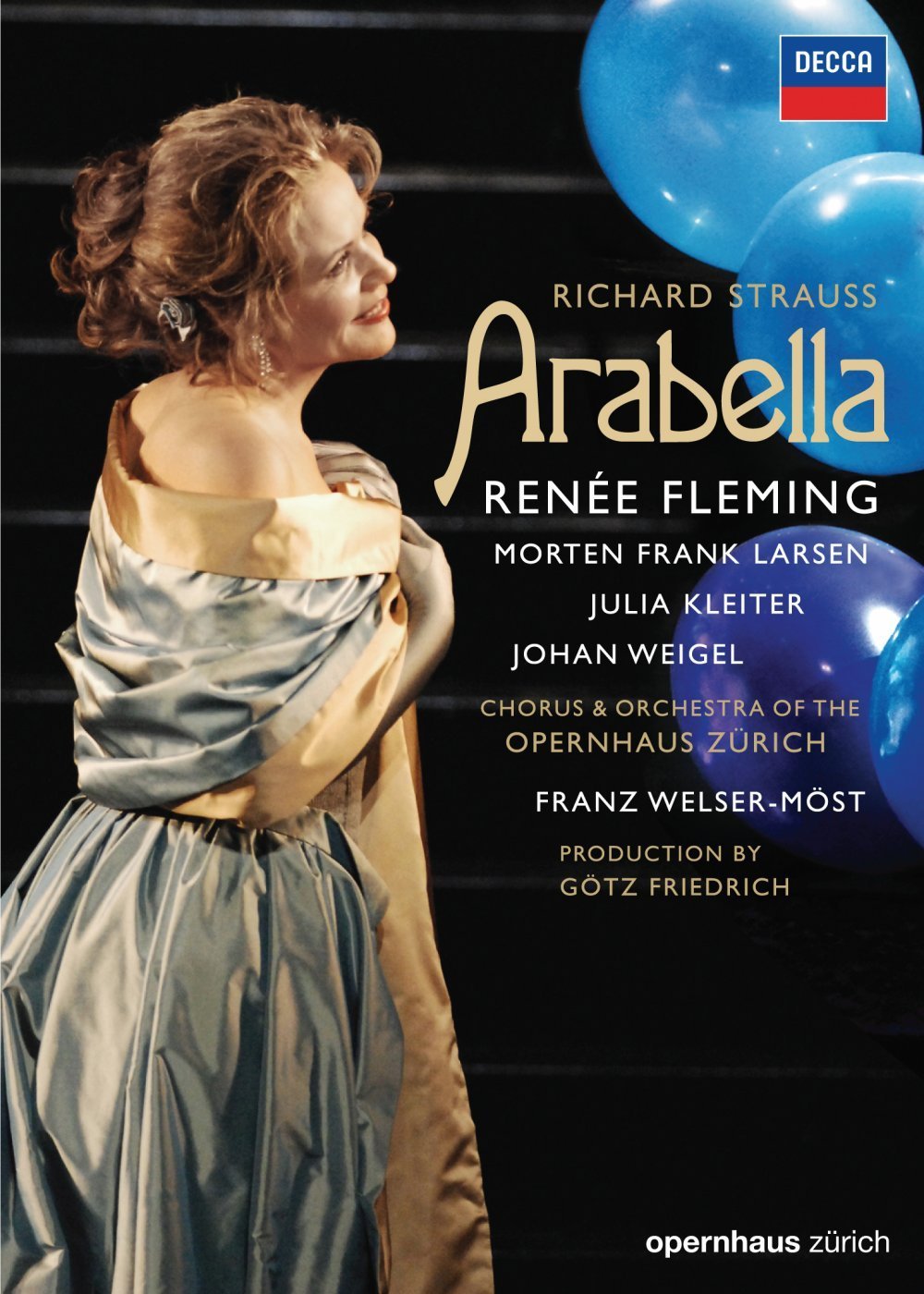
And then there is Renée Fleming (Decca 074363). Optically just about the most beautiful Arabella ever. Not only beautiful but also very full of herself; you can almost see her asking, “mirror, mirror on the wall….”

Impossible to ask Strauss now, but I suspect she could have modelled Arabella for him. Her vervet soft tones too; as if you are resting below the softest down comforter.

Julia Kleiter is a good Zdenka, but Morten Frank Larsen (Mandryka) is just a Dane. He looks Danish and sings Danish. A pity, because Götz Friedrich’s direction  (Zürich 2007) is really exciting.


Below a scene with Renée Fleming and Julia Kleiter:


Sven-Eric Bechtolf
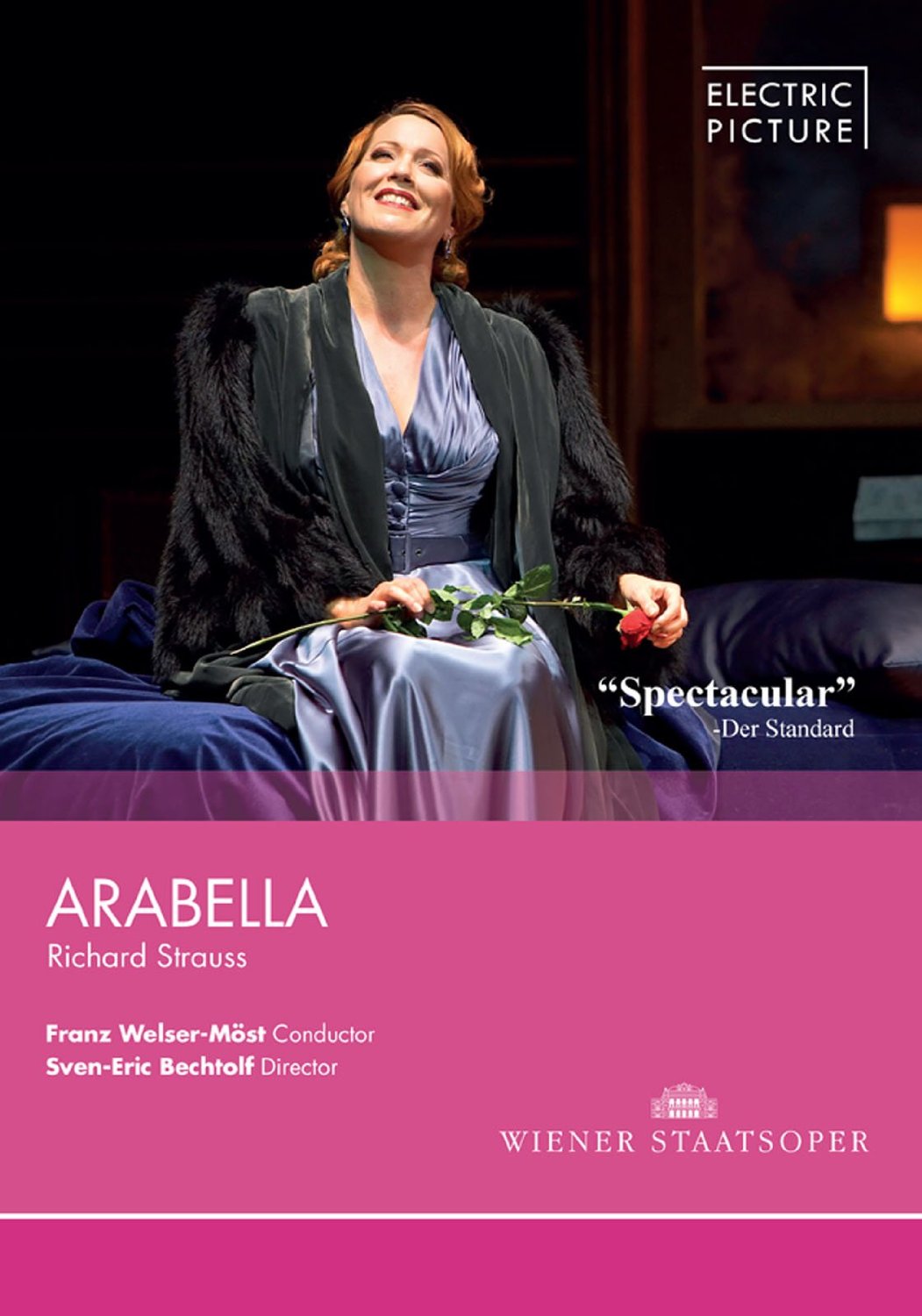

The latest production on my list comes from Vienna (BD EPCO 48D). Sven-Eric Bechtholf has surprised me. He adheres well to the libretto and everything just looks very beautiful.

Emily Magee lacks the sensuality of a Fleming or te Kanawa, but she does hold her own very well. Genia Kühmeier is a sensational Zdenka and Tomasz Konieczny an (indeed) “East European guest worker” with a lot of money. In terms of voice, he can easily match Weikl.

Trailer of the production:


Lisa Della Casa


And now back in time. For me, Lisa Della Casa is the Strauss singer pur sang. Just listen to her interpretation of the Vier letzte Lieder! Starting out as a very good Zdenka, she grew into a great Arabella.

In 1958, she recorded the role under Solti (Decca 4781400). I can never get enough of that. Hilde Güden is her sister and the duet of the two girls is of an unparalleled beauty. Two voices coming together and embracing each other almost as if they were not sisters, but lovers. You really rarely achieve such perfection.

And then the very erotic way Solti handles the score… It is all so sensual and fairy-like. Not only in terms of the singing, but also in terms of the orchestral sound. And George London sings Mandryka. Need I say more?


Montserrat Caballé


Montserrat Caballé as Arabella… Strange? Well no – she was one of the best Salome’s ever, did you know? She is also a fantastically sensual Arabella (BLV 107225). Don’t ignore the recording, especially since Zdenka is sung here by the very moving Oliviera Miljakovic.

Below Caballé and Miljakovic in the duet ‘Er ist der richtige’:


English Arabella


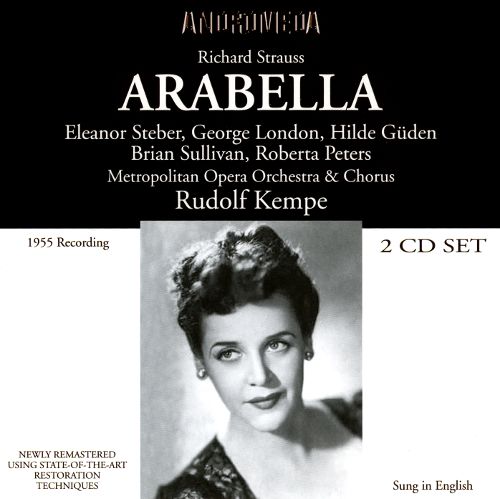
‘Arabella’ in English? (Andromeda andrcd 5013). Why not? Unimaginable how different the opera sounds in this language. It’s like listening to, say, Vanessa. Something to think about.

Eleanor Steber lacks the velvet in the voice, but her involvement makes you understand a little more of the woman. Hilde Güden also sounds different here. It is as if she gains volume and eloquence. I love it. And then George London with his ‘I am the Mandryka, no one else’. Why do I find it even more impressive in English than in German? Rudolf Kempe is conducting.


Kiri te Kanawa


And then, finally, we have Kiri te Kanawa on CD (Decca 4783460). I find Zdenka (Gabriele Fontana) too heavy and in the duet she drowns out her sister – it not very beautiful. Tate conducts unevenly. But what a Matteo! Peter Seiffert is more than delightful to listen to. And Franz Grundhebber (Mandryka) also makes the recording very much worth listening to.
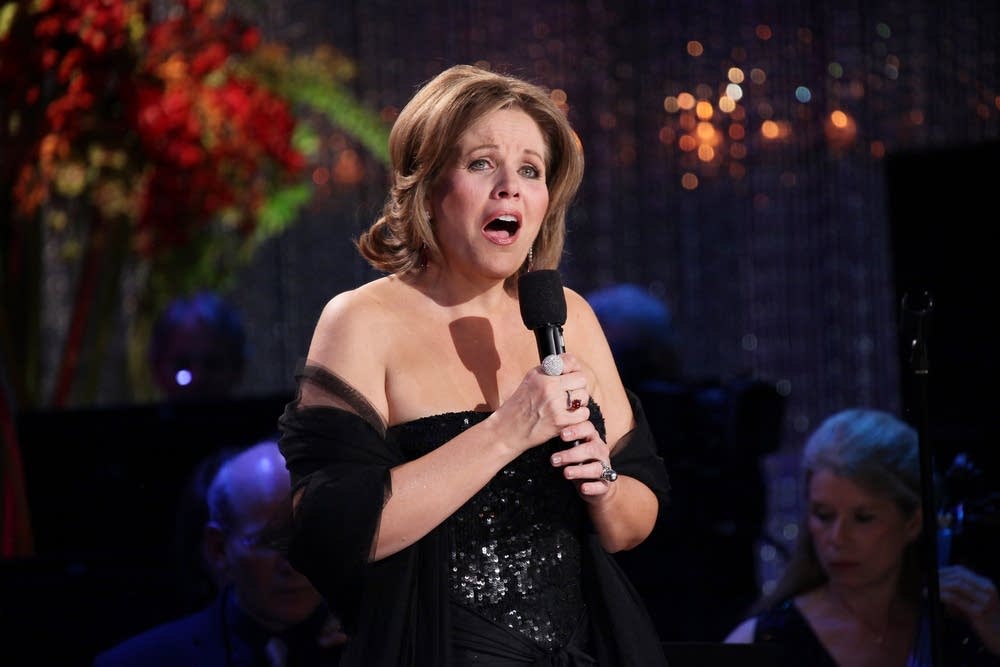


For Renée Fleming on her Birthday

Bel Canto


When this CD came out in 2010, it was greeted with quite a lot of suspicion, but the combination is really less strange than you think. Nowadays, Fleming is mainly associated with Mozart and Strauss, but her career began with singing (among others) Bellini, Donizetti and Rossini.

Fleming grew up in a musical family; both her parents were singing teachers. It was also her mother, who gave her her first singing lessons. She achieved her first major success in 1988 in Houston, as the Contessa in Nozze di Figaro, but her international breakthrough came in 1993, when she performed Armida at the Rossini festival in Pesaro, a role she subsequently repeated at Carnegie Hall. She has also not only recorded, but also performed scenically, the lead roles in Maria Padilla, La Sonnambula, Il Pirata and Lucrezia Borgia.

“When I started singing, I thought bel canto operas were the foundation of every singer’s repertoire. All the singers I admired then: Sutherland, Callas, Caballé, Sills, Scotto sung them. It was quite shocking to discover that in the professional world of opera there was such a thing as a ‘Mozart/Strauss soprano’, and that that soprano never sang bel canto.”

“If I had to count them, there are seven complete bel canto roles I have sung live. I learnt most of them in the early years of my career, when I often worked with Eve Queler. But I also learnt a lot from Montserrat Caballé. We sang together in Il Viaggio a Reims and we discussed the repertoire many times. Marilyn Horne also meant much to me and I learned my high notes from Joan Sutherland at her home”.

The “Bel Canto” CD is just wonderful. The music is magnificent and Fleming’s interpretations superior. Her creamy soprano and exquisite height may be widely known, but her colouraturas and expressiveness are just as fine. Her fabulous breathing technique allows her to spin out the longest arches into the finest pianissimi.

Philip Gossett is a specialist in nineteenth-century opera. He has worked with Renée Fleming many times before and especially for her he ‘reconstructed’ the ornamentation in the well-known cabalettas, including those from La Sonnambula. The result is very surprising and exciting, although one has to get used to those different notes.


ARABELLA


Optically, Fleming is just about the most beautiful Arabella ever. Not just beautiful, but so full of herself: you can see her asking the mirror “mirror, mirror on the wall”, so to speak….
I can no longer ask Strauss, of course, but I suspect she could have been the model Arabella for him. Also her velvety way of singing as if you landed under a down duvet….

Julia Kleiter is a good Zdenka, but Morten Frank Larsen (Mandryka) is simply Danish. He looks Danish and he sings Danish. Too bad, because the direction by Götz Friedrich (Zurich 2007) is extremely exciting.

Below is a scene with Renée Fleming and Julia Kleiter:


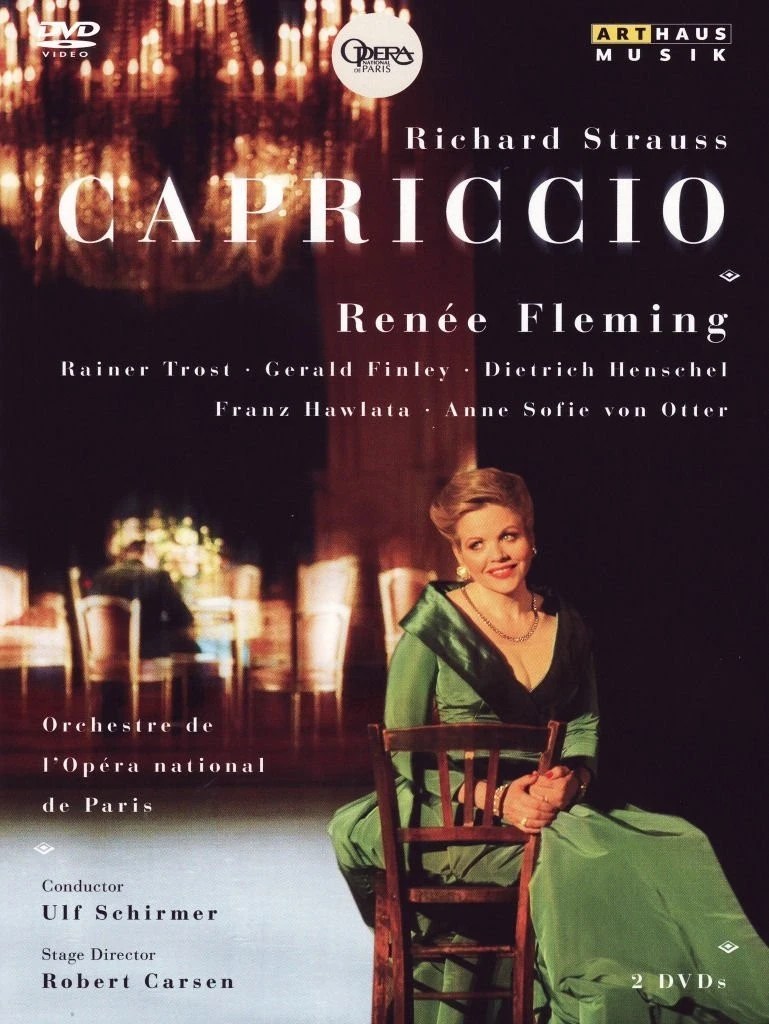
CAPRICCIO


Carsen moved the action to Nazi-occupied Paris in 1942, the time of the opera’s creation. The setting is the entire Palais Garnier, including the majestic staircase, the long corridors and the boxes in the auditorium. I assume video technology was used, but I don’t really get how it is done. So it is with bated breath that I watch the Countess, who looks admiringly from her box at her alter ego singing on stage. A truly ingenious invention for the final scene, in which she was originally supposed to sing her long final monologue in front of the mirror.

The opera’s final scene:


It is mentioned at the beginning of the opera that the text and the music are like brother and sister, and so too are the two rivals, the composer Flamand and the poet Olivier; they end up sitting fraternally in the opera’s lounging sofa, looking tenderly at their joint child: a symbiosis of words and notes. An opera.

A better Madeleine than Renée Fleming can hardly be imagined. With her endless legato, her round, creamy soprano and (not least) her scenic presence, she portrays a countess with narcissistic traits: beautiful, self-conscious, aloof and very admirable.
Her brother, portrayed by Dietrich Henschel, is a match for her, and though he does not physically resemble her, his traits betray the family ties.

It is difficult, if not impossible, to choose between the two gentlemen in love, as both Gerald Finley (Olivier) and Rainer Trost (Flamand) look very attractive in their well-groomed suits, and neither their voices nor their acting can be faulted.

Franz Hawlata is a phenomenal La Roche, and the delightful Robert Tear portrays an entertaining Monsieur Taupe.

Anne Sofie von Otter is unrecognisable as the “diva” Clairon – her entrance, with which, accompanied by a Nazi officer, she causes a lot of commotion, evokes memories of the great actresses of the 1940s.

The direction is so brilliant that you simply forget that this is an opera, and not the real world. Everyone moves and acts very naturally, and the costumes are dazzlingly beautiful. Were it not for the occasional, but very prominently portrayed, Nazis, one could imagine oneself in a utopian world of serene tranquillity.

Was this what Richard Strauss’ world looked like back then? Perhaps that was the message? I leave the conclusion to you.


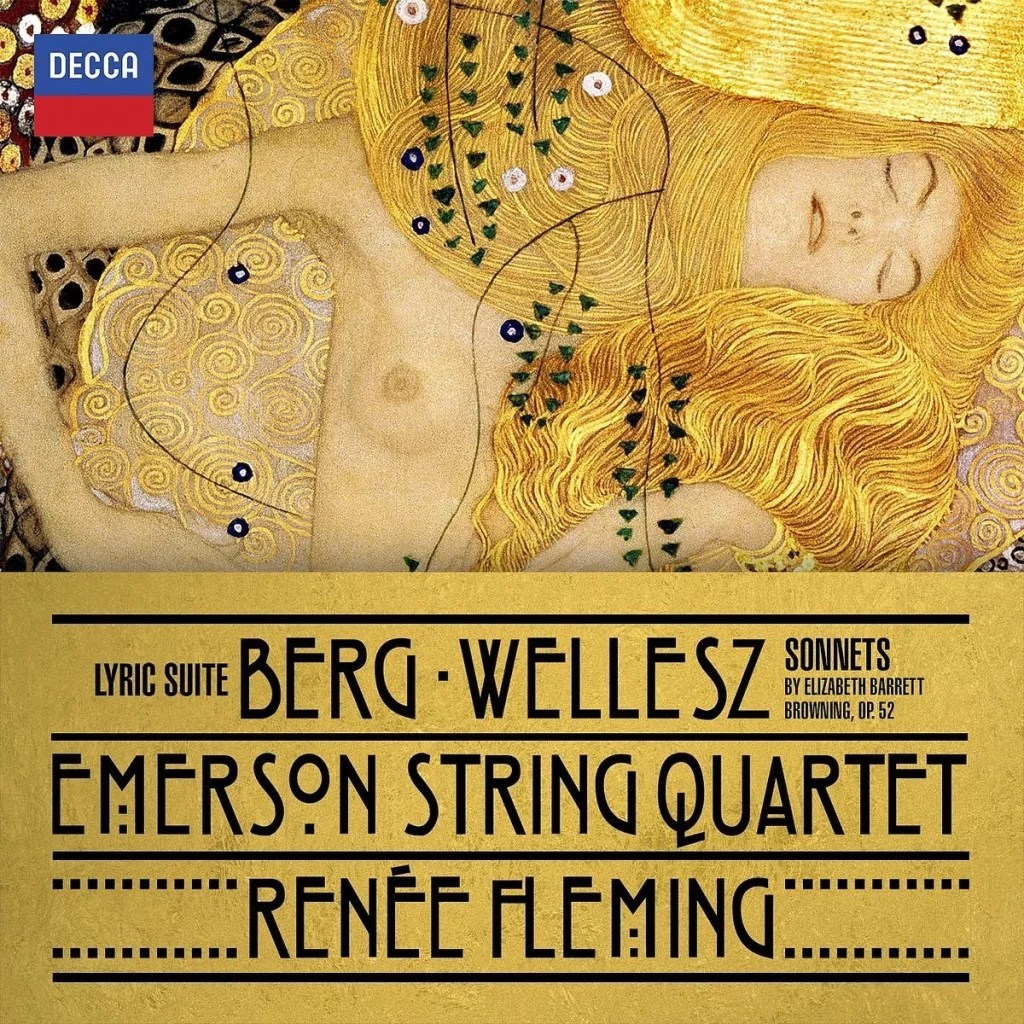
Renée Fleming sings Berg, Wellesz and Zeisl. A must buy!


There is no shortage of recordings of Berg’s Lyric Suite. Both in the version for string quartet and in the version for chamber orchestra: the choices are many. Whether it was Berg’s intention we cannot really know for certain, but we assume it was: the last movement, the Largo Desolato,  may also be sung.

Theodor Adorno, Berg’s pupil and confidant, considered the work to be an almost latent opera and that makes sense. Adorno was one of the few who knew about Berg’s affair with the married Hanna Fuchs, for whom he composed the work. For Berg, Fuchs was not only his lover and muse, but also his Isolde and his Lulu.

It is not the first time, by the way, that the poem by Baudelauire, the source of inspiration for the last part of the quartet, is actually sung. The Kronos Quartet and Dawn Upshaw had already recorded the version in 2003, there is also a recording by Quator Diotima with Sandrine Piau. The “Emerson”, however, offer us both versions: with and without vocals.

The decision to link Berg’s Lyric Suite to the songs of Egon Wellesz is nothing less than genius. Both composers had received their training from Schönberg, who had taught them not only the twelve-tone technique, but also to use a large dose of expressionism. Something you hear very clearly in the cycle Sonette der Elisabeth Barrett Browning.

That the songs are not performed more often is not only strange, but also a great shame. Of course, this has everything to do with the “once forbidden and then forgotten” attitude, which has also been fatal for Eric Zeisl. His short song Komm Süsser Tod makes us long for more: couldn’t there be some Zeisl added to the CD? It’s not the lack of space: at just 56 minutes, the CD is very short.

Renée Fleming’s creamy, cultured soprano and her mannerism fit the songs like a glove. The result is a beautiful cross between Gustav Klimmt and Max Beckmann. The very imaginative and expressive performance by the Emerson String Quartet adds to the overall experience. A must.

Decca 4788399


Ladies and Gentlemen, Miss Renée Fleming


The life of an opera star is no bed of roses. You are born with a voice that you then try to mould into an instrument that will always obey you. Throughout your life, you work on your technique, take language and acting lessons and you keep your body in shape because appearance is also very important, especially for a woman. And should you not only be wanting a career but also a family life, then things get tough. No wonder that at some point you start to question what is most important in your life and where your priorities really lie.

In the wonderful documentary by Tony Palmer (the maker of more wonderful documentaries, just think of the film about Maria Callas), Renée Fleming, one of the greatest opera singers of our time, talks at length about her fears and doubts. We see her during rehearsals and performances, we admire her dresses, watch home videos showing an apparently happy family life and wipe away a tear listening to her rendition of ‘Amazing Grace’ at Ground Zero.

At the presentation of a new creation from the master pastry chef: a chocolate treat called ‘La Diva Renée’, we get slightly moved. And she well deserves it.

Arabella. Discografie

arabella-uesuleac

Richard Strauss met de allereerste Arabella (Viorica Ursuleac) en Mandryka (Alfred Jerger)

Teschek, bedien dich’! Je ontkomt er echt niet aan dat de woorden van Mandryka, eindeloos door Graf Waldner herhaald, zich in je oren nestelen als een onvervalste oorwurm. ‘Teschek, bedien dich’ zingt Mandryka terwijl hij zijn dikke portefeuille tevoorschijn haalt en de bankbiljetten, gelijk bonbons, zijn aanstaande schoonvader voor zijn neus houdt.

Voor degenen die niet zo bekend zijn met het ‘Weense’, teschek is behalve een persoon die altijd aan het kortste eind trekt ook een kaartspel en wellicht een ‘delicate’ verwijzing naar de verslaving van de graaf, waardoor de familie aan de grond is geraakt, de jongste dochter verkleed als een jongen door het leven moet gaan en de oudste, Arabella, aan de hoogste bieder verkocht gaat worden. Bij wijze van spreken dan.

Hoe goed kent u de opera? Eerlijk! Ik ben de eerste om het toe te geven: tot voor kort kende ik de opera maar zo zo. Ooit heb ik haar gezien (en vergeten), ooit iets prachtigs op de radio opgevangen (Lucia Popp en Bernd Weikl! Nog steeds is het mij niet gelukt om de opname te pakken te krijgen), een fragmentje hier en daar …. Meer niet. Leuk niemendalletje, dacht ik.

Maar nu, na een paar weken ‘Arabella-dieet’ ben ik een echte aanbidder van het werk geworden. Hoe dat komt? Voornamelijk door het libretto, denk ik. De opera wordt als een lichte komedie gezien, een soort sprookje waarin alles aan het eind goed gaat komen. Maar is dat echt zo? Ik denk van niet Eigenlijk is het helemaal geen leuke opera. Want laten we eerlijk zijn: iedereen bedriegt hier iedereen en de kans dat wie dan ook gelukkig gaat worden is net zo groot als bij Sneeuwwitje.

Om met Zdenka, de haast ‘afgedankte’ dochter te beginnen: denkt u daadwerkelijk dat Matteo opeens van haar is gaan houden? Nou, ik niet! Hij moet met haar trouwen, omdat zij hem haar bed heeft ingelokt. En dat, terwijl hij dacht dat zij een man is. Maar goed, Mandryka betaalt, en aangezien alles in de opera om geld draait…

Afijn, ga er eens rustig voor zitten, want de opera is het meer dan waard. En er bestaan zo veel goede uitvoeringen!

Otto Schenk 1

arabella-janowitz

Mocht u de opera nog nooit eerder hebben gezien dan doet u er goed aan om met de film van Otto Schenk uit 1977 te beginnen (DG0743255). Larger than life, met levensechte decors. Daar kan natuurlijk geen gewone live voorstelling mee concurreren.

Gundula Janowitz is een heerlijke Arabella. Wellicht niet de beste actrice ter wereld, maar haar hoge noten zijn mooier dan mooi. Sona Ghazarian is een goede Zdenka, maar wat de opname, naast de zeer erotisch spelende Wiener Philharmoniker (Solti!) echt meer dan de moeite waard maakt is de Mandryka van Bernd Weikl. Daar wil een beetje vrouw zeker door wakker gekust worden.

Ook de kleine rollen zijn fantastisch bezet: René Kollo is een Matteo uit duizenden en ik ken geen betere Fiakermilli dan de jonge Gruberova. Tel de piepjonge (30!) Kurt Rydl als Lamoral en Margarita Lilova (Adelaide) erbij. Zonder meer goed.

Hieronder Gundula Janowitz and Bernd Weikl in de laatste akte::

Otto Schenk 2

arabella-kanawa-schenk

We blijven even bij de goede oude Otto Schenk: in 1995 is zijn productie in de Met opgenomen (DG 0730059). Kiri te Kanawa is een Arabella uit duizenden, er zijn weinig zangeressen die zich met haar in de rol kunnen meten. Strauss is altijd een beetje haar “huiscomponist”geweest en optisch is zij natuurlijk een Arabella om van te dromen.

Ook haar zusje Zdenka (Marie McLaughlin) is om van te dromen, iets wat niet van Wolfgang Brendel (Mandryka) gezegd kan worden. Van hem gaat mijn vrouwenhart niet harder kloppen. Thielemann dirigeert goed, maar mist het sensuele van Solti.

Hieronder Kiri te Kanawa zingt ‘Und du wirst mein Gebieter sein’:

Renée Fleming

arabella-fleming-zurich

En dan komen wij bij Renée Fleming (Decca 0743263). Optisch zowat de mooiste Arabella ooit. Niet alleen maar mooi, maar ook zo vol van zichzelf: je ziet haar als het ware de spiegel vragen ‘spiegeltje, spiegeltje aan de wand”…

Ik kan het natuurlijk niet meer aan Strauss vragen, maar ik vermoed dat zij voor hem de model Arabella kon zijn. Ook haar fluwelen manier van zingen alsof je onder een donzen dekbed ben geland….

Julia Kleiter is een goede Zdenka, maar Morten Frank Larsen (Mandryka) is gewoon Deens. Hij oogt Deens en hij zingt Deens. Jammer, want de regie van Götz Friedrich (Zürich 2007) is buitengewoon spannend.

Hieronder een scène met Renée Fleming en Julia Kleiter:

Sven-Eric Bechtolf
 arabella-magee

De nieuwste productie komt uit Wenen (BD EPCO 48D). Sven-Eric Bechtholf heeft mij verbaasd. Hij houdt zich goed aan het libretto en de aankleding is gewoon mooi.

Emily Magee mist het sensuele van een Fleming of te Kanawa, maar houdt zich goed staand. Genia Kühmeier is een sensationele Zdenka en Tomasz Konieczny een (inderdaad) “Oosteuropeese gastarbeider” met poen. Qua stem kan hij zich zonder meer met Weikl meten.

Trailer van de productie:

Lisa Della Casa

arabella-lisa-decca

En nu even terug in de tijd. Lisa Della Casa is voor mij de Strauss-zangeres. Luister alleen maar naar haar interpretatie van de Vier letzte Lieder! Begonnen als één van de mooiste Zdenka’s groeide zij uit tot de Arabella.

In 1958 heeft zij de rol onder Solti (Decca 4781400) opgenomen. Daar kan ik nooit genoeg van krijgen. Hilde Güden is haar zusje en het duet van de twee meisjes is van een ongekende schoonheid Twee stemmen die bij elkaar komen en elkaar omhelzen al waren ze geen zussen maar geliefden. Zo’n perfectie bereik je werkelijk zelden.

En dan de zeer erotische manier waarop Solti met de partituur omgaat… Het is één en al sensueel en feeëriek. Niet alleen wat de zang, maar ook wat de orkestklank betreft. En George London zingt Mandryka. Moet ik nog meer zeggen?


Montserrat Caballé

arabella-caballe

Caballé als Arabella

Montserrat Caballé als Arabella… Vreemd? Welnee! Zij was één van de beste Salome’s ooit, wist u dat? Zij is ook een fantastisch sensuele Arabella (BLV 107225). Ga niet om de opname heen, zeker niet omdat Zdenka hier gezongen wordt door de zeer ontroerende  Oliviera Miljakovic.

Hieronder Caballé en Miljakovic in het duet ‘Er ist der richtige’:

Engelse Arabella

arabella-steber

‘Arabella’ in het Engels? (Andromeda andrcd 5013). Waarom niet? Onvoorstelbaar hoe anders de opera dan klinkt. Het is alsof je naar pak ‘m beet Vanessa luistert. Iets om over na te denken.

Eleanor Steber mist het fluwele, maar haar betrokkenheid maakt dat je iets meer van de vrouw begrijpt. Ook Hilde Güden klinkt hier anders. Het is alsof zij aan volume en zeggingskracht wint. Ik houd ervan. En dan George London met zijn ‘I am the Mandryka, no one else’. Waarom vind ik het in het Engels nog indrukwekkender dan in het Duits?

Kiri te Kanawa

arabella-kiri-tat

En dan hebben we tot slot nog Kiri te Kanawa op cd (Decca 4783460). Zdenka (Gabriele Fontana) vind ik te zwaar en in het duet overstemt zij haar zus – niet echt mooi. Tate dirigeert onevenwichtig. Maar wat een Matteo! Peter Seiffert is meer dan heerlijk om naar te luisteren. En ook Franz Grundhebber (Mandryka) maakt de opname meer dan het beluisteren waard.


Onevenwichtige Arabella uit Amsterdam

CC72686 - Omslag+++.inddVan alle late opera’s van Strauss is Arabella mij het dierbaarst. Daar heb ik geen logische verklaring voor. Of, misschien toch: ooit, jaren geleden hoorde ik op de radio hemelse muziek die gezongen werd door stemmen die mijn oren meer dan streelden. Het bleek Arabella te zijn, met in de hoofdrollen Lucia Popp en Bernd Weikl.

De hemelse klank werd toen voor altijd in mijn geheugen gegrift en in mijn lange zoektocht naar dezelfde sensatie heb ik de ene na de andere Arabella verslonden.

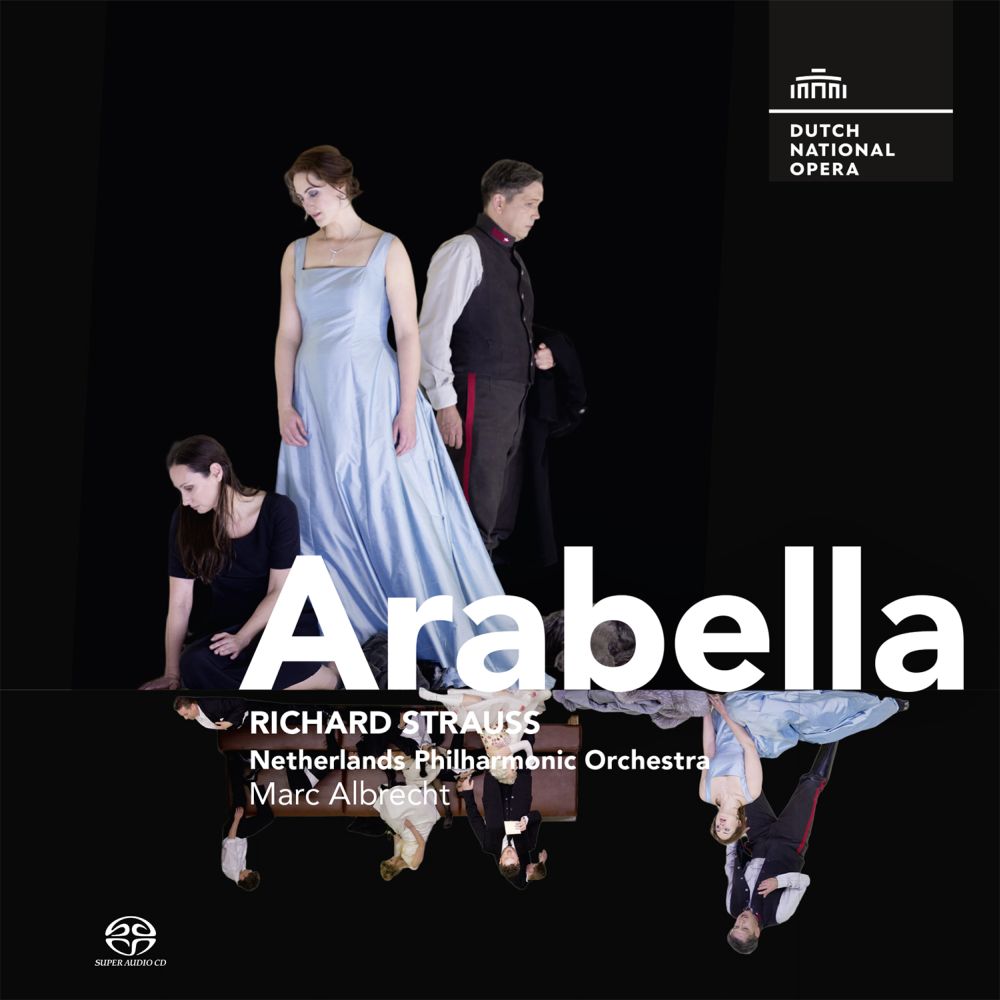
De productie van de Nationale Opera moest ik door omstandigheden missen, vandaar dat ik maar al te blij werd met de live registratie. Het is een behoorlijk goede uitvoering geworden, waar weinig op aan te merken is. Maar een hoogvlieger is het in mijn ogen niet.

Trailer van de productie:

Jacquelyn Wagner (Arabella) heeft een mooie, zilverkleurige sopraan, maar ik mis de in elkaar overvloeiende fluwelige lijnen. Haar portrettering vind ik ook een beetje onevenwichtig.

Agneta Eichenholz is een fatsoenlijke, goed zingende maar niet echt opwindende Zdenka. Helaas is Will Hartmann geen goede Matteo. Voor de rol klinkt zijn stem te oud en te versleten.

Susanne Elmark (Fiakermilli) vind ik een ramp – onzuiver en schreeuwerig – en ook James Rutherford (Mandryka) kan mij niet echt bekoren. Zijn stem is mega groot en zeer imponerend, maar hij is meer een Wotan dan een ongelikte charmante beer uit Kroatië.

Charlotte Margiono is een heerlijke Adelaide en ook de drie graven zijn voortreffelijk bezet. Kon Marcel Reijans, één van die graven, de rol van Matteo niet overnemen?

Het orkest onder Marc Albrecht speelt, zoals het de laatste tijd helaas vaker het geval is, gewoon te hard.


RICHARD STRAUSS
Arabella
Jacquelyn Wagner, Agneta Eichenholz, James Rutherford, Will Hartmann, Susanne Elmark, Charlotte Margiono e.a.
Netherlands Philharmonic Orchestra olv Marc Albrecht
Challenge Classics CC72686 • SACD 195’ (3cd’s)

ARABELLA. Discografie