
THE SOUND

Sight & Sound Experience of Gustav Klimt – Atelier des lumières Paris
On the threshold of the twentieth century, many artists were guided in their work by the desire – and the search – for a perfect world. It had to do with the spirit of the times, among other things, and it influenced many painters, writers, poets and composers in their work. But with no other artist it was as prominent as with Franz Schreker (1878-1934). The search for ‘the’ sound dominated his entire life, he was fascinated and obsessed with it. A sound that would die of its own accord, but not really, because it had to continue to be heard – if only in your thoughts. It had to be a pure sound, but one with orgasmic desire and interwoven with visions. Narcotic. In his music I really hear the perfect sound that he so desired which makes me intensely happy.
For Schreker you can wake me up in the middle of the night. The fusion of shameless emotions with undisguised eroticism and intense beauty turns me into an ‘Alice in wonderland’. I want more and more of it. Call me a junkie. I consider his operas to be the most beautiful in existence, alongside those of Puccini and Korngold.
When the Nazis came to power, Schreker was labelled an ‘entartet’. His works were banned and no longer performed. In 1933 he was dismissed from all his engagements and suspended. Schreker was devastated. In December of that year he suffered a heart attack which became fatal to him. But even after the war Schreker was hardly ever performed. The same fate awaited him as (among others) Korngold, Braunfels, Goldschmidt, Zemlinsky, Waxman …. An unprecedented number of names of composers. They were once labelled ‘Entartet’ by the Nazis and banned, reviled, expelled and murdered. Forgotten.
And that was not just the fault of the Nazis. After the war, the young generation of composers did not want to know about emotions anymore. Music had to be devoid of any sentiment and subject to strict rules. Music had to become universal: serialism was born. The past was dealt with, including composers from the 1930s. It is only in the last thirty years that the once forbidden composers have regained their voices. The Saturday Matinee has played a major role in this and I thank them on my bare knees for that.
DER FERNE KLANG
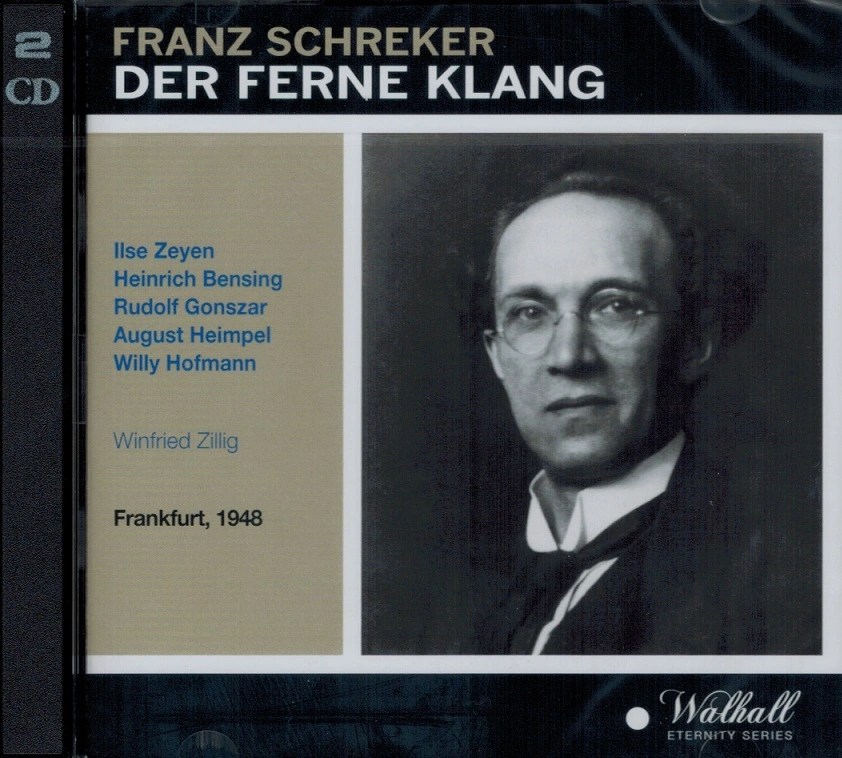
, The premiere of Der ferne Klang, in Frankfurt in 1912, was very enthusiastically received. In the Frankfurter Zeitung, critic Paul Bekker wrote that “the audience could identify with the central metaphor of Schreker’s work. Everyone hears that enigmatic sound at some point”.
The protagonist is a composer with only one desire: to discover the perfect sound. On his quest for it, he rejects his beloved Grete and leaves everything he loves behind. Only at the end, when it is already too late, does he realise that he could only find the enchanting “distant sound”, along with happiness, in his love for Grete.
There are not many official recordings of the opera on the market. I myself know only one: live recording from Berlin 1991, on Capriccio (60024-2). I’ve never been devastated by that and quietly hoped that NTR will release their September 2004 performance, with Anne Schwanewilms and others. Alas.
Fortunately, Walhall is now coming out with a live radio recording from Frankfurt 1948, and I am very happy about that. It is a fantastic recording, with exceptionally good sound quality for the time.
I did not know any of the singers, the greater the surprise for me. Der Ferne Klang is an opera that is not easy to cast. Both main roles require big voices that are also distinctly lyrical, and Ilse Zeyen (Grete) and Heinrich Bensing (Fritz) are very much so.
The Frankfurt radio orchestra is sublimely conducted by Winfried Zillig, a very well-known German composer, musict heorist and conductor at the time.
Excerpts can be heard here:
https://www.jpc.de/jpcng/classic/detail/-/art/Franz-Schreker-Der-Ferne-Klang/hnum/2994743
DIE GEZEICHNETEN

The idea came from Zemlinsky. He wanted to compose an opera about an ugly man – his obsession – and commissioned the libretto from Schreker. After finishing his work, it was hard for Schreker to give up his text. Fortunately, Zemlinsky abandoned the opera so Schreker started to compose himself.

Zemlinsky, Schoenberg and Schreker in Prague 1912
Like Der Ferne Klang, perhaps his best-known work, Die Gezeichneten also deals with the search for unattainable ideals. Alviano, a deformed rich nobleman from Genoa, dreams of beauty and perfection. On an island he has ‘Elysium’ built, a place where he hopes to realize his ideals. What he doesn’t know is that the noblemen abuse his island: they are engaged in orgies, rapes and even murders.

Alviano: photo from the premiere in Frankfurt 1918 via Green Integer Blog
The title of the opera is ambiguous. Not only are the main characters ‘marked’ (Alviano by his monstrous appearance and Carlotta by a deadly illness), Carlotta also makes a drawing of Alviano, in which she tries to capture his soul.
This beautiful opera, with its thousands of colours and sensual sounds (just listen to the overture, goosebumps!), is being staged more and more nowadays. In 1990 it was performed at the Saturday Matinee, with an ugly singing but very involved and therefore very vulnerable William Cochran as Alviano and a phenomenal Marilyn Schmiege as Carlotta (Marco Polo 8.223328-330).
Evelyn Lear (Carlotta) and Helmut Krebs (Alviano), scene from the second act:
On Spotify you can find several performances of the complete opera, but if you want to have images as well: below you will find the recording from Salzburg 2005:
IRRELOHE
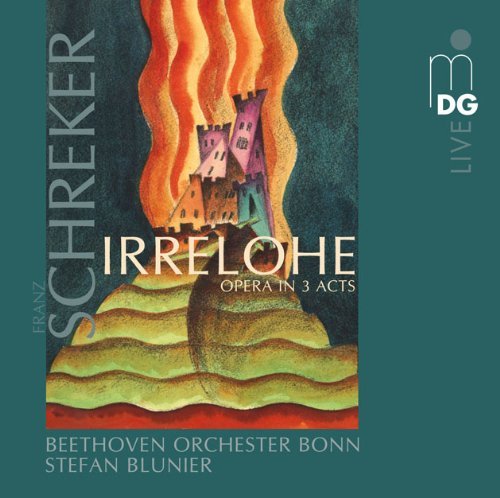
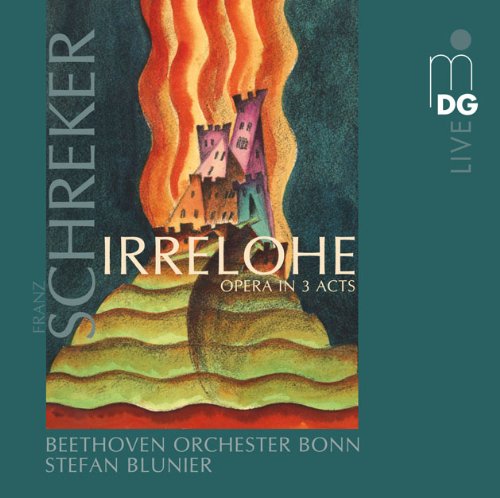
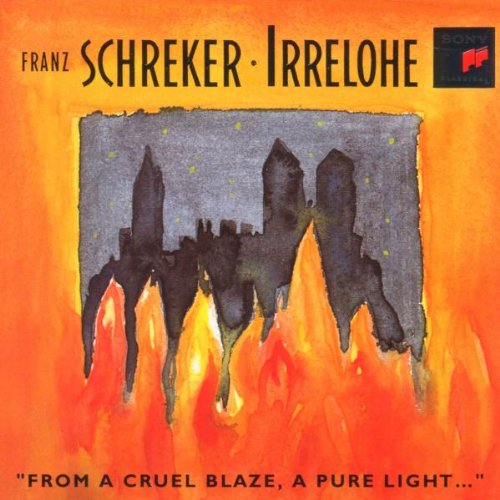
In 2010, The Opera in Bonn started a Schreker revival. Kudos! In 2010, Irrelohe was put on the stage there and recorded live by MDG (9371687-6).
The story most resembles a real horror movie. The lords of the Irrelohe castle are cursed. On their wedding day, they go mad and rape a virgin, a curse they pass on to their first-born son. Only a fire and its flames can lift the curse. And those flames do come, at the end, when the beautiful Eva (Ingeborg Greiner) prefers Count Heinrich (irresistible Roman Sadnik) to the bastard Peter (Mark Morouse). You get the idea: Peter is the first-born son of the rapist; Heinrich (who is his half-brother) was born 30 days later. All’s well that ends well, but first we shudder, shiver and enjoy…….
Roman Sadnik in scenes from Irrelohe:
Of the opera there already existed a recording on Sony, recorded live in Vienna in 1989. The Wiener Symphoniker was conducted by Peter Gülke and maybe it is his fault that it does not sound very exciting. The singers (including Luana de Vol and Monte Pederson) are certainly not to blame, although they are nothing to write home about.
Worth knowing:
Schreker wrote the libretto in a very short time (it took him only a few days) in 1919. The work takes its name from a railway station called Irrenlohe which Schreker passed by on a trip to Nuremberg in March 1919.
DER SCHMIED VON GENT

I had in my possession a pirate recording of Schrekers’s last opera, Der Schmied von Gent from Berlin 1981, but I wasn’t particularly fond of it: neither the sound nor the performance could really please me. Moreover, the opera was hard to follow without a synopsis.
So I was eagerly awaiting the first commercial release of it and lo and behold: there it is! ‘The Smith’ was recorded live in Chemnitz in 2010 and released on CPO (777 647-2), kudos!
It is a “Grosse Zauberoper” with a story a bit close to ‘Der Freischütz’, it also features a devil, as well as Saint Peter and … Alva (it takes place during the Eighty Years’ War). And yes, it all works out.
The cast, including a fantastic Oliver Zwarg in the role of Smee, is excellent.
VOM EWIGEM LEBEN

I don’t think it was wise to include ‘Ekkehard’, a work Franz Schreker wrote while still in his youth. And certainly not to place it at the beginning of the CD. The symphonic overture has little to say, sounds incoherent, is boring and deters rather than invites listening. ‘Phantastische Ouvertüre’ on 15 is hardly any better and even I, a diehard Schreker fan, really had to force myself to keep listening to it.
But it could also be a bit down to the young English conductor Christopher Ward. He conducts very skilfully but lacks a real drive. Nor can I escape the impression that he doesn’t quite understand the ‘Schrekian idiom’, because somewhere between all the very neatly played notes he has quite lost the eroticism. You hear it best in Schreker’s best-known piece, his ‘Vorspiel zu einer grossen Oper’.
Fortunately, on that CD you will also find two songs; two settings to the poem by Walt Whitman, (translated into German by Hans Reisiger) entitled ‘Vom Ewigen Leben’ and here you hear the real Schreker. Sensual and languorous. That my final verdict is not negative is therefore thanks to these songs being sung beautifully, with much sehnsucht, by Australian soprano Valda Wilson.
SONGS

The unsurpassed Reinild Mees took the initiative and (of course) got behind the piano herself, to accompany and record two CDs full of Schreker’s songs. It features Jochen Kupfer, Ofelia Sala and Anne Buter and the result is truly outstanding (Channel Classics CCS 12098 and CCS 14398)
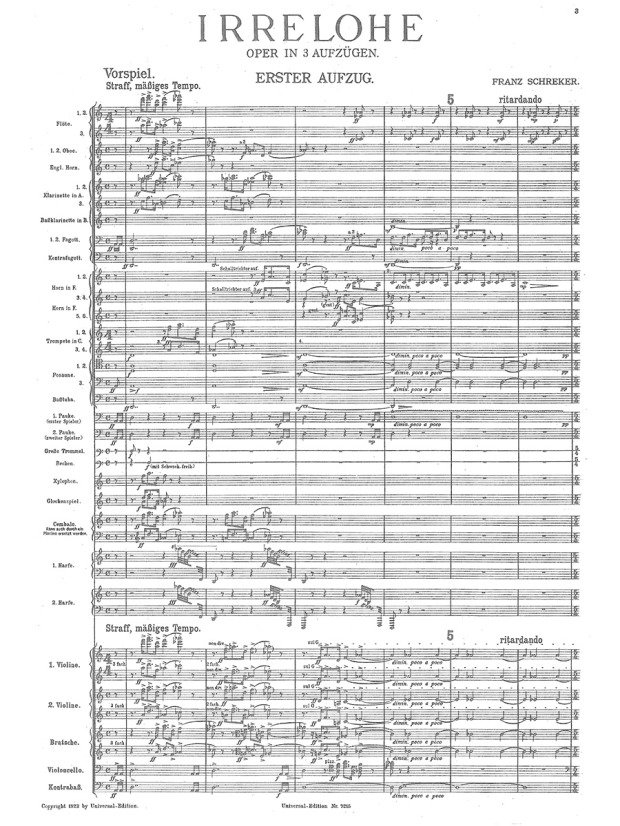
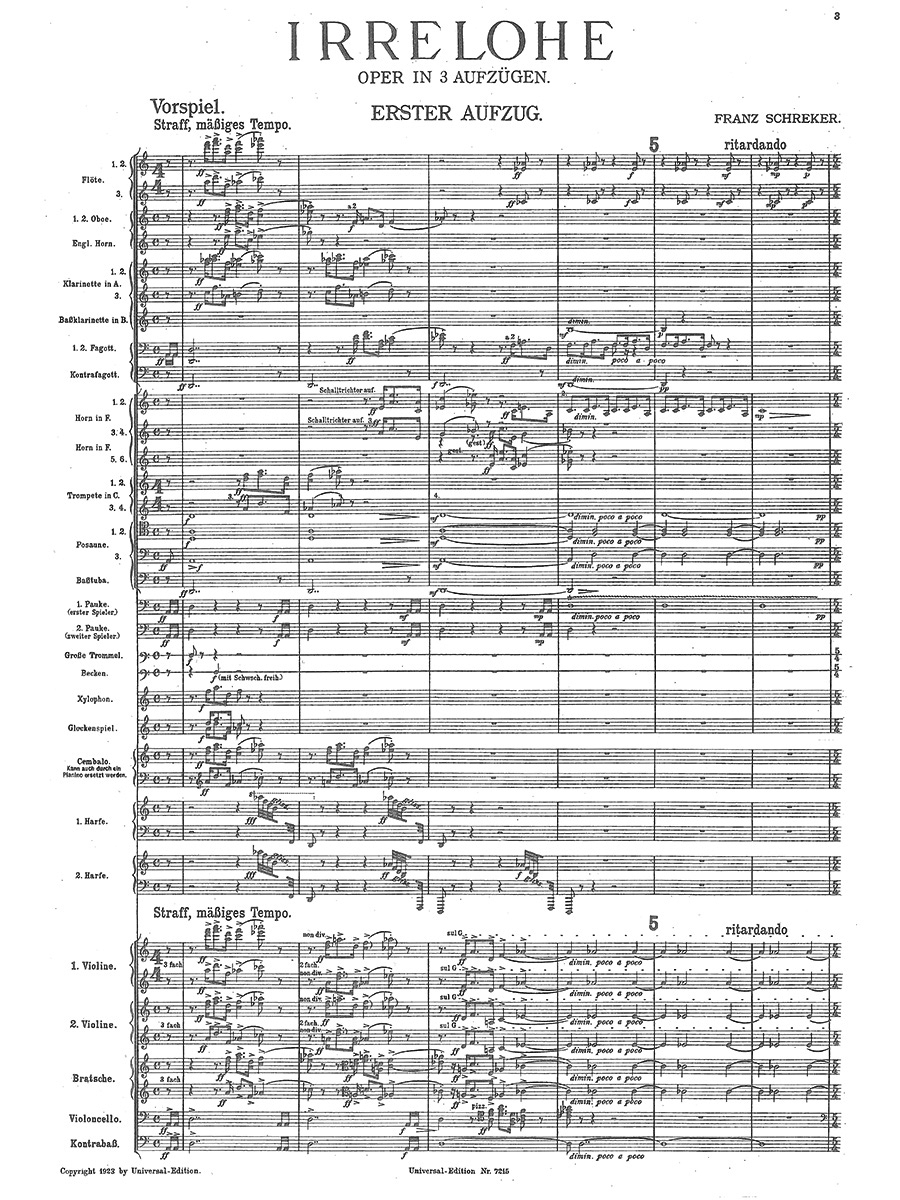
Also highly recommended is a release by Koch Schwann (3-6454-2), hopefully still for sale, which includes, in addition to the prelude to Irrelohe and ‘Vorspiel zu einer grossen Oper’, again the truly irresistible song cycle ‘Vom ewigen Leben’, after Walt Whitman’s poems.
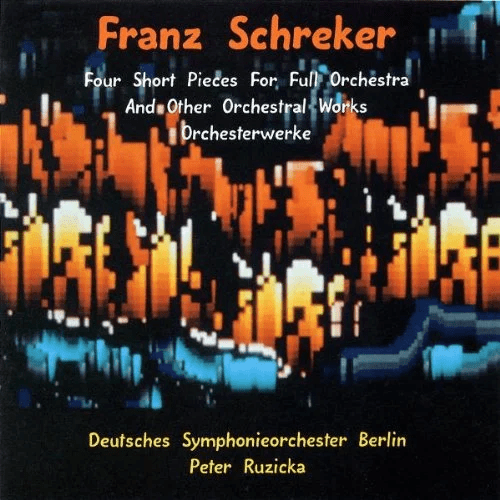
It is phenomenally sung by Claudia Barainsky – for her alone, with her radiant height and tremendous understanding of the text, you really must have the CD. Not to mention the fantastically playing Deutsche Symphonie-Orchester Berlin. The conductor, Peter Ruzicka understands exactly what Schreker’s music is all about.
For dessert, one of the most beautiful instrumental works by my beloved composer: Vorspiel zu einem Drama from 1913. The BBC Symphony Orchestra is conducted by Jascha Horenstein:
A new arrival:


Christoph Eschenbach and Chen Reiss
“Christoph Eschenbach conducts this generous survey of the sumptuous, hyper-Romantic music of Austrian composer Franz Schreker. Not only was he the pre-eminent opera composer of his generation, he also, says Eschenbach, “took Mahler’s symphonic writing to a whole new level”. The album includes the ecstatic “Nachtstück” from Der ferne Klang, the exquisite Chamber Symphony and some ravishing orchestral songs, featuring Chen Reiss and Matthias Goerne”(© DG)






 Basia con fuoco