Peter_Dvorsky

The Eternal Life or Věc Makropulos by Janáček

Eternal life, don’t we all secretly want it? Especially if you will stay young, beautiful and healthy in the process? And especially if you are an opera singer and you will be able to perfect your voice during all those hundreds of years of your life. Unfortunately, there is also a downside: you will certainly become cynical and then nothing will interest you anymore, not even sex. After all: you’ve seen it all?

Emilia Marty (or Elina Makropoulos, or Eugenia Montez, or any of the other of her former alter egos) brings turmoil to everyone’s lives, but she herself remains calm thoughout it all. Once she loved, yes, but even that was more than a hundred years ago. Now her end seems closer anyway, so she must find the elixir once invented by her father. But maybe death is the solution after all?


Janáček’s Věc Macropulos (The Makropoulos Case) is an extraordinary opera, providing much food for thought. A ˜gefundenes fressen” for a director, you might say, especially since the libretto (by Janáček himself and based on the story by Karel Čapek ) is truly genius and provided by the composer with equally genius music.

DVD


But when your name is Christoph Marthaler, you prefer to put your own stamp on the production, and he does just that. The opera begins with ˜silent” dialogue, which you can follow through subtitles. No, it’s not in the libretto, but apparently this director thought it was exciting. It took me a few hours to figure out that it wasn’t because of the DVD!

© Walter Mair


Whether it adds any value? You have to judge that for yourself. For me, it doesn’t; the opera’s message was more than clear without it. But once you get the hang of it, it is undeniably exciting, although I wonder if the audience on the left of the hall could see anything except the subtitles.


I have absolutely nothing against modern theatre, especially if it is done well and intelligently. As theatre, then, the production is certainly engaging. But Janáček it is not, also because the orchestra has too little affinity with him. Janáček is not modern, Mr Salonen! Even in this horribly inverted fairy tale, he does not lack lyricism. And the accents, the typical ‘Janáček accents’, I don’t hear them anywhere either. What a misunderstanding!


The singing is undeniably good to very good. Johan Reuter is a fantastic Prus and Raymond Very a really endearing Gregor. Angela Denoke is a fenomenal artist and although I don’t really like her voice, in her role she is more than convincing.

The reviews were almost all very complimentary. People praised the drama and the singers. Even Salonen was applauded, so the final verdict is yours.


Behind the scenes:


CDS


The 30-year-old classic conducted by Charles Mackerras still sounds great and it leaves very little room for improvement, unfortunately it is not available separately (anymore?). Decca has compiled all the Janáček operas recorded by Mackerras and put them in a 9-CD box set (4756872).

Fine in itself, especially considering the price; unfortunately you don’t get the libretto with it. But the performance is very pleasing indeed. Elisabeth Söderström  is an excellent Emilia, Peter Dvorský a fine Albert and Václáv Zítek an impressive Baron Prus.


In 2006, Mackerras conducted the opera at English National Opera, in English. The (live) recording appeared on Chandos (CHAN 3138), and it is good to have it there. Cheryl Barker sings a beautiful, cool Emilia, perhaps less lived-in than Söderström, but certainly no less sophisticated. And the English is something you just have to get used to.)
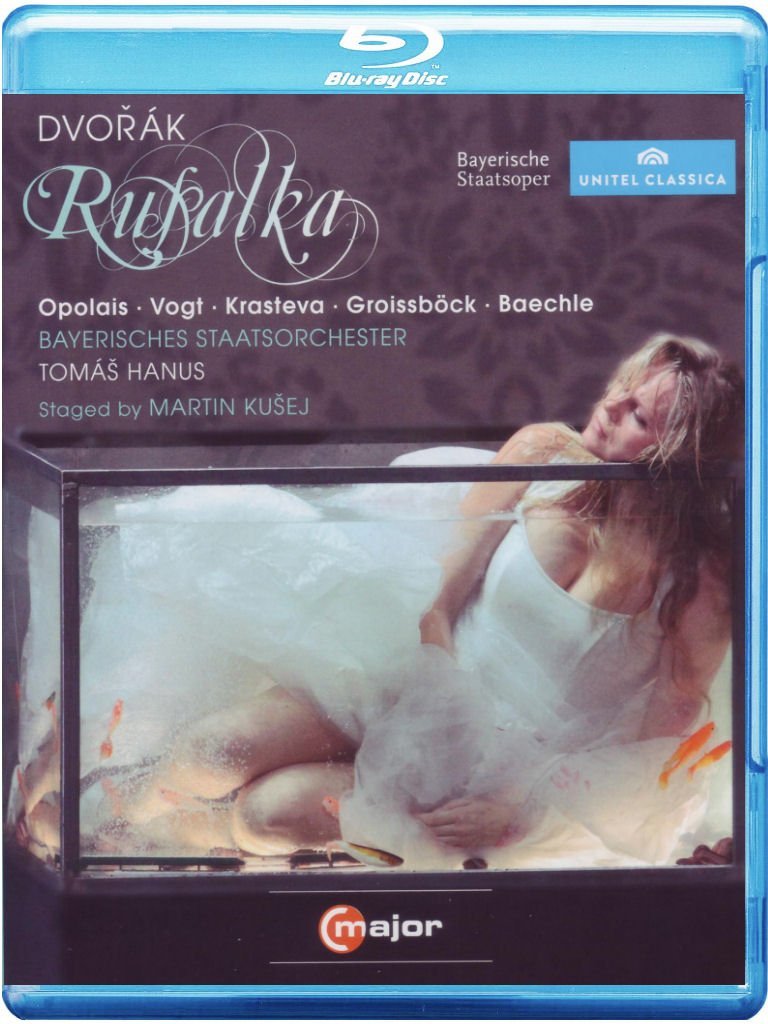

3 x RUSALKA: Kristine Opolais, Gabriela Beňačková en Ana María Martinéz

Kristine Opolais

rusalka-opolais

Regisseur Martin Kušej creëerde in 2010 een nieuwe Rusalka voor de Bayerische Staatsoper in München. Met de nadruk op nieuw, want de opera zelf was amper meer te herkennen. De zieke enscenering zette de ijzersterke cast helaas op het tweede plan.

Het label Cmajor (706408) heeft de opera op dvd opgenomen en daar ben ik niet echt blij mee. De regisseur Martin Kušej heeft het drama naar de Oostenrijkse Amstetten verhuisd. Weet u nog wie Josepf Fritzl was? Juist ja.

Hoe ziek moet je brein zijn om Rusalka, één van de allermooiste, maar ook één van de allerdroevigste sprookjes ooit, met het gruweldrama in het Oostenrijkse Amstetten te vergelijken? Hoe ziek moet je brein zijn om van Watergeest, de allerbeminnelijkste en liefhebbendste ‘sprookjesvader’, de psychopaat Joseph Fritzl te maken? Hoe ziek moet je geest zijn om van de naïeve, kinderlijke waternimf een krolse kat te maken?

Nee, dat staat niet in het libretto. En het staat ook niet in de muziek. De kleine Rusalka heeft haar hart en ziel aan een menselijk wezen verpacht. En in ruil voor het menselijk lichaam offert ze aan de heks Ježibaba het mooiste wat zij heeft – haar stem.

In het sprookje van Andersen loopt het niet goed af, en niet anders is het in het sprookje van Dvořak. Maar: voor ze haar stem kwijtraakt, zingt Rusalka het ‘lied aan de maan’, zowat het mooiste wat er ooit is gecomponeerd.

Maar kan het de regisseur wat schelen? Als hij maar scoren kan! Wat een zonde van de prachtige opera! En wat een zonde van de werkelijk fantastische zangers.

Kristine Opolais (Rusalka) is om te zoenen zo mooi. Letterlijk en figuurlijk. Klaus Florian Vogt is een goede prins en zingt beter dan ik van hem gewend ben.

Günther Groissböck is met zijn diepe, warme bas absoluut één van de beste keuzes voor Wodnik. Hij doet zijn best om de enge Fritzl te verbeelden. Dat wat hij zingt en wat hij doet in geen enkel geval met elkaar sporen, is zijn schuld niet.

Soms wens je jezelf terug naar het cd-tijdperk.


Gabriela Beňačková

rusalka-benackovaDe wegen (en de programmering) van sommige operahuizen zijn ondoorgrondelijk. Want waarom de ene opera wel en de andere niet?

Rusalka, toch een groot succes in veel operahuizen ter wereld, bereikte Wenen pas in 1987, 86 jaar na de première. Waarom? Dat weet niemand, maar de voorstelling was het grote wachten meer dan waard. Al op de premièreavond sprak men (terecht!) van een legendarische uitvoering.

Gelukkig voor ons werd de voorstelling toen voor de radio opgenomen en later op cd uitgebracht. De muziek werd met twintig minuten ingekort (de scènes met de boswachter en de koksjongen). Jammer eigenlijk, maar niet meer dan dat.

De hoofdrol werd gezongen door mijn geliefde Rusalka allertijden: Gabriela Beňačková. Haar stem was een juweel op zich: licht, teder en toch intens en vol van emoties. Het lied aan de maan heeft nog nooit ontroerender geklonken: onschuldig, maar al vol met passie.

Schitterend was ook de Prins van Peter Dvorsky. Wat een mooie, lyrische stem! Jevgenij Nesterenko was zeer indrukwekkend en ontroerend in zijn rol van de smartelijke Watergeest.

Eva Randova imponeerde in haar dubbele rol van de heks Ježibaba en de Vreemde Prinses, al is de keuze om beide rollen door dezelfde zangeres te laten zingen nogal vreemd en verwarrend. Het Weense orkest onder Václav Neumann speelde zeer bezield (Orfeo C638 0421)

Hieronder zingt Beňačková het ‘lied tot de maan’, tijdens een concert in Praag, 1988:


Ana María Martinéz

rusalka-martinez

Het Glyndebourne Festival zette in 2009 Dvořáks Rusalka op het toneel en toen ook meteen live voor cd opgenomen. Een jaar later bracht het festival een opname van de productie uit op haar eigen label (GFOCD 007-09)

Men kan zich afvragen waarom er geen dvd van gemaakt is (de foto’s zien er prachtig uit), maar misschien is het ook maar beter zo. Want nu kunnen we ons geheel op de muzikale kant concentreren. En geloof me: zo’n prachtig orkestspel hebt u nog nooit gehoord. Al bij de ouverture ziet u wat er gebeurt, ondanks het gebrek aan beeld. U ziet het meer, omgeven door bossen, u ziet de dansende nimfen en de heldere maan. De betovering, die is voornamelijk aan het London Philharmonic Orchestra te danken en aan de magische directie van Jíří Bělohlávek.

De hoofdrol van de ongelukkige waternimf, wier liefde voor de man haar fataal werd, wordt hier gezongen door Ana María Martinéz. Zij combineert de Slavische, ietwat hysterische vibrato met de Latijnse passie. Minder romig dan wij van een bepaalde zangeres zijn gewend, maar met veel meer gevoel en onverholen droefheid. Aan de ene kant nog de maagdelijke nimf, maar aan de andere al de liefhebbende vrouw van vlees en bloed.

Larissa Diadkova is Ježibaba uit duizenden en Brandon Jovanovich een zeer mannelijke prins.