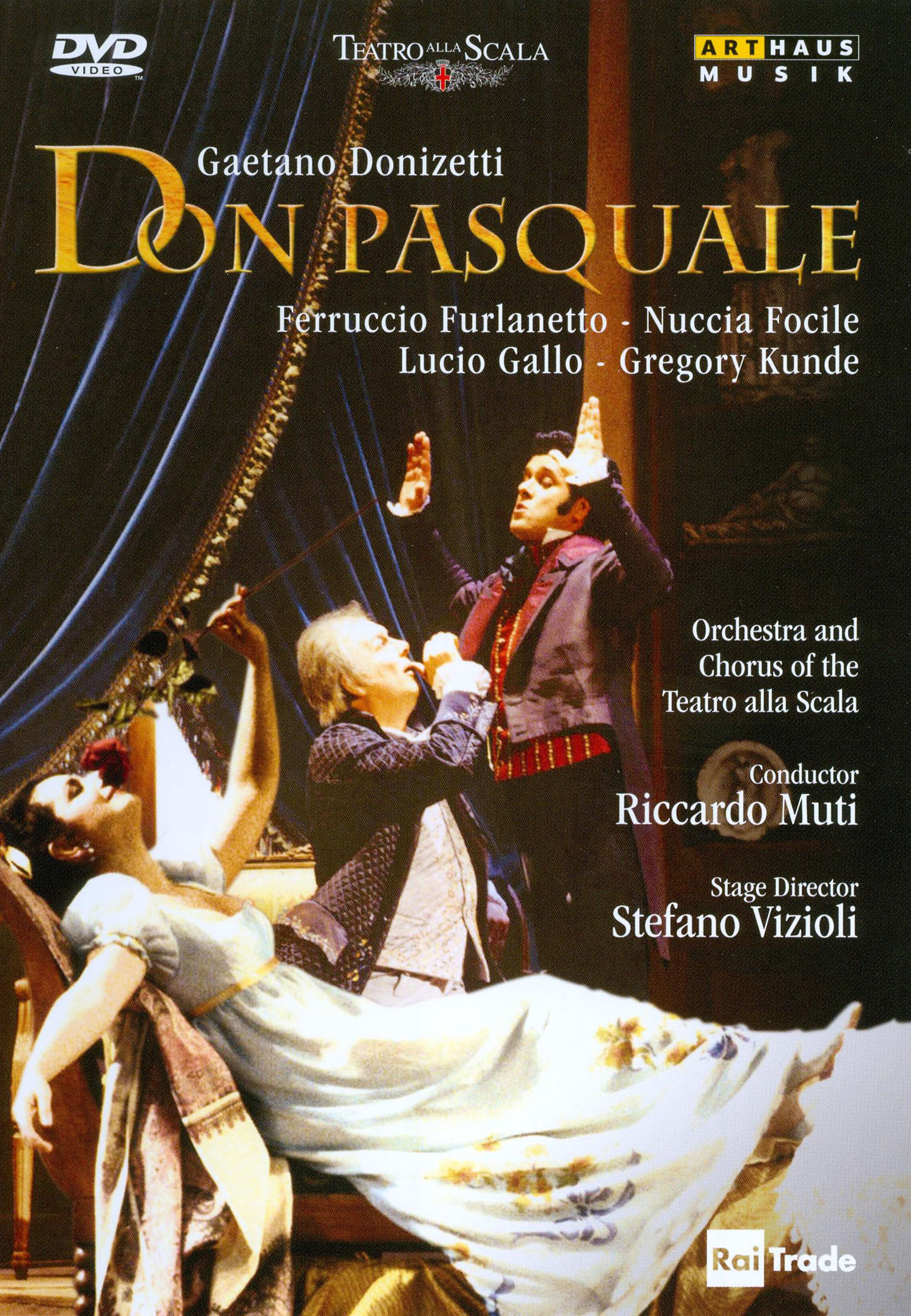
Almost immediately, within the first bars of the overture, I spring to my feet: this will be a delight! Muti starts firmly and immediately afterwards the mood changes into an unparalleled lyricism. His tempi are generally on the high side, but nowhere do they degenerate into panting.
Stefano Vizioli’s direction is a textbook example of what an opera should look like. His conventional, 1994 staging is truly sparkling, exciting, innovative and inspiring. Comical and sentimental at the same time and with great attention to detail.
The costumes are dazzlingly beautiful and correspond to the characters of all the characters. The emergence of the good-for-nothing Ernesto (phenomenally played by Gregory Kunde) is truly precious: in slippers and a silk dressing gown, he lies down on the sofa, sipping his espresso, waiting for the luck to come by itself or with the help of Malatesta (Lucio Gallo at his best).
Ferruccio Furlanetto is a Don Pasquale in a thousand and Nuccia Focile a delightful Norina. Everyone sings and acts at an all-time high and the orchestra could charm the stars from heaven.
No sooner has it happened to me that I couldn’t find a minus point anywhere: for me it is one of the best opera’s on DVD I have ever seen, don’t miss it!
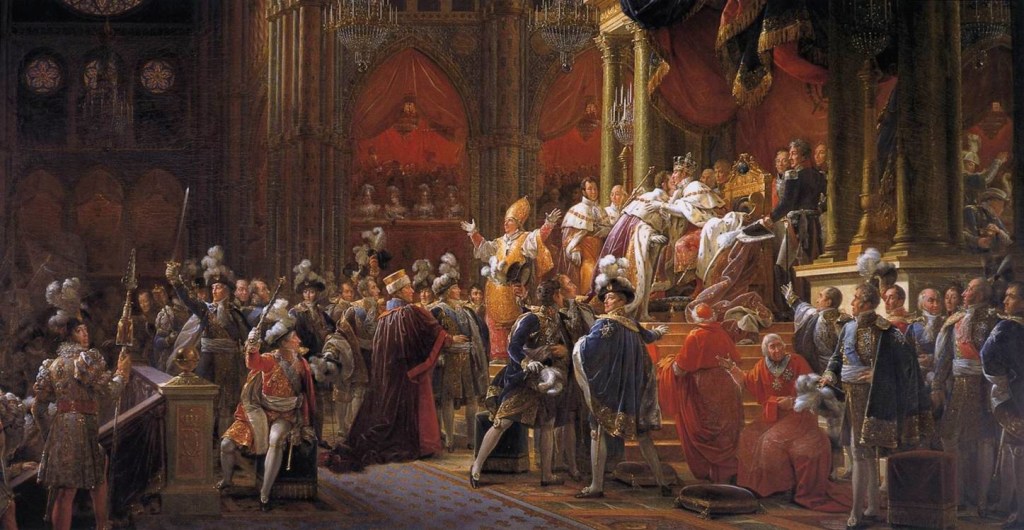
Coronation of Charles X of France by François Gérard, circa 1827
Was it ever Rossini’s real intention? To perform it and then throw it away? Rossini considered his opera Il viaggio a Reims an occasional piece, created for the coronation of Charles the X in 1825. The opera was first performed in Paris, with Giuditta Pasta as Corinna. It was a great success, but the composer pulled the plug after only three performances.
He reused much of the music in Le Comte Ory, the rest disappeared into various drawers in different countries (how appropriate, don’t you think?) and was only recovered in the late 1970s.
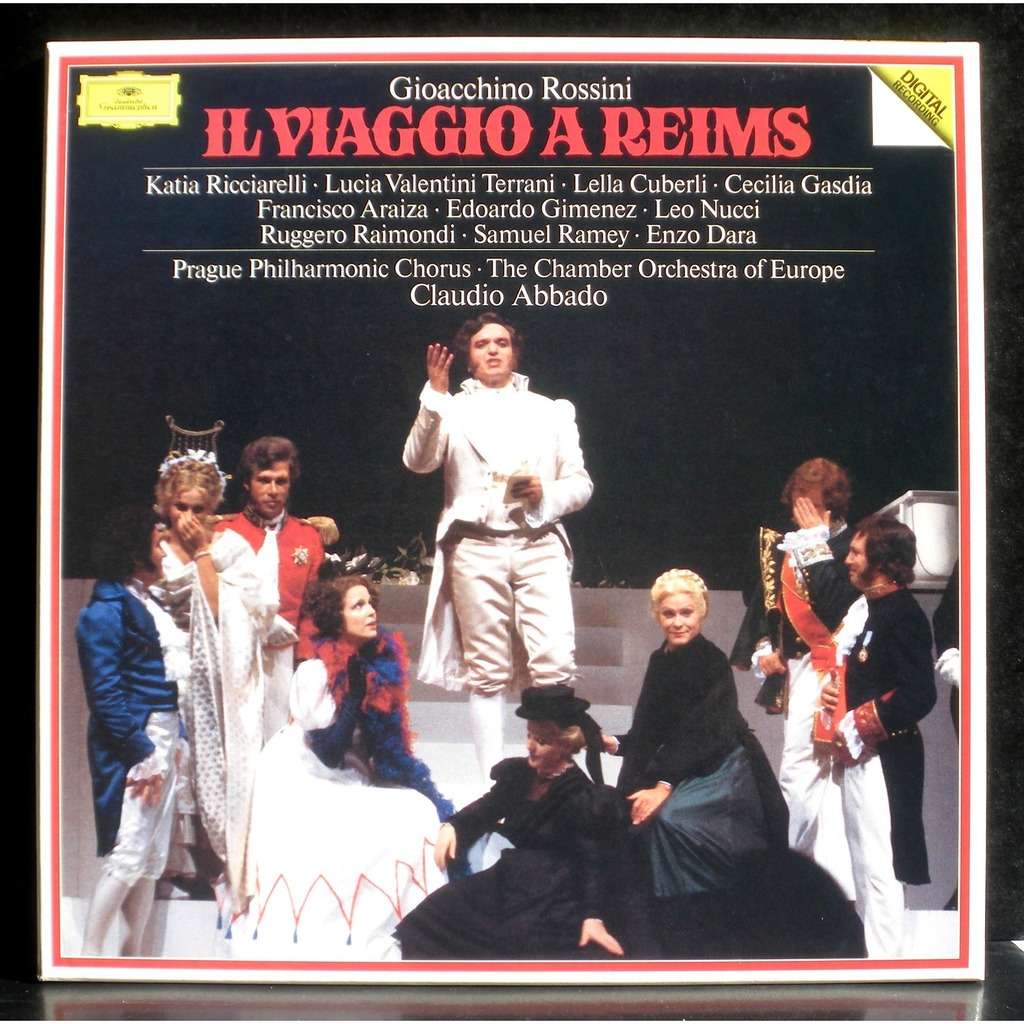
CLAUDIO ABBADO: Pesaro 1984
The first “modern” performance of Il viaggio took place in Pesaro, in 1984. Claudio Abbado conducted an absolute star-studded cast, which had been brought together just for this occasion… In alphabetical order: Francisco Araiza, Lella Cuberli, Enzo Dara, Cecilia Gasdia, Eduardo Gimenez, William Matteuzzi, Leo Nucci, Ruggero Raimondi, Samuel Ramey, Katia Ricciarelli and Lucia Valentini Terrani.
Youtube also offers the entire recording from Pesaro – on screen! – :
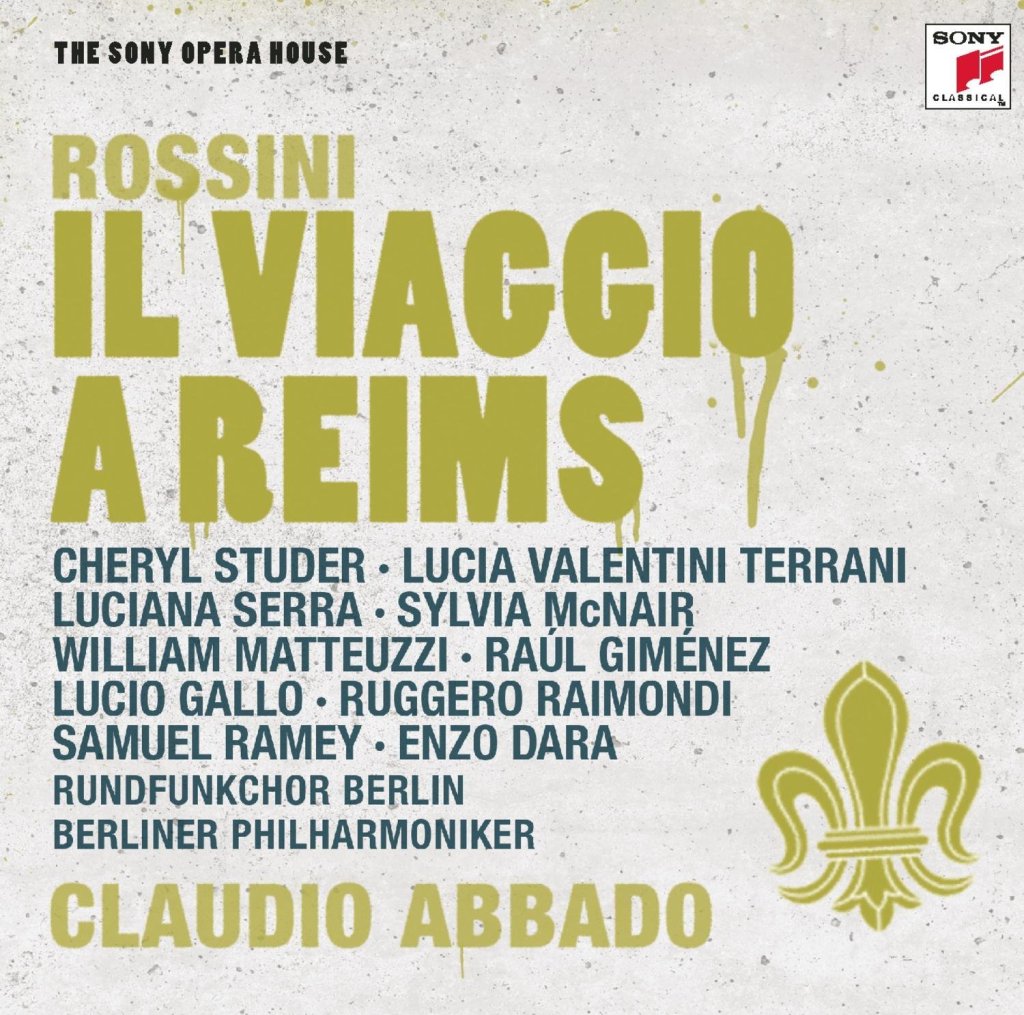
And Berlin 1992
Eight years later, Abbado conducted the opera in Berlin with mostly the same singers. Both performances were recorded live and both are very good. Personally, I prefer Cheryl Studer (Madama Cortese) on Sony (53336) to Katia Ricciarelli (DG 4777435), but that is entirely personal.
Encore from Berlin 1992
BARCELONA 2003
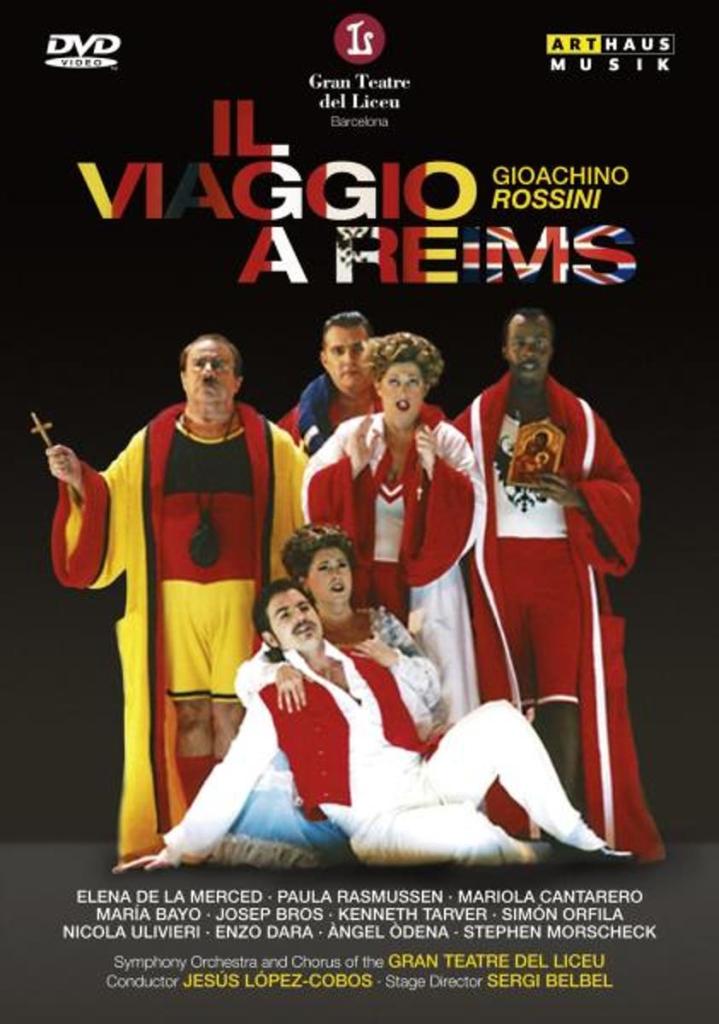
A visually arresting performance of Il viaggio was recorded at Barcelona’s Gran Teatre del Liceu in 2003 (Arthouse Musik 107 135). The action is set in a spa resort at the beginning of the 20th century, and the guests in bathing suits are being pampered by a variety of masseurs, nurses and beauticians. Everyone wears clothes with their country’s colours and the director has Corinna, dressed in an EU flag, solve every problem between them. Obvious? Definitely, but also very entertaining.
It’s just a shame that the singing is not that great. Apart from veteran Enzo Dara (Il Barone di Trombonok) and Josep Bros (Belfiore), the cast is mediocre, with the low point being the totally miscast Maria Bayo (Madama Cortese) and Simón Orfila (Lord Sydney). The latter looks very attractive in his swimming costume, but barely manages to sing a clean note.
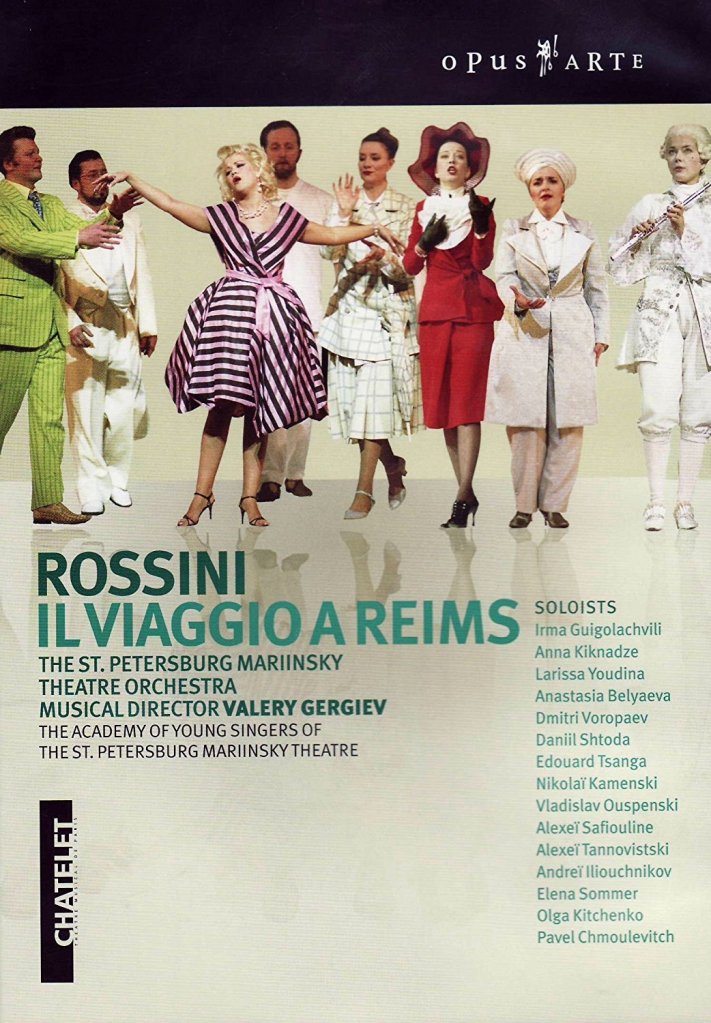
Valery Gergiev is not easily associated with Rossini’s music. Yet it was he who conducted a highly spectacular Il viaggio at the Théâtre du Châtelet in 2005, presenting young Russian singers to international audiences.
The orchestra sits at the back of the stage, forming, together with the conductor, a part of the dazzling show which really takes place everywhere, even among (and with) the audience. Props and colourful costumes also play an important role, and there is even a real horse. The singers are mostly young and, apart from Daniil Shtoda (Count Libenskof), unknown. It is clear that they still have a lot to learn, including proper pronunciation, but their performance is really very nice (Opus Arte OA 0967 D).
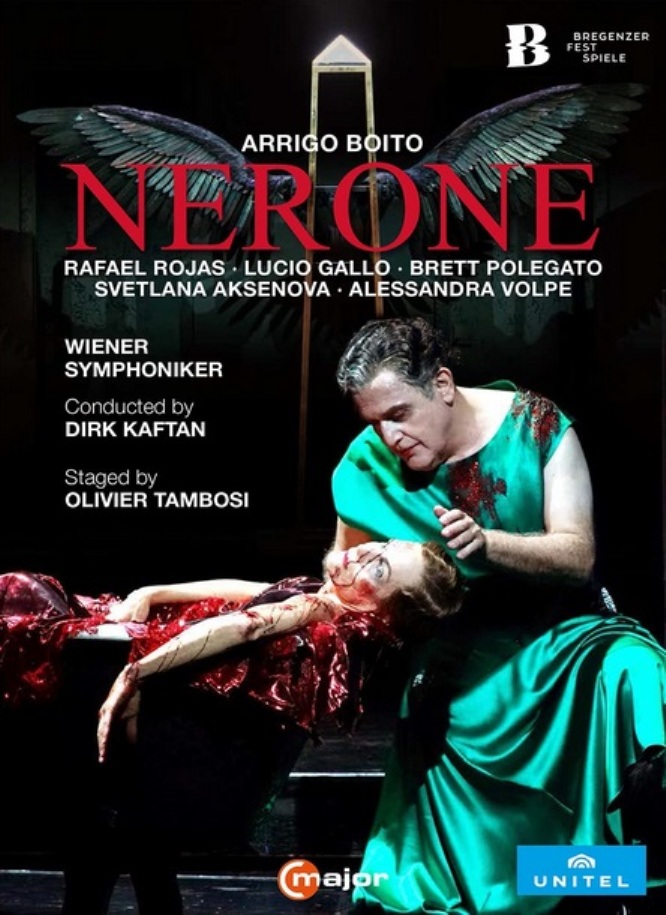
In 2021 stond in Bregenz Arrigo Boito’s onvoltooide opera Nerone op het programma. Een opname hiervan is recent op dvd uitgebracht door het label Cmajor. De productie van Olivier Tambosi geeft een goed beeld van wat Boito’s magnum opus had moeten worden.
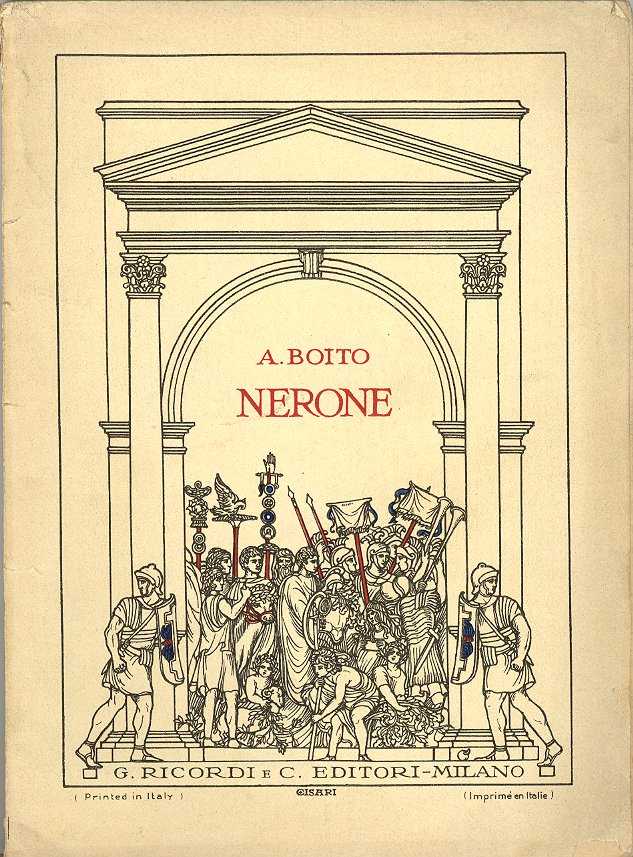
Boito vatte reeds in 1860 het plan op een opera te schrijven over Nero tegen de achtergrond van de conflicten tussen het ‘heidense’ Rome met zijn veelgodendom en de joodse Jezussekte die aldaar voet aan de grond had gekregen. Toch zou het tot 1901 duren voor er eindelijk een libretto werd gepubliceerd, bestaande uit vijf aktes.
Bij Boito’s dood in 1918 waren de eerste vier aktes vrijwel voltooid en dankzij de inbreng van Toscanini kon een volwaardige versie uiteindelijk in 1924 in La Scala in première gaan. Door toedoen van de maestro bleef het werk daar een tiental jaren op het programma, elders werd het slechts zelden uitgevoerd.
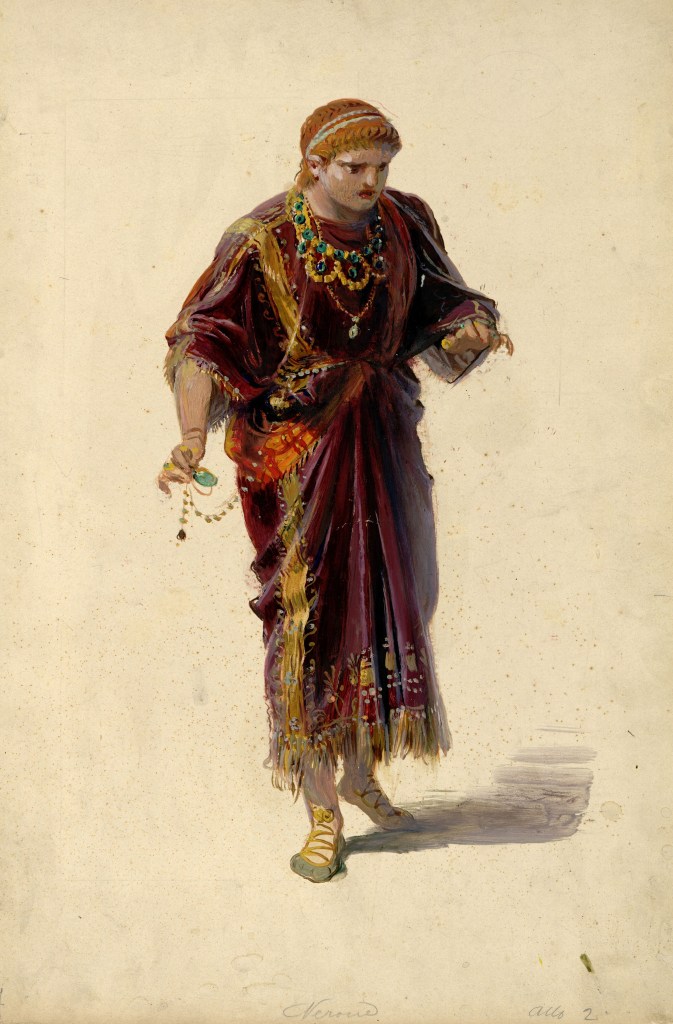
Nerone, costume design for Nerone act 2 (1924)
Nerone paste uitstekend in de Bregenz traditie om vergeten en verwaarloosde grote werken nieuw leven in te blazen en na het succes van Alfano’s Amleto, waarvoor Boito het libretto schreef, heeft Tambosi zich nu ook aan Boito’s moeilijk uitvoerbare eigen compositie gewaagd. Het werd een qualified success.
Boito schetst het klassieke Rome aan de hand van Nero’s reactie op de door hem gepleegde moord op zijn moeder Agrippina. Hij vergelijkt zichzelf met Orestes en wentelt in zelfmedelijden en angst voor de reactie van de goden en vooral van het volk. Wat staat hem te wachten als hij na de begrafenis in de stad terugkeert? Gelukkig voor hem wordt hij glorieus ingehaald in een koorscène die muzikaal kan wedijveren met de opening van Mefistofele.
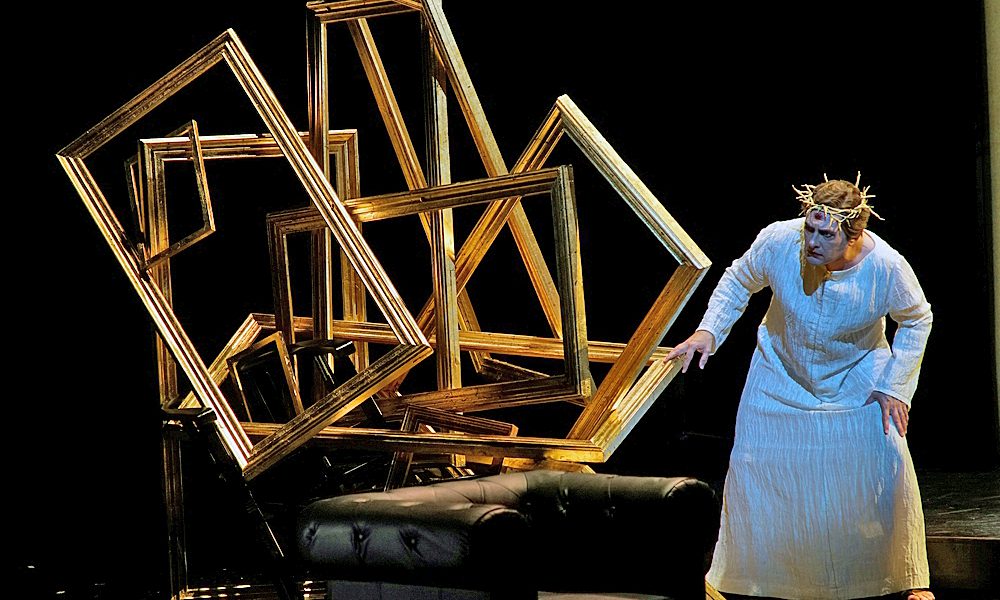
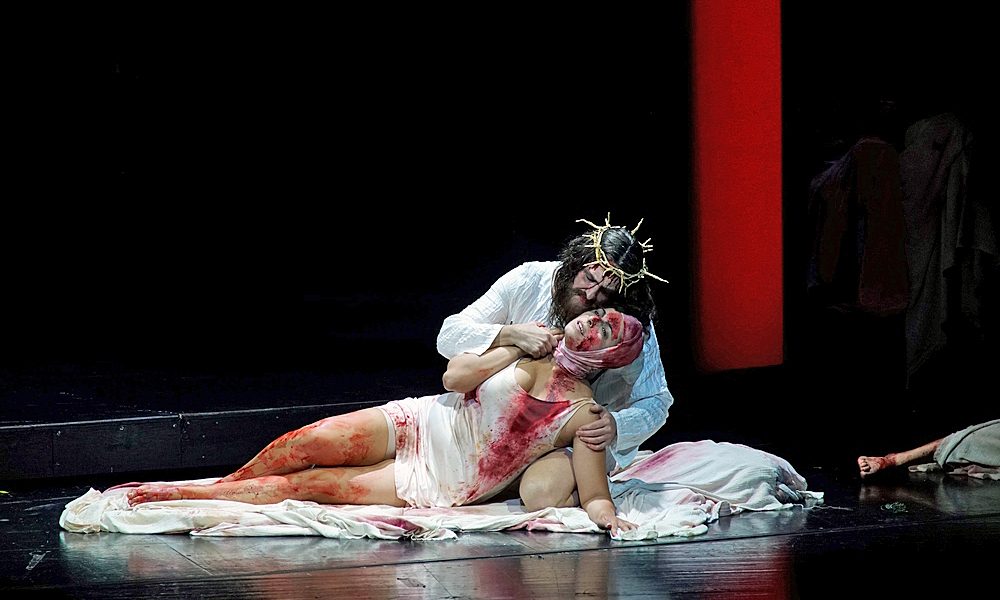
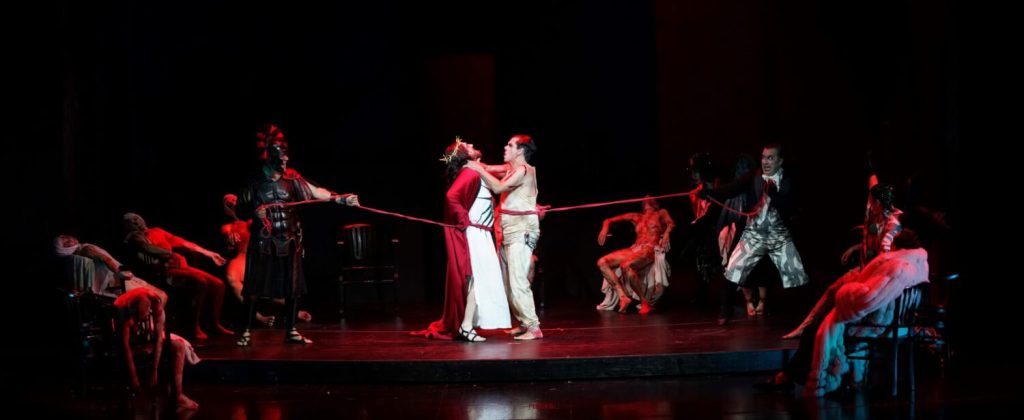
De Jezussekte krijgt gestalte in de persoon van de prediker Fanuèl die zich gemakshalve presenteert als Jezus zelve, compleet met doornenkroontje. Hij citeert uitspraken die in de evangeliën aan Jezus worden toegeschreven waaronder een lange passage uit de ‘Bergrede’.
Zijn concurrent is Simon Magus, uiterlijk nauwelijks van hem te onderscheiden door gelijke kleding en eveneens een doornenkroontje. Deze Simon was een succesvolle magiër die de apostelen veel wind uit de zeilen nam. Hij leeft nog slechts voort in het begrip ‘simonie’ maar in zijn tijd had hij veel volgelingen. In het ‘relilab’ van de eerste eeuw was zijn beweging zeker zo prominent als die van wat later de christenen werden genoemd.
Simon speelt ook iets na uit het Nieuwe Testament, hij wil zich als apostel aansluiten bij de sekte van Fanuèl. Net als door Petrus eertijds wordt hem dat geweigerd waarna Simon definitief de kant van Nero’s Rome kiest. De vrouwelijke inbreng komt van de Vestaalse maagd Rubria die in het geheim ook Fanuèls volgeling is. Met haar loopt het niet goed af. Boito verwijst hier onopvallend naar de parabel over de wijze en de dwaze maagden met hun olielampjes, wachtend op de bruidegom.
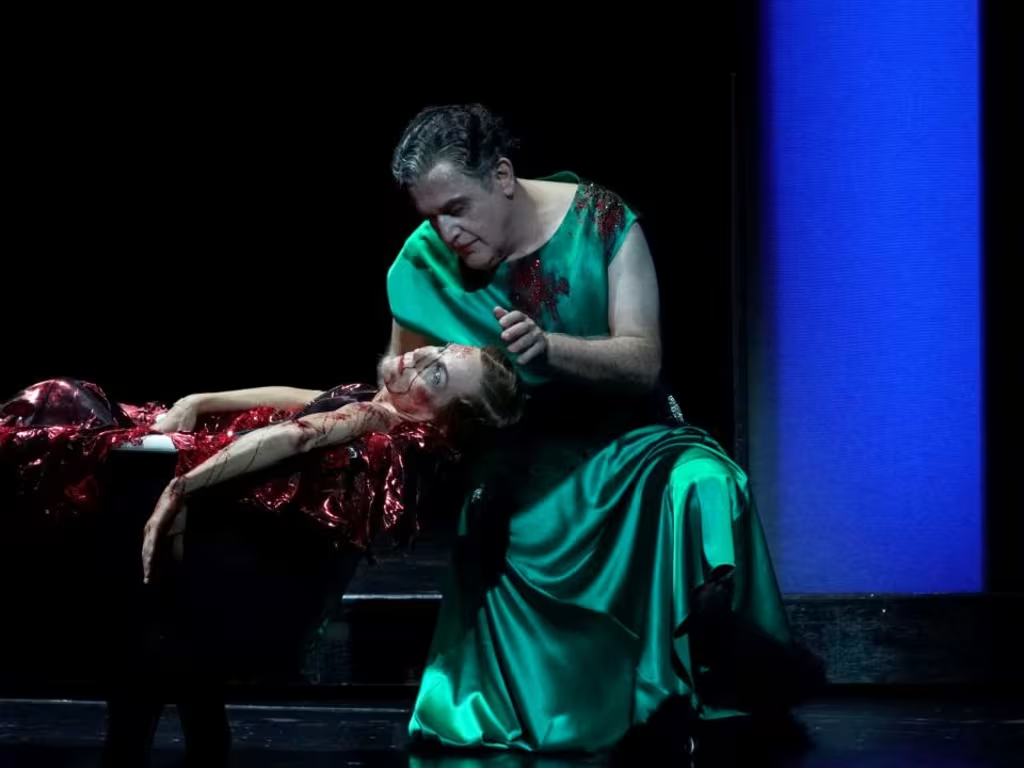
De vrouwelijke tegenhanger van Simon, als tweede stoorzender, is Asteria. Haar rol is dermate complex dat je er alle kanten mee uit kan. Ze twijfelt welke god ze zal kiezen als levensvervulling en na een korte aarzeling kiest ze voor de god Nerone. Zijn brute wreedheid trekt haar aan, zonder lijden en dood kan er geen liefde zijn. Aangezien de opera stopt na de vierde akte krijgen we haar einde niet te zien.
De feitelijke plot is onsamenhangend en kan verder buiten beschouwing blijven. Aardig detail is de wijze waarop Magus aan zijn einde komt. Hij moet in het circus van een grote hoogte springen om te laten zien dat hij kan vliegen, vergelijkbaar met de anekdote uit het evangelie van Petrus. Fanuèl ontkomt zodat hij elders zijn sekte kan blijven verbreiden.
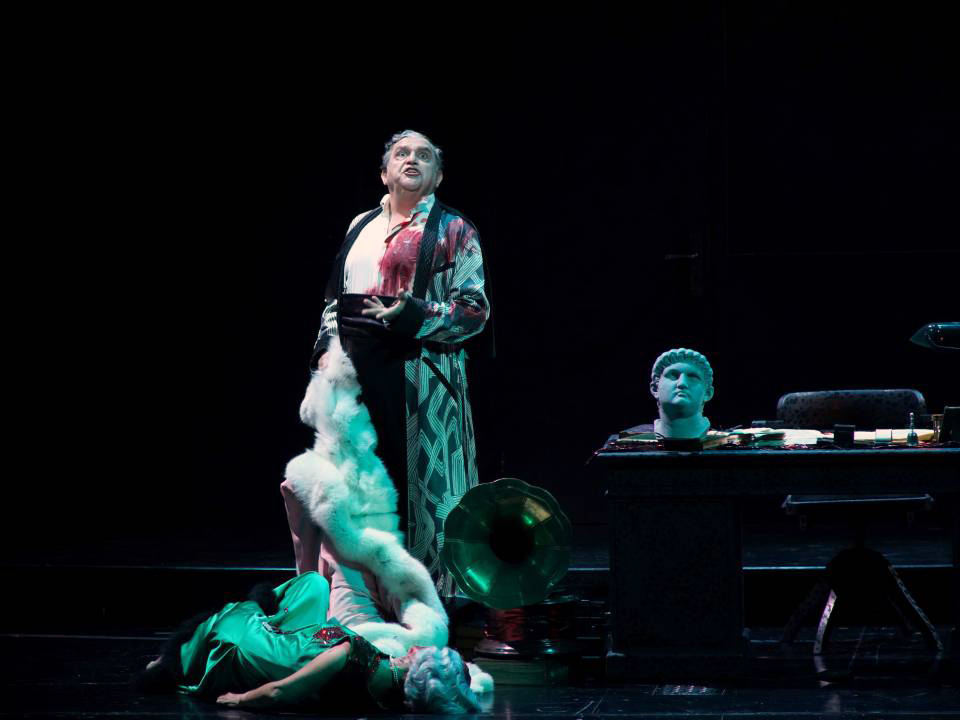
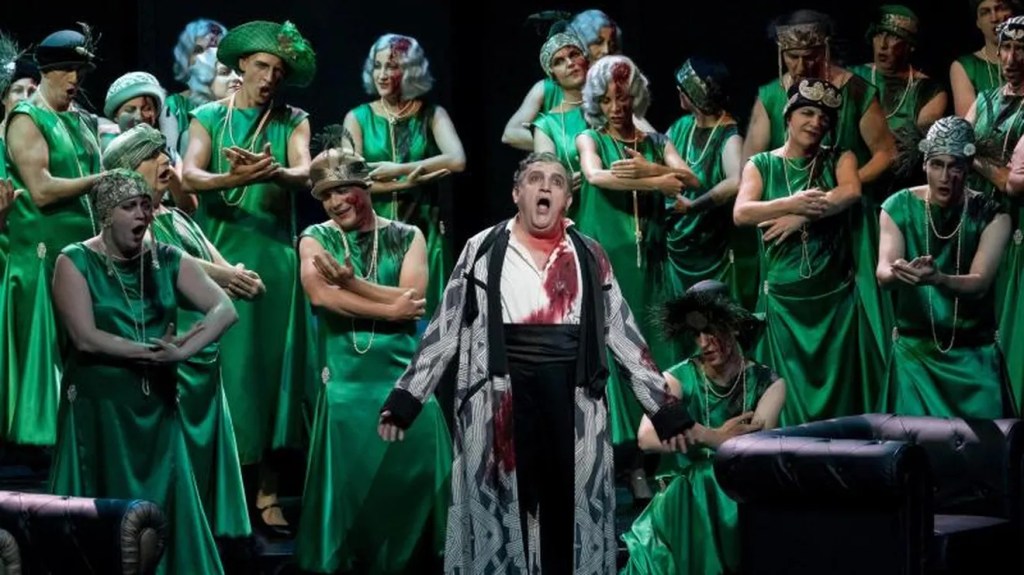
Het decor van Frank Philipp Schlößmann is sober: een draaitoneel en erboven lichtzuilen in wisselende kleuren. Een biljart fungeert als altaar en als toevallige zetel voor Nerone, als er tenminste niet gewoon op gespeeld wordt. Iedereen loopt met ‘bloedvlekken’ rond op kleding en gezicht. Nerone’s heerschappij is een bloederige hel.
Om onderscheid te maken met Nerone’s volgelingen die hem zo enthousiast inhalen aan het einde van de eerste akte, loopt het vrouwenkoor later rond in heuse habijten, komt een paar eeuwen te vroeg. Veel meer valt er niet over de enscenering te zeggen.
Muzikaal is het werk moeilijk te duiden. Veel Sprechgesang maar ook de nodige breed uitgesponnen lyrische passages. Als het erom spant laat Boito het orkest flink donderen. Feitelijk is het van alles wat, eigenlijk net zoals in zijn Mefistofele. Wel is soms hoorbaar dat hij componeerde in een tijd dat ook iemand als Richard Strauss furore maakte maar wellicht is dat een persoonlijke preoccupatie.
De Mexicaanse tenor Rafael Rojas groeit in zijn rol en weet vooral in de laatste twee aktes te overtuigen in de titelrol. Goed beschouwd komt het werk qua zang pas tot leven tegen het einde van de eerste akte en dat bepaalt ook de indruk die de andere protagonisten weten te maken.
De Italiaanse bariton Lucio Gallo neemt als Simon gemakkelijk bezit van het podium wanneer hij maar even iets te zingen heeft, de beste man van het veld. Hij heeft ook de meest aansprekende rol. Dat neemt niet weg dat hij ook als zanger behoorlijk veel concurrentie krijgt van de Canadese bariton Brett Polegato als Fanuèl. En zodra Simon zijn hielen licht haalt deze pseudo Jezus met gemak alle aandacht naar zich toe. Beide kemphanen leveren een schitterende vocale prestatie.
Svetlana Aksenova stelt me een beetje teleur als Asteria. De partij ligt hoorbaar buiten haar comfortzone en kent sowieso maar weinig echt aansprekende momenten. Acterend is ze voortdurend in de weer maar qua zang stelt Boito zijn Asteria duidelijk achter bij Rubria, ‘torn between two religions’. Dat is een mooie rol van de Italiaanse mezzo Alessandra Volpe. De kleinere rollen zijn over het geheel genomen goed bezet.
Mooie inbreng van het Prague Philharmonic Choir onder leiding van Lukas Vasilek. De Wiener Symphoniker staan onder leiding van Dirk Kaftan. Hij weet zijn orkest goed af te stemmen op de gebeurtenissen op het toneel, niet eenvoudig gelet op de onbekendheid met dit stuk en de bij vlagen bijna chaotische handeling.
Alles overwegend is dit een redelijk geslaagde poging een rariteit uit het operarepertoire enige bekendheid te geven. Tot veel nieuwe voorstellingen zal het niet leiden maar gelukkig kan iedereen er nu kennis van nemen dankzij deze dvd.
Almost immediately, within the first bars of the overture, I spring to my feet: this will be a delight! Muti starts firmly and immediately afterwards the mood changes into an unparalleled lyricism. His tempi are generally on the high side, but nowhere do they degenerate into panting.
Stefano Vizioli’s direction is a textbook example of what an opera should look like. His conventional, 1994 staging is truly sparkling, exciting, innovative and inspiring. Comical and sentimental at the same time and with great attention to detail.
The costumes are dazzlingly beautiful and correspond to the characters of all the characters. The emergence of the good-for-nothing Ernesto (phenomenally played by Gregory Kunde) is truly precious: in slippers and a silk dressing gown, he lies down on the sofa, sipping his espresso, waiting for the luck to come by itself or with the help of Malatesta (Lucio Gallo at his best).
Ferruccio Furlanetto is a Don Pasquale in a thousand and Nuccia Focile a delightful Norina. Everyone sings and acts at an all-time high and the orchestra could charm the stars from heaven.
No sooner has it happened to me that I couldn’t find a minus point anywhere: for me it is one of the best opera’s on DVD I have ever seen, don’t miss it!
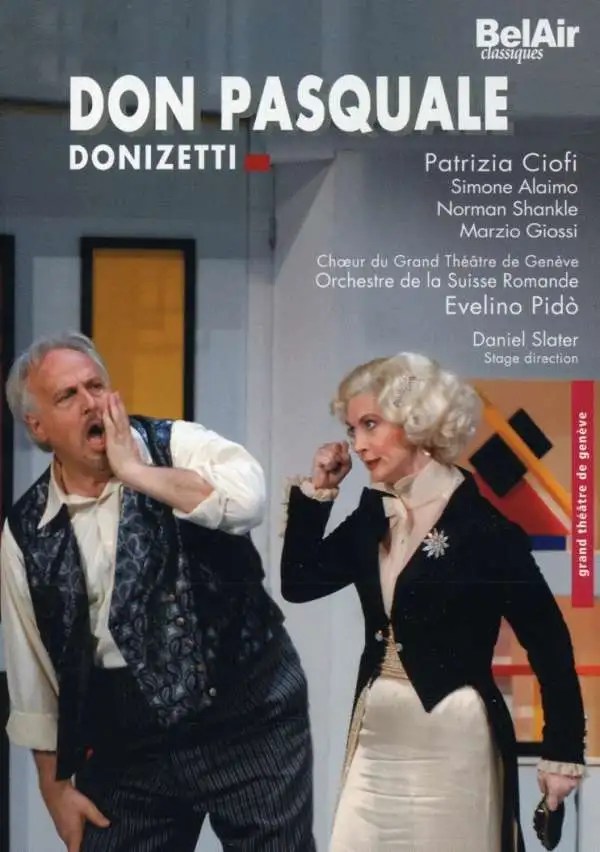
Don Pasquale from Geneva: a must-see not just for painting lovers
Admittedly, the staging sometimes seems too contrived, but isn’t that how it usually goes, with concepts? Surrender to it, I would say, and your evening can’t go wrong, because the production is just incredibly fun (do keep watching until the end!)
Daniel Slater, aided by designer Francis O’Connor moves the action to 1920s Paris of ‘Oh la la!’, cafes, street painters, the avant-garde and psychoanalysis. Images of Picasso and Magritte are liberally sprinkled and the third act is all Mondrian. Wonderful to watch and you can immediately test your art knowledge.
Simone Alaimo is a fantastic don Pasquale. He sings and acts like hell, delightful! Together with Marzio Grossi (Doctor Malatesta), he provides many a hilarious moment.
Only in Patrizia Ciofi (Norina) do they have to acknowledge their superiority, but then she is the uncrowned queen of (dramatic) bel canto and dominates the stage from her first appearance. She portrays a woman of the world, whom it is better not to mock. Ernesto (a nice Norman Shankle) might also find that out painfully.
Possible representation of Simone (or Guglielmo) Boccanegra at the Palazzo San Giorgio (Genoa).
The real Simone Boccanegra was the very first doge of Genoa, and, unlike his brother Egidio, not a pirate at all. It was the Spanish poet Antonio Garcia Gutièrrez who had combined the two characters into one, adding an extra dimension to the story.
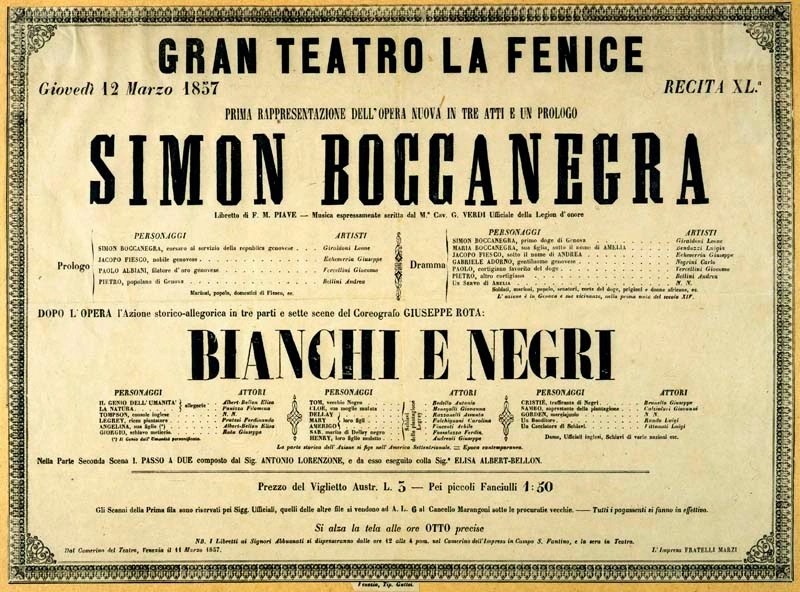
The story itself is indeed very complex, but no more difficult to retell than, say, Il Trovatore. Still, the premiere in 1857 was a fiasco, after which the opera disappeared for more than 20 years.
In 1880, Verdi decided to completely revise the work, with the help of Arrigo Boito. A golden touch, which also marked the beginning of the fruitful collaboration between the two composers.
Boito thoroughly reworked the libretto, created a new finale for the first act (the council scene), and further developed the character of the protagonist. To no avail: until the second half of the 20th century, the opera was only seldom performed and there are still those who consider the work unbalanced and boring. How unjustified!
Personally, I find it one of Verdi’s most exciting and beautiful operas, with a very strong and human story, and the most beautiful bass aria ever (‘Il lacerate spirito’).
Giulio Neri sings Il Lacerato Spirito:
Admittedly, the opera is something of a hybrid with a mix of styles, because in addition to the typical “middle Verdian” music that occasionally strongly reminds one of that of Trovatore, Ballo in Maschera or Rigoletto, there is also a foreshadowing of Otello (second scene of the first act, for instance, when Amelia’s kidnapping is announced). Not a bad thing, because that is precisely what makes the work varied and surprising.
People say the opera is dark, and that’s true. It is also mournful, with mostly melancholic and sad music, and with only one bright spot: ‘Come in quest’ora bruna’, Amelia’s ode to the beauty of sky and sea. But even there the melancholy keeps resonating.
The fact that four of the five male leads are sung by singers with low voices is, of course, also very influential on the musical colours.
1957
The first studio recording of Simone Boccanegra was made by EMI (now Warner Classics 2435674835) in 1957. Under the direction of Gabriele Santini a truly magnificent cast was assembled: Tito Gobbi as Simone, Boris Christoff as Fiesco and Victoria de los Angeles as Amelia. Very beautiful.
1973
In 1973, RCA recorded the opera (RD 70729). Gianandrea Gavazenni conducts in a sluggish way and produces little or no excitement. A pity really, as the cast is excellent. It is one of the first recordings of Katia Ricciarelli, a singer with the lyricism of a nightingale. Her Amelia is so pure, so virginal – a teenage girl really still, eager to keep her little secret to herself a little longer. Nor is her love for Adorno really earthly, though in fact, Amelia is really almost thirty!
Katia Ricciarelli sings ‘Come in quest’ora bruna’:
Piero Cappuccilli is a splendid Simon and Ruggero Raimondi a fine Fiesco. As Adorno, Placido Domingo is a little too dominant and too determined, though his singing is obviously impeccable
1977
In 1971, Claudio Abbado conducted a magisterial and now legendary performance of Boccanegra at La Scala. It was directed by Giorgio Strehler and the beautiful sets were designed by Ezio Frigerio.
In 1976, the production was filmed at the ROH in Covent Garden. Unfortunately, no official (there are ‘pirates’ in circulation) video of it was made, but the full cast did go into the studio, and the ultimate ‘Simone’ was recorded in 1977 (DG 4497522).
Abbado treats the score with such love and such reverence as if it were the greatest masterpiece of all time, and under his hands it truly transforms into a masterpiece without parallel. Such tension, and so many nuances! It is so, so beautiful, it will make you cry.
The cast too is the best ever. Piero Cappuccilli (Simon) and Nicolai Ghiaurov (Fiesco) are evenly matched. Both in their enmity and reconciliation, they are deeply human and always convincing, and in their final duet at the end of the opera, their voices melt together in an almost supernatural symbiosis:
Before that, they pass through all ranges of feelings and moods, from grievous to hurtful, and from loving to hating. Just hear Cappuccilli’s long-held ‘Maria’ at the end of the duet with his supposedly dead and found daughter (‘Figlia! A tal nome palpito’)
José van Dam is an exquisitely vile Paolo and Mirella Freni and Jose Carreras are an ideal love couple. The young Carreras had a voice that seems just about created for the role of Adorno: lyrical with a touch of temper, underlining Gabriele’s brashness. Freni is more than just a naive girl, in her love for Adorno she shows herself to be a real flesh-and-blood woman.
1961
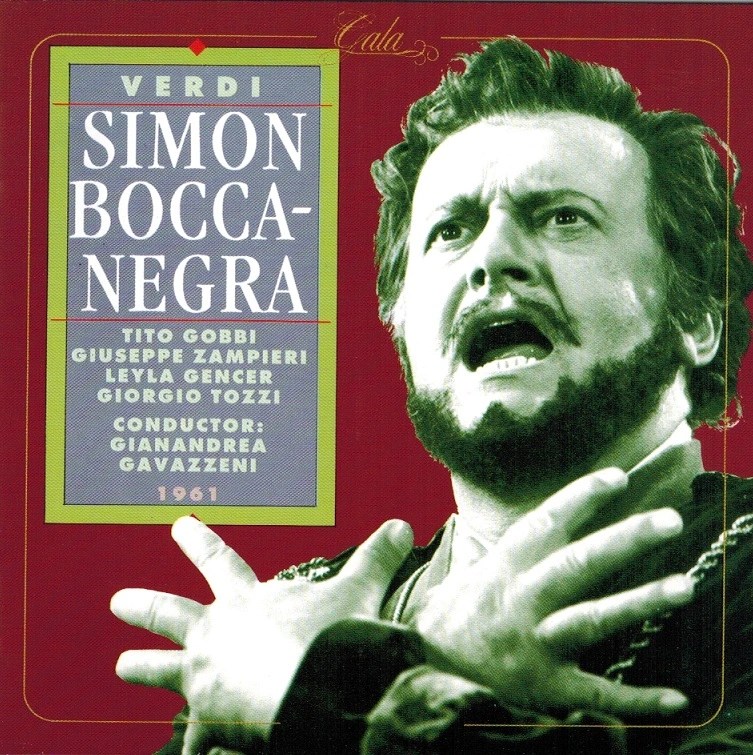
A fine performance of ‘Simone’ was recorded live in Vienna in 1961 (Gala GL 100,508). Gianandrea Gavazzeni is more exciting than on his RCA studio recording, but he cannot match Abbado.
Still, this recording is very worthwhile, not least because of Leyla Gencer’s Amelia. The Turkish soprano was the equal of Callas, only much less fortunate and she had to make do without having a recording contract. Tito Gobbi is an excellent Simone, and there is little to criticise about the rest of the cast either.
Leyla Gencer and Tito Gobbi in ‘Figlia! a tal nome palpito’:
1995
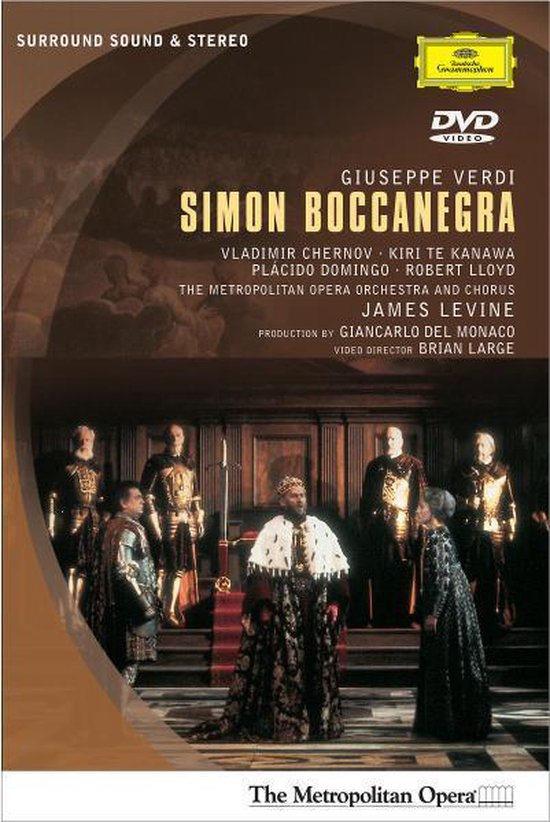
A new (the previous one, with Domingo, Milnes and Tomova-Sintov was directed by Tito Capobianco and released by very hard-to-get Pioneer in 1984) Simone was recorded at the Metropolitan Opera in 1995, directed by Giancarlo del Monaco (DG 0731319).
The staging is very naturalistic, eliciting bravos. The costumes and sets are also overwhelming and elaborate to the smallest details, beautiful to the eye, but not conducive to the drama unvolding. One loses oneself, as it were, in the details.
James Levine, meanwhile, has upped his tempi, and there is a decent pace. The direction is a bit static at first, but gradually it becomes more exciting. Robert Lloyd is a tormented Fiesco, but lacks the deep thirst for vengeance. Domingo is optically a bit too old for Adorno, too confident too, but he can sing like no other.
Kiri te Kanawa is a problematic Amelia: her face has only one expression and she has never heard of character portraiture, but her singing is certainly beautiful. Vladimir Chernov is very strong as Simone, whom he portrays as a kind of Jesus figure in the third act.
An excerpt from the production:
2002
At the Maggio Musicale in Florence (June 2002), Claudio Abbado conducted a superb production by Peter Stein, which had previously been seen in Salzburg. Stein refrained from any updating of the opera, and so it is set in Genoa in the 14th century, including the blue sea and the doge’s council chamber.
The costumes too are in style, exquisitely beautiful and in brilliant colours. So the plebeians (in blue) can be distinguished from the patricians (red). The sets, on the other hand, are very sparse, giving extra attention to the few props – an example of clever manipulation.
Karita Mattila shines as Amelia. She polishes her high notes like gems: hear how her ‘pace’ towers above everything else in ‘Plebe! Patrizi’ in the second act.
Lucio Gallo puts down a vile Paolo and Carlo Guelfi moves us as Simon. Most bravos, however, are for the seriously ill and severely emaciated Abbado. What he manages to elicit from the orchestra, choir and soloists borders on the impossible (Arthaus Musik 107073)
Trailer of the production:
2007
The star of this recording from Bologna (Arthaus Music 101 307) is Michele Mariotti. He comes up, looks around nervously, shakes the hands of a few orchestra members, puts a nervous smile on his face and bites his lips. And then he raises his baton and the spell begins.
I cannot remember the last time this opera was so beautifully conducted, so lovingly and with such élan, spirituality and bravura. Mariotti, born in 1979, graduated cum laude in Pesaro in 2004. His Boccanegra, recorded in Bologna in November 2007, was such a great success that he was immediately appointed as the principal conductor there.
The cast is mostly young. Giuseppe Gipali (Adorno) possesses a ringing tenor voice with an old-fashioned timbre, but unfortunately also with an old-fashioned way of (not) acting. This is much better handled by the beautiful Carmen Giannattasio (Amelia), who reminds me a little of Kiri te Kanawa in terms of tonal beauty.
Roberto Frontali is a convincing Boccanegra, Marco Vratogna a very vile Paolo and Alberto Rota shines in the small role of Pietro. The production is quite traditional, with fine period costumes.
Al bij de eerste maten van de ouverture veer ik op: het wordt genieten! Muti zet ferm in om onmiddellijk daarna de stemming in een weergaloze lyriek te laten overgaan. Zijn tempi zijn over algemeen aan de hoge kant, maar nergens ontaarden ze in een gehijg.
De regie van Stefano Vizioli is een schoolvoorbeeld hoe een opera eruit hoort te zien. Zijn conventionele, uit 1994 stammende enscenering is werkelijk sprankelend, spannend, innovatief en inspirerend. Komisch en sentimenteel tegelijk en met veel oog voor details.
De kostuums zijn oogverblindend mooi en corresponderen met de karakters van alle personages. De opkomst van de nietsnut van een Ernesto (fenomenale Gregory Kunde) is werkelijk kostelijk: op sloffen en in een zijden kamerjas, gaat hij, nippend aan zijn espresso, op de sofa liggen wachten op het geluk dat vanzelf of met de hulp van Malatesta (Lucio Gallo op zijn best) gaat komen.
Ferruccio Furlanetto is een Don Pasquale uit duizenden en Nuccia Focile een heerlijke Norina. Iedereen zingt en acteert op een allerhoogst niveau en het orkest speelt de sterren van de hemel.
Niet eerder is het me overkomen dat ik nergens een minpuntje kon vinden: voor mij is het één van de beste (zo niet de beste) opera’s op DVD die ik ooit heb gezien, mis het niet!
Gaetano Donizetti
Don Pasquale Ferrucio Furlanetto, Nuccia Focile, Lucio Gallo, Gregory Kunde
Orchestra e coro del Teatro alla Scala olv Ricardo Muti Arthaus Musik Musik 107 207








 Basia con fuoco