
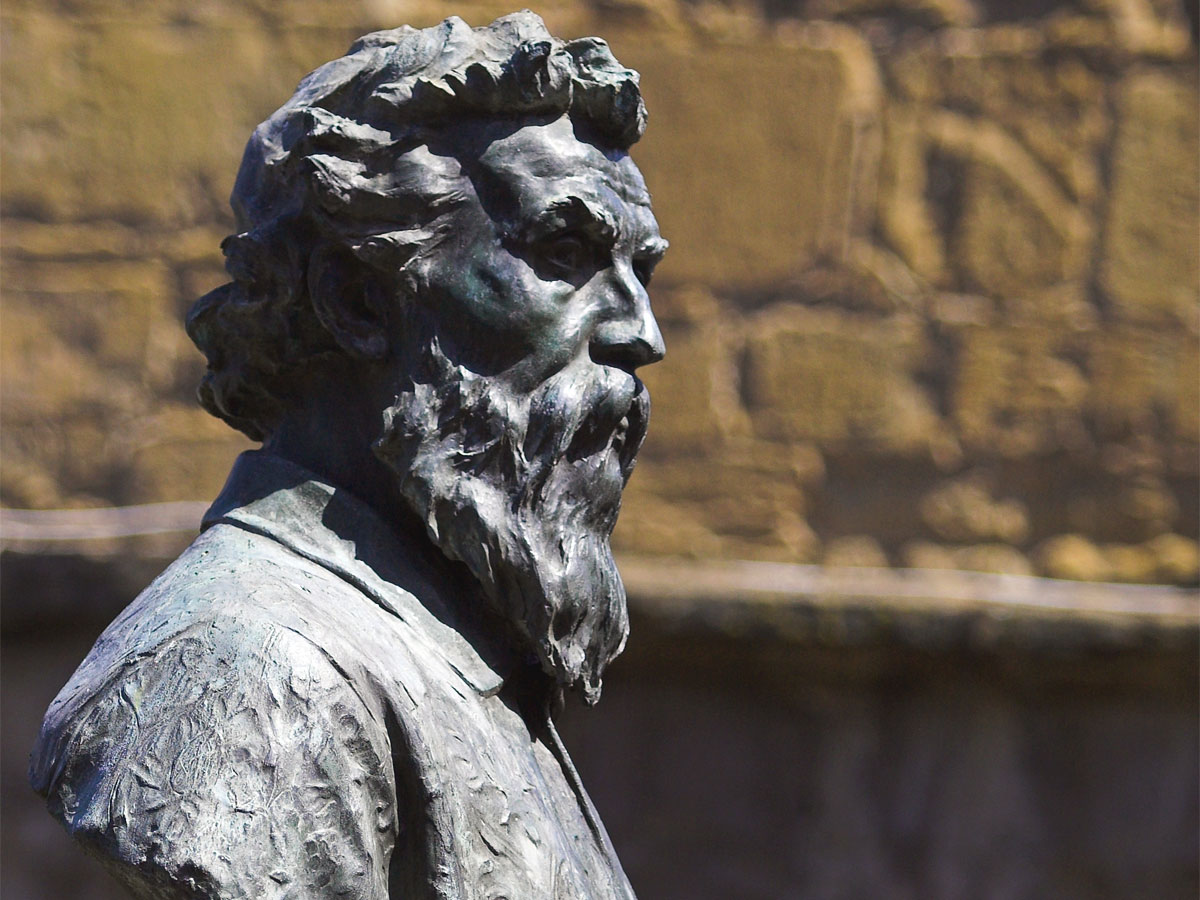
Bust of Benvenuto Cellini, by Raffaello Romanelli (1901), at the centre of the Ponte Vecchio, Firenze, Italy. Photo by Thermos.
Benvenuto Cellini was a 16th-century Italian artist considered the representative of Mannerism. He was a sculptor, silversmith, writer and musician, clearly an example of the ˜uomo universale.”
We know from his memoirs that he was no sweetheart: he is portrayed as a self-assured, egotistical man who was not averse to sexual excesses and who had lots of affairs, both with women and with men. That he also did not treat his fellow man with the utmost decency was forgiven from higher up: after all, he was a gifted artist.

Why exactly did Berlioz choose Cellini for his first opera? Perhaps he thought he had found a new Don Giovanni and thus created a new masterpiece?

The premiere of the opera in Paris in September 1838 was a flop. For the revival a year later, Berlioz made some changes, but to no avail. Later, for a performance in Weimar in 1852, he made another shorter version of his work, on the advice and in collaboration with Liszt and Von Bülow.
CD’S
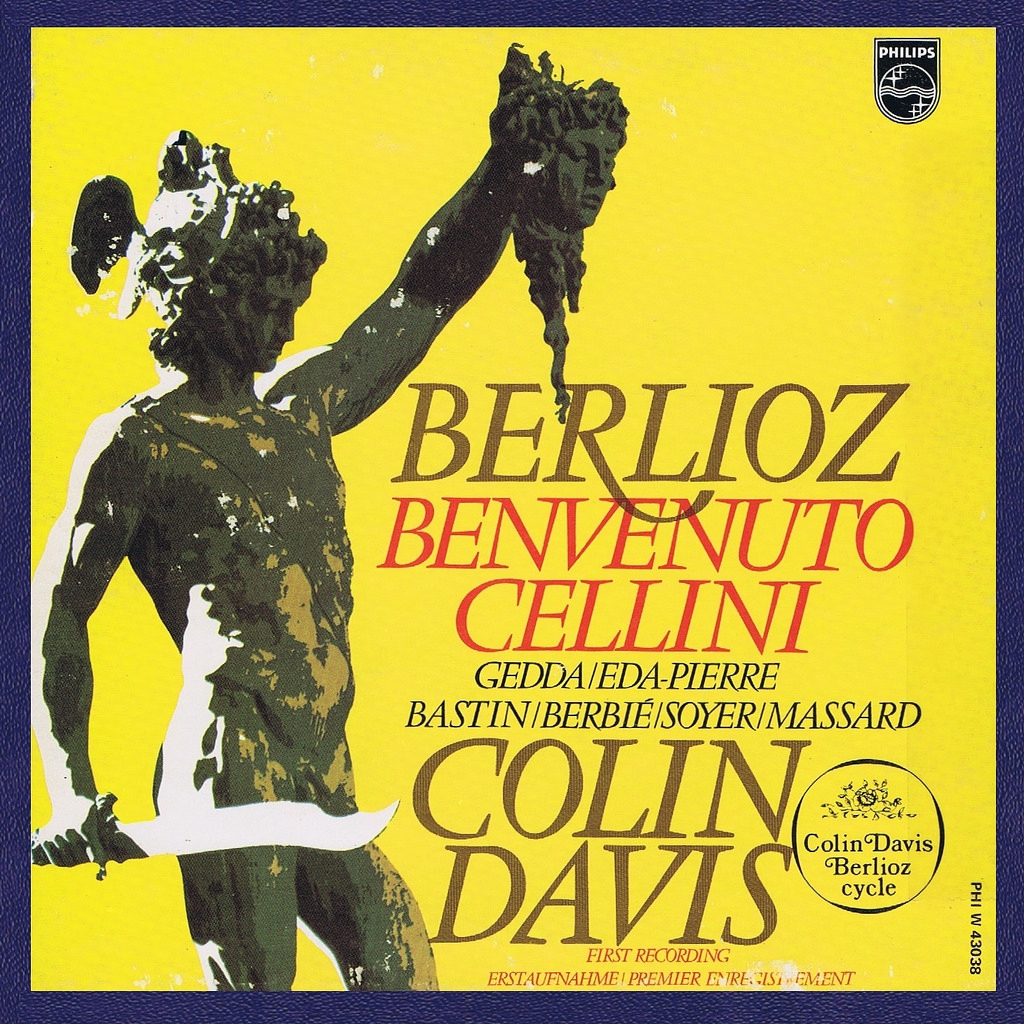
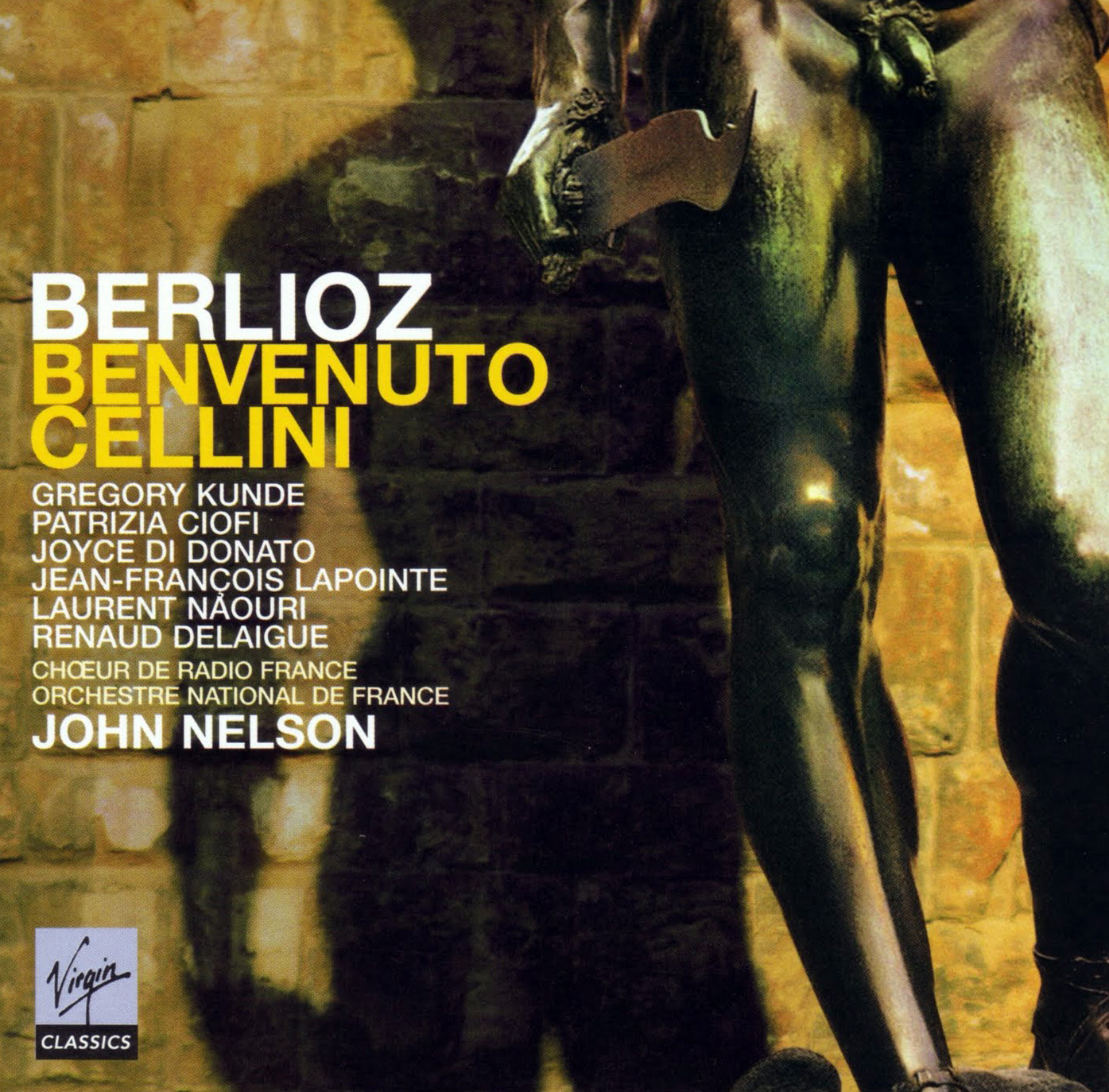
Colin Davis, one of the greatest advocates of Berlioz’s music, recorded the opera in 1972. For years, the recording (Philips 4169552) was regarded as the example of how it should be done. It took more than 30 years before it met a formidable opponent in John Nelson’s registration (once Virgin Classics 54570629).
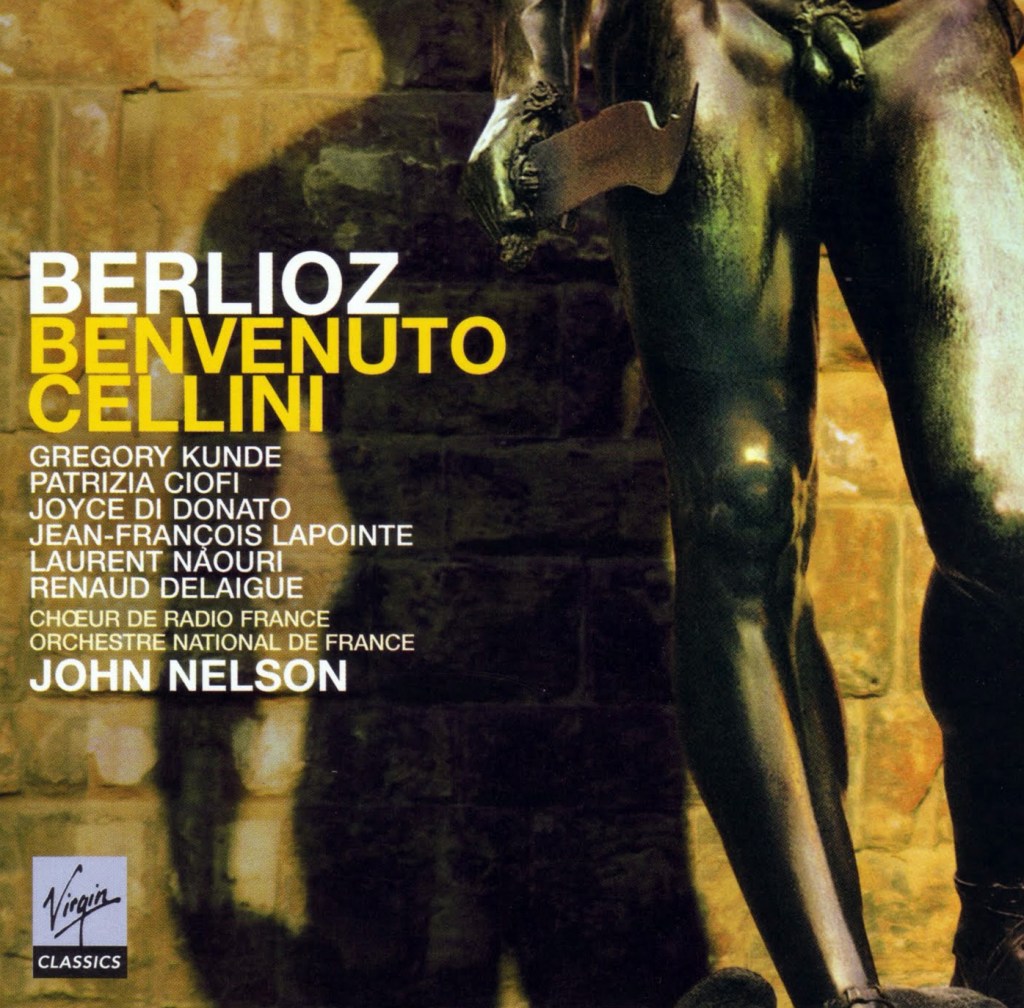
Whichever of the two you choose: the orchestra is fine and both conductors are a match for each other. Nelson is perhaps a bit brighter while Davis is more into lyricism.
Can you imagine a better Cellini than Nicolai Gedda (Davis)? One would say not. I thought so too. Until recently, at least, because Gregory Kunde comes pretty close.
I love Kunde’s slim, agile yet firm tenor. His high notes are produced so easily that you’d almost think he was rehearsing a shopping list. And then his power… What a voice, what a singer! Incredible that the record companies ignored him for so long. He almost didn’t participate in this recording either: he replaced Roberto Alagna.
Jules Bastin (Balducci with Davis) was matched by Laurent Naouri. I personally prefer the second, but that’s personal.
The choice for my favourite Ascanio is quickly made: even Jane Berbié (Davis) has to concede superiority to Joyce DiDonato (Nelson). Just listen to her ˜Mais quai-je donc”. No, not everything was always better in the olden days!
But Nelson has more to offer, should you feel the need: the score is more than complete, as he combines both Paris versions and adds another appendix with a whopping 15 minutes of additional music.
Below is the trio ‘Ô Teresa’, sung by Gedda, Eda-Pierre and Massard under Colin Davis:
And by Kunde, Ciofi and Lapointe under John Nelson:
Nelson’s recording is officially off the market, but you can find it on Spotify:
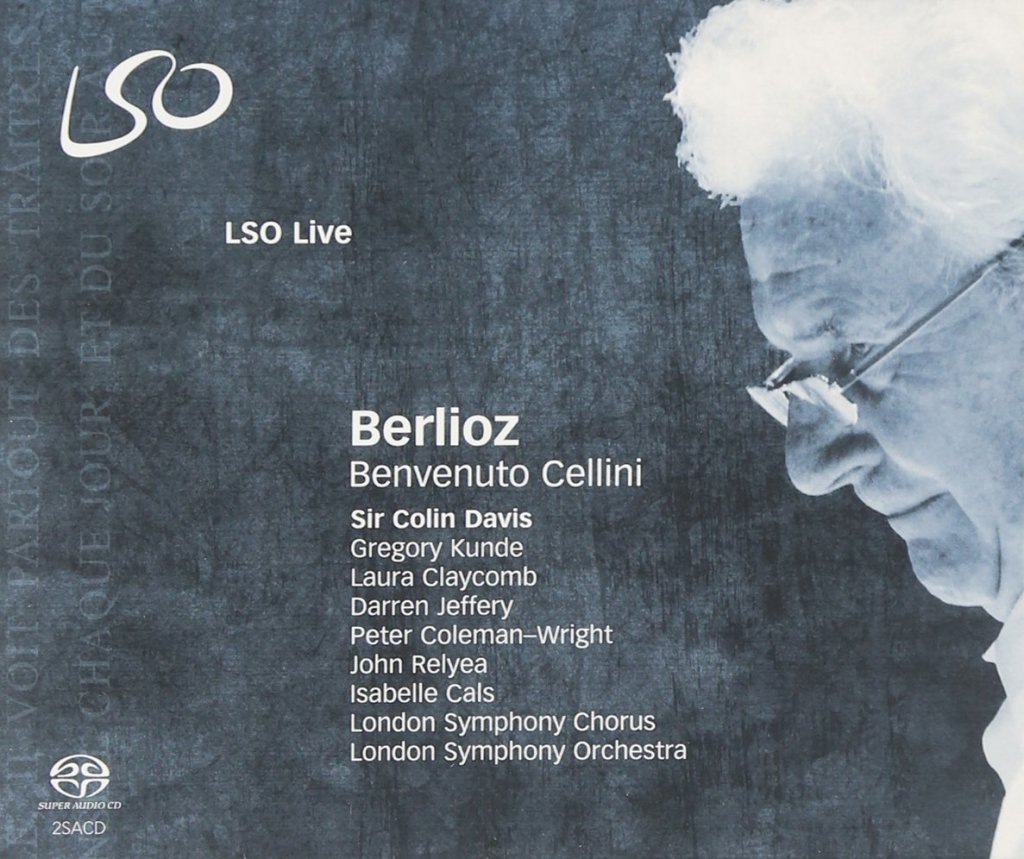
And then there is Colin Davis II. In 2007, he once again ˜dusted off” the opera, resulting in several cuts in the dialogues. Cellini and Teresa’s duet from the second act also had to go. The live performance from Barbican Hall was released on two SACDs on London Symphony Orchestra’s own label (LSO Live 0623).
I find the result satisfactory, but a little too polished for me. Gregory Kunde once again shows what a great singer he is: for him alone, the recording is more than worthwhile. I am less pleased with Laura Claycomb (Teresa) and the other singers do not really appeal to me either.
DVD’S
Salzburg 2007
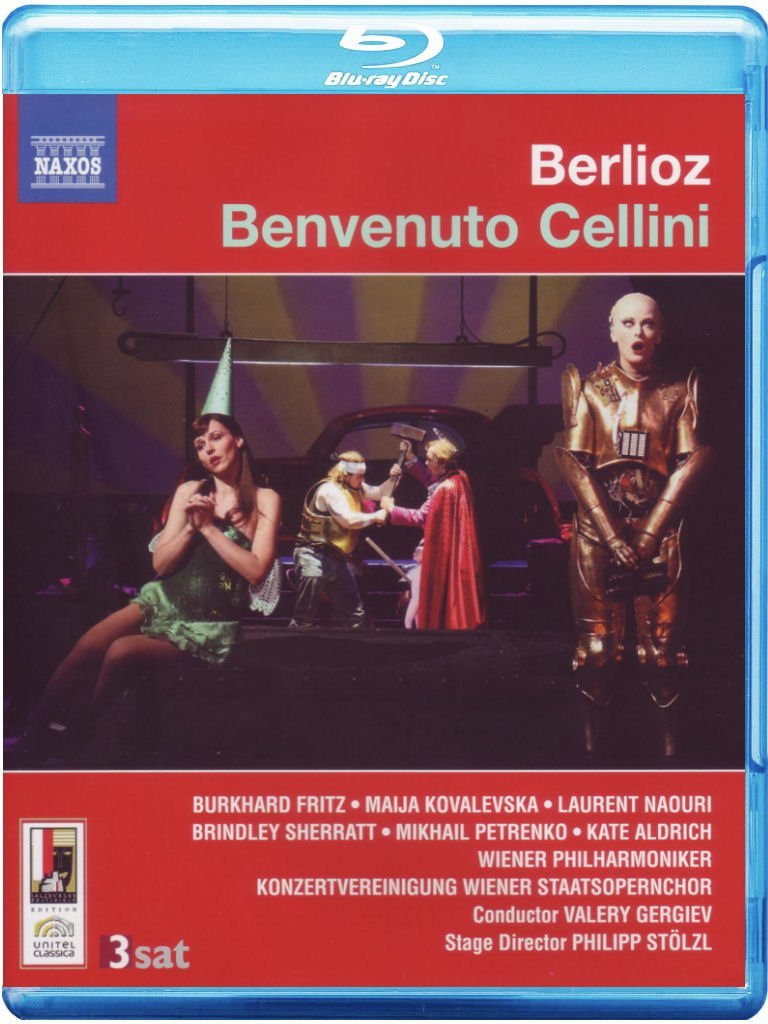
Presented in Salzburg in 2007, Benvenuto Cellini was subsequently recorded for DVD (Naxos 2110271). The production is great fun. It contains all sorts of things that makes one laugh: commedia dell’arte, comedy theatre, a pope accompanied by dancing blonde drag queens, a helicopter, robots as house servants, a madonna as a naked angel with wings… You name it and it’s there.
It starts off in quite a nice way: Rome, carnival, fireworks… Almost Fellini-like. The whole thing is set in a ˜world of once upon a time”. The Wizard of Oz is not far away. Yes, director Philipp Stölzl knows his film classics! Beautiful, yes. Funny? Yes. Logical? No. The audience is overenthusiastic, I am not.
There is good singing without any question, though I don’t really get excited. Burkhard Fritz (also a substitute, this time for Shicoff) at the time still had both feet firmly in the heavier belcanto repertoire, but he lacks charisma.
You can leave the latter to Maija Kovalevska. She is beautiful and slender (an indispensable requirement these days, it seems) and has a ditto voice. She is a good actress too. What she lacks is the ˜typical characterization” needed for this role. Without it she sounds like just one of many beautiful slender sopranos from Eastern Europe.
Terr
Whether Valery Gergiev is the appropriate conductor for this work I doubt. He makes a lot of noise, like heavy fireworks. At the start of the overture, I thought for a moment I was in the middle of one of the Bruckners.
Below is the trailer of the Salzburg production:
Amsterdam 2015
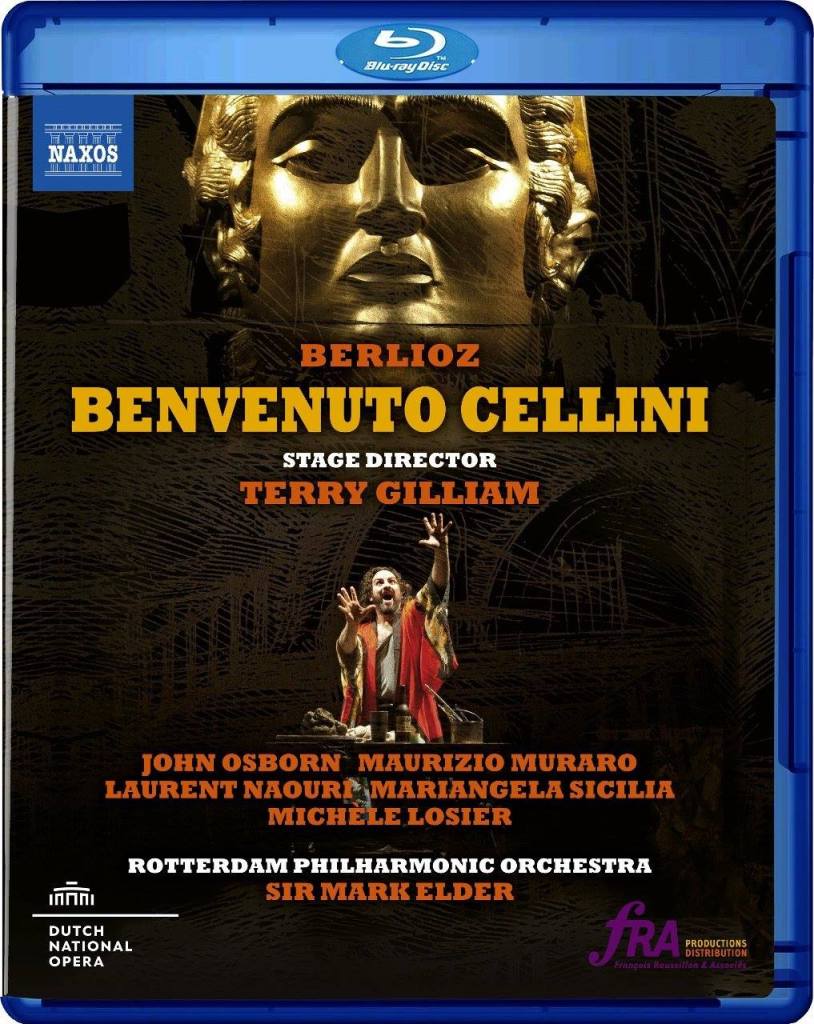
It’s still not really my kind of opera but I enjoyed Terry Gilliams’ 2015 Amsterdam production so immensely that I visited the show several times.
I can sum up the lavish, rich production in one word: whirlwind. Cellini is one hell of a role, but leave it to John Osborn! Just listen to his ˜La gloire était ma seule idole”, wow!
Mariangela Sicilia is a fantastic Teresa. Her light soprano seems created for the role but it is mainly thanks to the fantastic persona direction and the unimaginably good orchestral accompaniment by Sir Mark Elder that she is able to make the role her very own.
Laurent Naouri (Fieramosca) is a delicious schemer. What a voice and what an actor! Michèle Losier is a superb Ascanio, Maurizio Muraro an excellent Balducci and Orlin Anastasov a fine Pope.
In the innkeeper scene, it is Marcel Beekman who steals the show with his irresistible performance as Le Cabaretier, but the smaller roles of Bernardino (Scott Conner), Francesco (Nicky Spence) and Pompeo (André Morsch) are also more than excellently cast.
François Roussillon’s video direction is excellent. He highlights all the important details without losing sight of the whole. As a result, you can perfectly see what really good direction does for an opera. Also note the more than excellent chorus: each chorus member is an individual character.
Those who were not there can now catch up on a missed opportunity. For those who did attend: this DVD is a lasting memory of one of the finest DNO productions ever.



 Basia con fuoco