The Orient! What did we know about it in those far gone days? It was exotic, adventurous and exciting. All the men there were macho, super attractive and potent. And they smoked opium. All the women were beautiful, graceful, mysterious and seductive. It smelled of amber and wild jasmine….
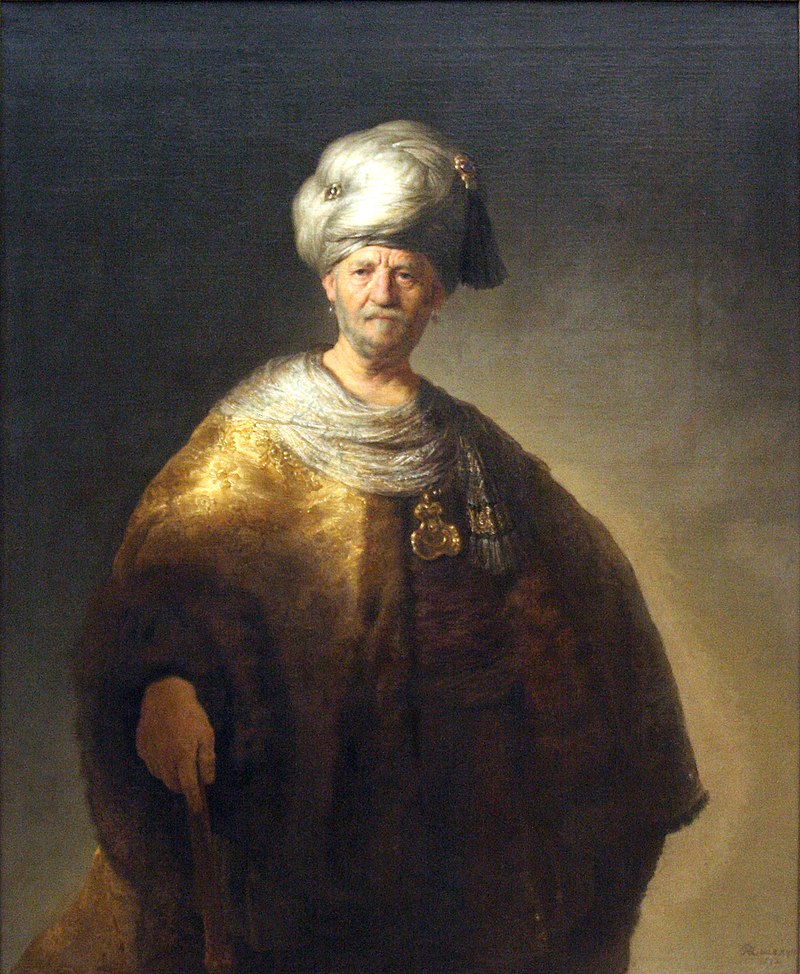
Man In Oriental Costume (“The Noble Slav”), oil on canvas, by Rembrandt, 1632. A significant example of European emulation of Ottoman dress for the purpose of portraying a dignified, elite appearance.
It was so incredibly far away and unknown – no wonder we were enchanted by it. No wonder, too, that our dreams sometimes ran wild. But the dreams turned out to be good for something, because they gave us the most beautiful works of art, including operas. Rossini’s Il Turco in Italia is one of them.
Believe it or not (believe it!), Turco is very similar to Mozart’s Cosi van tutte. Even the music is often reminiscent of it. The story: a Don Alfonso-like poet without inspiration, a kind of evil genius really, devises an intrigue in which he then manipulates all the characters as if they were puppets, so that everyone ends up with (almost) everyone else, but in the end everything does turn out well. Or not. In any case, our Prosdocimo tells a wonderful story.
I wonder what the ideal Fiorilla should sound like. On the recordings known by me, she is sung by all voice types: from a super light coloratura soprano to a dark coloratura mezzo with chest tones. Somehow, none of the ladies really appeal to me, not even Maria Callas, although she comes close to what I would like to hear in this role.
DVD’S
Zurich, 2002
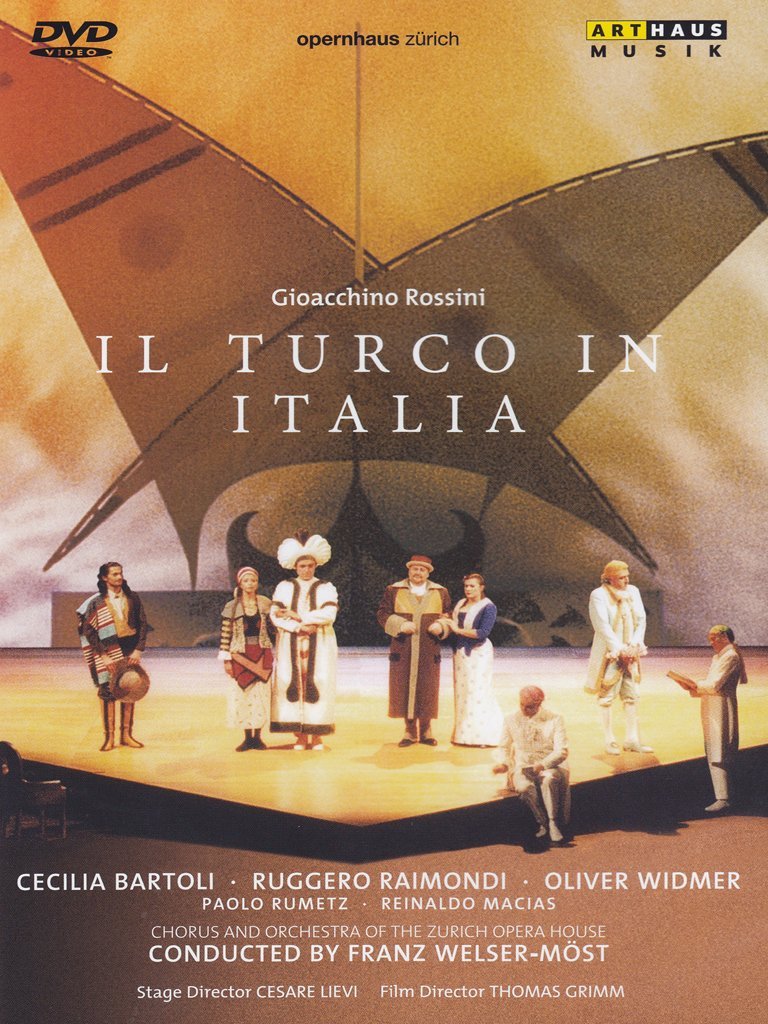
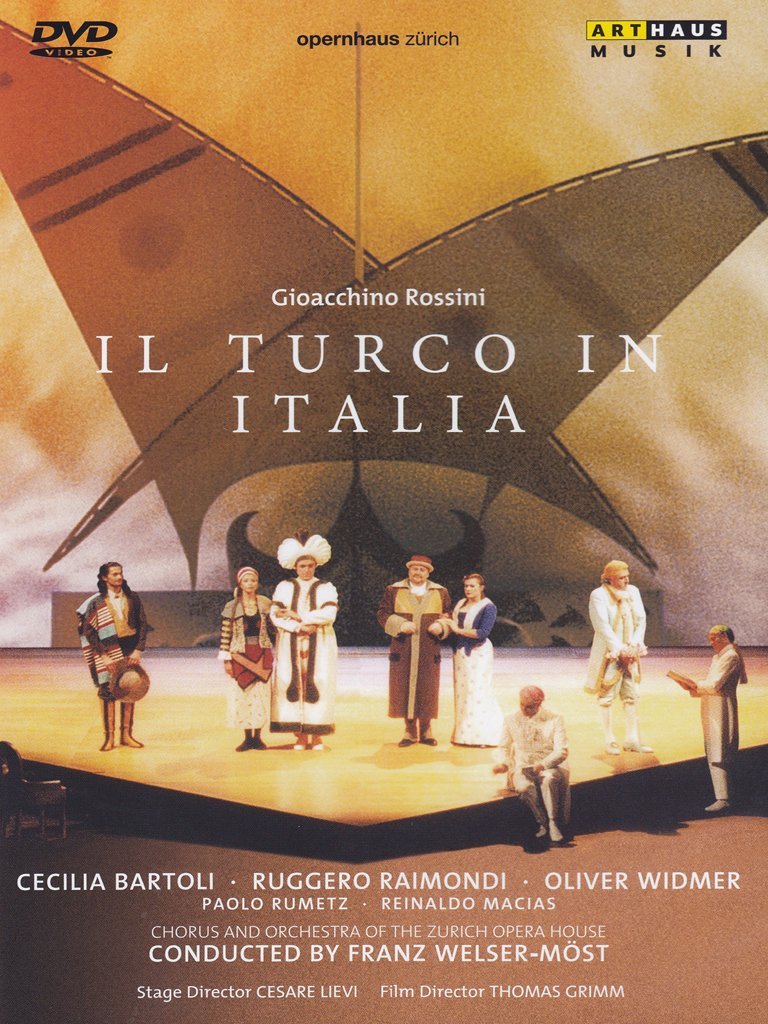
In 2002, Il Turco was staged in Zurich. The lead role was played by an old hand, Ruggiero Raimondi. His Selim is undoubtedly exciting and erotic, and he compensates for the wear and tear of his voice with overwhelming acting and tremendous charisma.
Oliver Widmer is in fine form as the cynical poet Prosdocimo, and Paolo Rumetz plays a delightfully dim-witted Geronio. The problem is Cecilia Bartoli. (Please don’t hit me, it’s just my opinion!) She is undoubtedly a virtuoso, but I find her mannerisms very irritating and her dark timbre completely unsuitable for the role.
The whole thing is cheerful, with bright colours and crazy costumes: the gypsies look like a combination of Volendam people and Peruvians (Arthaus Musik 100 369).
Pesaro 2007
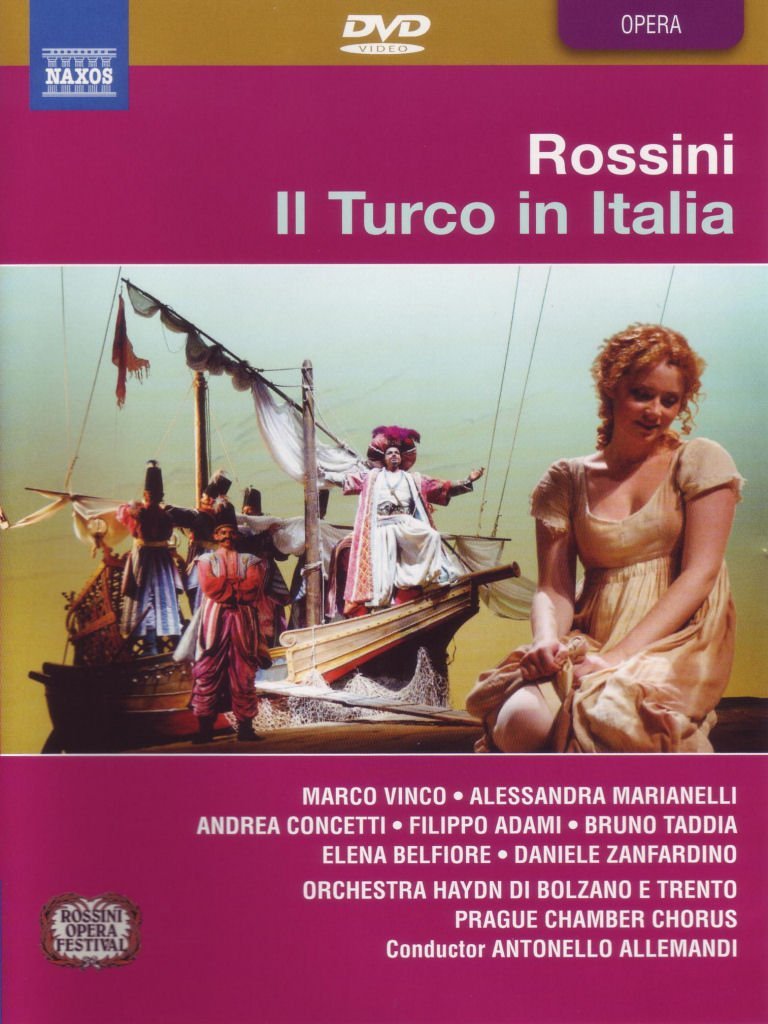
In Pesaro in 2007, a very naturalistic-looking Turco was recorded, with only young, unknown singers in the leading roles. The fact that they, with the possible exception of Marco Vinco (Selim), have remained unknown, does not say everything, but it does say a lot.
Nevertheless, there is much to enjoy. The characters are wonderfully recognisable, the colours are beautiful and the action follows the libretto closely. Definitely enjoyable! (Naxos 2.110259)
Genoa, 2009
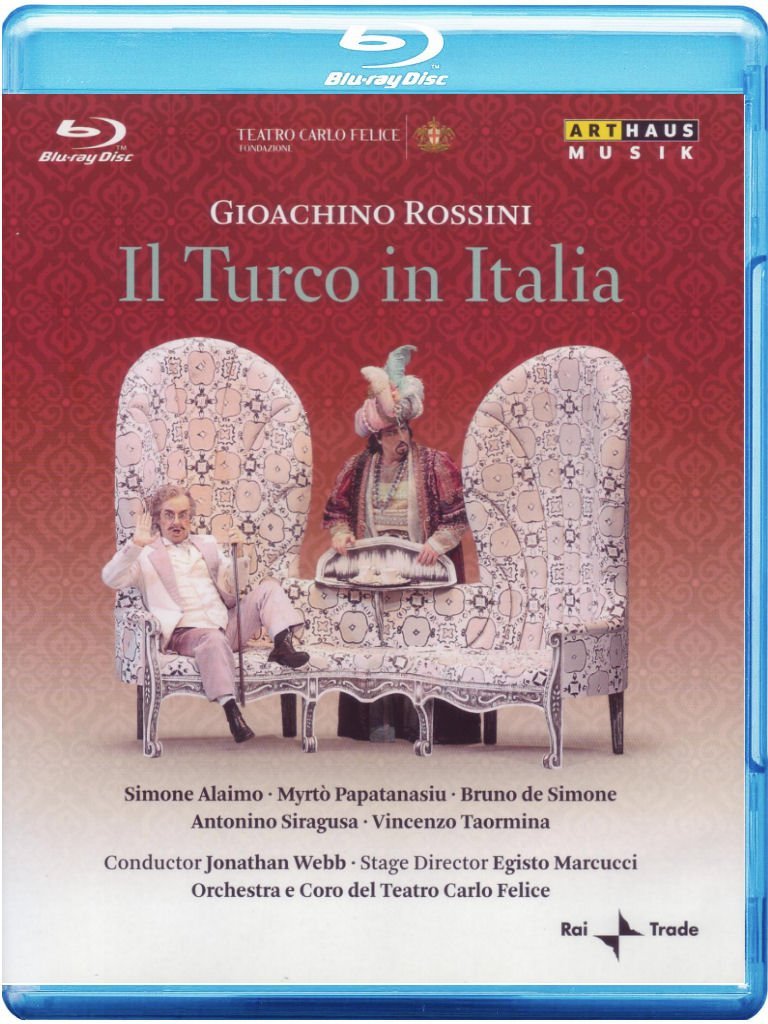
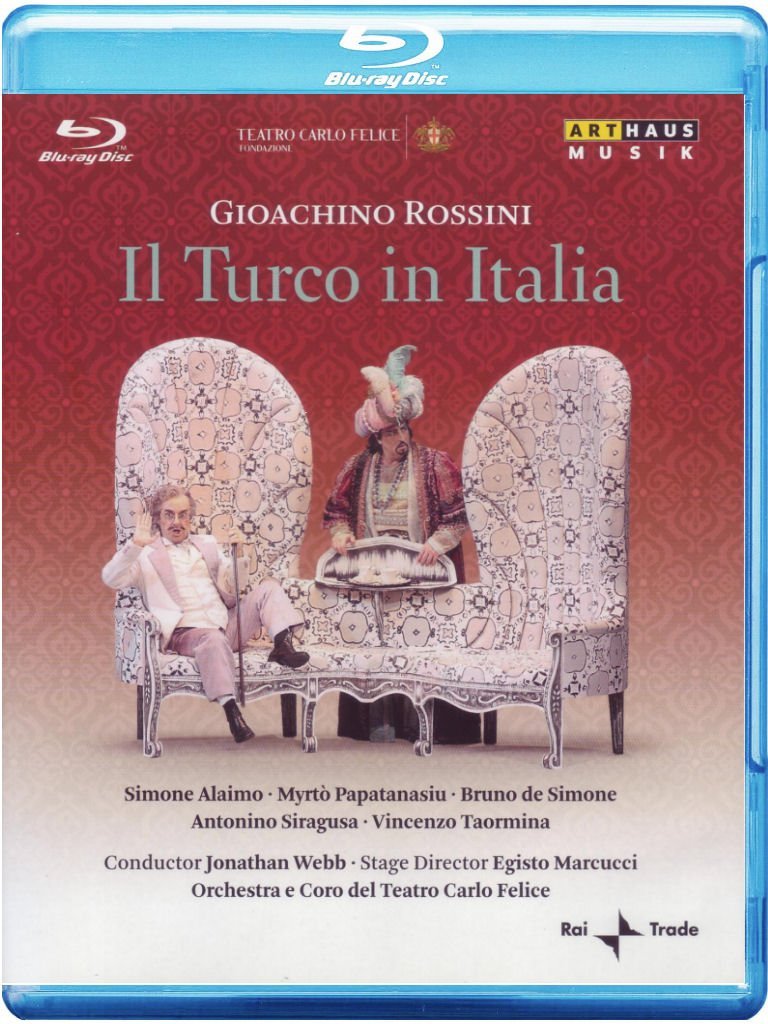
One of the newer recordings on DVD is from 2009 at the Teatro Carlo Felice in Genoa. Well, new… the production is more than 40 years old and was first seen in 1983.
That’s okay, because it’s still very entertaining, although I must admit that I sometimes feel a little dizzy from everything that’s happening on the stage: acrobats, fire-eaters, ballerinas, Arlecchinos and so on. Commedia dell’Arte at its best.
Myrtò Papatanasiu is a beautiful Fiorilla and Simone Alaimo a delightful Selim, although I think he is performing slightly below his usual high standard. Antonino Siragusa is also a tiny bit disappointing as Narciso (Arthaus Musik 101 39).
CD’s
Milan, 1954
.
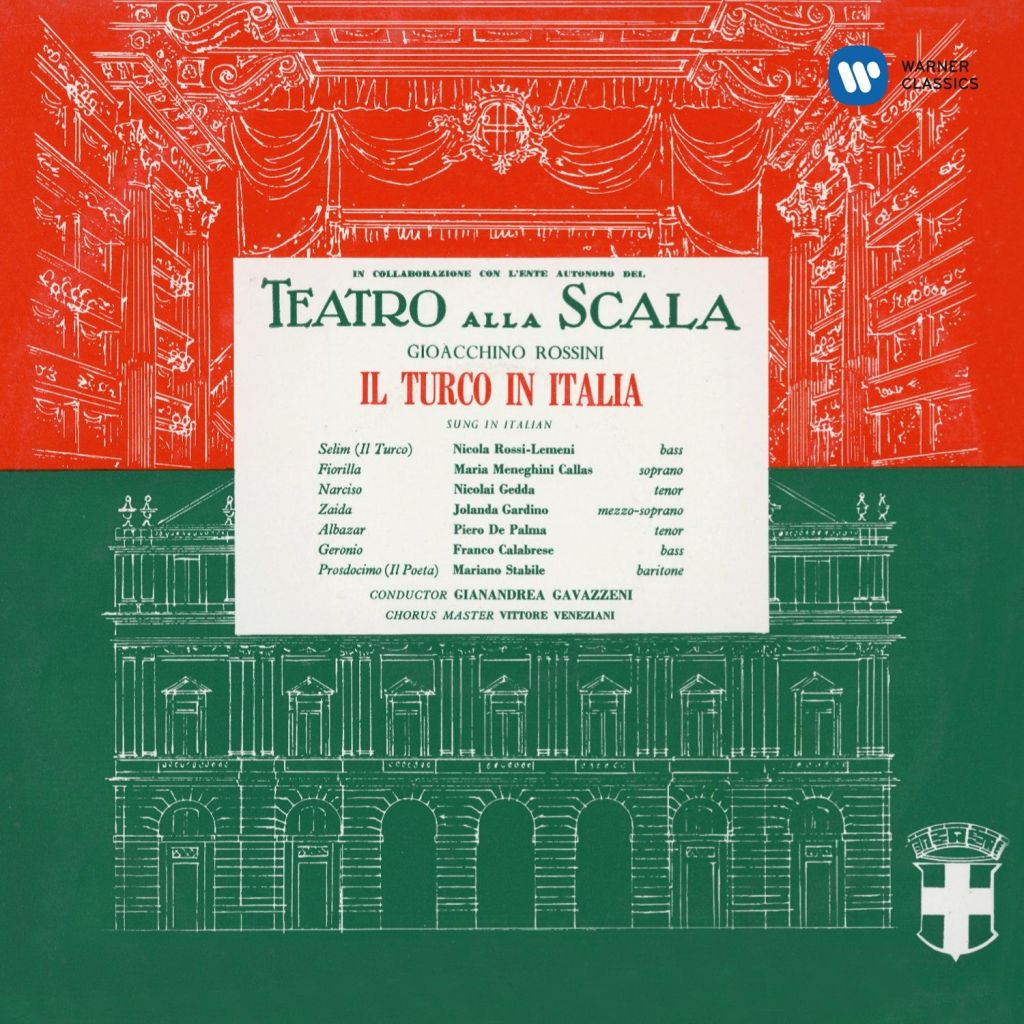
Maria Callas sang the role of Fiorilla in Rome in 1950 and four years later recorded it in the studio with La Scala in Milan. Gianandrea Gavazzeni conducted an “all-star cast” – most of the names make our mouths water today. But, apart from the fact that they were all truly fantastic, we have to ask ourselves whether it still sounds adequate to our ears.
Yes, Nicola Rossi-Lemeni would still be able to do it today, but the rest, including La Divina? With her, I often get the feeling that I am in the wrong opera and that I’m really listening to Anna Bolena. (Warner 0825646340880)
Milan, 1958
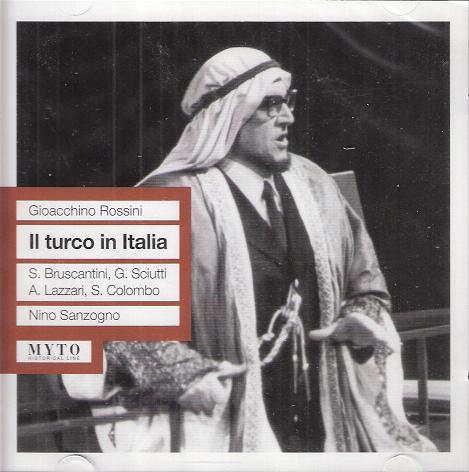
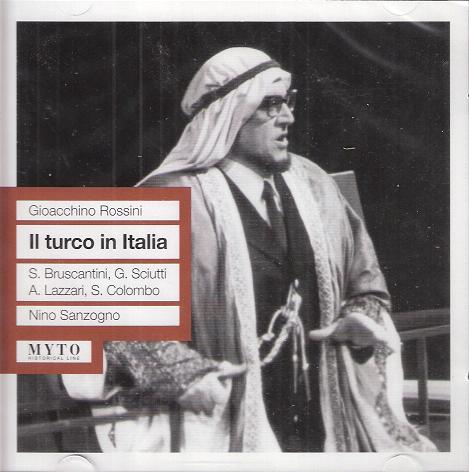
I absolutely cannot ignore Sesto Bruscantini who is a truly irresistible Selim. Scipio Colombo is delightful as the (in his interpretation) comic villain Prosdocino, and as Donna Fiorilla we hear one of the most delightful light sopranos of the time: Graziella Sciutti. A little soubrette-like, but so agile, and with such a wonderful timbre! The rest of the voices are good, but not exceptional, but Nino Sanzogno’s conducting – light and sparkling – does the opera justice. The live recording from 1958 (Milan) is rather dull. Nevertheless, it is a special document of a time that is now truly gone (Myto 00193).
Sesto Bruscantini and Graziella Sciutti in “Credete alle femmine”:
Olga Peretyatko is meer dan de zoveelste ‘rising star’ uit één van die landen die vroeger eufemistisch ‘het Oostblok’ heette. Niet alleen ziet zij er werkelijk prachtig uit en kan ze goed acteren, zij kan eveneens – en dat is natuurlijk het allerbelangrijkste – zingen. En hoe!
Zij heeft een lichte, zeer wendbare stem met een stralende hoogte en haar coloraturen zijn gewoon perfect. En denk niet dat zij de zoveelste ‘kanariepiet’ is! Olga Peretyatko is een echte nachtegaal.
Op donderdag twaalf januari 2012 zong ze bij de Nationale Opera de première van (hoe toepasselijk!) De Nachtegaal van Igor Strawinsky en in april dat jaar kwam ze terug voor Il Turco in Italia van Rossini.
Trailer van Nachtegaal:
Trailer van Il Turco in Italia:
Op haar debuut-cd bij Sony, met een zeer toepasselijke titel La bellezza di canto, ontbreekt ook de aria van Fiorilla niet. Voor de rest veel Donizetti en nog een Rossini: ‘Canzone del salice’, de aria van Desdemona uit Otello. Dat je daar van moet huilen, ligt uiteraard voornamelijk aan de muziek, maar zo mooi en zo ontroerend gezongen heb ik het zelden gehoord.
Verder staat er van alles en nog wat. Gilda, Manon (Massenet), Adele (Die Fledermuis) … Ook “Het lied aan de maan” uit Rusalka ontbreekt er niet.
Eerlijk gezegd is het een beetje ratjetoe, maar als het zo gezongen wordt dan mag het van mij ook een telefoonboek zijn. Ik ben zeer onder de indruk.
Olga Peretyatko La belezza del canto Aria’s van Rossini, Donizetti, Massenet, Offenbach, Dvořák, Puccini en Johann Strauss Münchner Rundfunkorchester olv Miguel Gómez-Martínez Sony 88697785442
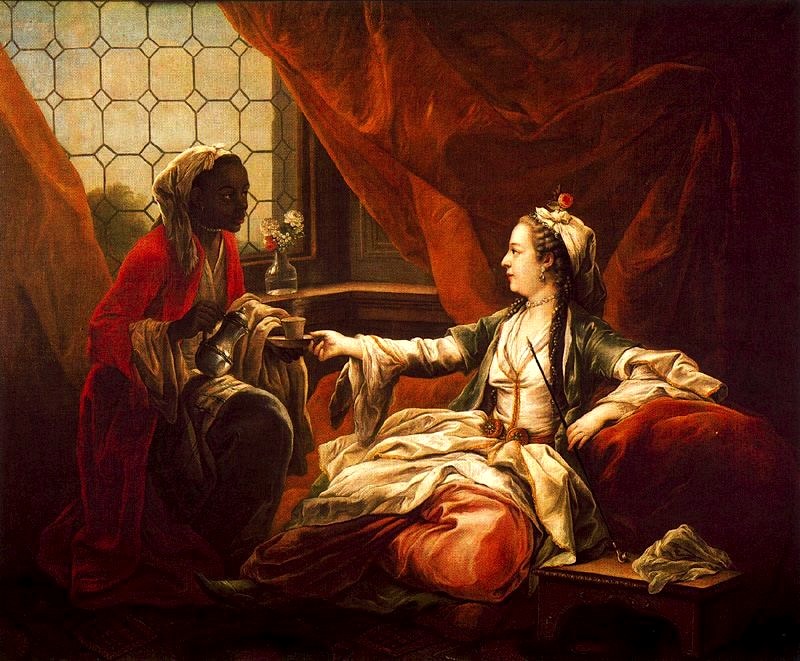
Turkomanie in Europa van de 18-de eeuw. Jeane-Etienne Lotard: Portret van Marie Adelaïde de France in Turkse jurk (1753). Credits: Andere Tijden
Oriënt! Wat wisten wij er ooit van? Het was exotisch, avontuurlijk en spannend. Alle mannen daar waren macho, super aantrekkelijk en potent. En ze rookten opium. Alle vrouwen waren mooi, gracieus, geheimzinnig en verleidelijk. Het geurde daar naar amber en wilde jasmijn ….
Het was zo ontzettend ver weg en onbekend – geen wonder dat wij daar door betoverd werden. Geen wonder ook dat onze dromen soms op hol sloegen. Maar de dromen bleken ergens goed voor, want ze hebben ons de prachtigste kunstwerken opgeleverd, waaronder ook opera’s. Il Turco in Italia van Rossini is er één van.
Geloof het of niet (geloof het!), maar Turco heeft heel veel weg van Cosi van tutte van Mozart. Zelfs de muziek doet er vaak aan denken. Het verhaal: een Don Alfonso-achtige dichter zonder inspiratie, zeg maar een soort kwade genius, bedenkt een intrige waarin hij alle personages manipuleert als zijnde marionetten, waardoor iedereen het (bijna) met iedereen doet, maar aan het eind komt alles goed. Of niet. In ieder geval heeft onze Prosdocimo een prachtig verhaal.
Ik vraag mij af hoe de ideale Fiorilla zou moeten klinken. Op de mij bekende opnamen wordt zij gezongen door alle stemsoorten: van een super lichte coloratuur sopraan tot een donkere coloratuur mezzo met borsttonen. Op de een of andere manier kan mij geen van de dames echt bekoren, ook Maria Callas niet, al komt zij dicht in de buurt van wat ik in de rol zou willen horen.
DVD
Zürich, 2002
In 2002 werd Il Turco in Zürich op het programma gezet. De hoofdrol was in handen van een oude rot in het vak, Ruggiero Raimondi. Zijn Selim is zonder meer spannend en erotisch en de slijtage aan zijn stem compenseert hij met een overweldigend spel en een geweldig charisma.
Oliver Widmer is goed op dreef als de cynische dichter Prosdocimo en Paolo Rumetz zet een heerlijk suffige Geronio neer. Het probleem heet Cecilia Bartoli. (Niet slaan alstublieft, het is maar mijn mening!) Zij is zeer virtuoos, zonder meer, maar haar maniertjes vind ik zeer irritant en haar donkere timbre absoluut niet bij de rol passend.
Het geheel is vrolijk, met felle kleuren en maffe kostuums: zo lijken de zigeuners op een combinatie van Volendammers met Peruanen (Arthaus Musik 100 369)
In Pesaro werd in 2007 een zeer naturalistisch ogende Turco opgenomen, met in de hoofdrollen uitsluitend jonge, onbekende zangers. Dat ze, wellicht op Marco Vinco (Selim) na, nog steeds onbekend zijn gebleven, zegt niet alles, maar toch wel wat.
Niettemin valt er veel lol aan te beleven. De typetjes zijn heerlijk herkenbaar, de kleuren mooi en de handeling volgt het libretto op de voet. Zeker leuk! (Naxos 2.110259)
Genua, 2009
Een van de nieuwste opname op dvd komt uit 2009 uit Teatro Carlo Felice in Genua. Nou ja, nieuw… de productie is bijna 30 jaar oud en werd voor het eerst al in 1983 gezien.
Het is niet erg, want het is nog steeds bijzonder vermakelijk, al moet ik toegeven dat het mij soms een beetje duizelt van wat er allemaal op de bühne gebeurt: acrobaten, vuurvreters, ballerina’s, Arlechino’s en wat al niet. Commedia dell’Arte ten voeten uit.
Myrtò Papatanasiu is een mooie Fiorilla en Simone Alaimo een heerlijke Selim, al vind ik dat hij iets beneden zijn gebruikelijke hoge niveau presteert. Ook Antonino Siragusa stelt lichtelijk teleur als de smachtende Narciso (Arthaus Musik 101 39)
CD
Milaan, 1954
Maria Callas zong de rol van Fiorilla al in 1950 in Rome en vier jaar later nam ze haar in de studio op, met de krachten van de Milanese Scala. Gianandrea Gavazzeni dirigeerde een ‘all star cast’ – de meeste namen doen ons nu watertanden. Maar, afgezien van het feit dat ze allemaal werkelijk fantastisch waren, moeten we ons afvragen of het nog steeds adequaat klinkt in onze oren.
Ja, Nicola Rossi-Lemeni zou vandaag de dag nog kunnen, maar de rest, inclusief La Divina? Bij haar bekruipt mij vaak het gevoel dat ik bij de verkeerde opera ben beland en dat ik naar Anna Bolena zit te luisteren. (Warner 0825646340880)
Milaan, 1958
Waar ik absoluut niet omheen kan is Sesto Bruscantini als een werkelijk onweerstaanbare Selim. Scipio Colombo is heerlijk als de (in zijn interpretatie) komische schurk Prosdocino en als Donna Fiorilla horen we een van de heerlijkste lichte sopranen uit de tijd: Graziella Sciutti. Een beetje soubretteachtig, maar zo wendbaar, en zo heerlijk getimbreerd!
De rest van de stemmen is goed maar niet uitzonderlijk, maar de directie van Nino Sanzogno – licht en sprankelend – doet de opera alle eer na. De live opname uit 1958 (Milaan) is behoorlijk dof. Toch – een bijzonder document van de tijd die nu toch echt voorbij is (Myto 00193)
Sesto Bruscantini en Graziella Sciutti in ‘Credete alle femmine’:




 Basia con fuoco