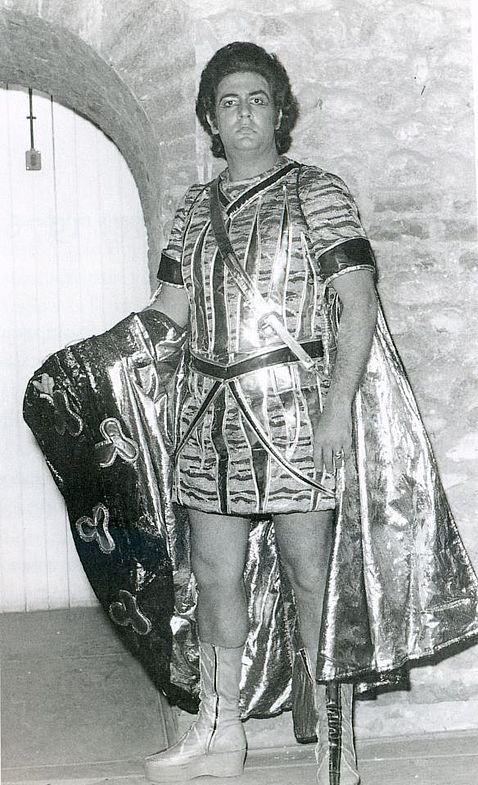
Fiorenza_Cossotto

Aida and Plácido Domingo


Radames was among Domingo’s favourite roles. No wonder. Here he could really ‘show it all’, because the hero is very complex. He is a ‘macho with a lot of muscles’ and a vulnerable boy at the same time, and he is torn between duty and passion. Unfortunately, the two are not compatible.


To sing Radames well you need not only a cannon of a voice but also an intellectual ability. And he has both.
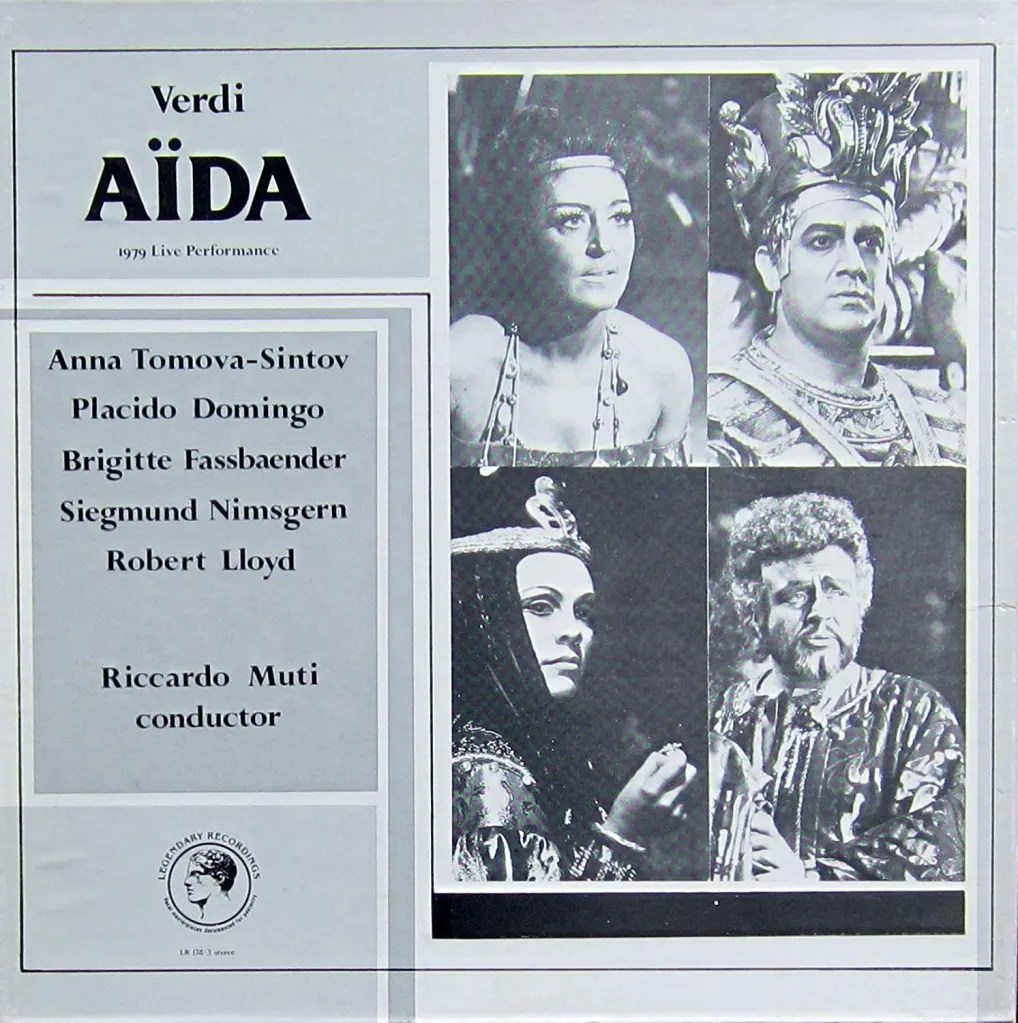

He made his debut with Aida in 1968 in Hamburg and he has since sung the opera thousands of times. There are many recordings on the market, both studio and live. I would like to dwell on a recording that will not evoke an ‘aha’ moment for most of you – also because at first glance the cast is not idiomatically perfect.

The fact that Anna Tomowa-Sintow was one of Karajan’s favourite singers had its advantages and disadvantages. She was a welcome guest in Salzburg and her name appears on many recordings conducted by the maestro. But it also meant that she was primarily rated as a Mozart and Strauss singer, while she had so much more to offer. Her Desdemona and Amelia were legendary and after her Munich Aida, Leonie Rysanek praised her performance for its pure beauty.

Fassbaender is really surprising and particularly convincing as Amneris. Just listen to what she does with the single word ‘pace’ at the end of the opera. The opera was recorded by Bayeriche Rundfunk on 22 March 1979 and released on Orfeo (C583 022).


Also noteworthy is the recording from Munich 1972, with a now almost forgotten Verdi singer, Martina Arroyo. As Amneris, we hear Fiorenza Cossotto and Cappuccilli and Ghiaurov complete the excellent cast conducted by Claudio Abbado.
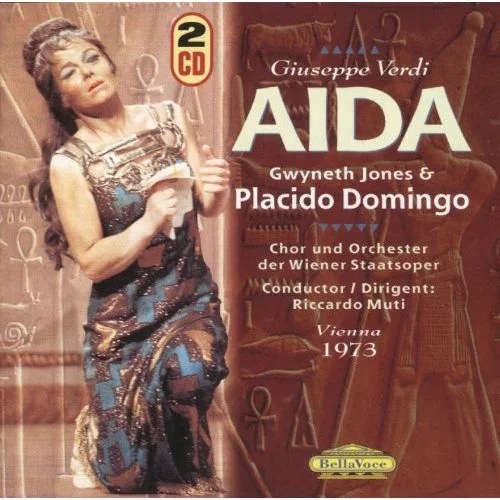


The recording from Vienna 1973 (Bela Voce BLV 107.209), under Riccardo Muti, is also of particular interest. In the leading role we meet Gwyneth Jones and Amneris is sung by an exceptional mezzo: Viorica Cortez.
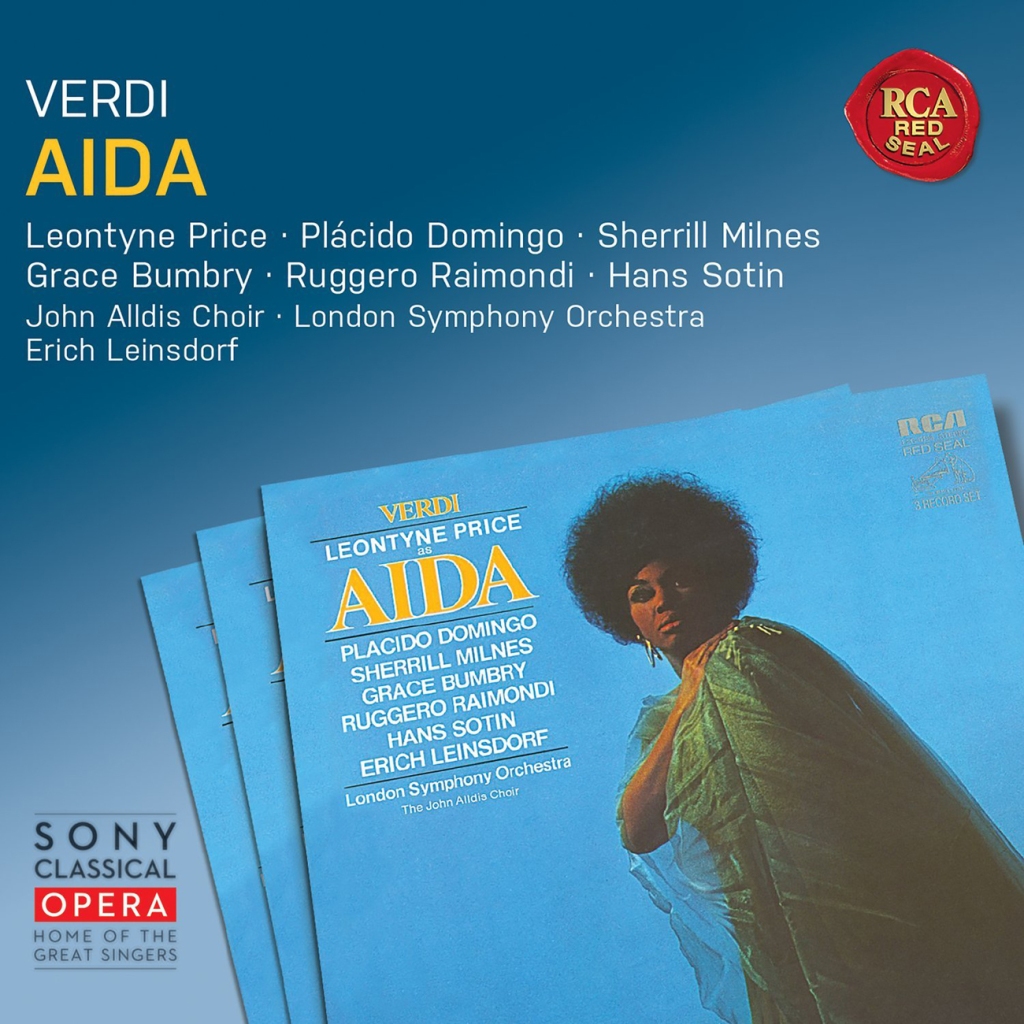
Of Domingo’s studio recordings the 1970 RCA release (probably from the catalogue), is probably the best. How could it be otherwise, when you know that the conductor is Erich Leinsdorf and the other roles are sung by Leontyne Price, Sherrill Milnes, Grace Bumbry and Ruggero Raimondi. The whole thing almost pops out of your speakers.

Almost all about Les Dialogues des Carmélites. Part one

There are those operas that you just can’t spoil and Les Dialogues des Carmélites is one of them. For Poulenc, melody is the centre of the universe. His music is so poignantly beautiful and his composition so expressive that you don’t really need a director.

The opera’s themes are sacrifice, martyrdom, revolutions and ideologies, but those are just the side lines, because the main theme is an all-devouring fear that makes it impossible to live or die: “Fear is a terrible disease. I was born of fear, in fear I live and in fear I shall die. Everyone despises fear, so I am condemned to be despised.


Milan, 1957


The world premiere of Dialogues des Carmélites took place on 26 January 1957 at La Scala in Milan, in an Italian translation. The cast reads like a ‘who’s who’ in the opera world, because, ask yourself: were there any bigger names in those days?

Blanche was sung by Virginia Zeani, a singer with a full, large and dramatic voice, that was suitable for both Violetta and Tosca. Marie was played by Gigliola Frazzoni, one of the best Minnies (La fanciulla del West) in history. And Madame Lidoine was given to Leyla Gencer.

With Fiorenza Cossotto, Gianna Pederzini, Eugenia Ratti and Scipio Colombo in the smaller roles, the opera sounded less lyrical than we are used to nowadays, almost veristic even. But that made the dramatic effect even more poignant.

Virginia Zeani and Francis Poulenc, Milano 1957


In The Operatic PastCast, Virginia Zeani talks about Poulenc, the influence the opera has had on her life, her colleagues and the production in Milan.
The entire performance from Milan, fantastically conducted by Nino Sanzogno, is on YouTube. Do not miss it!


Paris, 1957


The Paris premiere of Dialogues des Carmélites followed six months later. On 21 June 1957, the opera, now in French, was presented at the Théâtre National de l’Opéra.
Blanche was sung by Poulenc’s beloved soprano Denise Duval. Duval’s voice (girlishly naive, light, almost ethereal) fitted Blanche like a glove.
The rest of the cast, including Régine Crespin as Madame Lidoine and Rita Gorr as probably the best Mère Marie ever, was also chosen by Poulenc himself


Régine Crespin (Madame Lidoine) in “Mes chères filles”:


The orchestra was conducted by Pierre Dervaux and I can be very brief about him: there is no better. Full stop. (Warner 08256483211)


Almost all about Les Dialogues des Carmélites: part 2

Almost all about Les Dialogues des Carmélites: part 3

Almost all about Les Dialogues des Carmélites: part 4


Between Gina Cigna and Renata Scotto, forty years of Norma in a mini-discography. Part 2

It is perhaps superfluous, but I have to get it off my chest: there is no such thing as objective music criticism. Of course there are criteria, but it is not science: after all, you listen to music not only with your ears, but also with your soul and your heart, and you cannot switch them off. Therefore, do not consider my mini discography as an absolute truth and, as far as possible, listen and judge for yourself.


JOAN SUTHERLAND


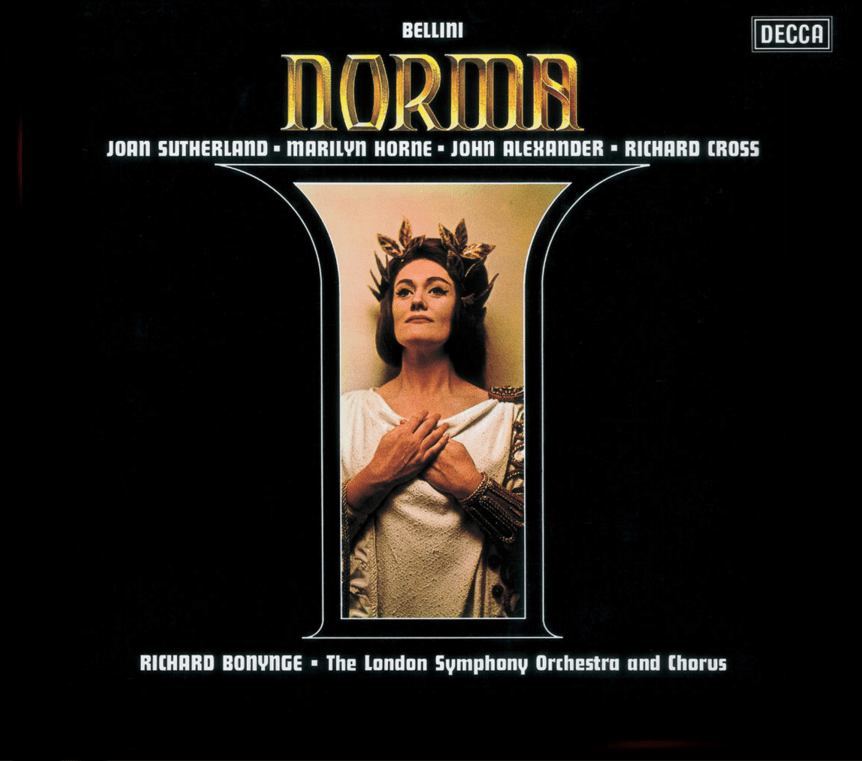
Joan Sutherland, like Callas recorded Norma twice (officially). Her first recording from 1965 (Decca 4704132) caused a real sensation. It was the very first recording of Bellini’s complete music, without any cut. Moreover, it was the first recording in the original key (Bellini composed his opera in G, but before the premiere he changed it to F).

In those days, Sutherland was considered the belcanto specialist par excellence. Her voice knew no limits and seemed to be made of elastic. High, higher, highest, and with coloraturas that sound almost inhumanly perfect.


Adalgisa was sung by Marilyn Horne, Sutherland’s alter ego in the mezzo voice. The result is dazzling, but it lacks the necessary drama, all the more so because John Alexander (Pollione) has a beautiful but insipid voice.


The orchestral playing is excellent, however, and if you like pure singing, high notes and and if you like pure singing, high notes and coloratura, this recording is the best choice.

https://open.spotify.com/album/0PTji5FoZbMsdQALilFEgh?si=k_4QKyzdQqmN-PJNo4tkIg


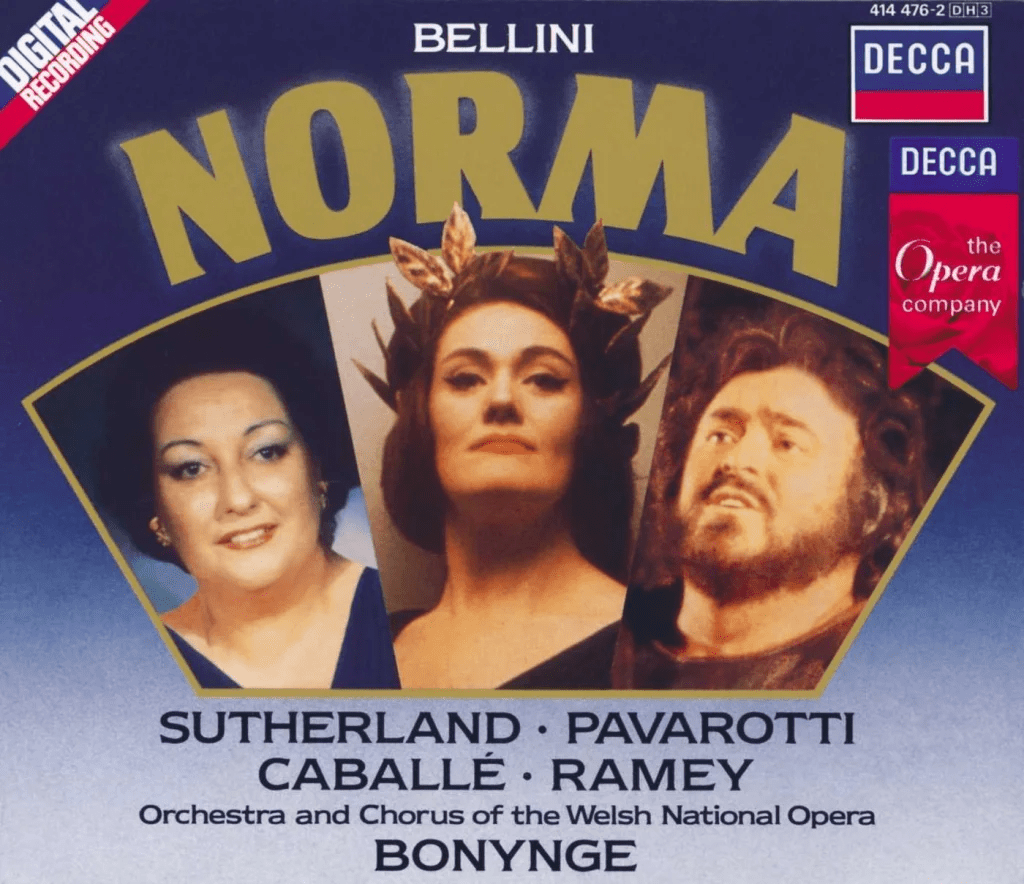
Twenty years later, Sutherland recorded the role again, this time with Montserrat Caballé (Adalgisa) and Luciano Pavarotti (Pollione). Let’s call it a mistake, although Caballé’s Adalgisa is at least interesting. It’s a pity it wasn’t thought of sooner.


MONTSERRAT CABALLÉ


Caballé is a kind of cross between Callas and Sutherland: wonderful top notes, incredibly beautiful legato arches, perfect trills, and moreover a pianissimo that none of her colleagues could match. She was a much better actress than Sutherland, moreover she had great charisma. She never went to extremes like Callas or (later) Scotto, but her performances were always very convincing.
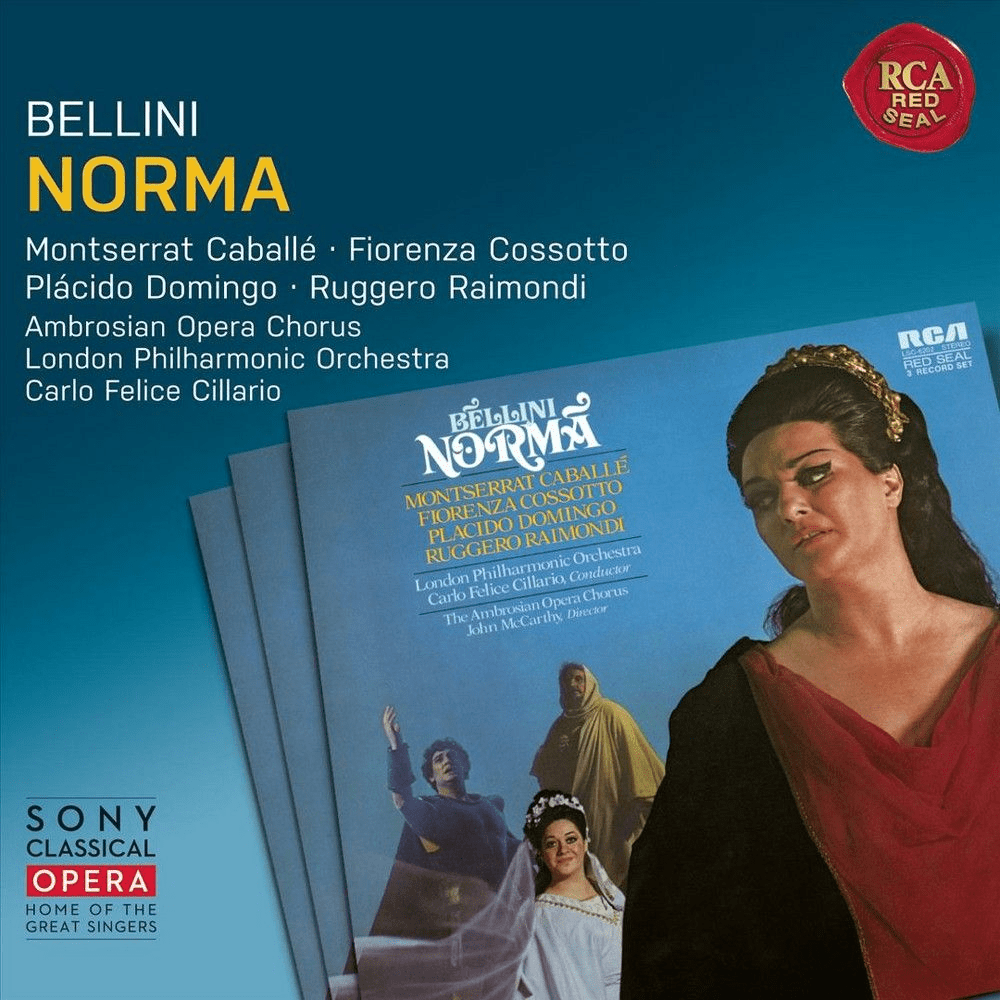
In 1973 she recorded the role for RCA and the result was very decent (GD 86502). Her Pollione, a very young Plácido Domingo, was vocally crystal clear and sounded like a bell. However, he lacked dominance, making him sound far too young for the role.

Fiorenza Cossotto in her role of Adalgisa looked more like Azucena than a young girl, but her singing as such was flawless. Unfortunately, the orchestra sounds uninspired and hurried, which must surely be blamed on the conductor, Carlo Felice Cillario.


In 1974 she sang Norma in the Roman amphitheatre in Orange (Provence). It was a very windy evening, and everything blew and moved: her hair, veils and dresses. A fantastic sensation, which added an extra dimension to the already great performance. It was filmed by French television (what luck!), and has now appeared on DVD (VAIV 4229).

Caballé sings ‘Casta Diva’:


Caballé was in superb voice, very lyrical in ‘Casta Diva’, dramatic in ‘Dormono etrambi’ and moving in ‘Deh! Non volerli vittime’. Together with Josephine Veasey, she sang perhaps the most convincing ‘Mira , o Norma’ – of all, at least in a complete recording of the opera. As two feminists avant la lettre, they renounce men and transform from rivals into bosom buddies.


Jon Vickers (Pollione) was never my cup of tea, but Veasey is a fantastic (also optically) Adalgisa and Patané conducts with passion. Of all the recordings on DVD (and there are not many), this is definitely the best.


RENATA SCOTTO


Scotto sang her first Norma in 1974, in Turin. To my knowledge, there is no recording of it, at least not of the complete opera.

Casta Diva’ from Turin:


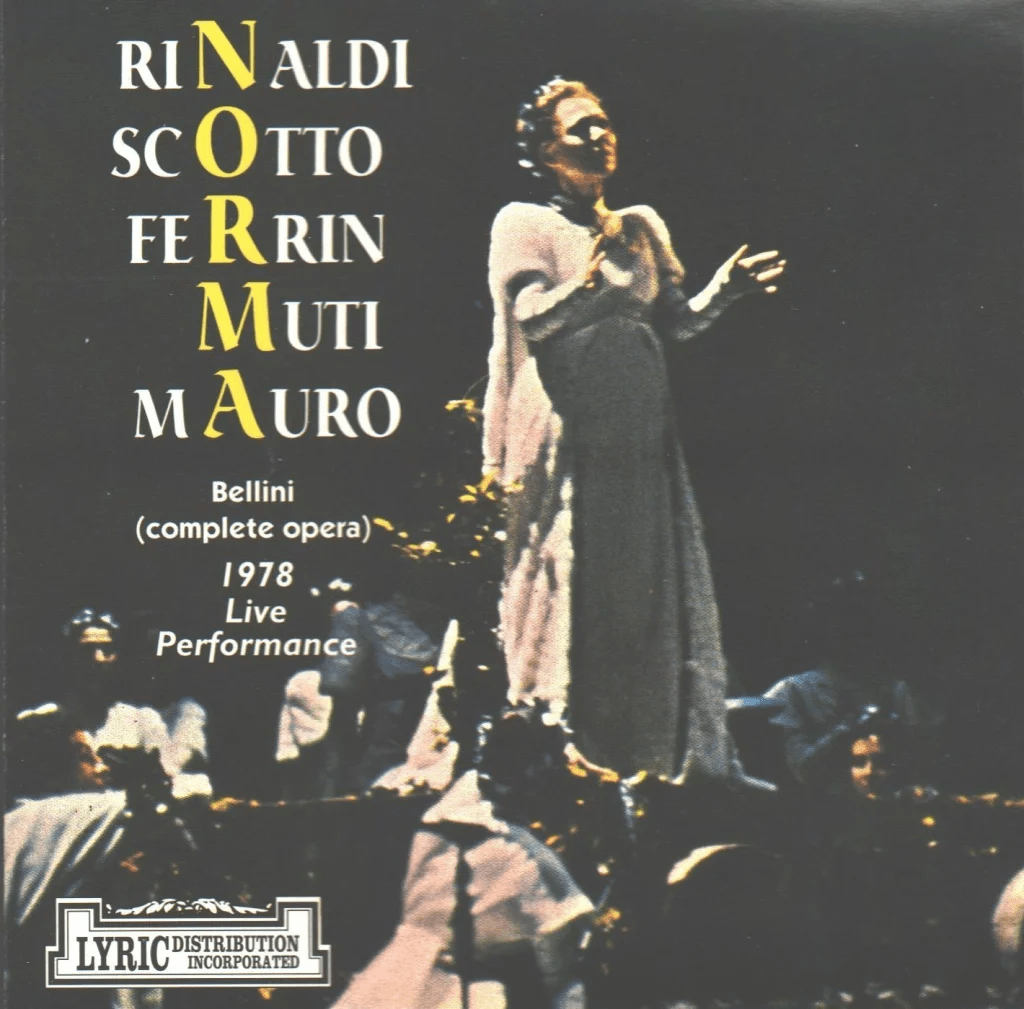
A pirate did record the 1978 performance in Florence (Legato LCD 203-2). It should have been an ideal Norma, but unfortunately the performance was marred by a no more than adequate Ermanne Mauro as Pollione.

Margherita Rinaldi (finally a soprano again) sounds young as Adalgisa and Scotto is, according to many critics, the first Norma, after Callas, who seems to know what it’s all about. Orchestrally, this recording belongs to my top three, but the sound is unfortunately not really great.

Scotto in ‘Dormono entrambi’ in 1978:


In 1980 Scotto recorded the opera in the studio (Sony SM2K 35902), conducted by James Levine. I cannot find  much negative to say about her performance, although the ‘steel’ in her voice is sometimes particularly painful. The Adalgisa (incredibly beautiful Tatiana Troyanos) is also absolutely top-notch. But Giuseppe Giacomini (Pollione) is not great at all and Levine conducts far too heavily and overdramatically.


From Gina Cigna to Renata Scotto, forty years of Norma in a mini-discography. Part one