Sergei_Larin

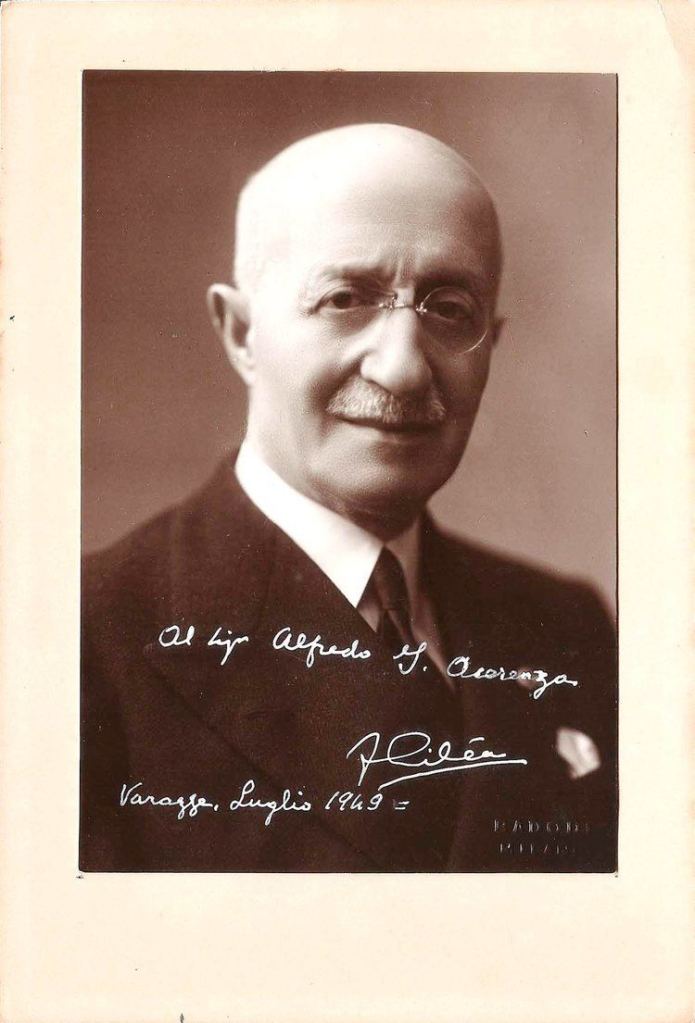
For Francesco Cilea on his birthday

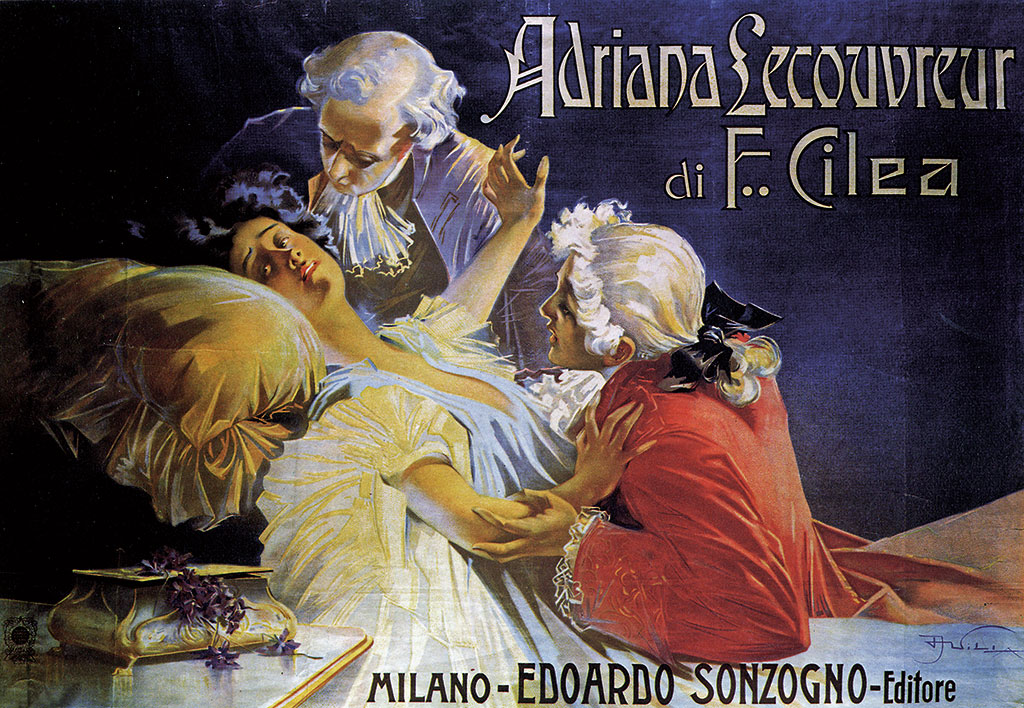
Adriana Lecouvreur

Aleardo_Villa

Daniela Dessì


‘Poveri fiori’ (poor flowers), Adriana sings in one of the most moving arias in the history of opera, smelling the bunch of wilted violets. If only we could warn her, because those violets are poisoned, you can smell the contamination even from your armchair in front of the TV. And indeed they prove fatal. She launches into a big monologue, and that was it! Tutto e finito.

The orchestra plays a few more bars, and then there is the final chord. Pian-pianissimo, and so movingly beautiful that my tears, which had already begun to flow at the beginning of the last act, turn into a veritable flood.
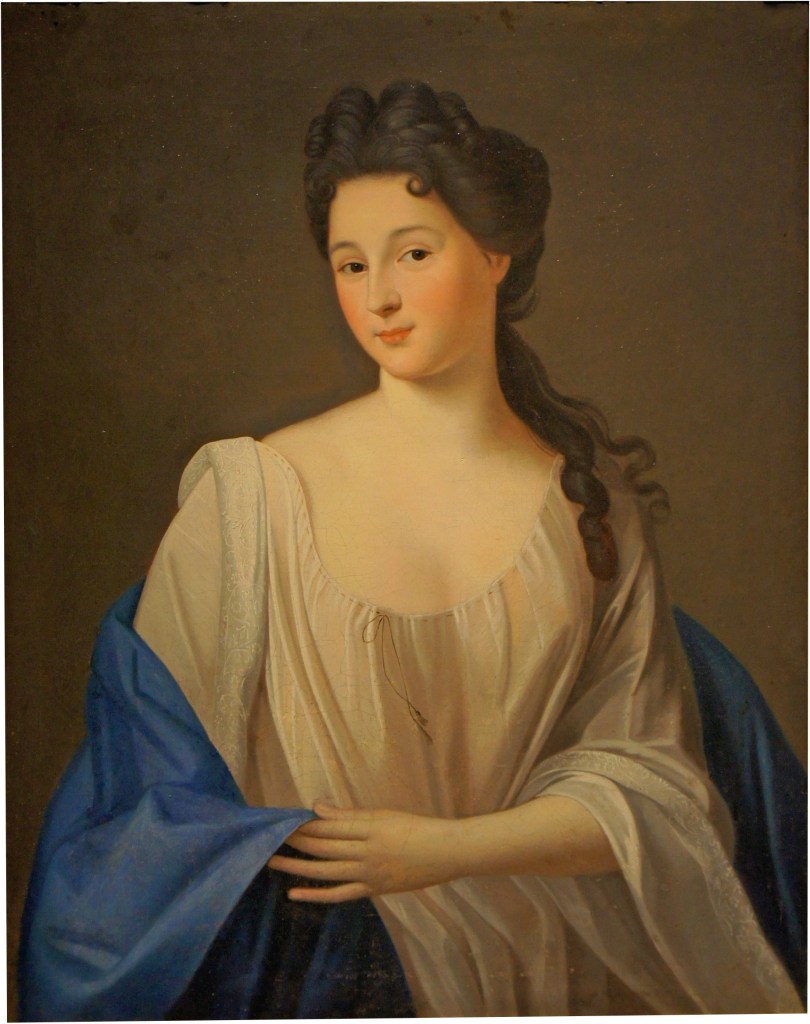
Portrait of Lecouvreur (ca. 1725), by anonymous artist, based on her first appearance at the Comédie-Française, and located in the Musée des Beaux-Arts, Châlons-en-Champagne


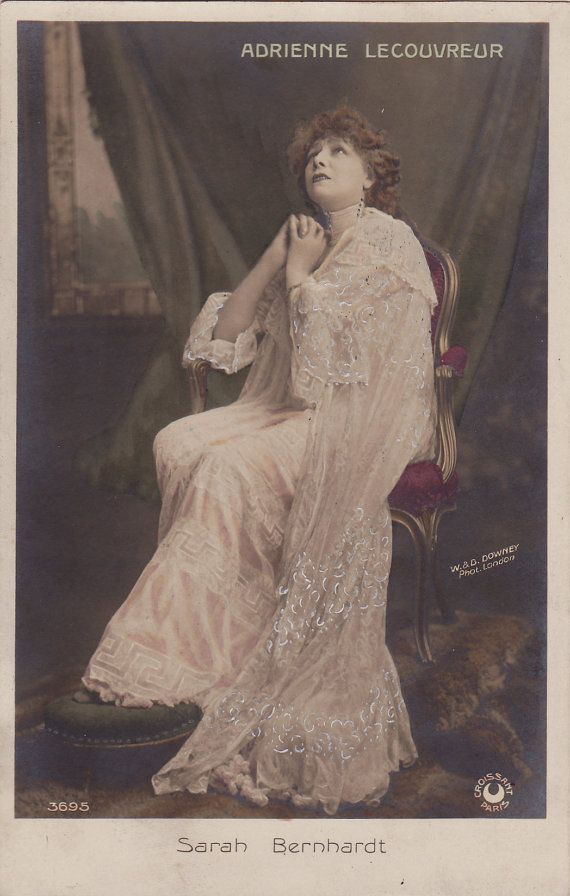
The real Adriana, a star of the Comédie Française, died in Voltaire’s arms in 1730. Eugene Scribe made her immortal by creating a play about her life and her role was played by the greatest actresses of the time: Sarah Bernhardt, Eleonora Duse, Helena Modjeska.


The opera, which Francesco Cilea based on the play, thus requires a singer with the greatest acting skills, such as a Mafalda Favero, Magda Olivero or Renata Scotto.


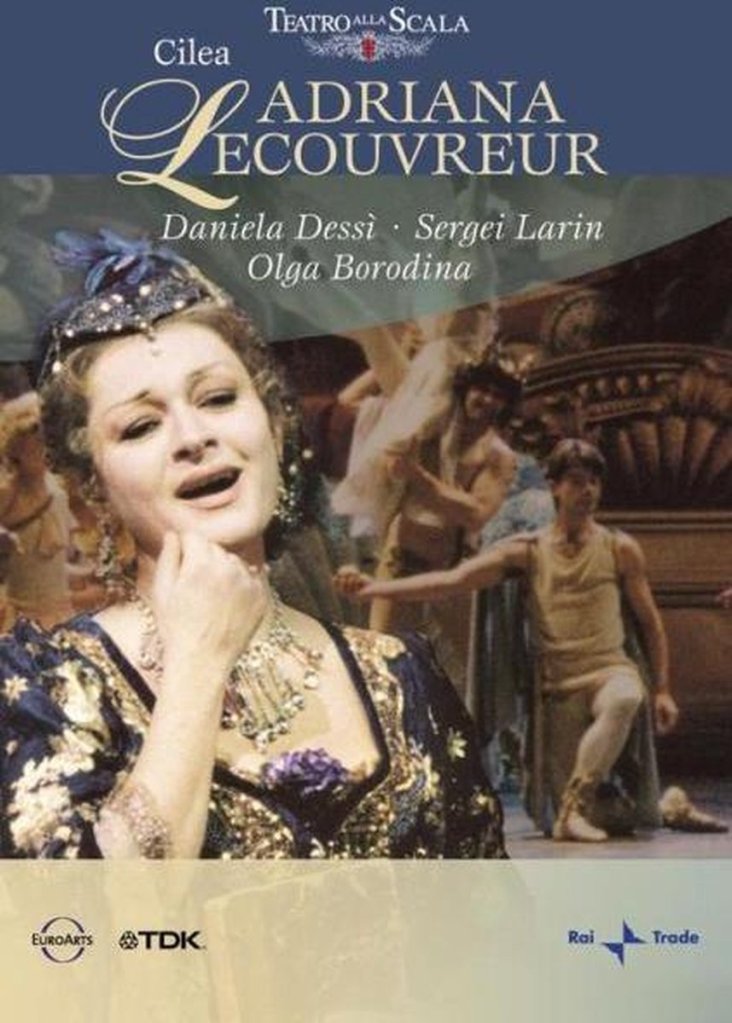
Daniela Dessi, by the way, can do both the singing and the acting. 21 years ago (the recording was made at La Scala in January 2000), her sound was still lyrical, but already well developed dramatically. A true lirico-spinto, even if it was still a bit ‘in spe’ then.


Maurizio was one of Sergei Larin’s favourite roles, he also sang it in 2006 in Amsterdam (Saturday Matinee) alongside Nelly Miricioiu. The much-lamented Latvian tenor (he died in January 2008 at the age of 51) presents a beautiful and elegant sound, not devoid of passion, but still without the ‘roar’ that marred his last performances.


Olga Borodina is a deliciously mean Principessa di Bouillon and Carlo Guelfi a sonorous Michonnet, although his voice lacks ‘that certain something’, that made Sherrill Milnes one of the best interpreters of the role.


Roberto Rizzi Brignoli elicits from the orchestra all the colours of the rainbow and then some more. Here he is at the very beginning of his career (I once wrote: remember that name, we will be hearing more from him). Now he has become one of the greatest.

For those who appreciate it: the direction and the stage setting are traditional.


Dessì and Borodina in the finale of the third act:

EuroArts 2050098

Mafalda Favero:

Magda Olivero:

Renata Scotto:

L’Arlesiana (rediscovered!)


There are more operas that derive their fame from just one aria: just think of La Wally. Or even Andrea Chenier or La Gioconda. But there can only be one winner and that is undoubtedly Cilea’s L’Arlesiana.


The aria “E’ la solita storia del pastore”, better known as Lamento di Federico is among the most beautiful and best-loved tenor arias in all opera history. Just about every tenor sings it; it is also very often found on compilation CDs or opera recitals. No wonder: who among us can keep dry eyes listening its languorous tones? And: who among us actually knows what it is about? And who has ever heard the opera in its entirety?

L’Arlesiana is still performed only sparsely, even its recordings are scarce. Strange really, but the intendants of most opera houses don’t like verism. Is there too little honour to be gained for directors?

Not that L’Arlesiana is a masterpiece. That the opera is unbalanced, Cilea himself knew that very well. He also continued to tinker with it from its premiere in 1897 until his death in 1950. He went from four acts to three, and his finest and best move was undoubtedly adding the famous interlude “La notte di Sant’Egilio”, in 1937.


Curiously, the heroine, the girl from Arles, is not even present in the opera. Well, not fysically. She is being talked about, gossiped about also and she is the cause of the ensuing drama, of which she is probably not even aware, we will never know it.


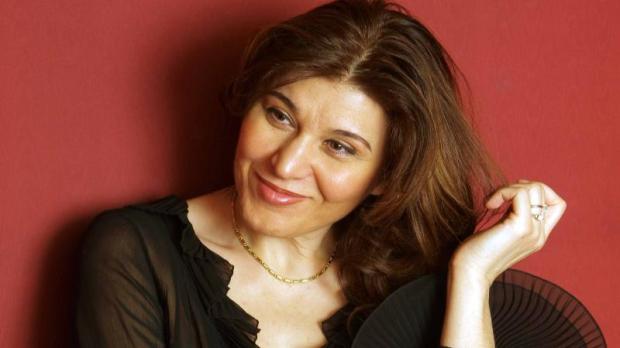
Clearly present, though, is Rosa Mamai, Federico’s mother. I read somewhere that if Santuzza (Cavalleria rusticana) had ever left Sicily and started a family of her own, she would surely have become Rosa Mamai. I was reminded of this when listening to Iano Tamar’s fantastic, highly dramatic Rosa Mamai.
arlesiana-tamar

Iano Tamar. Foto: Picus online


In her own “lamento” (‘Esser madre è un inferno’), she defies the limits of beautiful singing, but nowhere crosses them and she really makes us share her grief.  In doing so, she proves what we actually already knew: the opera is not about silly shepherd Federico and his desperate love for the adulterous Arlesienne. No, it is about the boundless love of a mother who wants to save her son from a fatal fate at any cost and who even goes so far as to give her consent to the marriage with “the bitch”. To no avail: in a moment of madness, Frederico plunges himself from the hayloft

arlesiana-filianotti

Foto: Arielle Doneson


Giuseppe Filianotti has the ideal timbre for Federico: beautifully lyrical, but with enough power to meet the heavy demands of the complex role, with its many changes of mood. I truly would not know who else, perhaps apart from Beczala or Fabiano, could sing the role with as much feeling and languor. It is a real “Caruso role”; lyricism alone would not be enough.

Mirella Buonoaica’s light and agile soprano is sometimes like quicksilver: bouncy and fascinatingly beautiful. But her Vivetta also possesses enough power: should the need arise, the girl is ready to fight. It is not her fault that her lover has gone mad, remember Micaela!

Francesco Landolfi is a beautiful Baldassare, authoritarian but also very fatherly. His ‘Come due tozzi accesi’ moves me greatly. He phrases with a perfection you don’t often come across anymore and his messa di voce is astounding..

All the minor roles are also more than adequately cast and the orchestra under Fabrice Bollon plays very animatedly.

But this recording has even more to offer. It contains a lost aria by Federico: a “Una mattina m’apriron nella stanza”. We owe the discovery to Giuseppe Filianotti, who found the piece at the Museo Francesco Cilea, in a manuscript belonging to the composer. “Una mattina” was heard for the first time during this performance in Freiburg.

The original 1897 version of Lamento di Federico (note the end):


The rediscovered aria “Una mattina m’apriron nella stanza”:


CPO 7778052; recorded live juli 2012 in Freiburg


Bonus: Tito Schipa sings Il Lamento di Federico


A pleasant introduction to Cilea’s piano works
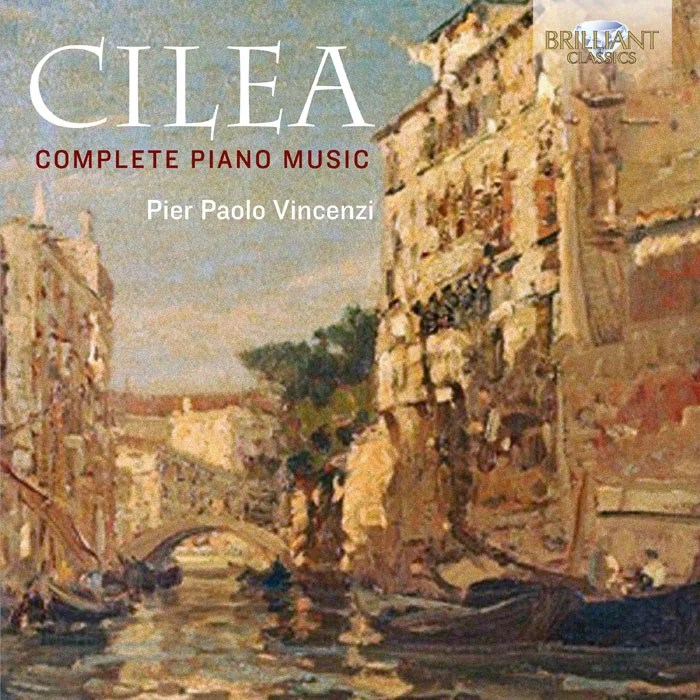
Francesco Cileais today particularly known for his opera’s Adriana Lecouvreur and L’Arlesiana, but did you know that he, himself a great pianist also composed for the piano?

I didn’t. Not that I think I missed much. It’s all very pleasant, no more. Wonderful to have in the background but the music has too little going for it. It does not sink in.

And yet I am glad someone took the trouble to record the music. It sheds a totally different light on the composer and takes him out of the shadows in which (music) history has cast him. No, Puccini he was not, and in his day piano music was already much more than just an entertaining ‘salon music’, but fair is fair: I must confess that I found it an extremely  enjoyable introduction. Not least because of pianist Sandro De Palma’s very strong advocacy of his music.

In the very Schubertian-looking sonata for cello and piano, De Palma is assisted by the not particularly virtuoso Ferdinando Calcaviello.


Rusalka van Robert Carsen in Parijs

TEKST PETER FRANKEN

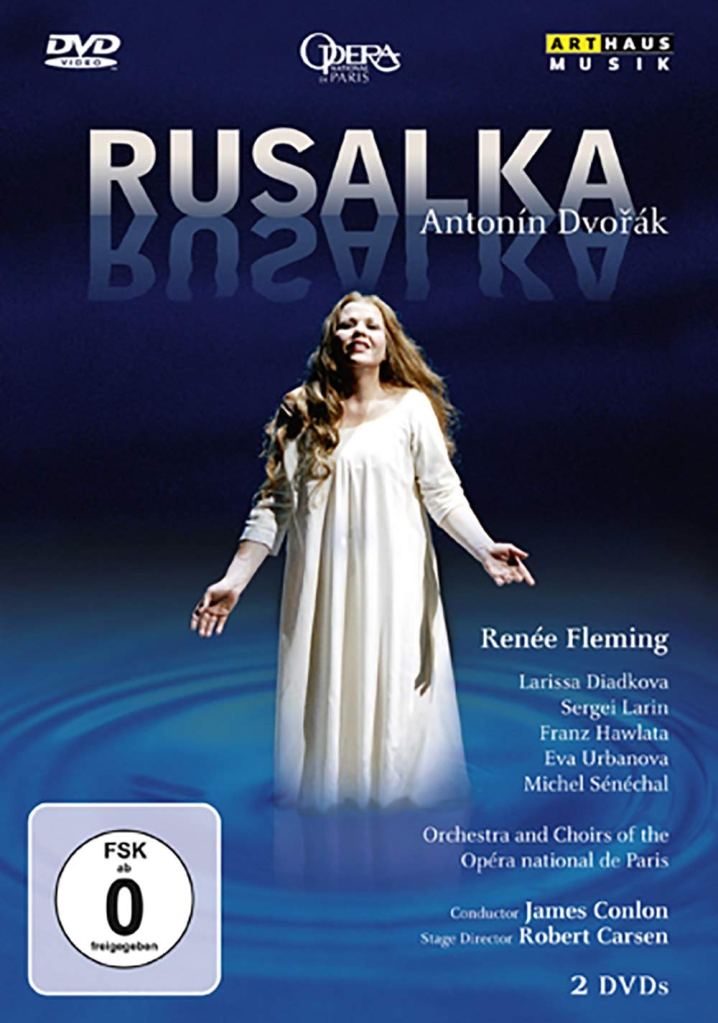
Je ontkomt er niet aan, natuurlijk heeft ook Carsen een productie van deze prachtige opera op zijn naam staan. Zijn Rusalka zag ik in 2005 in de Bastille, een herneming van de premièrereeks uit 2002. Om het later nog eens op mijn gemak te bekijken heb ik vervolgens een opname op dvd van zo’n eerdere voorstelling aangeschaft. Bij die gelegenheid zong Renée Fleming de titelrol met Sergei Larin als haar tegenspeler.

Carsen brengt het verhaal zonder daar zelf inhoudelijk iets aan toe te voegen, zoals eigenlijk altijd. Hij is geen concepten regisseur maar een klassieke vakman die de enscenering ten volle gebruikt om er zijn eigen stempel op te drukken.

In een andere recensie vergeleek ik het lot van Rusalka met dat van Moravische plattelands meisjes die worden teruggestuurd na in de grote stad te zijn bezwangerd door hun werkgever. Een andere vergelijking is die van een hopeloos verliefde vrouw die tijdelijk niet in staat is tot enig rationeel denken in haar handelen. En die dan de pech heeft dat haar liefdesobject afkomstig is uit een volledig andere cultuur die door haar  sociale omgeving niet wordt geaccepteerd, op straffe van levenslange uitsluiting. Ze emigreert, komt in een omgeving waar ze de taal niet spreekt en kan daar niet assimileren. Terug naar huis betekent een bestaan als outcast. Zo heftig gaat het er bij Rusalka ook aan toe.

Carsen heeft met vormgever Michael Levine een toneelbeeld gecreëerd waarin de verschillen tussen de waterwereld en het paleis goed worden uitgelicht. Een enorm bassin wordt op halve hoogte gemarkeerd door een rand met uitstekende elementen die verticaal gedubbeld worden waardoor de suggestie van een waterspiegel wordt gegeven. Voor de vorm is er op de toneelvloer ook nog een ondiep klein bassin waarin de zangers kunnen rondhupsen. Er gaat immers niets boven echt water op het toneel in een opera over een waternimf.

Die spiegeling wordt voortgezet in de paleisscène. Alles speelt zich af in twee enorme slaapkamers, nu met de spiegeling links en rechts. Verder wordt een uniforme kostumering aangehouden: alle vrouwen gaan in prachtige witte bruidsjurken en alle mannen in double breast suits. Met dezelfde pruiken op lijken de Vreemde Prinses en Rusalka zo eveneens elkaar spiegelbeeld. Wellicht wordt hiermee gedoeld op de uitwisselbaarheid van het lot van de betrokkenen.

Het ballet in de feestscène eindigt met de gedeeltelijke ontkleding van de dames, nu in zwarte onderjurken. Voorspelbaar dragen de Prinses en Rusalka die ook onder hun bruidsjurk en in de derde akte verschijnt Jezibaba eveneens in zo’n onderjurk.

Het ziet er schitterend uit allemaal en houdt de aandacht prima vast. De productie is dan ook een blijvertje geworden in Parijs, nadien nog hernomen in 2015 en 2019.

Fleming schittert in de titelrol. Haar zang is van hoog niveau maar ze acteert ook zeer innemend waardoor je als toeschouwer je erg bij haar betrokken voelt ook al gedraagt ze zich feitelijk als een kip zonder kop. Wie gaat er nu akkoord met de voorwaarde dat je je stem moet opgeven om ‘aan land‘ te kunnen gaan.? Haar tegenspeler Sergei Larin doet nauwelijks voor haar onder, mooi gecast.

Eva Urbanova is als Rusalka lookalike zeer effectief in haar wraakneming. Als ik hem niet kan krijgen, dan zij ook niet. Franz Hawlata is een heel overtuigende vaderlijke Watergeest, een van zijn glansrollen.

In de kleinere rol van de Houtvester zien we niemand minder dan Michel Sénéchal,mooi typetje. Larissa Diadkova is als Jezibaba minder onaangenaam dan veelal het geval is, goede vertolking.

James Conlon heeft de muzikale leiding.


Foto’s © Opéra Bastille

Daniela Dessì shines as Adriana Lecouvreur

Poveri fiori’ (poor flowers), Adriana sings in one of the most moving arias in the history of opera, smelling the bunch of wilted violets. If only we could warn her, because those violets are poisoned, you can smell the contamination even from your armchair in front of the TV. And indeed they prove fatal. She launches into a big monologue, and that was it! Tutto e finito.

The orchestra plays a few more bars, and then there is the final chord. Pian-pianissimo, and so movingly beautiful that my tears, which had already begun to flow at the beginning of the last act, turn into a veritable flood.

The real Adriana, a star of the Comédie Française, died in Voltaire’s arms in 1730. Eugene Scribe made her immortal by creating a play about her life and her role was played by the greatest actresses of the time: Sarah Bernhardt, Eleonora Duse, Helena Modjeska.

The opera, which Francesco Cilea based on the play, thus requires a singer with the greatest acting skills, such as a Mafalda Favero, Magda Olivero or Renata Scotto.


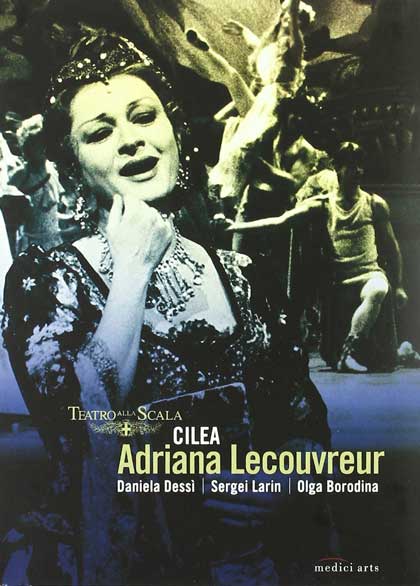
Daniela Dessi, by the way, can do both the singing and the acting. 21 years ago (the recording was made at La Scala in January 2000), her sound was still lyrical, but already well developed dramatically. A true lirico-spinto, even if it was still a bit ‘in spe’ then.


Maurizio was one of Sergei Larin’s favourite roles, he also sang it in 2006 in Amsterdam (Saturday Matinee) alongside Nelly Miricioiu. The much-lamented Latvian tenor (he died in January 2008 at the age of 51) presents a beautiful and elegant sound, not devoid of passion, but still without the ‘roar’ that marred his last performances.
Olga Borodina is a deliciously mean Principessa di Bouillon and Carlo Guelfi a sonorous Michonnet, although his voice lacks ‘that certain something’, that made Sherrill Milnes one of the best interpreters of the role.

Roberto Rizzi Brignoli elicits from the orchestra all the colours of the rainbow and then some more. Here he is at the very beginning of his career (I once wrote: remember that name, we will be hearing more from him). Now he has become one of the greatest. For those who appreciate it: the direction and the stage setting are traditional.

Dessì and Borodina in the finale of the third act:

Francesco Cilea
Adriana Lecouvreur
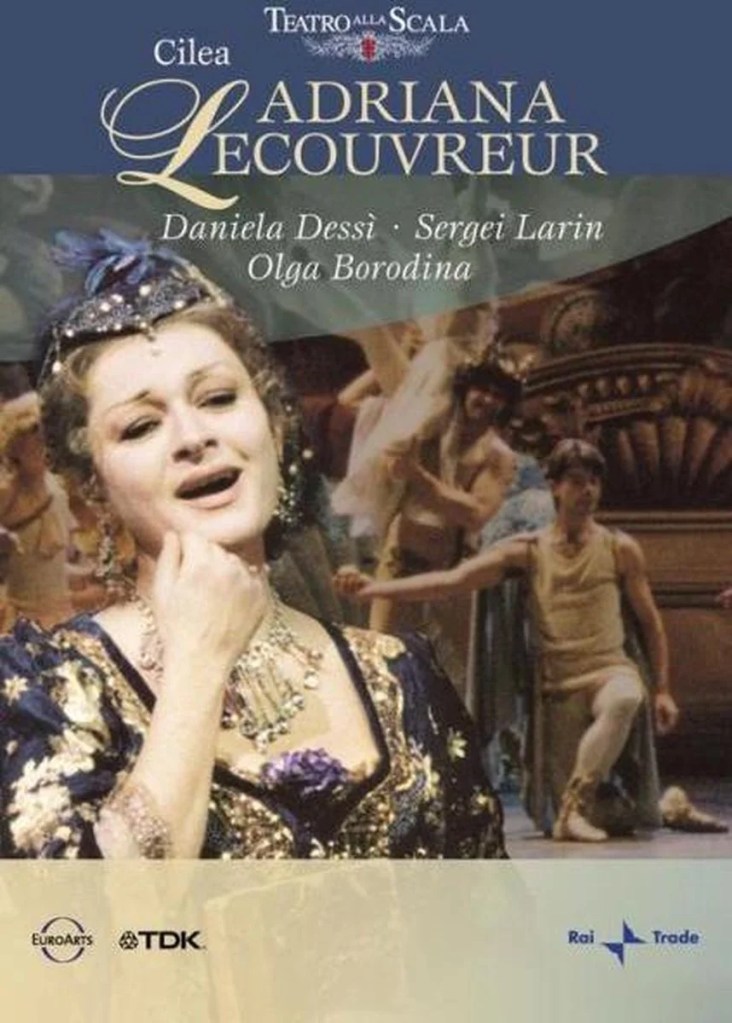
Daniela Dessì, Sergei Larin, Olga Borodina, Carlo Guelfi e.a.
Orchestra e Coro del Teatro alla Scala olv Roberto Rizzi Brignoli

Daniela Dessì schittert als Adriana Lecouvreur

Adriana-Lecouvreur

‘Poveri fiori’ (arme bloemen) zingt Adriana in één van de ontroerendste aria’s uit de operageschiedenis en ruikt aan het bosje verlepte viooltjes. Konden we haar maar waarschuwen, want die viooltjes zijn vergiftigd, dat ruik je zelfs op je luie stoel voor de TV. En inderdaad. Ze heft nog een grote monoloog aan, en dat was dat. Tutto e finito.

Het orkest speelt nog een paar maten, en dan is er het slotakkoord. Pian-pianissimo, en zo ontroerend mooi, dat mijn tranen, die al aan het begin van de laatste acte begonnen te vloeien, in een heuse stortvloed veranderen.

De echte Adriana, een ster aan de Comédie Française, stierf in de armen van Voltaire  in 1730. Eugene Scribe maakte haar onsterfelijk door een toneelstuk over haar leven te maken en haar rol werd vertolkt door de grootste actrices uit die tijd: Sarah Bernhardt, Eleonora Duse, Helena Modjeska.

Ook de opera, die Francesco Cilea op het toneelstuk baseerde vereist een zangeres met het grootste acteervermogen, zoals een Mafalda Favero, Magda Olivero of Renata Scotto.

Daniela Dessì kan het. Zingen trouwens ook. Zestien jaar geleden (de opname is in januari 2000 in La Scala gemaakt) was haar geluid nog steeds lyrisch, maar al goed dramatisch ontwikkeld. Een echte lirico-spinto, al was het toen nog een beetje ‘in spe’.

Maurizio was één van de lievelingsrollen van Sergei Larin, hij zong hem ook in 2006 in Amsterdam (Matinee op vrije Zaterdag) naast Nelly Miricioiu. De zeer betreurde Letse tenor  (hij stierf in januari 2008 op 51-jarige leeftijd) laat een mooi en elegant geluid horen, niet gespeend van passie, maar nog zonder dat brullerige, wat zijn laatste optredens zal ontsieren.

Olga Borodina is een lekker gemene Principessa di Bouillon en Carlo Guelfi een welluidende Michonnet, al mis ik in zijn stem dat ‘kleine etwas’, wat Sherrill Milnes tot de beste vertolkers van de rol maakte.

Roberto Rizzi Brignoli ontlokt aan het orkest alle kleuren van de regenboog en nog een paar meer. Toen nog aan het begin van zijn carrière (ooit heb ik geschreven: onthoudt die naam,  daar gaan we nog meer van horen), inmiddels behoort hij tot de allergrootsten. Voor wie daar prijs op stelt: de regie en aankleding zijn traditioneel.

Dessì en Borodina in de finale van de derde acte: