John_Barbirolli

Carlo Bergonzi: from belcanto to verismo in just a few recordings

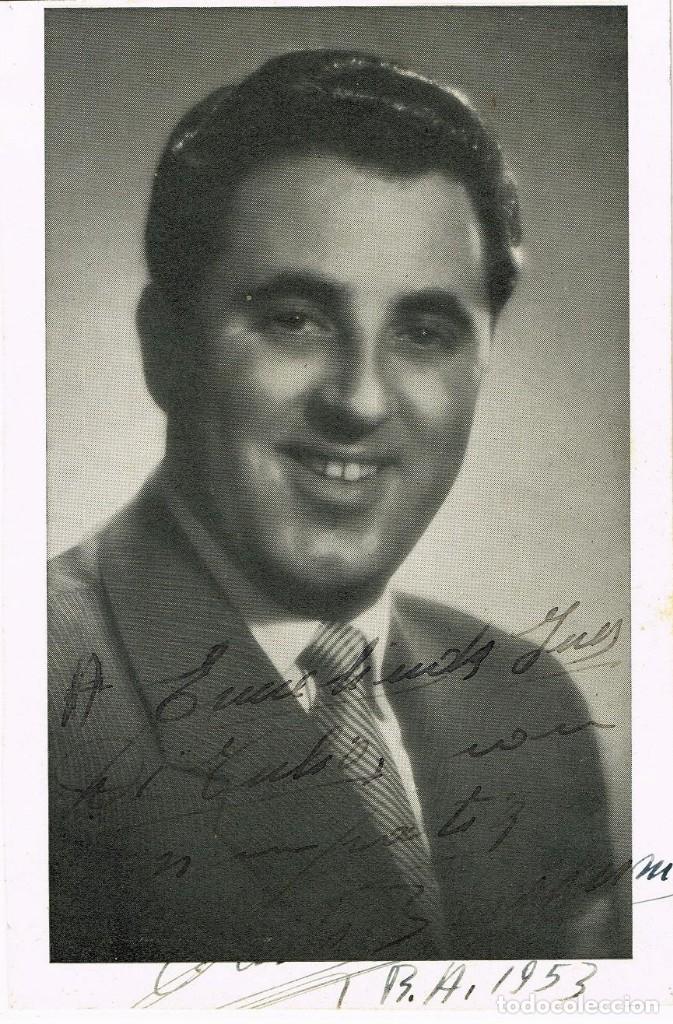
©https://cloud10.todocoleccion.online/autografos-antiguos-cantantes-musicos/tc/2021/08/05/19/279594008.jpg

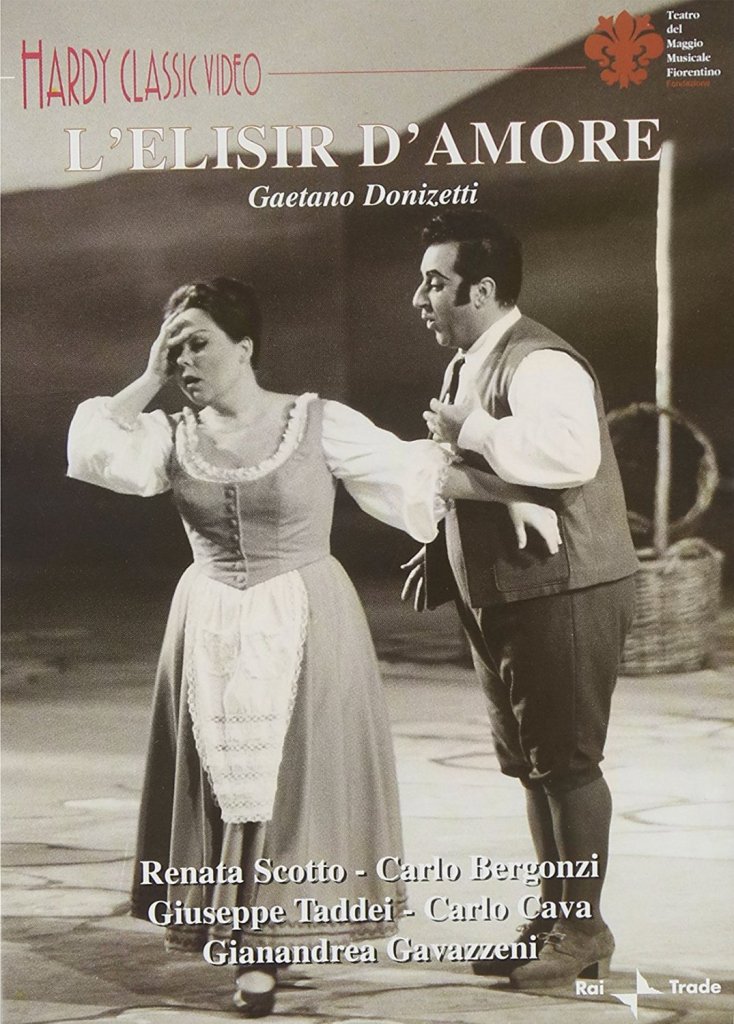
L’ELISIR D’AMORE


To the younger generation I would especially recommend the DVD with Renata Scotto, Carlo Bergonzi and Giuseppe Taddei (Hardy Classic Video HCD 4014). It is not only the beautiful voices of the past that impress (Scotto, Bergonzi, Taddei – who can still sing like them?), the eye is also given a lot to enjoy.

Do not think that they just enter the stage, sing an aria facing the audience and then take a bow. It is theatre pur sang and a better acting singer than Scotto has yet to be born.

The picture is black and white (the recording was made during Maggio Musicale Fiorentino in 1967) and the scenery is cardboard, but who cares?

LUCIA DI LAMMERMOOR

Renata Scotto 1967
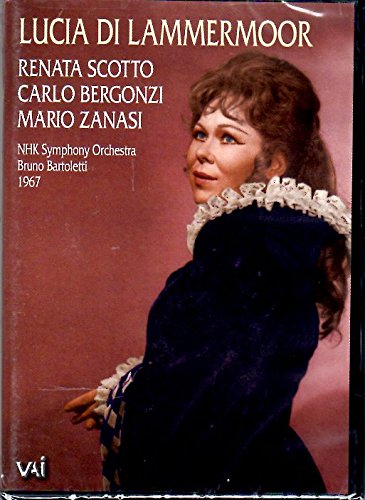

This production of Lucia di Lammermoor was recorded in Tokyo in 1967 and is available on DVD (VAI 4418). It circulated for years on pirate video, but since the sound and picture quality was particularly poor, the commercial release has made many opera lovers very happy. The sound is a little sharp, making Scotto’s high notes sound even more metallic than usual, but who cares?

Her interpretation is both vocally and scenically of an unprecedented high level. With a childishly surprised expression (my brother does this to me?) on her face, she agrees, albeit not without grumbling, to the forced marriage with Arturo (an Angelo Marchiandi who is hideous in every way).

After her mad scene, you tend to pull the plug, because everything that comes after it can only feel like a cold shower. But you are wrong about that. Edgardo’s two arias, sung by Carlo Bergonzi, will take you straight to (singer’s) heaven.


Afterwards, you can’t help but be a little sad, because where have they gone, yesterday’s singers? Small, tall, fat, skinny, with or without acting talent… None of them was a ballet dancer, but could they sing! And it was through their voices alone that they were able to convey all of the feelings that now require a whole ‘artistic team’. In spite of the cuts that were common at the time, this is an absolute must.

Below, Bergonzi sings ‘Fra poco a me ricovero’

Beverly Sills 1970
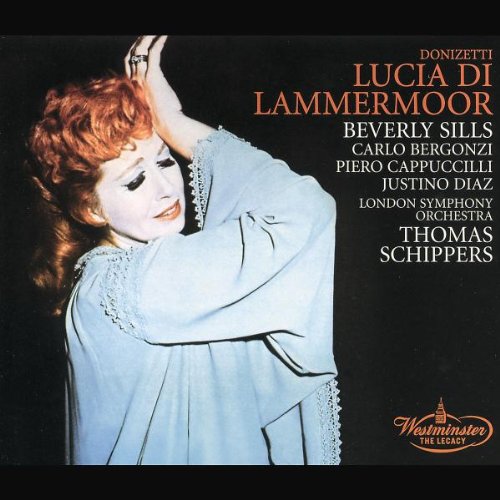


Sills’ Lucia (Westminster 4712502) for me remains one of the best interpretations ever, especially talking about studio recordings. Her portrayal unites the best of Callas and Suitherland: the virtuosity, vocal beauty and pure intonation of la Stupenda and the great acting of la Divina. Not really a great tragédienne (but then, neither is Lucia), she is more of a passive child-girl who just lets it all happen. Carlo
Sills’ Lucia (Westminster 4712502) for me remains one of the best interpretations ever, especially talking about studio recordings. Her portrayal unites the best of Callas and Suitherland: the virtuosity, vocal beauty and pure intonation of la Stupenda and the great acting of la Divina. Not really a great tragédienne (but then, neither is Lucia), she is more of a passive child-girl who just lets it all happen. Carlo Bergonzi sings an elegant and outraged Edgardo and Piero Cappuccilli a brutal and cruel Edgardo and Thomas Schippers conducts very firmly.

But what makes this recording really special is the use of a glass harmonica in the madscene, exactly as Donizetti had originally prescribed it


LA BOHEME

Renata Tebaldi 1958
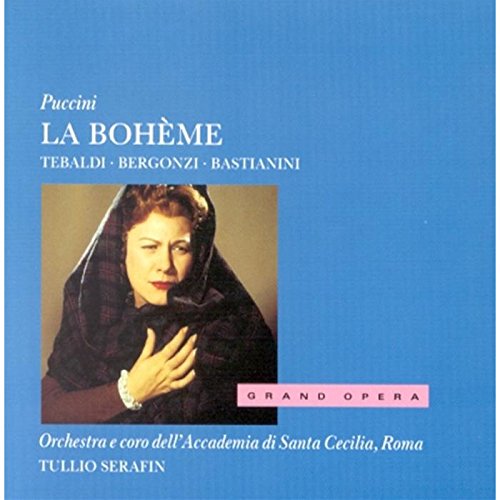


Actually, I also find Tebaldi’s voice a bit too heavy for Mimi, a tad too dramatic too, but there is no denying that her interpretation is very exciting. You have to keep listening to it.

Carlo Bergonzi is an insanely beautiful Rodolfo; secretly, I think he is the real star of the recording. Ettore Bastianini is a very charming Marcello, but Gianna d’Angelo is not a beautiful Musetta. Her singing has nothing sensual and is vulgar at times.

Tulio Serafin conducts more than superbly and the orchestral sound is brilliant. Remarkable actually how wonderful that recording still sounds! (Decca 4487252)

Licia Albanese 1958
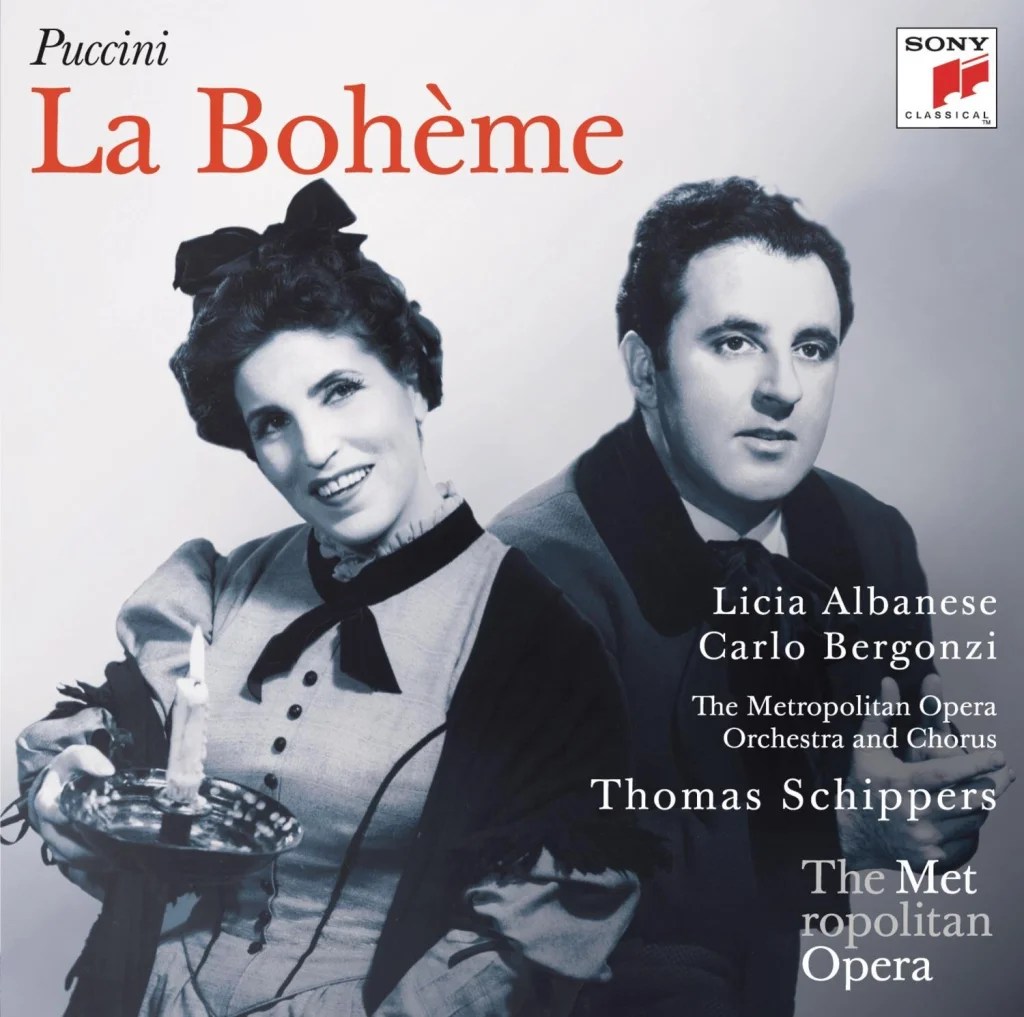
A warning is in order: the sound is not great. It is sharp and dull and occasionally the radio waves are humming rebelliously, but it also has something quite endearing. As if a time machine takes you back to the afternoons of yore, when the whole family settled down in front of the radio to listen to the latest invention, the live broadcast.

The performance, too, is old-fashionedly delicious. Not that the voices are all that exceptional, apart from Carlo Bergonzi who is at his finest, the other roles could have been better cast.

Licia Albanese (almost fifty by then, which is not at all audible) was a real crowd pleaser, especially in New York. Thomas Schippers conducts very vividly (Sony 8697804632)

MADAMA BUTTERFLY
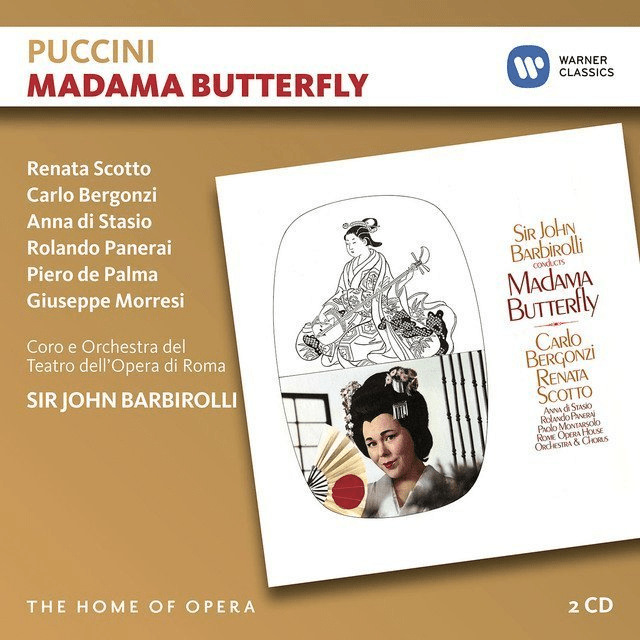
For me an absolute ‘numero uno’ is the 1966 recording by EMI (now Warner 0190295735913) under Sir John Barbirolli. One might imagine a more lyrical or alternatively a more dramatic Cio Cio San; one with less metal in her voice or maybe one with a more childlike voice. But no other singer was able to grasp the complex nature of the girl so well and to characterise her change from a naive child into an adult woman, broken by immense grief, so impressively

Carlo Bergonzi is a beautiful, lyrical Pinkerton, singing with glorious, golden ton and Rolando Panerai a very warm Sharpless.
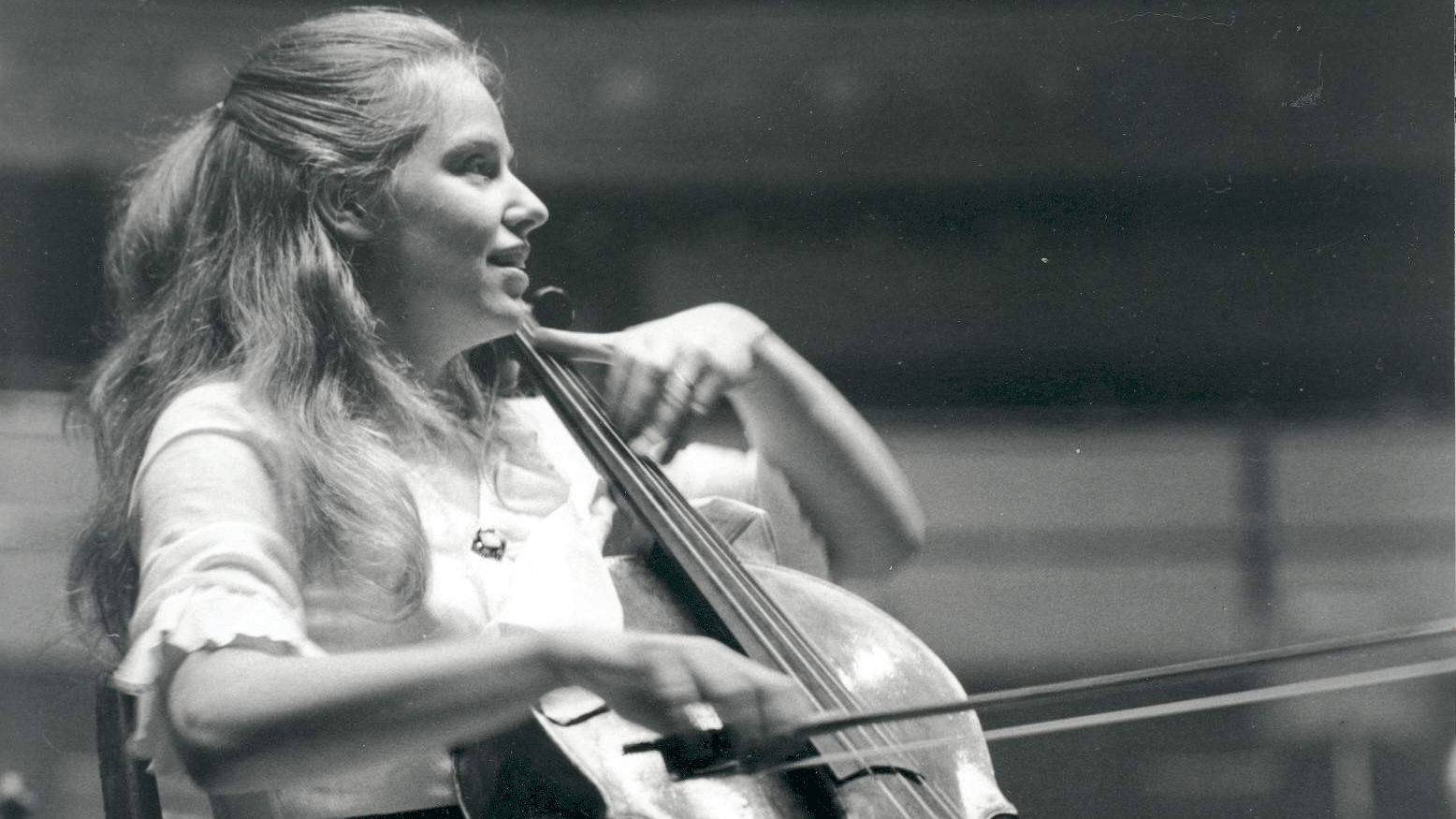
Jacqueline du Pré. Because no reason is necessary.

Ever since the truly brilliant and now legendary movie Amadeus shattered Mozart’s reputation (or, on the contrary, boosted it), nobody is holy anymore.

https://m.media-amazon.com/images/M/MV5BYjdlZjU3M2UtMjg3Yi00MTMyLWE0MTktMzgzNWQ0ZTYxMmRiXkEyXkFqcGdeQXVyODc0OTEyNDU@._V1_.jpg

In Anand Tucker’s extremely bad – in contrast to the masterful Amadeus –  Hilary and Jackie it was the turn of star cellist Jacqueline du Pré.

Trailer of the film:

It was all over with her image of a cute girl: the darling of so many fans turned out to be a nymphomaniac, who was also jealous of her sister and went to bed with her brother-in-law. The film is based on the book of du Pré’s sister and brother, so I’m sure it’s all true, but: what does it matter to a serious music lover? Will he now listen to Edward Elgar’s cello concerto in any other way? I certainly won’t.

dy pre elgar_wide-4cedfd9218869a63bd15fc09f7625b2e0b01eca4-s800-c85

Cellist Jacqueline Du Pre records Elgar’s Cello Concerto with conductor John Barbirolli at Kingsway Hall in London, 1965.
David Farrell/EMI Classics

Elgar and Jaqueline du Pré belong together, just like Chopin and Rubinstein or Vincent van Gogh and the sunflowers. Du Pré began to study the Elgar Concerto at the age of thirteen, under the inspired guidance of her teacher and ‘cello daddy’ Wiliam Pleeth, and in 1965 she made a recording of it, conducted by John Barbirolli.  This performance was already declared legendary at the time of its appearance, and when in 1970 a live recording with her husband Daniel Barenboim came out, opinions were clearly divided.

Du Pré, Elgar and Barbirolli:


du pre barenboim

Du Pré, Elgar and Barenboim:

Even today it remains difficult to choose between the two. The recording with Barbirolli is almost perfect, but the one with Barenboim sparkles and twinkles more. It is clearly audible that two perfect soul mates are at work here. This recording was also used in ‘Hilary and Jackie’ and can be found, next to Pheloung’s music on the soundtrack from that movie (Sony 60394).

Du Pré and Barenboim performed a lot together, but made few studio recordings together. The plans were there but her illness struck and that was that. Luckily there are a lot of live recordings of their performances. Beethoven’s cello sonatas, for example. They were recorded during the Edinburgh Festival in 1970 (EMI 5733322).

In 1999 EMI collected all the recordings the BBC ever made of du Pré (now available as Warner 2435733775). Maréchal’s arrangements of the Falla from 1961 are a bit dubious, and her Couperin (1963) and Händel (1961) are a bit dated, but the joy that radiates from them compensates a lot, or perhaps everything.

Du Pré was a natural talent, her playing was inspired and characterised by great intensity, and the liberties she took are not disturbing, partly because of that. As Barenboim once said “she had a gift for making the listener feel that the music she played was being composed at that moment”.


Translated with http://www.DeepL.com/Translator (free version)

Jacqueline du Pré. Omdat er geen reden voor is.

-du-pre-christopher-nupen_d

Sinds de, werkelijk geniale en inmiddels legendarische film Amadeus korte metten met de reputatie van Mozart heeft gemaakt (of het juist heeft opgevijzeld), is niemand meer heilig.

https://m.media-amazon.com/images/M/MV5BYjdlZjU3M2UtMjg3Yi00MTMyLWE0MTktMzgzNWQ0ZTYxMmRiXkEyXkFqcGdeQXVyODc0OTEyNDU@._V1_.jpg

In de, in de tegenstelling tot de meesterlijke Amadeus buitengewoon slechte Hilary and Jackie (regie: Anand Tucker) was de stercelliste Jacqueline du Pré aan de beurt.

Trailer van de film:

Het was gedaan met haar imago van een schattig meisje: de lieveling van de zovele fans bleek een nymfomane, die ook nog eens jaloers was op haar zus en met haar zwager naar bed ging. De film is gebaseerd op het boek van de zus en broer du Pré, dus het zal wel allemaal waar zijn, maar: wat kan het een serieuze muziekliefhebber schelen? En: zal hij nu anders naar het celloconcert van Edward Elgar luisteren? Ik in ieder geval niet.

dy pre elgar_wide-4cedfd9218869a63bd15fc09f7625b2e0b01eca4-s800-c85

Cellist Jacqueline Du Pre records Elgar’s Cello Concerto with conductor John Barbirolli at Kingsway Hall in London, 1965.
David Farrell/EMI Classics

Elgar en Jaqueline du Pré horen bij elkaar, net als Chopin en Rubinstein of Vincent van Gogh en de zonnebloemen. Du Pré begon het in te studeren op haar dertiende, onder het bezielde oog van haar leraar en ‘cellopappa’ Wiliam Pleeth, en in 1965 maakte zij er een opname van, onder leiding van John Barbirolli.  Deze uitvoering werd al bij het verschijnen legendarisch verklaard en toen in 1970 een liveopname met haar echtgenoot Daniel Barenboim verscheen, waren de meningen duidelijk verdeeld.

Du Pré, Elgar en Barbirolli:


du pre barenboim

Du Pré, Elgar en Barenboim:


Ook vandaag blijft het moeilijk om tussen die twee te kiezen. De opname met Barbirolli is bijna volmaakt, maar die met Barenboim sprankelt en twinkelt meer. Het is duidelijk hoorbaar dat hier twee perfecte soulmates aan het werk zijn. Deze opname werd ook in ‘Hilary and Jackie’ gebruikt en bevindt zich, naast de muziek van Pheloung, op de soundtrack uit die film (Sony 60394)


Du Pré en Barenboim traden veel met elkaar op, maar samen maakten zij weinig studio-opnamen. De plannen waren er wel maar haar ziekte sloeg toe en dat was dat. Gelukkig bestaan er veel live opnamen van hun optredens. De cellosonates van Beethoven, bij voorbeeld. Ze werden opgenomen tijdens het Edinbourgh Festival in 1970 (ooit EMI 5733322)


In 1999 heeft EMI (tegenwoordig Warner 2435733775) alle opnamen gebundeld die de BBC ooit van du Pré maakte. Maréchal’s bewerkingen van de Falla uit 1961 zijn een beetje bedenkelijk, en de uitvoering van de werken van Couperin (1963) en Händel (1961) doet een beetje gedateerd aan, maar het speelplezier dat er uitstraalt vergoedt veel. Zo niet alles.


Du Pré was een natuurtalent, haar spel was bezield en werd gekenmerkt door een grote intensiteit en de vrijheden die zij zich veroorloofde, zijn mede daardoor niet storend. Barenboim: “zij had een gave, om een luisteraar het gevoel te geven dat de muziek die zij speelde op dat moment werd gecomponeerd”.

Barenboim dirigeert povere The dream of Gerontius

Elgar Barenboim

Toegegeven, de omstandigheden waren alles behalve optimaal. Het begon met de afzegging van de stertenor Jonas Kaufmann. Op zich niet echt een ramp, zijn stem is niet echt geschikt voor Gerontius.

Kaufmann werd vervangen door Toby Spence, een zowat ideale vertolker van die rol. Helaas, ook Spence zegde af en Andrew Staples stapte in. Prima tenor, zonder meer, maar zijn stem past beter bij werken van Mozart en Bach. Op het laatste moment liet ook Sarah Connoly het afweten en de rol van Angel werd overgenomen door Catherine Wyn-Rogers.

Geen van de twee nieuwe solisten voldeed aan de hoge eisen van het werk. Wyn-Rogers intoneert niet zuiver en haar ruime vibrato is een marteling om naar te luisteren. Van de oorspronkelijk voorgestelde bezetting bleef alleen Thomas Hampson over, maar in zijn eentje kon hij de uitvoering echt niet dragen.

Daniel Barenboim heeft altijd veel affiniteit met de muziek van Elgar gehad, het is ook niet de eerste keer dat hij het mystieke meesterwerk dirigeert. Helaas is het resultaat nu gewoon knudde. Het orkest is te zwaar en het koor klinkt te Duits. Ik snap best dat je de geplande voorstellingen en radio-uitzendingen niet zo maar kunt cancelen, maar moest het povere resultaat dan ook op cd’s uitgebracht worden?


EDWARD ELGAR
The Dream of Gerontius
Catherine Wyn-Rogers, Andrew Staples, Thomas Hampson
Staatsopernchor Berlin, RIAS Kammerchor; Staatskapelle Berlin olv Daniel Barenboim

SIR JOHN BARBIROLLI AND SIR ADRIAN BOULT

Afbeeldingsresultaat voor Gerontius Barbirolli Warner

Gelukkig: aan goede uitvoeringen geen gebrek. Het mooist vind ik de opname onder John Barbirolli uit 1964 (Warner 0724357357920) , niet in de laatste plaats vanwege de onnavolgbare bijdrage van Janet Baker:

Maar ook Sir Adrian Boult (Warner 0724356654020 ) uit 1975 is niet te versmaden!
Alleen al vanwege Nicolai Gedda’s meer dan ontroerende ‘I went to sleep’: