Jaco_Huipen

Unforgettable premiere of Pascal Dusapin’s ‘Faustus, The Last Night’

Pascal Dusapin

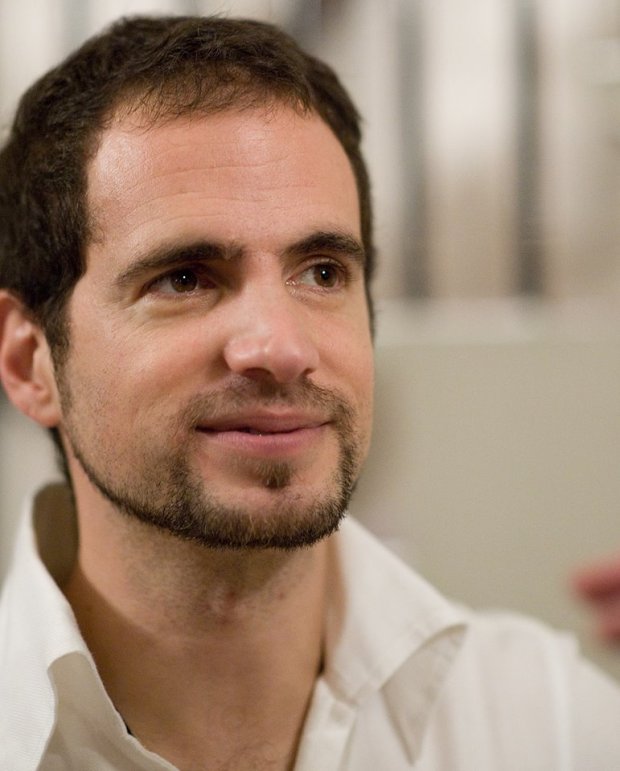
Dusapin’s opera Faustus, The Last Night had an unforgettable Dutch premiere at the ZaterdagMatinee on 13 November 2010. It is hard to imagine a better performance; it was wonderfully conducted by Jonathan Stockhammer and featuring soloists such as John Hancock and Jaco Huijpen.
dusapin-dirigent

Jonathan Stockhammer


All of us sometimes dream of eternal youth, perfect health, happy love and freedom to do as we please. Some people are very willing to pay a lot for those things, they will even make a pact with the devil if necessary. See here the inspiration for countless books, poems, operas, musical pieces and paintings


We, humans, we love dreams. And fairy tales. But devils, should they really exist, might have something better to do than serve us for a few decades, in exchange for our souls. Nor are heaven and hell to be taken for granted. Maybe they are made up?

That’s what “Faustus, The Last Night” by Pascal Dusapin (1955) is all about. Forget Goethe, because Mephistopheles is not interested in Faustus’ soul and Faustus does not want to sell anything. There is also no Marguérite, no love and no artistry either. There is NOTHING. A “nulla”, as it was articulated by Iago in Verdi’s Otello. And a total nihilism like that of Mefistofele, from Boito’s opera of the same name.

Dusapin’s opera, a work comprising one night and 11 scenes, was first performed in 2006 at the Staatsoper unter den Linden in Berlin.

Lyon and Spoleto followed and now it was Amsterdam’s turn, with a performance at the ZaterdagMatinee. Fortunately concertante, which meant you were not disturbed by the (delusional) concepts of a mallotic director.

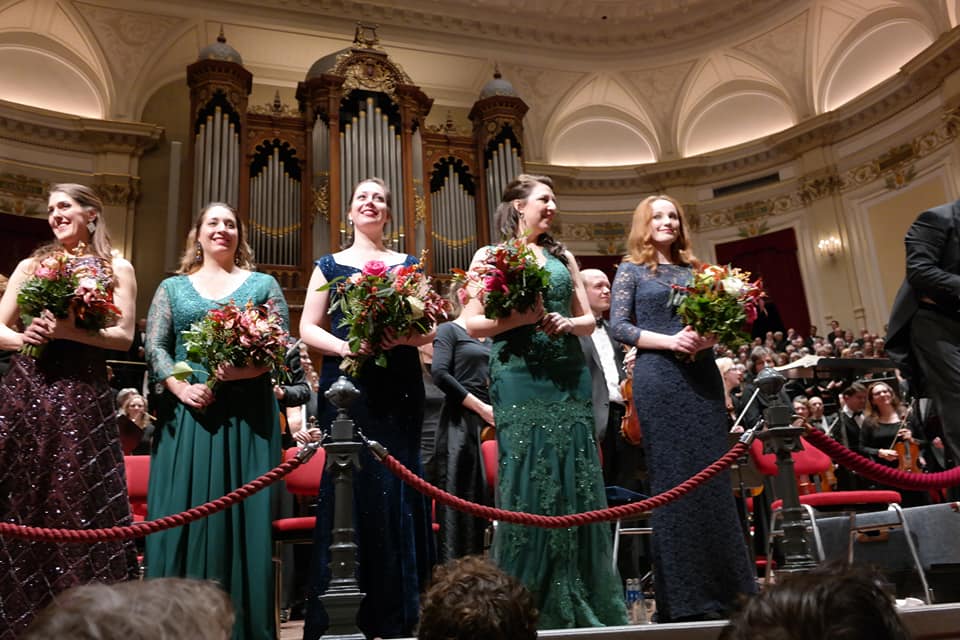
Although, concertante? Quite a lot happened on the Great Hall stage. The stairs and balconies were used gratefully. All the singers knew their roles by heart (most of them have also sung the opera elsewhere), allowing them to concentrate not only on the dog-eared score, but also on acting.

The opera itself is actually one long conversation about the existence or non-existence of things. And the sense or nonsense of life. Existentialism at its finest.

Dusapin is not easy to categorize. He was taught by Franco Donatoni and Iannis Xenakis, but did not adopt their ideas. Fortunately, he also has an aversion to ˜systems”and he makes grateful use of everything that has been developed over the years: jazz, electronics, bandas, added timpani and horns…

Whatever you come up with, Dusapin knows how to use it. Eclectic? Yes, but thankfully that is no longer a swear word. Easy? No. But so insanely fascinating!

Apart from Faustus and Mephistopheles, Dusapin introduces two more characters: Togod, (an anagram of Godot, think Beckett’s play) – half God, half devil.
And Sly, a drunk and a laughingstock, and he is yet another quote. Not only from the Shakespeare (Sly is a minor character in The Taming of the Shrew) but also from Wolf-Ferrari’s opera.

And then we also have a blind angel, who cannot be seen himself and who only manages to tell the protagonist to be born again. In the total chaos that follows, the angel is consumed by flames.

At the end, the fire extinguishers, and, whispering softly, and the music extinguishes  with it. The spectators are left to their own devices in ˜Nothingness”. Breathtakingly beautiful and painfully moving.

About the performance of the ZaterdagMatinee I can be very brief: TOP! How and where does one find such brilliant singer/actors? Granted, they were amplified, but that could not be otherwise, no (human) voice can withstand the violence of those timpani, trombones and electronics. And yet … Amplified or not –  hats off to them, all of them.

Heather Buck (Angel) ˜walked”through her prescribed vocal jumps of no less than two octaves with a deadly ease. Adam Klein was at times hilarious as the constantly drunk Sly and yet he also managed to emphasise the more serious side of his role.

dusapin-jaco

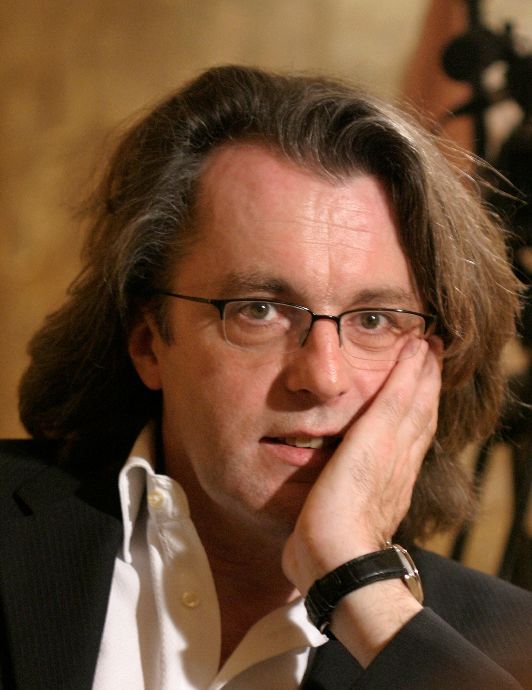
Jaco Huijpen


Dutch bass Jaco Huijpen was a very impressive Togod and Stephen West was a no-holds-barred Mephistopheles.

John Hannock was a Faustus out of thousands. In fact, I still cannot fathom how he filled the role. His voice seemed made of elastic. Sprechgesang? Bel canto? Dramatic? Anything really: he could do it and he did it all. And how!
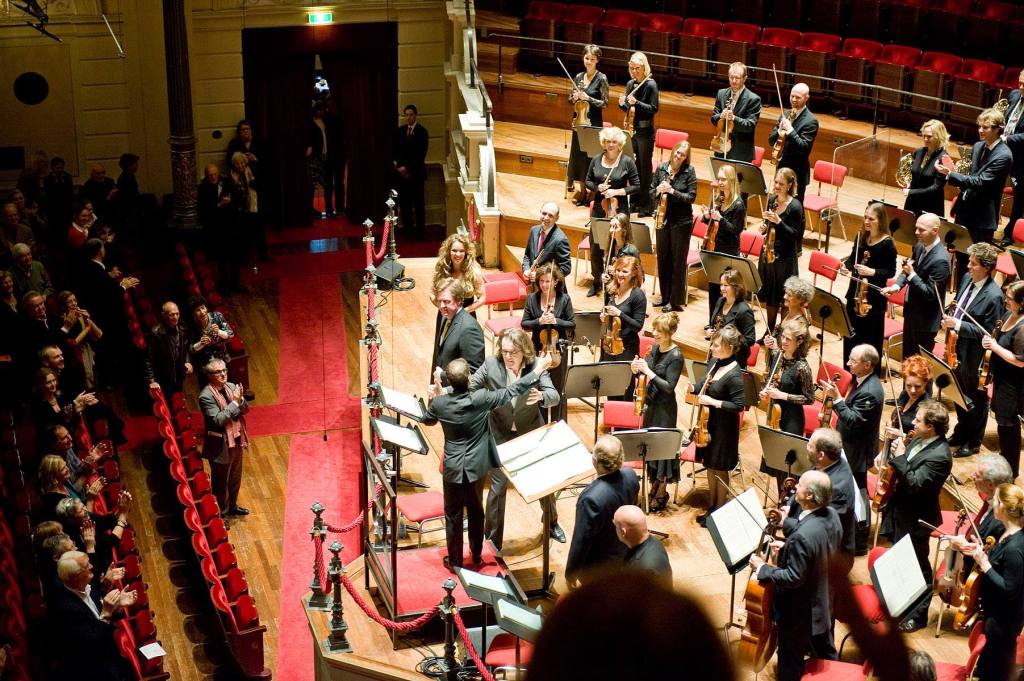
The final applause with Pascal Dusapin and Jonathan Stockhammer in the middle


The Radio Chamber Philharmonic under Jonathan Stockhammer’s direction sounded as if they had fused with Dusapin’s music, and perhaps that is true. Unforgettable.


Pascal Dusapin
Faustus, the Last Night
Performed by Radio Kamer Filharmonie olv Jonathan Stockhammer
Soloists: John Hancock, Stephen West, Jaco Huijpen, Adam Klein and Heather Buck
Visited on 13 November 2010 in the Concertgebouw in Amsterdam
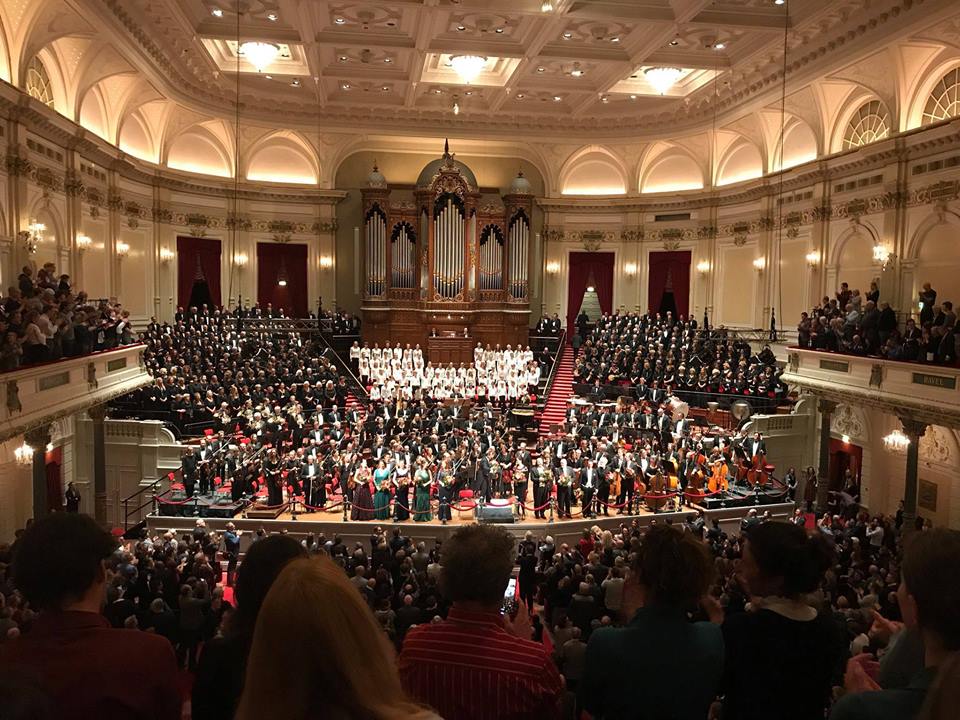
Jules van Hessen dirigeert ‘Sinfonie der Tausend’ van Gustav Mahler

Mahler zaal Maurits Haenen

Mahler 8 in Amsterdam © Maurits Haenen

De achtste symfonie van Mahler heet onuitvoerbaar te zijn. Je hebt er een immens orkest voor nodig dat ook nog eens versterkt is met extra koperblazers en slagwerk. Tel daar nog een orgel bij, drie gemengde koren, twee jongens (kinder)koren, drie sopranen, twee alten, tenor, bariton en bas! Alles bij elkaar zowat duizend musici (vandaar de bijnaam ‘Symphonie der Tausend’), maar echt zo veel lukt natuurlijk (bijna?) nooit.

Bij de – door veel beroemde dirigenten en componisten bezochte en zeer enthousiast ontvangen – première op 12 september 1910 in München had Mahler niet “meer” dan vierhonderd musici en (koor)zangers bij elkaar verzameld. Aanzienlijk minder dus dan de 500+ die ‘losgelaten werden’ op de bijna 2000 bezoekers van het concert op 30 november 2017.

Mahler julesbraz5

Jules van Hessen © René Knoop

Het concert had een inmiddels zeer vertrouwde en bij velen zeer geliefde formule ‘Maestro Jules onthult’.  Het begon met een superieure toelichting van het werk door de dirigent Jules van Hessen die alle door hem uit(en toe)gelichte voorbeelden liet ‘illustreren’ door de musici en zangers, allemaal uiteraard live. De tot de nok gevulde en tot de allerlaatste plaats uitverkochte zaal juichte het toe. En terecht, want: hoeveel mensen, de zogenaamde ‘kenners’ incluis, kennen hun Mahler 8 echt goed?

De toelichting duurde een half uur en mocht je daar geen zin in hebben dan kwam je gewoon na de pauze binnen: het concert zelf werd niet verstoord.

De eerste deel, het ‘Veni Creator Spiritus’ die een middeleeuws pinksterhymne als uitgangspunt heeft kan mij eerlijk gezegd gestolen worden. Het is verschrikkelijk imposant en imponerend, dat wel, maar echt mooi kan ik het niet vinden.

Het tweede deel is gebaseerd op de slotscène uit Goethe’s ‘Faust’. Het mysterieuze begin hoort fluisterzacht en zeer liefdevol te klinken: Mahler schreef het als een soort liefdesverklaring aan zijn vrouw Alma. Zo klonk het ook. Mooi.

Na het voorzichtige instrumentale begin namen de koren en de solisten het over en zo werd er een verhaal verteld dat zowel van een allesomvattende liefde als van een spirituele verlossing getuigde. Om dan, aan het eind met het monumentale Chorus Mysticus  die ‘Alles Vergängliche’ inzette, waardoor het hele Concertgebouw zowat uit zijn voegen barstte. Want, zeg maar zelf, zoveel muzikaal geweld hoor je echt niet iedere dag.

Met een werkelijk grandioze uitvoering van wat ‘onuitvoerbaar’ heet te zijn heeft Jules van Hessen een dikke vinger naar alle sceptici en betweters opgestoken.

Mahler 8 philips-symfonie-orkest-rob-beltjens-2

Jules van Hessen en ‘zijn’ Philips Symphony Orchest © Rob Beltjens

Naar een ieder die beweert dat Mahler 8 uitsluitend voorbestemd is voor de allerbeste orkesten ter wereld, bij voorbeeld. Van Hessen wist het door hem geleide Philips Symfonie Orkest dat voor een groot deel uit (zeer gevorderden, dat wel, maar toch….) amateurs bestaat een echt onvervalste Mahler-sound te ontlokken. Iets wat je heel goed kon horen in de zachte passages en in de duidelijk ‘onderstreepte’ en daardoor zeer herkenbare Mahler-deuntjes.

Dikke vinger ook naar alle castingdirectors die nooit eens naar het talent kijken dat ons land rijk is en al die geweldige Nederlandse zangers meestal links laat liggen. Alle – en daarmee bedoel ik ook alle – solisten bleken niet alleen tegen hun zware taak opgewassen, maar lieten ook een grote affiniteit met het Mahlers-idioom te hebben.

Mahler dames Nicole

slotapplaus: van links naar rechts Maartje Rammeloo, Carina Vinke, Leonie van Rheden, Lisette Bolle en Laetitia Gerards © Nicole van Eijck

Het kan aan de plaats waar ik zat liggen dat ik mij sterk gefocust had op de prachtige alt Carina Vinke. Bij haar had ik het gevoel dat zij haar Mahler niet alleen de goede noten en mooie klanken, maar ook heel veel liefde gunde. Wat het ook was: ik hing aan haar lippen.

Maar ook haar mezzo – collega, Leonie van Rheden kon mij meer dan bekoren. Haar buitengewoon fraaie, zeer warme en ronde geluid klonk als balsem in mijn oren.

Maartje Rammeloo’s stem is heel erg groot waardoor haar hoge sopraan zeer dominant klonk, wat bij Magna Peccatrix eigenlijk vanzelfsprekend is.

Mahler Maartje Lisette

Maartje Rammeloo en Lisette Bolle

Als Una poenitentium (en daarna Gretchen) wist Lisette Bolle mijn hart te stelen. Wat een fraaie stem toch! Met haar korte optreden op het balkon klonk Laetitia Gerards als een echte Mater Gloriosa die even voorbij ‘zweefde’.

Frank van Aken is een echte heldentenor en met zijn lange staat van dienst was het niet meer dan logisch dat de rol van Doctor Marianus hem zowat op de huid is geschreven.

Jaco Huipen behoort al jaren tot mijn geliefde bassen en ook met zijn optreden als Pater Profundus wist hij mij zeer te overtuigen en Martijn Sanders zong een fraaie Pater Ecstaticus.

Na afloop van het concert stond ons allemaal nog een verrassing te wachten. De dirigent viert dit jaar zijn dertigjarig jubileum als chef-dirigent van het Philips Symfonie Orkest en zijn verdiensten zijn groots. Daarvoor, maar ook voor alles wat hij het muziekminnende publiek heeft geschonken werd hij donderdag benoemd tot Ridder in de Orde van Oranje-Nassau.

Mahler ondescheiding

© Rob Beltjens

Locoburgemeester Simone Kukenheim overhandigde hem het speldje met de woorden: “Door de unieke combinatie van zijn muzikale gave, zijn presentatiekunde en cultureel ondernemerschap is Jules van Hessen een dirigent die een groot publiek weet te bereiken en inspireren” .

Daar konden we het niet anders dan helemaal mee eens zijn.

Teaser:

Gustav Mahler
Achtste symfonie in Es (Symphonie der Tausend)
Maartje Rammeloo, Lisette Bolle, Laetitia Gerards (sopraan); Leonie van Rheden (mezzosopraan);  Carina Vinke (alt);  Frank van Aken (tenor);  Martijn Sanders,  Jaco Huijpen (bas)
Philips’ Philharmonisch Koor, Nederlands Concertkoor, Toonkunstkoor Utrecht, Vocaal Talent Nederland;  Philips Symfonie Orkest olv Jules van Hessen

Gehoord donderdag 30 november 2017 in de Grote Zaal van het Concertgebouw