Brigitte_Fassabender

Brigitte Fassbaender: ‘lilting’ is the magic word


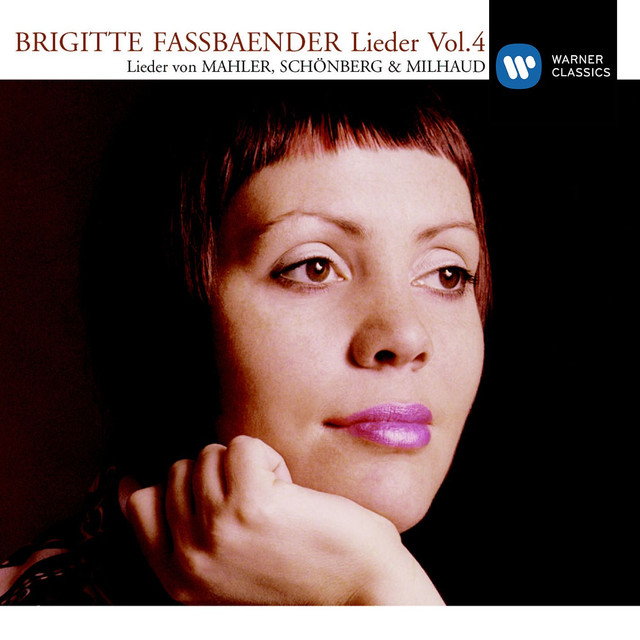
In the original EMI release (74767972), the texts were not included. A shortcoming, but they were not strictly necessary: Fassbaender articulates so well that every word is clear, without compromising the music.

Her Mahler is very sensitive, sung with compassion. Sometimes her emotions get the better of her (Lieder eines fahrenden Gesellen), but I don’t mind. Mahler can have it.

Arnold Schoenberg is very different. He composed his cycle ‘Das Buch der hangenden Garten’ in 1908, and though it is not devoid of emotions, it is strictly atonal. In an interview with Thomas Vogt, Fassbaender confesses that learning to sing the songs was not easy, yet she finds them written ‘liltingly’. And that is also how she performs them, liltingly, as if she were singing Schumann.


Milhaud’s songs are another thing altogether: if Mahler was the appetiser and Schoenberg the (heavy) main course, the “Chansons de la négresse” make for a lovely light dessert. Despite the far from cheerful texts, they are light-hearted and dancey, and they are very pleasant to listen to.


Gustav Mahler, Arnold Schoenberg, Darius Milhaud
Brigitte Fassbaender (mezzo-soprano)
Irwin Gage & Aribert Reimann (piano)
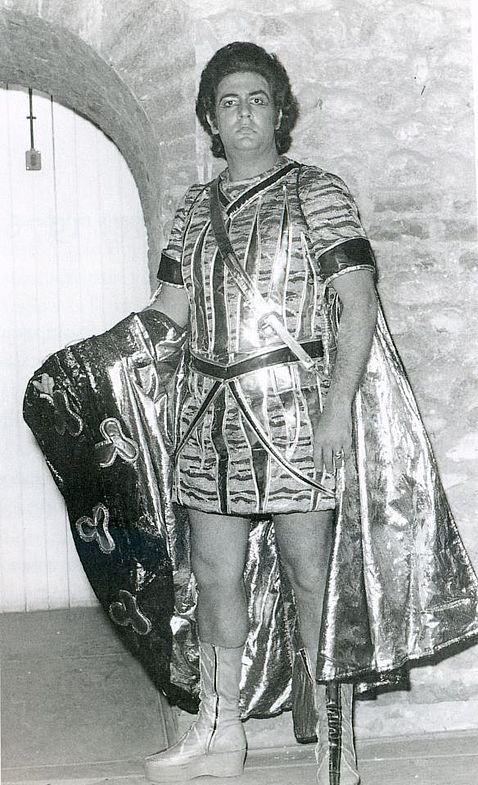
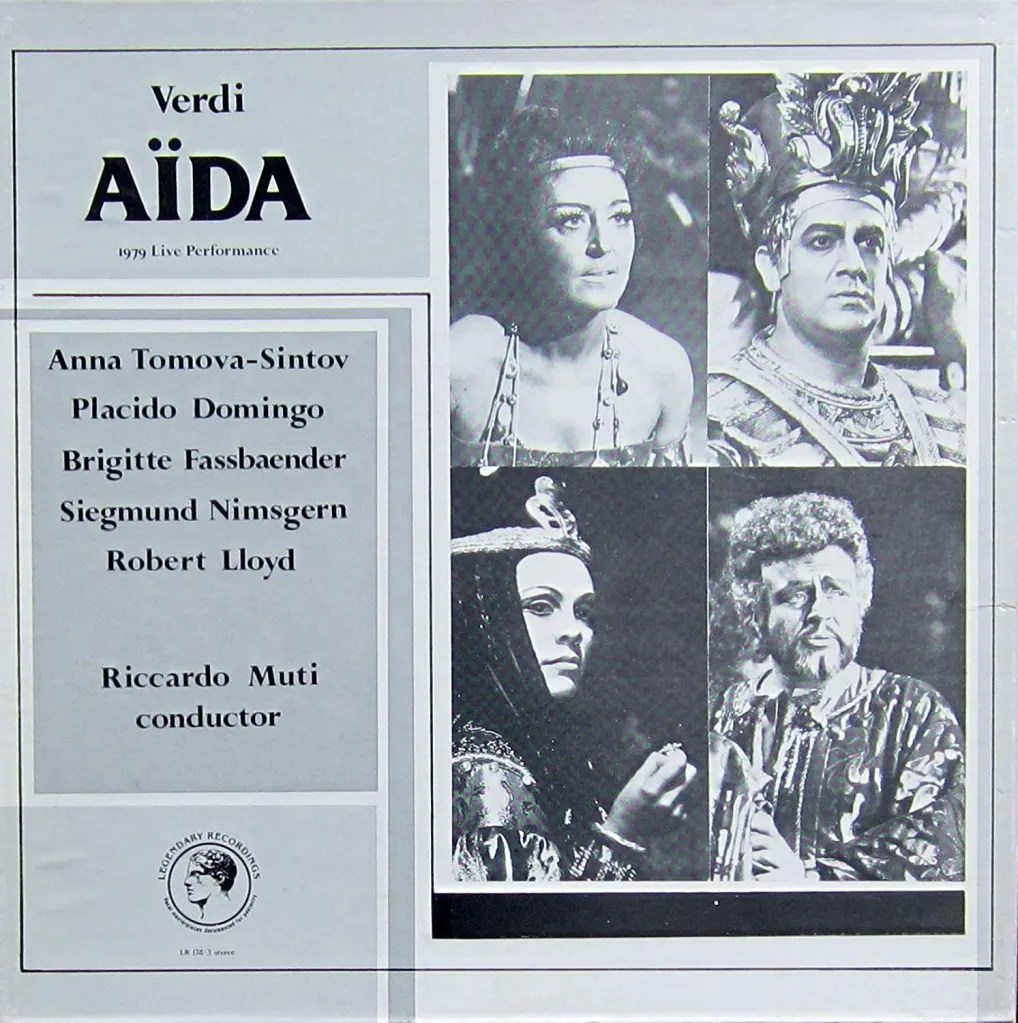
Aida and Plácido Domingo


Radames was among Domingo’s favourite roles. No wonder. Here he could really ‘show it all’, because the hero is very complex. He is a ‘macho with a lot of muscles’ and a vulnerable boy at the same time, and he is torn between duty and passion. Unfortunately, the two are not compatible.


To sing Radames well you need not only a cannon of a voice but also an intellectual ability. And he has both.


He made his debut with Aida in 1968 in Hamburg and he has since sung the opera thousands of times. There are many recordings on the market, both studio and live. I would like to dwell on a recording that will not evoke an ‘aha’ moment for most of you – also because at first glance the cast is not idiomatically perfect.

The fact that Anna Tomowa-Sintow was one of Karajan’s favourite singers had its advantages and disadvantages. She was a welcome guest in Salzburg and her name appears on many recordings conducted by the maestro. But it also meant that she was primarily rated as a Mozart and Strauss singer, while she had so much more to offer. Her Desdemona and Amelia were legendary and after her Munich Aida, Leonie Rysanek praised her performance for its pure beauty.

Fassbaender is really surprising and particularly convincing as Amneris. Just listen to what she does with the single word ‘pace’ at the end of the opera. The opera was recorded by Bayeriche Rundfunk on 22 March 1979 and released on Orfeo (C583 022).


Also noteworthy is the recording from Munich 1972, with a now almost forgotten Verdi singer, Martina Arroyo. As Amneris, we hear Fiorenza Cossotto and Cappuccilli and Ghiaurov complete the excellent cast conducted by Claudio Abbado.


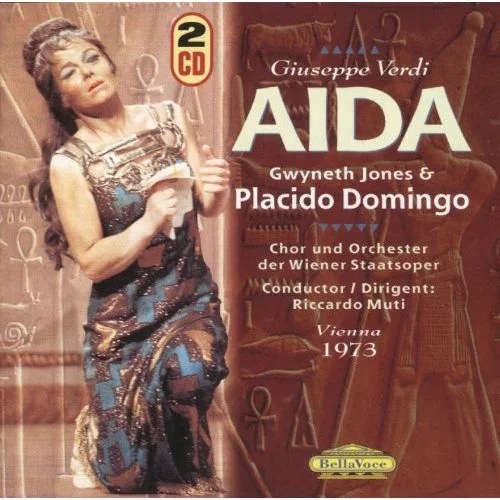
The recording from Vienna 1973 (Bela Voce BLV 107.209), under Riccardo Muti, is also of particular interest. In the leading role we meet Gwyneth Jones and Amneris is sung by an exceptional mezzo: Viorica Cortez.

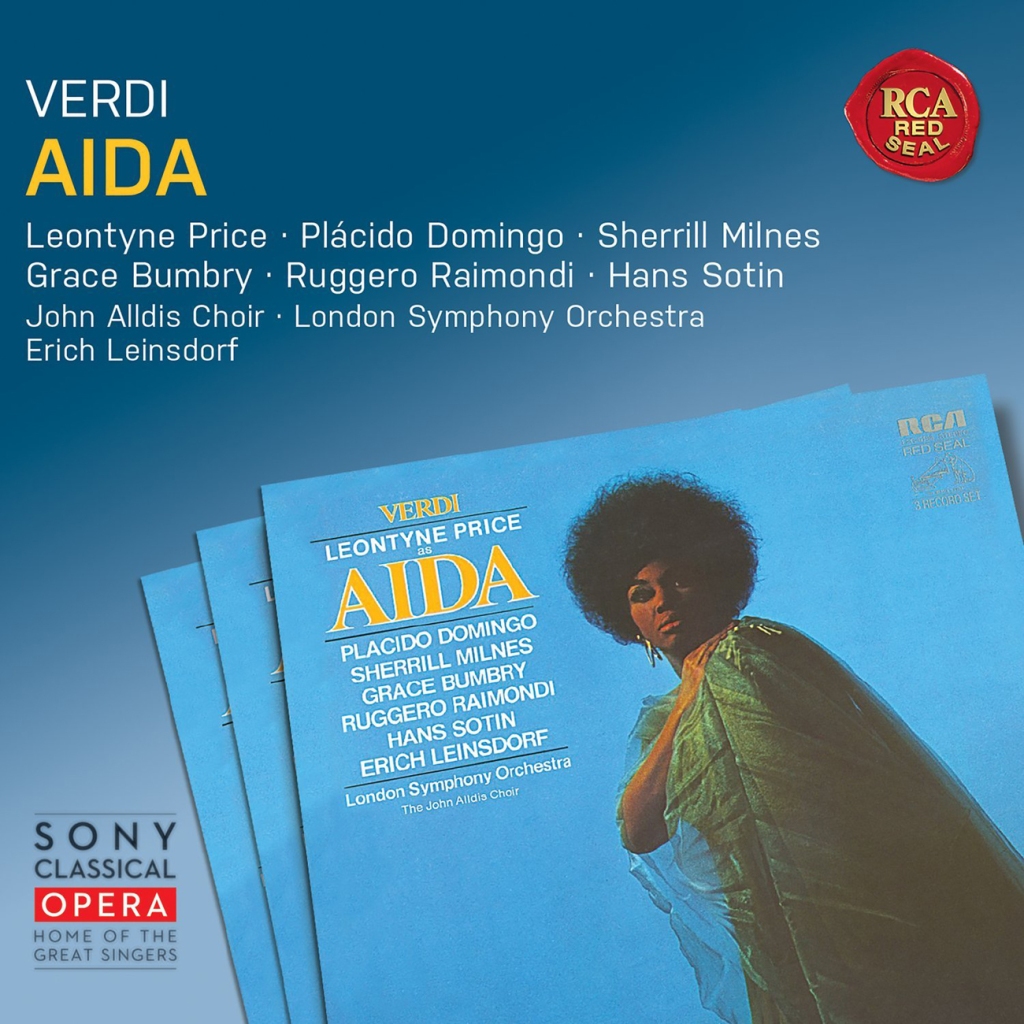
Of Domingo’s studio recordings the 1970 RCA release (probably from the catalogue), is probably the best. How could it be otherwise, when you know that the conductor is Erich Leinsdorf and the other roles are sung by Leontyne Price, Sherrill Milnes, Grace Bumbry and Ruggero Raimondi. The whole thing almost pops out of your speakers.

Brigitte Fassbaender: ‘zangerig’ is het toverwoord

Fassbaender

In de oorspronkelijk EMI-uitgave (74767972) waren de teksten niet bijgeleverd. Een euvel, maar echt nodig waren ze niet: Fassbaender articuleert zo goed dat ieder woord duidelijk verstaanbaar is, zonder dat het afbreuk doet aan de muziek.

Haar Mahler is zeer gevoelig, gezongen met compassie. Soms worden haar emoties haar de baas (Lieder eines fahrenden Gesellen), maar ik vind het niet erg. Mahler kan het hebben.

Arnold Schönberg is andere koek. Zijn cyclus Das Buch der hangenden Garten componeerde hij in 1908, en al is het niet gespeend van emoties, toch is het strikt atonaal. In een interview met Thomas Vogt bekent Fassbaender dat het niet makkelijk was om de liederen te leren zingen, toch vindt zij ze ‘zangerig’ geschreven. En zo vertolkt zij ze ook, zangerig, alsof zij Schumann staat te zingen.

De liederen van Milhaud zijn een hoofdstuk apart: was Mahler een voorgerecht en Schoenberg een (zwaar) hoofdgerecht, zo zijn de Chansons de la négresse net een luchtig dessert. Ondanks de verre van vrolijke teksten zijn ze licht en dansant, en ze liggen prettig in het gehoor.


Gustav Mahler, Arnold Schönberg, Darius Milhaud
Brigitte Fassbaender (mezzosopraan)
Irwin Gage & Aribert Reimann (piano)