Boris_Godunov

Boris Godunov: attempt to write a discography

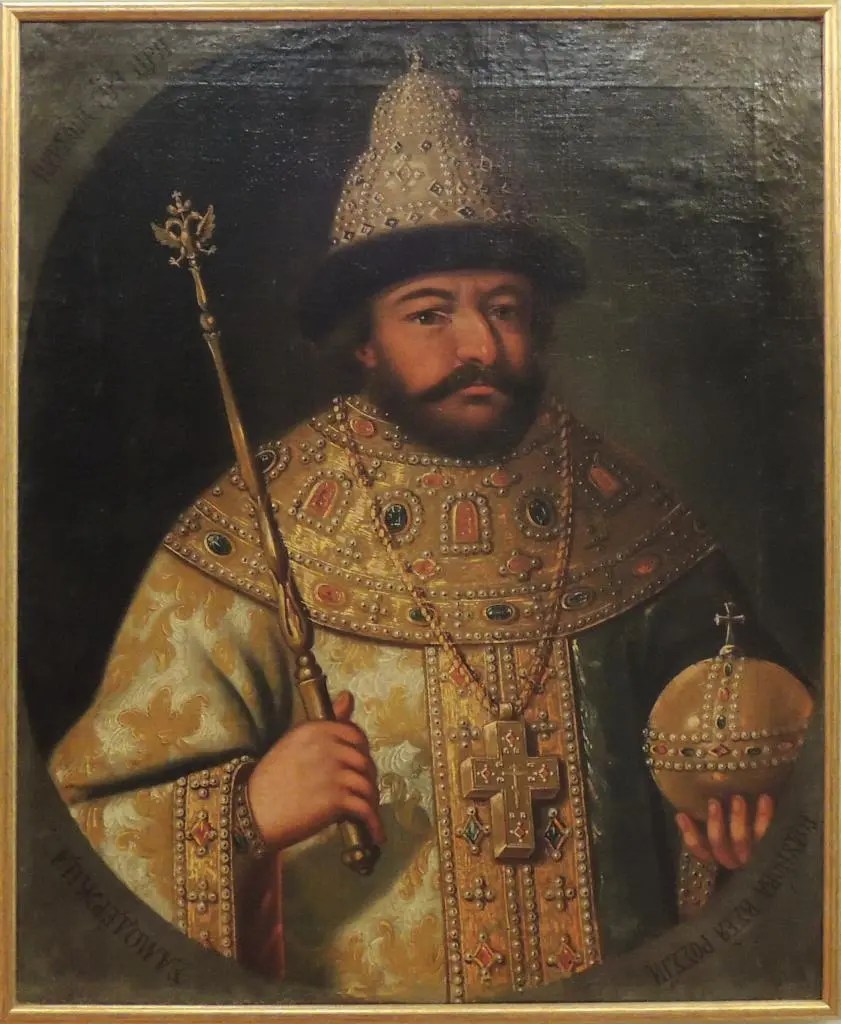
I am not going to bore you with a detailed explanation of the various versions of Boris Godunov – two of them by Mussorgsky himself. Enough has already been written about it and if you want to know more, you can find some on the internet. Besides: really getting sidetracked by this doesn’t work, I’m afraid. Hence I judge these few selectively chosen recordings purely on performance (and direction).

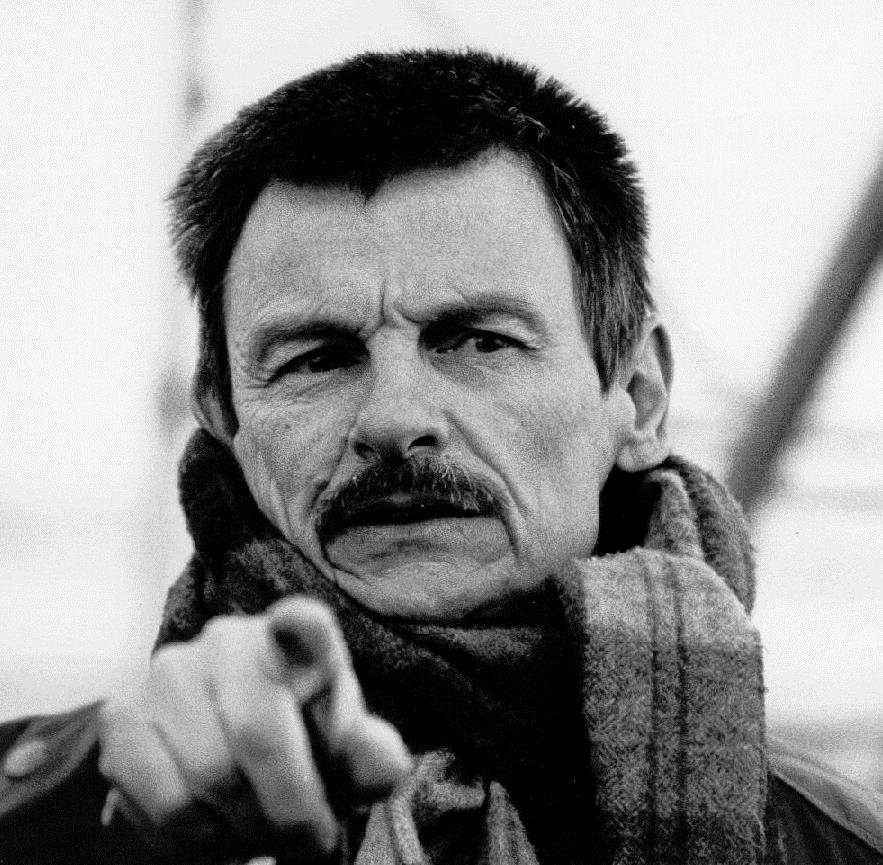
ANDREI TARKOVSKY
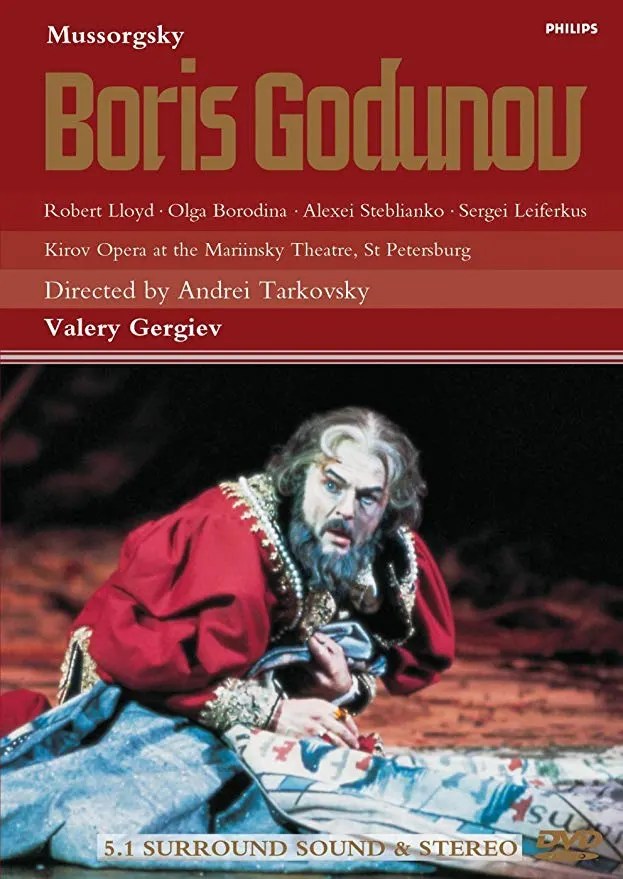
In 1983, Andrei Tarkovsky staged ‘Boris Godunov’ for Covent Garden. It was his first opera direction and also his last. Something very regrettable because his vision of Mussorgsky’s magnum opus is truly breathtaking.

The staging exudes the same style so characteristic of all his films: visionary and poetic. The whole shows itself as a colourful film with lots of Christian symbolism, images in slow motion and an enormous attention to every detail. In 1990, the production was taken on by the Mariinsky theatre and broadcast live on English television, a first at the time.

The lead role was also performed in London by the English bass, Robert Lloyd, and his interpretation is among the most impressive I have ever seen in my life. His voice was still truly great then, both in volume and timbre, and in his acting he was not inferior to the best stage actor. In the process, he managed to hold his own excellently among the otherwise exclusively Russian cast.

About the cast by the way, which apart from Lloyd includes (among others) Olga Borodina, Alexei Steblianko and Sergei Leiferkus. Nothing but praise, by the way. Valery Gergiev has the opera at his fingertips. An absolute must. (Philips 0750899)

WILLY DECKER

Filmed in Barcelona in 2004, Willy Decker’s production had already been presented in Amsterdam in 2001. The direction is heavily centred around the protagonist: for Decker, the drama is psychological rather than historical. The setting betrays Russia of the early 20th century, just before the revolution, and the scenery is very minimalist.

The chairs and tiny houses, Decker’s trademark are obviously present, a giant seat dominates the mise-en-scéne from the start. It makes for some very nice scenes – the ascent to the throne, for instance.

Eric Halfvarson is a bit of a weak Pimen, but the rest of the cast, with Matti Salminen (Boris), Anatoli Kotscherga (Varlaam) and Philip Langridge (Shuisky) leading the way is truly outstanding.

And then there’s Fyodor sung by the unforgettable Brian Asawa, who left us far too soon.

Alex Grigoriev deserves special mention for his superb performance in the role of Yuriodivy. (Arthaus Musik 107 237)

CALIXTO BIEITO

Sometimes I suspect that opera directors imagine themselves to be some kind of modern-day dictator, trying to force their own opinions down our throats. And if we don’t want to swallow it then we are mistaken for stupid.

That the abuse of power is a product of all times is clear; even toddlers know that these days. The news, whether we want it or not, invades our households and there is no shortage of images – on Youtube or otherwise. So I don’t think we need a director to tell us yet again that Putin or Blair (?) is the new Godunov, with the gory images included, otherwise the opera won’t do any more.

If I want to watch Boris Godunov by Mussorgsky, I don’t expect Putin and I don’t expect Pussy Riot. I expect the boyars, the monks, the ‘Old Believers’ and the church bells of St Petersburg. I can make the link to the present myself.

You get the point: Calixto Bieito’s Boris Godunov (Munich 2013) just cannot charm me, and I am putting that mildly here.

I prefer Willy Decker’s production, which was also shown in Amsterdam. It also had better singing.(BelAir BAC102)he role of Yuriodivy. (Arthaus Musik 107 237)

FILM

‘Boris’ was filmed in Russian studios in 1954. It was directed by Vera Stroyeva, a grand lady of Soviet cinema, who captured the opera in the best social-realist (think Eisenstein!) traditions.

It is a mix of all versions with many cuts but it doesn’t matter: you must have seen it at least once. Just for the atmosphere the film exudes, which really brings you frighteningly close to the story.

And it features insanely good singing by the likes of Alexander Pirogov, Georgi Nelepp and Ivan Kozlovsky, the then stars of the Bolshoi. Legendary (VAI 4253).

Boris’ death scene

CDS

Martti Talvela
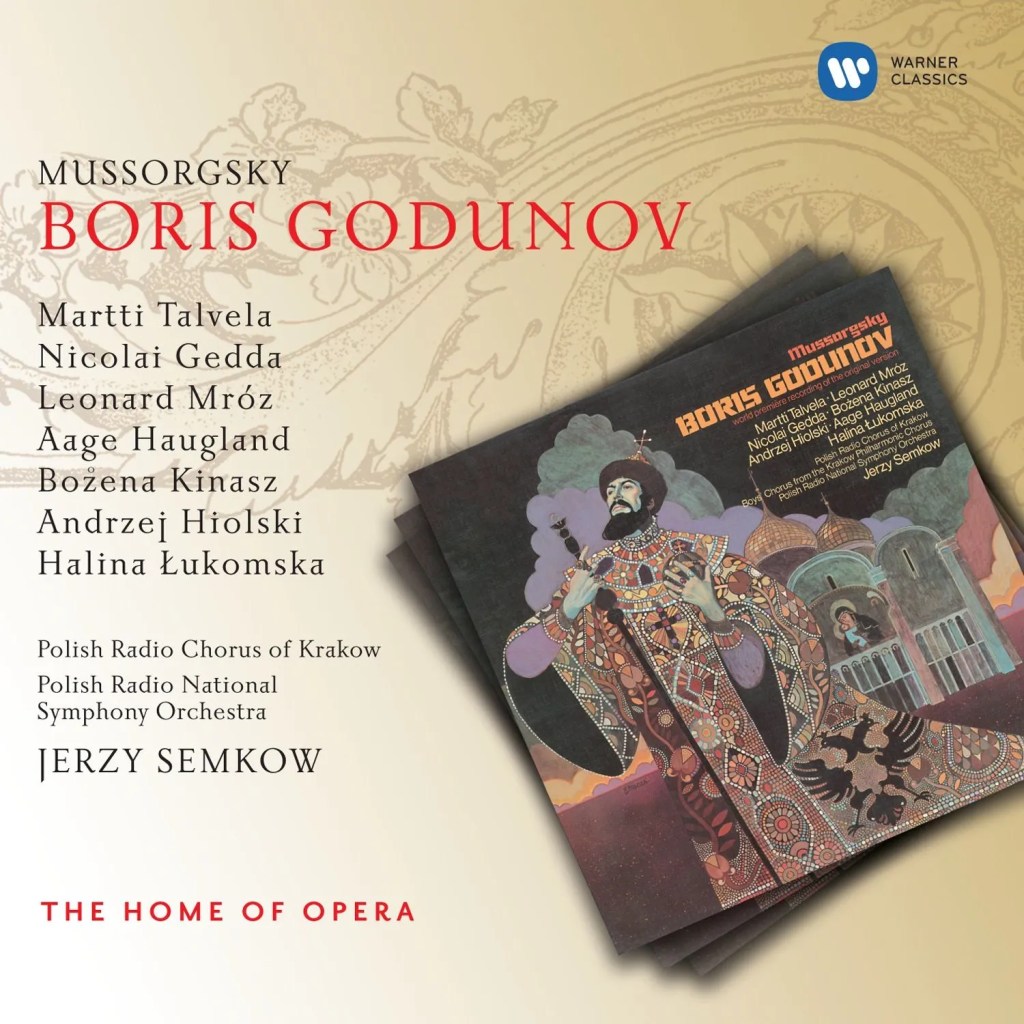
The first ever recording of Mussorgsky’s original score, (the revised version from 1872) was made in 1976. Anyone familiar with Rimsky-Korsakov’s polished arrangement(s) (which at the time was most of us) was in for a shock by the rough-hewn sounds. But once you adjust to the shock, you could not help but give in. Less beautiful, though it may be, it fits the story much better.

The all-Polish cast, except Martti Talvela (Boris), Aage Haugland (Varlaam) en Nicolai Gedda (Grigori/Dimitri) is more than up to the job, but not quite thrilling under the direction of Jerzy Semkow.

Boris Christoff
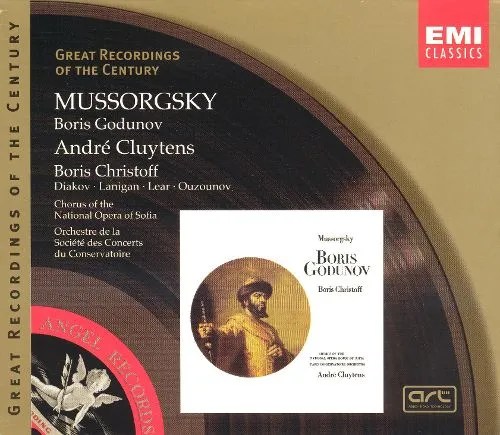
We cannot ignore Boris Christoff, one of the all-time great Borises. He has recorded the role several times, of which the performance under André Cluytens is dearest to me.

Here, apart from Boris, he also sings Pimen and Varlaam, which is a bit confusing at times, but gives him the opportunity to showcase different possibilities of his fantastic bass. The version is of course by Rimsky-Korsakov, and the 1962 recording still sounds fine. (once EMI 5678772)

Speaking of Boris Christoff, not long ago the budget label Andromeda reissued a 3-CD box set of all the songs of Mussorgsky he sang. The recordings, with both piano and orchestral accompaniment were made in 1951, 1955, 1957 respectively. Unfortunately no lyrics, nor any liner notes. (ANDRCD 5098)

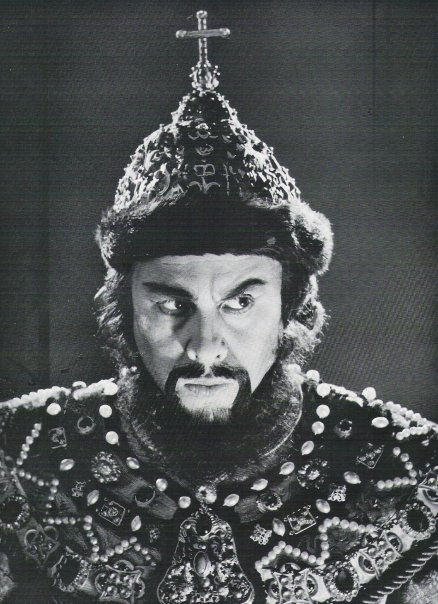
Bonus: George London as Boris:

Boris Godoenov met Gergiev in het Mariinsky

Tekst: Peter Fanken

Boris Tarkovski

Een productie van de Royal Opera met Robert Lloyd in de titelrol werd in 1990 in het Mariinsky uitgevoerd onder leiding van Gergiev. Ik bekeek een dvd van de opname van deze in alle opzichten zeer geslaagde voorstelling.

Regisseur Andrei Tarkovsky heeft in deze productie gekozen voor de complete versie in vier akten. Dat voegt beslist veel toe aan het werk. In de oorspronkelijke versie heeft Moessorgski een aantal scènes ingevoegd die de kennelijke bedoeling hebben het geheel wat op te fleuren. Zo is er het volksliedje dat wordt gezongen door de voedster van Boris’ dochter Xenia in de derde akte. De tweede akte laat hij beginnen met een vergelijkbaar liedje dat wordt gezongen door de herbergierster, voordat Varlaam, Missail en Grigori binnen komen vallen. Varlaam is het cliché van de sjacherende losbandige monnik en hij heft direct een dronkemanslied aan over de verovering van Kazan.

Die tweede akte had als enig doel de link te leggen tussen de jonge monnik Grigori en de pretendent Dmitri die tegen het einde zijn opwachting maakt. En verder natuurlijk het opfleuren van het werk door die liedjes. Maar met het toevoegen van een forse akte die zich afspeelt in Polen, verliest die tweede akte zijn betekenis. De toeschouwer wordt nu immers al uitvoerig meegenomen in de metamorfose van Grigori in Dmitri. Tegelijkertijd krijgt de rol van de pretendent meer inhoud. In plaats van een bordkartonnen personage in een bijrol, treedt hij nu meer op de voorgrond en krijgt ook meer te zingen. Marina vertolkt een grote rol voor mezzosopraan en maakt daarmee die liedjes zingende herbergierster en voedster volledig overbodig.

Het ware beter geweest als Moessorgski de gehele tweede akte had laten vervallen en ook de rol van de voedster en van Xenia had geschrapt. Dat gebral van Varlaam is sowieso een van de momenten die mij altijd storen in Russische opera’s.

Het toneelbeeld is tamelijk eenvoudig gehouden. Een licht oplopend breed plankier dat reliëf krijgt door een geaccentueerde verdeling in vierkanten. Zo nu en dan worden er rekwisieten bijgeplaatst of neergelegd zoals in geval van het grote kleed dat Boris’ rijk voorstelt en waar Fjodor met hem over spreekt. De kostumering is ronduit overweldigend, absoluut top en dat maakt het gebruik van zetstukken om een omgeving te definiëren bijna overbodig.

De Poolse akte spreekt me het meeste aan, het operahart in een zich voortslepend historisch drama. Sergei Leiferkus is geweldig op dreef als de manipulerende Jezuïet Rangoni. Hij vraagt Marina zonder veel omhalen om te hoereren voor het Rooms Katholieke geloof en als ze botweg weigert en hem wegstuurt, gooit hij het over een andere boeg. Haar gezicht is reeds vervormd door de komst van de duivel die op het punt staat in haar te varen of dreigementen van gelijke strekking. Dat werkt en ze stemt toe in het bewerken van Dmitri zodat hij zijn verliefdheid op het tweede plan zal plaatsen en zich zal richten op hogere doelen: de kroning van Marina tot tsarina en de vestiging van het rooms-katholicisme in een Pools-Litouwse vazalstaat zoals gepropageerd door Rangoni.

Marina bespeelt Dmitri in die scène werkelijk als een piano en krijgt de voormalige monnik geheel waar ze hem hebben wil. Olga Borodina haalt deze akte geheel naar zich toe, eerst in het verbale duel met Rangoni, vervolgens hetzelfde nog eens met Dmitri, een mooie rol van Alexei Steblianko. Dit vormt het hart van de opera en is in deze voorstelling een hoogtepunt dat slechts wordt geëvenaard door de scène waarin Boris sterft, een meesterstuk van Robert Lloyd.

Hoewel al een oude opname is deze productie zeker het aankijken en beluisteren waard. Als ik dat nog eens doe zal ik mijn eigen adviezen volgen en de tweede akte en het begin van de derde gewoon overslaan.

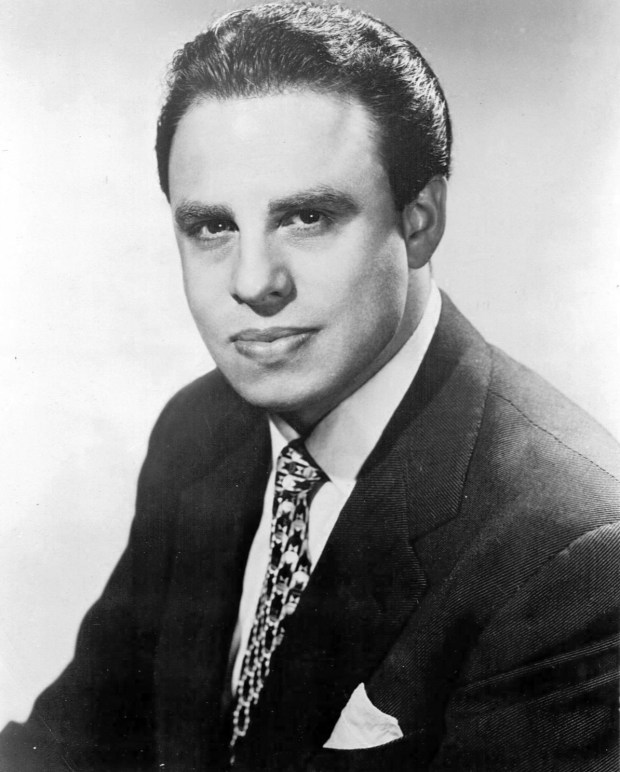
Between Gods and Demons: George London

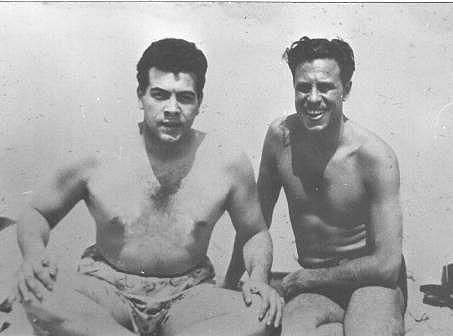
And now I would like to tell you about George London. Born as George Burnstein into a family of Russian Jewish immigrants in Montreal, Canada in May 1920, he grew up in Los Angeles and began his career in the 1940s in the Bel-Canto Trio. The other two were soprano Frances Yeend and … Mario Lanza!

                                                              with Mario Lanza


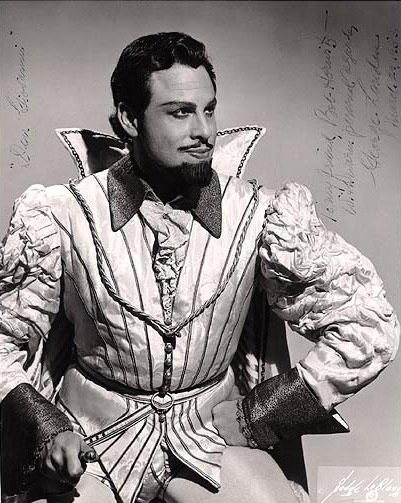
London was the very first American to sing Boris Godunov (in Russian!) at the Bolshoi in Moscow and was considered one of the best Wotans/Wanderers of his era. His Scarpia was also already legendary during his lifetime.

Here is a wonderful recording from a 1962 concert of George London (in perfect Russian!) as Boris,


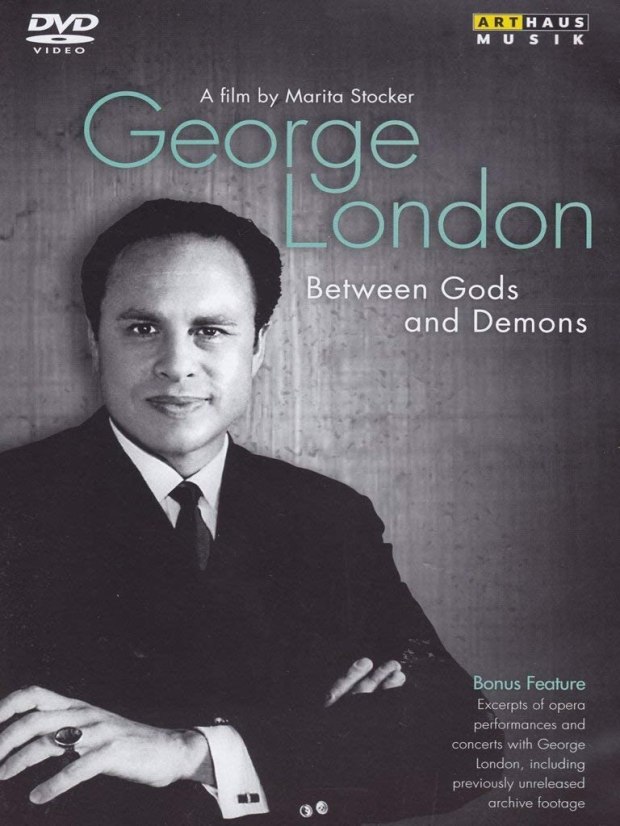
In addition to his Boris Godunov and Scarpia, London was mainly renowned for his Don Giovanni. Everyone agreed about his Don Juan that if you ooze that much sex appeal, it can be demonic. Definitely something to think about! As far as I know, there is no complete film of the opera with him in it. All the more reason to recommend to all of you the portrait of the singer that came out a couple of years ago at Arthaus Musik (101473). The title of the documentary says it all, Between Gods and Demons.

About a decade ago, the budget label Walhall re-issued two historic recordings of Tannhäuser on CDs, one a Berlin performance in 1949 conducted by Leopold Ludwig (WLCD 0145) with Ludwig Suthaus (Tannhäuser), Martha Musial (Elisabeth) and a very young Fischer-Dieskau (Wolfram), and the other a performance at the Met (WLCD 0095) conducted by Rudolf Kempe in 1955. Except for the not very idiomatic Astrid Varnay as Elisabeth, it featured a magnificent array of the greatest singers of the day, Blanche Thebom, George London, Jerome Hines and Ramon Vinay. Here is George London singing ‘O du mein holder Abendstern’:


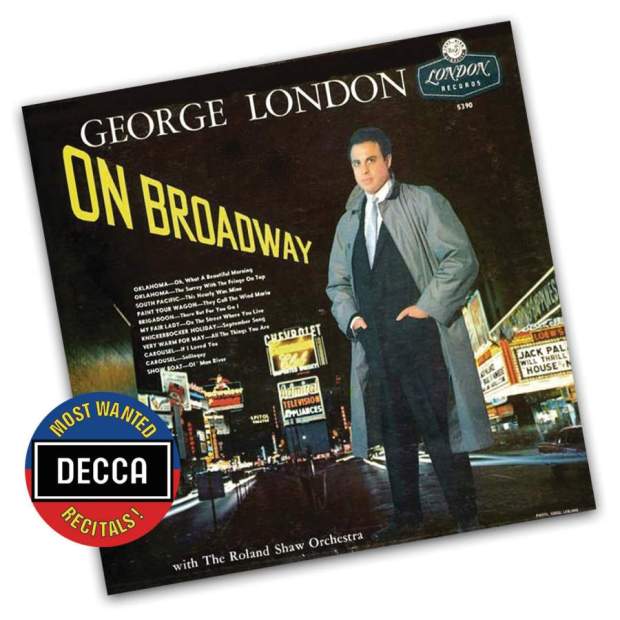
Decca London

But he was also a real entertainer who took popular music seriously, to him they were all ‘artificial art songs’. On the CD On Broadway (Decca 4808163) he gives us a lesson on how to sing the songs of musical composers Rogers, Kern and Loewe.

Below London sings Rogers and Hammerstein’s If I Loved You:

And you get Wagner as a bonus.


English translation: Sheila Gogol

Tussen goden en demonen: George London

En nu wil ik het even over George London hebben.  Geboren als George Burnstein in mei 1920 in Montreal in de familie van Russisch-Joodse emigranten. Hij groeide op in Los Angeles en zijn carrière begon hij begin jaren veertig als lid van het ‘Bel-Canto Trio’, met als de andere twee leden de sopraan Frances Yeend en … Mario Lanza.

    met Mario Lanza

London was de allereerste Amerikaan die Boris Godunov (in het Russisch!) in het Bolshoi in Moskou heeft gezongen en werd beschouwd als één van de beste Wotans/Wanderers van zijn tijd. Ook zijn Scarpia was al bij zijn leven legendarisch.

George London (in een perfecte Russisch!) als Boris, opname uit een concert uit 1962

Behalve voor zijn Boris Godunov en Scarpia was London voornamelijk beroemd voor zijn Don Giovanni. Over zijn ‘Don Juan’ was iedereen het eens: als je zo veel seks uitstraalt, dan kan het demonisch worden. Iets om over na te denken. Bij mijn weten bestaat er geen complete beeldopname van die opera met hem. Des te meer kan ik iedereen het portret van de zanger aanbevelen dat een paar jaar geleden bij Arthaus Musik (101473) verscheen. De documentaire draagt de alleszeggende titel Between Gods and Demons.

Een jaar of tien geleden heeft het budgetlabel Walhall twee historische opnamen van Tannhäuser op cd’s heruitgebracht. Het betreft resp. de door Leopold Ludwig in 1949 in Berlijn geleide voorstelling (WLCD 0145) met Ludwig Suthaus (Tannhäuser), Martha Musial (Elisabeth) en een piepjonge Fischer-Dieskau (Wolfram); en een voorstelling uit de MET (WLCD 0095), in 1955 gedirigeerd door Rudolf Kempe, met op de weinig idiomatische Astrid Varnay als Elisabeth na, een keur aan de grootste zangers uit die tijd: Blanche Thebom, George London, Jerome Hines en Ramon Vinay.

George London zingt ‘O du mein holder Abendstern’:

Decca London

Maar hij was ook een echte entertainer, die de populaire muziek serieus nam: voor hem waren het allemaal ‘artificial art songs’. Op de cd On Broadway  (Decca 4808163) geeft hij ons een les in hoe je de muziek van musicalcomponisten Rogers, Kern en Loewe moet zingen.

Hieronder zingt London ‘f I loved you’ van Rogers and Hammerstein’s

Wagner krijgt u als bonus.