I have never been a ‘Wagnerian’. I could never muster the patience to sit through hours of his operas. I found them bombastic. Pathetic. And even though I had to admit that there were some beautiful melodies, I felt that I really needed a pair of scissors and radically shorten them
That this feeling has totally changed, I owe to Domingo. In my collector’s mania (I had to have everything he had done), I bought the recently released Tannhäuser (DG 4276252) in 1989. And then it happened: I became addicted.
At first, it was mainly Domingo who was to ‘blame’, whose deeply human interpretation of the title role gave me the goose bumps. His words: “Wie sagst du, Wofram? Bist du denn nicht mein Feind?” (sung with emphasis on ‘mein’ and ‘Feind’ and with a childish question mark at the end of the phrase) caused me to burst into tears.
Later, I learned to appreciate the music for itself and to this day, Tannhäuser is not only a very beloved Wagner opera, but also one of my absolute favourites.
I still consider this recording, conducted very sensually by Giueseppe Sinopoli, to be one of the best ever. Also because all the roles (Cheryl Studer as Elisabeth and Agnes Baltsa as Venus, such wealth!) are excellently cast. At the time, in the eighties and early nineties, this was not necessarily a given.
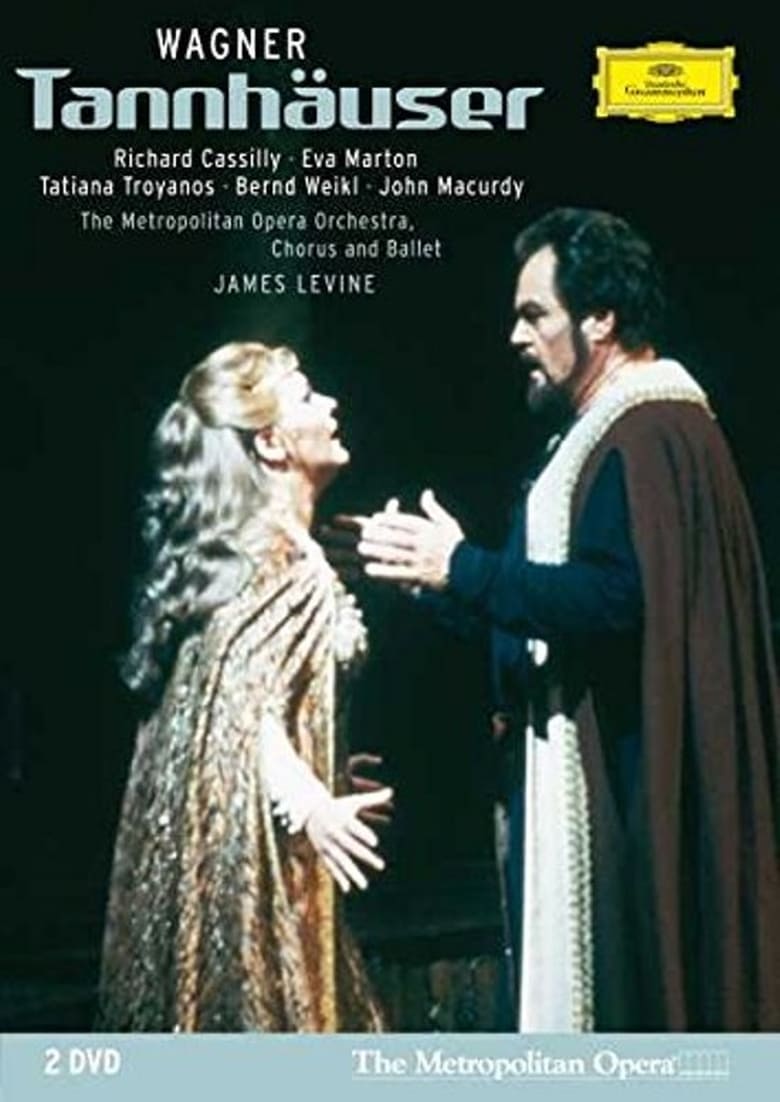
RICHARD CASSILY 1982
In those years there was a lack mainly of good tenors and that can be clearly heard on these two DVD – recordings. Otto Schenk’s insanely beautiful 1982 production, recorded at the Metropolitan Opera in New York (DG 0734171) dates from 1977. If you like very realistic, lavish sets and ditto costumes (I do) you can have a lot of fun with this. Just about the entire Venus grotto from Schloss Neuschwanstein was recreated for the opening scene, and the ballet presents us with a truly orgasmic Bacchanal.
The orchestra, conducted by James Levine, plays mostly lyrical and light, there is nothing to criticise at all. Eva Marton is a fine Elisabeth, Tatiana Troyanos a wonderfully sensual and seductive Venus.
Bernd Weikl, one of my favourite baritones sings an irresistible Wolfram, although he messes up his great aria by trying to give his (in principle) lyrical voice too much volume, making his voice unsteady.
And although the Landgrave (John Macurdy) is really terrible, I would not have had a problem with that recording, provided … yes … provided the tenor had not been so awful. The textbook mentions “the very highest standard”, well, I’m not so sure about that. Richard Cassilly is a physically very unattractive Tannhäuser with a pinched voice and a total lack of lyricism, giving the impression of having wandered into the wrong opera.
Arrival of the guests at Wartburg:
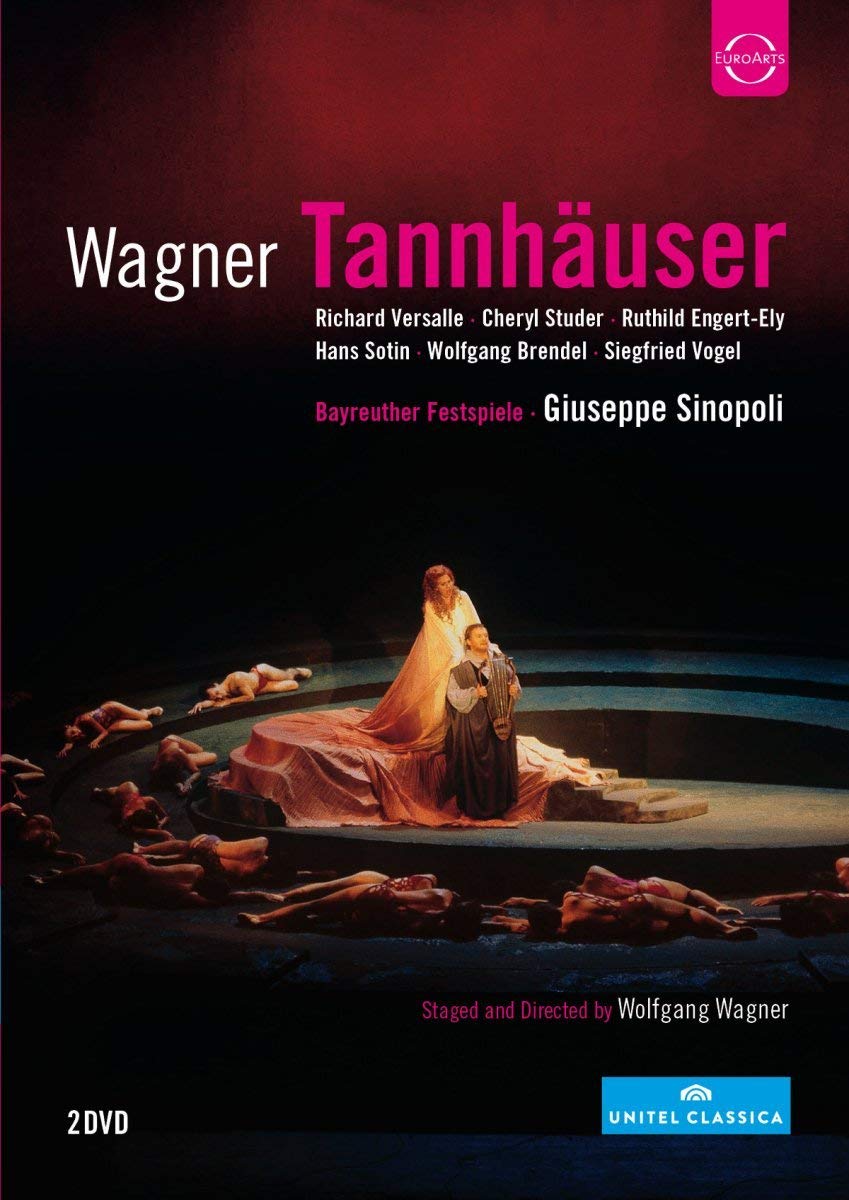
RICHARD VERSALLE 1989
Even worse is the 1989 recording (Euroarts 2072008) from Beyrouth. Wolfgand Wagner’s direction is mainly symbolic, thus everything takes place in a circle (circle of life? Seasons? Panta Rhei?) and already during the overture the pilgrims are walking around the stage.
The costumes are not particularly flattering to the singers, which is particularly merciless for poor Cheryl Studer (Elisabeth). Her breathtakingly sung evening prayer is of a touching beauty. Both Hans Sotin (de Landgraaf) and Wolfgang Brendel (Wolfram) are undoubtedly excellent, but yes, again, there is no good leading role.
Richard Versalle as Tannhäuser:
Richard Versalle is not much like a young man obsessed with (physical) love. There is also little of his dichotomy between the earthly and the heavenly. His voice is not pretty and devoid of any charm. A macabre fact: the fact, that his name has not yet been forgotten owes it to his death: during the premiere of Vec Makropoulos (MET 1996), he fell from a ladder, stricken by a heart attack, just after singing the words “You can only live so long”.
Trailer of the production:
In both of the above recordings, Messrs Tannhäuser and Wolfram are continuously walking around with harps, on which they ‘accompany’ themselves at the appropriate moments. That imaginary pinging should be banned, it’s so fake!
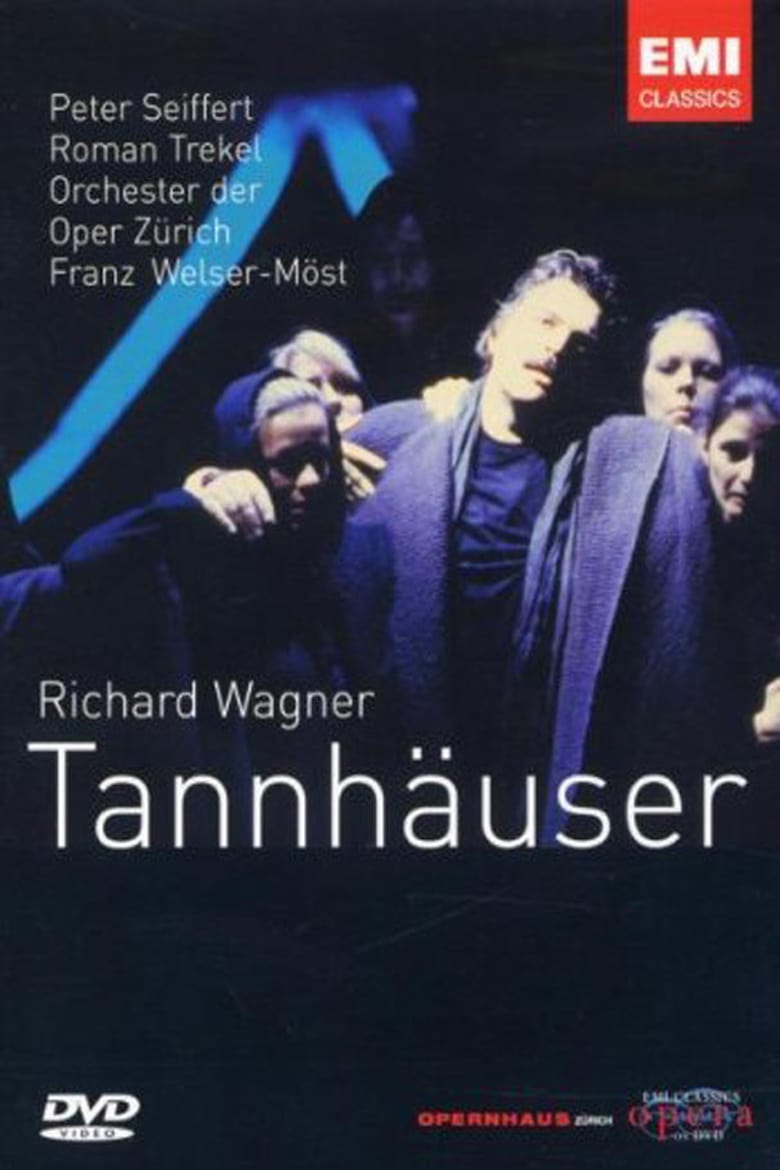
PETER SEIFFERT 2003 (for fans of Jonas Kaufmann)
The in itself nicely designed production from Zurich (once EMI 5997339) is suffering from the highly irritating TV direction, it really seems as if the TV director has taken over directing. The ‘manager of images’ likes close-ups, so that during Elisabeth’s prayer we look at the clarinetist’s fingernails. Or we are being zoomed in on Tannhäuser’s sweat-covered forehead. He also finds it necessary to film the singers behind the scenes, which very much disrupts the romance and the magic.
Once you get used to it, there is undoubtedly much to enjoy. The stage setting is beautiful, the colourful costumes – apparently from the early twentieth century – are handsome, and Jens-Daniel Herzog’s character direction is fine. But what makes this production especially worthwhile are the vocal contributions of the singers.
Isabelle Katabu is an extraordinarily beautiful and sensual Venus, darkly coloured and highly erotic. Solveig Kringelborn’s Elisabeth sounds especially pure and lyrical as does her appearance. At the time, Peter Seiffert was one of the best Tannhäusers, both vocally and as a actor. Torn between the sensual and the spiritual, he chooses the higher, which can only result in death.
Nice detail for his many fans: the small role of Walther is sung by none other than Jonas Kaufmann. Only: we don’t get to see him, as during his aria the camera focuses on the faces of Tannhäuser or Elisabeth. Incidentally, I think that recording is now sold out, but yes: fans will remain fans, won’t they?
That Nikolaus Lehnhoff can direct Wagner in a very beautiful way, yes, we already knew that. Already in his earlier productions for Baden Baden he showed that modern staging does not have to produce weird images, and that concepts are not necessarily ridiculous. This Tannäuser, previously seen in Amsterdam, is also exceptionally successful (Arthaus Musik 101 351).
Lehnhoff emphasises Tannhäuser’s search for the balance between the physical and the spiritual by creating a world where tradition goes hand in hand with innovation. He builds on a discrepancy (but also a symbiosis) between innocence and evil, and between art and kitsch. Thus, the singing competition degenerates into a kind of glorified form of ‘Idols’, and Tannhäuser’s symbolic ‘redemption’ is painfully beautiful and effective.
Musically, too, there is little to complain about. Robert Gambill sings a particularly moving Tannhäuser, his ‘Rom-Erzählung’ cutting through the marrow. Camilla Nylund is a beautiful, somewhat understated Elisabeth which makes her unapproachable and Waltraud Meier is a Venus out of thousands. Only with Roman Trekel do I have a little trouble. There is nothing wrong with his carrying, solid baritone, but for Wolfram I still opt for a bit more warm lyricism (Hermann Prey, where are you?).
Hermann Prey sings ‘O du mein holder Abendstern’:
BACK IN TIME
About ten years ago, budget label Walhall reissued two historic recordings of Tannhäuser on CD. These are respectively. the 1949 Berlin performance conducted by Leopold Ludwig (WLCD 0145), featuring Ludwig Suthaus (Tannhäuser), Martha Musial (Elisabeth) and a very young Fischer-Dieskau (Wolfram); and a performance from the MET (WLCD 0095), conducted by Rudolf Kempe in 1955, with, excluding a not very idiomatic Astrid Varnay as Elisabeth, a selection of the greatest singers of the time: Blanche Thebom, George London, Jerome Hines and Ramon Vinay.
George London sings ‘O du mein holder Abendstern’:
In both cases, the sound is entirely acceptable and the performances are of a standard that seems very hard to reach these days.
Ik ben nooit een ‘Wagneriaan’ geweest. Nooit kon ik het geduld opbrengen om zijn urenlange opera’s uit te zitten. Bombastisch vond ik ze. Aanstellerig. En al moest ik toegeven dat er best mooie melodieën in zaten, toch vond ik dat er op zijn minst een schaar aan te pas moest komen, wilde ik ze enigszins kunnen verdragen.
Dat daar toch nog een verandering in is gekomen, heb ik aan Domingo te danken. In mijn verzamelwoede (ik moest en ik zou alles van hem hebben) schafte ik in 1989 de net uitgebrachte Tannhäuser (DG 4276252) aan. En toen gebeurde het: ik raakte verslaafd.
In het begin was het voornamelijk de ‘schuld’ van Domingo, wiens diepmenselijke invulling van de titelrol me kippenvel bezorgde. Bij zijn woorden ‘Wie sagst du, Wofram? Bist du denn nicht mein Feind?’ (gezongen met de nadruk op ‘mein’ en ‘Feind’ en met een kinderlijk vraagteken aan het eind van de frase) barstte ik in snikken uit.
Later leerde ik ook de muziek zelf te waarderen en tot op de dag van vandaag is Tannhäuser niet alleen mijn geliefde Wagner-opera, maar ook één van mijn absolute favorieten.
Deze door Sinopoli zeer sensueel gedirigeerde opname beschouw ik nog steeds als één van de beste ooit. Ook omdat alle rollen (Cheryl Studer als Elisabeth en Agnes Baltsa als Venus, wat een weelde!) voortreffelijk zijn bezet. Dat was toen, in die jaren, beslist niet vanzelfsprekend.
RICHARD CASSILY 1982
Dat die jaren zeer arm aan (voornamelijk) goede tenoren zijn geweest, hoor je duidelijk op deze twee DVD – opnamen. De waanzinnig mooie productie van Otto Schenk die in 1982 in de Metropolitan Opera in New York werd opgenomen (DG 0734171) stamt uit 1977. Als u van zeer realistische, overdadige decors en dito kostuums houdt dan kunt u hier een hoop plezier aan beleven. Voor de beginscène werd zowat de hele Venusgrot uit Schloss Neuschwanstein nagebouwd en het ballet schotelt ons een werkelijk orgastisch Bacchanaal voor.
Het orkest onder leiding van James Levine speelt voornamelijk lyrisch en licht, daar valt helemaal niets op aan te merken. Eva Marton is een goede Elisabeth, Tatiana Troyanos een prachtig sensuele en verleidelijke Venus.
Bernd Weikl, één van mijn favoriete baritons zingt een onweerstaanbare Wolfram al verprutst hij zijn grote aria doordat hij zijn (in beginsel) lyrische stem te veel volume wil geven, waardoor zijn stem onvast wordt.
En al is de Landgraaf (John Macurdy) werkelijk niet om aan te horen, toch zou ik met die opname geen moeite hebben gehad, mits … ja … mits de tenor niet zo waardeloos was geweest. Het tekstboekje rept over de allerhoogste standaard, nou, dat weet ik zozeer niet. Richard Cassilly is een zeer onaantrekkelijke Tannhäuser met een geknepen stem en totaal gebrek aan lyriek, die de indruk wekt in een verkeerde opera te zijn beland.
Aankomst van de gasten in Wartburg:
RICHARD VERSALLE 1989
Nog slechter is het gesteld met de opname uit 1989 (Euroarts 2072008) uit Beyrouth. De regie van Wolfgand Wagner is voornamelijk symbolisch, zodoende speelt alles zich af in een cirkel (levenscirkel? Jaargetijden? Panta rei?) en al tijdens de ouverture lopen de pelgrims rondjes op de bühne.
De kostuums zijn niet echt vleiend voor de zangers, wat voornamelijk voor de arme Cheryl Studer (Elisabeth) genadeloos uitpakt. Haar adembenemend gezongen avondgebed is van een ontroerende schoonheid. Zowel Hans Sotin (de Landgraaf) als Wolfgang Brendel (Wolfram) zijn zonder meer uitstekend, maar ja, alweer geen goede hoofdrol.
Richard Versalle als Tannhäuser:
Richard Versalle heeft weinig van een jonge, door (lichamelijke) liefde geobsedeerde man. Ook van zijn tweestrijd tussen het aardse en de hemelse valt weinig te bespeuren. Zijn stem is niet mooi en gespeend van ieder charme.
Een macaber wetje: het feit, dat zijn naam nog niet is vergeten dankt hij aan zijn dood: tijdens de première van Vec Makropoulos (MET 1996) viel hij, door een hartaanval getroffen van een ladder, net nadat hij de woorden “Je leeft maar een keer lang” had gezongen.
Trailer van de productie:
In beide bovengenoemde opnamen lopen de heren Tannhäuser en Wolfram continue rond met harpen, waarop zij zichzelf op de juiste momenten ‘begeleiden’. Dat denkbeeldige gepingel zou verboden moeten worden, het is zo nep!
PETER SEIFFERT 2003 (voor de fans van Jonas Kaufmann)
De op zich mooi vormgegeven productie uit Zurich (ooit EMI 5997339) gaat gebukt onder de hoogst irritante TV-regie, het lijkt waarachtig alsof de TV-regisseur de macht heeft overgenomen. De ‘beheerder van het beeldmateriaal’ houdt van close-ups, dus kijken wij naar de vingernagels van de klarinettist tijdens het gebed van Elisabeth. Of word er op het met zweet bedekte voorhoofd van Tannhäuser ingezoomd. Ook vindt hij het nodig om de zangers alvast achter de coulissen te filmen, wat de romantiek en magie danig verstoort.
Ben je er éénmaal aan gewend dan valt er ongetwijfeld veel te genieten. Het bühnebeeld is mooi, de kleurrijke kostuums – zo te zien uit het begin van de twintigste eeuw – zijn fraai en de personenregie van Jens-Daniel Herzog is prima. Maar wat die productie hoofdzakelijk de moeite waard maakt, zijn de vocale bijdragen van de zangers.
Isabelle Katabu is een buitengewoon mooie en sensuele Venus, donkergekleurd en zeer erotisch. Elisabeth van Solveig Kringelborn klinkt voornamelijk puur en lyrisch en zo is ook haar verschijning. Peter Seiffert was in die tijd, zowel vocaal als qua spel, één van de beste Tannhäusers. die men zich kan voorstellen. Verscheurd tussen het zinnelijke en spirituele kiest hij voor het hogere, wat alleen de dood tot gevolg kan hebben.
Een leuk detail voor zijn vele fans: de kleine rol van Walther wordt gezongen dor niemand minder dan Jonas Kaufmann. Alleen: we krijgen hem niet te zien want tijdens zijn aria focust camera zich op de gezichten van Tannhäuser of Elisabeth. Ik denk trouwens dat die opname inmiddels uit de handel is, maar ja: fans blijven fans, nietwaar?
Dat Nikolaus Lehnhoff heel mooi Wagner kan regisseren, ja, dat wisten we wel. Al in zijn vroegere producties voor Baden Baden heeft hij laten zien dat een moderne enscenering geen rare beelden hoeft op te leveren, en dat concepten niet per definitie bespottelijk zijn. Ook deze Tannhäuser, eerder in Amsterdam te zien, is uitzonderlijk gelukt (Arthaus Musik 101 351).
Lehnhoff benadrukt Tannhäusers zoektocht naar het evenwicht tussen het fysieke en het spirituele door een wereld te creëren waarin traditie hand in hand gaat met vernieuwing. Hij borduurt voort op een discrepantie (maar ook een symbiose) tussen onschuld en kwaad, en tussen kunst en kitsch. Zo ontaardt de zangwedstrijd in een soort veredelde vorm van ‘Idols’ en de symbolische ‘verlossing’ van Tannhäuser is pijnlijk mooi en doeltreffend.
Ook muzikaal valt er weinig te klagen. Robert Gambill zingt een bijzonder ontroerende Tannhäuser, zijn ’Rom-Erzählung’ gaat door merg en been. Camilla Nylund is een mooie, ietwat onderkoelde Elisabeth wat haar ongenaakbaar maakt en Waltraud Meier is een Venus uit duizenden. Alleen met Roman Trekel heb ik een beetje moeite. Er is niets mis met zijn dragende, solide bariton, maar voor Wolfram kies ik toch voor wat meer warme lyriek (Hermann Prey, waar bent u?).
Hermann Prey zingt ‘O du mein holder Abendstern’:
TERUG IN DE TIJD
Een jaar of tien geleden heeft het budgetlabel Walhall twee historische opnamen van Tannhäuser op cd’s heruitgebracht. Het betreft resp. de door Leopold Ludwig in 1949 in Berlijn geleide voorstelling (WLCD 0145) met Ludwig Suthaus (Tannhäuser), Martha Musial (Elisabeth) en een piepjonge Fischer-Dieskau (Wolfram); en een voorstelling uit de MET (WLCD 0095), in 1955 gedirigeerd door Rudolf Kempe, met op de weinig idiomatische Astrid Varnay als Elisabeth na, een keur aan de grootste zangers uit die tijd: Blanche Thebom, George London, Jerome Hines en Ramon Vinay.
George London zingt ‘O du mein holder Abendstern’:
Het geluid is in beide gevallen alleszins acceptabel en de uitvoeringen zijn van een niveau dat tegenwoordig nog maar zeer moeilijk te halen lijkt.




 Basia con fuoco