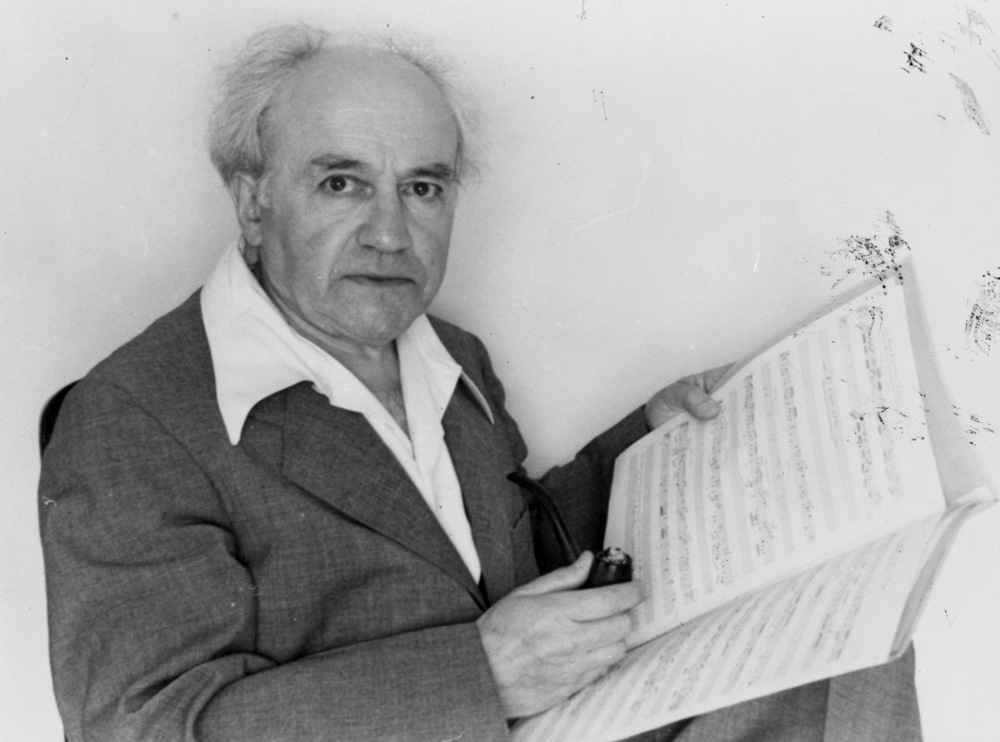
I am often asked if there is such a thing as Jewish music ….. Well, there certainly is! Just take Ernest Bloch. He was born in 1880 in Geneva in an assimilated family. Around the age of twentyfive he became interested in everything to do with Judaism and translated it into his language – music.
“I’m interested in the Jewish soul” he wrote to Edmund Fleg, cantor and librettist of his opera Macbeth. “I want to translate all this into music.”
He developed a very personal style: his compositions reflect the atmosphere of Hebrew chant, without actually being a literal imitation of it. His intention was not to reconstruct old Hebrew music, but to write his own, good music, because, as he said, he was not an archaeologist. He succeeded.
Cello Concerto
Before the war, he was among the most played and appreciated composers. People even called him the fourth great ˜B,” after Bach, Beethoven and Brahms. It is not that people now no longer know his name, but they usually do not get any further than his cello concerto.
Baal Shem
\
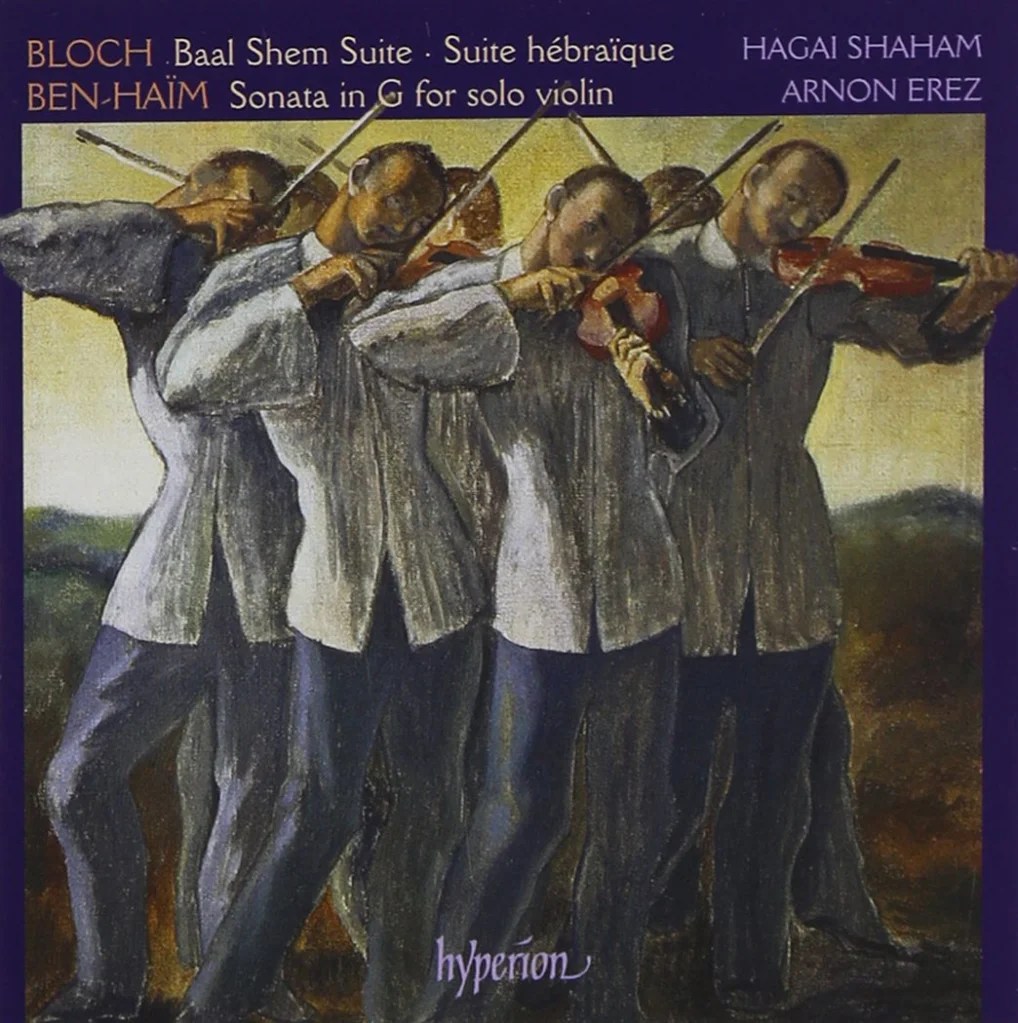
For the Baal Shem Suite (1923), one of his best-known works, he was inspired by Israel ben Eliezer (Baal Shem Tov), the founder of modern Chassidism, a movement that originated in eighteenth-century Poland and was based on mysticism, spiritualism and magical doctrines. It proclaimed a kind of bliss that could only be achieved through music, dance and song because that was the only way to achieve direct contact with God.
Of all the performances of those made of “Baal Shem” (and there are many), this one, played by Hagai Shaham and accompanied by Arnon Erez is for me one of the dearest. Shaham’s tone is round and warm with a healthy dose of “schmalz”. And though he often balances just on the edge, nowhere does he degenerate into banalities.
Seasons without the summer
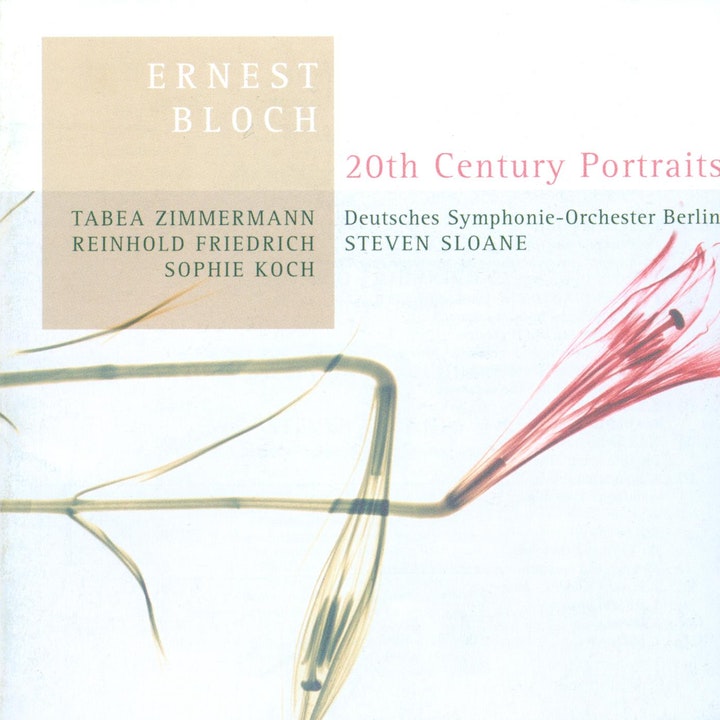
The symphonic poems Hiver-Printemps are very evocative. Together with the beautiful song cycle ‘Poèmes d’Automne’, composed for the texts of Béatrix Rodès, Bloch’s lover at the time, and sung very emotionally by Sophie Koch (Kleenex at hand?), they form, as it were, a kind of ˜Seasons”, from which only the summer is missing.
The suite for viola is among Bloch’s best compositions and one cannot imagine a better performance than Tabea Zimmermann’s.
The Deutches Symphonie-Orchester Berlin, con Sloane, plays in a very animated way
Dalia Atlas dirigeert symfonische werken van Bloch
Macbeth by Ernest Bloch. Ever heard of?

 Basia con fuoco