KIm_Bagley

Excellent production of Szymanowski’s Król Roger from the ROH , London

Król Roger in Teatr Wielki in Warsaw, 1926. Act 1.
© Jan Malarski / „Tygodnik Ilustrowany”


Not so long ago ago, one of the leading Dutch music critics (no, I’m not going to name names) wrote:
“Karol Szymanowski, a composer from whom few pieces have held repertoire, still experienced his Król Roger being put on in the 1920s. Later, his semi-destillates from Nietzsche’s Geburt der Tragödie, Euripides’ Bacchants and Shakespeare’s Lear, disappeared from view altogether. One cannot ultimately blame the great eclectic Szymanowski, maybe only the fact that he wanted an opera so badly.”

He was not alone in this: because his works betrayed a variety of influences, Szymanowski was long mistaken for an eclectic, an insult at the time.
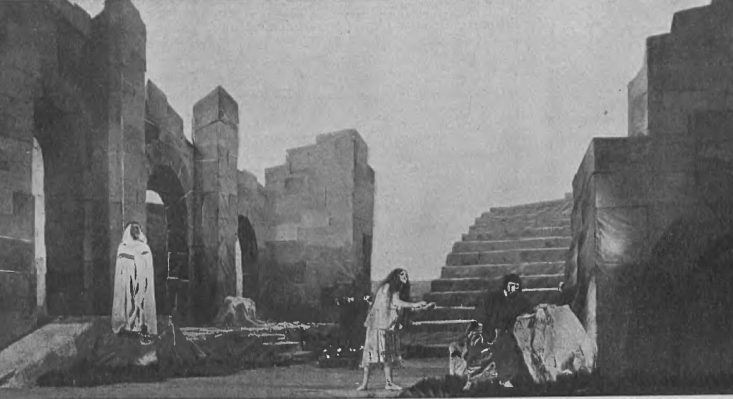
Król Roger in Teatr Wielki in Warsaw, 1926. Act 2.
© Jan Malarski / „Tygodnik Ilustrowany”


Times are changing. Szymanowski is now counted among the greatest composers of the early twentieth century and his works are always being performed on concert stages and recording studios.

His Król Roger, a poetic opera full of symbolism and perfumed with myrthe has – rightly – achieved true cult status. Take the opening chorus alone! The softly emerging “Hagios, Kyrios, Theos Sabaoth”, sung by the immense choir, with the added high voices of the boys’ choir, rivals Verdi’s Requiem.
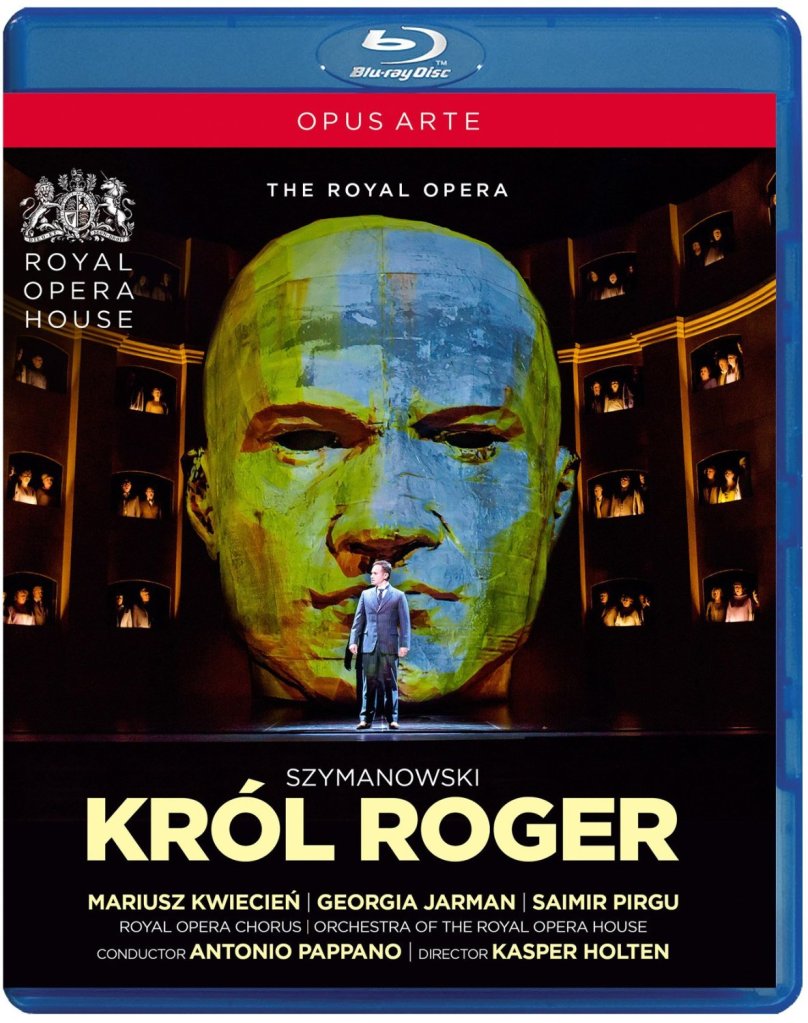


The performance at Covent Garden, directed by Kasper Holten and conducted by Antonio Pappano was a true triumph for all involved. Holten depicted the opera as a kind of journey of the protagonist into the deeps of his psyche. Figuratively, but also literally. Everything takes place in Roger’s head, so it is a huge head that dominates the stage and also acts as his palace if necessary.
It made me speechless.

That the opera is enigmatic is rather obvious. The libretto by Jaroslaw Iwaszkiewicz is rather pompous and the text is, even for Poles, difficult to understand and unpronouncable. Big kudos to the Polish coach (Marek Ruszczyński) who made all the singers sound as if they were native speakers.

Saimir Pirgu (Pasterz) was the biggest surprise of the evening for me. His voice sounded cultured and seductive and his entire performance was a delight to the ear and to the eye,

Georgia Jarman was a very good Roxana: her cantilena in the first act went deeply into my heart.

Roxana’s Song:


Mariusz Kwiecień was one of the best Roger’s of our time. It is a role he has made his own and which no one can take away from him. In fact, I am struck by how differently he performs the role in different productions!


Kim Bagley was an excellent Edrisi and Agnes Zwierko is a luxurious choice for Dyakonissa. Highly recommended, this recording!


Below is an introduction to the opera:

One of the best recordings of the opera from Teatr Wielki in Warsaw dated 23.11.1965

— 

Uitstekende productie van Król Roger uit Londen

krol-roger

Nog maar 15 jaar geleden schreef één van de vooraanstaande Nederlandse muziekrecensenten (nee, ik ga geen namen noemen): “Karol Szymanowski, een componist van wie weinig stukken repertoire hebben gehouden heeft in de jaren twintig nog meegemaakt dat Król Roger werd opgevoerd. Later verdween zijn halfdestillaat uit Nietzsches Geburt der Tragödie, Euripides’ Bacchanten en Shakespeares Lear uit het vizier. Je kan de grote eclecticus Szymanowski uiteindelijk maar weinig kwalijk nemen, behalve dat hij zo nodig een opera wou.”

Hij was de enige niet: doordat zijn werken een verscheidenheid aan invloeden verraadden, werd Szymanowski lang voor een eclecticus uitgemaakt, een scheldnaam in de tijd.

Tijden veranderen. Szymanowski wordt inmiddels gerekend tot de grootste componisten van het begin van de twintigste eeuw en zijn werken zijn niet weg te denken van de concertpodia en opnamestudio’s.

Zijn Król Roger, een poëtische opera vol symboliek en geparfumeerd met myrthe heeft – terecht – een ware cultstatus bereikt. Neem alleen al de openingskoor! Het zacht opdoemende, door het immense koor gezongen “Hagios, Kyrios, Theos Sabaoth”, met de invallende hoge stemmen van het jongenskoor steekt het Requiem van Verdi naar de kroon.

De voorstelling in Covent Garden, geregisseerd door Kasper Holten en gedirigeerd door Antonio Pappano was een ware triomf voor alle betrokkenen. Holten verbeeldde de opera als een soort reis van de hoofdpersoon in het binnenste van zijn psyche. Figuurlijk, maar ook letterlijk. Alles speelt zich in het hoofd van Roger, het is dan ook een enorm hoofd die de bühne domineert en die zonodig ook als zijn paleis fungeert. Het maakte mij sprakeloos.

Dat de opera enigmatisch is, is nogal wiedes. Het libretto van de hand van Jarosław Iwaszkiewicz is nogal hoogdravend en de tekst is, zelfs voor Polen moeilijk verstaanbaar en onuitspreekbaar. Grote hulde voor de Poolse coach (Marek Ruszczyński) die alle zangers liet klinken als waren ze native speakers. Of misschien zelfs beter!

Saimir Pirgu (Pasterz) was voor mij de grootste verrassing van de avond. Zijn stem klonk gecultiveerd en verleidelijk en zijn hele optreden was een oor- en oogstrelend.

Georgia Jarman was een zeer goede Roxana: haar cantilena in de eerste akte drong diep tot mijn hart.

Roxana’s song:


Mariusz Kwiecień is dé Roger van onze tijd. Het is een rol die hij zich eigen heeft gemaakt en die niemand hem kan afnemen. Het valt mij trouwens op hoe anders hij de rol in verschillende producties vertolkt!

Kim Bagley was een voortreffelijke Edrisi en Agnes Zwierko is een luxe bezetting voor Dyakonissa. Een aanrader, deze opname!

Hieronder een introductie tot de opera:


KAROL SZYMANOWSKI
Król Roger
Mariusz Kwiecień, Georgia Jarman, Saimir Pirgu, Kim Begley, Alan Ewing, Agnes Zwierko
Royal Opera Chorus (Renato Balsadonna), Orchestra of the Royal opera House olv Antonio Pappano
Regie: Kasper Holten