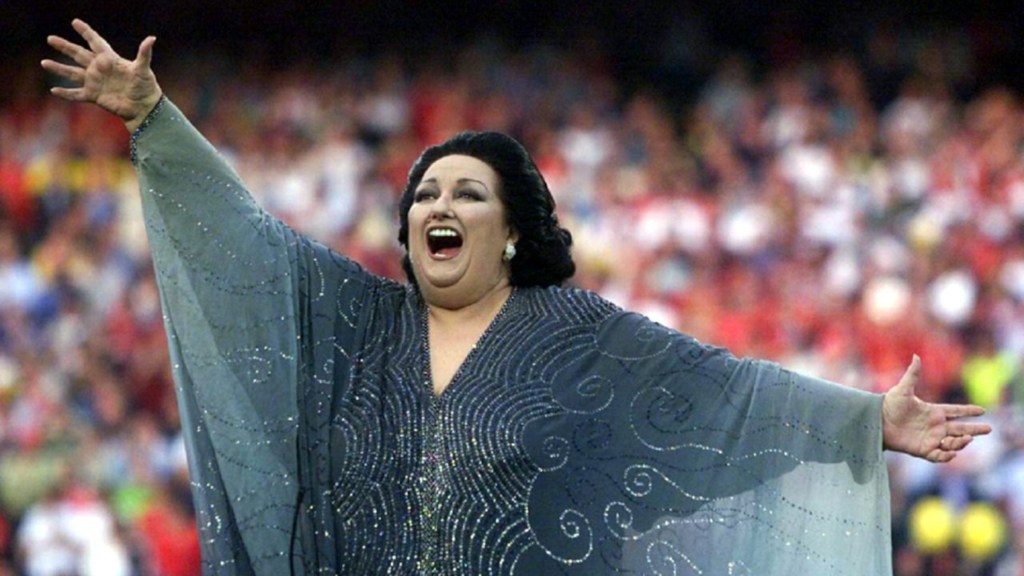
José Carreras

Montserrat  Caballé as Norma, Salome and Salome. And herself

Norma

Metropolitan Opera’s production of “Norma” starring Montserrat Caballé, John Alexander, Fiorenza Cossotto, and Giorgio Tozzi in February 1973. Photo by Jack Mitchell/Getty Images

Caballé is a kind of cross between Callas and Sutherland: wonderful top notes, incredibly beautiful legato arches, perfect trills, and moreover a pianissimo that none of her colleagues could match. She was a much better actress than Sutherland, moreover she had great charisma. She never went to extremes like Callas or (later) Scotto, but her performances were always very convincing.


In 1973 she recorded the role for RCA and the result was very decent (GD 86502). Her Pollione, a very young Plácido Domingo, was vocally crystal clear and sounded like a bell. However, he lacked dominance, making him sound far too young for the role.

Fiorenza Cossotto in her role of Adalgisa looked more like Azucena than a young girl, but her singing as such was flawless. Unfortunately, the orchestra sounds uninspired and hurried, which must surely be blamed on the conductor, Carlo Felice Cillario.


In 1974 she sang Norma in the Roman amphitheatre in Orange (Provence). It was a very windy evening, and everything blew and moved: her hair, veils and dresses. A fantastic sensation, which added an extra dimension to the already great performance. It was filmed by French television (what luck!), and has now appeared on DVD (VAIV 4229).

Caballé sings ‘Casta Diva’:


Caballé was in superb voice, very lyrical in ‘Casta Diva’, dramatic in ‘Dormono etrambi’ and moving in ‘Deh! Non volerli vittime’. Together with Josephine Veasey, she sang perhaps the most convincing ‘Mira , o Norma’ – of all, at least in a complete recording of the opera. As two feminists avant la lettre, they renounce men and transform from rivals into bosom buddies.


John Vickers (Pollione) was never my cup of tea, but Veasey is a fantastic (also optically) Adalgisa and Patané conducts with passion. Of all the recordings on DVD (and there are not many), this is definitely the best.

Herodiade


This recording may only be obtained via a pirate (or You Tube), but then it is complete and moreover with (admittedly bad) images!


Dunja Vejzovic portrays a deliciously mean Hérodiade and Juan Pons is a somewhat youthful but otherwise fine Hérode. A few years later, he will become one of the best “Hérodes” and you can already hear and see that in this recording.

Montserrat Caballé is a fantastic Salomé, the voice alone makes you believe you are in heaven and José Carreras is very moving as a charismatic Jean.


None of the protagonists is really idiomatic, but what a pleasure it is to watch a real Diva (and Divo)! They really don’t make them like that anymore

The whole opera on you tube:

Salome


Montserrat Caballé as Salome? Really? Yes, really. Caballé sang her first Salome in Basel in 1957, she was only 23 at the time.

Salome was also the first role she sang in Vienna in 1958 and I want to (and can) assure you: she was one of the very best Salome’s ever. Especially on the recording she made in 1969 under the blistering direction of Erich Leinsdorf.

Her beautiful voice, with the whisper-soft pianissimi and a velvety high even then, sounded not only childlike but also very deliberately sexually charged, a true Lolita.

The Jochanaan, sung very charismatically by Sherrill Milnes, has an aura of a fanatical sect leader, and Richard Lewis (Herod) and Regina Resnik (Herodias) complete the excellent cast (Sony 88697579112).

Caballé as Salome in 1979:


<

What’s the difference between a terrorist and a diva? ‘Caballé, beyond music’

“We all owe a great deal to music (…) It is a form of expression that originates not so much from thinking as from feeling”. These words come from one of the greatest singers of the twentieth century, Montserrat Caballé.

In his film Caballé Beyond Music, Antonio Farré portrays the diva*, her life and her career, talking to her, her family and her colleagues. The documentary also contains a lot of wonderful (archival) footage, starting with Caballé’s debut in Il Pirata in 1966 in Paris.

The film is interspersed with fun anecdotes such as how she smashed a door because she was not allowed to take time off (Caballé wanted to attend a performance of Norma with Maria Callas). How she had stopped a dress rehearsal in La Scala because she noticed that the orchestra was not tuned well. About her debut at the Metropolitan Opera in New York, the discovery of José Carreras (how beautiful he was!), her friendship with Freddy Mercury ….

About her Tosca in the ROH in London in the production that was made for Callas. She wasn’t happy with that, it didn’t feel good, but no one wanted to change it. Caballé called Callas, it was exactly eight days before her death, and complained about her fate. “But of course it doesn’t feel right”, said Callas. “I am tall and you are not, I am slim and you are not, I have long arms and you have not. Tell them to call me, I will convince them that you are not me”.

And so the production was adapted for Caballé. “Copies are never good,” Caballé says, and I agree with her. This is a fascinating portrait of a fascinating singer. Very, very worthwhile.

* London taxi driver: “What is the difference between a terrorist and a diva? You can negotiate with a terrorist”.

Caballé beyond music
With José Carreras, Plácido Domingo, Joan Sutherland, Cheryl Studer, Giuseppe di Stefano, Freddie Mercury, Claudio Abbado and others.
Directed by Antonio A. Farré, EuroArts 2053198

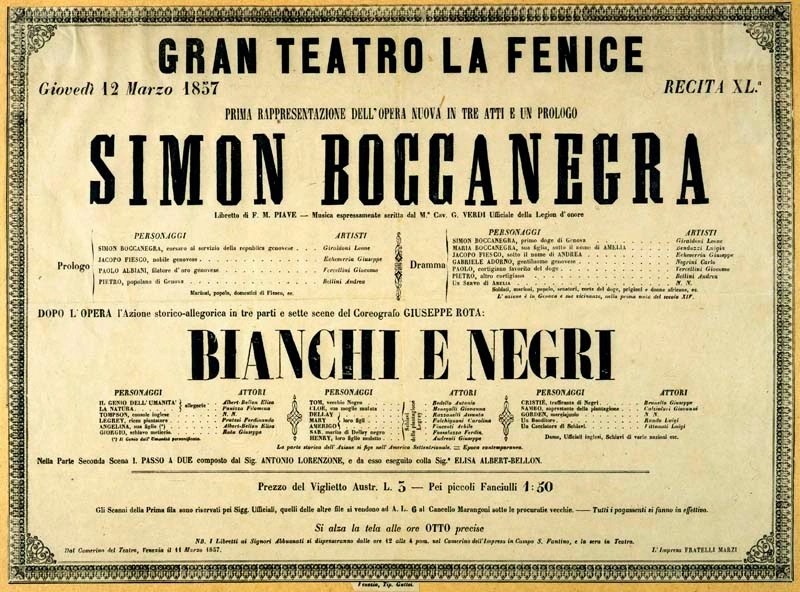
Let’s talk about Simon Boccanegra! The real one ánd the one from Verdi’s opera.

Possible representation of Simone (or Guglielmo) Boccanegra at the Palazzo San Giorgio (Genoa).

The real Simone Boccanegra was the very first doge of Genoa, and, unlike his brother Egidio, not a pirate at all. It was the Spanish poet Antonio Garcia Gutièrrez who had combined the two characters into one, adding an extra dimension to the story.


The story itself is indeed very complex, but no more difficult to retell than, say, Il Trovatore. Still, the premiere in 1857 was a fiasco, after which the opera disappeared for more than 20 years.

Set design by Girolamo Magnani for the revised Simon Boccanegra premiered at Milan’s La Scala in 1881: A Piazza in Genoa, Prologue. © Bertelsmann. com


In 1880, Verdi decided to completely revise the work, with the help of Arrigo Boito. A golden touch, which also marked the beginning of the fruitful collaboration between the two composers.

Front and back of Edel’s design for Amelia’s costume in Act 1. The illustrated design boards often provided detailed technical indications for the theater tailoring shop regarding cloth types and colors, shoes, headgear, and various accoutrements and decorations © Bertelsmann. com

Boito thoroughly reworked the libretto, created a new finale for the first act (the council scene), and further developed the character of the protagonist. To no avail: until the second half of the 20th century, the opera was only seldom performed and there are still those who consider the work unbalanced and boring. How unjustified!

Costume designs by Alfredo Edel, left: Simon Boccanegra, in the Prologue; middle: Simon Boccanegra, Act 1, Scene 2; right: Fiesco, Prologue © Bertelsmann.com


Personally, I find it one of Verdi’s most exciting and beautiful operas, with a very strong and human story, and the most beautiful bass aria ever (‘Il lacerate spirito’).

Giulio Neri sings Il Lacerato Spirito:


Admittedly, the opera is something of a hybrid with a mix of styles, because in addition to the typical “middle Verdian” music that occasionally strongly reminds one of that of Trovatore, Ballo in Maschera or Rigoletto, there is also a foreshadowing of Otello (second scene of the first act, for instance, when Amelia’s kidnapping is announced). Not a bad thing, because that is precisely what makes the work varied and surprising.

People say the opera is dark, and that’s true. It is also mournful, with mostly melancholic and sad music, and with only one bright spot: ‘Come in quest’ora bruna’, Amelia’s ode to the beauty of sky and sea. But even there the melancholy keeps resonating.

The fact that four of the five male leads are sung by singers with low voices is, of course, also very influential on the musical colours.


1957


The first studio recording of Simone Boccanegra was made by EMI (now Warner Classics 2435674835) in 1957. Under the direction of Gabriele Santini a truly magnificent cast was assembled: Tito Gobbi as Simone, Boris Christoff as Fiesco and Victoria de los Angeles as Amelia. Very beautiful.


1973


In 1973, RCA recorded the opera (RD 70729). Gianandrea Gavazenni conducts in a sluggish way and produces little or no excitement. A pity really, as the cast is excellent. It is one of the first recordings of Katia Ricciarelli, a singer with the lyricism of a nightingale. Her Amelia is so pure, so virginal – a teenage girl really still, eager to keep her little secret to herself a little longer. Nor is her love for Adorno really earthly, though in fact, Amelia is really almost thirty!

Katia Ricciarelli sings ‘Come in quest’ora bruna’:


Piero Cappuccilli is a splendid Simon and Ruggero Raimondi a fine Fiesco. As Adorno, Placido Domingo is a little too dominant and too determined, though his singing is obviously impeccable


1977


In 1971, Claudio Abbado conducted a magisterial and now legendary performance of Boccanegra at La Scala. It was directed by Giorgio Strehler and the beautiful sets were designed by Ezio Frigerio.

In 1976, the production was filmed at the ROH in Covent Garden. Unfortunately, no official (there are ‘pirates’ in circulation) video of it was made, but the full cast did go into the studio, and the ultimate ‘Simone’ was recorded in 1977 (DG 4497522).


Abbado treats the score with such love and such reverence as if it were the greatest masterpiece of all time, and under his hands it truly transforms into a masterpiece without parallel. Such tension, and so many nuances! It is so, so beautiful, it will make you cry.

The cast too is the best ever. Piero Cappuccilli (Simon) and Nicolai Ghiaurov (Fiesco) are evenly matched. Both in their enmity and reconciliation, they are deeply human and always convincing, and in their final duet at the end of the opera, their voices melt together in an almost supernatural symbiosis:


Before that, they pass through all ranges of feelings and moods, from grievous to hurtful, and from loving to hating. Just hear Cappuccilli’s long-held ‘Maria’ at the end of the duet with his supposedly dead and found daughter (‘Figlia! A tal nome palpito’)

José van Dam is an exquisitely vile Paolo and Mirella Freni and Jose Carreras are an ideal love couple. The young Carreras had a voice that seems just about created for the role of Adorno: lyrical with a touch of temper, underlining Gabriele’s brashness. Freni is more than just a naive girl, in her love for Adorno she shows herself to be a real flesh-and-blood woman.


1961


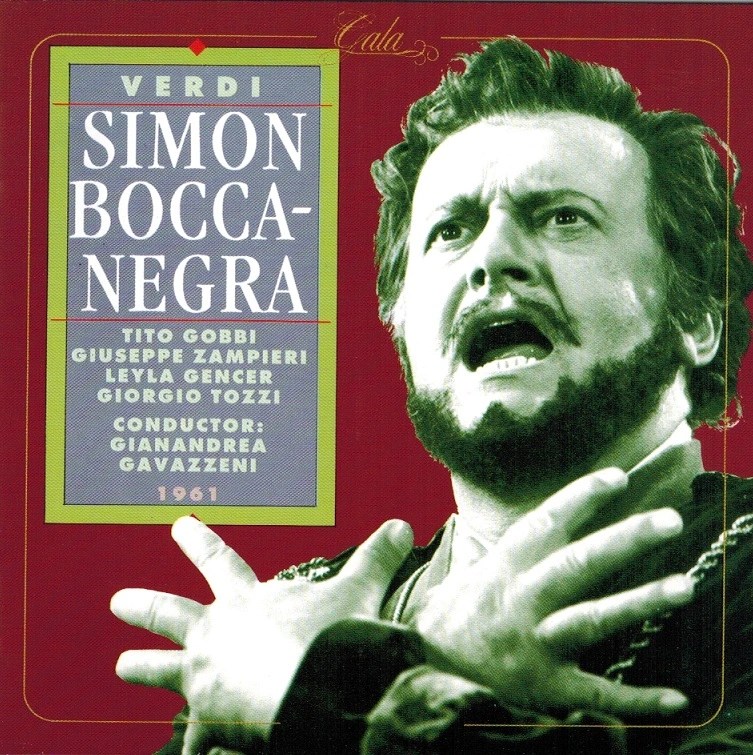
A fine performance of ‘Simone’ was recorded live in Vienna in 1961 (Gala GL 100,508). Gianandrea Gavazzeni is more exciting than on his RCA studio recording, but he cannot match Abbado.

https://open.spotify.com/album/3ZaFvXzv35PWIa5sX1lp6f?si=nmBNanJeSQ6CgYsHw9KT9w


Still, this recording is very worthwhile, not least because of Leyla Gencer’s Amelia. The Turkish soprano was the equal of Callas, only much less fortunate and she had to make do without having a recording contract. Tito Gobbi is an excellent Simone, and there is little to criticise about the rest of the cast either.


Leyla Gencer and Tito Gobbi in ‘Figlia! a tal nome palpito’:


1995


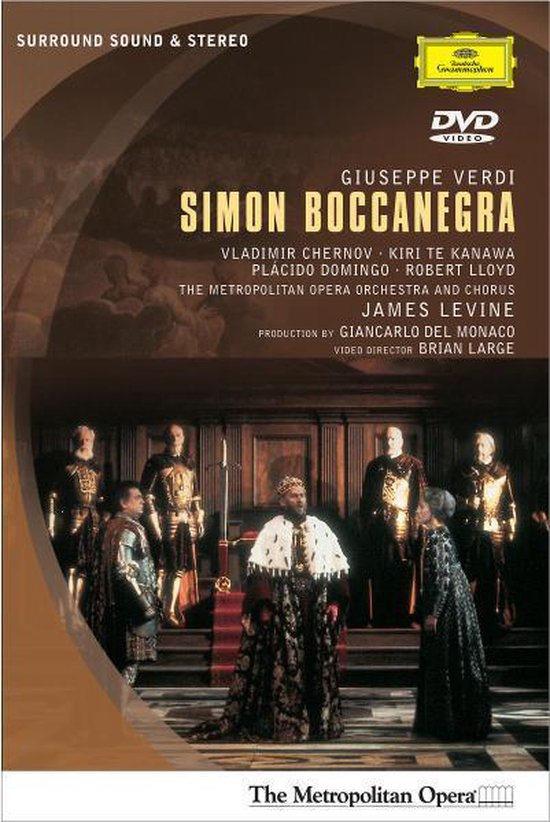
A new (the previous one, with Domingo, Milnes and Tomova-Sintov was directed by Tito Capobianco and released by very hard-to-get Pioneer in 1984) Simone was recorded at the Metropolitan Opera in 1995, directed by Giancarlo del Monaco (DG 0731319).

The staging is very naturalistic, eliciting bravos. The costumes and sets are also overwhelming and elaborate to the smallest details, beautiful to the eye, but not conducive to the drama unvolding. One loses oneself, as it were, in the details.

James Levine, meanwhile, has upped his tempi, and there is a decent pace. The direction is a bit static at first, but gradually it becomes more exciting. Robert Lloyd is a tormented Fiesco, but lacks the deep thirst for vengeance. Domingo is optically a bit too old for Adorno, too confident too, but he can sing like no other.

Kiri te Kanawa is a problematic Amelia: her face has only one expression and she has never heard of character portraiture, but her singing is certainly beautiful. Vladimir Chernov is very strong as Simone, whom he portrays as a kind of Jesus figure in the third act.

An excerpt from the production:


2002


At the Maggio Musicale in Florence (June 2002), Claudio Abbado conducted a superb production by Peter Stein, which had previously been seen in Salzburg. Stein refrained from any updating of the opera, and so it is set in Genoa in the 14th century, including the blue sea and the doge’s council chamber.

The costumes too are in style, exquisitely beautiful and in brilliant colours. So the plebeians (in blue) can be distinguished from the patricians (red). The sets, on the other hand, are very sparse, giving extra attention to the few props – an example of clever manipulation.

Karita Mattila shines as Amelia. She polishes her high notes like gems: hear how her ‘pace’ towers above everything else in ‘Plebe! Patrizi’ in the second act.

Lucio Gallo puts down a vile Paolo and Carlo Guelfi moves us as Simon. Most bravos, however, are for the seriously ill and severely emaciated Abbado. What he manages to elicit from the orchestra, choir and soloists borders on the impossible (Arthaus Musik 107073)


Trailer of the production:


2007


The star of this recording from Bologna (Arthaus Music 101 307) is Michele Mariotti. He comes up, looks around nervously, shakes the hands of a few orchestra members, puts a nervous smile on his face and bites his lips. And then he raises his baton and the spell begins.

I cannot remember the last time this opera was so beautifully conducted, so lovingly and with such élan, spirituality and bravura. Mariotti, born in 1979, graduated cum laude in Pesaro in 2004. His Boccanegra, recorded in Bologna in November 2007, was such a great success that he was immediately appointed as the principal conductor there.

The cast is mostly young. Giuseppe Gipali (Adorno) possesses a ringing tenor voice with an old-fashioned timbre, but unfortunately also with an old-fashioned way of (not) acting. This is much better handled by the beautiful Carmen Giannattasio (Amelia), who reminds me a little of Kiri te Kanawa in terms of tonal beauty.

Roberto Frontali is a convincing Boccanegra, Marco Vratogna a very vile Paolo and Alberto Rota shines in the small role of Pietro. The production is quite traditional, with fine period costumes.


Closing of the opera:


L’ELISIR D’AMORE: vier opnamen uit de oude doos.

ElisirLELISIR-DAMORE-TITO-SCHIPA-SR.-e-JR.-copyright-Ing.-Gianni-CARLUCCIO-6

Tito Schipa, Margherita Carosio en Salvatore Baccaloni, getekend door de Italiaanse cartoonist Onorato in 1937

DVD’S

FERRUCIO TAGLIAVINI

Elisir Tagliavini

Men kan niet om Ferrucio Tagliavini heen, een door God gekuste tenore-leggiero prima grazia. Zo zoet zoals zijn stem klinkt, daar kan geen Mona-toetje tegenop. En de tekstbegrip, ach!

Op VAI (4492) werd een complete L’elisir met hem en Alda Noni vastgelegd, opgenomen in Tokyo in 1959. Het zwart-witbeeld moet men voor lief nemen en het geluid is ook niet om naar huis te schrijven. Maar ja, Tagliavini! Als je zijn versie van ‘Una furtiva lagrima’ hoort, dan voel je je in de hemel. Niet minder dan dat:

CARLO BERGONZI

Elisir Scotto Bergonzi

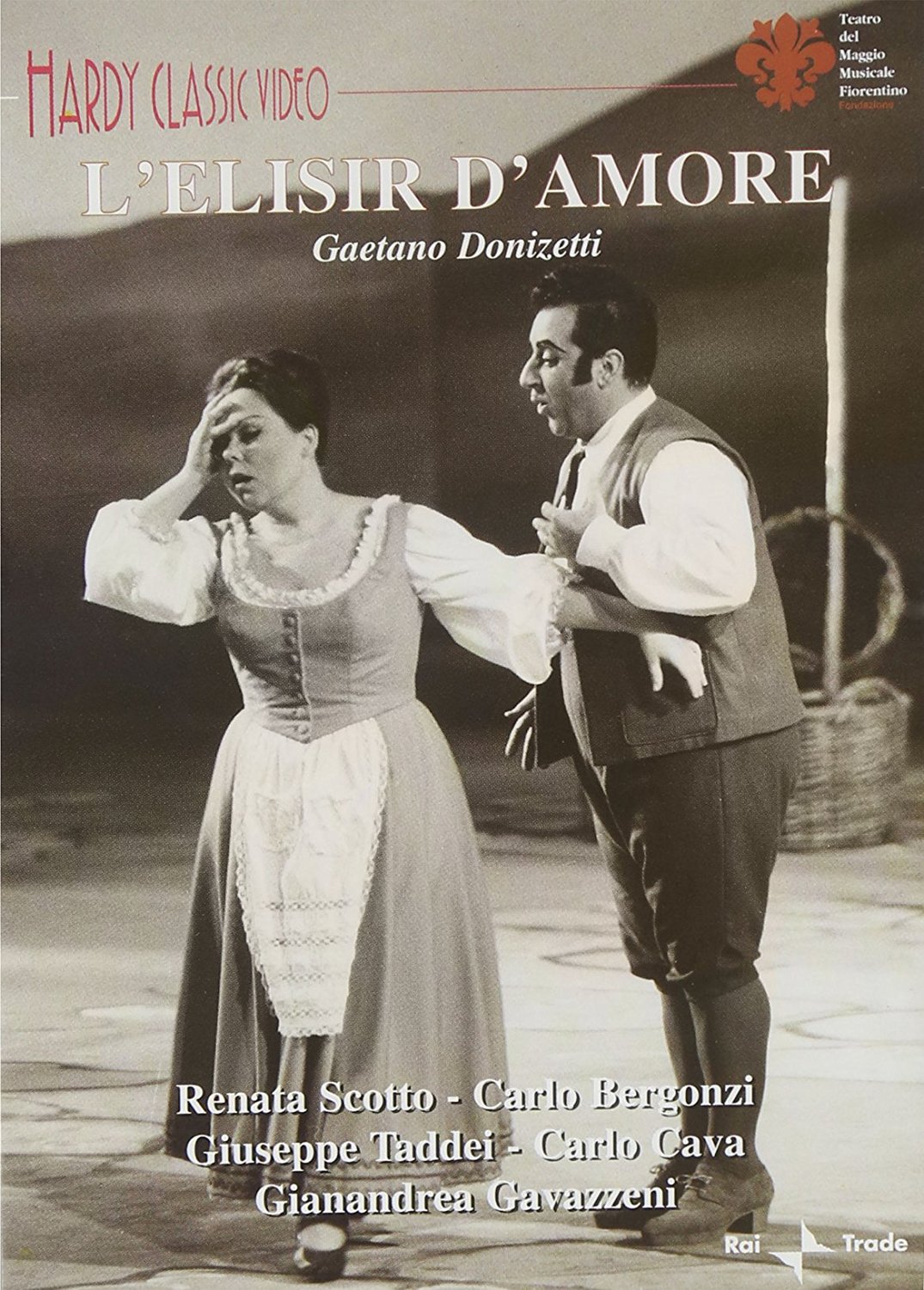
De dvd met Renata Scotto, Carlo Bergonzi en Giuseppe Taddei (Hardy Classic Video HCD 4014) wil ik speciaal de jongere generatie aanbevelen. Het zijn niet alleen de prachtige stemmen van weleer die imponeren (Scotto, Bergonzi, Taddei – wie zingt ze dit nog na?), het oog krijgt ook het een en ander om te genieten.

Denk maar niet dat ze het toneel opkomen, hun aria met het gezicht naar het publiek zingen en buigen, want dan komt u bedrogen uit. Het is theater pur sang en een beter acterende zangeres dan Scotto moet nog geboren worden.

Renata Scotto zingt ‘Prendi, per me sei libero’:

Het beeld is zwart-wit (de opname is gemaakt tijdens Maggio Musicale Fiorentino in 1967) en het decor is van bordkarton, maar wie maalt er om?

Carlo Bergonzi zingt ‘Una furtiva lagrima’:


CD’S 

JOSÉ CARRERAS


Elisir Carreras

Mijn geliefde cd-opname is live en verre van perfect (Legato Classics LCD 218-2). Yasuko Hayashi is zo-zo als Adina, zij haalt het allemaal maar net en zet te zwaar aan. Maar de mannen! José Carreras is een droom van een Nemorino – onnozel en hopeloos verliefd. Aan hem is de drank ook goed besteed, hij wordt er werkelijk vrolijk en uitgelaten van.

Geraint Evans zet Dulcamara lekker dik aan en chargeert, maar helemaal in de geest van het karakter. Thomas Allen is een zeer potente Belcore en het orkest en koor uit Covent Garden wordt zeer spiritueel en aanstekelijk gedirigeerd door John Pritchard.

De opname (Londen, 1976) klinkt prima. Als bonus krijgen wij een recital dat Carreras gaf in Carnegie Hall 30 november 1980, waarop hij ook wat minder bekende aria’s en liederen zingt, onder meer uit Lady Chatterton van Leoncavallo en Pietra del Paragone van Rossini.


LUIGI ALVA

Elisir glyndebournegfocd00562

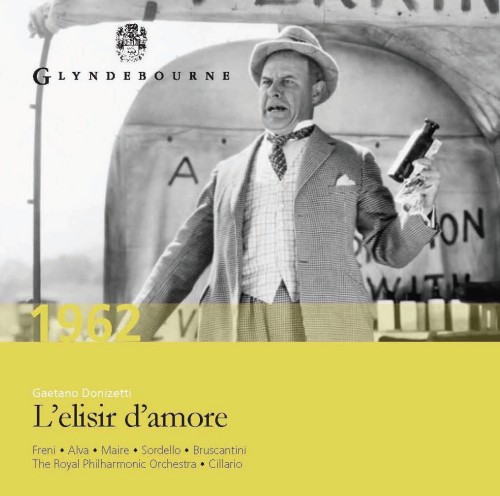
De andere, door mij zeer gewaardeerde opname is de live-uitvoering uit Glyndebourne 1962 (GFOCD 005-62). Niet zo lang geleden werd het op het eigen label van het befaamde operafestival uitgebracht.

Adina betekende de internationale doorbraak van Mirella Freni. Begrijpelijk, als je hoort hoe prachtig zij gestalte aan die rol geeft: charmant en geestig laat zij haar prachtige lyrische, jonge meisjessopraan bloeien en haar hoogte is stralend.

Luigi Alva was door zijn fluwelen timbre en perfecte coloratuurtechniek een in de tijd zeer gevraagde Mozart- en Rossini-tenor en ook Donizetti past hem als een handschoen. Zijn ‘Una furtiva lagrima’ klinkt misschien iets minder zoetgevooisd dan die van Tagliavini of Schipa, maar zijn invulling van het karakter van Nemorino is formidabel.

Sesto Bruscantini is zonder meer één van de beste Dulcamara’s uit de geschiedenis en Enzo Sordello een zeer mannelijke Belcore.

TITO SCHIPA

ElisirTito-Schipa-storico-Nemorino

Nee, van hem bestaat geen complete opname van de opera. Toch durf ik te beweren dat hij de mooiste Nemorino was. Ever.