TIDES OF LIFE: exciting arrangements of songs by Wolf, Schubert, Brahms
and Barber

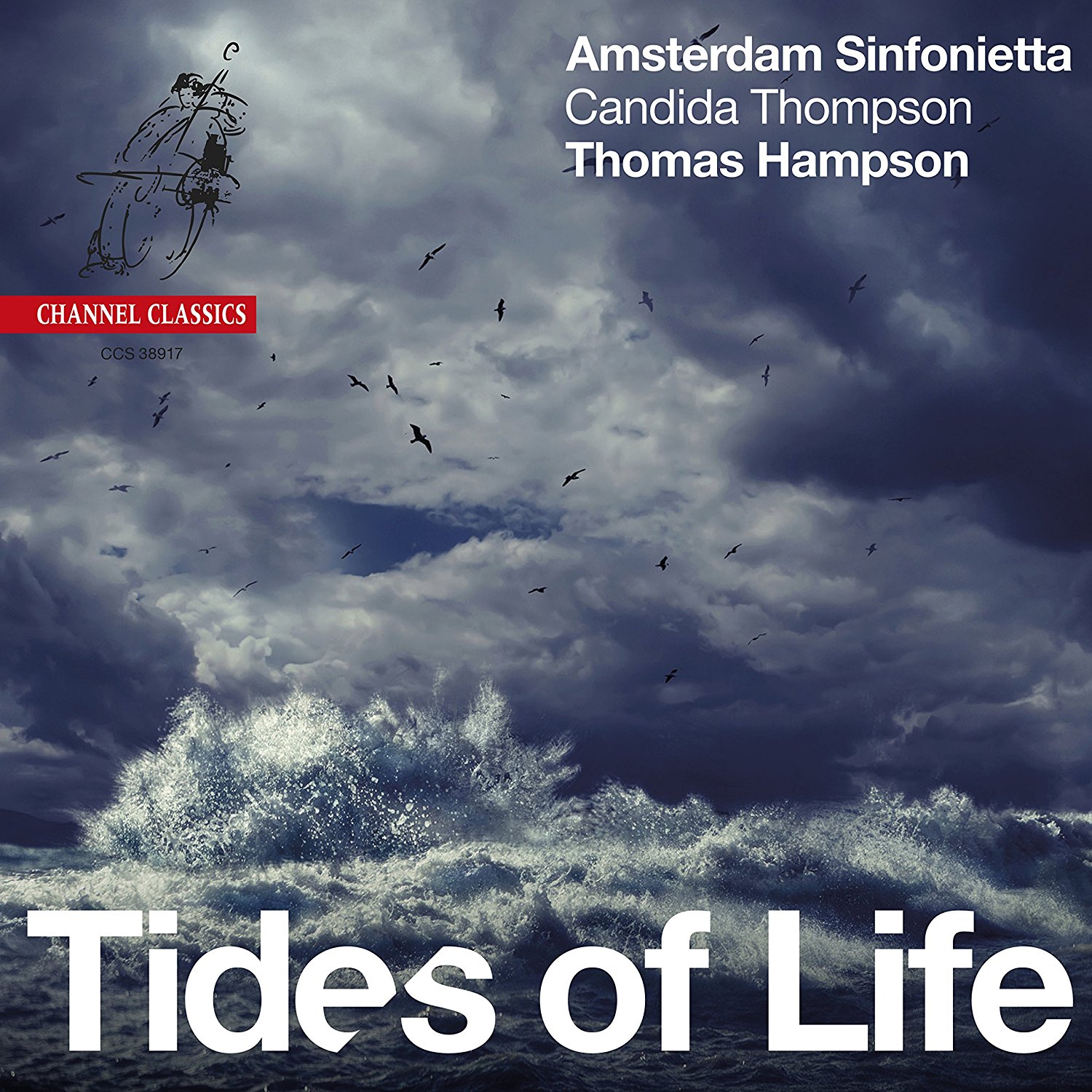
In the winter of 2014, Amsterdam Sinfonietta and American baritone Thomas Hampson toured Europe. In a fortnight, they gave 12 concerts in six different European countries.
Especially for this tour and commissioned by Amsterdam Sinfonietta, British composer David Matthews arranged songs by Wolf, Schubert and Brahms. Schubert’s ‘Ständchen’ was given a new arrangement by Bob Zimmerman. Only Samuel Barber’s “Dover Beach” was not given a real ‘make over’ and remained close to the original composition.
The songs are sometimes barely recognisable, but I don’t mind. It’s quite exciting to hear what an arrangement can do with familiar melodies.
The text remains the same, of course, but the melody line – and ertainly the tone – does change. In the new arrangements, Brahms’ “Vier ernste Gesänge” sound a little less sombreand Wolf’s songs (“Der Rattenfänger”!) actually become much more serious in tone and less ironic.
In Bob Zimmerman’s setting, the lovely “Ständchen” sounds a little unheimlich. A feeling reinforced by the reversal of the ‘roles’: it is now not a girl assisted by a male choir, it is now the women who accompany the man. It takes some getting used to, but beautiful it most certainly is. In any case, the National Women’s Youth Choir knows it well.
Hampson’s voice is not as beautiful and cultured as it used to be, which is only a plus here.Thus, the songs sound sort of spicy, with plenty of punch. Nice!
Amsterdam Sinfonietta proves yet again that they are one of the best chamber music ensembles in the world.
TO THE SOUL: AMERICAN SONGBOOK
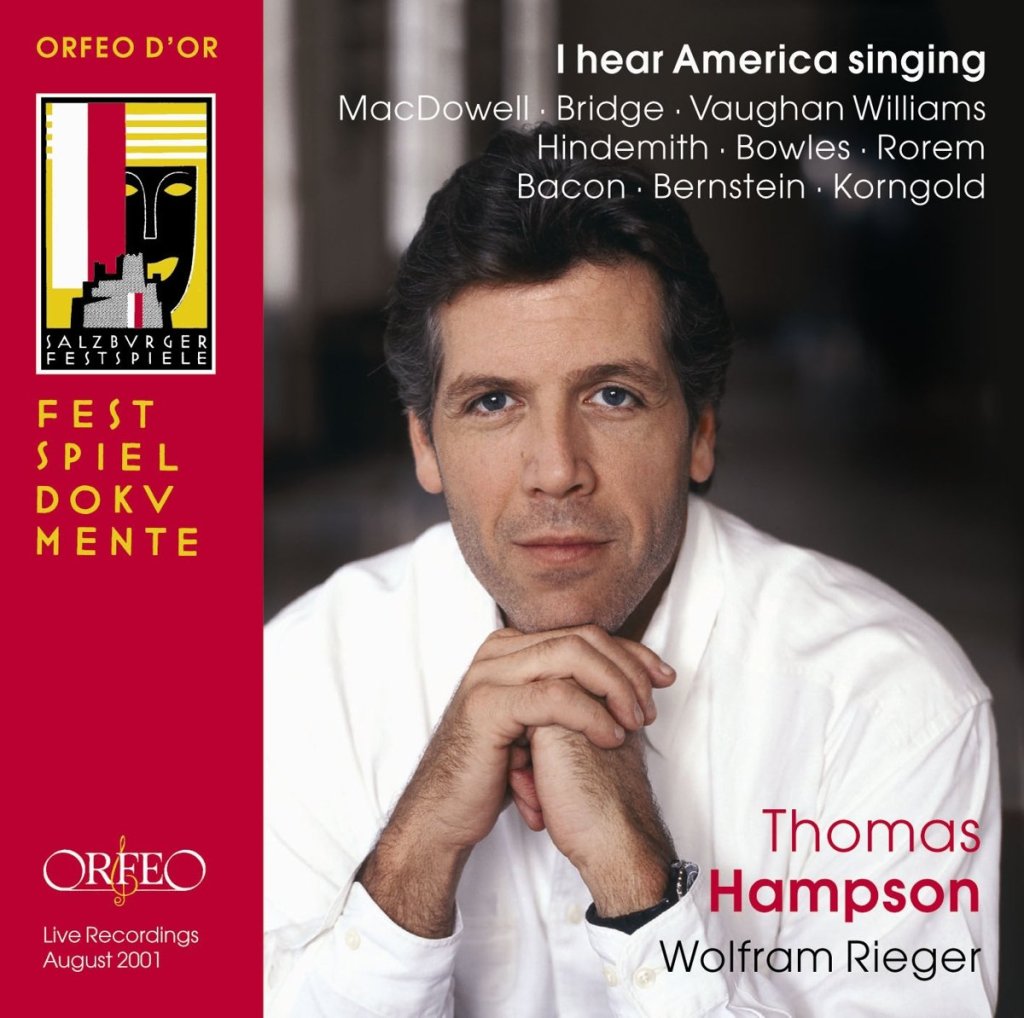
For decades, Thomas Hampson has been a tireless ambassador for art songs by American
composers, as well as American poetry. In 1991, he recorded a CD for Teldec with “German” songs by Charles Ives, Charles Tomlinson Griffes and Edward MacDowell
Griffes’ “Mein Herz ist wie die dunkle Nacht”:
To the Soul was released by EMI in 1997, featuring songs on texts by Walt Whitman.
Those names were therefore not missing from the recitals he gave in Salzburg in 2001, part of what was called a “Hampson Project”.
The theme of this mini-festival (there was also a symposium) was American poetry, set to music by various, not only American, composers. Hampson did more than just sing. He introduced the songs, commented on them and talked
about the composers, poets, writers and traditions.
Thomas Hampson on “American Songbook” :
To the delight of anyone who cares about American music and poetry, three of those recitals, from 12 (and not 15), 17 and 22 August 2001 respectively, were released on two CDs a few years ago. Hampson sings as we have come to expect: cultured and beautiful, and his diction
and text handling are exemplary.
This clip is not from the CDs (neither found on You Tube nor Spotify), but it illustrates Hampson’s commitment to the music and poetry of his homeland:
As a bonus, we get three songs by Korngold, taken from the project Forbidden and Exiled, from Salzburg 2005.
WERTHER : Can a baritone be a convincing Werther?

In 1902, ten years after the premiere, Massenet made a new version of his Werther, this at the request of Italian baritone Mattia Battistini, who was eager to sing the lead role. Massenet did not change the key, but rewrote the vocal lines of Werther’s music, making the arias, “Pourquoi me réveiller” included, barely recognisable.
The “baritone version” of the opera was and remains an oddity; no original manuscript of the score even exists. In recent times, with its penchant for ever new challenges, there was also an increased interest in the alternative versions of well-known operas.
Thomas Hampson has always walked the lesser-known paths, and he first performed the role of Werther back in 1989. In 2004, he sang a concert performance of it at the Paris Chatelet, and that performance has been released by Virgin on two DVDs. He does an excellent job, but
the manic-depressive is a bit off.
His Charlotte is sublimely sung by Susan Graham, who also performed the role in Amsterdam some years ago, where she had moved the audience and press to tears. Michel Plasson has drama in his fingertips and you can hear it.
 Basia con fuoco