Aris_Argiris

The miracle that is Annemarie Kremer’s ‘Heliane ‘

What do you do when laughter is not allowed in your country and love is punishable by death? Where everything, absolutely everything that gives colour to life, is banned? And what do you do when one day a Stranger appears who teaches the people what joy is, and for this the Ruler of the land (who also happens to be your hated husband) condemns him to death? You visit that man in his cell and then you discover the most beautiful and the most important thing: love?! You are caught, the death penalty follows, but if you are really innocent then a miracle has to happen. And it does happen!, after which you and The Stranger go to heaven together.

Das Wunder der Heliane was Korngold’s fourth opera and it was undoubtedly his most ambitious project. The libretto may seem a little bizarre, but you have to look at it through the eyes of the ‘zeitgeist’ of the time. The mysterious, the unearthly, the supernatural, the divine, the exaggerated emotions, the decadence and the undisguised eroticism… all this can be seen in many works of art of the time. Also the spirit of sacrifice and the notion that love conquers all: if not now, then in the hereafter. And the bright colours with lots of gold. The score also represents all this..
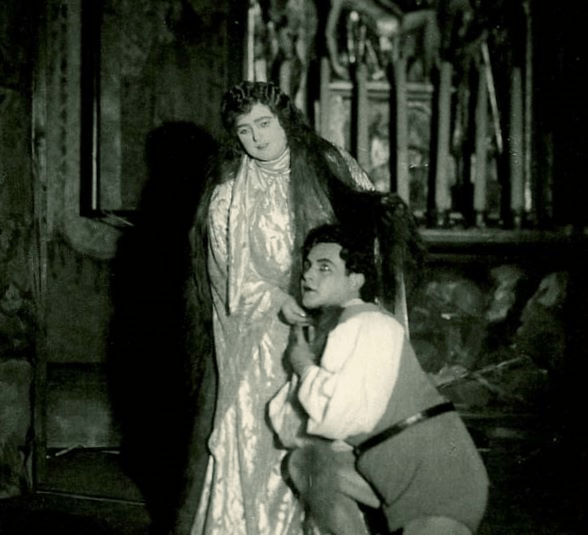
Lotte Lehmann en Jan Kiepura


The premiere of ‘Heliane’ took place in Hamburg in 1927 and it was repeated three weeks later in Vienna. Heliane was sung by Lotte Lehmann and the role of The Stranger by Jan Kiepura, a lyric tenor.
According to Brendan Carroll, the Korngold biographer and connoisseur, the aria ‘Ich ging zu Ihm’ is the “musical expression of sexual ecstasy, comparable only to  similar passages in Tristan und Isolde.

Below: Lotte Lehmann sings ‘Ich ging zu Ihm’


The role of Heliane, the only character in the opera who has a name, is a real tour de force, especially as she has to be on stage almost during the entire opera. The role calls for a strong dramatic soprano with a dominant lyricism in her voice. Leave that to Annemarie Kremer! Her soprano is dark, her height impeccable and her sensuality evident. Add to that her brilliant understanding of the text: from the very first note she manages to ‘grab’ you and make you fall in love with her (and her character!). No doubt about it: Kremer is the born interpreter for the fin de siècle repertoire.

Annemarie Kremer in ‘Ich ging zu Ihm’:


Unfortunately Ian Storey (The Stranger) is not on the same level. All the notes are there, but the feeling of listening to something special is missing. His voice is too Wagnerian and too little Puccini. Something that this role absolutely needs. It is true that the sound must be big, but his voice lacks the sweet tones, the beautiful and seductive sounds.
Do you remember who was the first interpreter of that role? Well, yes, that is what is needed here.

Aris Argiris, on the other hand, is a magnificent Ruler. His very impressive baritone sounds are authoritarian and he knows how to convey his overpowering jealousy. He is truly wonderful.

Katerina Hebelková is a very good messenger and the minor roles are also well performed. The orchestra occasionally sounds too loud and sometimes I think the balance is off. Could it be the recording?

Puccini about Korngold: “He has so much talent that he can easily give us half and still keep enough for himself.” And that’s true. Hurry to the shops and bring ‘Heliane’ into your home. You will not regret it.


Trailer of the recording:


Erich Wolfgang Korngold
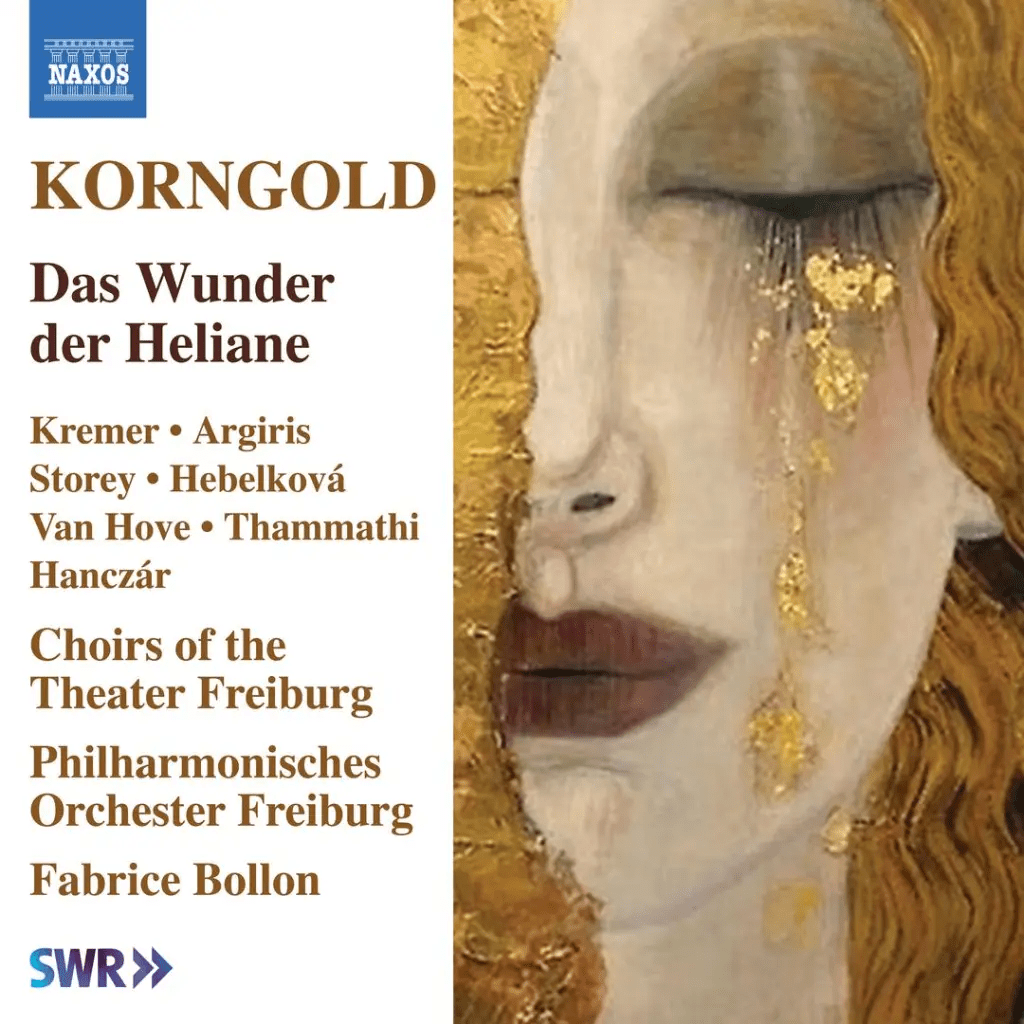
Das Wunder der Heliane
Annemarie Kremer, Ian Storey, Aris Argiris, Katerina Hebelková and others.
Opernchor und Extrachor of the Theater Freiburg
Philharmonisches Orchester Freiburg conducted by Fabrice Bollon
Naxos 866041

Das Wunder der Annemarie Kremers ‘Heliane’

Heliane

Wat doe je als er in je land niet gelachen mag worden en op de liefde de doodstraf staat? Als er alles, maar dan ook alles wat kleur geeft aan het leven wordt verbannen? En wat doe je als er op een dag een Vreemdeling opduikt die de mensen leert wat vreugde is en daar voor door de Heerser van het land (die toevallig ook je gehate echtgenoot is) ter dood wordt veroordeeld? Je zoekt die man in zijn cel op en dan ontdek je het mooiste en het belangrijkste: de liefde? Jullie worden betrapt, de doodstraf volgt, maar als je echt onschuldig was dan moet er een wonder gebeuren. En dat gebeurt, waarna jij samen met De Vreemdeling ten hemel vaart.

Das Wunder der Heliane was de vierde opera van Korngold en het was ongetwijfeld zijn meest ambitieuze project. Het libretto lijkt wellicht een beetje bizar, maar je moet het door de ogen van de toenmalige ‘tijdgeest’ bekijken. Het mysterieuze, onaardse, buitennatuurlijke, het goddelijke, de uitvergrote emoties, de decadentie en de onverholen erotiek… dat zie je in veel kunstwerken uit die tijd. Ook de opofferingsgezindheid en het motto dat liefde alles overwint: zo niet nu, dan in het hiernamaals. Alsook de felle kleuren met veel goud. Ook in de notenschrift.

heliane-lotte-lehmann-i-pura

Lotte Lehmann en Jan Kiepura

De première van ‘Heliane’ vond plaats in 1927 in Hamburg en werd maar liefst drie weken later in Wenen herhaald. Heliane werd gezongen door Lotte Lehmann en de rol van De Vreemdeling door Jan Kiepura, een _lyrische_ tenor.

Volgens Brendan Carroll, dé Korngold-biograaf en kenner is de aria ‘Ich ging zu Ihm’ de “muzikale uitdrukking van de seksuele extase, alleen te vergelijken met de soortgelijke passages uit Tristan und Isolde.

Hieronder: Lotte Lehmann zingt ‘Ich ging zu Ihm’

De rol van Heliane, de enige personage in de opera die een naam heeft is een echte tour de force, zeker omdat ze zowat de hele opera aanwezig moet zijn. De rol vraagt om een sterke dramatische sopraan met een overheersende lyriek in haar stem. Laat dat maar aan Annemarie Kremer over! Haar sopraan is donkergekleurd, haar hoogte onberispelijk en haar sensualiteit evident. Tel daarbij het schitterende tekstbegrip: vanaf de eerste noot weet ze je te ‘pakken’ en verliefd op haar (én haar personage!) te laten worden. Geen twijfel mogelijk: Kremer is de geboren vertolkster voor het fin de siècle repertoire.

Annemarie Kremer in ‘Ich ging zu Ihm’:

Helaas haalt Ian Storey (De Vreemdeling) haar niveau niet. Alle noten zijn er, maar het gevoel om naar iets bijzonders te luisteren ontbreekt. Daarvoor is zijn stem te Wagneriaans en te weinig Pucciniaans. Iets wat die rol absoluut nodig heb. Het is wel waar dat je stem groot moet zijn, maar er ontbreekt hem aan de zoete tonen, aan de mooie en verleidelijke klanken.Weet u nog wie de eerste vertolker van die rol was? Juist, ja.

Aris Argiris daarentegen is een schitterende Heerser. Zijn zeer indrukwekkende bariton klinkt autoritair en hij weet zijn allesoverheersende jaloezie goed over te brengen. Prachtig.

Katerina Hebelková is een zeer goede bode en ook de kleine rollen zijn goed ingevuld. Het orkest klinkt af en toe te hard en soms denk ik dat de balans ergens niet klopt. Zal het aan de opname liggen?

Puccini over Korngold: “Hij heeft zoveel talent dat hij ons gemakkelijk de helft kan geven en toch genoeg voor zichzelf kan behouden.” En dat is waar. Snel naar de winkels en haal ‘Heliane’ thuis. Daar zult u geen spijt van hebben.

Trailer van de opname:

Erich Wolfgang Korngold
Das Wunder der Heliane
Annemarie Kremer, Ian Storey, Aris Argiris, Katerina Hebelková e.a.
Opernchor und Extrachor of the Theater Freiburg
Philharmonisches Orchester Freiburg olv Fabrice Bollon
Naxos 8660410-12

Wonderlijke productie van Das wunder der Heliane uit Berlijn

Aanbeden, genegeerd, vergeten: over Erich Wolfgang Korngold en ‘Die Tote Stadt’

Die Tote Stadt discografie. Deel 1

DIE KATHRIN