Angelina_Ruzzafante

La Muette de Portici, an opera known for its alleged role in the revolution

How many operas can claim to have shot the world order hell by sparking a revolution and thereby creating an entirely new country?

The honour falls to La Muette de Portici, an opera almost forgotten today by an almost equally forgotten French composer Daniel-François-Esprit Auber (1782 – 1971).

The situation ignited during a performance at Brussels’ La Monnaie in 1830, a performance in honour of the birthday of King William I. The moment suprème came during an aria, in which one of the protagonists sang the text: “Holy patriotism, give us back our courage and pride. My life I owe to my country, it will owe its freedom to me.” The audience left the hall, took to the streets and voilà: the Kingdom of Belgium was born.

That La Muette is different from all other operas also has to do with the protagonist. The latter may be present but has no note to sing – poor fisherman’s girl Fenella is mute.

Anna Pavlova as Finella

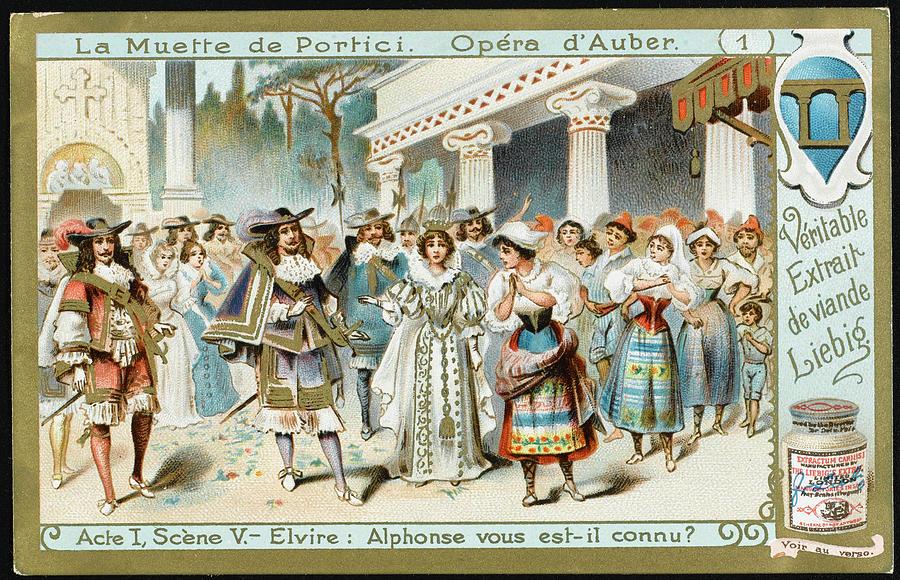
She is seduced by the young Neapolitan count Alphonse, who then exchanges her for a better match: a Spanish princess Elvire. Fenella is imprisoned, escapes and – using only sign language – manages to attract Elvire’s attention and pity, turning her brother Masaniello into the destroying angel.

This also becomes the signal to spark an uprising against the hated rulers; after which everything that can go wrong does. Masaniello is poisoned, the revolt fails and Fenella finds self-death in the lava flow from Vesuvius. I can’t make it more logical for you, but that doesn’t matter, because the opera itself is more than delightful and provides you with more than two hours of pure listening pleasure.

La Muette is considered the first true ‘grand opéra’. That may also be why it was so rarely staged, given our long-standing condescending view of the phenomenon of ‘grand opéra’.

But the tide is turning. A few years ago, La Monnaie dared to include the opera in its repertoire. Unfortunately, their courage did not go so far as to include performances in Brussels.

Peter de Caluwe, the director of La Monnaie, said with that, “That was done deliberately. Staging the opera in Brussels now would not only be an artistic act, but also a political statement; it would be interpreted as a plea for Belgian unity at a politically precarious moment.”

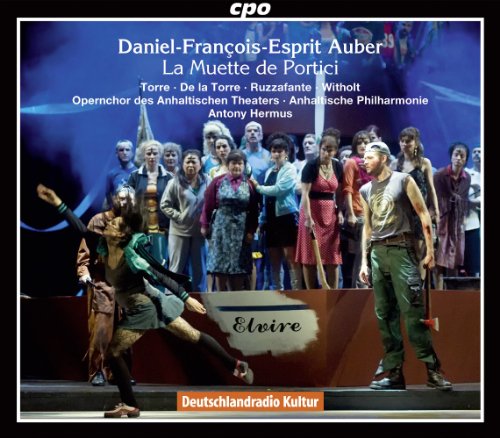
In 2011, a German opera house, the progressive Anhaltisches Theater in Dessau, where the young Dutch conductor Antony Hermus, then Generalmusikdirektor, also staged the opera. The performances were recorded live by CPO. It was about time!
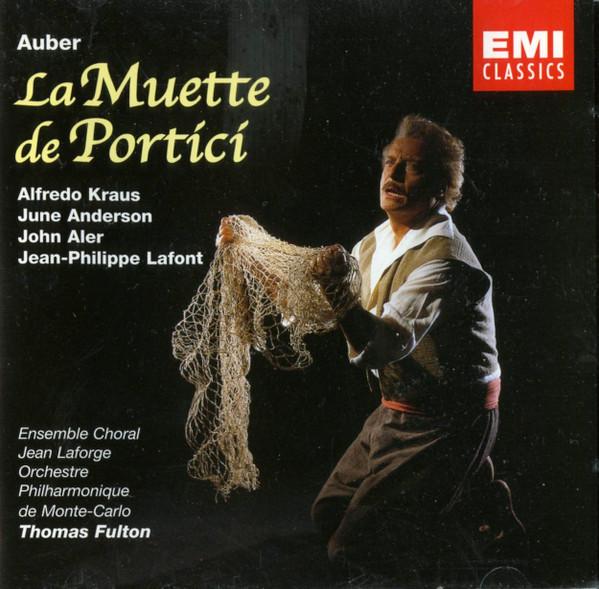
I knew of only one recording of the opera, with Alfredo Kraus, June Anderson, John Aler and Jean-Philipe Lafont conducted by Thomas Fulton (EMI not available anymore)). No one can match Alfredo Kraus’ elegant phrasing, but I still prefer Diego Torres’ more heroic sound. As Masaniello, he manages to convince much better. With him, you can practically hear the hormones coursing through his veins.

In his madness scene (yes, why not? Men are allowed to go mad too!), he sounds a lot like John Osborn.His high notes are not only spectacular but he also sings them at the top of his voice. Occasionally he sounds a little tired, but that doesn’t matter, especially in the context of the whole thing.

In “Mieux vaut mourir que rester misérable!”, from which the incendiary text thus comes, he is joined by Wiard Withold as Pietro. I also find him more interesting than Jean-Philipe Lafont on the Fulton (EMI) recording. It has now been recorded by CPO. It was about time

The young Dutch singer is at his best in the fifth act. His barcarolle “Voyez du haut de ces rivages” is particularly impressive. His lyrical baritone, meanwhile, has darkened a little without compromising on suppleness and lyricism, which goes without a hitch.

Angelina Ruzzafante is a wonderful Elvire. Her voice is light, supple and agile, her pitch beautiful and pure, and her vocal acting is perfect.Sometimes she reminds me of Cristina Deutekom, but without her oh-so-typical “staccato” (no offence!). It is about time the we get to hear the Dutch soprano on our stages too!

Oscar de la Torre (Alphonse) starts out weak – his tenor sounds a bit pinched – but in the fourth act he more than recovers. He is still young and – from the looks of it – inexperienced, but he will get there!

The chorus is formidable and I find Hermus’ tempi definitely better than Fulton’s.
La muette de Portici: de opera die een revolutie heeft ontketend

auber

Hoeveel opera’s kunnen zich erop beroepen dat ze de wereldorde een beetje naar de sodemieter hebben geholpen door een revolutie te ontketenen en daardoor een geheel nieuw land te creëren?

De eer valt te beurt aan La Muette de Portici, een vandaag bij het grote publiek vrijwel vergeten opera van een bijna net zo vergeten Franse componist Daniel-François-Esprit Auber (1782 – 1871).

De vlam sloeg in de pan tijdens een voorstelling in de Brusselse De Munt in 1830, een opvoering nota bene ter ere van de verjaardag van koning Willem I. Het moment suprème kwam tijdens een aria, waarin één van de protagonisten de tekst zong: “Heilige vaderlandsliefde, geef ons onze moed en trots terug. Mijn leven heb ik aan mijn land te danken, het zal zijn vrijheid aan mij te danken hebben.” Het publiek verliet de zaal, ging de straat op en voilà: het Koninkrijk België werd geboren.

Dat La Muette anders is dan alle andere opera’s heeft ook met de hoofdpersoon te maken. Die is dan wel aanwezig is, maar heeft geen noot te zingen – het arme vissersmeisje Fenella is namelijk stom.

Zij wordt verleid door de jonge Napolitaanse graaf Alphonse, die haar daarna omruilt voor een betere match: een Spaanse prinses Elvire. Fenella wordt opgesloten, vlucht en weet – enkel met gebarentaal – de aandacht en medelijden van Elvire te wekken en haar broer Masaniello in de wraakengel te doen veranderen.

Dat wordt tevens het sein om een opstand tegen de gehate heersers te ontketenen; waarna alles wat mis kan gaan, ook daadwerkelijk misgaat. Masaniello wordt vergiftigd, de revolte mislukt en Fenella vindt de zelfdood in de lavastroom van Vesuvius. Logischer kan ik het voor u niet maken, maar dat geeft niet, want de opera zelf is meer dan heerlijk en bezorgt u meer dan twee uur pure luisterplezier.

La Muette wordt gezien als de eerste echte ‘grand opéra’. Dat kan ook de reden zijn dat het zo zelden werd opgevoerd, gezien onze jarenlang durende neerbuigende kijk op het fenomeen ‘grand opéra’.

Maar het tij keert. Twee jaar geleden heeft De Munt het aangedurfd om de opera op het repertoire te nemen. Jammer genoeg ging hun moed zo ver dat de voorstellingen ook in Brussel plaatsvonden. Peter de Caluwe, de directeur van De Munt, zei daarvoer: “Dat is bewust zo gedaan. De opera nu opvoeren in Brussel zou niet alleen een artistieke daad zijn, maar ook een politiek statement; het zou worden uitgelegd als een pleidooi voor Belgische eenheid op een politiek precair moment.”

In 2011 heeft ook een Duits operahuis, het vooruitstrevende Anhaltisches Theater in Dessau, waar de jonge Nederlandse dirigent Antony Hermus, toen Generalmusikdirektor was, de opera opgevoerd. De voorstellingen werden live door CPO opgenomen. Dat werd tijd!

Ik kende maar één opname van de opera, met Alfredo Kraus, June Anderson, John Aler en Jean-Philipe Lafont onder leiding van Thomas Fulton (EMI). Aan de elegante frasering van Alfredo Kraus kan niemand zich meten, maar toch prefereer ik het meer heroïsche geluid van Diego Torre. Als Masaniello weet hij veel beter te overtuigen. Bij hem hoor je de hormonen zowat door zijn aderen gieren.

In zijn waanzinscène (ja hoor, waarom ook niet? Mannen mogen ook gek worden!) heeft hij veel weg van John Osborn. Zijn hoge noten zijn niet alleen spectaculair maar hij zingt ze ook uit volle borst. Af en toe klinkt hij een beetje vermoeid, maar dat stoort niet, zeker niet in de context van het geheel.

In ‘Mieux vaut mourir que rester misérable!’, waaruit dus de opruiende tekst afkomstig is, wordt hij bijgestaan door Wiard Withold als Pietro. Ook hem vind ik interessanter dan Jean-Philipe Lafont bij Fulton.

De jonge Nederlandese zanger is op zijn best in de vijfde akte. Zijn barcarolle “Voyez du haut de ces rivages” is bijzonder indrukwekkend. Zijn lyrische bariton is inmiddels wat donkerder geworden zonder dat hij concessies aan de souplesse en lyriek doet, dat gaat van een leien dakje.

Angelina Ruzzafante is een prachtige Elvire. Haar stem is licht, soepel en wendbaar, haar hoogte mooi en zuiver en het acteren (met de stem dan) gaat haar perfect af. Soms doet zij mij aan Cristina Deutekom denken, maar dan zonder haar o zo typische “staccato” (is niet negatief bedoeld!). Het wordt tijd dat de wij de Nederlandse sopraan ook op onze podia te horen krijgen!

Oscar de la Torre (Alphonse) begint zwak – zijn tenor klinkt een beetje geknepen – maar in de vierde akte revancheert hij zich ruimschoots. Hij is nog jong en – zo te lezen – onervaren, maar hij komt er wel!

Het koor is formidabel en de tempi van Hermus vind ik zonder meer beter dan bij Fulton. Een aanwinst, en dat niet alleen maar vanwege het rariteitsgehalte!

Daniel-François-Esprit Auber
La Muette de Portici
Diego Torre, Oscar de la Torre, Angelina Ruzzafante, Wiard Witholt e.a.
Opernchor des Anhaltischen Theater, Anhaltische Philharmonie olv Antony Hermus
CPO 7776942