Michael_William_Balfe

Satanella or how a female demon turned into an angel

circa 1850: A music score for the ‘Satanella Quadrille’, by Henri Laurent. (Photo by Hulton Archive/Getty Images)

After its world premiere in London in 1858, Michael William Balfe’s opera Satanella was in the repertoire for over 60 years. After that, the piece disappeared. However, thanks to the efforts of Richard Bonynge, Satanella is now back in the spotlight. The eminent maestro leads the first-ever recording of the work

© National Portrait Gallery, London


Born in Dublin in 1808, Michael William Balfe played the violin in theatre orchestras when he was just a teenager. He also made a very successful career as an opera singer. For instance, he sang Figaro in Barbiere di Sevilla at the Théâtre des Italiens and performed with none other than Maria Malibran. And all the while, he was composing. His works include 29 operas and some 250 songs.
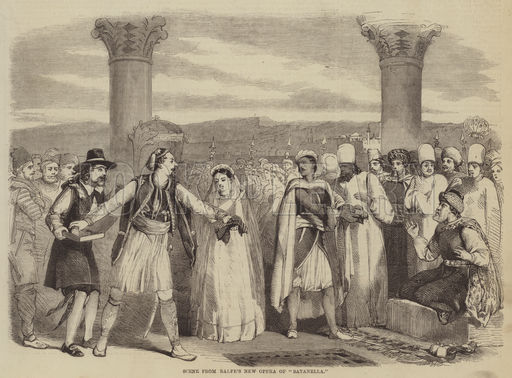
Satanella“/ Illustration zur Uraufführung/wiki


What a career, you might say. Yet… he is not really well known. Of all his works, only one has held repertoire: The Bohemian Girl. What’s to blame? At least not his music: it sounds like a ˜Donizetti light” peppered with a touch of Meyerbeer and salted with a drop of Rossini; but in English.


Satanella is a horror tale that reminds me vaguely of Mayerbeer’s Robert le Diable, only it is less scary. It has all the elements of the horror genre: power, money, jealousy, a card game, a loss and – how could it be otherwise – an innocent love that defeats even the dark forces from hell. Satanella even goes a step further: the title heroine, overcome by pure love, turns from a devil into an angel. This is how it can be done.
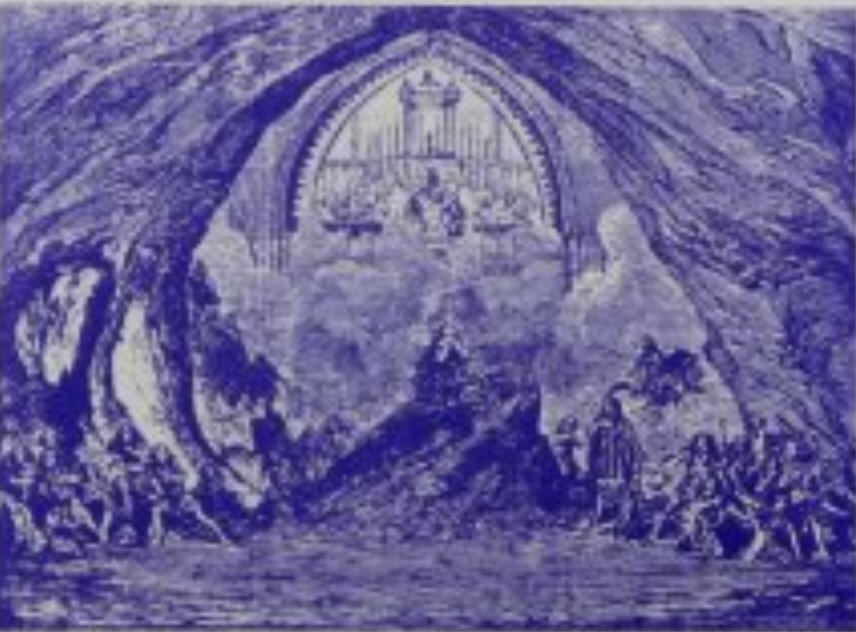
„Satanella“/ Bühnenbild zum 3. Akt/ Balfe Society


In the meantime, the innocent girl Lelia, partly due to the jealous Stella, is kidnapped by pirates, sold on the slave market and then freed again. In the process, all the women, Satanella included, fall in love with poor Count Rupert, who loses his fortune in a card game, and all the men fall for Lelia. Something that complicates the story quite a bit. But to reassure you right away: everything ends well.

The score is wonderfully simple and enjoyable, with lots of ballad-like arias, but also with many dark tones and timpani drumming accompanying the appearance of the devil Arimanes.

The cast is truly outstanding. Kang Wang is a wonderfully lyrical Rupert. His Rossinian timbre rivals the best in the business.

Catherina Carby convinces as the innocent Lelia and Sally Silver (Satanella) is a real discovery. Listen to her very emotionally sung ‘There’s a power’ (power of love) at the end of the first act: I bet you’ll fall hopelessly for her.

Richard Bonynge conducts as we have come to expect from him: with great passion.
Highly recommended.

Satanella of hoe een duivelin in een engel veranderde

satanella

Na de wereldpremière in Londen in 1858 stond de opera Satanella van Michael William Balfe ruim zestig jaar lang op het repertoire. Daarna verdween het stuk uit beeld. Met dank aan de inspanningen van Richard Bonynge is Satanella nu echter terug in de aandacht. De vooraanstaande maestro leidt de allereerste opname van het werk

De in 1808 in Dublin geboren Michael William Balfe speelde viool in theaterorkesten toen hij nog maar een teenager was. Hij maakte ook een zeer succesvol carrière als operazanger. Zo zong hij Figaro in Barbiere di Sevilla in Théâtre des Italiens en trad op met niemand minder dan Maria Malibran. En al die tijd componeerde hij. Op zijn naam staan 29 opera’s en zowat 250 liederen.

Wat een carrière, zou je zeggen. Toch… echt bekend is hij niet. Van al zijn werken heeft er maar één repertoire gehouden: The Bohemian Girl. Waar het aan ligt? In ieder geval niet aan zijn muziek: die klinkt als een “Donizetti light” gepeperd met een vleugje Meyerbeer en gezouten met een druppeltje Rossini; maar dan wel in het Engels.

Satanella is een griezelverhaal die mij vaag aan Robert le Diable van Mayerbeer doet denken, alleen is het minder eng. Alle elementen van het griezelgenre zitten erin: macht, geld, jaloezie, een kaartspel, een verlies en – hoe kan het ook anders – een onschuldige liefde die zelfs de duistere krachten uit de hel verslaat. Satanella gaat zelfs een stapje verder: de titelheldin, door pure liefde bevangen, verandert van een duivelin in een engel. Zo kan het ook.

Tussendoor wordt het onschuldige meisje Lelia, mede door toedoen van de jaloerse Stella, door piraten ontvoerd, op de slavenmarkt verkocht en dan weer bevrijd. Daarbij zijn alle vrouwen, Satanella incluis, verliefd op de arme graaf Rupert, die zijn vermogen in een kaartspel verliest, en vallen alle mannen op Lelia. Iets wat het verhaal lekker ingewikkeld maakt. Maar om u meteen gerust te stellen: alles loopt goed af.

De partituur is heerlijk eenvoudig en aangenaam, met veel ballade-achtige aria’s, maar ook met veel duistere tonen en paukengetrommel die het verschijnen van de duivel Arimanes begeleiden.

De bezetting is werkelijk voortreffelijk. Kang Wang is een heerlijk lyrische Rupert. Zijn Rossiniaans timbre kan zich met de besten in het vak meten.

Catherina Carby overtuigt als de onschuldige Lelia en Sally Silver (Satanella) is een echte ontdekking. Luister naar haar zeer emotioneel gezongen ‘There’s a power (power of love)’ aan het einde van de eerste acte: wedden dat u hopeloos verliefd op haar word?

Richard Bonynge dirigeert zoals we van hem gewend zijn: gepassioneerd. Een echte aanrader.


MICHAEL WILLIAM BALFE
Satanella
Kang Wang, Quentin Hayes, Anthony Gregory, Trevor Bowes, Sally Silver, Christine Tocci, Catherine Carby e.a.
Victorian Opera Orchestra & John Powell Singers olv Richard Bonynge
Naxos 8660378/79