Jacques_Zoon

Erwin Schulhoff: genres and music crossing borders

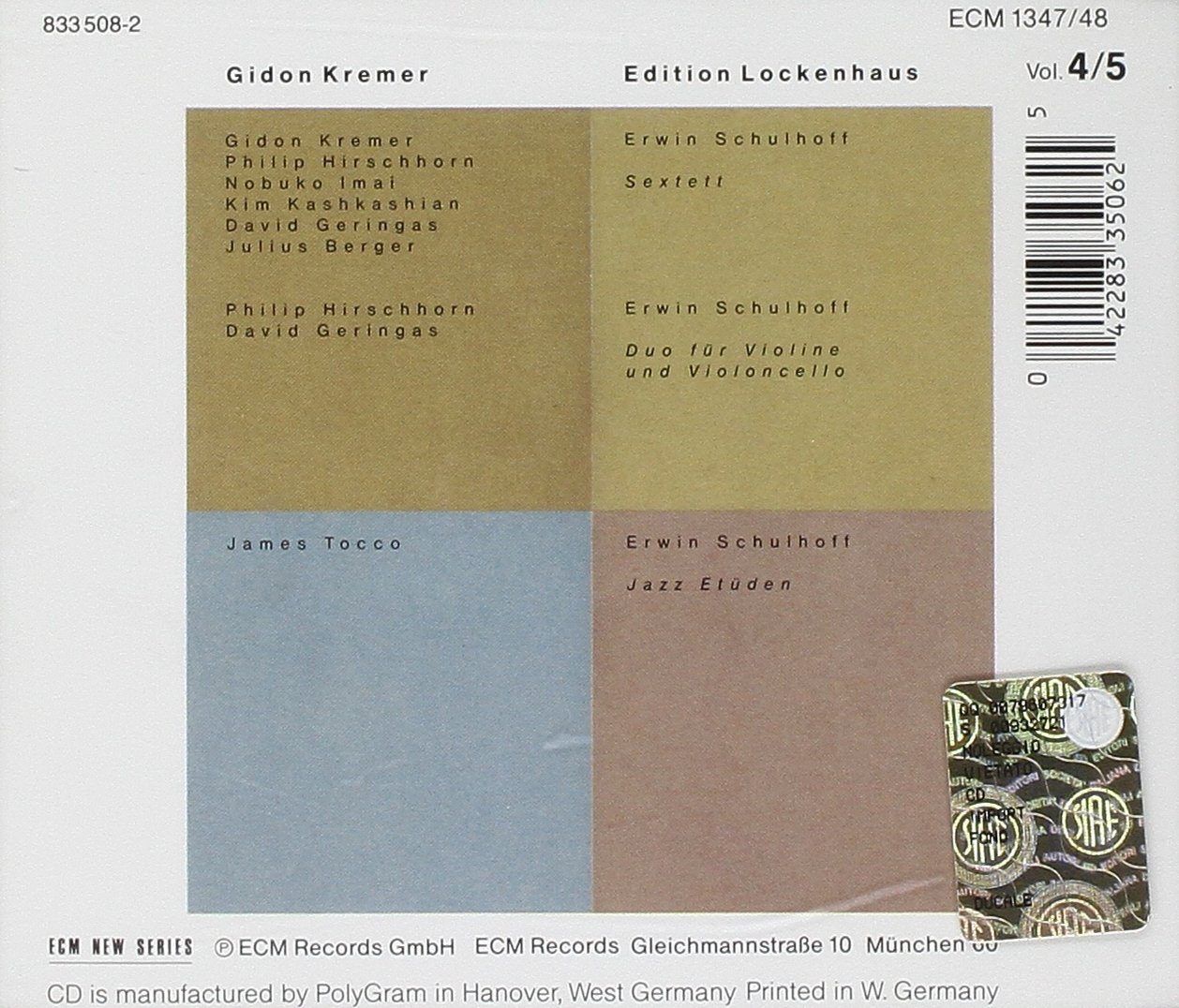
Schulhoff box

“Music should primarily bring physical pleasure, even ecstasy, to the listener. It is not philosophy, its origin lies in ecstatic situations and its expression in rhythm”  Erwin Schulhoff wrote in 1919.

From his earliest youth, Schulhoff was fascinated by everything new. His music transcended borders and genres – sometimes even those of ‘good decency’. He was a man of extremes, heartily embracing dada and jazz, and he also had a particular liking for the grotesque. No wonder that the synthesis of jazz and classical music, of everything in fact, became for him not only a challenge, but ultimately his artistic credo.
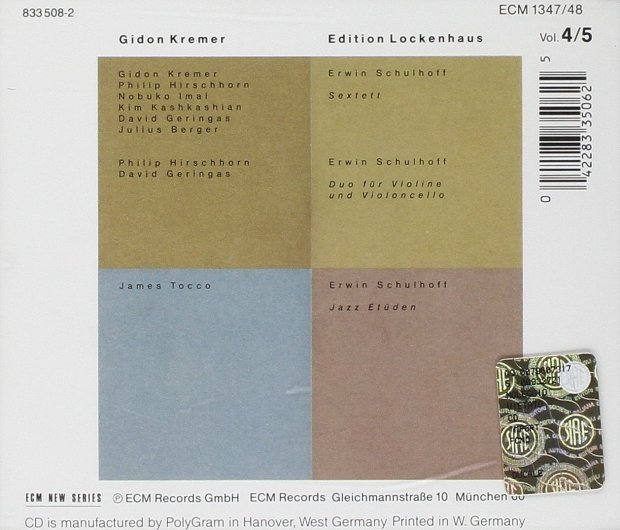
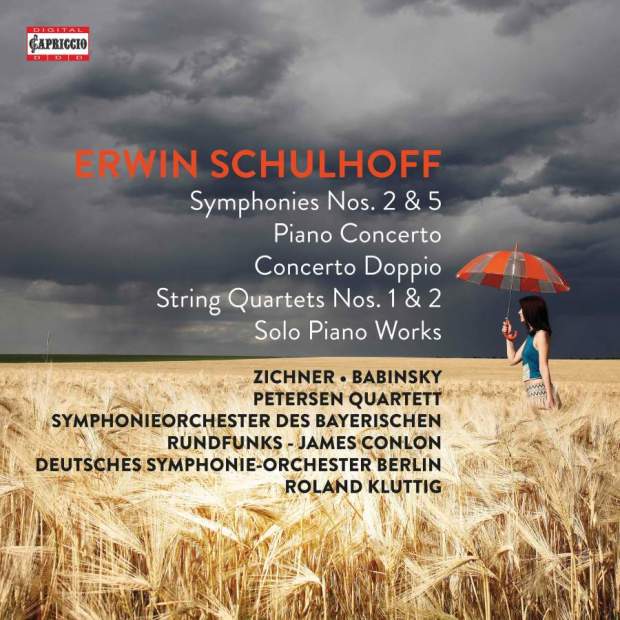
Schulhoff Lockenhaus


My first acquaintance with the composer and his music was thirty years ago, at the Lockenhaus chamber music festival, led by Gidon Kremer. It was mainly his string sextet, with its strong Janaček influences, that made me gasp for air. Since that day I was hooked. It took a long time, but in the meantime Schulhoff has found his way to the concert stages and recording studios. Especially the latter, because he is still too rarely programmed at concerts.
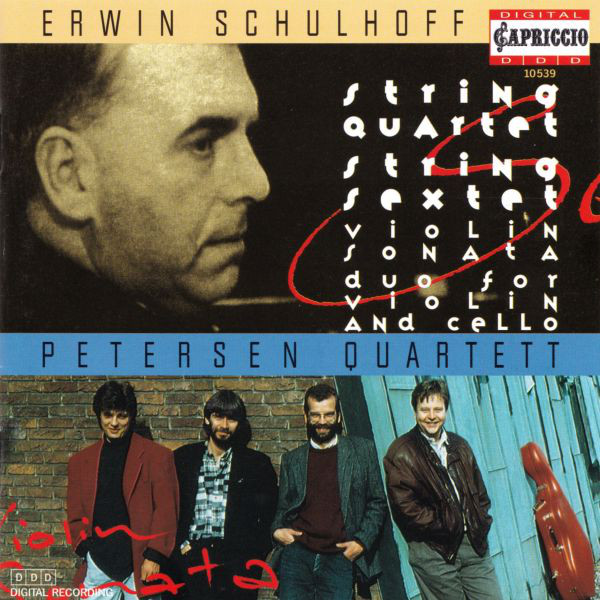
Schulhoff etersen


My very first record encounter with the composer was the recording of his complete string quartets by the Petersen Quartet, in 1992. To my delight, the string quartets are also in the six-CD box set recently released by the Capriccio label. These are recordings of many of his works (dear Capriccio: there is more!) made by Deutschlandfunk Kultur between 1992 and 2007. Most of these recordings have already appeared on Capriccio (but also on other, often no longer existing labels).

The 2007 recording of the Double Concerto for flute and piano, with Dutch flutist Jacques Zoon as soloist, is new to me. And it is so beautiful! Also new to me is the recording of the Second and Fifth Symphonies, in which the Symphonieorchester des Bayerischen Rundfunks is conducted by the greatest advocate of ‘entartete composers’, James Conlon.


ERWIN SCHULHOFF
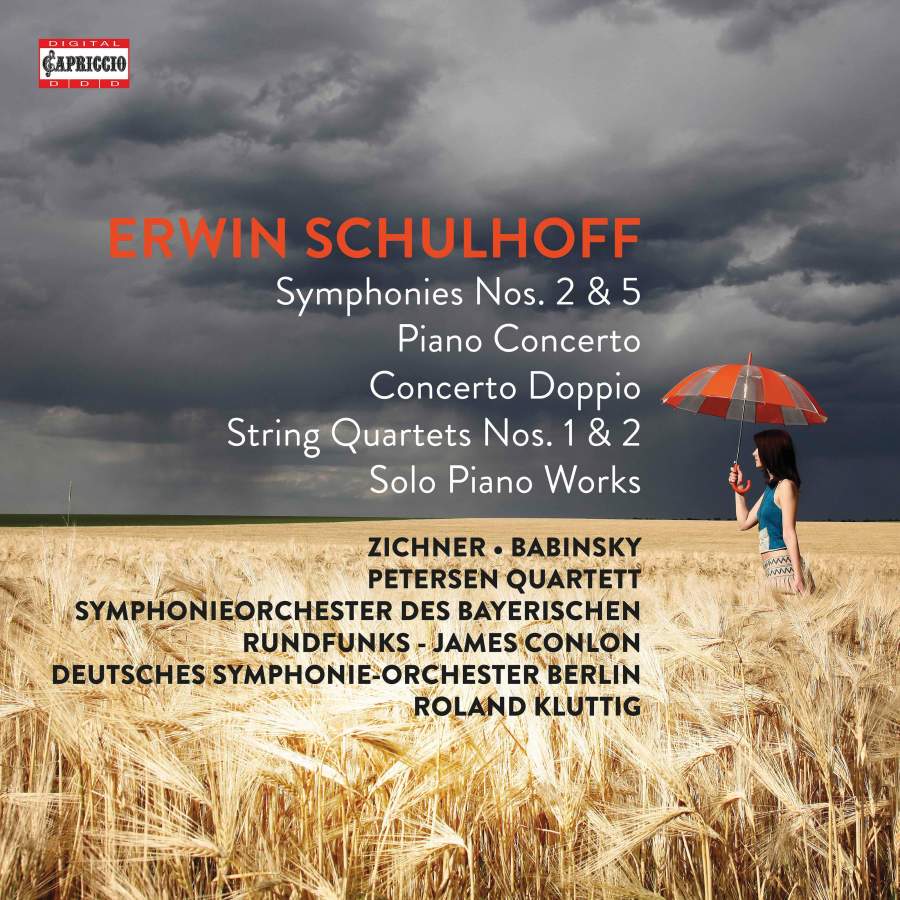
Symphonies no. 2 & 5, Piano Concerto op. 34, Concerto Doppio, Concert for string quartet and winds, String quartets no. 1 & 2, String sextet, Sonata for violin solo, Duo for violin and cello, Piano sonatas no. 1 & 3, Piano works
Jacques Zoon (flute); Frank-Immo Zichner, Margarete Babinsky (piano); Petersen Quartet; Leipzicher Streichquartett; Symphonieorchester des Bayerischen Rundfunks conducted by James Conlon; Deutscher Symphonie-Orchester Berlin conducted by Roland Kluttig
Capriccio C7297

More Schulhoff:

Alma Quartet records all of Schulhoff’s string quartets. And how!

Music as ecstasy: Kathryn Stott plays Erwin Schulhoff


Erwin Schulhoff: genres en grenzen overschrijdende muziek

Schulhoff box

“Muziek moet voornamelijk fysiek plezier, zelfs een extase bij de luisteraar teweegbrengen. Zij is geen filosofie, haar oorsprong ligt in de extatische situaties en haar uiting in het ritme” schreef Erwin Schulhoff in 1919.

Vanaf zijn prille jeugd werd Schulhoff gefascineerd door alles wat nieuw was. Zijn muziek was  genres en grenzen – soms zelfs die van een ‘goed fatsoen’ – overschrijdend. Hij was een man van uitersten, hartelijk omarmde hij dada en jazz, had ook een bijzondere voorkeur voor het groteske. Geen wonder, dat de synthese van jazz en klassieke muziek, van alles eigenlijk voor hem niet alleen een uitdaging, maar zelfs zijn artistieke credo werd.

Schulhoff Lockenhaus

Mijn eerste kennismaking met de componist en zijn muziek was dertig jaar geleden, in het door Gidon Kremer geleide kamermuziekfestival in Lockenhaus. Het was voornamelijk zijn strijksextet, met zijn sterke Janaček-invloeden, dat mij naar adem deed happen. Sinds die dag was ik verslaafd.

Het heeft lang geduurd, maar inmiddels heeft Schulhoff zijn weg naar de concertpodia en opnamestudio’s gevonden. Voornamelijk dat laatste, want op concerten wordt hij nog steeds te weinig geprogrammeerd. Waar het aan ligt? Niet aan zijn muziek. Ik vind het buitengewoon pervers dat de vermoorde componisten nog steeds vaak doodgezwegen worden. Voor de tweede keer vermoord.

Schulhoff etersen

Mijn allereerste ‘platen-encounter’ met de componist betrof de opname van de complete strijkkwartetten door het Petersen Quartet, in 1992. Tot mijn vreugde zitten die strijkkwartetten ook in de box met zes cd’s die het label Capriccio onlangs op de markt gebracht. Het betreft opnamen van veel van zijn werken (beste Capriccio: er bestaat meer!) door Deutschlandfunk Kultur tussen 1992 en 2007 gemaakt. De meeste van die opnamen zijn al eerder op Capriccio (maar ook andere, vaak niet meer bestaande labels) verschenen.

De opname uit 2007 van het Dubbelconcert voor fluit en piano, met als solist de Nederlandse fluitist Jacques Zoon is voor mij nieuw. En mooi dat het is! Nieuw voor mij is ook de opname van de tweede en de vijfde symfonie, waarin de Symphonieorchester des Bayerischen Rundfunks onder leiding staat van de grootste pleitbezorger voor de ‘entartete componisten’, James Conlon.


ERWIN SCHULHOFF
Symfonieën nr. 2 & 5, Pianoconcert op. 34, Concerto Doppio, Concert voor strijkkwartet en blazers, Strijkkwartetten nr. 1 & 2, Strijksextet, Sonate voor viool solo, Duo voor viool en cello, Pianosonates nr. 1 & 3, Pianowerken
Jacques Zoon (fluit); Frank-Immo Zichner, Margarete Babinsky (piano); Petersen Quartett; Leipzicher Streichquartett; Symphonieorchester des Bayerischen Rundfunks olv James Conlon; Deutscher Symphonie-Orchester Berlin olv Roland Kluttig
Capriccio C7297

Entartete Musik, Teresienstadt and Channel Classics

Spectrum Concerts Berlin speelt ERWIN SCHULHOFF

ERWIN SCHULHOFF strijkkwartetten door ALMA QUARTET