Izhar_Elias

Mario Castelnuovo-Tedesco: more than just a composer of guitar works

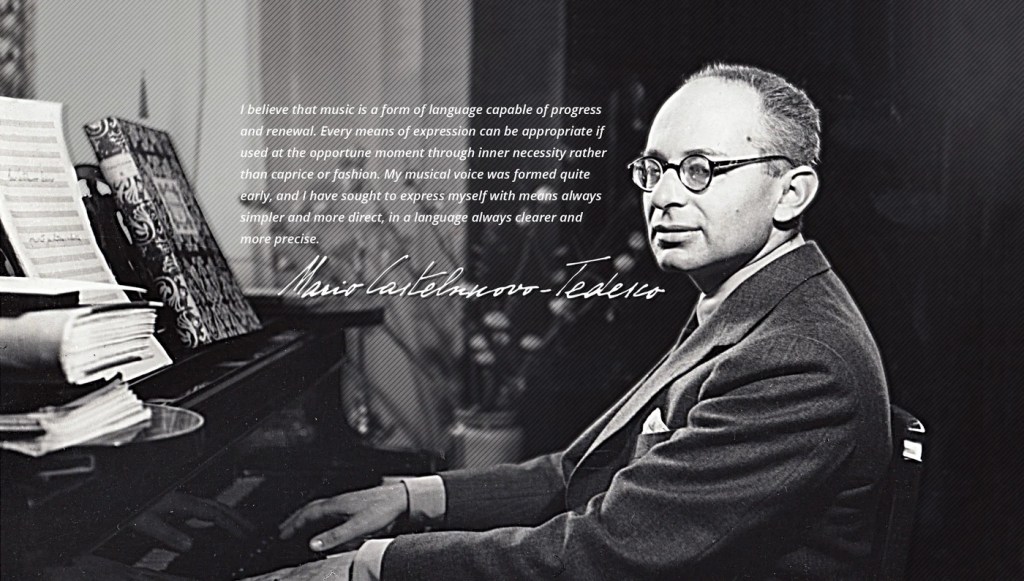
Mario Castelnuovo-Tedesco (Florence, 3 April 1895 – Beverly Hills, 16 March 1968) was born into a Jewish family of Sephardic descent (Jews expelled from Spain in 1492). He was extraordinarily creative, to his credit he worked on all sorts of things: piano works, concertos, operas…. His compositions were played by the great: Walter Gieseking, Gregor Piatigorsky, Jascha Heifetz, Casella.
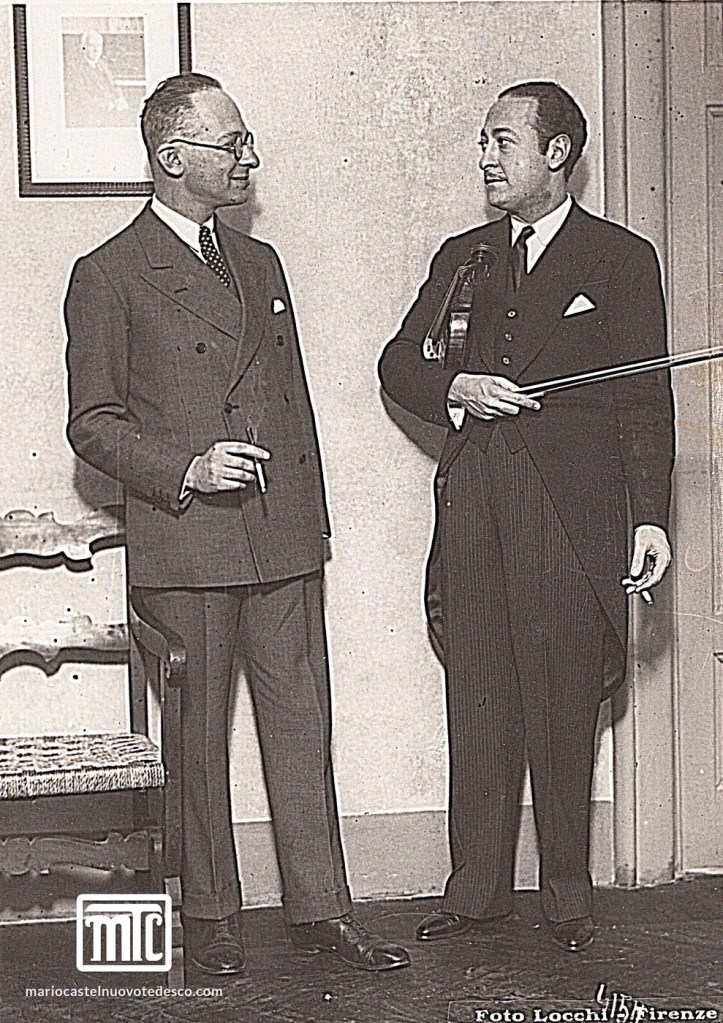

Heifetz plays Mario Castelnuovo-Tedesco’s second violin concerto: ‘I Propheti’. Recording from 1954:


Today, we know him mainly for his guitar works, nearly a hundred in all, mostly written for Andres Segovia.
Segovia plays the Guitar Concerto No.1 in D major, Op. 99; live recording from 1939:


In the beginning of the 1930s the composer began to explore his “Jewish Roots”, which was intensified by the rising of fascism and the racial laws. His music was not performed anymore. Helped by Arturo Toscanini, Castelnuovo-Tedesco and his family were able to leave Italy just before the beginning of World War 2.


Like most Jewish composers who fled Europe, Castelnuovo-Tedesco ended up in Hollywood. Where, thanks to Jascha Heifetz, he was appointed composer of film music by Metro-Goldwyn-Mayer.
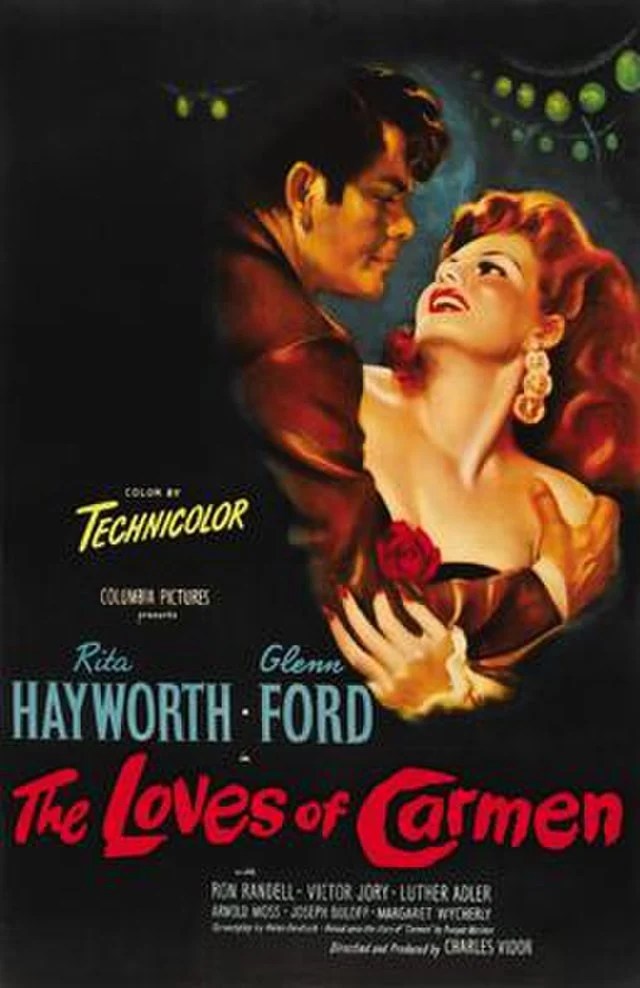


At Rita Hayworth’s special request, he composed music for the film The Loves of Carmen starring Hayworth and Glenn Ford. Below is the dance scene from the film:


During this time, Castelnuovo-Tedesco also composed new operas and vocal works inspired by American poetry, Jewish liturgy and the Bible: America offered him opportunities to deepen and develop his Italian musical heritage and his Jewish spirituality. He dreamed of hearing his Sacred Service “once in the synagogues of Florence”. It was premiered in 1950, at New York’s Park Avenue Synagogue.
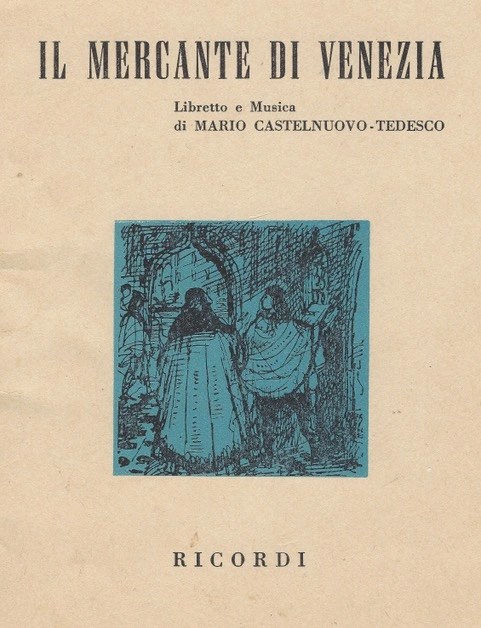

Dating from 1956, the opera Il Mercante di Venezia after Shakespeare’s The Merchant of Venice (Castelnuovo-Tedesco was a great Shakespeare lover) was performed at Maggio Musicale in Florence in 1961. Toscanini conducted and the leading roles were sung by Renato Capecchi (Shylock) and Rosanna Carteri (Portia).
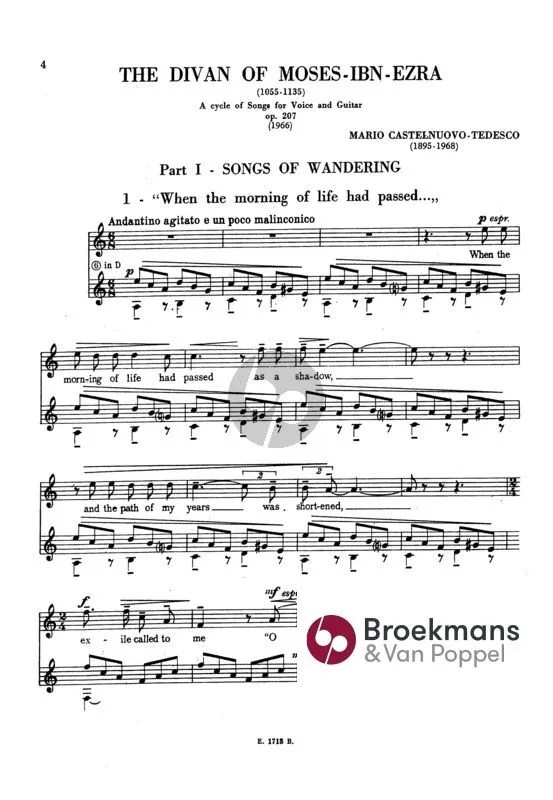


In 1966, he composed The Divan of Moses Ibn Ezra. It is a setting of nineteen poems by Rabbi Moses ben Jacob ibn Ezra, also known as Ha-SallaḠ(‘writer of penitential prayers’).


An illustration of Ibn Ezra (centre) using an astrolabe
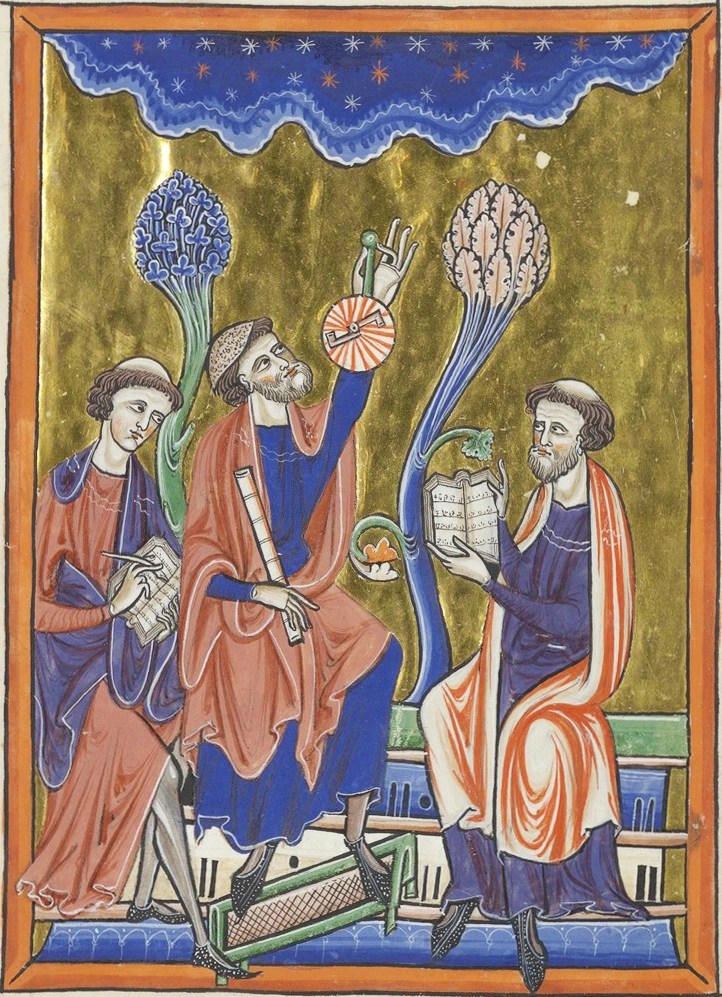


Born in Granada around 1055 – 1060, Ibn Ezra died after 1138 and is considered one of Spain’s greatest poets. He also had a huge influence on Arabic literature. Castelnuovo-Tedesco composed the ‘Divan’ (meaning; a collection of poems) to the modern English translation.


Roberta Alexander sings The Divan of Moses Ibn Ezra


Channa Malkin and Izhar Elias in ‘Fate has blocked the way’:


The composer wrote his Cello Concerto for Gregor Piatigorsky, the premiere took place in 1935, with Arturo Toscanini conducting the New York Philharmonic. And that was it. Since then, the concerto was totally forgotten for all of eighty years. Until Raphael Wallfisch took it on.


Raphael Wallfisch plays the Allegro Moderato from Castelnuovo-Tedesco’s Cello Concerto


After World War II, Castelnuovo-Tedesco, like several Jewish composers who were forced to flee and seek refuge in Hollywood, was accused of conservatism and sentimentality. That he was inspired by Spanish folklore in many of his works, was not appreciated either.

Song of Songs
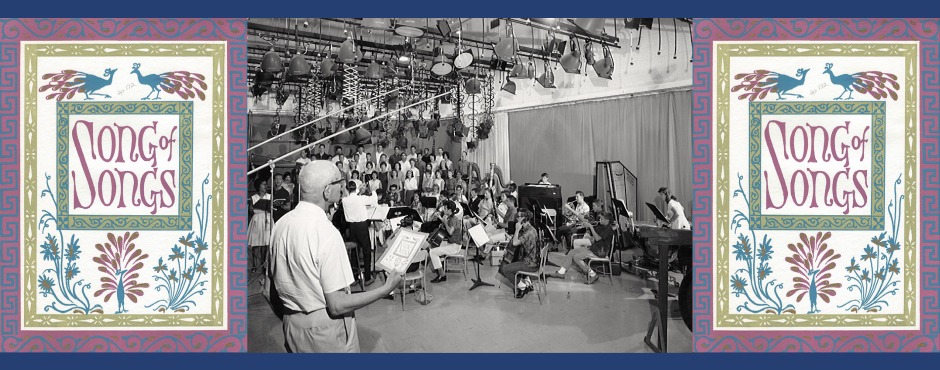


In 2022, in celebration of Castelnuovo-Tedesco’s birthday on 3 April his official website presented a long-buried treasure: a recording of the world-premiere of The Song of Songs, which took place in Los Angeles on 7 August 1963

More information:

https://mariocastelnuovotedesco.com/song-of-songs-a-hidden-treasure/?fbclid=IwAR1VjUytiv8h9TnAxMbUwlffBlgU-YeLaXRxeD-XUVJbf6bXAxVmewBhyMc


Castelnuovo-Tedesco:
“In my life I have written many melodies for voice and published 150 of them (many others remaining unpublished) on texts in all the languages I know: Italian, French, English, German, Spanish and Latin. My ambition and, indeed, my deep motivation has always been to unite my music with poetic texts that stimulated my interests and feelings, to express its lyricism.”


In 2019, his biography was filmed in the movie Maestro. Below is the trailer:


Official website of Mario Castelnuovo -Tedesco:

https://mariocastelnuovotedesco.com/

:
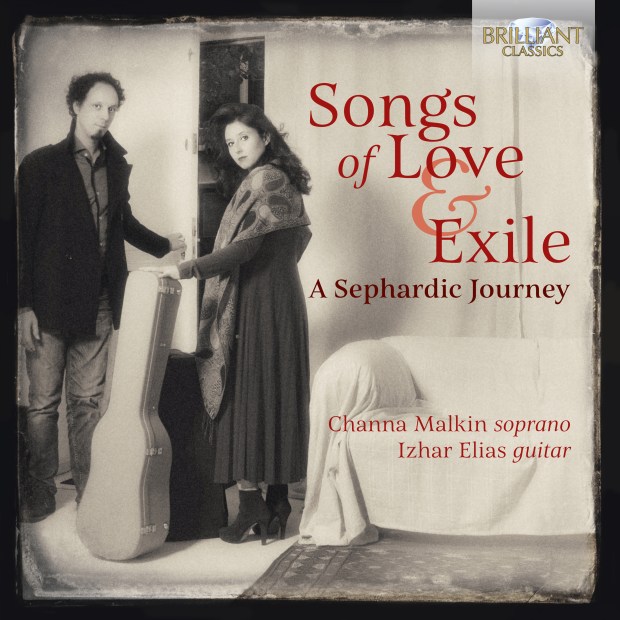
Channa Malkin and Izhar Elias in ‘Songs of Love and Exile, a Sephardic Journey’

Channa.jpg

Mario Castelnuovo-Tedesco (Florence, 3 April 1895 – Beverly Hills, 16 March 1968) was born into a Jewish family of Sephardic origin (Jews who were expelled from Spain in 1492). He was extraordinarily creative, and has numerous compositions to his name: piano works, concerts, opera’s…. His compositions were played by the greatest: Gieseking, Piatigorski, Heifetz, Casella. Nowadays we mainly know him from his guitar works, almost a hundred in total, mostly written for Andres Segovia.

In the early 1930s, the composer began to discover his ‘Jewish roots’, something that was reinforced by the rise of fascism and racial laws. His music was no longer performed. With the help of Arturo Toscanini, Castelnuovo-Tedesco and his family managed to leave Italy just before the outbreak of the Second World War.

Like most of the Jewish composers who fled Europe, Castelnuovo-Tedesco ended up in Hollywood. Thanks to Jascha Heifetz he was hired by Metro-Goldwyn-Mayer as a composer of film music. At that time he also composed new opera’s and vocal works inspired by American poetry, Jewish liturgy and the Bible.

Castelnuovo-Tedesco: “In my life I have written many melodies for the voice and published 150 of them (many remained in my drawer) on texts in all the languages I know: Italian, French, English, German, Spanish and Latin. My ambition and indeed, my deep motivation has always been to unite my music with poetic texts that stimulated my interest and feelings, to express their lyricism”.

In 1966 he composed The Divan of Moses Ibn Ezra. It is a setting of nineteen poems by, Rabbi Moses ben Jacob ibn Ezra also known as Ha-Sallaḥ (‘writer of penitential prayers’). Ibn Ezra was born in Granada around 1055 – 1060, and died after 1138 and is considered one of the greatest poets in Spain. He also had an enormous influence on Arabic literature. Castelnuovo-Tedesco composed the ‘divan’ (poems) on the modern English translation.

I very much regret that the duo Channa Malkin (soprano) and Izhar Elias only recorded six songs of the cycle. Not only because they have almost no competition (I only know two complete recordings of the songs myself), but also because their performance is really beautiful. Malkin’s lyrical soprano: girlish yet very focused fits the songs like a glove. She was born in Amsterdam, but her Jewish roots lie in Moldova, Russia and the Ukraine.

The guitarist Izhar Elias was also born in the Netherlands, but his roots lie in Iraq and India. And in Israel. What they have in common is the restlessness and the strong urge to do something with their own past. And you can hear that. You can hear that in the thirteen Sephardic folk songs that are presented here in arrangements by Joaquin Rodrigo and Daniel Akiva, among others.

What makes the CD stand out is the really excellent booklet with lots of information and all the lyrics.

Songs of Love & Exile – A Sephardic Journey
Channa Malkin (soprano), Izhar Elias (guitar)
Brilliant Classics 95652

https://www.channamalkin.com

In Dutch: Songs of Love & Exile – A Sephardic Journey

Translated with http://www.DeepL.com/Translator

Songs of Love & Exile – A Sephardic Journey

Channa.jpgMario Castelnuovo–Tedesco (Florence, 3 april 1895 – Beverly Hills, 16 maart 1968) werd geboren in de Joodse familie van Sefardische afkomst (Joden die in 1492 werden verdreven uit Spanje). Hij was buitengewoon creatief, op zijn naam staat van alles: pianowerken, concerten, opera’s…. Zijn composities werden gespeeld door de grootsten: Gieseking, Piatigorski, Heifetz, Casella. Tegenwoordig kennen we hem voornamelijk van zijn gitaarwerken, bijna honderd in totaal, veelal geschreven voor Andres Segovia.

Begin jaren dertig is de componist zijn ‘Joodse roots’ gaan ontdekken, iets wat versterkt werd door het opkomend fascisme en de rassenwetten. Zijn muziek werd niet meer uitgevoerd. Geholpen door Arturo Toscanini heeft Castelnuovo-Tedesco, samen met zijn gezin vlak voor het uitbreken van de tweede wereldoorlog Italië weten te verlaten

Zoals de meeste Joodse componisten die Europa ontvluchtten belandde ook Castelnuovo-Tedesco in Hollywood. Waar hij dankzij Jascha Heifetz door Metro-Goldwyn-Mayer werd aangesteld als componist van filmmuziek. In die tijd componeerde hij ook nieuwe opera’s en vocale werken geïnspireerd door Amerikaanse poëzie, Joodse liturgie en de Bijbel.

Castelnuovo-Tedesco: “Ik heb in mijn leven veel melodieën voor zangstem geschreven en er 150 van uitgegeven (in mijn la bleef veel liggen) op teksten in alle talen die ik ken: Italiaans, Frans, Engels, Duits, Spaans en Latijn. Mijn ambitie en sterker nog, mijn diepe drijfveer is altijd geweest om mijn muziek te verenigen met poëtische teksten die mijn belangstelling en gevoel prikkelden, om de lyriek ervan tot uitdrukking te brengen”.

In 1966 componeerde hij The Divan of Moses Ibn Ezra. Het is een setting van negentien gedichten van Rabbi Moses ben Jacob Jacob ibn Ezra, ook bekend als Ha-Sallaḥ (‘schrijver van boetvaardige gebeden’). Ibn Ezra werd geboren in Granada rond 1055 – 1060, en overleed na 1138 en hij wordt beschouwd als één van de grootste dichters van Spanje. Die ook nog eens een enorme invloed op de Arabische literatuur heeft gehad. Castelnuovo-Tedesco componeerde de ‘divans’ (gedichten) op de moderne Engelse vertaling.

Ik betreur het zeer dat het duo Channa Malkin (sopraan) en Izhar Elias maar zes liederen van de cyclus hebben opgenomen. Want niet alleen dat ze bijna geen concurrentie hebben (zelf ken ik maar twee complete opnamen van de liederen), maar ook omdat hun uitvoering werkelijk prachtig is. Malkins lyrische sopraan: meisjesachtig maar toch zeer kernachtig past de liederen als een handschoen. Zij is in Amsterdam geboren maar haar Joodse roots liggen in Moldavië, Rusland en Oekraïne.

Ook de gitarist Izhar Elias is in Nederland geboren maar zijn roots liggen in Irak en in India. En in Israël. Wat ze gemeen hebben is de rusteloosheid en de sterke drang om iets met hun eigen verleden te doen. En dat hoor je. Dat hoor je ook in de dertien Sefardische volksliedjes die hier gepresenteerd worden in bewerkingen van o.a. Joaquin Rodrigo en Daniel Akiva.

Wat de cd dat ene extra geeft is de werkelijk voortreffelijke booklet met veel informatie en alle liedteksten


https://www.channamalkin.com

Songs of Love & Exile – A Sephardic Journey
Channa Malkin (sopraan), Izhar Elias (gitaar)
Brilliant Classics 95652