Das_Buch_der_hangenden_Garten

Brigitte Fassbaender: ‘lilting’ is the magic word


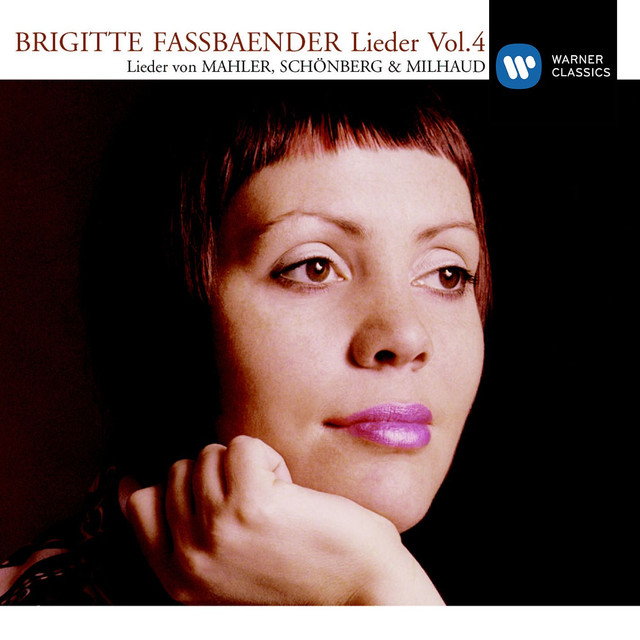
In the original EMI release (74767972), the texts were not included. A shortcoming, but they were not strictly necessary: Fassbaender articulates so well that every word is clear, without compromising the music.

Her Mahler is very sensitive, sung with compassion. Sometimes her emotions get the better of her (Lieder eines fahrenden Gesellen), but I don’t mind. Mahler can have it.

Arnold Schoenberg is very different. He composed his cycle ‘Das Buch der hangenden Garten’ in 1908, and though it is not devoid of emotions, it is strictly atonal. In an interview with Thomas Vogt, Fassbaender confesses that learning to sing the songs was not easy, yet she finds them written ‘liltingly’. And that is also how she performs them, liltingly, as if she were singing Schumann.


Milhaud’s songs are another thing altogether: if Mahler was the appetiser and Schoenberg the (heavy) main course, the “Chansons de la négresse” make for a lovely light dessert. Despite the far from cheerful texts, they are light-hearted and dancey, and they are very pleasant to listen to.


Gustav Mahler, Arnold Schoenberg, Darius Milhaud
Brigitte Fassbaender (mezzo-soprano)
Irwin Gage & Aribert Reimann (piano)
Brigitte Fassbaender: ‘zangerig’ is het toverwoord

Fassbaender

In de oorspronkelijk EMI-uitgave (74767972) waren de teksten niet bijgeleverd. Een euvel, maar echt nodig waren ze niet: Fassbaender articuleert zo goed dat ieder woord duidelijk verstaanbaar is, zonder dat het afbreuk doet aan de muziek.

Haar Mahler is zeer gevoelig, gezongen met compassie. Soms worden haar emoties haar de baas (Lieder eines fahrenden Gesellen), maar ik vind het niet erg. Mahler kan het hebben.

Arnold Schönberg is andere koek. Zijn cyclus Das Buch der hangenden Garten componeerde hij in 1908, en al is het niet gespeend van emoties, toch is het strikt atonaal. In een interview met Thomas Vogt bekent Fassbaender dat het niet makkelijk was om de liederen te leren zingen, toch vindt zij ze ‘zangerig’ geschreven. En zo vertolkt zij ze ook, zangerig, alsof zij Schumann staat te zingen.

De liederen van Milhaud zijn een hoofdstuk apart: was Mahler een voorgerecht en Schoenberg een (zwaar) hoofdgerecht, zo zijn de Chansons de la négresse net een luchtig dessert. Ondanks de verre van vrolijke teksten zijn ze licht en dansant, en ze liggen prettig in het gehoor.


Gustav Mahler, Arnold Schönberg, Darius Milhaud
Brigitte Fassbaender (mezzosopraan)
Irwin Gage & Aribert Reimann (piano)