
“The” sound. That is what Schreker was obsessed and fascinated by. A sound that died off on its own, but not really, because it had to keep resounding – if only in your mind. It had to be a pure sound, but one containing orgasmic desire and it should be intertwined with visions.
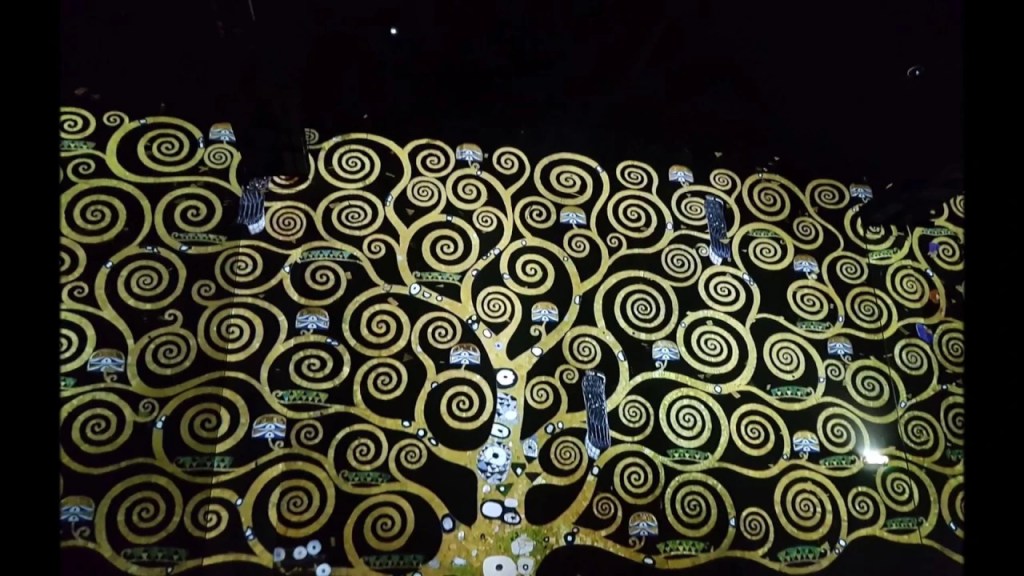
Sight & Sound Experience of Gustav Klimt – Atelier des lumières Paris
Of course, it also had to do with the spirit of that time; other artists too were experimenting with it, though perhaps not so fanatically.
“The” sound, Schreker never let go of it, even when, at the end of his short life, he seemed to be going in a different direction.
This sound, which according to our chief conductor Marc Albrecht is “narcotic”, is abundant in Der Schatzgräber. It was Albrecht’s deepest wish to conduct the opera one day, a dream that came true in September 2012.

The making of Der Schatzgräber in Amsterdam:
And Albrecht is good at it, at creating the perfect sound. It still needs to be perfected, though, as the sound at the premiere was, especially at the beginning, far too loud. Fortunately, after the intermission it became more lyrical and softer, gently guiding you through the music, just like in Els’s stunning lullaby at the beginning of the third act.
About the staging, I can be brief: it sucks. In the first two acts I was still able to somewhat relate to the neglected, aggressive cult members (?). The beautiful Els resembled Catherine Deneuve in Belle de Jour, with her blonde wig and the very high heels under her short, sexy dresses. Something that was also a bit true for the Queen (good silent role by Basja Chanowski).

But the geriatric hospital/nursing home, with stumbling old people with walkers? Sorry, that didn’t even make me reflect; I found it ugly and unnecessary. And speaking of films, I was reminded a bit of Lars von Trier’s Breaking the Waves. The ultimate sacrifice.
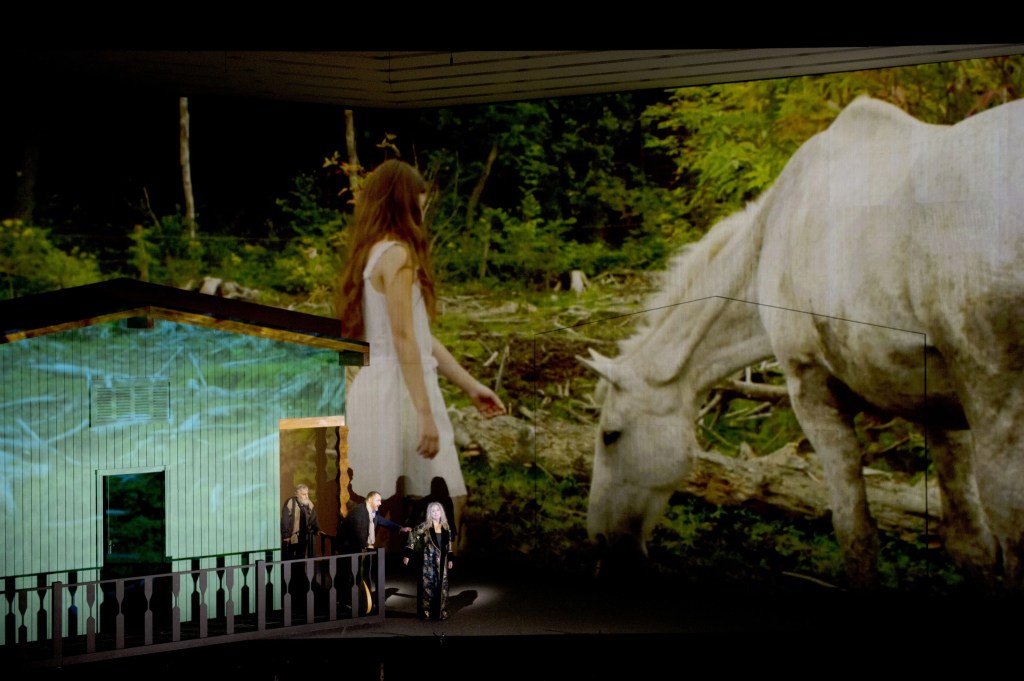
The video projections were too much of a good thing for me. A lot of them also didn’t add anything at all or were just too obvious (white horse, children being born or a twinkling starry sky during the love night – Kubrick’s ‘2001 Odyssey’?). It made me restless. Schreker’s music has to be experienced, then the images will come naturally.

I do have to admit that van Hove kept reasonably to the libretto, there were very few discrepancies between what you saw and what you read. What he did do is translate the medieval fairy tale into our contemporary (hyper)realism, and that is alright. In his introduction, he said he did not want to start from a concept, what he wanted was to create a universal drama.
It was a first for everyone. For the director, for the conductor and for the orchestra. And for all the, more than outstanding singers. Hats off!

First of all, the interpreter of the title role, Raymond Very. His tenor is lyrical and agile, he just throws his high notes into the air as if they are very easy to sing, and he manages not to overpower himself with the, at times, very intense music. What a relief to enjoy the long Schrekerian arcs so completely in style. You may notice that he is struggling towards the end, but try to walk in his shoes! Three times BRAVO!

Manuela Uhl (Els) was also a bit spent towards the end. But her performance before that borders on the impossible. Beautiful woman with above-average acting skills and with a voice that went from whispery-soft to bellows and from very low to very high, chapeau.
Kay Stieferman made a particularly strong impression. His baritone is of an immense size and blessed with thousands of colour nuances. He certainly needed all those for Der Vogt, because there were so many emotions in this character. He managed to convey them all clearly, even allowing you to have some sympathy for his actions. Very impressive.
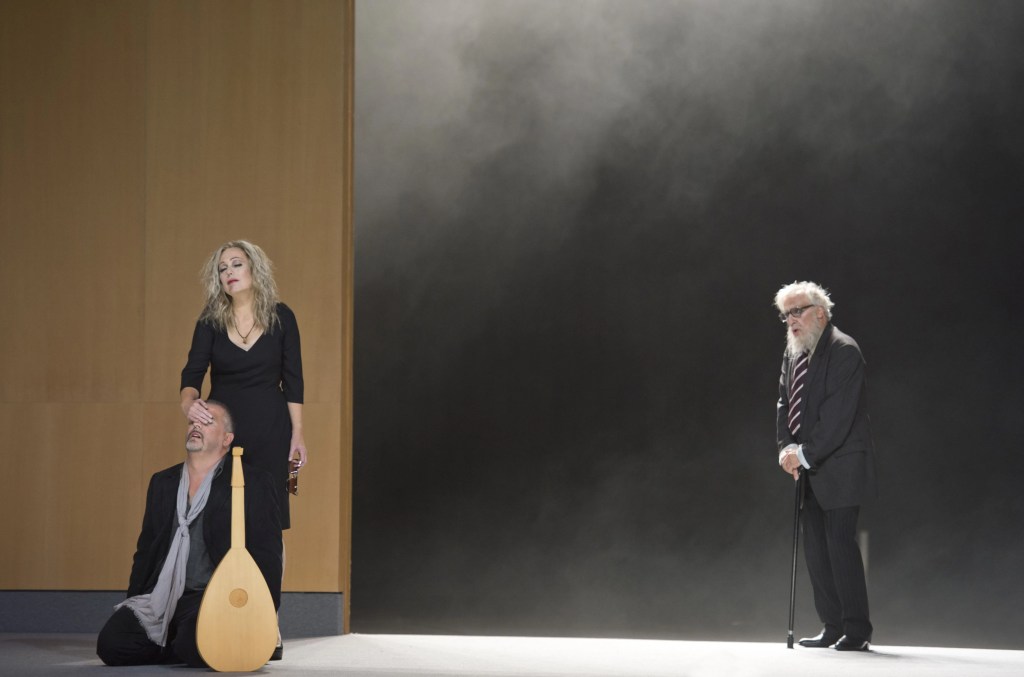
About Graham Clark (the Jester), I can be short. He was exactly what was expected of him – nothing but really wonderful!
Trailers of the production:
audience reactions:
Photo’s from the production: © © Monika Rittershaus
Live recording on cd:
 Basia con fuoco