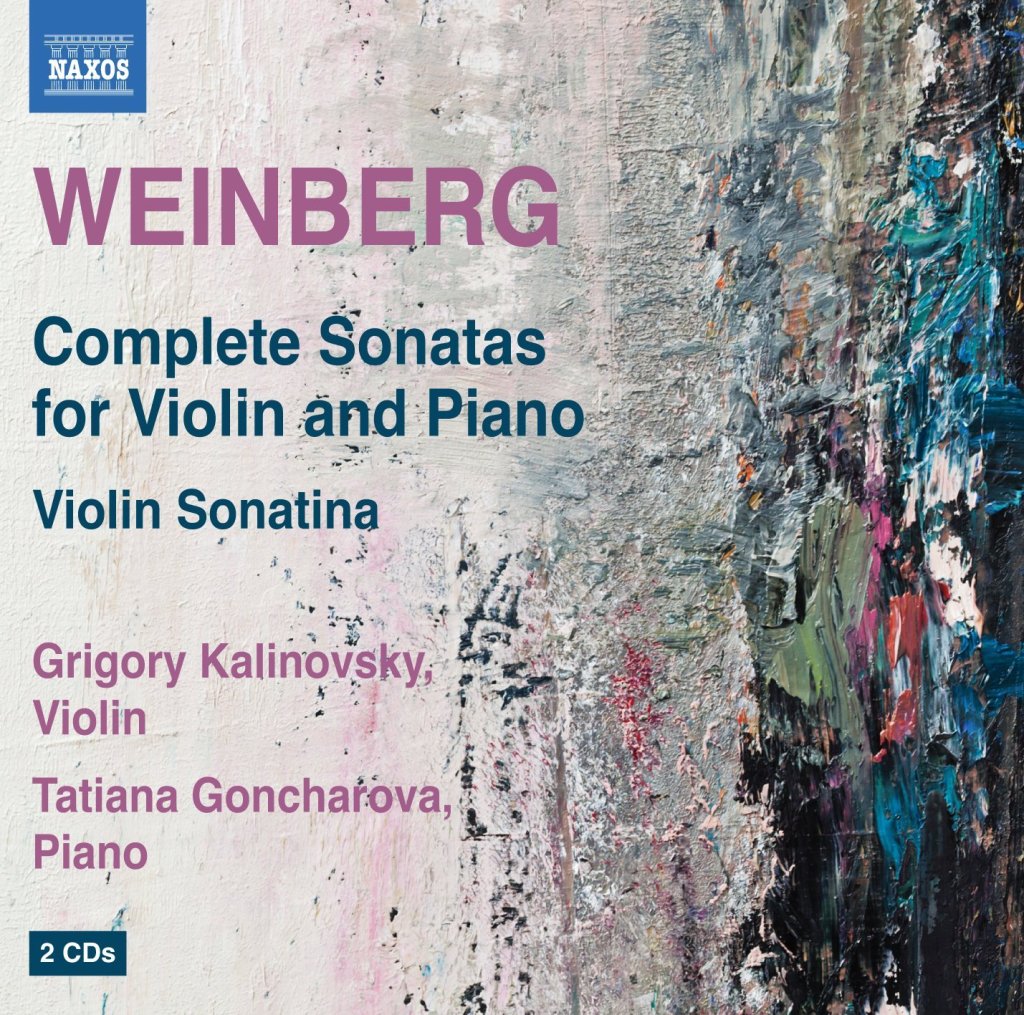
I know the risk of my umpteenth ultimate praise for a ‘new Weinberg’, but believe me: I have no choice.
Not that I didn’t have my doubts. Especially on the first time listening; I had a bit of trouble with the violinist, because to say that his violin really sings… well, no.
I found his playing too fierce, too straightforward . . violent at times. The singing came mainly from the piano, at least it seemed so at first, because the more I listened to the CDs the more layers I discovered in the renditions of – both – soloists.
Just take the moving Lento in the second sonata, here time stood still for a moment. This also because the work reminded me most of film music. Black-and-white images from ‘The Cranes are Flying’ automatically loomed before my eyes. It is one of the most moving films ever, for which Weinberg composed music.
And what a difference with the Lento from the 1947 third sonata! Here you can already see Shostakovich lurking around the corner, smiling approvingly. And here it was that I finally heard Kalinovsky sing on his violin as I was, again, marvelling at Goncharova’s beautiful touch.
The first four sonatas were created between 1943 and 1947 and, despite the major Shostakovich influences, they are rather conservative in nature. Especially number four, for me, the least interesting of these first four pieces: despite the passionate plea of both soloists, I noticed that somewhere along the way my attention had waned.
Only in the fifth sonata from 1953 does the true genius Weinberg reappear: it was the first composition that he completed after being released from prison. Listen to the Allegro moderato in which he manages to forge totally different themes into one whole.
His sixth sonata is a bit of an odd one out. Weinberg composed it in 1982; it was not premiered until 2007, eleven years after his death.
 Basia con fuoco