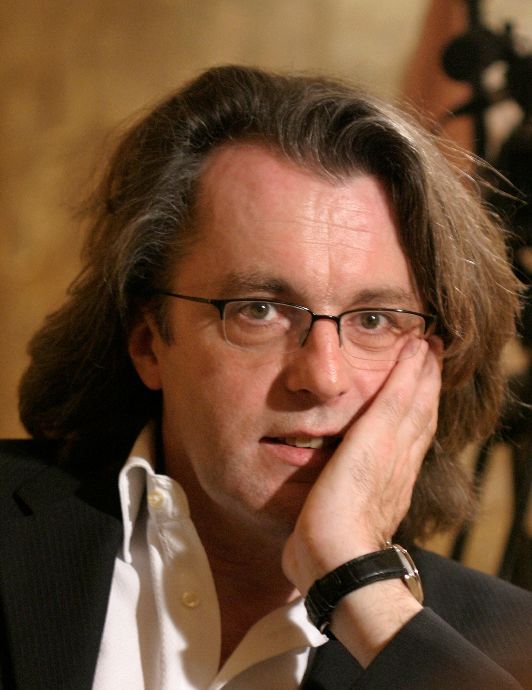
Pascal Dusapin
Dusapin’s opera Faustus, The Last Night had an unforgettable Dutch premiere at the ZaterdagMatinee on 13 November 2010. It is hard to imagine a better performance; it was wonderfully conducted by Jonathan Stockhammer and featuring soloists such as John Hancock and Jaco Huijpen.
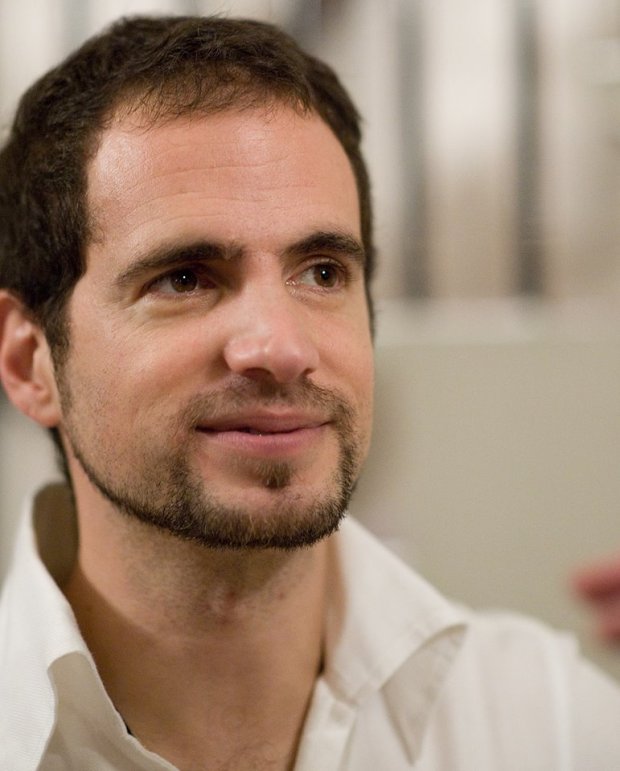
Jonathan Stockhammer
All of us sometimes dream of eternal youth, perfect health, happy love and freedom to do as we please. Some people are very willing to pay a lot for those things, they will even make a pact with the devil if necessary. See here the inspiration for countless books, poems, operas, musical pieces and paintings
We, humans, we love dreams. And fairy tales. But devils, should they really exist, might have something better to do than serve us for a few decades, in exchange for our souls. Nor are heaven and hell to be taken for granted. Maybe they are made up?
That’s what “Faustus, The Last Night” by Pascal Dusapin (1955) is all about. Forget Goethe, because Mephistopheles is not interested in Faustus’ soul and Faustus does not want to sell anything. There is also no Marguérite, no love and no artistry either. There is NOTHING. A “nulla”, as it was articulated by Iago in Verdi’s Otello. And a total nihilism like that of Mefistofele, from Boito’s opera of the same name.
Dusapin’s opera, a work comprising one night and 11 scenes, was first performed in 2006 at the Staatsoper unter den Linden in Berlin.
Lyon and Spoleto followed and now it was Amsterdam’s turn, with a performance at the ZaterdagMatinee. Fortunately concertante, which meant you were not disturbed by the (delusional) concepts of a mallotic director.
Although, concertante? Quite a lot happened on the Great Hall stage. The stairs and balconies were used gratefully. All the singers knew their roles by heart (most of them have also sung the opera elsewhere), allowing them to concentrate not only on the dog-eared score, but also on acting.
The opera itself is actually one long conversation about the existence or non-existence of things. And the sense or nonsense of life. Existentialism at its finest.
Dusapin is not easy to categorize. He was taught by Franco Donatoni and Iannis Xenakis, but did not adopt their ideas. Fortunately, he also has an aversion to ˜systems”and he makes grateful use of everything that has been developed over the years: jazz, electronics, bandas, added timpani and horns…
Whatever you come up with, Dusapin knows how to use it. Eclectic? Yes, but thankfully that is no longer a swear word. Easy? No. But so insanely fascinating!
Apart from Faustus and Mephistopheles, Dusapin introduces two more characters: Togod, (an anagram of Godot, think Beckett’s play) – half God, half devil.
And Sly, a drunk and a laughingstock, and he is yet another quote. Not only from the Shakespeare (Sly is a minor character in The Taming of the Shrew) but also from Wolf-Ferrari’s opera.
And then we also have a blind angel, who cannot be seen himself and who only manages to tell the protagonist to be born again. In the total chaos that follows, the angel is consumed by flames.
At the end, the fire extinguishers, and, whispering softly, and the music extinguishes with it. The spectators are left to their own devices in ˜Nothingness”. Breathtakingly beautiful and painfully moving.
About the performance of the ZaterdagMatinee I can be very brief: TOP! How and where does one find such brilliant singer/actors? Granted, they were amplified, but that could not be otherwise, no (human) voice can withstand the violence of those timpani, trombones and electronics. And yet … Amplified or not – hats off to them, all of them.
Heather Buck (Angel) ˜walked”through her prescribed vocal jumps of no less than two octaves with a deadly ease. Adam Klein was at times hilarious as the constantly drunk Sly and yet he also managed to emphasise the more serious side of his role.
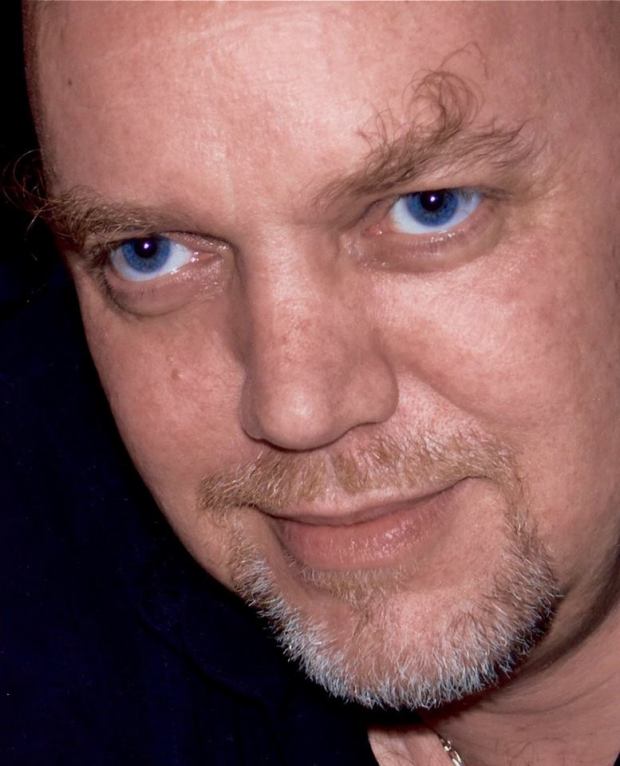
Jaco Huijpen
Dutch bass Jaco Huijpen was a very impressive Togod and Stephen West was a no-holds-barred Mephistopheles.
John Hannock was a Faustus out of thousands. In fact, I still cannot fathom how he filled the role. His voice seemed made of elastic. Sprechgesang? Bel canto? Dramatic? Anything really: he could do it and he did it all. And how!
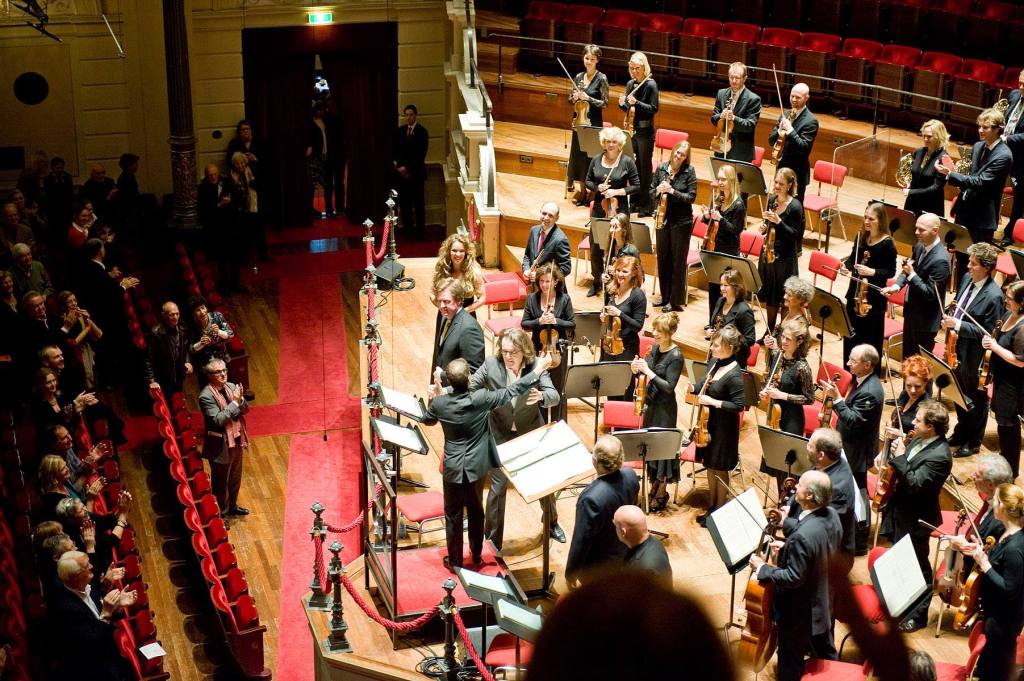
The final applause with Pascal Dusapin and Jonathan Stockhammer in the middle
The Radio Chamber Philharmonic under Jonathan Stockhammer’s direction sounded as if they had fused with Dusapin’s music, and perhaps that is true. Unforgettable.
Pascal Dusapin
Faustus, the Last Night
Performed by Radio Kamer Filharmonie olv Jonathan Stockhammer
Soloists: John Hancock, Stephen West, Jaco Huijpen, Adam Klein and Heather Buck
Visited on 13 November 2010 in the Concertgebouw in Amsterdam
 Basia con fuoco