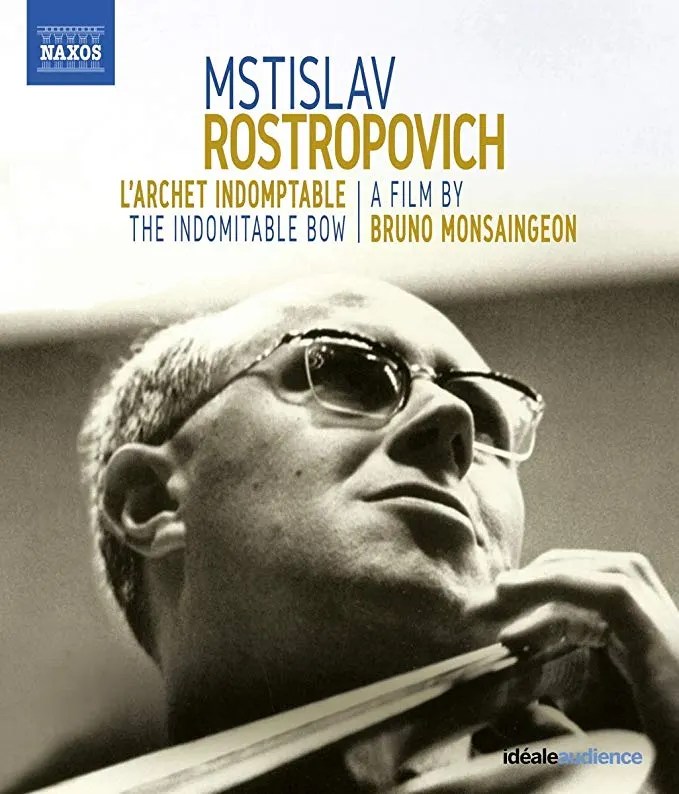
Bruno_Monsaingeon

Mstislav Rostropovich’s indomitable bow

The year 2000 (and the new century) had just begun when French documentary maker Bruno Monsaignon was invited by Mistislav Rostropovich to his home: the famous cellist wanted to hand him all the material of films and recordings he possessed… containers full. And although much was missing in terms of dates and information, it was immediately clear to Monsaignon what a valuable treasure he had in his hands. After several vodkas later, Monsaignon dared to ask the great maestro’s permission to make a film about his life. IIt has become a fascinating document full of historical footage and music excerpts:
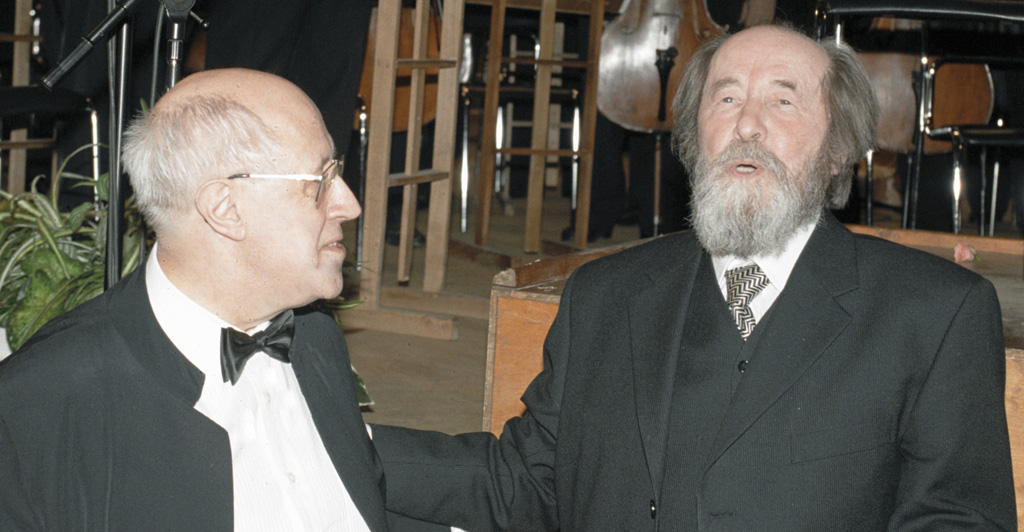
6624 17.12.1998 Писатель, лауреат Нобелевской премии Александр Солженицын (справа) и виолончелист Мстислав Ростропович (слева) на концерте в честь 80-летия писателя. Юрий Абрамочкин/РИА Новости

Rostropovich was not only one of the greatest cellists of his time who inspired untold numbers of composers to write works for him, he was also an excellent pianist and conductor as well as a political activist and champion of human rights. In 1972, he was exiled and stripped of his nationality for defending his friend, the writer Alexandr Solzhenitsyn. After the fall of communism, he was rehabilitated and welcomed as a hero in the ‘new’ Russia.

The film begins with a party at the Barbican Centre in London. On the stage, the greatest of the great gather. There they are, all in a row: Kremer, Argerich, Vengerov, Jansons, Kissin, Penderecki, Ozawa…. In fact, who isn’t? Not even Margaret Thatcher is missing! The ‘birthday boy’ cuts the cake (in the shape of a cello), after which he gestures that it is now time to start drinking. It must have been Costly!

There is also a bonus. Two, actually. After Tchaikovsky’s Rococo Variations from 1986, we get a unique visual recording of Beethoven’s ‘Archduke Trio’ recorded in 1977, featuring Wilhelm Kempff and Yehudi Menuhin alongside Rostropovich; followed by the ‘Sarabande’ from Bach’s second cello solo suite recorded in 1969… Wow.

Bonus two treats us to table talk with the children of Rostropovich and Solzhenitsyn. How much more valuable do you want it to be?

De ontembare strijkstok van Mstislav Rostropovich

Rostropovich film


Het jaar 2000 (en de nieuwe eeuw) was net begonnen toen de Franse documentairemaker Bruno Monsaignon uitgenodigd werd door Mistislav Rostropovitsj om bij hem thuis te komen: de beroemde cellist wilde hem al het materiaal aan films en opnamen dat hij bezat, containers vol, overhandigen. En al ontbrak er veel aan data’s en informatie, het was Monsaignon onmiddellijk duidelijk wat een waardevolle schat hij in zijn handen kreeg. Na ettelijke wodka’s later durfde Monsaignon het aan om de grote maestro toestemming te vragen om een film over zijn leven te maken.


File:RIAN archive 6624 Alexander Solzhenitsyn and Mstislav Rostropovich.jpg  - Wikimedia Commons

Het is een fascinerend document vol historische beelden en muziekfragmenten geworden: Rostropovitsj was niet alleen één van allergrootste cellisten van de zijn tijd die onnoembare aantal componisten inspireerde om werken voor hem te schrijven, hij was ook een uitstekende pianist en dirigent. Én politiek activist én voorvechter van mensenrechten. In 1972 werd hij verbannen en van zijn nationaliteit gestript omdat hij zijn vriend, de schrijver Aleksander Sozjenitsyn verdedigde. Na de val van het communisme werd hij gerehabiliteerd en als held welkom geheten in het ‘nieuwe’ Rusland.


De film begint met een feest in de Barbican Centre in Londen. Op de bühne verzamelen zich de grootsten van de grootsten en daar staan ze, allemaal op een rij: Kremer, Argerich, Vengerov, Jansons, Kissin, Penderecki, Ozawa.. Wie eigenlijk niet? Zelfs Margareth Thatcher ontbreekt niet! Het ‘feestvarken’ snijdt de taart (in de vorm van een cello) aan, waarna hij gebaart dat het nu tijd is om aan de drank te gaan. Kostelijk.

Er is ook een bonus. Of twee eigenlijk. Na de Rococo Variaties van Tsjaikovski uit 1986 krijgen we een unieke beeldopname van de in 1977 geregistreerde ‘Archduke – trio’ van Beethoven, met naast Rostropovitsj Wilhelm Kempff en Yehudi Menuhin; gevolgd door de in 1969 opgenomen ‘Sarabande’ uit Bachs tweede cellosolosuite. Wow.


Bonus twee trakteert ons op tafelgesprekken met de kinderen Rostropovitsj en Solzjenitsyn. Hoe waardevoller wilt u het nog hebben?

MSTISLAV ROSTROPOVICH: L’ARCHET INDOMPTABLE
A film by Bruno Monsaignon
Naxos 2.110583