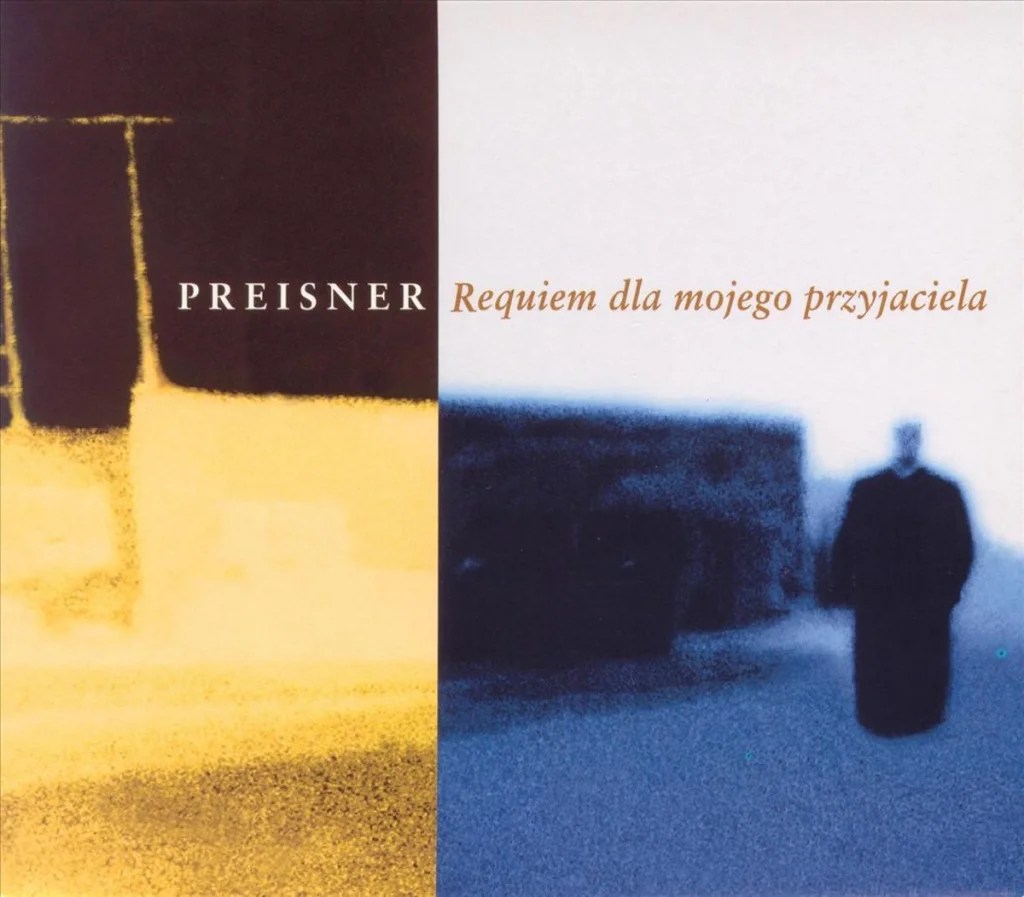
What does a composer do when a dear friend dies? Naturally, he writes a Requiem.
Zbigniew Preisner is among the one of the best film composers of our time. His music is much loved, even in the Netherlands. In particular, his collaboration with director Krzysztof Kieśłowski (La Double Vie de Veronique, Trois Couleurs, Decalogue) has led to great success and it is sometimes difficult to separate the film images from the music.
On his 50th birthday, Kieśłowski decided to stop filming, a decision that many film fans deeply regretted. However, he still had very many plans for the future, including a creation of a mystery play/opera about ‘life’, obviously in collaboration with Preisner and his regular screenwriter Krzysztof Piesiewicz.
It was due to premiere at the Acropolis. Sadly, in March 1996, Kieśłowski died of a heart attack, aged just 55. Whether the plans had progressed very far, the (otherwise very brief) liner notes do not mention.
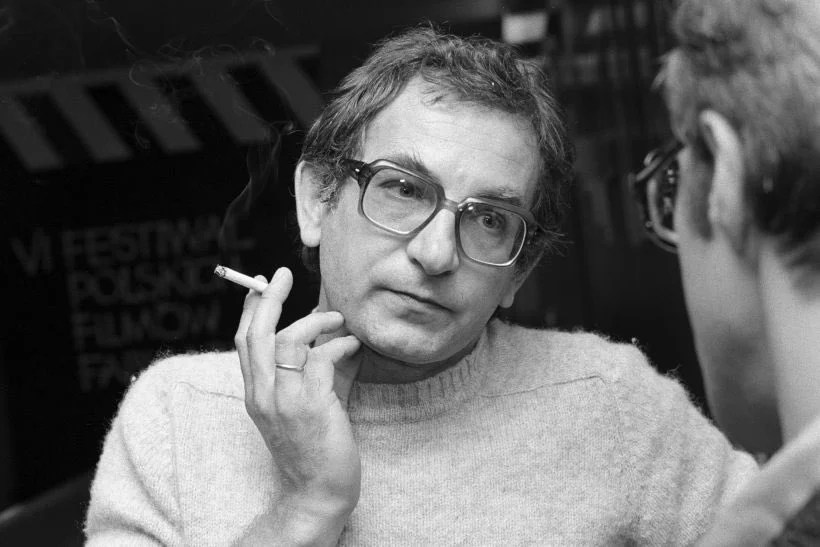
Krzysztof Kieśłowski
The music is very wistful and evocative. The ‘Ascende huc’ in the Apocalypse section would not have been out of place in a Theodorakis score (it also contains literal quotes from ‘Z’). The lyrics are in Latin (in the Life section also in Greek) and in Polish.

Zbigniew Preisner
Fans of Preisner’s music will definitely not be disappointed. The Sinfonia Varsovia conducted by Jacek Kaspszyk plays very well and there is beautiful singing. The whole thing has a great deal of potential and I don’t mean that in a condescending way. I personally love it. However, I do warn against the high ‘Górecki 3’ content.
 Basia con fuoco
I was familiar with Preisner collaboration with Kieslowski, but only learned from this blog about his Requiem for the director. Thank you, Basiu.
LikeGeliked door 1 persoon